The Council of Architecture (COA), constituted by the government of India under the Architects Act 1972, came into fruition on the 1st of September 1972. The Act aimed to provide registration for Architects, standards of education, qualification status, and standards for practice of the profession, along with maintaining the register of architects for the country. The presence of such a body for a professional degree is extremely important as it forms a collective and aims to protect its interest from false services with inadequate knowledge about the field. This safeguards the users, in this case, citizens of the country at large, who will be impacted by failures in the built environment.
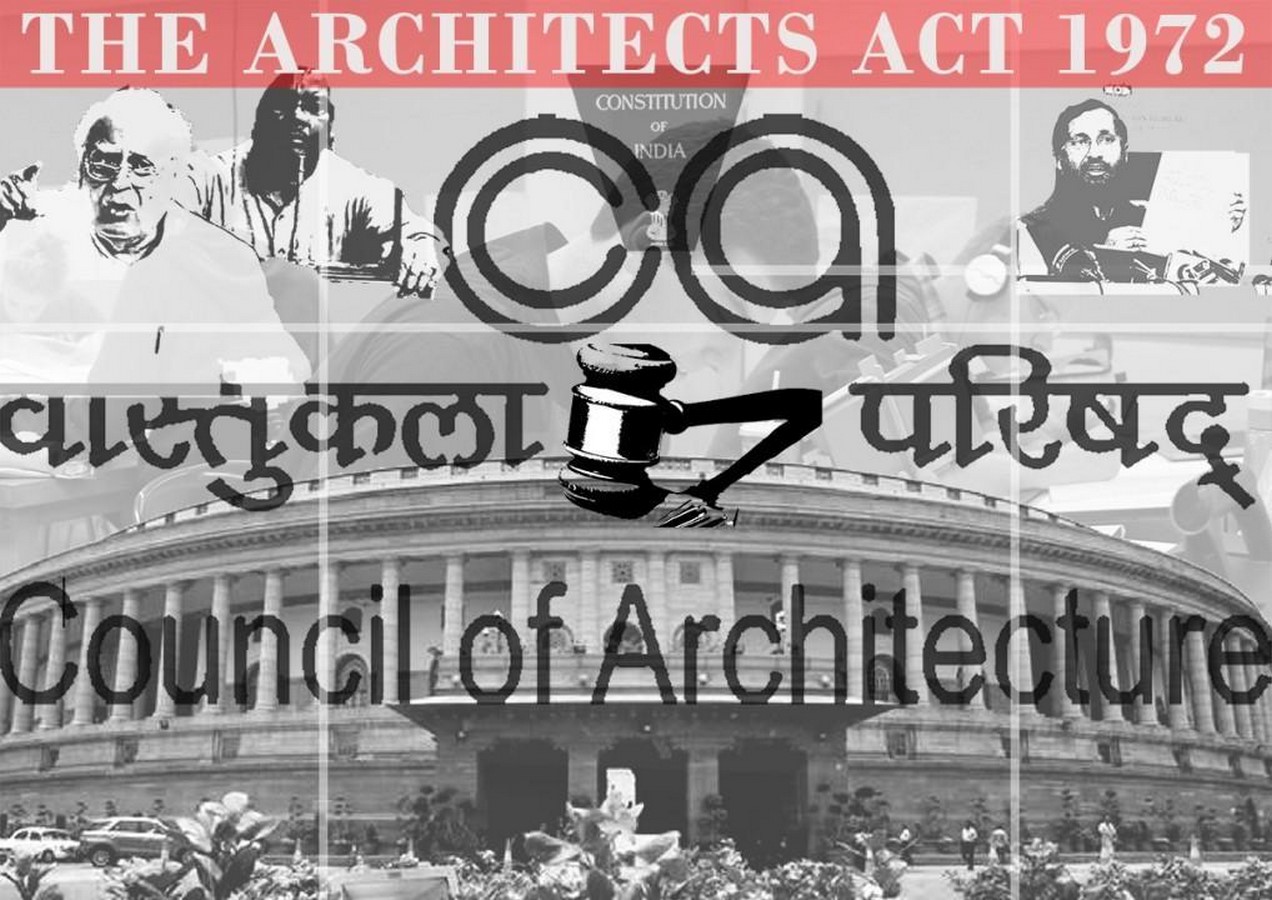
However, the COA in India has garnered a lot of criticism and feedback on its purpose, regulations and, more importantly, its role in pushing the field of architecture forward. Fifty-three years after being established, the COA has left architects to fight for their relevance within the Indian context.
What’s in a label?
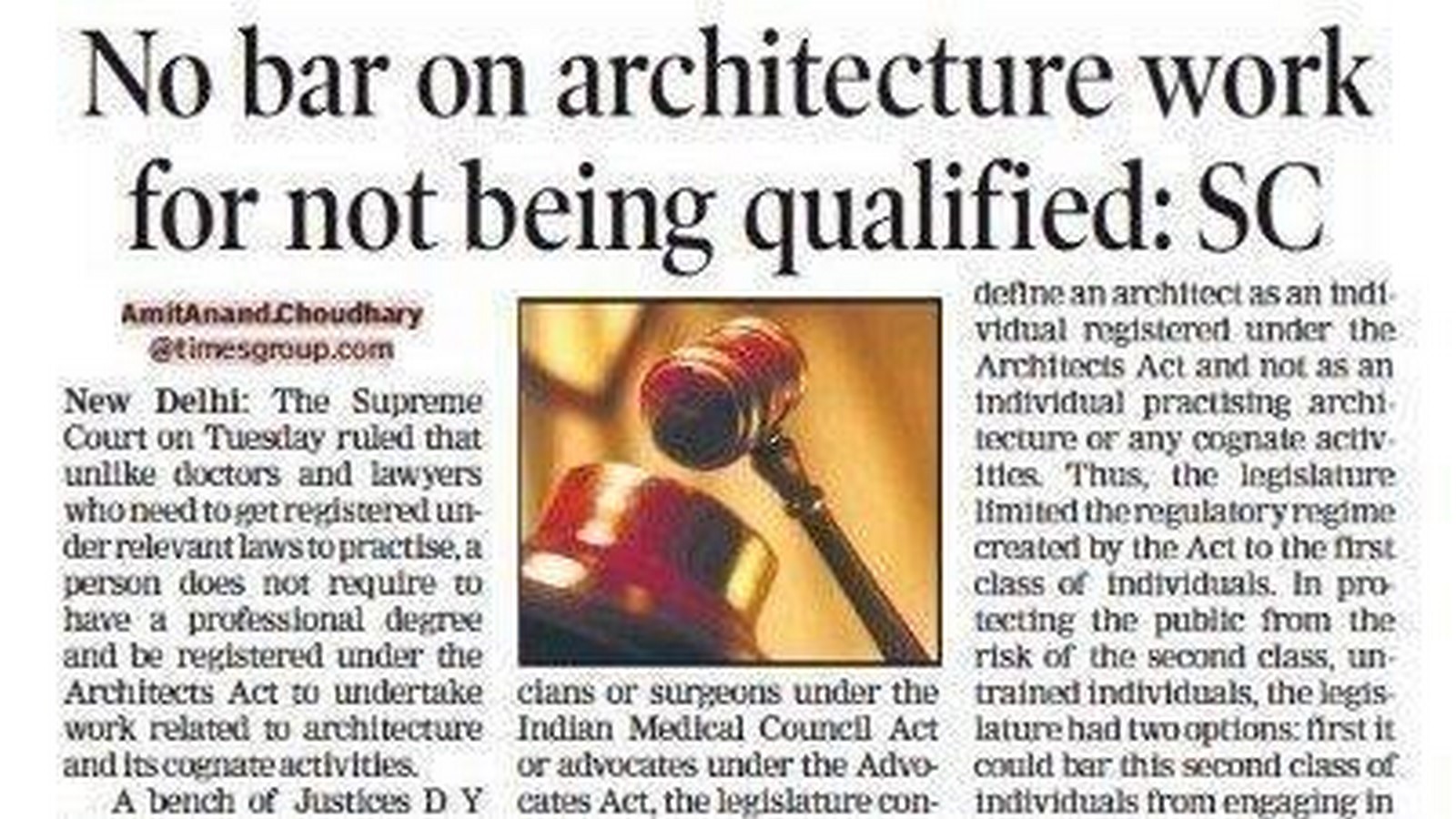
In 2020, A Civil Appeal in the Supreme Court of India filed by the Council of Architecture against Mr. Mukesh Goyal & Ors led to a landmark judgement that questions the very nature of the education, accreditation, and practice of the Architecture profession.
The question placed before the court pertained to whether Section 37 of the Architects Act of 1972 merely prohibits the use of the title ‘Architect’ by an individual not registered with the COA or if it prohibits the unregistered individuals from practicing architecture and its cognate activities.
The court ruled in favor of the defendants that, unlike the Indian Medicals Act 1956 and the Advocates Act 1961, it clearly prohibited any person not registered under the respective boards from practicing the profession. The Architects Act of 1972 only restricts the use of the title and does not lay any restrictions on practicing the profession. Any engineer or relevant individual can legally bid and carry out work for tenders and projects that call for architects.
In summary, one does not have to have the necessary qualifications or hold the code of conduct but can practice the profession that requires a five-year bachelor’s degree and uphold a very restrictive code of conduct. This begs the question: If one were to denounce one’s status as an architect and continue to practice the profession, what would the repercussions or advantages be?
Service and Sacrifice

The Architects Professional conduct regulations, 1989 lays out the standards of professional conduct/ self-discipline required of an Architect. The entire document lays out extremely important points that are true to the practice of any profession, including Architecture. But it doesn’t provide any specifics or yardsticks to ensure fair adherence to the code of conduct.
For instance, points (xix), (xx), and (xi) use words such as “suitable”, “fairly”, “recognize,” and “respect” to describe how employees and associates must be compensated and treated. All four words allude to a very vague and canopy-like approach towards realistic problems that plague the profession.
A suitable work environment is relative to the power hierarchy in a firm. Is fair compensation fair to the employee or employer? How does one recognize and respect professional contribution? Is a pat on the back or an email enclosing ‘good job’ enough to recognize and respect an employee? There are no provisions to measure any of this.
Architects being overworked and underpaid is a cliche. Yet, each day, the media reports on various infrastructure projects undertaken in different parts of our country. It is hypocritical to ask architects to adhere to these codes when oftentimes a large part of the community is denied access to a seat at the table of essential infrastructure and built projects in the country. Primarily when Infrastructure projects are undertaken by individuals who don’t hold the title ‘Architect’.
Architect… you make drawings, right?
By holding the title ‘Architect’, one cannot advertise his professional service or allow their name to be included in advertisements or used for publicity purposes, except for administrative tasks, tender and hiring requirements, citations, informative brochures, and telephone directory. There is also an additional requirement that if an architect’s name is used, it be done unostentatiously and within a lettering size of 10 cm in height outside their office or on a building they designed.
If this did not seem restrictive enough, as of May 4, 2022, the COA has warned architects against the use of social media to advertise themselves and their work. Any non-compliance will be met with a lawsuit. In a society where the role of an architect is reduced to ‘making drawings’ and confused with ‘civil engineers,’ how does one hope to garner trust and work without advertising their services?
By not holding the title ‘Architect’, one can promote oneself, reach a larger audience, and professionally grow at a much faster rate. Builders such as L&T, Prestige, DLF and Godrej are well known with their logos on the buildings, but architects who build schools, offices, and public spaces go unmentioned.

India also has a culture of communities that have worked in the construction industry for multiple generations and have a much stronger presence in society than architects do. The skill passed on across generations gains a standing in society due to its familiarity and goodwill gained over a long period of time.
Architects compete between these communities on a smaller scale and builders on a larger scale. Both of whom are not registered or come under the purview of the COA. When the playing field isn’t leveled, ensuring architects don’t advertise themselves seems like tying one’s legs and asking them to run. Architects don’t stand a chance.
What did you learn in 5 years?

The points discussed above are related to regulations that affect an architect who has finished five years of bachelor’s education. However, some fundamental issues plague the profession even before one enters it. An essential part of the COA’s daily operations is to oversee architectural education.
A professional degree should expose students to various aspects of the profession but works on a framework that is uninformed and outdated.
A report published in August 2020 by the Council of Architecture, titled ‘Perspective plan for growth of Architectural Education,’ outlines five recommendations for changes.
- Categorising states on their need for new institutions
- Determining appropriate geographic location of institutions
- Fostering Research and Development
- Building Awareness of the role of architects through programs and workshops
- Diversity in Academics by awarding a B.Sc ( architecture) at the end of 3 years. It also allows for a plethora of design degree programs under the same umbrella.
It remains unclear how the quantity of institutions in the country will impact the quality of architectural education. It also remains a mystery how the COA plans to strengthen the job market for all the architects graduating from these institutions.
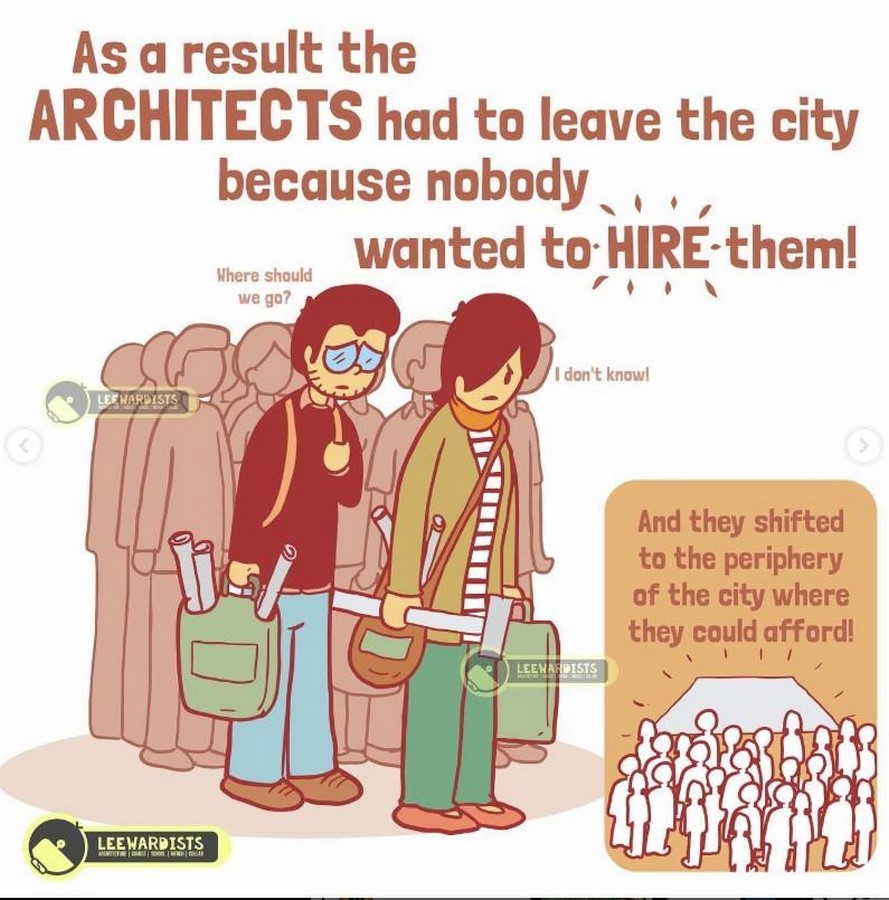
The summary of this report states, ‘the number of seats available for architecture has grown from 700 in 1972 to 25000 in 2020’ and “Somehow, this growth was not planned and the new institutions were recognised on a first come first serve basis.” And accepts that it has led to an imbalance in the architecture education imparted. 1972 to 2020 is a 48-year period. It is alarming that the Council did not notice this trend.
This goes to show that “Somehow”, the COA has been functioning on a rectification strategy as opposed to one that predicts future requirements.
Smoke in Mirrors

At present, it is pretty disheartening to think that the Council of Architecture has been adamant about policies that were relevant five decades ago. It addresses architecture in the same light as servitude while acknowledging that the ‘ role of architects has been limited to high and upper middle sectors of society.’ The solution to this is to establish institutions in appropriate geographical regions, but this seems juvenile as the location of an institution holds no bearing on where the profession is practiced.
In 2017, the COA also ruled that students must have studied physics, chemistry, and mathematics in their 11th and 12th grades to pursue architecture. However, the architecture curriculum holds very little expectation for students to have this prior knowledge. The curriculum prescribed doesn’t include much of the physics, chemistry, or mathematics taught in 11th and 12th grade. Highlighting the significant disconnect the Council has with the ground realities
The initial purpose of the Council of Architecture, which was to unite us as a profession under its umbrella, has dwindled today. It is more beneficial to denounce the title architect that most students strived to achieve; the way one sees the profession today still appears to be united, but views the council as an independent body losing its relevance.
References:
Government of India 1972, The Architects Act, 1972, Act No. 20 of 1972. Available at: https://www.indiacode.nic.in/bitstream/123456789/1690/1/197220.pdf [Accessed 16 March 2025].
Council of Architecture 1989, Architects (Professional Conduct) Regulations, 1989, Government of India, New Delhi. Available at: https://www.coa.gov.in/showfile.php?lang=1&level=1&sublinkid=1144&lid=1022 [Accessed 16 March 2025].
Supreme Court of India 2020, Council of Architecture vs. Mukesh Goyal & Ors., Civil Appeal Nos. 1820-1822 of 2020. Available at: https://www.coa.gov.in/app/myauth/judgement/D4_MukeshGoyalCaseJudgement.pdf [Accessed 16 March 2025
Council of Architecture 2020, COA Perspective Plan for Growth of Architectural Education (Amended), Government of India, New Delhi. Available at: https://www.coa.gov.in/app/myauth/notification/COA%20Perspective%20Plan%20for%20Growth%20of%20Architectural%20Education%20%28Amended%29-rev_11zon%20%281%29.pdf [Accessed 16 March 2025].
Modak, S. 2019, ‘Architecture industry plummets, young architects hit hardest in India!’, World Architecture Community, 25 August. Available at: https://worldarchitecture.org/architecture-news/ecmzg/architecture-industry-plummets-young-architects-hit-hardest-in-india-.html [Accessed 16 March 2025].
Srivathsan, A. and Bhatt, C. 2023, ‘What do numbers reveal about architecture admissions and the state of education?’, ArchitectureLive!, 15 December. Available at: https://architecture.live/architecture-admissions-and-the-state-of-education-srivathsan-chirayu-bhatt/ [Accessed 16 March 2025].
Chandavarkar, P. 2023, ‘Changing demographics of the architectural profession in India’, ArchitectureLive!, 16 June. Available at: https://architecture.live/changing-demographics-of-the-architectural-profession-in-india-prem-chandavarkar/ [Accessed 16 March 2025].
Council of Architecture 2022, Advertisement in print media and social media, Government of India, New Delhi. Available at: https://www.coa.gov.in/app/myauth/report/2963_220504060601_001.pdf [Accessed 16 March 2025].