Zoning is the primary factor that determines land use in the urban context. It defines the typology and form of a built structure which in turn impacts human activity. In today’s world zoning laws are the means through which urban fabrics can be manipulated to separate residential and commercial zones, ensure easy mobility, and safeguard both human and natural life. However, the harsh reality lies in the fact that these laws originated with ulterior motives of social segregation which were driven by caste, creed, and color. This led to the segregation of large populations across the world based on the color of their skin and in turn their income levels.

Evidences of Social Segregation
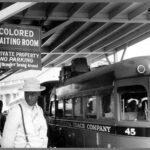
Up to the 20th century, American cities carried out zoning restrictions to separate racial groups from one another, which was deeply rooted in the economic dissimilarities between Blacks and Whites. Various states in the southern U.S.A. prohibited the sale of property to Blacks in majority White areas and vice versa. As these segregations grew deeper, a vicious cycle ensued, where race became a driving factor for economics, since proximity to a lower class diminished a property’s market value. White majority areas were more equipped with basic human needs in terms of health, sanitation, and education, as well as better infrastructure ensuring mobility to jobs and access to public spaces. Planning for single-family homes in America, prevented the development of multi-family housing with reduced cost of living and pushed people with lower incomes, further away from growth centers. Forms of racism also ensued in the zoning of industrial areas, which were placed near Black-dominated areas, severely impacting the health of citizens due to industrial waste discharge.
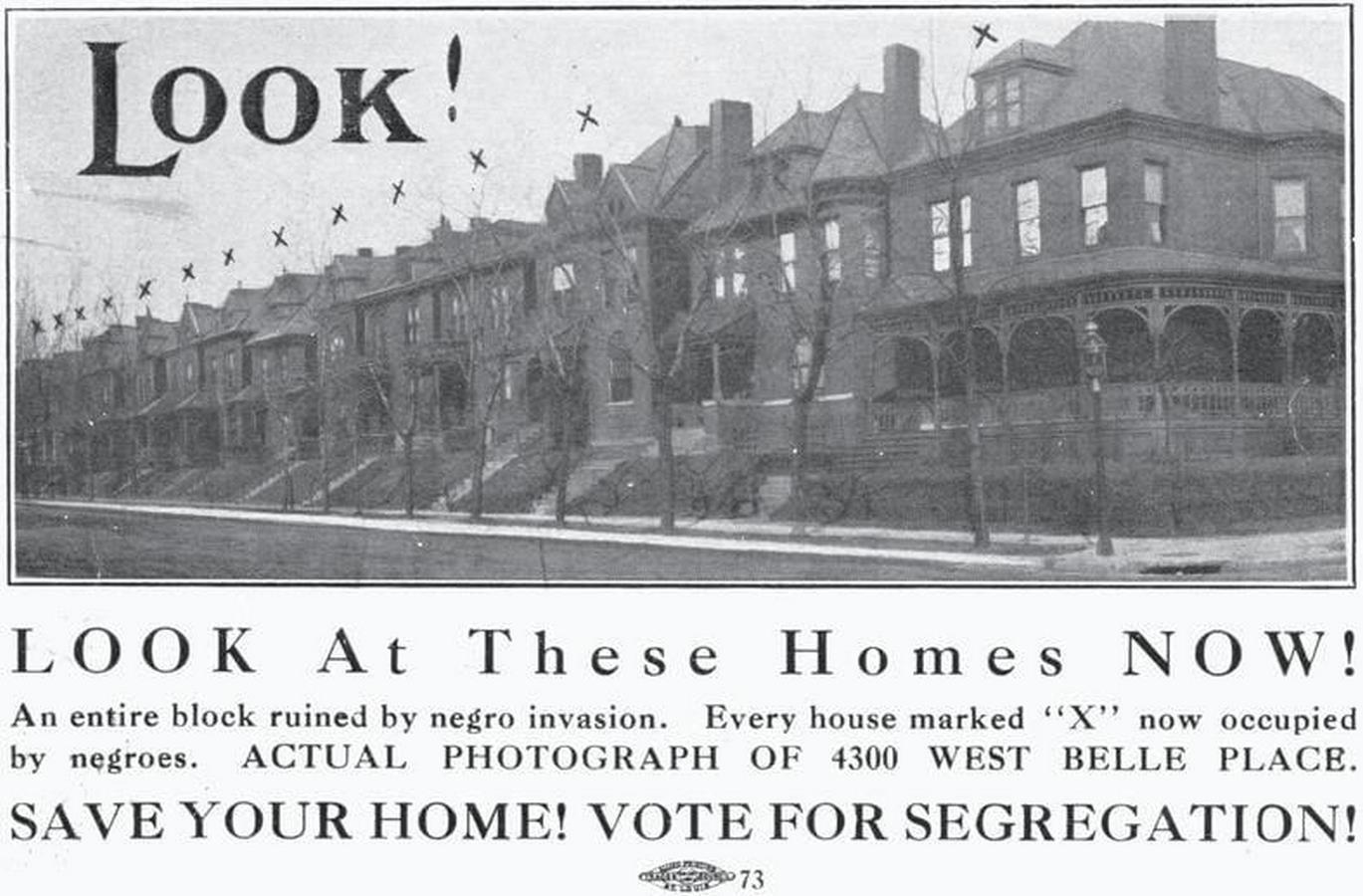
Although a series of laws around the world now prevent social segregation on a racial basis, years of zoning continue to impact current interventions. A significant case that continues to experience the brunt of past segregation patterns is Johannesburg, South Africa.
Urban Apartheid: A Case of Johannesburg
The policy of Apartheid in South Africa was a system of segregation of people belonging to different racial and ethnic groups, enforced by an all-white government to exploit cheap labor. Johannesburg is a city that was built as segregated by the gold mining belt, with the Blacks living in the southern mine dumps and the Whites in planned neighborhoods of the north. Further divisions segregated Blacks from Indians and other colored groups, and these barriers were made visually obvious. A series of laws ensured they did not have the right to own property and were extensively exploited as labor for industrial growth.

When South Africa gained independence in 1994, the ANC government that came to power set out to improve the living conditions of its poor. This meant that the government required cheap land to quickly build affordable housing and roll it out to its suffering citizens. This land was typically agricultural land that was available on the outskirts of the city and thus ultimately reinforced segregation patterns with the poorest living further away. The city’s zoning is such that even today, a large population of poor Africans live in settlements located in the city outskirts called townships, and commute to the city for work. Their income barely amounts to survival, with around 40% of it depleting on daily commutes to the city center. In addition to the costs, lack of mobility takes away time from people’s lives. The most basic infrastructure is miles away, and the inability to join good schools makes it impossible to upskill and increase income.
Similar remnants of urban Apartheid continue to exist in various cities across the country. The wounds of race lie deep and it is only through massive government intervention at the city level that social segregation can be phased out to achieve a more integrated social structure.
Caste as an Indian Segregator
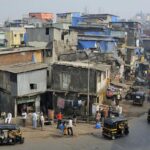
In India, social segregation has existed based on a unique stratification of caste. Caste is a form of social segregation based on ancient Hindu scriptures that segregates people into a hierarchical distribution on the basis of occupation, from birth. The brunt of the caste system is borne by the lower castes or Dalits who are typically pushed to spatial peripheries in villages as well as cities. Dr. B. R. Ambedkar argued that urbanization was a solution to reduce caste inequalities since moving to cosmopolitan environments allows people to let go of their historical baggage and work towards improving their social and economic standing thus reducing segregation.
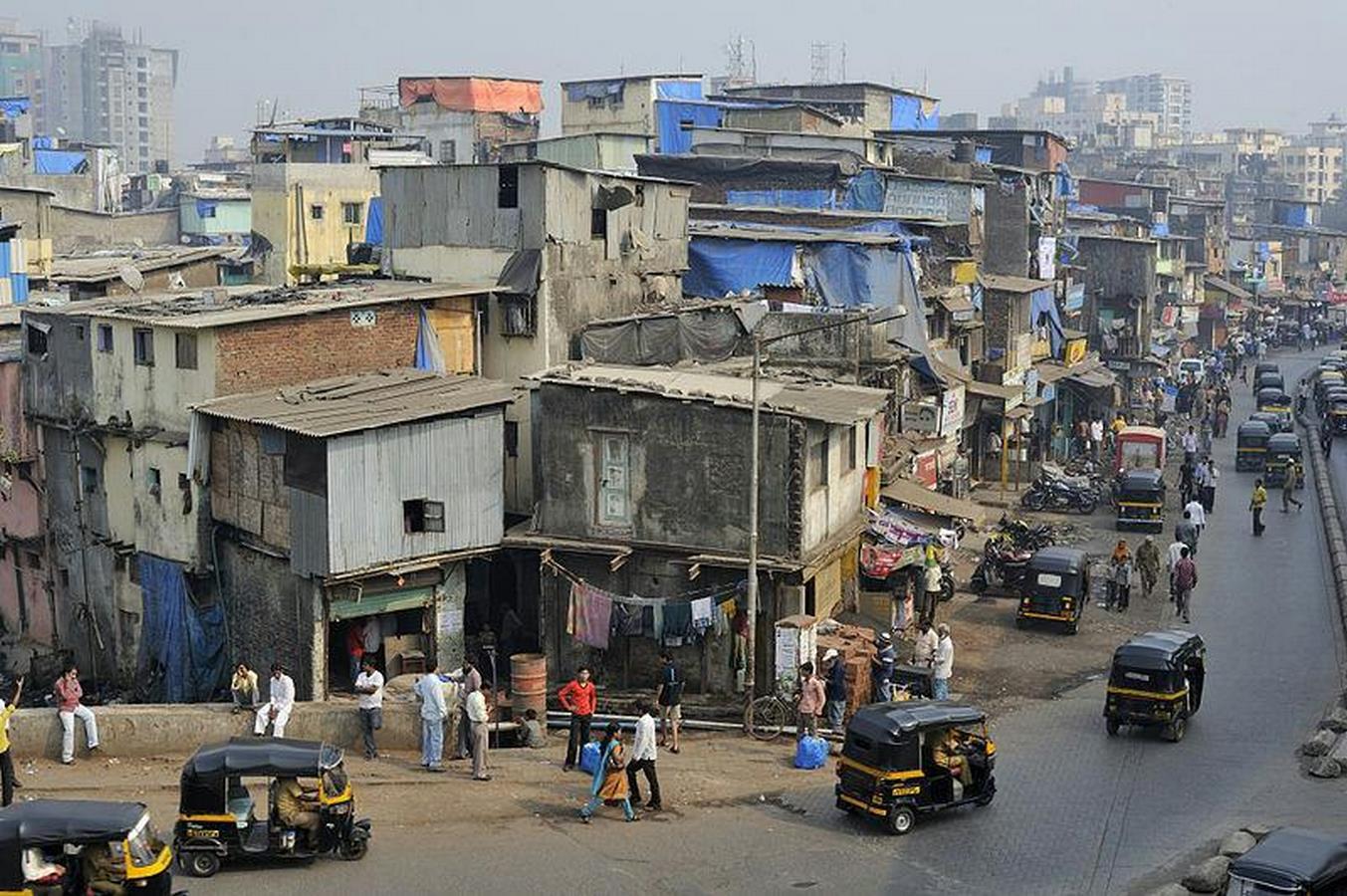
Studies show that over the years this presumption has not followed through since residential zoning in urban areas also sees strong patterns of ‘cultural preferences’. This is primarily because caste and religious segregation are also intrinsically tied to economic differences which ultimately affects affordability. However, even in cases where state interventions have assisted in improving socio-economic conditions of lower castes the stigma persists and forces these groups into localities identified by their caste.
Modern Day Implications
While the past segregation patterns loom large in modern-day society, zoning laws are responsible for sustaining social segregation. Zoning is now influenced by two typically opposing stakeholders: homeowners and business developers. Homeowners are presumed to oppose high-density development in order to increase the value of their property and generally adopt a ‘not in my backyard’ approach to urban growth. In opposition, business development acts as a magnet for growth and employment opportunities, eventually creating a need for multi-family housing and denser development, lowering the cost and quality of living. In addition, governmental and institutional buildings further act as growth magnets allowing for the spread of urban sprawl when placed in the outskirts.
The decision-making of zoning laws thus becomes key to determining societal structures but is often heavily influenced by privileged groups which leads to further marginalization. Urban planners are now faced with the dilemma of providing equitable housing for all while ensuring affordability regardless of income. While this poses a challenge in today’s capitalist society, a more inclusive outlook can motivate planners to strike a balance, catering to all and leading to a more equitable urban distribution.
Citations for Journal Articles accessed on a website or database:
Hindson, D. The apartheid city : construction, decline and reconstruction. Horizon Documentation IRD. Available at: https://horizon.documentation.ird.fr/exl-doc/pleins_textes/divers11-10/010005820.pdf [Accessed 11 Jan. 2025]
Rothwell, J., & Massey, D. S. (2009). THE EFFECT OF DENSITY ZONING ON RACIAL SEGREGATION IN U.S. URBAN AREAS. Urban affairs review (Thousand Oaks, Calif.), 44(6), 779–806. https://doi.org/10.1177/1078087409334163 [Accessed 11 Jan. 2025]
Citations for websites:
Palani, M. (2023). The Relationship between Urban Segregation and Urban Form: Causes, Consequences, and Efforts to Address [online] Linkedin.com. Available at: https://www.linkedin.com/pulse/relationship-between-urban-segregation-form-causes-efforts-palani/ [Accessed 2 Jan. 2025].
Lens, M.C. (2022). Zoning, Land Use, and the Reproduction of Urban Inequality. Annual Review of Sociology, 48(1). doi:https://doi.org/10.1146/annurev-soc-030420-122027. [Accessed 8 Jan. 2025]
Fatheree, G. (2024). A Brief History of Racial Zoning and How to Reverse the Lasting Effects of Housing Discrimination. [online] Urban Land. Available at: https://urbanland.uli.org/a-brief-history-of-racial-zoning-neighborhood-associations-and-municipal-zoning. [Accessed 8 Jan. 2025]
the Guardian. (2016). A walk to freedom: can Joburg’s bridges heal the urban scars of apartheid? [online] Available at: https://www.theguardian.com/cities/2016/dec/16/corridors-of-freedom-johannesburg-bridges-heal-urban-scars-apartheid. [Accessed 17 Jan. 2025]
Christina Mojica. (2024). Dividing Lines: Understanding the tradeoffs in modern zoning and its impact on communities. [online] Reason Foundation. Available at: https://reason.org/commentary/dividing-lines-understanding-the-tradeoffs-in-modern-zoning-and-its-impact-on-communities/. [Accessed 11 Jan. 2025]
Ideas For India (n.d.). Residential segregation in urban India and persistence of caste – I. [online] Ideas For India. Available at: https://www.ideasforindia.in/topics/urbanisation/residential-segregation-in-urban-india-and-persistence-of-caste-i.html. [Accessed 11 Jan. 2025]
BBC (2019). What is India’s caste system? BBC News. [online] 19 Jun. Available at: https://www.bbc.com/news/world-asia-india-35650616. [Accessed 12 Jan. 2025]
Writer, S. (2024). Housing Apartheid In India: Passive Untouchability | Madras Courier. [online] Available at: https://madrascourier.com/policy/housing-apartheid-in-india-passive-untouchability/. [Accessed 17 Jan. 2025]
Citations for YouTube videos:
City Beautiful (2020). How did planners design Soviet cities? [online] YouTube. Available at: https://youtu.be/JGVBv7svKLo?si=7sITXKAmCYAkbc25 [Accessed 2 Jan. 2025].
Ideology How (2023). Architecture of Ideology: How Soviet Cities Were Built. [online] YouTube. Available at: https://youtu.be/X1vKKnd3vr8?si=BEuFR-J3lCp_89A1 [Accessed 2 Jan. 2025].
Bloomberg Originals (2024). How Urban Design Keeps South Africa Segregated. [online] YouTube. Available at: https://youtu.be/p5O3yjC1BqA?si=0lcuvCYxTC8DMMP_ [Accessed 2 Jan. 2025].
Vox (2024). Why South Africa is still so segregated. [online] YouTube. Available at: https://youtu.be/NVH7JewfgJg?si=5qNWS6n33_HlRFfn [Accessed 2 Jan. 2025].