Set design, or scenic design, is an important part of storytelling that creates a narrative’s visual feel and context. It is the process of designing stage or cinematic scenery to define the location, period, and atmosphere, and serve as a framework for the director’s vision. Rooted in classical theatre, where simple backgrounds provided the backdrop, set design has developed into a highly technical art, combining aesthetics, materials, and spatial arrangements. Beyond theater and film, it enhances live performances like concerts and events, creating immersive worlds that elevate realism and captivate audiences.

Understanding the Context of Set Design
The Past
In earlier set design, filmmakers used real architectural works to create believable futuristic worlds due to technology limitations. For example, Frank Lloyd Wright‘s Ennis House in Blade Runner (1982) and the Sculptured House in Sleeper (1973) reflected dystopian and futuristic themes, grounding the film’s atmosphere.

The Present
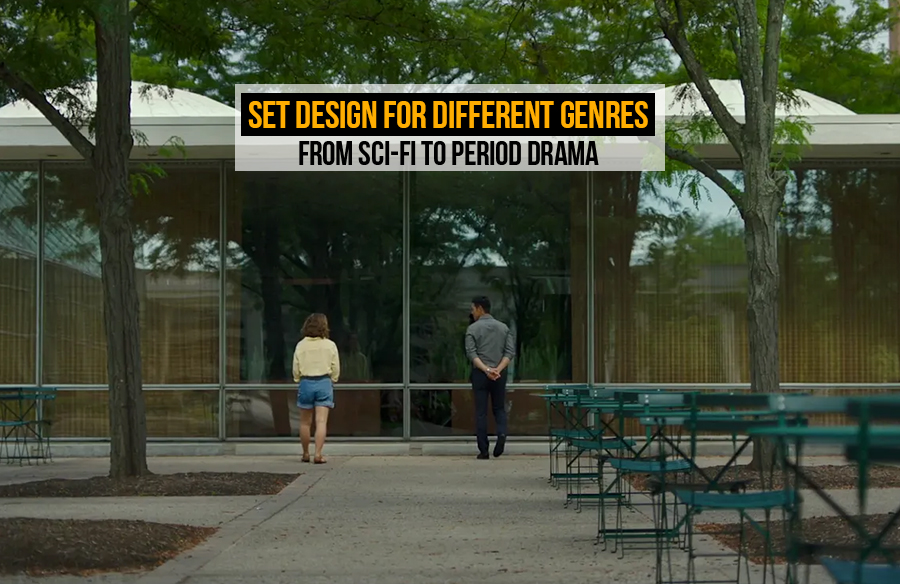
Modern set design, meanwhile, blends real architecture with digital technologies. Films like Aeon Flux (2006) used existing structures like the Baumschulenweg Crematorium to build a grim, while Columbus (2017) used architecture as both a set and a silent protagonist and modernist buildings like Eero Saarinen’s Irwin Union Bank to reflect emotional connections between characters.

The Future
The future of set design will combine physical spaces with virtual reality, expanding the possibilities of cinematic worlds. A recent example of this trend is Dune (2021 and 2024), where Denis Villeneuve integrated real architectural landscapes with cutting-edge CGI. The brutalist interiors, inspired by real-world designs like Paul Rudolph’s works, were combined with expansive, on-site desert environments, setting a new standard for cinematic storytelling.

Set Design as a Process
The set design process mirrors architectural design, beginning with a thorough script review to identify sensory and physical requirements. Initial ideas are sketched or modeled in 3D and refined collaboratively, leading to detailed renderings and scaled “white models” for spatial arrangements. A full-color model or rendering is created for rehearsals, allowing designers to observe, adjust, and align the set with the director’s vision. During technical rehearsals, all elements; including sets, props, lighting, and costumes, are synchronized to ensure thorough integration and enhance the performance.

Set Design as an Architecture
Sci-Fi: Futuristic Imagination
Sci-fi sets take us into futuristic worlds, pushing the boundaries of creativity and innovation. These sets often feature shiny metallic surfaces, smooth shapes, and synthetic materials. Cool colors like silver and blue dominate, with glowing neon lights and LED accents adding a high-tech feel. For example, in Interstellar (2014), the set design blends the simplicity of a farm on Earth with futuristic environments like spacecraft interiors, the waterlogged Miller’s planet, and the mesmerizing Infinity Room, where endless bookshelves symbolize the vastness of space and time, using both practical effects and CGI.

Fantasy: Out of the World Realms
Fantasy transports audiences into enchanting worlds filled with magic and myth. These sets often use natural materials like wood and stone, with earthy tones and vibrant highlights to create a mystical feel. Gothic or whimsical structures and soft, glowing lights add to the dreamlike atmosphere. For example, the Harry Potter series captures this perfectly with its grand structures, magical forests, and awe-inspiring landscapes, including the handmade Hogwarts castle model that brings it’s wizard world to life.

Period Drama: Historical Authenticity
Period drama set design recreates the aesthetics of a specific era, focusing on historical accuracy. These sets feature authentic materials, wood, brick, textiles, and furniture specific to a particular period which transport the viewer there. The authenticity is enhanced by the use of natural light sources and chandeliers or candles. In Bridgerton (2020), for example, the set design immerses viewers in Regency-era, with real historical structures like Ranger’s House in Greenwich and Wilton House with Baroque interiors and soft pastel colors, elegant furniture, and architectural details that evoke the grandeur of high society.

Horror: Evoking Fear and Creep
Horror scene design is based on visual and spatial components, creating uneasiness and terror. The materials like worn wood, cracked plaster, and aging metals provide a sense of deterioration. The muted tones like black and deep red dominate, with dim, flickering lighting while fearful spaces and unsettling props such as broken glass, broken mirrors, and strange dolls contribute to a creepy feeling. For example, In The Conjuring (2013), the house, with its dark, cramped rooms, low ceilings, and dim lighting, evokes a claustrophobic atmosphere, while the flickering lights, heavy shadows, old portraits, and doll Anabelle add to the eerie ambience.

Comedy: Bright and Relatable
Comedy sets are lively, colorful, and grounded in reality, creating cheerful backdrops for humor. Everyday materials like wood and fabric are paired with vibrant, warm colors and quirky patterns. Realistic spaces like homes or offices often feature exaggerated elements for comedic effect while bright even lighting and props are used for more humorous effects. For example, in Friends, the iconic Central Perk café with its vibrant orange couch and cozy decor creates a warm, familiar setting that enhances the show’s humor and comic.

Action-Adventure: High-Stakes Environments
Action and adventure sets emphasize movement, scale, and excitement. Neutral or earthy tones with bright accents dominate the film, and expansive spaces such as warehouses, jungles, or urban landscapes provide dynamic settings for stunts and chase scenes with striking effects and dramatic lighting. For example, KGF: Chapter 2 (2022) represents this genre with its iconic massive sets, including the sprawling featuring grand fight sequences, underground tunnels, and larger-than-life landscapes.

Romance: Dreamy and Intimate
Romantic scene designs evoke coziness and closeness through soft fabrics, floral prints, fine furniture, and beautiful woods. Soft colors, like pinks and peaches, trigger passion, and cottage or candlelit dining add emotional flavor. Meanwhile, shimmering water and lush forests evoke a sense of timeless intimacy and tranquility. For example, in The Notebook (2004), Noah’s lakeside house by the calm lake surrounded by green forests creates a peaceful and romantic cocoon, where the sounds of water and trees make their love even more special.

Animation: Boundless Creativity
Animation set design allows for crafting imaginative worlds that blur the lines between reality and fantasy by blending vibrant colors, proportions, and intricate details that justify narrative depth. For example, in Jujutsu Kaisen (2020), modern urban Tokyo is juxtaposed with eerie, cursed domains featuring old shabby structures and surreal red skies, creating a striking contrast. Many locations, like Shibuya and Tokyo streets, are inspired by real-life settings, grounding the supernatural elements in a relatable, authentic urban landscape.

Set design is a crucial element that can make or break the immersive experience of a film or theatrical production. It sets the visual tone and plays a defining role in determining the narrative and genre of a story. Through the thoughtful tailoring of lighting, and spatial layouts to each genre, set designers play an integral role in shaping the story and engaging the audience. Their work brings stories to life in ways that resonate deeply with viewers; from crafting a futuristic spaceship to a historically accurate Victorian mansion.
References:
Cinemagic. (2023). The 8 Technical Elements in Film Production. [online]. Available at: https://www.cinemagics.com/post/the-8-technical-elements-involved-in-film-production [Accessed 15 December 2024].
StudioBinder. (2024). Set Design in Film – Process and Purpose Explained. [online]. Available at: https://www.studiobinder.com/blog/what-is-set-design-in-film-definition/ [Accessed 16 December 2024].
ArchDaily. (2013). Through the Lens: Sci-Fi & Architecture. Available at: https://www.archdaily.com/359365/through-the-lens-sci-fi-and-architecture [Accessed 16 December 2024].
Study.com. (2023). Stage Set Design Ideas, Process & Examples – Video. [online]. Available at: https://study.com/academy/lesson/video/what-is-stage-design.html [Accessed 15 December 2024].
Study.com. (2023). Set Design | Definition, History & Examples. [online]. Available at: https://study.com/learn/lesson/set-design-overview-history-process [Accessed 15 December 2024].
Flandeck. (2024). Exploring the Role of Set Design in Genre Films: From Fantasy to Historical Drama. [online]. Available at: https://flandeck.com/exploring-the-role-of-set-design-in-genre-films-from-fantasy-to-historical-drama/ [Accessed 16 December 2024].
Dramatics Magazine Online. (2019). Read, render, realize. [online]. Available at: https://dramatics.org/read-render-realize/ [Accessed 15 December 2024].
Karsten Kroening. (2024). THE INSANE DESIGN OF DUNE. [YouTube video]. Available at: https://youtu.be/aUmE1IJPh6E?si=PRz0amPYa-GnWwls. [Accessed: Accessed 18 December 2024].
Elle Decor. (2024). 20 ‘Bridgerton’ Filming Locations to Visit in England. [online]. Available at: https://www.elledecor.com/life-culture/a45014398/bridgerton-filming-location-details/ [Accessed 18 December 2024].