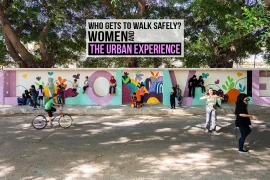
In Life Between Buildings, Jan Gehl writes, “In streets and city spaces of poor quality, only the bare minimum of activity takes place. People hurry home. In a good environment, a completely different, broad spectrum of human activities is possible.” There is so much of city life and day-to-day activities that occur in spaces outside of the buildings, shaping urban life in ways that are often unplanned yet deeply human. In India, streets become vibrant theatres of everyday life with kids playing cricket amidst traffic, neighbours laughing over rangolis, and communities coming together to celebrate festivals like Holi. These spaces, shaped as much by users as by planners, overflow with spontaneity and charm, creating a dynamic and inclusive urban rhythm that no map can capture.

The Three Faces of Street Life
City life flourishes, when necessary, optional, and social activities come together and complement each other. As Jan Gehl notes, well-designed outdoor spaces support this balance, bringing vibrancy to the city. Necessary activities, like commuting or running errands, keep life moving, no matter the surroundings. Optional activities, such as strolling through street markets or enjoying a cup of chai, happen when the environment invites them. Social activities, both active and passive, like neighbours chatting or simply observing others, bring people together.

These activities go beyond the comprehension of maps and city planners’ visions; they emerge from the way people interpret and engage with their surroundings. In poorly designed spaces, only basic tasks take place, but in well-designed ones, all three activities thrive, giving the city its energy and life.

Layers of Social Connection
Social activities in cities vary depending on the context. In some public spaces, social interactions are active and engaging—greetings, conversations, discussions, and playful exchanges form the heart of everyday life. These moments create bonds and deepen connections. In contrast, other spaces offer a more passive experience, where social interactions are primarily visual and auditory—seeing and hearing people without direct engagement. The bustling rhythm of the city makes these encounters feel more distant and less personal, yet they still contribute to a shared urban experience.

Though city planning doesn’t directly control the quality of these interactions, it can influence opportunities for connection. Thoughtful urban design can create spaces that encourage meetings, conversations, and daily activities, fostering both active interactions and passive encounters.

Life Between Buildings
A successful public space often begins at the street corner. When it’s a busy spot, it develops its own lively social atmosphere. People aren’t simply waiting for the light to change; some are engaged in conversation, while others are saying long goodbyes. If there’s a vendor present, people tend to gather around him, as observed by William H. Whyte in The Social Life of Small Urban Spaces.

In an urban setting, the street is often where the first encounters happen—outside the boundaries of private spaces, in the public realm. For residents in a neighbourhood, these initial interactions frequently occur on the streets that connect homes. For co-workers, the bonds of friendship are often formed over a cup of chai at the roadside stall. Streets, then, are not just pathways for pedestrian traffic or places for recreational activities; they are where relationships begin to take shape.

Life between buildings is a blend of everyday moments—shared conversations, impromptu meetings, and the simple act of being together in a public space. These interactions, small but significant, transform the street from just a thoroughfare into a vibrant space for connection. The boundaries between streets and buildings blur, as the street itself becomes an extension of the home, a place where people meet, relate, and create community.
Streets that Bring People Together
As the street becomes a place where relationships begin to form, the design of the space plays a crucial role in nurturing these connections. “On successful streets, people must appear at different times,” writes Jane Jacobs in The Death and Life of American Cities, highlighting the importance of “frequent streets”—those that allow for the intricate, everyday interactions that bring a neighbourhood to life. These streets are the heart of the city, where diversity flourishes, and people cross paths naturally, weaving the fabric of the urban community.

The design of spaces for sitting and standing, and their careful placement, can profoundly influence the chances for conversation and connection. Edward T. Hall, in The Hidden Dimension, explores how seating arrangements can shape social interactions. By studying the subtle dynamics of how people engage with one another in public spaces, Hall underscores the importance of thoughtful design in fostering spontaneous moments of connection.
Facing the Undesirables
If good public spaces are so desirable, why are they not more common? The answer often lies in the challenge of dealing with “undesirables.” While these elements may exist, the measures taken to address them can often improve the quality of a space. A pleasant space relies on protection—not just from crime and traffic, but also from unpleasant weather and the challenges that impact urban life, such as congestion, noise, air pollution, and gender discrimination. These factors erode the sense of safety and comfort, reducing a space’s appeal.
The role of urban planners and designers is crucial in addressing these issues, ensuring that public spaces are not only well-designed but also effectively maintained over time. Design must incorporate solutions that combat these negative elements, while maintenance ensures that these solutions continue to work in harmony.
When the streets are nurtured, they breathe life, turning into spaces where people not only walk but truly belong.

References:
Gehl, J. (2011). Life between Buildings: Using Public Space. Washington, DC: Island Press.
Whyte, W.H. (1980). The social life of small urban spaces. New York: Project For Public Spaces.
Jacobs, J. (1961). Death And Life Of Great American Cities. S.L.: The Bodley Head Ltd.
Hall, E.T. (1966). The hidden dimension. Gloucester, Ma: Peter Smith Pub.