Gentry: /ˈdʒɛntri/ : People of good social position, often connected to landed estates or people of upper levels of the clergy.
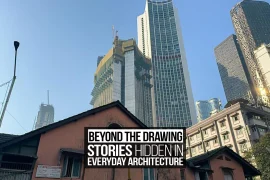
Gentrification is a complex urban condition where a wealthier individual or business moves into workingclass neighbourhoods, often leading to changes in the existing community’s urban, social and cultural fabric. The character, economy, and the existing street culture change because of the new development. There are huge debates over its social and economic consequences, wherein one side argues that it brings in new business investments, and better infrastructure, thereby increasing property valuation. The other side argues that it leads to the widening of existing social inequalities, loss of cultural heritage identity, and eventual relocation or displacement of the original community.

History of Gentrification
In 1964, German-born British Sociologist Ruth Glass, coined the term ‘gentrification’ to describe the displacement of the poor from parts of London. This is a phenomenon experienced by a lot of western cities after World War II due to significant suburbanisation leaving the inner-city decaying. In the latter half of the twentieth century, the trend slowly reversed. Many middle-class families, due to rising costs in the suburbs, returned to inner cities. New York and London became the focus of these movements – the developers and governments saw this as an opportunity for profit and paved the way for its acceleration.
What causes gentrification?
Gentrification arises from a host of cultural, economic and political forces. One such factor is the huge shift in the late twentieth century from a factory-based economy to a knowledge-based one leading to outsource manufacturing to other countries. The existing industries become redundant and become a fertile ground for new building typologies to be introduced, often at odds with the existing urban community living. Automation, new transport technology, and AI all increasingly contribute to this cause.
The government’s urban policies are also a contributing factor to gentrification wherein attracting private investments, rezoning of the existing neighbourhoods, tax rebates of developers etc are promoted. Although this appears to be the seen effect, the unseen effect becomes that the new developments often bring with them a rise in living costs and stratospheric housing prices leading to the displacement of existing long-term residents. Consequently, loss of cultural identity and extreme polarisation of the classes can affect the community living.

What are the various effects of gentrification?
The effect of gentrification is wide, it is hard to categorize whether the effects are positive or negative. Nobody can deny the economic benefits of new businesses, and developments in a decaying place, mostly lifting it from repair, crime and other illegal activities. Once dried and underused buildings or plots get a new lease of life in the form of new construction. The property values rise, homeowners will find better tenants and there is generally a positive spin to the whole concept.
Although the house owners may get good tenants and good prices for the rent, the existing or new tenants may have a hard time paying the revised high rent. Lower-income residents and marginalized communities may be even further moved out of their neighbourhoods leading to tension in the tight-knit community living.
It is a huge loss of cultural & social networks that have been present for generations.
The micro-cultural events of the existing neighbourhood get affected, with decades of rich history in the community paving the way for a more consumer-oriented and bland culture. Another wide-ranging issue is the worsening of the social inequalities in the existing community and changes in public space usage. The access to community living elements like Parks and streets – once the major activity hub may get exclusive limiting access to certain people.
What is architecture’s role in gentrification?
Architecture plays a big role in the complex process of gentrification. The new architectural proposals can either preserve the heritage image of a building or completely disregard it so that it grabs attention to guarantee financial viability. The erasure of monumental and iconic buildings that served as placemaking in the microcosmic urban scenario is a huge loss for the architecture community. Introducing new minimal or biomorphic forms like MAD architects’ Lucas Museum of Narrative Art in Los Angeles can harbour a feeling of alienation in the long-standing residents. The focus of the architects should be to propose design interventions that promote inclusivity of the existing residents and community-driven development, seeking suggestions from the community. Affordable housing should be given sufficient thought which helps maintain the urban character and scale and the introduction of public spaces allows spaces for interaction between new and old residents. Thoughtful urban planning can provide mixed-income housing which can reduce displacement and disarm the stress between the old and new.

The Highline project in New York was a huge success and the city wasn’t prepared for the speed of gentrification in the area. The reuse of the elevated old railway lines by architecture firm Diller Scofidio + Renfro as an elevated park with landscape in 2009 led to an increased valuation of the surrounding buildings where a host of residential buildings by prominent international architects like Zaha Hadid, Shigeru Ban, Jean Nouvel etc. have already come up.
Being the main engine of gentrification, architecture when done right with thoughtful inclusion of the community has the power to reduce its negative impact. It’s not just the responsibility of the architects, but stricter government policies in the building typology can help in reducing the ill effects of gentrification. Above all else, community living must be emphasised by introducing access to all public parks and other public plazas.