

Throughout history, the subcontinent has been known for its distinct character, steeped in culture and tradition—the architectural trail left behind by our ancestors is a testament to that fact. With a timeline, spanning back thousands of years, the architecture of this land boasts of an evolution only a few civilizations could rival.

The people of this region have been followers of multiple faiths and religions and often we see how architecture and religion have intertwined and been used as a medium of expression that has stood the test of time. Thus, a lot of the architecture surviving from the ancient era is that of religious buildings and structures and we get to see the work spanning eras and how that translates to multiple architectural styles and building techniques.
Historical preservation and its importance
Keeping all this historical background in mind, the question arises of why the preservation efforts of our land are not at par with those of other countries Eg: The United Kingdom. Belonging to a developing country with limited resources one can understand the reluctance of architectural preservation not being the top priority of our government and stakeholders, but attention needs to be drawn to the depleting historical landmarks that belong to this region and their importance.
Historical preservation not only serves as physical reminders of bygone eras but also serves as a knowledge base from which people in the architectural and archaeological industries can continuously learn. Preserving these monuments and buildings also serves as a tie to the land, invoking a sense of belonging and nationalism. Understanding that the beings we are today are because of generations of lineage, of people migrating from one area to another, from cultures and traditions upheld through generations helps tie us, humans, to a cause much bigger than the self. It can also bring a sense of awareness, of how the world has changed and yet certain things have always been at the forefront of these buildings and what they signify, how communities gathered, the belief systems followed, what was important to the people of that age.
What humans choose to portray through their architecture and sculpture, ornamentation and decoration has been insightful to what was most important to them at the time.


In the context of architectural knowledge, we’ve learnt a lot from the historical buildings in our region. From materials chemistry and building techniques to strategies employed within these structures to ensure comfortable living, our historical books are filled with discoveries of what the humans of that day were capable of in the built environment.
What is concerning is, that in the architecture we practice today, the comfort and breathability of the relics of the past is something we often fail to bring to the forefront of our designs today. The architectural examples available to us, from the Indus to the Gupta, the Mauryan to the Islamic periods, all are stunning examples of aesthetics, functionality and durability. Visiting these structures still can instill a tie to the land, an ode to the period they were constructed in, and yet they somehow are responsive to the climate and conditions of today. The architecture we practice today has lost the core trait of belonging. Architects are fascinated by the technologies and materials being explored in the West and we replicate those without giving a thought to how those elements and flow are foreign to the region we belong from.
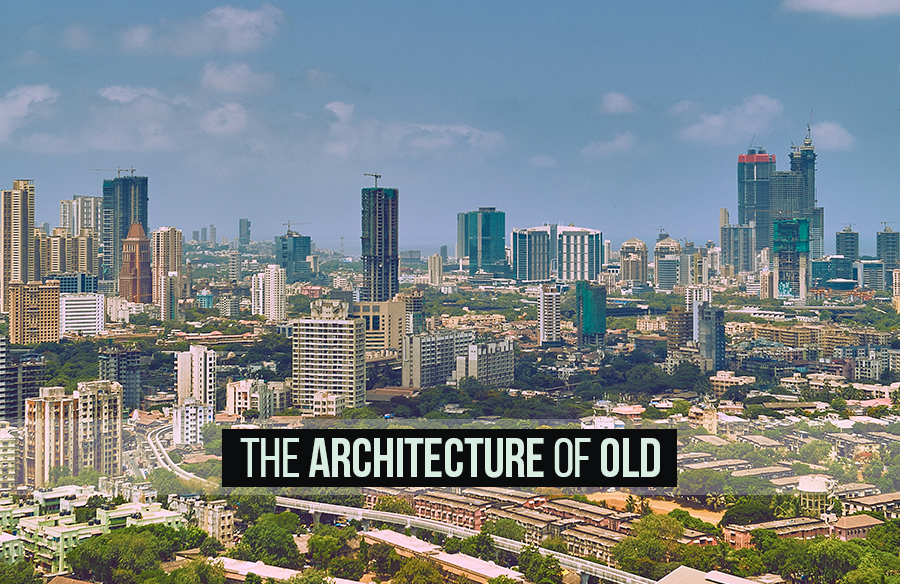
We keep constructing these glass skyscrapers without a thought to heat gain and internal temperature control. Our walls are now targeting transparency and glazing when our climates call for the thick insulated walls our ancestors employed to keep their houses cool.

Architects fawn over the modern and clean style of today, while we were the culture of maximalists and ornamentation, forgetting our craftsman and their skills, killing our industries and depriving our people of the skill and honour passed down through generations.
Visiting ancient buildings inspires and strikes awe. We marvel at the detail and thought put into the smallest of crevices. We applaud the materials used that weathered through years of use but we fail to try and incorporate those within our architectural practice.
The climate crisis engulfing the world is a real threat, but our people are the ones who will face the brunt of it. The least we can do as architects and designers is to study these historical buildings and employ the passive strategies used by our ancestors within the buildings we design today. Active strategies should always be the secondary option and we as architects need to learn from our history books and design responsibly.







