Adaptive reuse is one of the great sustainable approaches to architecture. This involves regenerating old structures for new functionality while preserving their historical significance. This process not only extends the lifespan of the structures but also maintains the cultural heritage and architectural character of urban landscapes.

In India, specifically in Hyderabad city,adaptive reuse projects are rapidly increasing to balance modern needs with historical preservation.
The Ideology of Adaptive Reuse:
Adaptive Reuse transforms outmoded or underutilised structures into functional spaces that serve contemporary purposes.
This method approaches several serious issues:
- Sustainability: Remodelling existing structures minimises the cost of construction, reduces waste, and saves the available resources.
- Cultural Preservation: Preserving the historical and architectural essence of a building helps in preserving the cultural heritage of a city.
- Economic Viability: Adaptive reuse is cost-effective, and requires less investment than the new construction while enhancing the building value and attracting tourism.
The City Hyderabad: The Nizam hub for Heritage Significance

Hyderabad, a city of rich history and diverse heritage, offers numerous examples of adaptive reuse, the city is known for its coalescence of Nizam-era monuments, Colonial architecture, and Mughal influences provides various opportunities for adaptive reuse projects.
Case Study 1: Falaknuma Palace


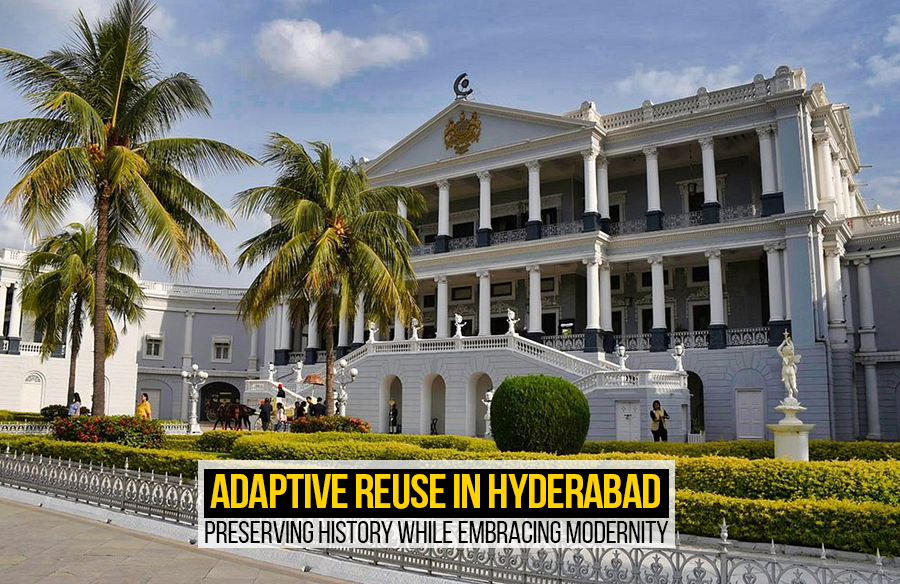
Falaknuma Palace which was once the residence of the Nizam is one such great example of adaptive reuse. The Taj Group reorganised it into a 5-star hotel when it was completed in 1894. Italian marble staircases, complex frescoes, and Venetian chandeliers were all retained during restoration while new modern amenities were included. This historical artefact came back to life and was converted into a new tourist destination drawing people globally within a matter of months.
Case Study 2: Devdi Ranachand

In the busy lanes of Old Hyderabad lies a cultural centre and museum dedicated to Devdi Ranachand, a 19th-century Haveli. The adaptive reuse of Devdi Ranachand breathed new life into the building for such things as art exhibitions or workshops besides hosting cultural shows themselves. This move has revived the building by converting it into a more lively place where people from various backgrounds come together and enjoy themselves, hence improving their creativity and making them feel proud of what they do.
Case Study 3: Moazzam Jahi Market

In its original form, it was first established as a fruit and vegetable market by the name of Moazzam Jahi Market in 1935 AD. After a slow restoration and a new use built into the renovation, the building has been converted into what serves both as a centre for retailing as well as culture. Even though there are still those who will insist that nothing much has changed visually at this renovated market, the restored structure maintains the classical architecture of the Indo-Saracenic era through such aspects as its clock tower which stands out near one corner complete with arch-shaped entry points. The latter comprises kinds of shops not common during those days; restaurants with menus that are not possible elsewhere including areas for music shows: this scheme has revived it and at the moment it attracts many people.
Benefits of Adaptive Reuse in Hyderabad
Most Adaptive Reuse projects in Hyderabad provide many benefits:
- Cultural Enrichment: By preserving historical buildings, adaptive reuse projects keep the city’s rich cultural heritage alive.
- Economic Growth: These projects can drive economic development by attracting tourism, creating jobs, and increasing property values.
- Environmental Sustainability: Repurposing existing structures reduces the environmental impact associated with new construction, such as resource extraction and waste generation.
Challenges and Considerations:
While Adaptive reuse provides various advantages, it also comes with equal challenges.
- Structural Integrity: It can be complex and costly to ensure that old buildings are structurally stable as they are adapted to new uses.
- Regulatory Hurdles: It can be tough to sail through the various regulations, including heritage conservation laws and building codes, governing the construction industry.
- Design Sensitivity: The careful planning and design required to strike a balance between preserving historic elements and incorporating contemporary facilities.
When adaptive reuse is being undertaken in Hyderabad, it acts as one good example for the conversion of historical structures into new uses that can still meet the current requirements as well as maintain their cultural values intact. For instance; If you look at the Falaknuma Palace Project, Devdi Ranachand Redevelopment Scheme, and Moazzam Jahi Market Renovation Plan Buildings; all these reflect the capacity that adaptive reuse has in establishing lively and workable premises that recognize what was there before but also projects what is expected in future years. The growth of towns together with their changing attitudes means that they find it best to adopt recycled models for all kinds of new purposes.