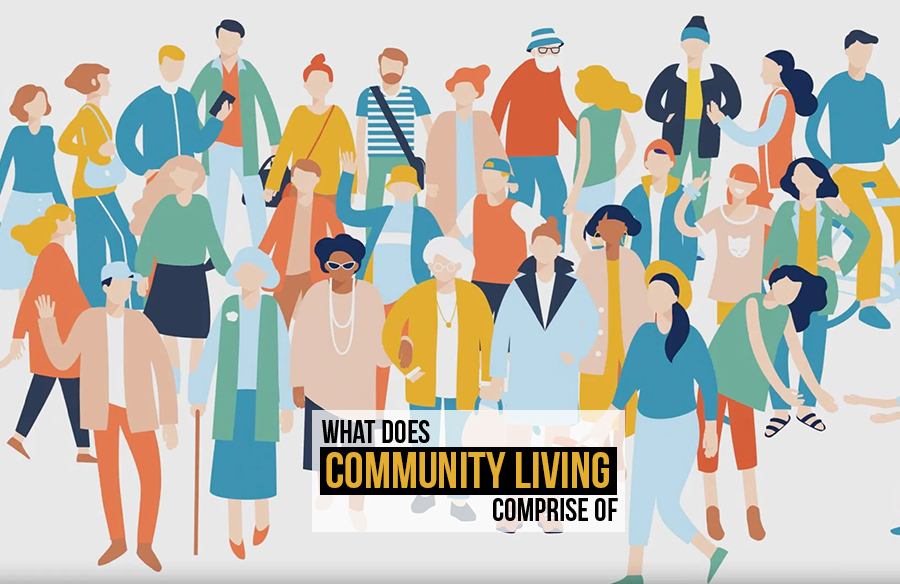
A community is made up of individuals who live together mostly because they have similar interests, beliefs, and demographics. Some live close to one another and help out whenever required, while others live in communal settings where everyone shares everything (think communes). Just like old, reliable neighbours, and nobody is left out. To put it briefly, it calls for involvement. It involves more than just closeness. You learn how to connect with people more deeply and build a rich, meaningful living environment. Beyond only sharing a home, there is also a feeling of belonging.

The Beginning

Karl Marx and Friedrich Engels claimed that communal living has always been the norm since the beginning of human history. These historians considered hunter-gatherer communities, with their shared resources and devoid of social stratification, to be outstanding instances of this. Despite living in rudimentary shelters such as caves, they collaborated to hunt, gather food, and raise their offspring.
Communities of faith, such as monasteries and convents, have also adopted communal life. Mosques in Islam, Buddhist monasteries, and Christian abbeys offered places for people to gather for prayer, worship, and communal meals.
It’s a widely held view that the 1970s community living movement was made popular by the hippie movement. On the other hand, Denmark is actually where modern communal living had its start. A construction site on the outskirts of Copenhagen was purchased by Danish architect Jan Gudmand-Hoyer and his five associates in 1966.
The majority of individuals would contend that living in a community is unnecessary in the modern world. This is particularly valid in light of social media’s explosive growth. We’re always connected, thanks to the Internet and our smartphones. But there is a catch to this. A Gallup poll of more than 140 nations found that almost one in four people worldwide experience extreme loneliness. That is approximately equivalent to over a billion people, with young adults having the greatest rates.
The essence of Community Living

- Sense of Belonging:
The human experience is fundamentally centred around togetherness; the sense that we are a part of something greater can help us find purpose in life. Realising we’re not alone and feeling appreciated are two things that come from meeting people who share our beliefs, passions, and worldviews. Having a sense of belonging does emphasise the importance of community: it helps us deal with difficult situations and emotions by strengthening our sense of self.
2. Security and Dependency:
During the COVID pandemic, living in uncertainty has become the norm. Because of this, having a solid support system in place is now more crucial than ever. Undoubtedly, one of the primary causes for the significance of community is its ability to combat pessimism and provide us with the assurance that we are safe in our community. Additionally, we gain by helping others, so the advantages are mutual.
3. Learning:
Although shared interests serve as the foundation for most communities, this does not make them homogeneous. They nevertheless contain individuals with varying opinions, backgrounds, and worldviews, and we can gain knowledge from them that would not have come to us otherwise.
4. Acceptance:
It can be difficult to build communal ties with people who hold different opinions, but it also presents an opportunity to practise acceptance. Reading this post helped me realise that acceptance does not always entail agreement, which was a major personal breakthrough for me. Calm and relief may come from this important lesson. Self-acceptance is an additional aspect of acceptance. Belonging to a community aids in our acceptance of the fact that, to prevent needless emotional hardship and suffering, we are both strong and weak at different times and that, to cope, we need the support of others.
To conclude, one can always get assistance from being a part of a healthy community. It can be tremendously beneficial to have individuals we can turn to while we’re experiencing hardship. We can get advice, practical assistance, and emotional support from the community. They can also give us the impression that we are not alone in our difficulties. Additionally, a community might aid in our feeling of self-development. We discover common values and beliefs when we are a part of a community. Our culture and history are also taught to us. Our sense of belonging and significance in the world can be enhanced by community living.
References:
- Rachelle. (2024, January 24). The ultimate guide to community living – The CityLifer blog. The Citylifer Blog. https://thecitylifer.com/blog/coliving/the-ultimate-guide-to-community-living/
- Livingston, A., & Livingston, A. (2023, May 25). Communal Living & Cohousing – Types & Benefits of Intentional Communities. Money Crashers. https://www.moneycrashers.com/communal-living-cohousing-types-benefits-intentional-communities/
- happiness.com. (2001, May 13). The importance of community: 7 key benefits. https://www.happiness.com/magazine/relationships/the-importance-of-community/