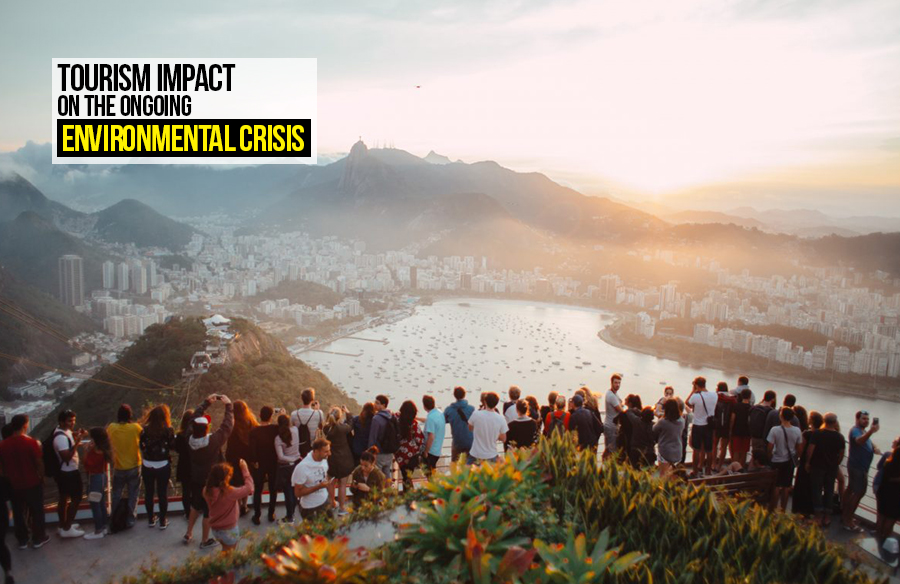
Tourism, a major contributor to the world economy, walks a thin line between exploitation and preservation. As travellers explore the world’s wonders, they inevitably leave footprints – some positive, some negative. This article delves into the complex relationship between tourism, the environment, and climate change, examining the balance required for a sustainable future.
Tourism is a powerful force that encourages people to travel to explore nature, adventures, wonders, and societies, learn about cultures, meet people, engage with values, and participate in new customs and events. Tourism development brings travellers to a certain destination to grow and sustain a tourism sector. Furthermore, environmental sustainability is a future-oriented intentional effort aimed at maintaining sociocultural legacy and natural resources to protect environmental ecosystems while also supporting people’s health and economic well-being. Clean and green natural landscaping, thriving biodiversity, virgin sea beaches, long stretches of desert steppes, socio-cultural values, and archaeological heritage are examples of environmental sustainability that demonstrate tourists’ motivation and the local community’s willingness to welcome visitors.

Tourism is one of the forms of natural use that is environmentally friendly. Tourism development necessitates human interaction with natural resources. This results in a unique type of landscape – recreational. In many wealthy countries, regions used for recreation and tourism rank third after agricultural and forest lands. The rapid rise of the worldwide tourism industry, combined with its significant economic benefits, makes recreational land use a likely candidate for effective competition and displacement of other uses.
The nature and territory of tourist interest are delicate and fragile, and recreational resources are finite, irreplaceable, and have limited opportunities. Their unplanned and inappropriate use causes a slew of environmental issues in areas of intensive tourism development, both in developed and developing countries.
The negative effects of tourism on many countries’ economies are enormous, and many countries lack sufficient technical and financial capacity to replace tourist resources and dispose of their garbage. The negative environmental repercussions of tourism, which were previously underestimated, are now the focus of the worldwide community’s attention. Such repercussions include contamination of natural objects, exploitation of natural resources, land development, degradation of natural landscapes, dangers to species and ecosystems, resulting in biodiversity loss, and, lastly, the dissolution of local customs and social structures.

Along with the burning problem of pollution and changing environmental components, which are most urgent in recreational areas such as national parks, nature reserves, and suburban green spaces, where tourist attendance destroys leaves, twigs, pine needles, and other components containing essential nutrients. Disturbing the natural cycle and regeneration processes, as well as damaging underbrush undergrowth, lowers soil biological activity and stand density. It causes terrible environmental difficulties and negative ecological consequences. Expansion of hospitality and the creation of a tourist destination (large hotels; ports, making modifications in the beach resort, but in the sea itself; especially setting up the equipped stations for mountain tourism, etc.) have a negative impact on the environment.
The negative features of tourism growth in protected areas receive more attention than the positive aspects because they are more evident. Increased tourist numbers, unsustainable use of natural resources, hotel building, and other tourism-related activities all have a significant environmental impact.
It is vital to acknowledge that unsustainable intensive tourism expansion frequently results in local environmental catastrophes. Simultaneously, the development of tourism is heavily reliant on environmental quality and biodiversity. Water and air quality, landscape beauty, and biological variety are all natural components of tourism that have a repeatable effect on the functioning of natural systems. Tourism is one of the few industries that is more concerned with the preservation of all aspects of the environment. Tourism destroys the ecosystem and limits its development. There is a contradiction: how do we address the issue? Are modern hotel sector experts looking for methods to solve problems?
In terms of climate change, tourism contributes to and is influenced by global warming. While the business contributes to global emissions, destinations, particularly those in coastal or mountainous regions, bear the direct consequences of increasing sea levels or shifting weather patterns. Melting glaciers in the Alps and Andes have an influence on the local tourism sector, which relies on skiing and mountaineering. Coastal places, such as the Maldives and portions of Thailand, face the prospect of submersion or increasing storm surges, which might displace residents and jeopardize the very features that attract visitors. It’s a circular challenge: tourist causes climate change, which interrupts tourism. Balancing the economic benefits of tourism with the urgent need for environmental sustainability is a global concern.

Tourism has a big impact on the environment. The expansion of tourism-related facilities and overconsumption have resulted in trash creation, which has a negative impact on ecosystem processes. Tourism-related environmental issues include CO2 emissions, water consumption, landscape deterioration, and biodiversity loss. Tourism in tiny island countries accounts for a significant portion of carbon dioxide emissions, resulting in environmental damage. Overexploitation and the need for additional amenities in the tourism business can harm the natural and cultural heritage, as well as the host community’s lifestyle. Houseboat tourism in Kerala‘s backwaters raises both good and negative sustainability problems, underscoring the importance of attentive destination management.
Understanding the convoluted connection between tourism and the environment presents us with a fundamental paradox: the undeniable economic benefits that tourism brings to many regions (including developing countries whose local populations often rely on tourism income to survive) are contrasted with the environmental toll it exacts. The tourism-environment conundrum implies that the sustainability and survival of both are dependent on their respective thriving modes. The quality of the environment and the viability of the bio-ecology encourage tourist arrivals and overtourism beyond capacity, with tourists’ reckless behaviour negatively influencing the environment and destroying the natural ecosystem.
As we are at the juncture of increased global travel and a dire need to address climate change, stakeholders ranging from governments to travel companies, neighbourhood organizations to individual visitors, must communicate and work together to develop creative approaches. The rise of eco-tourism and growing traveller awareness provide a glimpse of optimism, indicating that a sustainable balance is possible.
References:
- Hannah Loewentheil. BuzzFeed. “ This has become an unfortunate trend ” : Locals who live in tourist destinations are sharing the common things they wish travellers would stop doing while travelling.
[ online ]
Available at: Things Tourists Should Stop Doing Abroad (buzzfeed.com)
- National Library of Medicine. Impact of Tourism Development on environmental sustainability : a suggested framework for sustainable ecotourism. [ online ]
Available at: Impact of tourism development upon environmental sustainability: a suggested framework for sustainable ecotourism – PMC (nih.gov) - Kara Anderson. Greenly. Tourism and the Environment – A Delicate Balance [ online ]
Available at: Tourism & the Environment: A Delicate Balance (greenly.earth)