Concept of School Architecture
School Architecture means the layout, design, and functional spaces created for educational purposes. These include kindergartens, schools, colleges, and universities where the youth or people interested in receiving any form of education can attend. Some public utilitarian buildings such as libraries and museums can also be considered a component of school architecture. The design process of school architecture includes determining spaces of interest, designing layouts and organizing spaces for enhanced learning. These spaces can be used for functional learning, as congregation areas, and as connecting elements.

School architecture provides functional, safe, and inspiring spaces that contribute to effective learning. Factors such as the institute’s philosophy, core curriculum, site location, and spatial requirements for teaching & learning are considered during the design conceptualisation phase.
A good school architecture contributes comprehensively to the learning environment, encourages healthy social interaction, and fosters curiosity and, a creative & collaborative spirit for the students and teachers alike.
Technology for Education
The world is now connected, and a vast amount of information is dessiminated at a rapid pace. So, it is important to remember that a subject teachers’ knowledge is limited to an extent. Also, with every subject matter evolving in its direction, it is necessary to to be updated on this. Using technology in lectures allows an interactive and engaging learning experience.
It also allows diverse ways to express creativity and allows multiple mediums and software to do so. This allows technical accessibility and the students to explore their imagination.
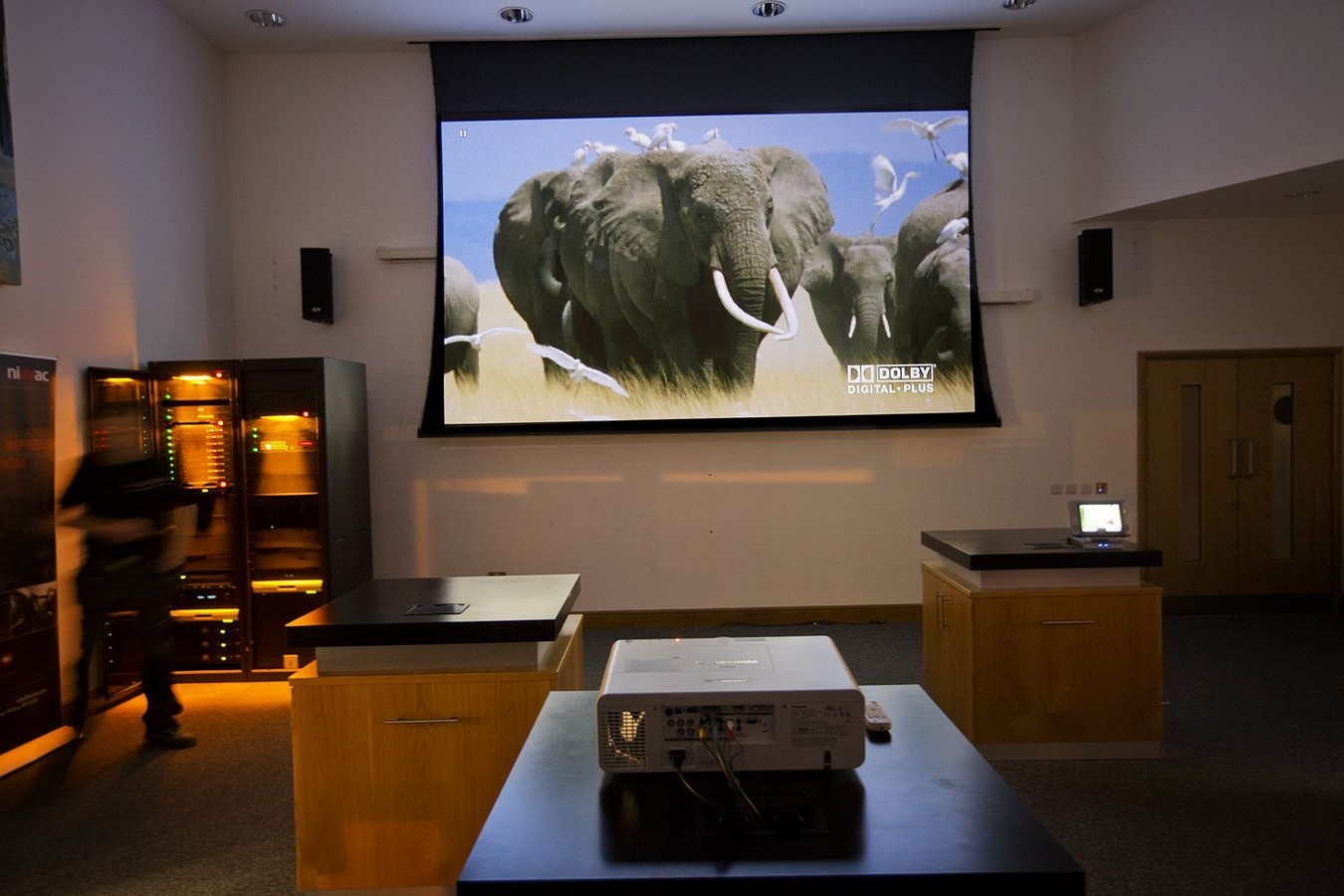
Virtual reality allows an immersive and engaging experience for the students in the comfort of their classrooms. It allows experiences that go beyond the traditional teaching method. For example, technological innovations have allowed us to experience different locations such as historical sites virtually.
It has been disseminated in varied forms. This allows us to understand abstract concepts such as those phenomena that are difficult to observe in the real world and gain a better understanding of the same.
Unlike virtual reality, Augmented Reality enhances the educational experience in a spatially immersive way. It allows the users to be ‘inside’ the experience from where they are at. These include sensors, computer vision, and an understanding of the users’ surroundings to enhance learning at a personal level. For example, it allows architects to visualize their designs in the real-world context.
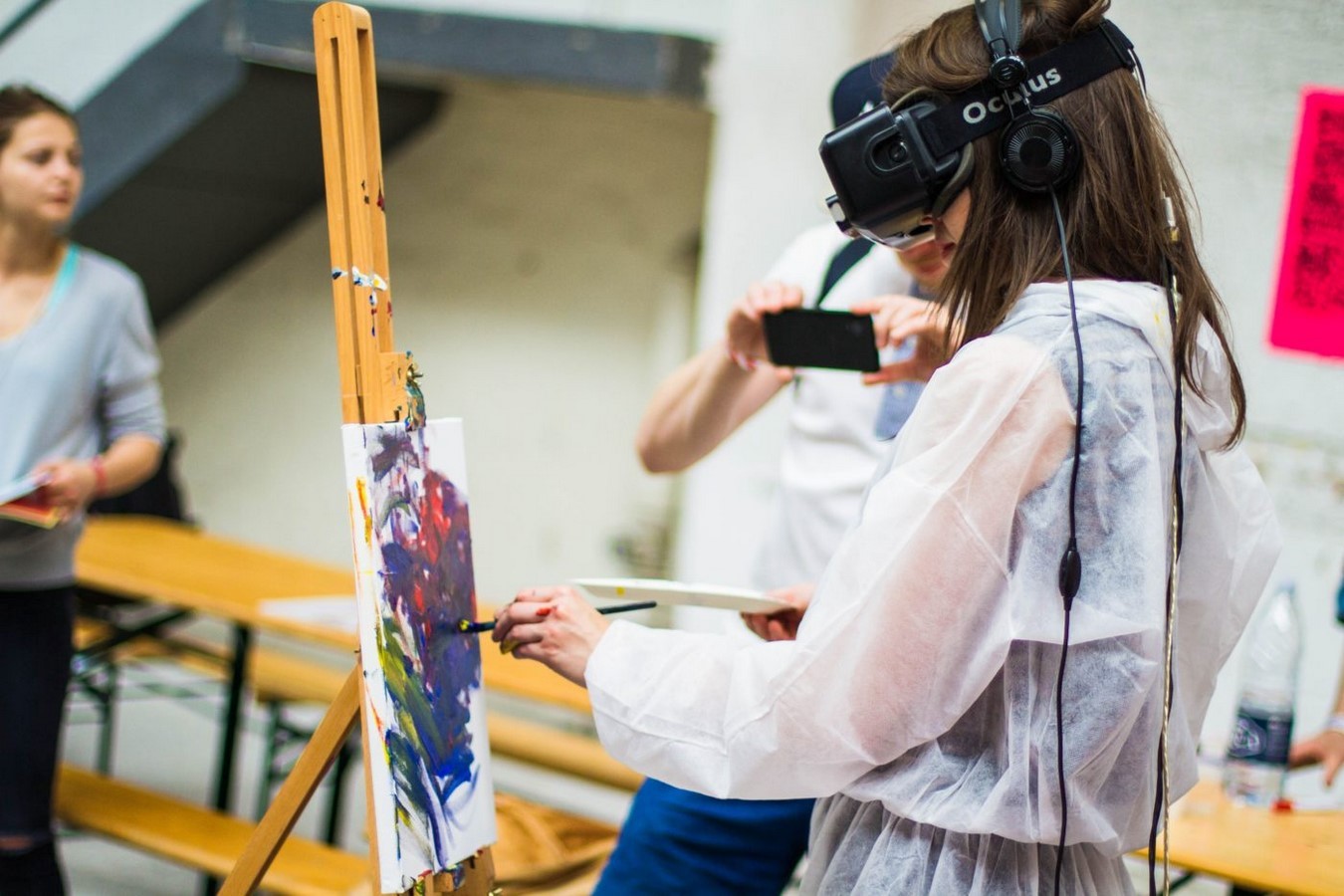
Including technology in the learning experience also breaks the geographical barriers, and this helps in developing cross-cultural understanding by engaging with peers in different regions, exchanging ideas, and gaining a global perspective. .
However, integrating these features into the school architecture environment would incur costs to develop technical infrastructure, subject matter content development, and integrate these learning methods into the curriculum.
Another aspect is to train the teachers who guide the students through these technological experiences. Therefore, the educator in charge must have a good command over the technology and the subject, which allows a smooth classroom experience for everyone involved.
Spatial Design for a Learning Environment
Designing a responsible and fun learning environment would require connecting architecture with learning. It should also allow appropriate connection between the students and teacher, which would impact the overall relationship of the student with their society.
A critical component of school architecture is that the layout should be able to reconfigure or adapt to different teaching methods and changing educational needs. Example, design elements such as flexible furniture, movable partitions, and multifunctional spaces allow dynamic interactions and interconnectivity.
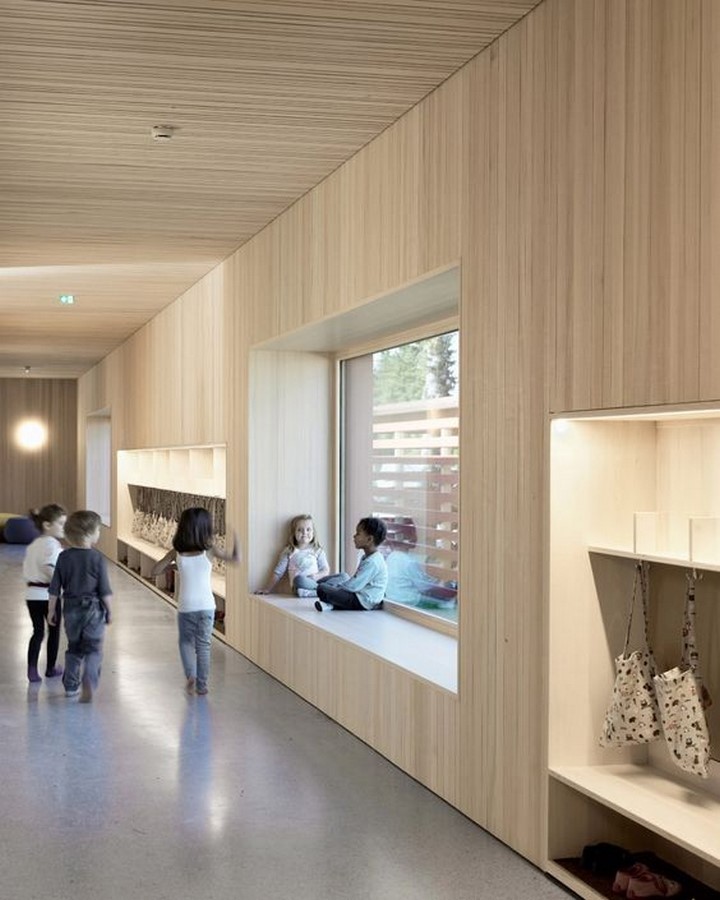
Ventilation and Daylighting allow free-flowing circulation of light and air, improving the mood, and focus, and overall well-being of the users. Incorporating climate-responsive design, large windows, and skylights would benefit the school environment.
Another factor is spatial consideration and movement flow for the users. Corridor and hallways should allow and accommodate the user volume and flow at a time without hindering the safety. Clear wide pathways and break-out spaces at regular intervals allow free and open flow for the same.
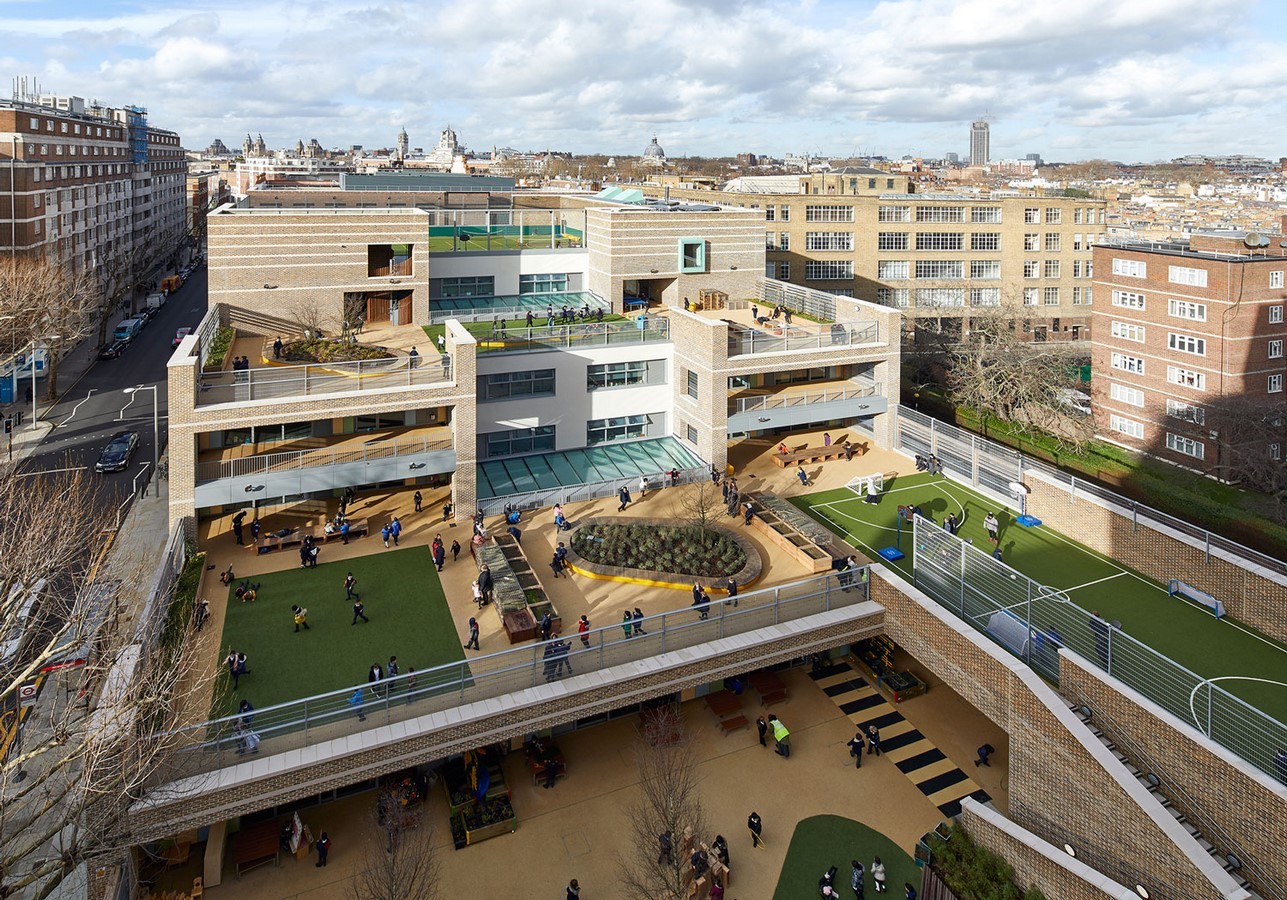
Considering the overall aesthetics to include bright colour schemes, varied textures, and design elements can reflect the school’s identity and encourage the users interest in the thorough use of space.
Spatial Configuration to Include Technology in School Architecture
In the 21st century, everyone is surrounded by technology. So, it is necessary to understand its appeal to the student’s interest as a learning mode. To integrate this ever-evolving technology, school architecture layouts must develop spaces where technical infrastructure can be included flexibly. These should also be adaptable to new models. This highly supports the student’s need for access to educational resources
The school location matters considerably. Schools should be included in the educational hub during the planning process. The location should be proximal to socio-educational institutions such as public libraries, science, and historical museums. It should also be located near public transportation so that the travel is easy and safe. This discontinues the students’ dependency on private transport and reduces the congestion in the area.

An audio-visual mode of learning is easy to grasp. Considering that even young children have become tech-savvy, schools must respond to this challenge by becoming media-rich. The learning environments should enhance and embrace an individual student’s ability to learn both online and offline. This encourages a spirit of exploration. Technology allows this kind of learning space. Additionally, the physical environments must be adapted to technology to encourage this shift.
This can be transformed by changing the existing curriculum and teaching system. For instance, a typical classroom for 30 students with a board, can instead be used as a technology-based learning space for a small group of students with the required pace and customization as per each student’s profile and learning capacity.
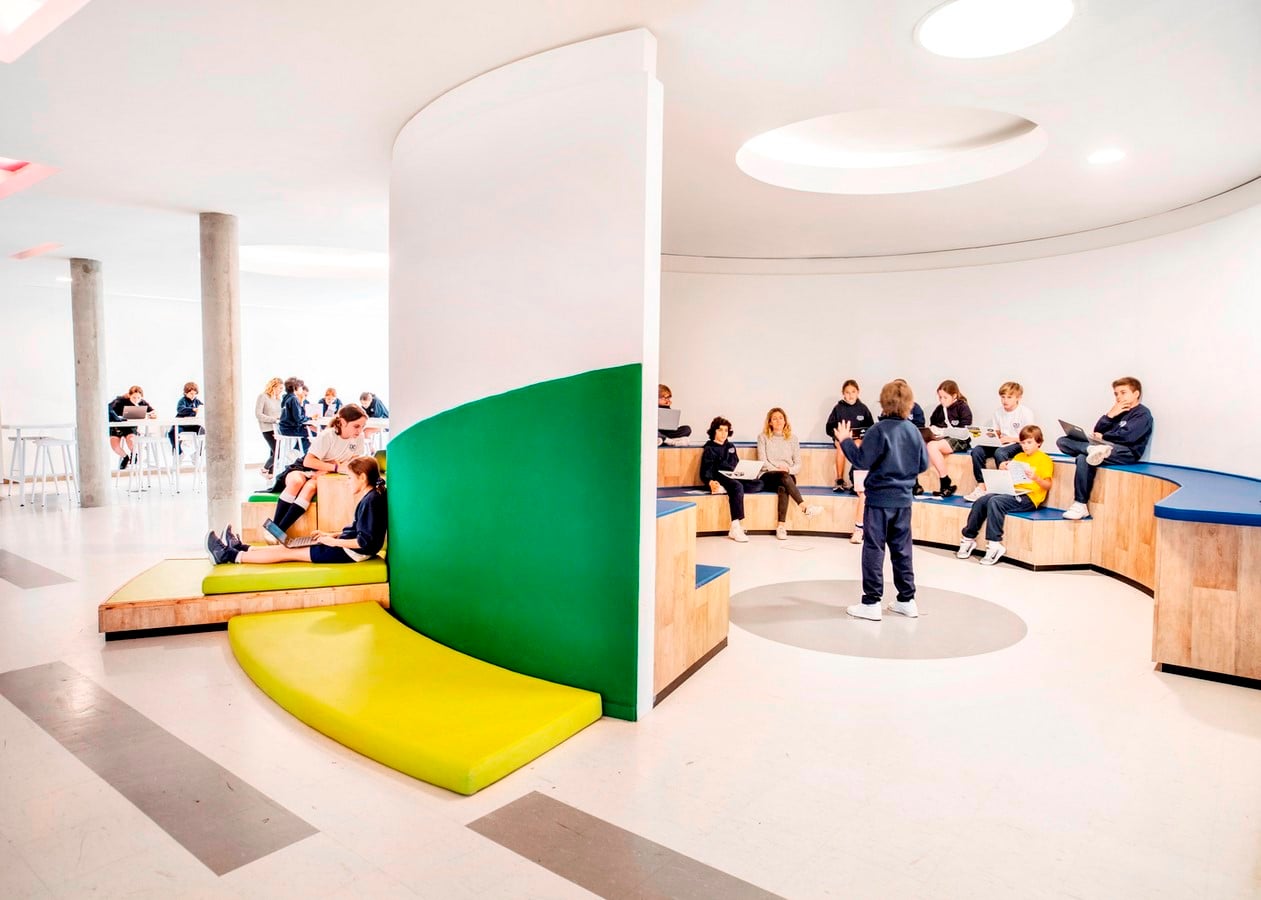
Break-out spaces with informal interactions allow individuals and small groups to work in a scalable interactive environment and create a micro-environment accommodating multiple learning styles.
Instead of planning a room for one function, it can be sectioned into smaller spaces to accommodate different activities at a time. This allows an open transitional space for engagement and a creative, dynamic atmosphere for interactive learning.
Impact of Integrating Technology in a Learning Environment
Technology impacts the learning and grasping power of students. This is because it paces out the learning to capture their attention and make learning more enjoyable and effective. It allows one to go beyond the classroom and explore the topics at a wide scale. Interactive simulations can help understand complex concepts and retain the learning of the same in a virtual and real-time sense. Most importantly, it allows the student to engage with the subject in a creative and relaxed manner. This increases the sense of curiosity and encourages them to challenge the existing notions.
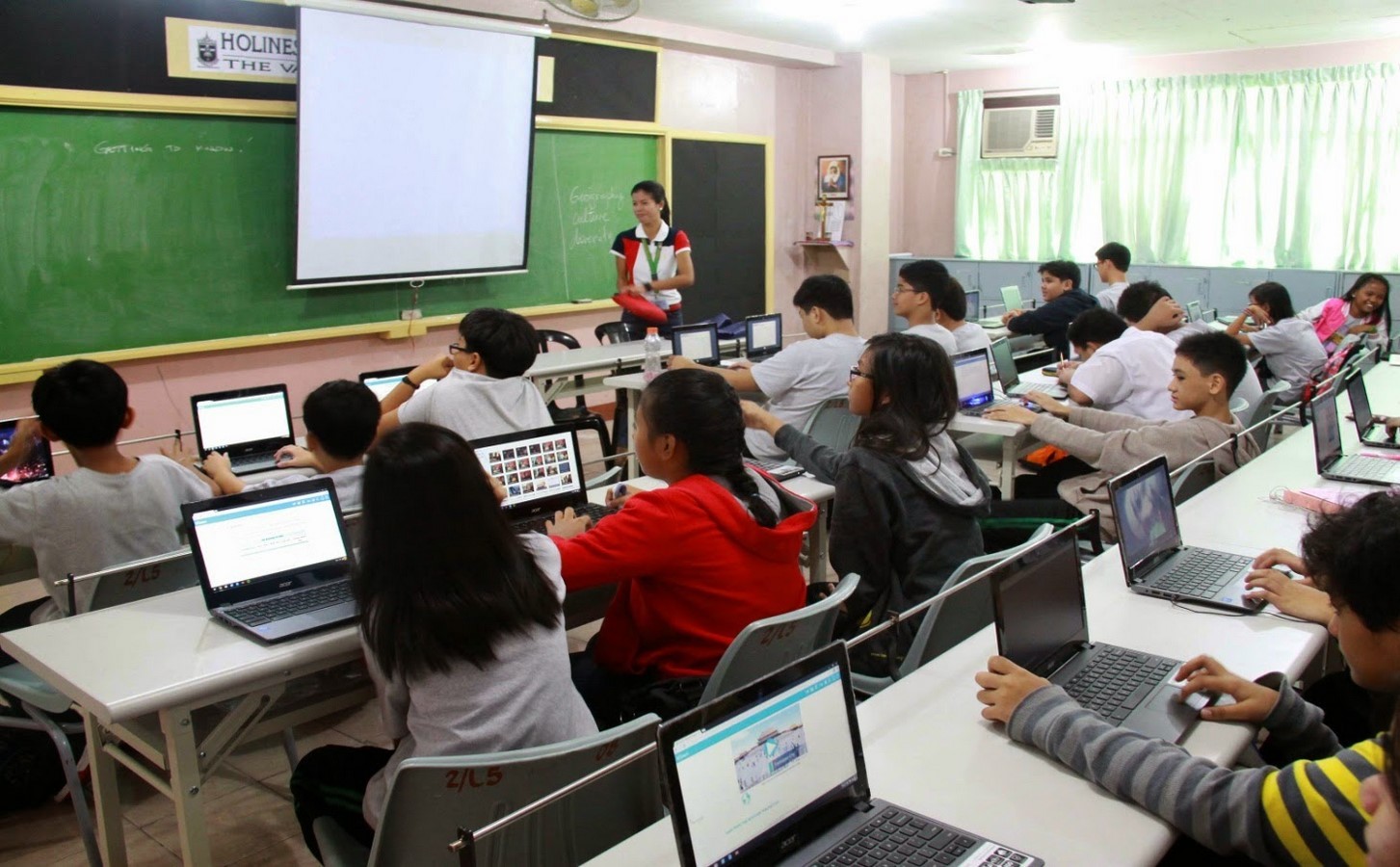
This leads to multiple inferences on an existing perspective and contributes significantly to healthy and constructive discussions. These could also possibly lead to evolving ideas on a thinking system.
Making Technology Accessible to Schools
Incorporating technology into the school systems incurs quite a high cost. It is important to allocate and prioritize funding for schools. As some schools might not easily avail of these facilities, due to a lack of financial resources.
It would require focused planning, strategic partnerships, creativity, and flexible methods to make this possible. One of the most common ways is to approach a Corporate-Non-profit partnership, where the organizations are willing to fund financial resources or sponsor the technology equipment as required.
Another method is to avail government grants for the schools as there may be many initiatives where the grants enhance educational technology and support its integration in not-so-well-off schools.
Many online platforms also provide quality learning at free or subsidized cost. It is an opportunity for students and teachers to upgrade their skills in their fields of interest.

Community fundraising is also a great initiative where the students, as well as the surrounding neighbourhood, can be a part of raising financial or technological resources for themselves. Old technological systems & devices can be re-purposed and rented for the school year. These are some constructive methods by which technology is made accessible.
Combining different strategies can overcome the barriers to fulfilling the needs and requirements of the schools that lack the financial resources. This can help to integrate technological systems into school architecture for students from diverse socio-economic backgrounds.
References:
- Dudek, M. (2005) Children’s Spaces. Oxford: Architectural Press
- Dudek, M. (2007). Schools and Kindergartens – A Design Manual. Berlin: Bikhauser Publishing
- Ivanic M, and Kuhar, A. (2008). Contemporary School Architecture in Slovenia 1991 – 2007. Vienna: Springer Publishing
- Scott, S. (2010). Architecture for Children. Melbourne: Australian Council for Educational Research
- Li, C. (2011). University Architecture. Shenyang: Liaoning Science & Technology Publishing House