Update 2026: Peter Zumthor, now 83, has completed his first building in the United States — the David Geffen Galleries at LACMA in Los Angeles, which opened to the public on 4 May 2026 — and is the subject of Wim Wenders’ documentary From Inside Out, which premiered at the Venice Film Festival in September 2026.
| Born | 26 April 1943, Basel, Switzerland |
| Based in | Haldenstein, Graubünden, Switzerland |
| Practice | A deliberately small atelier — “a team of 20, maybe 30,” in his own words |
| Major honours | Pritzker Prize (2009) · RIBA Royal Gold Medal (2013) · Praemium Imperiale (2008) |
| Signature works | Therme Vals (1996), Kunsthaus Bregenz (1997), Kolumba Museum (2007), Bruder Klaus Field Chapel (2007) |
| Newest work | David Geffen Galleries, LACMA, Los Angeles (2026) — his first in the United States |
Swiss architect Peter Zumthor (born 1943 in Basel) builds slowly, rarely, and almost entirely in the Alps — yet works like the Therme Vals spa, Kunsthaus Bregenz and the Kolumba Museum in Cologne have made the 2009 Pritzker Prize laureate one of the most revered architects alive. This guide visits 15 of his essential buildings, from a mountainside chapel in Sumvitg to a witch-trial memorial in Arctic Norway.
Peter Zumthor’s Famous Works at a Glance
| Project | Location | Year |
|---|---|---|
| Therme Vals | Vals, Switzerland | 1996 |
| Kunsthaus Bregenz | Bregenz, Austria | 1997 |
| Kolumba Museum | Cologne, Germany | 2007 |
| Serpentine Gallery Pavilion | London, United Kingdom | 2011 |
| Saint Benedict Chapel | Sumvitg, Switzerland | 1988 |
| Roman Archaeological Site Shelters | Chur, Switzerland | 1986 |
| Residential Home for the Elderly | Chur-Masans, Switzerland | 1993 |
| Unterhus Vacation Homes | Leis, Vals, Switzerland | 2009 |
| Topography of Terror Documentation Centre (unrealised) | Berlin, Germany | 1997 |
| House Räth | Haldenstein, Switzerland | — |
| Secular Retreat | Chivelstone, Devon, UK | 2018 |
| 7132 Hotel (House of Architects rooms) | Vals, Switzerland | 2016 |
| Allmannajuvet Zinc Mine Museum | Sauda, Norway | 2016 |
| Werkraum Bregenzerwald | Andelsbuch, Austria | 2013 |
| Steilneset Memorial (with Louise Bourgeois) | Vardø, Norway | 2011 |
Peter Zumthor is a Swiss architect whose work is frequently described as uncompromising and minimalist. Though managing a relatively small firm, he is the winner of the 2009 Pritzker Prize and 2013 RIBA Royal Gold Medal. Peter Zumthor’s best-known projects are the Kunsthaus Bregenz (1997), shimmering glass and concrete cube that overlooks Lake Constance (Bodensee) in Austria; the cave-like thermal baths in Vals, Switzerland (1999); the Swiss Pavilion for Expo 2000 in Hannover, an all-timber structure intended to be recycled after the event; the Kolumba Diocesan Museum (2007), in Cologne; and the Bruder Klaus Field Chapel, on a farm near Wachendorf. In this article, we shall be looking at 15 projects by Peter Zumthor.
1. Thermal Vals, Switzerland | Peter Zumthor

Year: 1996 Type: Hospitality Location: Vals, Graubünden, Switzerland
What makes the baths so influential is their construction: some 60,000 slabs of Valser quartzite, quarried barely a kilometre up the valley, are laid in precise horizontal courses so the walls read as solid geological strata. Grass-roofed stone-and-concrete volumes sit half-buried in the hillside, and daylight enters through narrow glass seams left between the roof slabs. Zumthor conceived the building as something hollowed out of the mountain — bathing recast as a primal ritual of stone, water, light and steam — and it was placed under heritage protection within two years of completion, a rarity for new architecture.
2. Kunsthaus Bregenz, Austria by Peter Zumthor
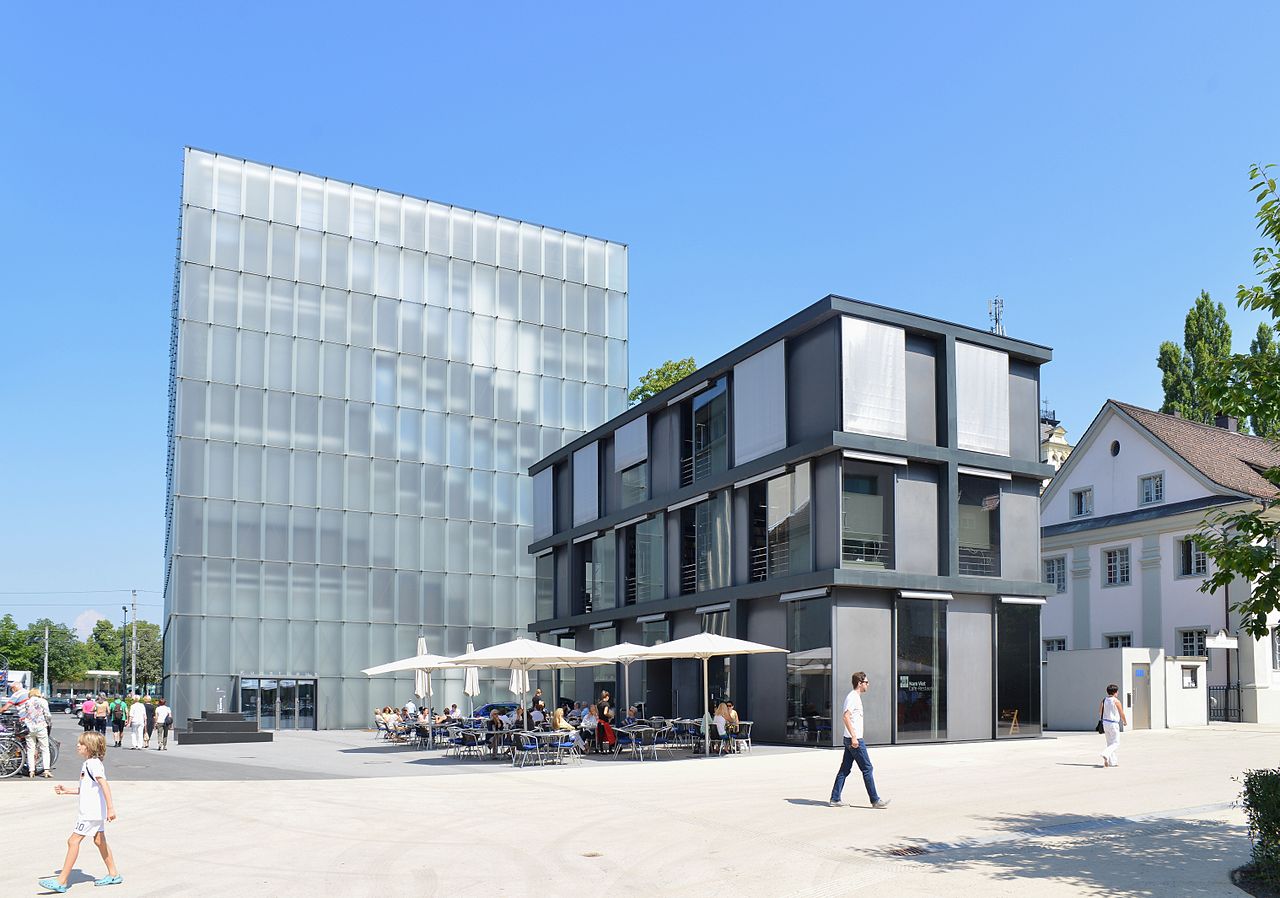
Year: 1997 Type: Public Location: Bregenz, Vorarlberg, Austria
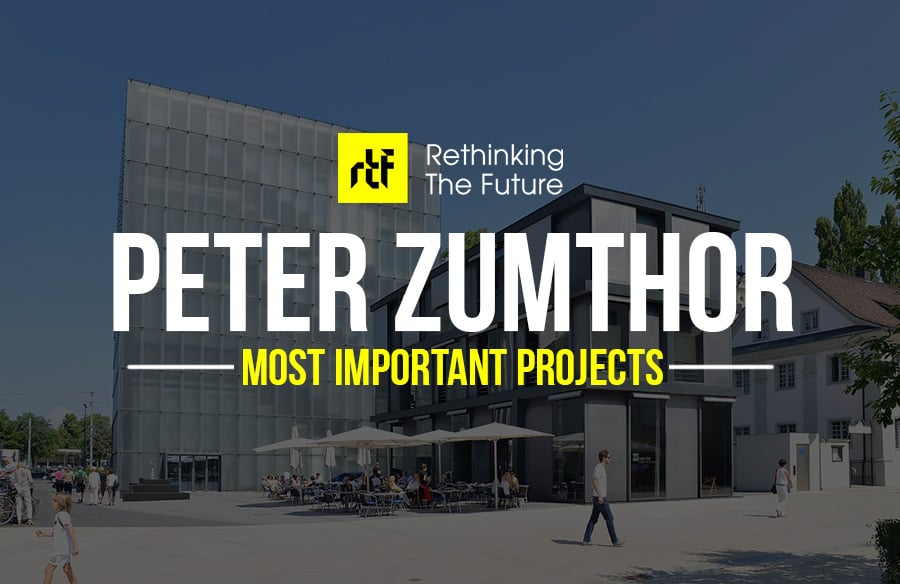
The Kunsthaus stands as a luminous cube on the shore of Lake Constance. Its skin is a free-hanging curtain of large etched-glass shingles that overlap like feathers, absorbing the changing lake light by day and glowing like a lantern after dark. Inside, three load-bearing concrete walls carry the exhibition floors, leaving every gallery column-free beneath a translucent glass ceiling that filters daylight down through the building. Nearly three decades on, KUB remains one of Europe’s most admired exhibition spaces, with artists regularly making work in direct response to its atmosphere.
3. Kolumba, Germany
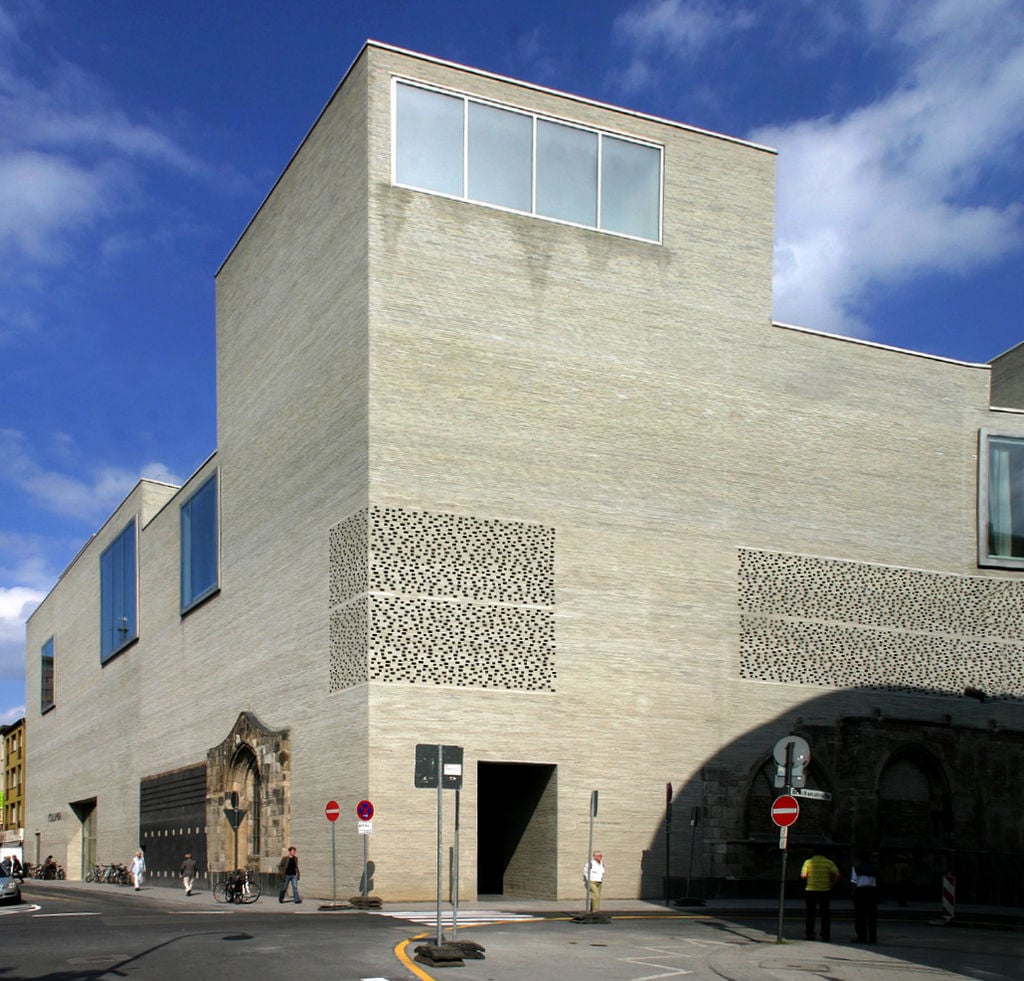
Year: 2007 Type: Art Museum Location: Erzbischöfliches Diözesanmuseum, Cologne, Germany
Kolumba — the art museum of the Archdiocese of Cologne — rises directly from the ruins of the late-Gothic church of St. Kolumba, destroyed in the Second World War, and folds Gottfried Böhm’s 1950 “Madonna of the Ruins” chapel into its ground floor. Zumthor developed a special long, slender grey brick — the “Kolumba brick”, produced by Danish brickmaker Petersen Tegl — and left whole passages of the new walls perforated, so pinpricks of daylight drift across the excavated ruins below. It is widely regarded as one of the most moving acts of building-on-ruins in contemporary architecture.
4. Serpentine Gallery Pavilion (Temporary)
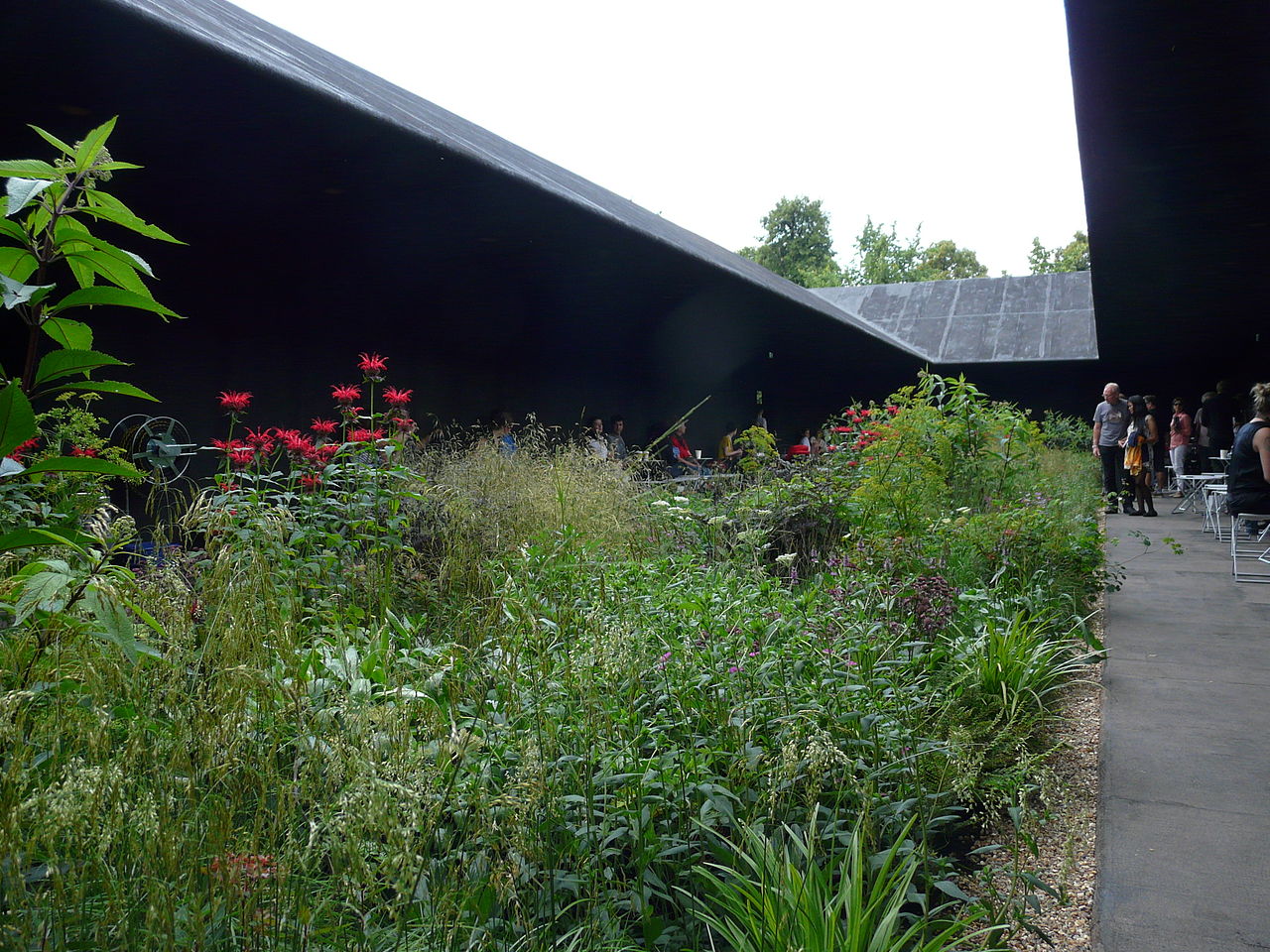
Year: 2011 Type: Pavilion Location: London, England
Zumthor’s pavilion was conceived as a hortus conclusus — an enclosed garden — at the heart of Kensington Gardens. Visitors passed through a double wall of black-painted timber and scrim into a shaded cloister wrapped around a sunken flower garden planted by Dutch landscape designer Piet Oudolf. Where most Serpentine pavilions perform for the camera, Zumthor’s deliberately turned inward, offering stillness, shadow and contemplation in the middle of a London summer.
5. Saint Benedict Chapel, Sumvitg by Peter Zumthor

Year: 1988 Type: Chapel Location: Sumvitg, Switzerland
The chapel replaced a baroque predecessor destroyed by an avalanche in 1984. Its plan is shaped like a leaf or teardrop, its structure is a delicate timber frame, and its skin is a coat of larch shingles that has weathered differently on every face — silver-grey where the storms strike, deep brown where the sun bakes. A ring of clerestory glazing makes the roof appear to float above the walls. Built on a modest budget for a mountain hamlet, Saint Benedict distilled the themes — craft, material, atmosphere — that would define everything Zumthor built afterwards.
6. Shelters for Roman Archaeological Site, Chur

Year: 1986 Type: Museum Location: Chur, Graubünden, Switzerland
Among Zumthor’s first built works, these shelters enclose the excavated foundations of Roman buildings on the edge of Chur. Slatted timber-lamella walls trace the exact footprint of the Roman structures, letting air and slivers of light pass through while protecting the ruins, and roof lights wash the fragments below. The project announced a conviction that runs through his whole career: even a utilitarian protective shed deserves the full attention of architecture.
7. Residential Home for the Elderly, Masans
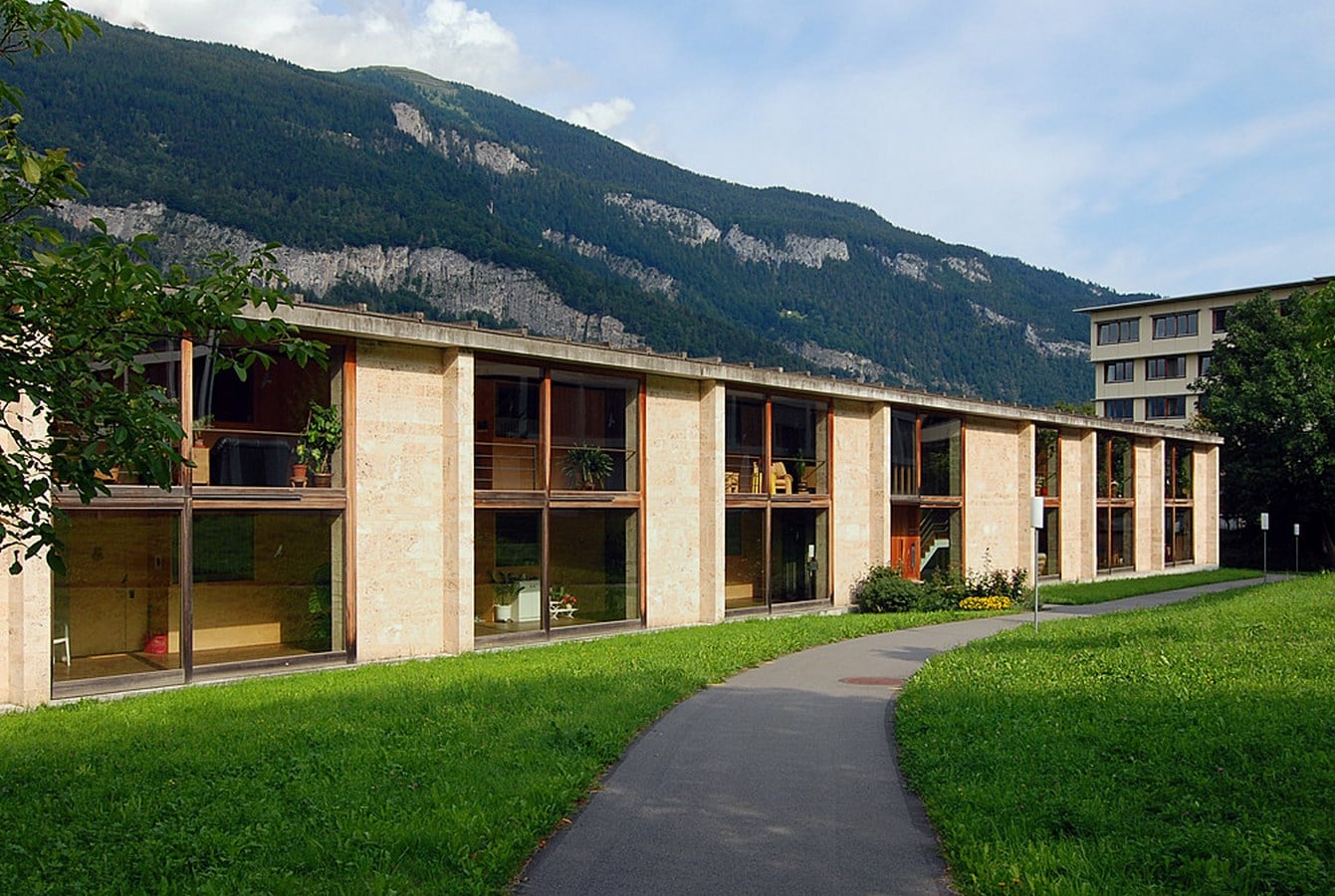
Year: 1993 Type: Residential Location: Kronengasse, Masans, Chur, Switzerland
An early demonstration of a belief Zumthor has held ever since: that modest, everyday social buildings — here, housing for elderly residents on the edge of Chur — deserve the same material care and dignity as museums and chapels.
8. The Unterhus Houses (Zumthor Vacation Homes), Leis
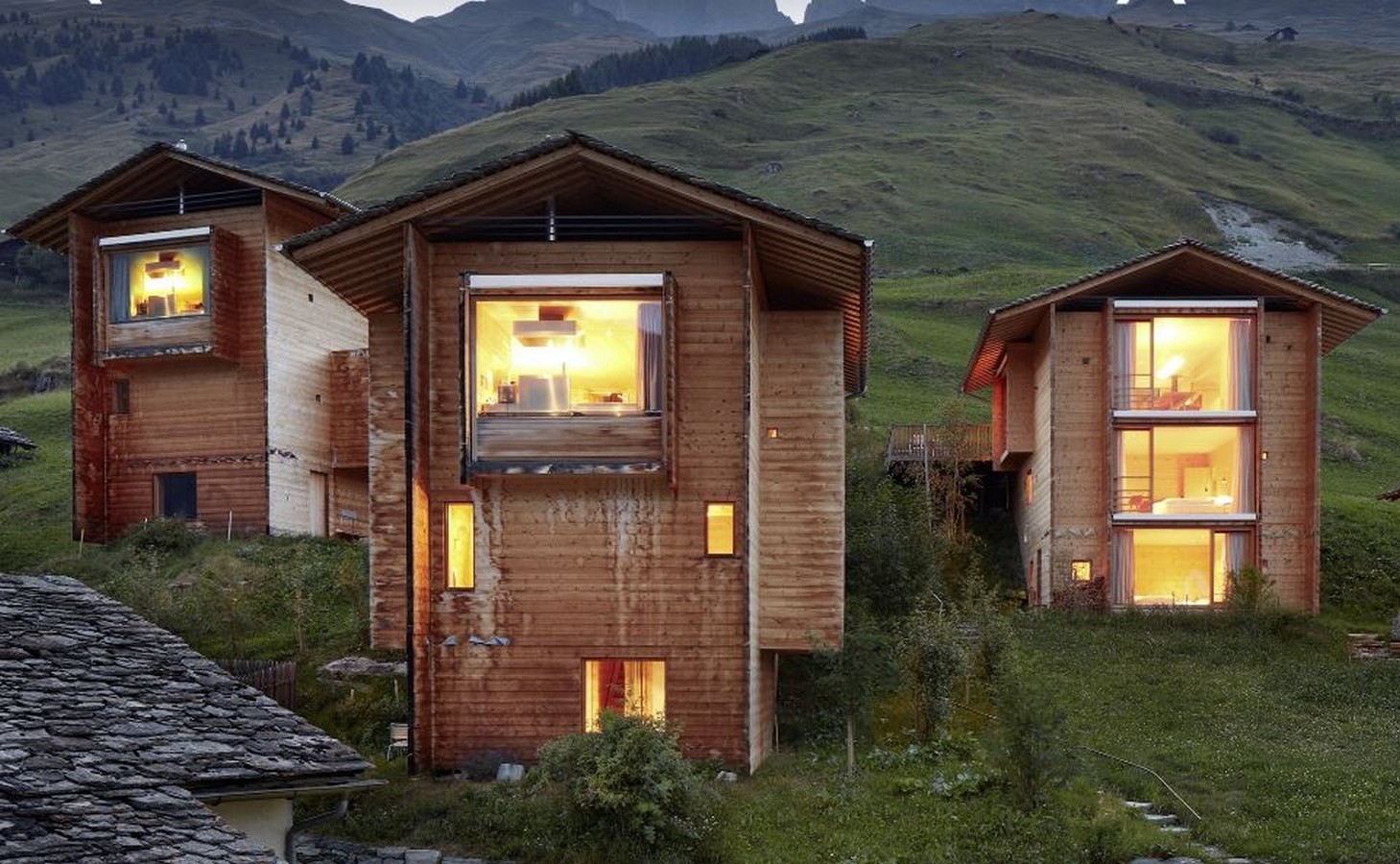
Year: 2009 Type: Private House Location: Leis by Vals, Switzerland
In the hamlet of Leis, high above Vals, Zumthor built a pair of timber vacation houses — Unterhus and Oberhus — that reinterpret the valley’s traditional Strickbau log construction in precisely milled solid timber, with large windows framing the mountains. The houses can be rented, which makes them one of the very few ways to actually live inside a Zumthor interior for a few days.
9. Topography of Terror
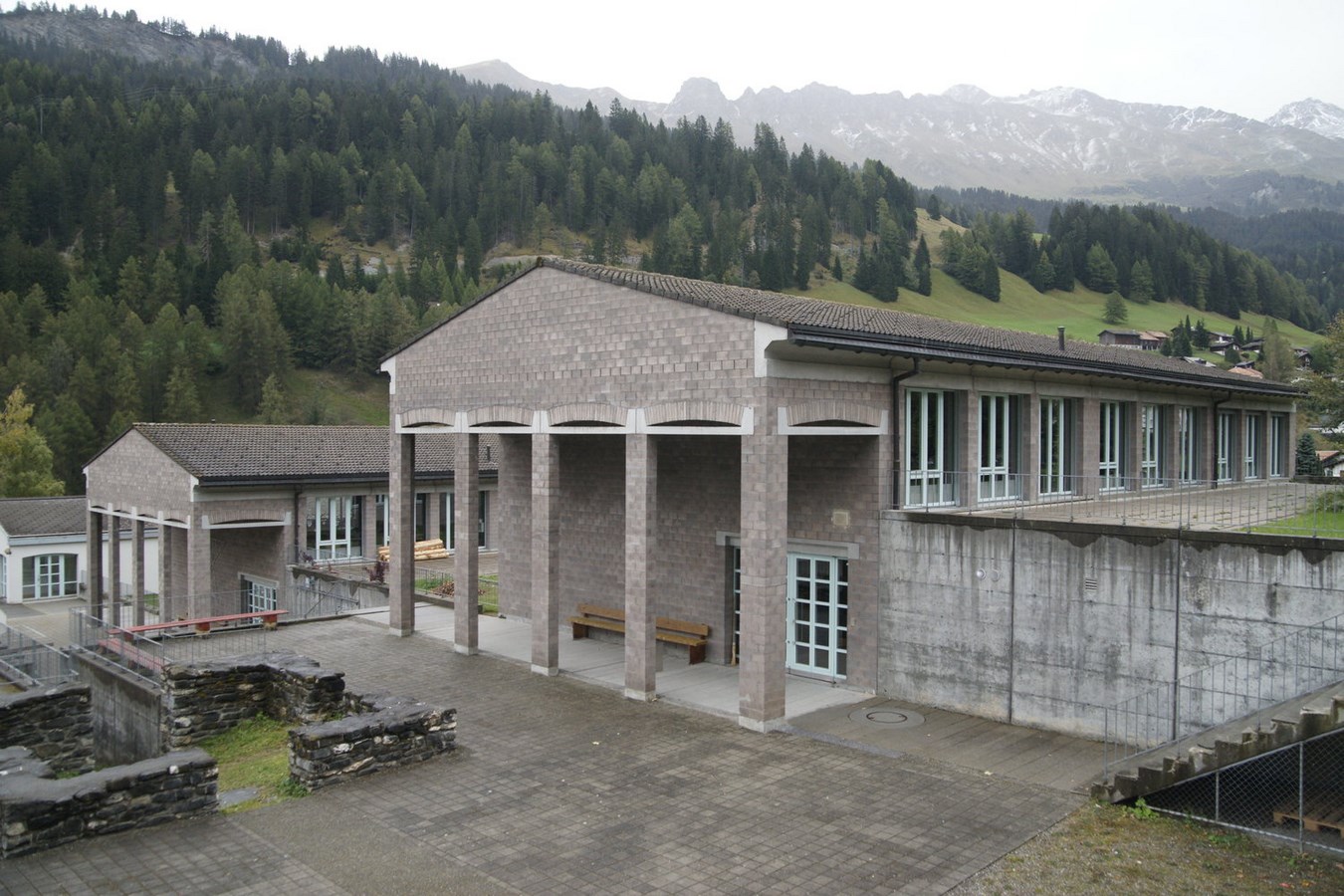
Year: 1983 Type: Educational Location: Churwalden, Graubünden, Switzerland
Zumthor won the competition for the documentation centre on the site of the former Gestapo and SS headquarters in 1993. His design — a long, comb-like structure of slender concrete ribs — was partially built before Berlin halted construction amid cost disputes; the completed stair towers stood for years before being demolished in 2004, and a different building by Ursula Wilms eventually opened on the site in 2010. It remains the most famous unbuilt chapter of Zumthor’s career.
10. House Räth, Haldenstein
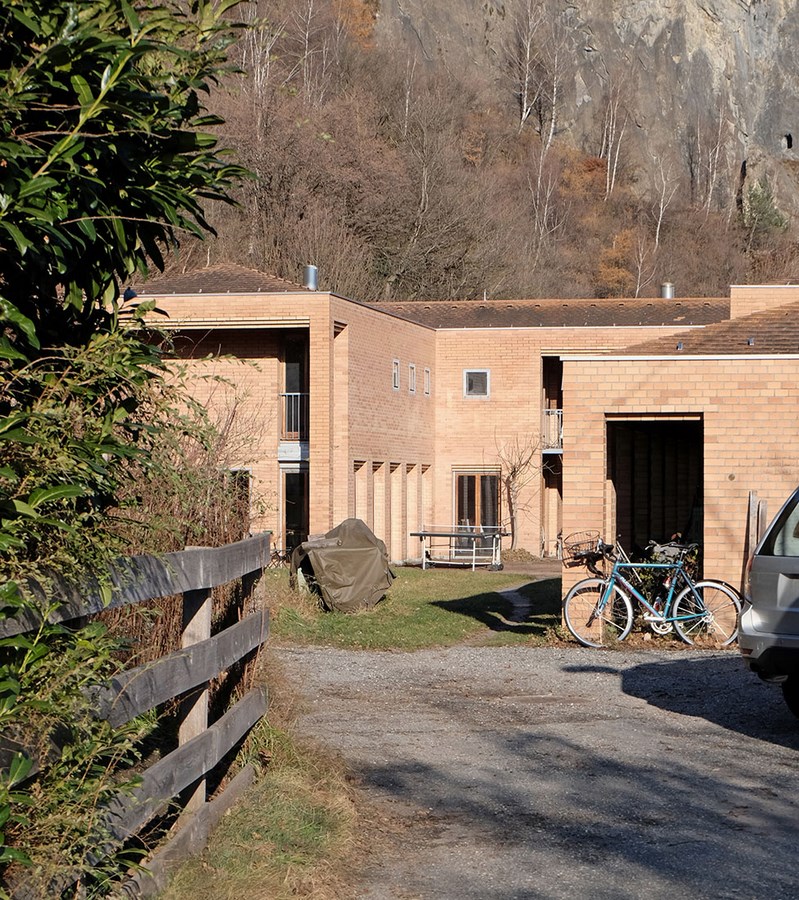
Year: 1983 Type: Residential Location: Haldenstein, Graubünden, Switzerland.
11. The Secular Retreat | Peter Zumthor

Year: 2018 Type: Single-family residence Location: Salcombe, United Kingdom
Commissioned by Living Architecture — the holiday-house programme founded by writer Alain de Botton — the Secular Retreat sits on a hilltop near Chivelstone in South Devon and is Zumthor’s first permanent building in the United Kingdom. Its massive walls were rammed by hand in successive layers of concrete, a technique that recalls rammed earth, and they carry broad roof slabs framing panoramic views of the South Hams. Like the Leis houses, it can be rented.
12. 7132 Hotel, The Art of Alpine Luxury
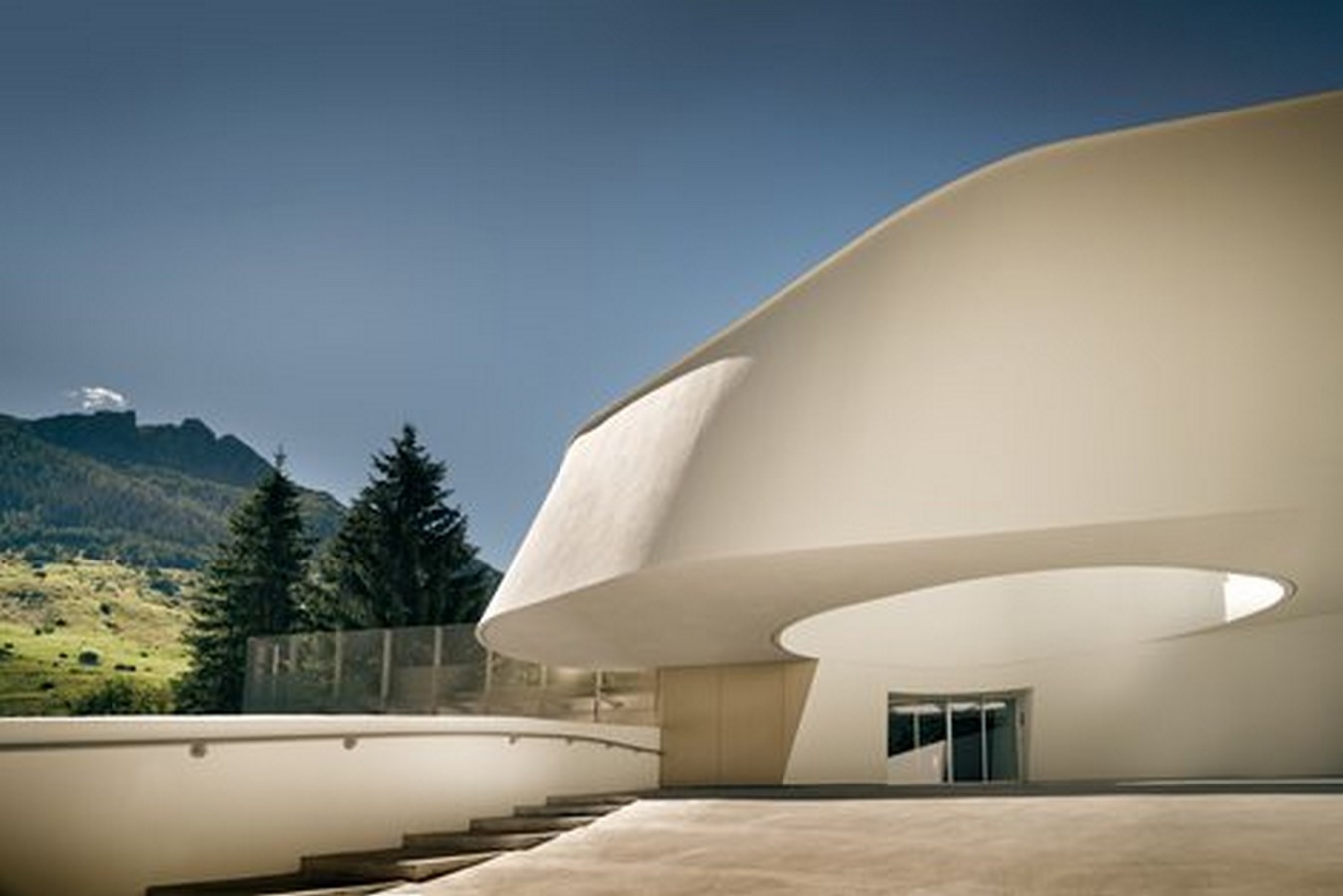
Year: 2016 Type: Hotel Location: Vals, Switzerland
After the municipality sold the Vals complex, the ensemble was rebranded 7132 — the village postcode — and expanded with the House of Architects, whose rooms were designed by Zumthor himself alongside fellow Pritzker laureates Tadao Ando and Thom Mayne, and Japanese architect Kengo Kuma. Zumthor has publicly kept his distance from some of the later commercial changes around his baths — a measure of how fiercely he guards the integrity of his buildings.
13. Allmannajuvet, National Tourist Routes in Norway
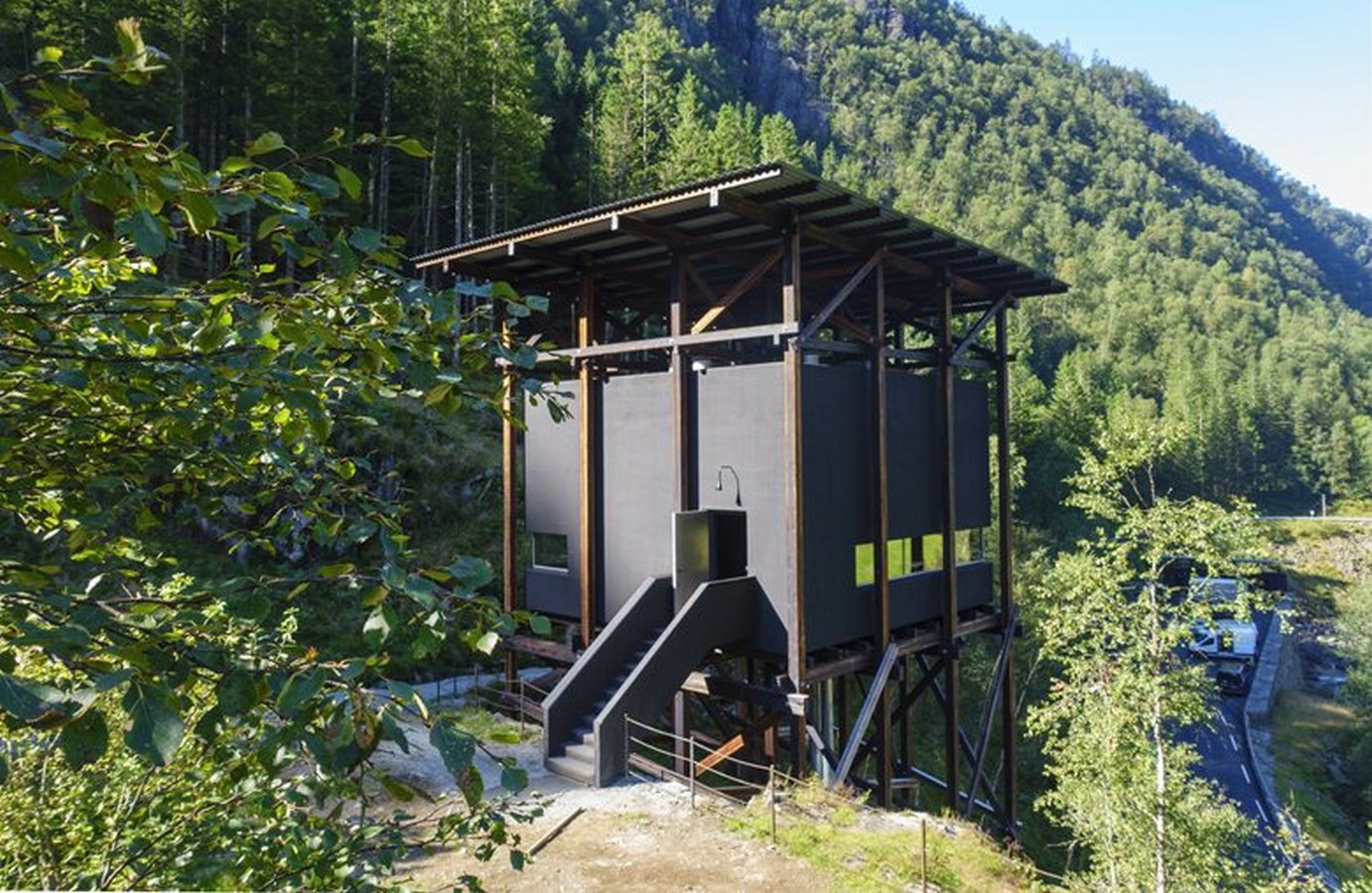
Year: 2016 Type: Exhibitions Location: Nip, Norway
Part of Norway’s National Tourist Routes programme, the Allmannajuvet ensemble — café, museum gallery and service buildings — commemorates the zinc mines that operated in the Sauda gorge in the late nineteenth century. Dark, creosote-treated timber boxes perch on slender supports against the ravine wall, their deliberate roughness echoing the toil of the miners’ working lives.
14. Werkraum Bregenzerwald | Peter Zumthor
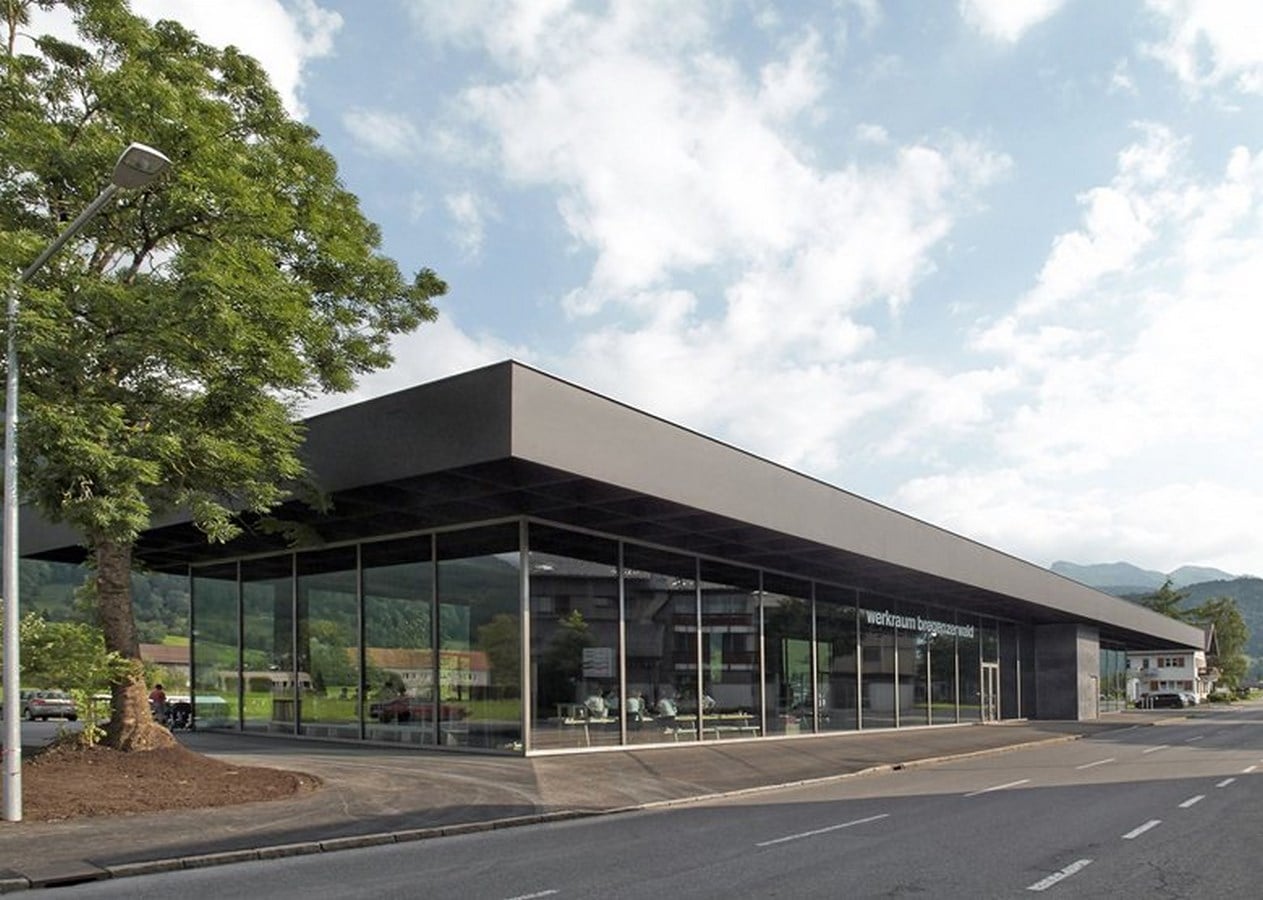
Year: 2013 Type: Conference Center Location: Vorarlberg, Austria
The Werkraum is a showcase and meeting house for the craft cooperative of the Bregenzerwald, a region with one of Europe’s densest concentrations of fine woodworking. Zumthor’s response was a vast dark roof floating above a fully glazed hall — a display cabinet for craftsmanship — built, fittingly, by the member craftsmen themselves.
15. The Steilneset Memorial – National Tourist Routes in Norway
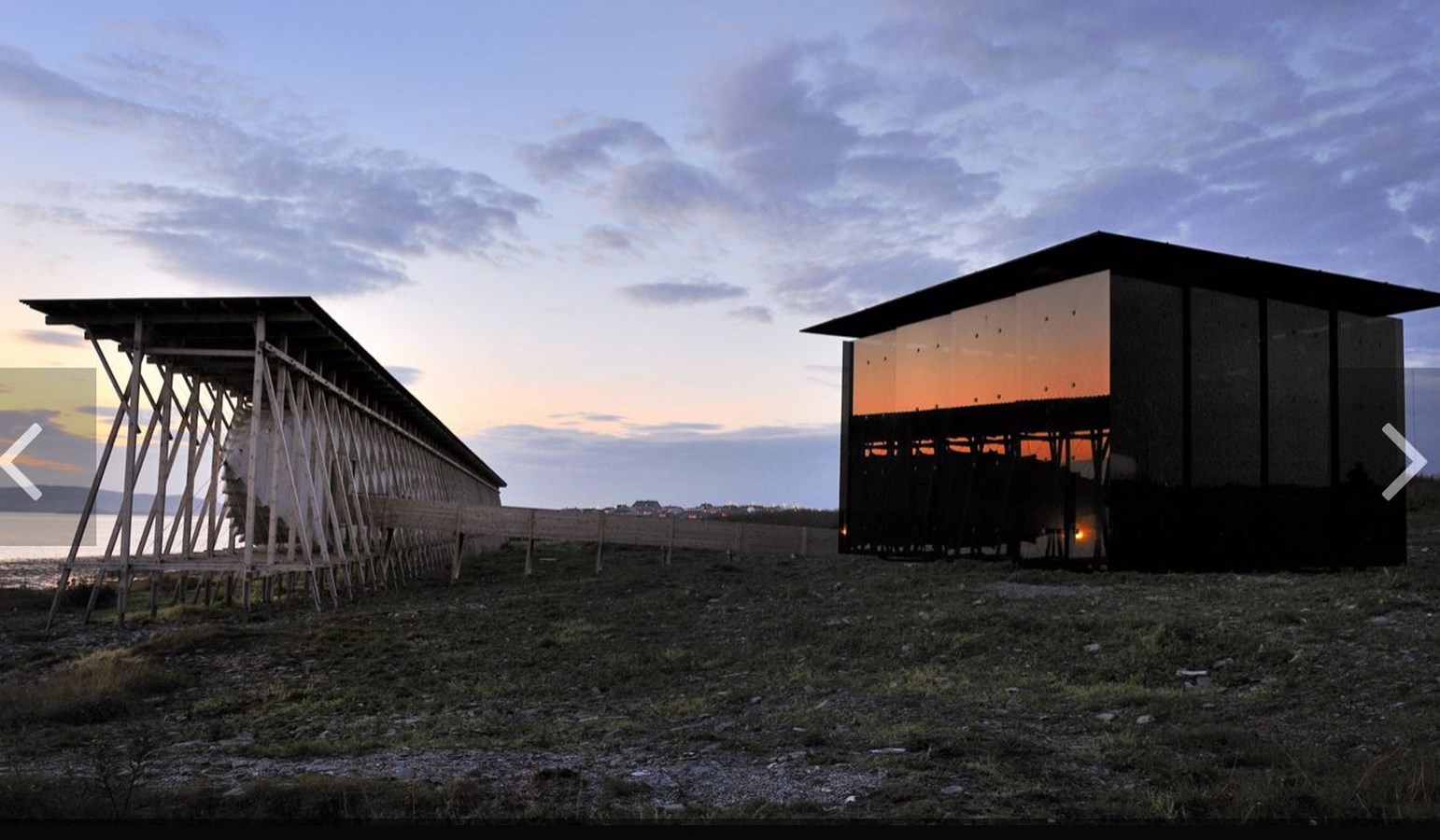
Year: 2011 Type: Museum Location: Vardø, Norway
Created together with the French-American artist Louise Bourgeois, the memorial honours the 91 people executed for witchcraft in seventeenth-century Finnmark. Zumthor contributed a 125-metre suspended corridor — a fabric cocoon held in a pine scaffold, with one small lit window for each victim — while Bourgeois’s installation The Damned, The Possessed and The Beloved, a steel chair ringed by gas flames and oval mirrors inside a smoked-glass pavilion, was among her final works: she died in 2010, before the memorial opened.
Peter Zumthor in 2026: LACMA, a Wenders Film and the Quiet Master at 83
Twenty years in the making, the David Geffen Galleries at the Los Angeles County Museum of Art finally opened in 2026 — to members on 19 April and to the public on 4 May. It is Zumthor’s largest building and his first in the United States: a sinuous, 275-metre-long concrete body raised about nine metres above the ground, arcing over Wilshire Boulevard, with 27 galleries ranging from 15 to 300 square metres arranged on a single exhibition level (Skidmore, Owings & Merrill served as executive architects). True to Zumthor form, the building has divided critics like no American museum in decades — praised as a radical, democratic alternative to the conventional suite of white cubes, and questioned for exactly the same reasons.
Weeks after the opening came a second milestone: From Inside Out: The Architecture of Peter Zumthor, a documentary by Oscar-nominated filmmaker Wim Wenders, premiered at the Venice Film Festival in September 2026 ahead of a November release. In it, the 83-year-old architect restates the creed behind his small Haldenstein atelier: “I don’t like to be a star architect, I like to make these artistic buildings… I can only do what I can control. I can work with a team of 20, maybe 30.”
Even a list of fifteen cannot hold everything: the Bruder Klaus Field Chapel (2007) in Mechernich, Germany — cast in layers of concrete around a wigwam of tree trunks that was then burned out to leave a charred, tent-like void — is for many visitors the most affecting Zumthor work of all. For a closer look at his masterpiece, read our detailed case study of Therme Vals, and see where Zumthor stands among the most famous architects of all time.
Frequently Asked Questions
What is Peter Zumthor famous for?
Zumthor is famous for a small number of materially exact, atmosphere-driven buildings — above all Therme Vals, Kunsthaus Bregenz and the Kolumba Museum — and for working slowly from a small atelier in Haldenstein, Switzerland. He received the Pritzker Prize in 2009 and the RIBA Royal Gold Medal in 2013.
What has Peter Zumthor built in the United States?
One building: the David Geffen Galleries at LACMA in Los Angeles, which opened to the public on 4 May 2026. The 275-metre-long concrete structure lifts 27 galleries onto a single level raised above the ground, arcing over Wilshire Boulevard.
Can you visit Therme Vals?
Yes. The baths now operate as the 7132 Thermal Baths, open to hotel guests and — subject to booking — day visitors. The building itself is protected as a heritage monument.
Why has Peter Zumthor built so few buildings?
By choice. Zumthor keeps his practice at around 20 to 30 people and accepts only commissions he can fully control, developing each project over years. As he puts it in Wim Wenders’ 2026 documentary, he does not want to be a star architect — he wants to make artistic buildings.
What awards has Peter Zumthor won?
The three highest honours in architecture: the Praemium Imperiale (2008), the Pritzker Architecture Prize (2009) and the RIBA Royal Gold Medal (2013).
Sources for the 2026 update: Wallpaper* (April 2026); AFP via France 24 and Kuwait Times (September 2026); The Architect’s Newspaper (October 2024); LACMA; Pritzker Architecture Prize and RIBA archives.