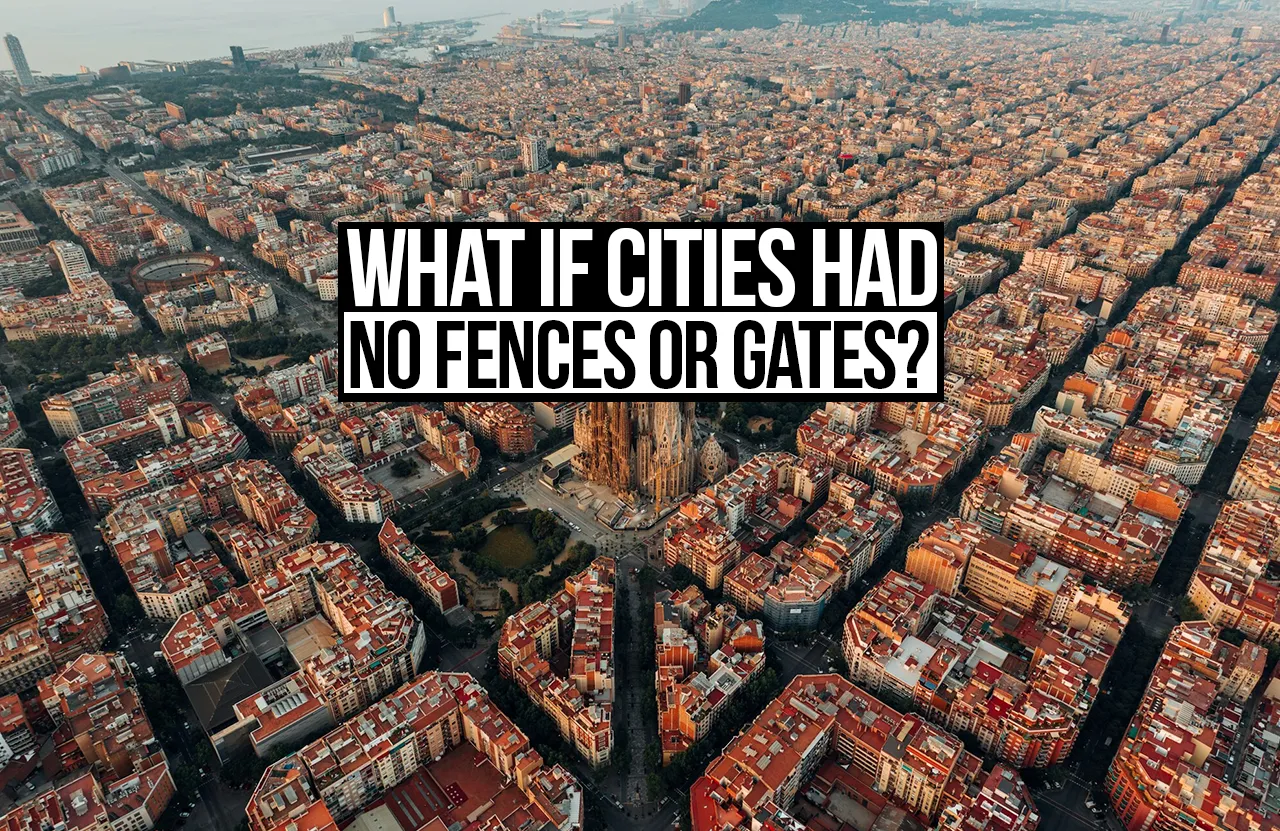
When asked to think of home architecturally, people often imagine it as a few rooms enclosed within four walls. If this idea is expanded further, a city can be considered a larger home with its own boundaries and divisions, and then a state and eventually a country. If observed closely, almost everything around has a boundary defined for various reasons, whether for security, maintaining order or differentiating one place from another. Every place has a perimeter that people recognise as a barrier, sometimes intentionally and sometimes without even realising it. This raises bigger questions: How are cities even planned and experienced? If these boundaries were reconsidered, how might the functionality of open urban environments be?
A house’s compound wall separates private property from the street; apartment gates distinguish residents from visitors; gated communities maintain their own neighbourhood. These boundaries exist at different scales and for different reasons, yet collectively influence how people move and experience their surroundings. They have become such a familiar part of everyday life that their presence is rarely ever questioned, as everyone expects it to be normal.
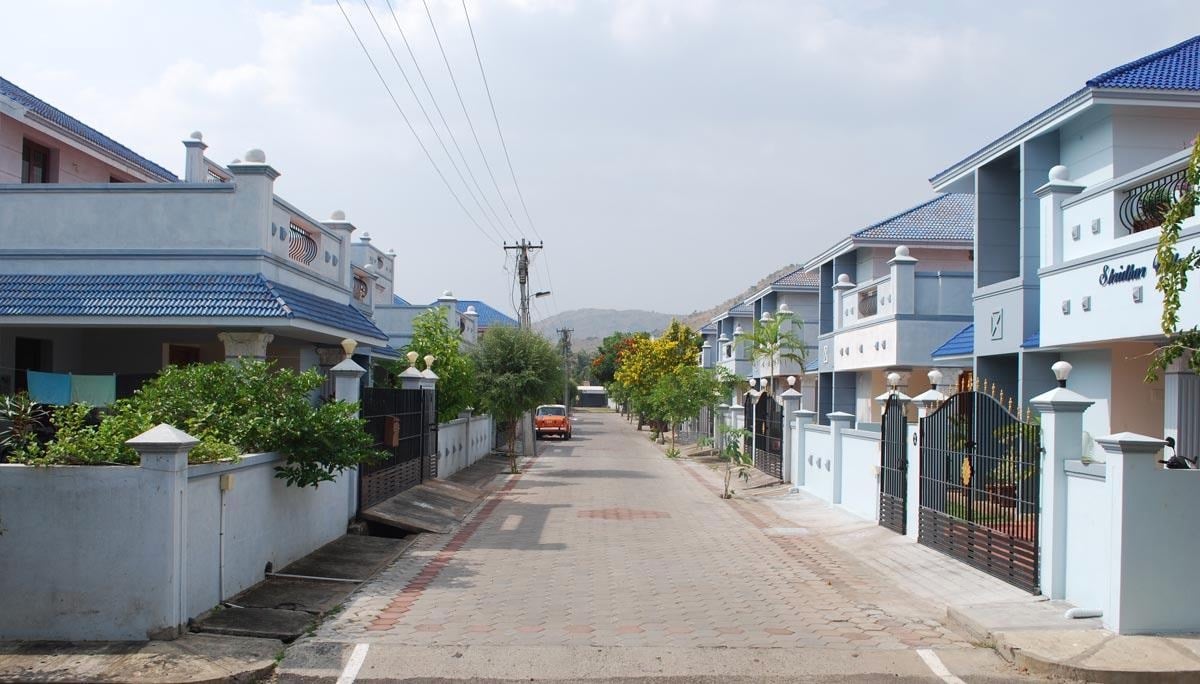
But why are these boundaries required in the first place? The most basic answer would be for security, privacy, establishing ownership, etc. They help define public and private space, give a level of control over one’s surroundings, and provide protection from encroachment. In a sense, boundaries are not necessarily restrictive; they play an integral part in organising the space people inhabit.
As the settlements grew to towns and then to cities, the scale and the purpose of these boundaries began to change. What was once used as a means of defining property eventually became a means of controlling access, protecting and organising settlements and defining empires. Historically, city walls were built to defend and stand against invasions, while gates were used to control the movement of people and goods. Over time, with urban expansion emerging, though most may not have physical barricades or fences, the idea of boundaries has been cemented, and people started following it without even realising.
Where Boundaries Became a Norm
From childhood, people have become so accustomed to being in defined spaces that it has slowly made boundaries an unquestionable part of the surroundings. The situation of a gate indicates when and where one can enter; a compound wall marks where one can stop. Over time, these divisions became so familiar that nobody bats an eye at the necessity of them.
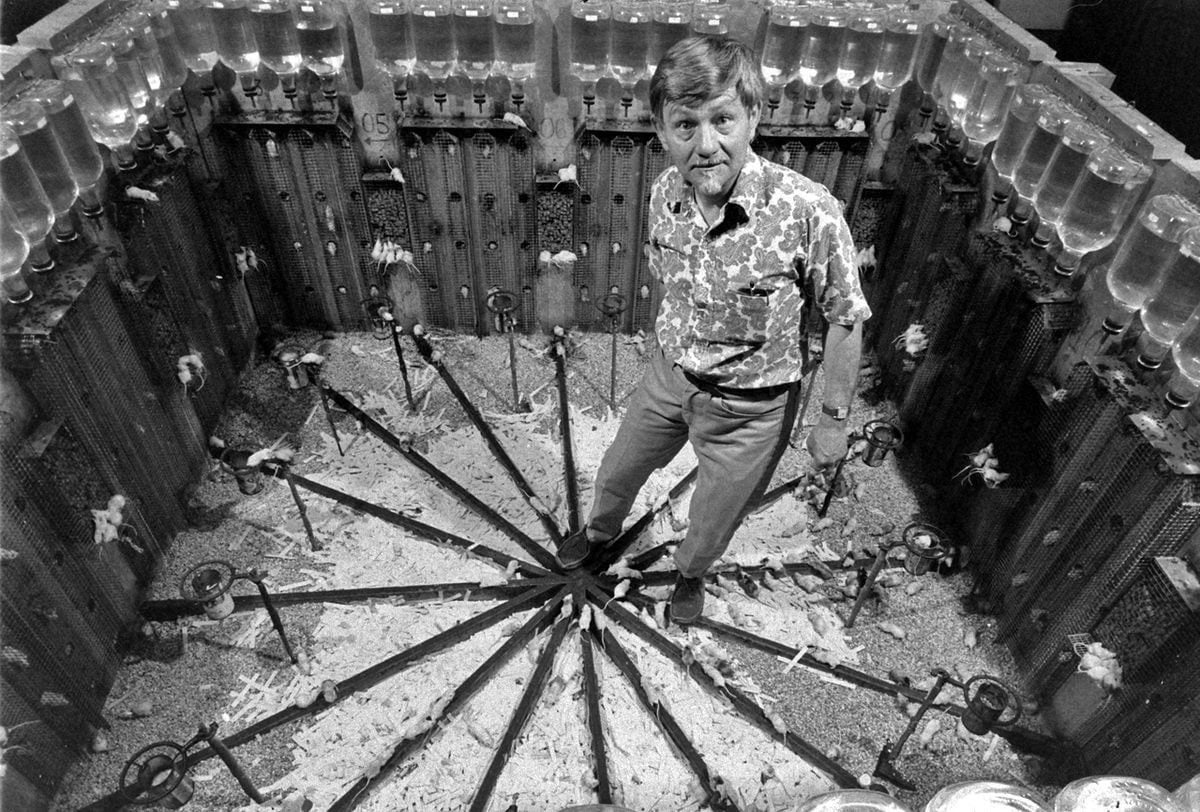
This can be a bit similar and is understood in the Universe 25 experiment conducted by researcher John B. Calhoun in 1968, exploring how environmental conditions influence social behaviour in mice. Although it can’t be directly compared to human societies, it shows how the environment and habits can influence how one another interact.
As cities became more organised around enclosed neighbourhoods, people gradually adapted to this and stopped thinking about it. The question therefore shifts from whether cities had gates to whether cities stopped questioning the idea without them as they got more accustomed to them.
Where Cities Have No Gates
Consider walking through a neighbourhood: there is no entry security checkpoint, the park has no gate, and the buildings have no compound wall that people can walk through. At first, the idea of a neighbourhood or city without its gates or fences may seem like a simple removal of a physical barrier. But removing these barriers alone would not suddenly transform how the surroundings function or how people interact.
Consider the same neighbourhood being used by the same people living there for years, accustomed to having these boundaries and barriers; they might still use it the same way as it was because they have gotten so used to it their entire lives.
A boundary is not solely defined by an entry gate or a compound wall. It is shaped by the established patterns attached to it; even if the physical barriers are removed, the underlying systems of why it even existed in the first place cannot be erased. Opening a place does not just suddenly make it accessible.
The objective is not to eliminate the physical boundary but to create an open urban environment where nothing unnecessarily affects or restricts movement, interactions, or access.
Open Urbanism
The way cities are interconnected with each other through the environment rather than as a collection of isolated developments is what open urbanism looks at. It encourages good connectivity between neighbourhoods, accessible and welcoming public spaces and streets that allow people to move freely without unnecessary restrictions. But this does not necessarily mean eradicating boundaries, but rather reconsidering how to develop without them being an obvious obstruction.
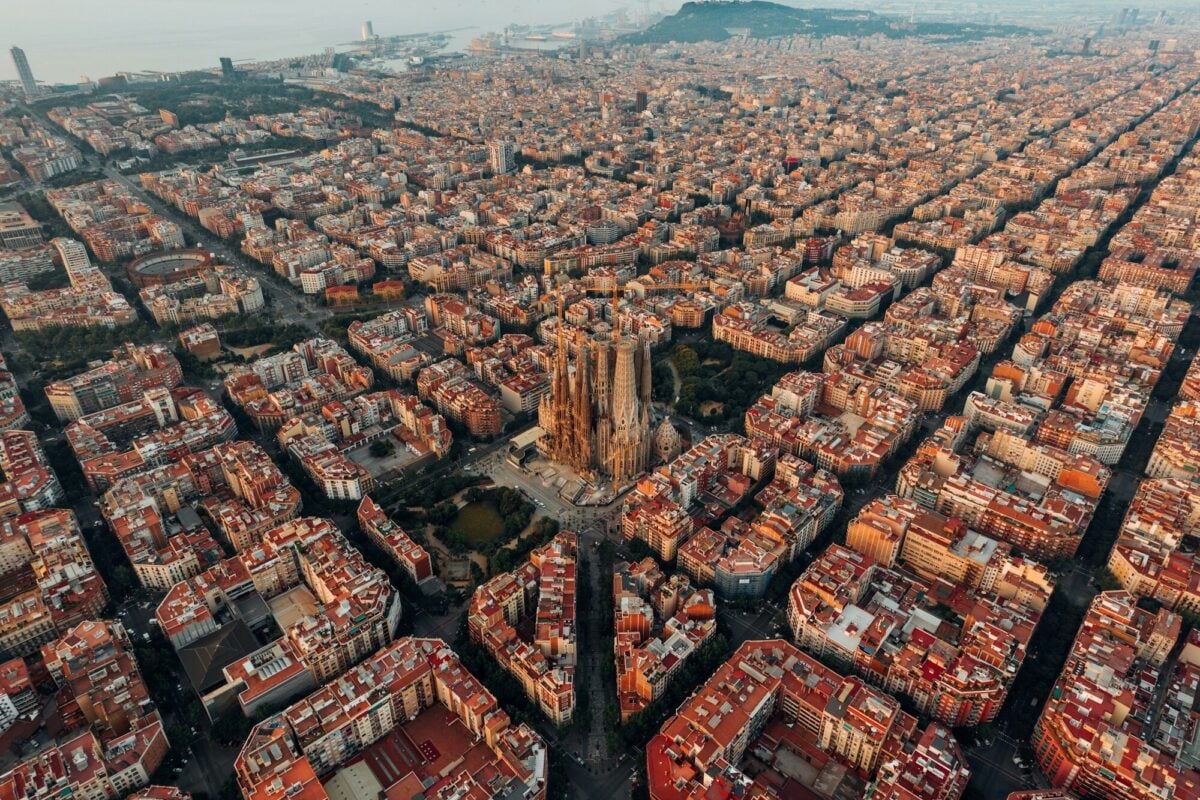
Barcelona‘s superblocks can be an example of open urban planning that systematically reorganised the street network by prioritising pedestrians, community and public spaces by reclaiming the streets for people and developing shared amenities to encourage interaction between everyone despite the differences.
But creating an open urbanscape requires more than just removing the barriers; social barriers must also be considered when planning a city without any.
Rethinking the City We Call Home
A home is defined not only by the walls that enclose it but also by the comfort, belonging, connection and safety it provides. A city is an extension of that home, and maybe it should offer more sense of belonging beyond the boundaries of a personal space. Maybe the question isn’t whether cities can exist without gates but whether they can be designed in such a way that the inhabitants no longer feel the need to keep everything and everyone beyond them.
Perhaps the difference lies in seeing the city not just as a place to inhabit but as a shared home that belongs to everyone, and recognising it as their own is where it makes all the difference.
Reference:
Abdelhamid, M. (2024). Barcelona superblocks: Reclaiming streets for people. [online] Urban Design Lab. Available at: https://urbandesignlab.in/barcelona-superblocks-reclaiming-streets-for-people/ [Accessed 9 Nov. 2026].
Castrezzati, M. (2023). Barcelona’s superblocks: Putting people at the centre. [online] CityChangers.org. Available at: https://citychangers.org/barcelona-superblocks/ [Accessed 8 Nov. 2026].
Kean, S. (2022). Mouse heaven or mouse hell? [online] Science History Institute. Available at: https://www.sciencehistory.org/stories/magazine/mouse-heaven-or-mouse-hell/ [Accessed 9 Nov. 2026].
Melchor, A. (2024). Universe 25 experiment. [online] The Scientist Magazine®. Available at: https://www.the-scientist.com/universe-25-experiment-69941 [Accessed 8 Nov. 2026].
Image source:
Figure 1: A street where compound walls and gates define the boundaries between spaces
Image: Varma Constructions Pvt. Ltd.
Figure 2: The Universe 25 experiment conducted by John B. Calhoun.
Image: Stan Wayman / The Life Picture
Figure 3: Barcelona superblocks.
Image: ArchDaily