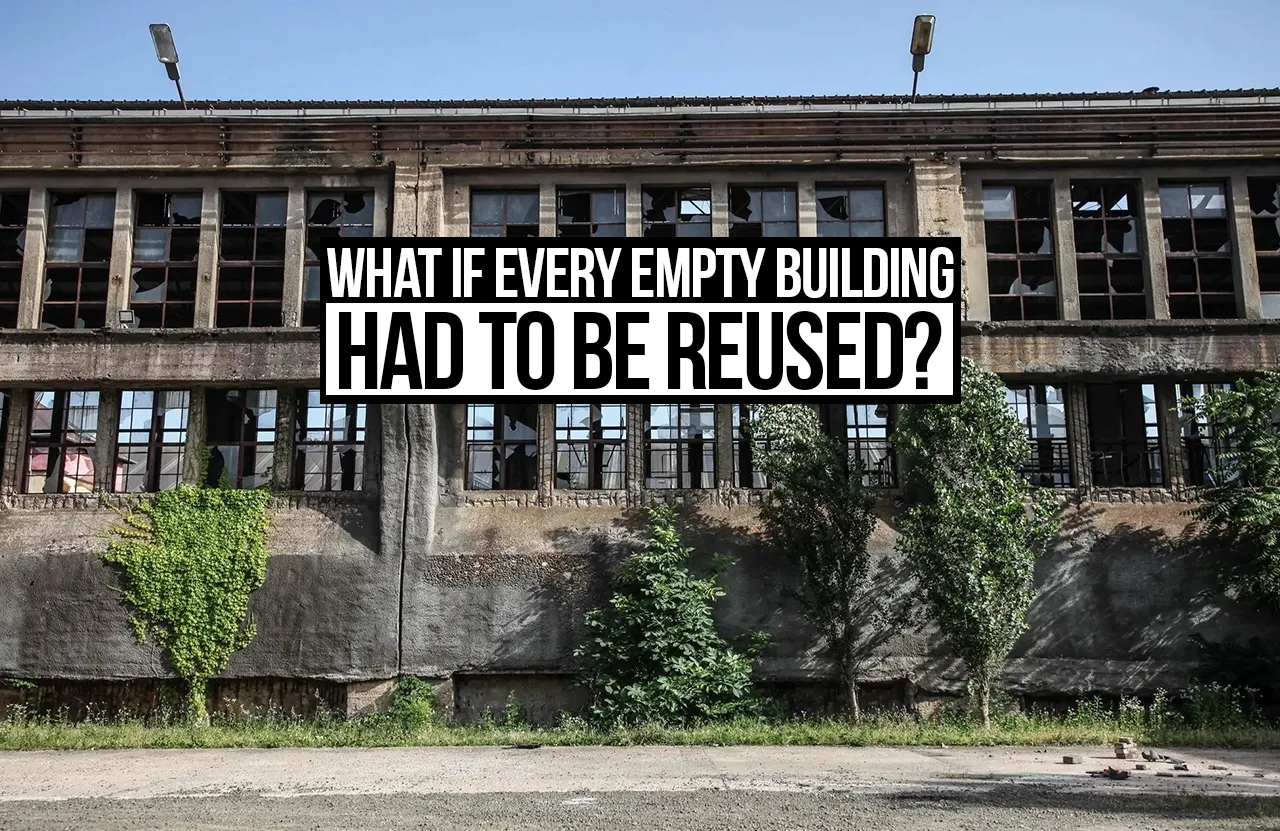
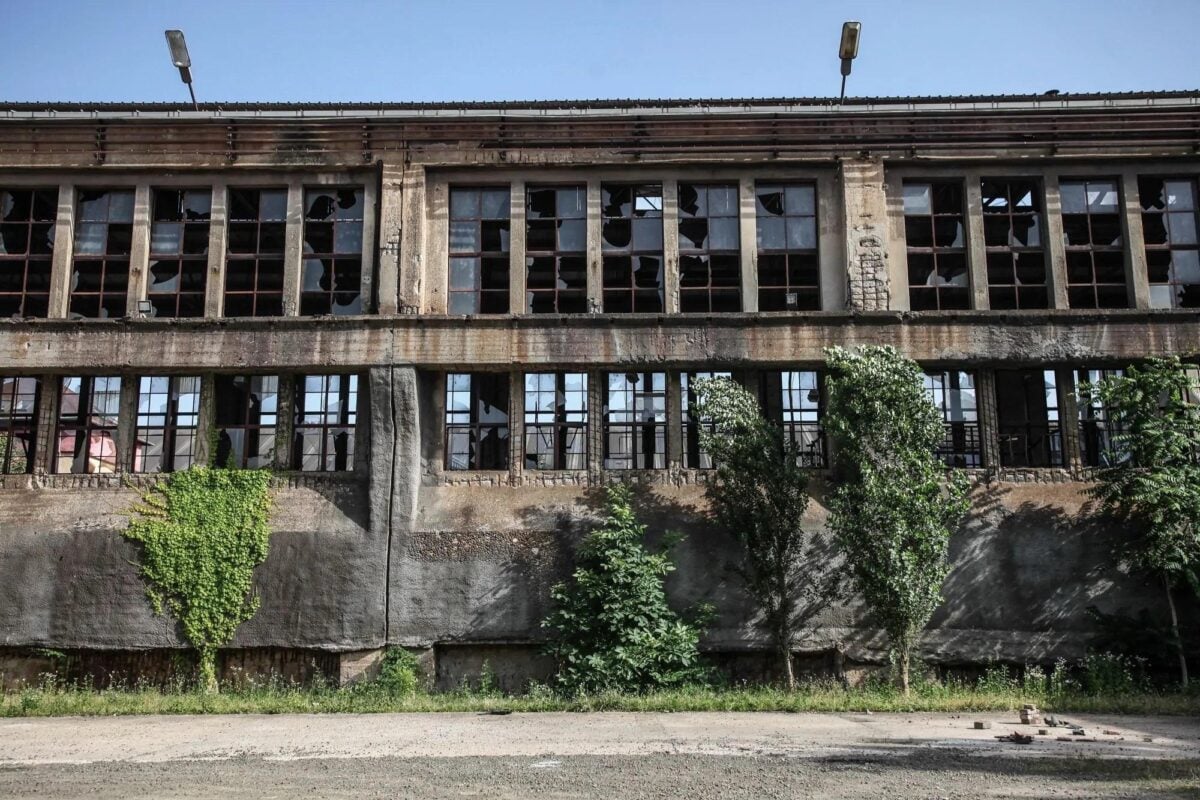
Cities are always expanding. Year on year, we see new office blocks, new housing, new retail, new commercial buildings. At the same time, there are derelict factories, derelict offices, derelict cinemas, old warehouses, and buildings that have simply outlived their original purpose. What if we reused every empty building before we even thought about demolishing it?
This question touches on several of our current concerns, primarily neighbourhood safety, the state of the urban environment, and the life of the building.
Abandoned buildings often become neglected spaces and can become havens for unauthorised occupation, illegal activity, dumping, and other nuisances. There’s an obvious safety issue there, but there’s another question you could ask. What happens to a building when it’s no longer in use?
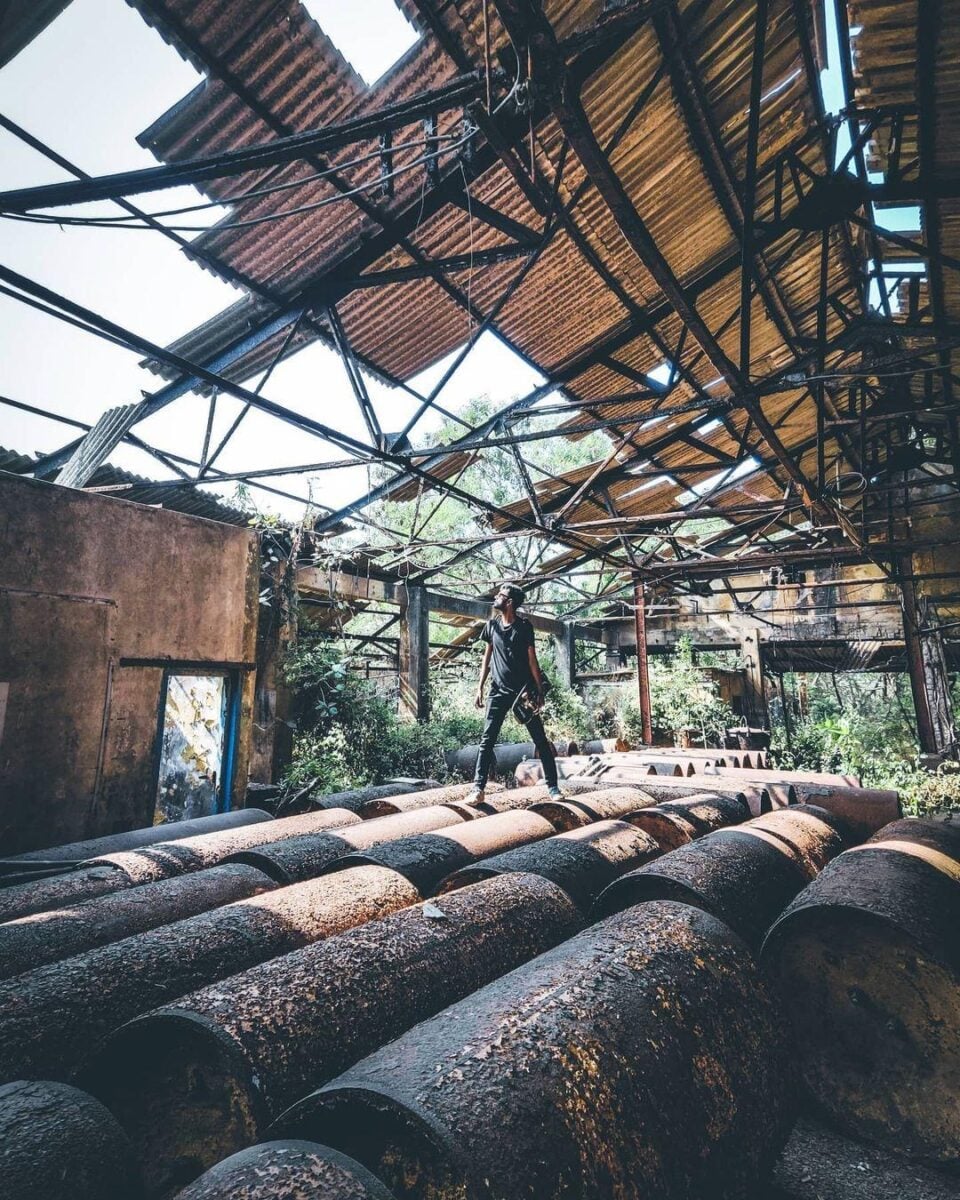
A building is much the same as any other piece of infrastructure in that it needs to be maintained and actively used if it is to remain in any sort of working order. Left unoccupied for long periods, it will start to fall apart like any other building. A piece of infrastructure that was once useful to a neighbourhood can easily become a liability.

Jane Jacobs, in her book ‘The Death and Life of Great American Cities’ (1961), talked about ‘eyes on the street’ and the way everyday life, active frontages and the presence of people contribute to a safer city. An empty building doesn’t necessarily make a street unsafe, but if it’s been empty for a long time and is neglected, it can reduce activity and the natural surveillance that would otherwise be present. It’s possible that giving those buildings a new use might also help bring life back to the streets around them.
Why do buildings become empty in the first place? The answer isn’t necessarily that they’ve deteriorated structurally. They can simply become obsolete in their original function. A textile mill closes because the manufacturing has moved. A cinema closes because the nature of entertainment has changed. An office becomes empty because the way people work has changed. That’s what we call building obsolescence. The building may be structurally sound and in excellent condition, but it no longer serves its original purpose.
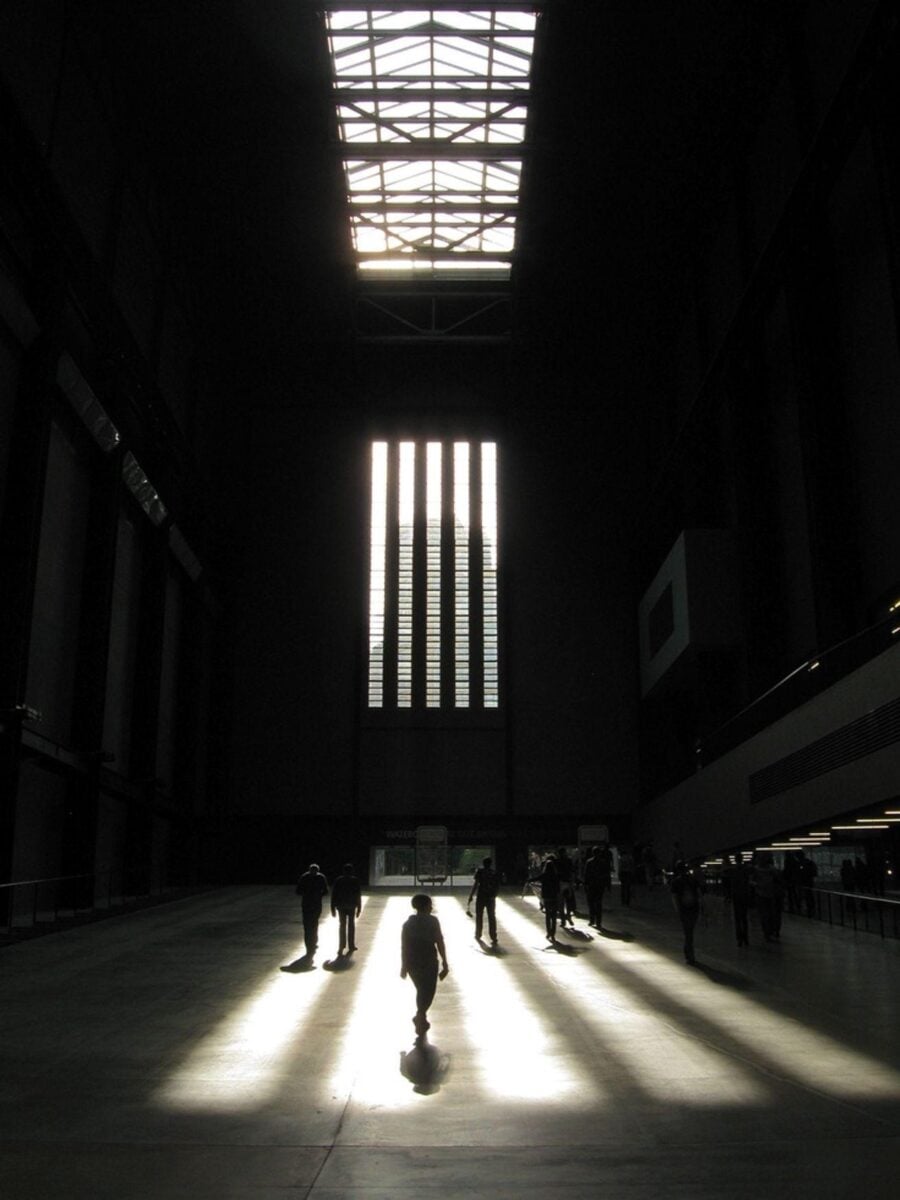
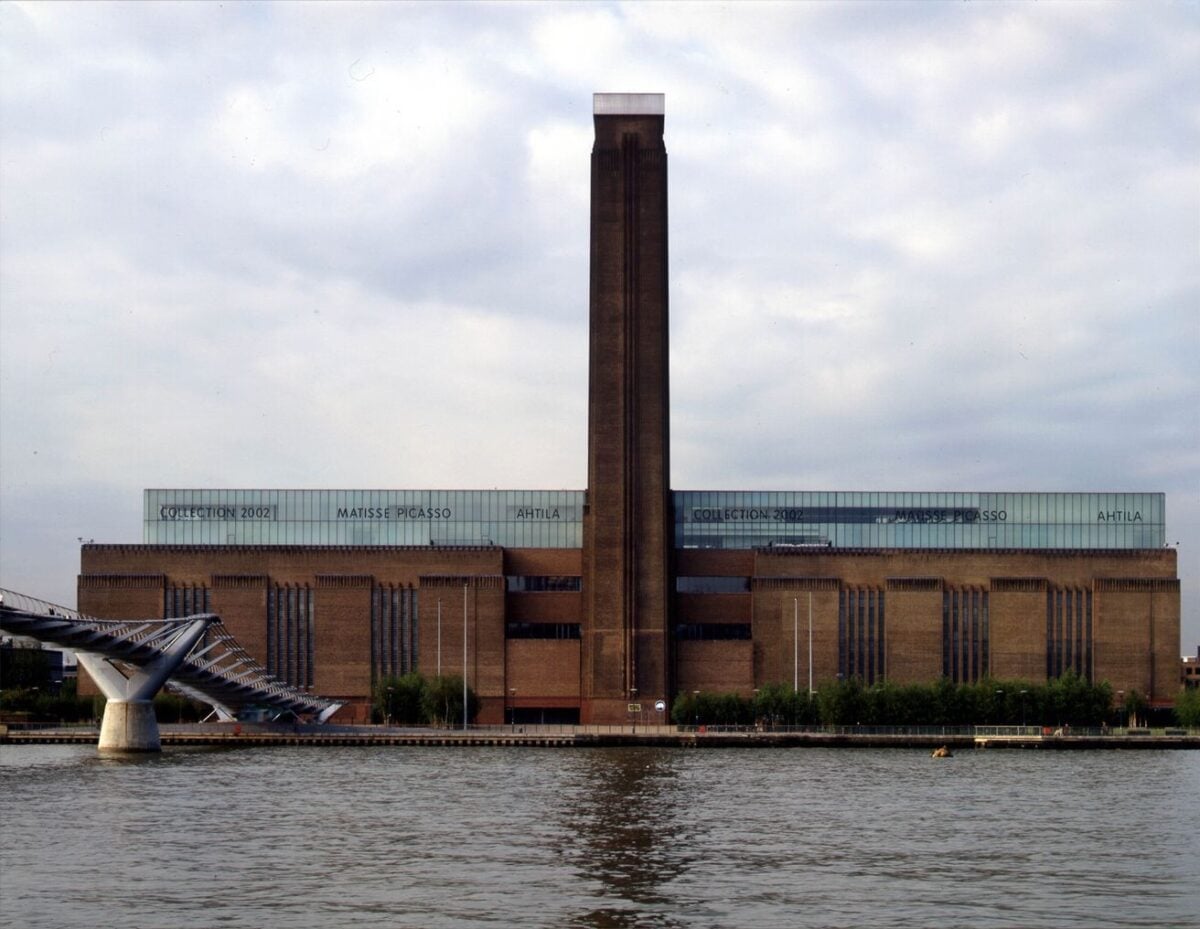
The Tate Modern in London is a good example. The former Bankside Power Station (which closed in 1981) was converted into a museum of contemporary art by Herzog & de Meuron and opened in 2000. Rather than knock the building down, the architects kept its industrial character and gave it a completely new cultural purpose. The same applies to Zeitz MOCAA in Cape Town, which took a former grain silo complex and converted it into a museum of contemporary African art. Heatherwick Studio has done the same thing: they’ve retained the industrial character of the building and cut a dramatic atrium out of the concrete silos. Both projects are a case in point: a building whose original function is no longer relevant, but which still has a lot of architectural potential.
The opportunity actually goes well beyond the cultural sector. Granby Four Streets in Liverpool is a clear example of how derelict buildings can catalyse regeneration across an entire area. A community initiative got residents to redevelop the derelict terraced houses and create affordable homes. With Assemble’s involvement, it became more than a housing project; it supported local craft, local employment, and community activity. It does raise the question, of course, of whether the future of a derelict building should be decided purely on the basis of its commercial viability, or whether community needs should also be a factor.
An environmental argument too makes this whole discussion very pertinent. You’ve got the same cycle of material extraction, manufacturing, transport and construction that you get with any new build. That’s the embodied carbon. A new building may be far more energy efficient in its day-to-day operation, but you have to factor in the embodied carbon of the construction process. Carl Elefante’s oft-quoted observation that “the greenest building is one that is already built” perfectly captures that. Historic England’s research into embodied carbon shows that, in certain circumstances, refurbishment and retrofit can result in a lower whole-life carbon footprint than demolition and reconstruction.
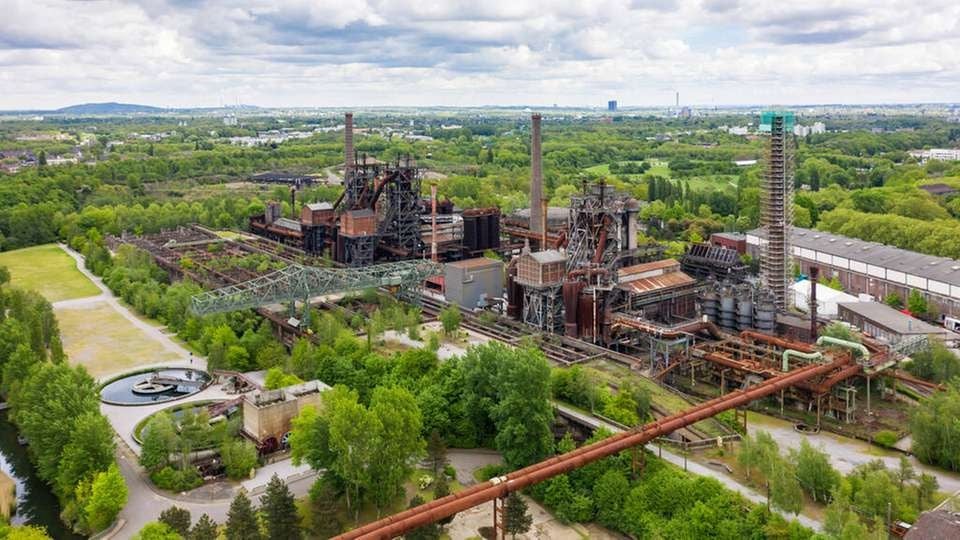
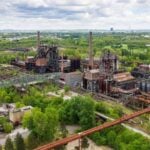
This approach doesn’t have to be restricted to buildings. Landschaftspark Duisburg-Nord in Germany (by Peter Latz and Partners) took a former steelworks and turned it into a public landscape park. Rather than clearing the site and creating a completely new park, the site’s blast furnaces, rail lines, and industrial buildings were retained and incorporated into the park as part of the recreational areas, gardens, and public spaces. It’s a case in point for how a derelict industrial site can become an ecological and social asset.
India has its own opportunities to look at. The former textile mill districts of Ahmedabad are a case in point for how an industrial property can become detached from the needs of the city. Research into the derelict Rajnagar Textile Mill suggests a model for community-based regeneration which would include green space, exhibitions, a range of commercial uses and public facilities. That’s still just a research proposal, not regeneration in any real sense, but it raises the question of how India’s industrial heritage might be brought into the 21st century.
Of course reusing every building isn’t as simple as it sounds. Some will be structurally unsound, some will be contaminated, some will just be too expensive to retrofit. Others may not be suitable in terms of daylight, ventilation, accessibility or fire safety for the new use they’re to have. An office building doesn’t just become a housing building because we need housing. Each building must be assessed individually for its physical condition, adaptability, environmental performance, and potential for a new use.
Perhaps the answer isn’t to ban demolition entirely but to make reuse the default option. What if every building slated for demolition had to go through a reuse feasibility study? An assessment of its structural soundness, potential for alternative uses, environmental impact and the needs of the local community could be carried out by architects, developers and local authorities prior to any decision being made as to its fate.
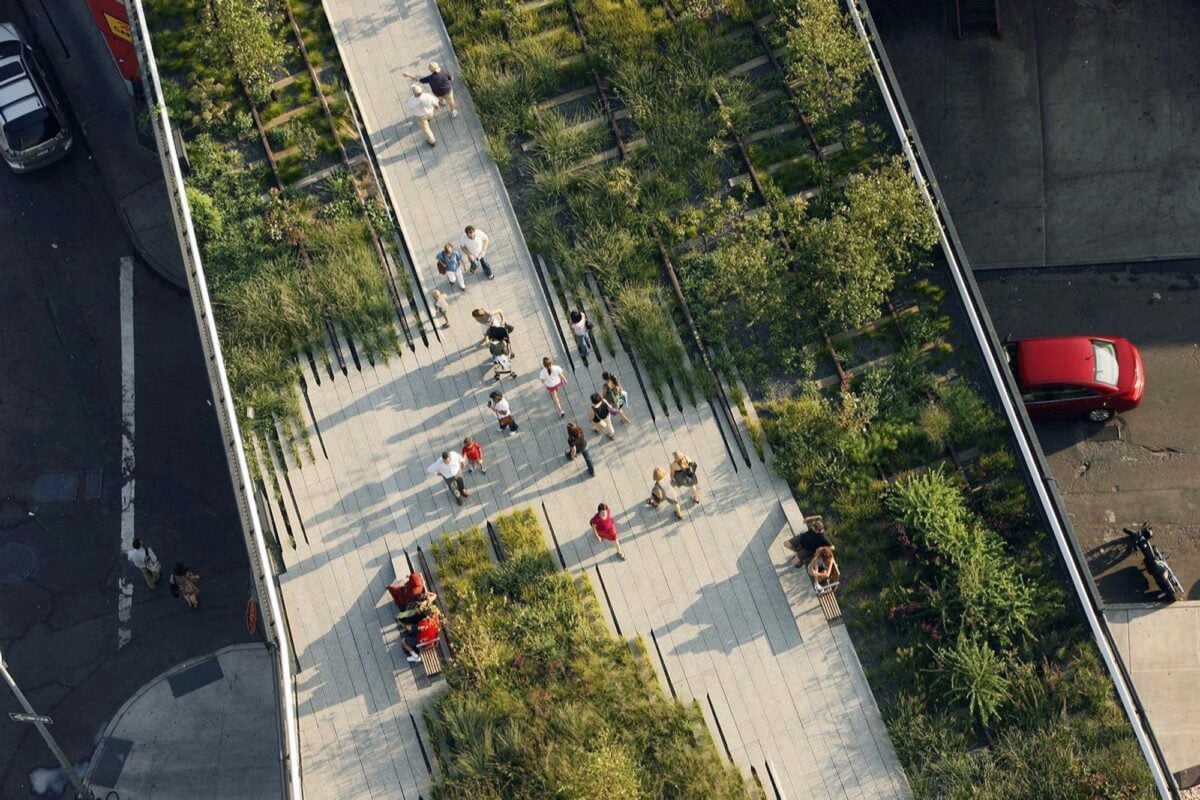
We tend to judge a city’s progress by how much new building takes place. Perhaps it’s time we looked at a different yardstick, though: how well we use what we already have. Once building has stopped, architecture isn’t complete. A building should be a living thing, evolving with the people and the city it serves.
Perhaps the future of architecture won’t be about how many new buildings we build, but how many existing buildings we can give a real second life.
Source/Credits:
- Spelman, W. (1993). Abandoned buildings: Magnets for crime?. Journal of Criminal Justice 21(5), pp. 481-495. https://doi.org/10.1016/0047-2352(93)90033-J
- Kondo, M., Keene, D., Hohl, B. C., MacDonald, J. M. & Branas, C. C. (2015). A Difference-In-Differences Study of the Effects of a New Abandoned Building Remediation Strategy on Safety. PLoS ONE 10(7). https://doi.org/10.1371/journal.pone.0129582
- (2024). Bankside Power Station. Wikipedia. https://en.wikipedia.org/wiki/Bankside_Power_Station
- (2017). Zeitz MOCAA. Heatherwick Studio. https://heatherwick.com/project/zeitz-mocaa/
- (n.d.). Granby Four Streets Regeneration. Arte Útil. https://arte-util.org/projects/granby-four-streets-regeneration/
- Zhang, Y., Sattar, S., Cook, D., Johnson, K. & Fung, J. (2024). Systematic Review of Embodied Carbon Assessment and Reduction in Building Life Cycles. Special Publication (NIST SP) – 1324. https://doi.org/10.6028/NIST.SP.1324
- (2024). Retrofitting Traditional Buildings: Embodied Carbon Payback Times. Historic England. https://historicengland.org.uk/research/heritage-counts/heritage-insights/payback-times-for-embodied-carbon/
- (n.d.). Landschaftspark Duisburg-Nord. Landschaftspark Duisburg-Nord. https://www.landschaftspark.de/en/industrial-heritage-circuit/denkmal-huttenwerk/
- Patel, M. & Patel, H. (2024). Abandoned territories in urbanscapes: adaptive reuse of Rajnagar Mill, Ahmedabad, Gujarat. Discover Cities 2. https://doi.org/10.1007/s44327-025-00094-y