Movies are a gateway to another world of imagination. And in them, we have anime movies. What makes them more fascinating is how they bring the imagined world of the creator to life through intricate, hand-drawn details and illustrations developed through sheer effort and years of dedication, helping people step into an experience that might only exist in someone’s imagination. Hayao Miyazaki, one of the founders of Studio Ghibli, is one such remarkable creator, having gifted the world with many such memorable masterpieces, with Howl’s Moving Castle being an example of one such extraordinary work, weaving magic, mystery, and fantasy to create something that feels almost real.

The castle that defines Convention
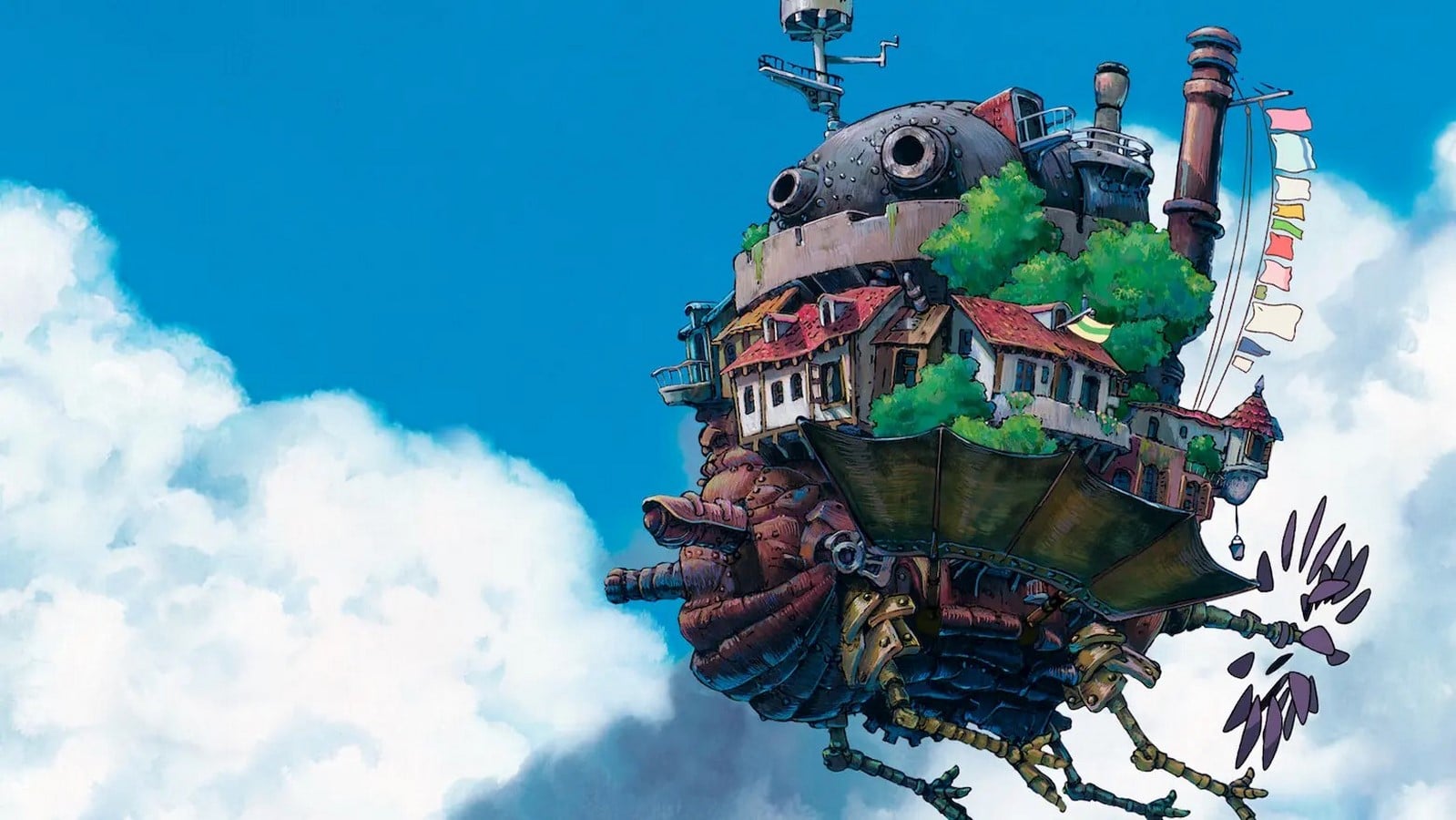
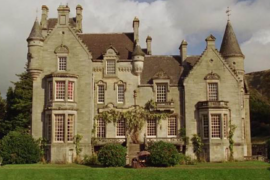
When asked to imagine a castle, one might picture a massive stone structure with turrets and drawbridges. Such an image feels easier to associate with Diana Wynne Jones’s 1986 novel Howl’s Moving Castle rather than the steampunk menace Hayao Miyazaki brought to life for his film adaptation.
What might seem like a straightforward story about a moving castle has far more beneath it. It is a tale of growth, understanding, and love built on standing with one another through hardships and looking beyond appearances or image. It shows that the journey of self-discovery is the first step to understanding the world beyond oneself.
Let’s look at Howl’s Moving Castle through the eyes of Miyazaki, where war and its effects are more than a backdrop to the story, and even the strange-looking structure might become home to the most unexpected bunch of people.
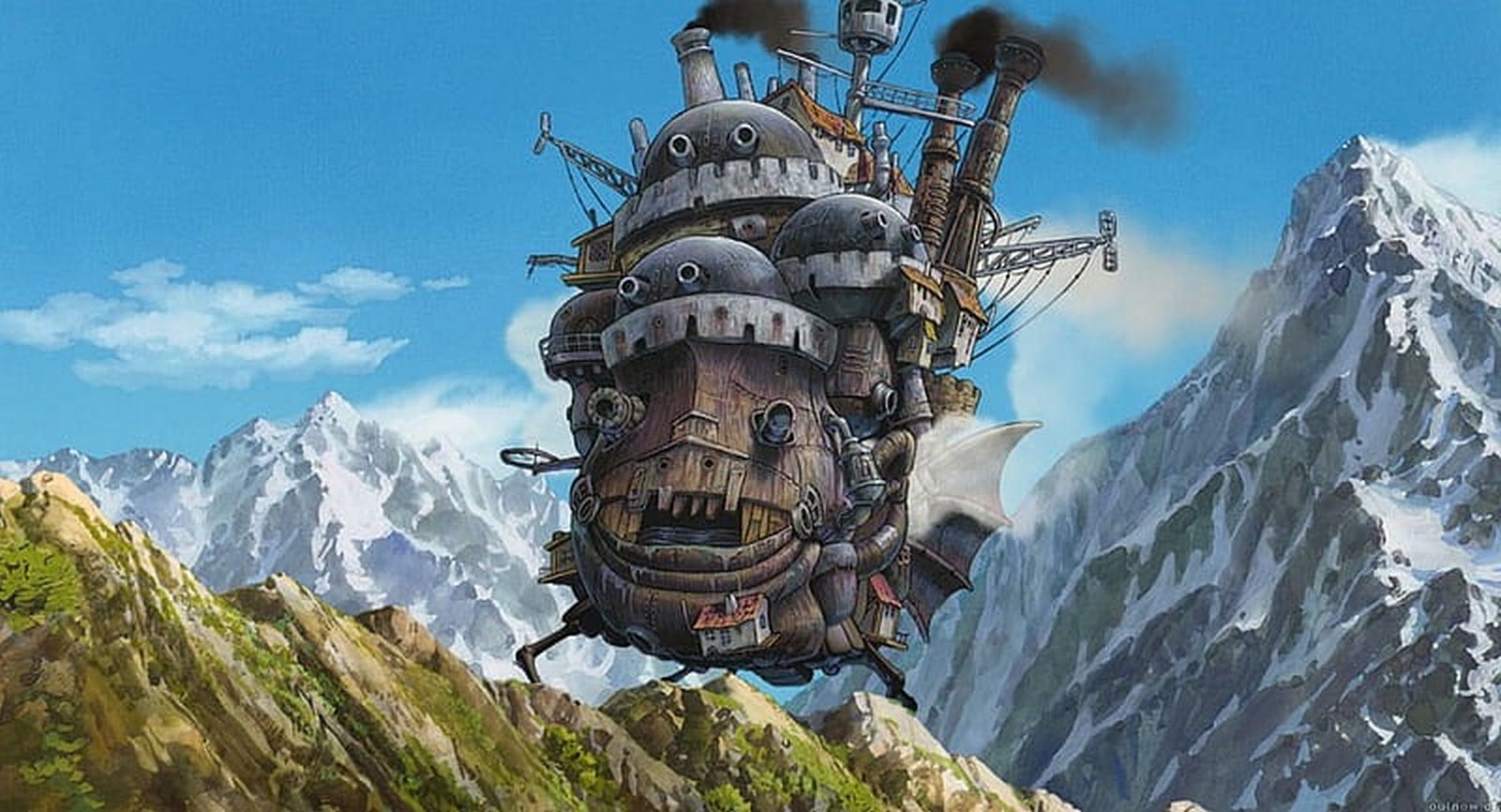
Set against the backdrop of war, where magic and emerging technologies of the 20th century coexist, Howl’s moving castle is a blend of fantasy, adventure, romance and humour. The story follows Sophie, a quiet young hatter whose unexpected encounters with Howl, an enigmatic and handsome wizard, get her tangled with the Witch of the Waste. Cursed to appear old, Sophie sets out to find a way to break the curse. Along the way, an act of kindness towards a seemingly ordinary scarecrow leads her to Howl’s moving castle, a living, breathing, mechanical leviathan resembling a patchwork of scrap moving on bird legs, defying every conventional architectural logic. And within this peculiar castle, Sophie makes a deal with Calcifer, the fire demon that powers the castle, to break her curse.
The Contrast
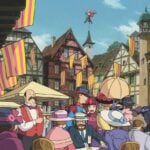
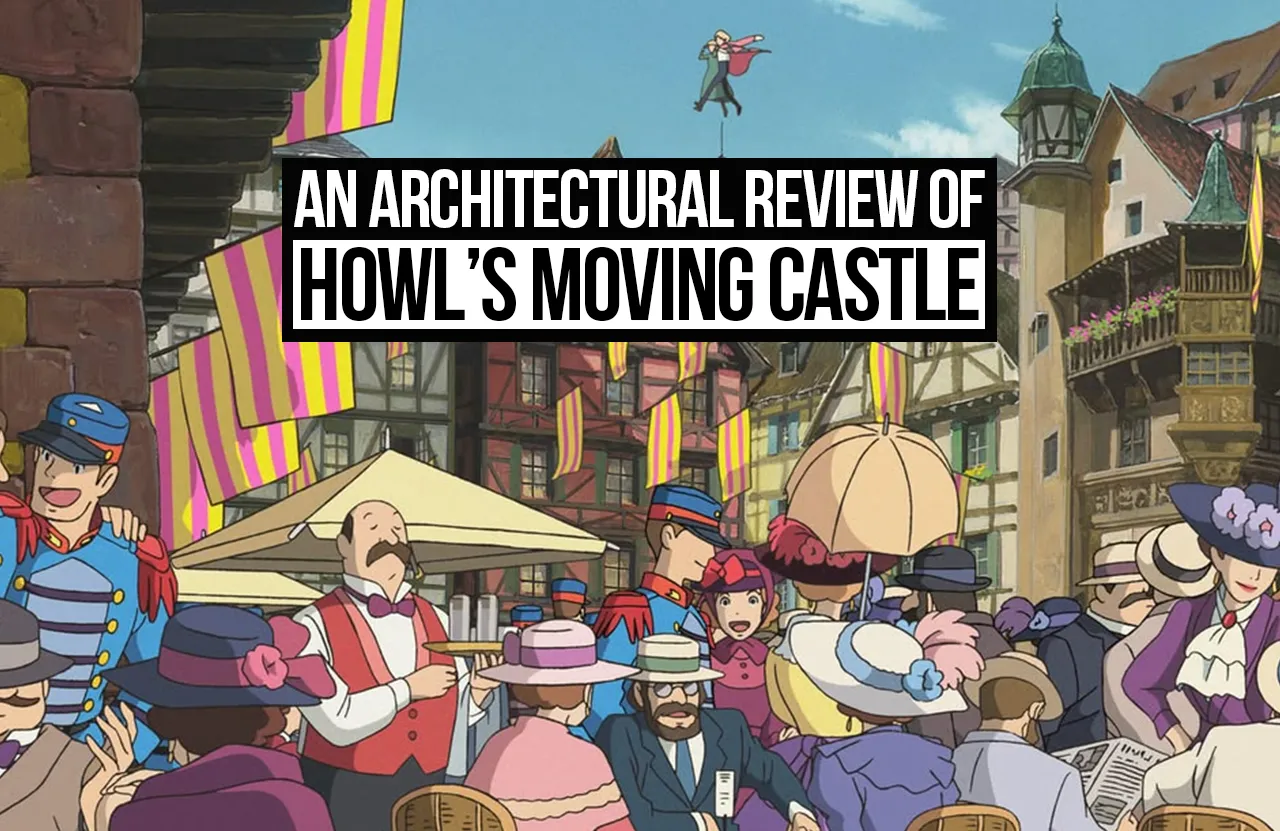
Among the lively and colourful buildings around, which appear to be recognisable European architectural features, ornate facades, sloping roofs and busy streetscapes, Howl’s castle stands out as an oddity for reasons beyond its ability to move. It seems to defy every conventional understanding of what a building should look like. Mismatched metal components, haphazard mechanics, and crooked silhouettes balanced on thin mechanical legs make it seem almost grotesque compared to its surroundings. Yet, beneath this chaotic exterior, the interior dwelling is quiet, a contrast to itself.
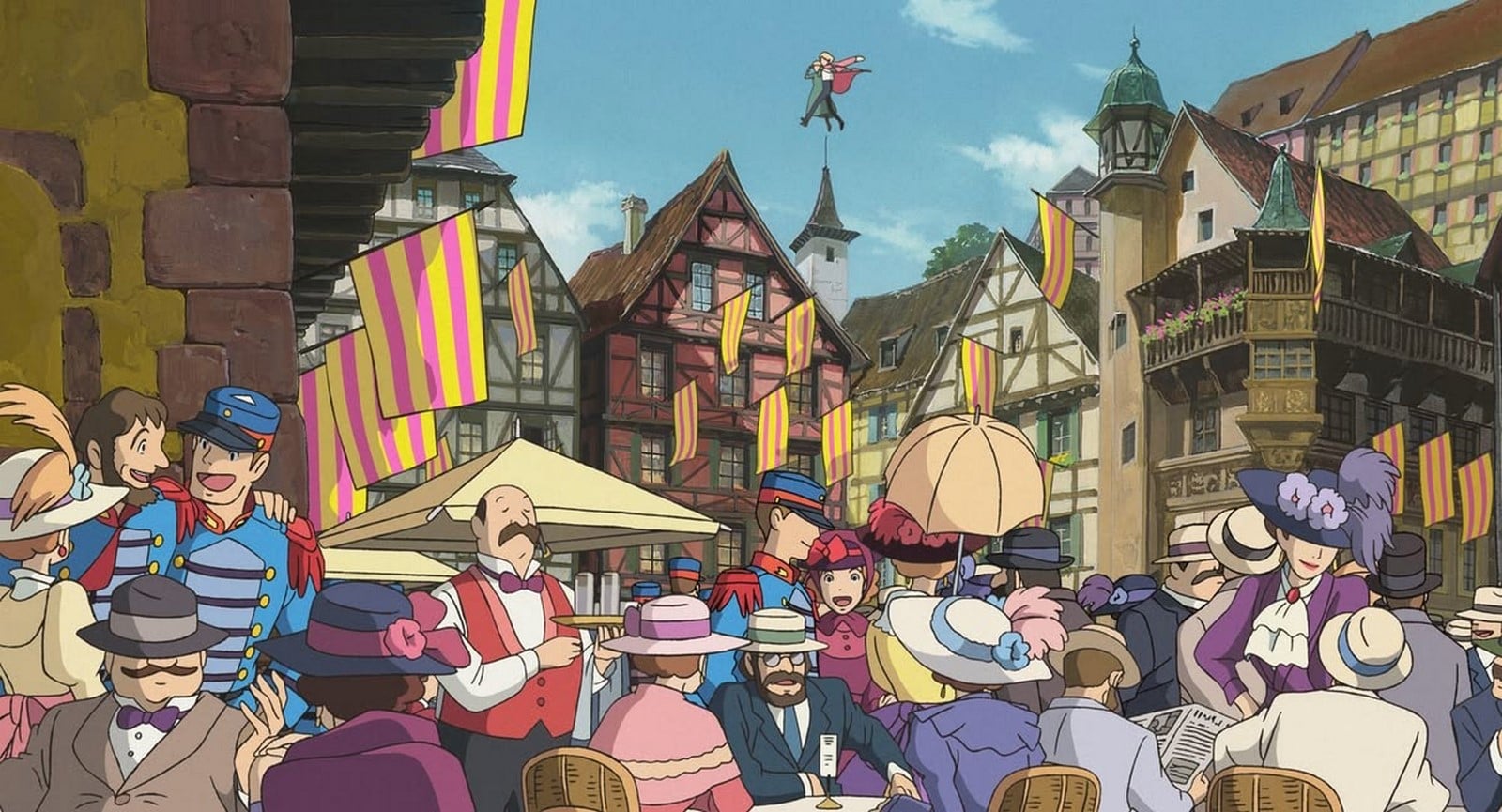
Yet the castle is fascinating not only because of its unusual appearance, its contrast with its surroundings or the mysterious dial that connects different locations through the same door, but also because of how closely it is tied to the characters living in it and how it changes as the story progresses.
The People
Under Howl, the castle appears unkempt, disordered and chaotic. When Sophie enters, she begins to transform the place through care and cleanliness, giving it a new sense of life that kept getting better as the familiarity and the relationship between the characters developed. In turn, the castle became a setting for Sophie’s own transformation, helping her gradually develop confidence and belonging, which slowly, unknowingly, reversed her curse and made her so much better and different from who she was in the beginning.
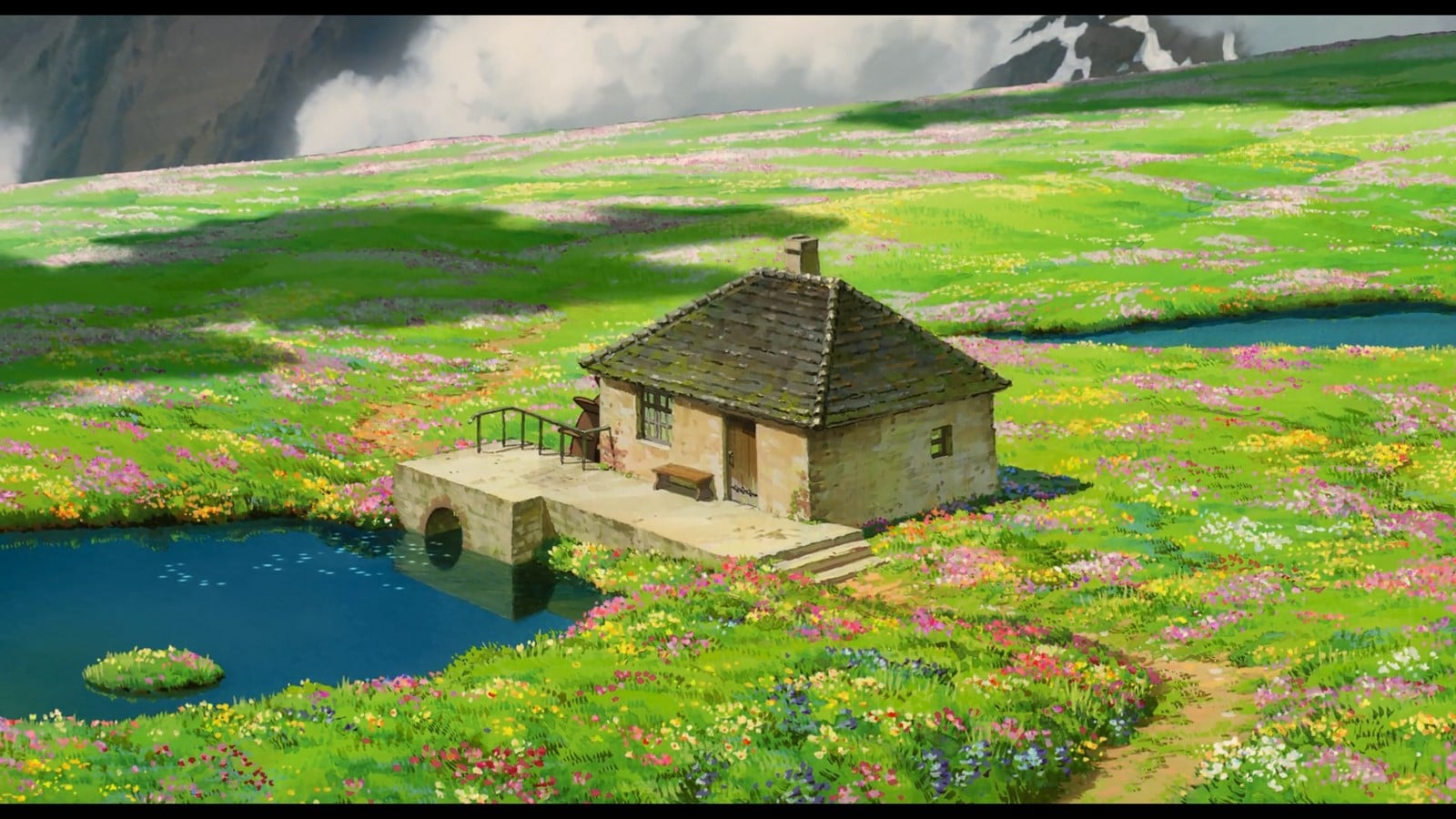
Howl’s development is equally revealing in his relationship with the castle. As his bond with Sophie deepens, the boundaries between the place and the people occupying it also begin to shift. The connection to Sophie’s hat shop, his secluded childhood garden, and his willingness to share it with her gives a deeper glimpse into his character and also shows that this castle is not just a vehicle for travel and refuge but also a place that slowly develops into a home under trust and affection.
Beyond the Castle
The same world that produces extraordinary inventions and impossible machinery has also repeatedly demonstrated its capacity for destruction. In Howl’s Moving Castle, war has played a greater role in reshaping the characters and the world they inhabit. What seemed to be a beautiful town was destroyed within minutes, and even the castle, in Sophie’s attempt to help Howl, fell to fragments. This shows that destruction inevitably reveals how fragile the idea of home can become when threatened by forces beyond control.
But this damage doesn’t end the story of the castle; it eventually plays a part in pivoting the war to a conclusion and also gives the characters a foundation to rebuild, and eventually transform the castle into a home, shaped by the people, their experiences, their relationship, and how far they’ve come. Perhaps that is what suggests that a home doesn’t need to be perfect, logical or even conventional, but a place shaped by the people living in it, their experiences and a place where one can just be.
This transformation in the characters and the castle also raises an uncomfortable question: Does something have to be destroyed for something better to emerge?
Change or transformation can be a hard choice and process involving letting go of what was familiar or comfortable. Architecture is no exception to change. Through time, various structures have emerged and have been demolished, renovated, destroyed and rebuilt. The creation never stopped but has changed and developed, for better or worse, with time and situations. Through Sophie and the Castle, the movie teaches that destruction isn’t necessary or desirable, but it leads to a harder consideration: what the cost of change brings and whether it is worth it.