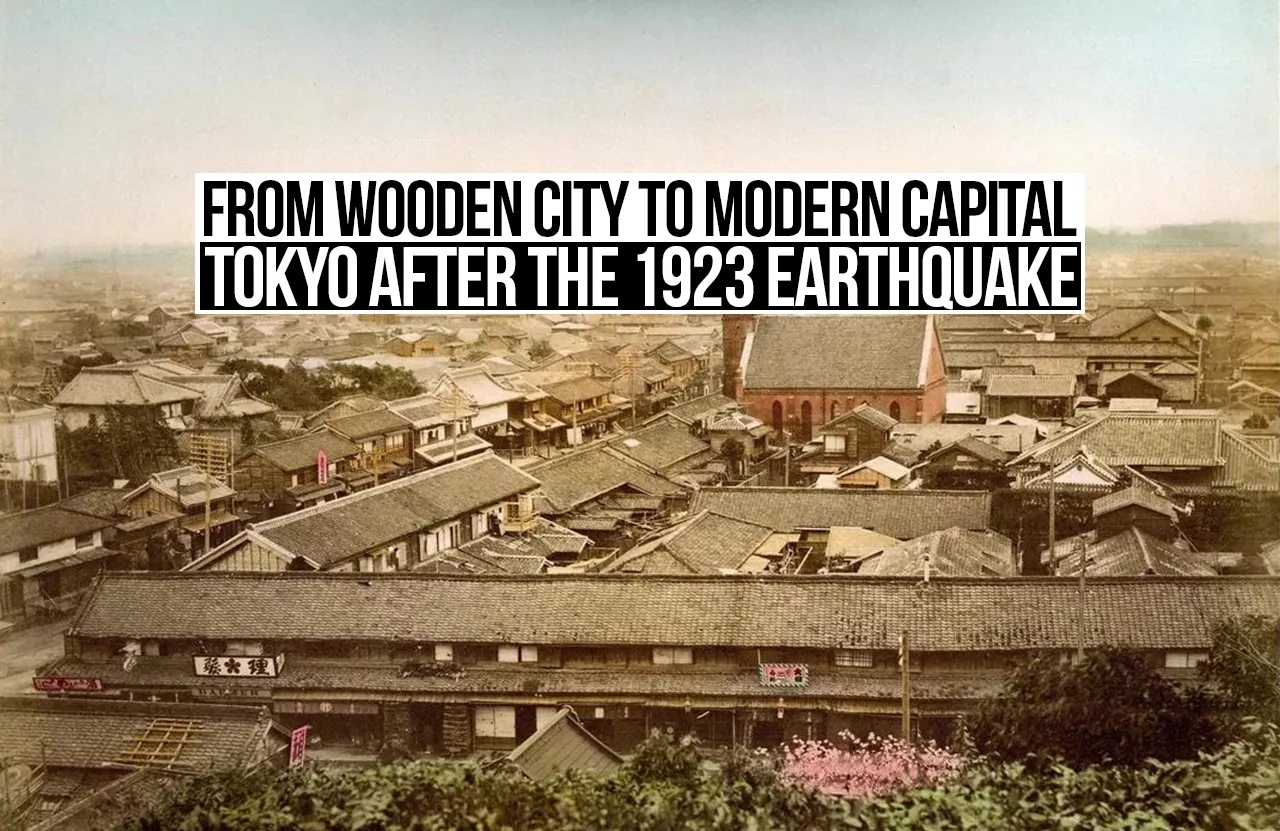
Present-day Tokyo is known for its glass skyscrapers, futuristic technology, earthquake-proof construction, and well-thought-out city planning. However, a century ago, Tokyo was primarily a wooden city.
The Great Kantō Earthquake destroyed Tokyo, Yokohama, and the surrounding areas, causing damage throughout the Kantō region. However, many bureaucrats, urban planners, and social reformers saw a silver lining to reconstruct the city as a modern, efficient, and resilient metropolis.
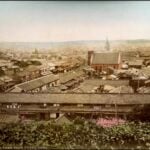
Tokyo before 1923
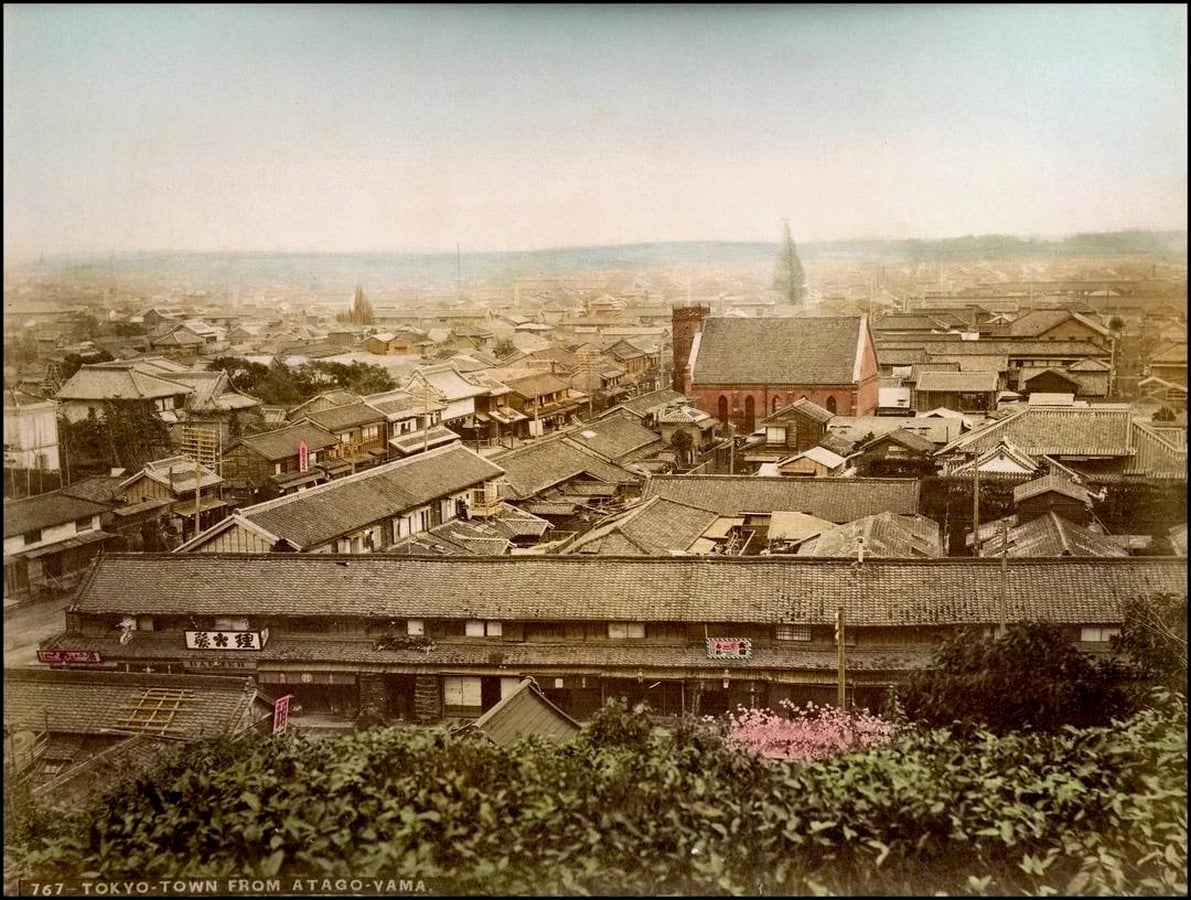
Before the earthquake, Tokyo was a dense and rapidly growing city. Many ordinary homes were made of wood, making them relatively light, well suited to Japan’s climate, and able to withstand an earthquake without immediately breaking. The city consisted of narrow lanes, tightly packed houses, and limited open space due to its growing population.
New railway stations, department stores, offices, and Western-style buildings were being constructed in the city. Tokyo Station, completed in 1914, was one of the most visible symbols of this modern era: a grand red-brick building designed to represent Japan’s growing power and technological ambition, but most everyday neighbourhoods were still being built in wood.
The Great Kantō Earthquake
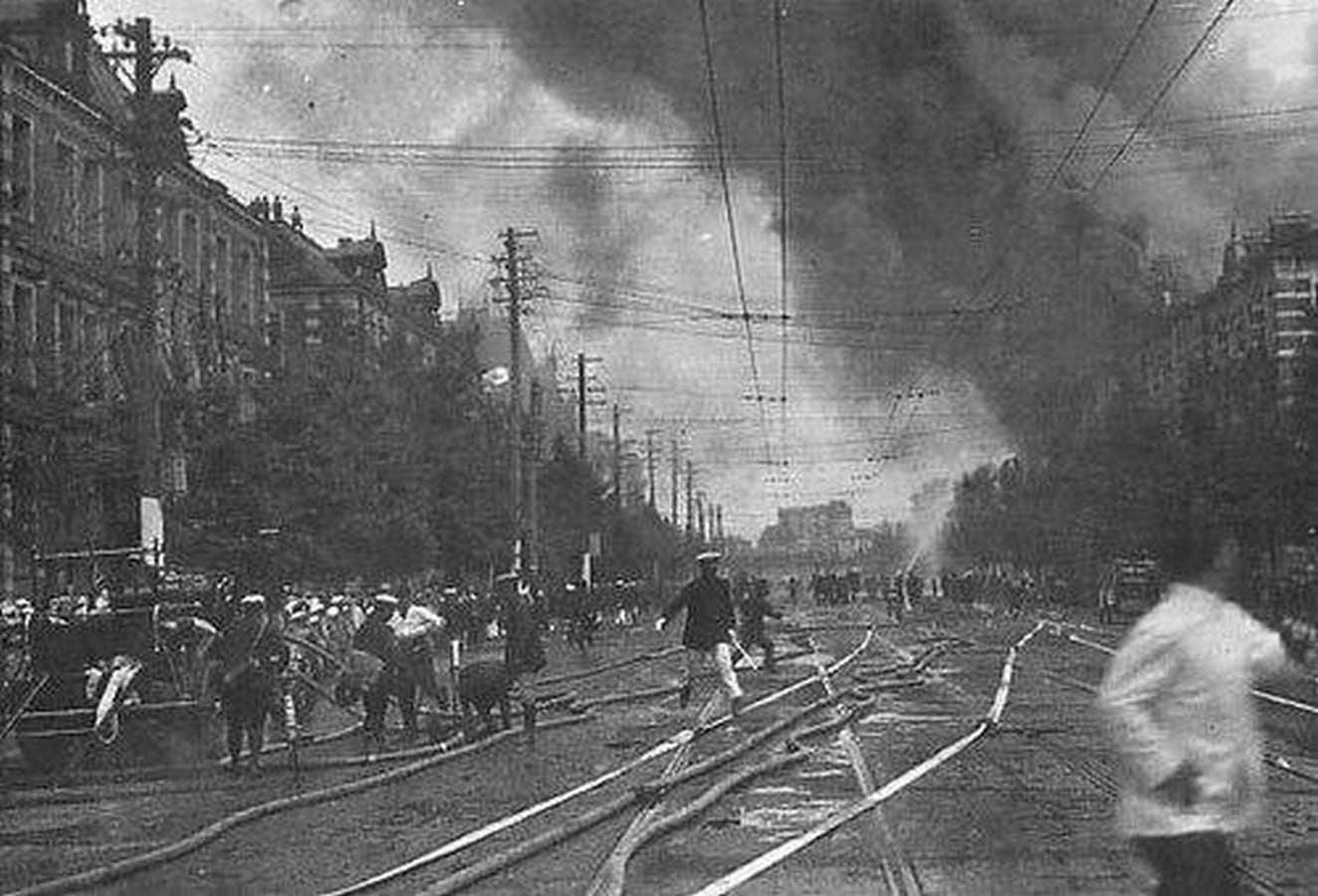
The Great Kantō Earthquake hit the island of Honshu on Saturday, September 1, 1923. The damage spread across the entire Kantō region, including the capital city of Tokyo.
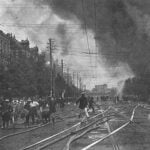
The earthquake was terrifying, but the fires that followed were even more destructive. More than 130 major fires broke out across Tokyo and kept spreading because of cramped wooden buildings and gas leaks from broken lines. Strong winds linked to a typhoon aggravated the fires further into massive firestorms.
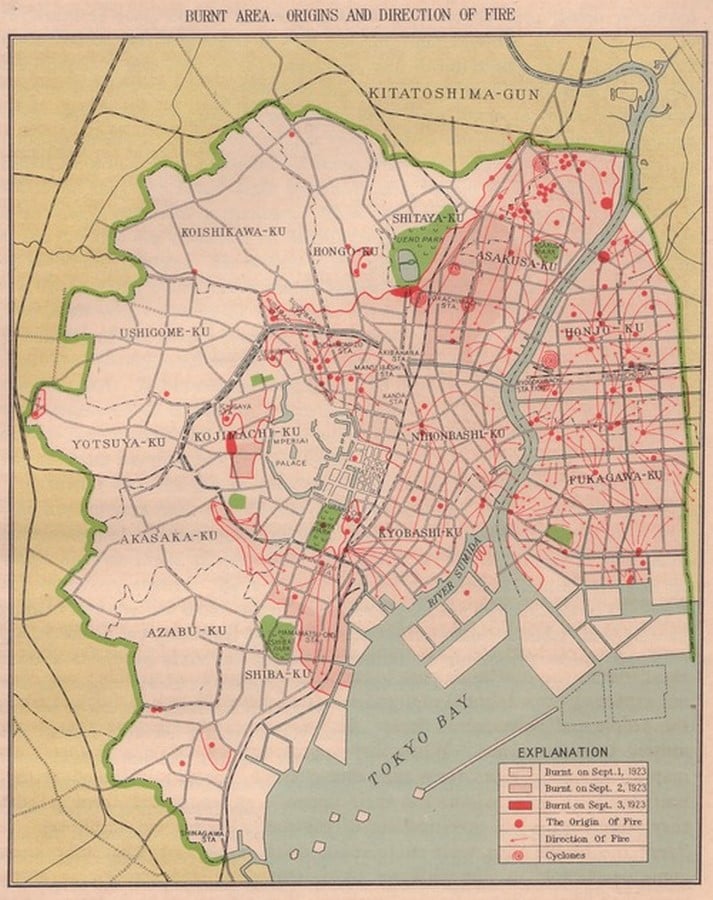
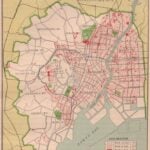
The death toll is estimated to have been between 105,000 and 140,000 people. The fire outbreak caused 90 percent of the casualties. 40 percent of Tokyo and 90 percent of Yokohama were burnt to ashes, leaving approximately 2.5 million people homeless.
This catastrophe brought Tokyo to its knees; it was the worst disaster it had ever experienced. It revealed how vulnerable the city’s wooden buildings, narrow streets, and limited infrastructure were.
Rebuilding a modern capital
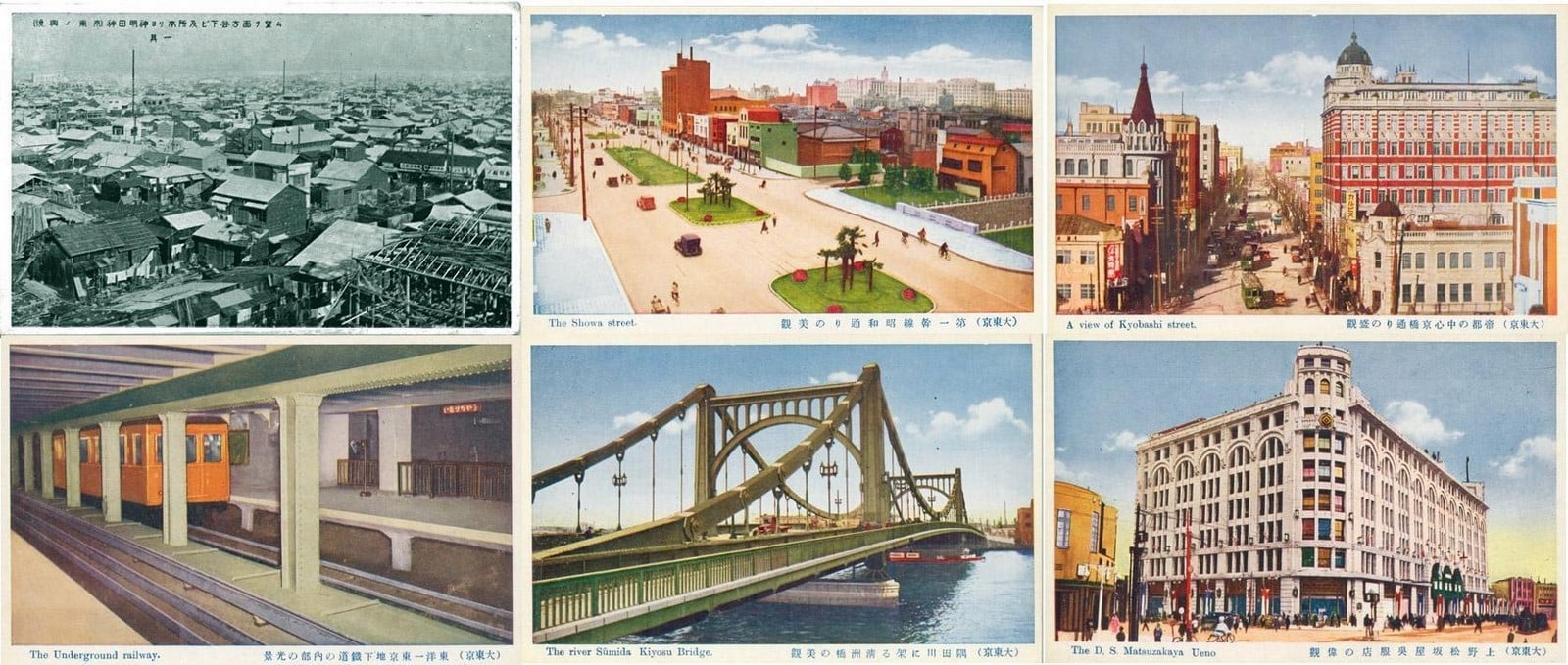
Schools were rebuilt in reinforced concrete, with small parks that could serve as evacuation spaces during future emergencies. The Dojunkai Foundation revolutionized the housing system with earthquake and fire-resistant apartments that included gas, water, and flush toilets, offering a new model of urban living. They were designed to protect residents better than the wooden houses that had burned so easily in 1923.
Many wooden bridges collapsed during the earthquake, so they were replaced by new modern steel bridges spanning the Sumida River, becoming new icons of the capital city.
Japan introduced its first earthquake-specific building codes in 1924. These codes were revised over time and eventually became some of the most advanced in the world. Japan is now widely recognized as one of the best-prepared countries for seismic risk.
Today, Japanese buildings use innovative technology to weaken seismic vibrations. Building foundations are made of rubber and steel. These are called base-isolation systems. During an earthquake, the rubber bearings allow the ground to move while reducing movement that reaches the building above. Some buildings also have tuned mass dampers, which are like large pendulums, that counterbalance the sideways movement of a building during an earthquake.
Modern buildings are designed to control and absorb shocks from tectonic movement. At the same time, the city is better protected against large fires through wider roads, better infrastructure, and improved planning.
Together, these projects shifted Tokyo’s architecture and urban planning toward disaster prevention while helping shape an image of Japan as a modern, resilient nation.
Achievements and Shortcomings
By 1930, Tokyo had undergone significant changes. Transportation infrastructure was notably improved, along with the river and canal system. The original reconstruction vision was much larger than what was finally carried out. Politicians reduced the budget from 4 billion yen to 649 million yen, scaling back their ambitious plans.
The time period after the 1923 calamity was marked by social unrest and political breakdown. There were conflicts over land readjustments. And although new building codes and concrete construction improved safety, many people continued to live in wooden houses.
Land readjustment did create wider roads, sidewalks, and small parks, but only a small share of residential land was converted for non-residential use. Most of the reconstruction still focused on rebuilding housing and basic infrastructure rather than transforming the entire city.
Tokyo shaped by disaster.
Tokyo’s modernisation was fueled by the 1923 catastrophe. The city rose from the ruins and asserted its status as a 20th-century modern city; its architecture reflected resilience, recovery, and growth.
Rather than borrowing Western archetypes, Tokyo created its own solution tailored to its own vulnerabilities: intense seismic activity, post-earthquake firestorms, and extreme urban density. Today, Tokyo stands as a symbol of hope and proof that smart design can keep a city and its citizens safe.
References:
Great Kantō Earthquake.com (2013) ‘Reconstruction’. Available at: http://www.greatkantoearthquake.com/reconstruction.html (Accessed: 12 October 2026).
Japan National Government (n.d.) ‘Architectural Regeneration’. Highlighting Japan. Available at: https://www.gov-online.go.jp/eng/publicity/book/hlj/html/201210/201210_05.html (Accessed: 12 October 2026).
Japan National Government (n.d.) ‘Introducing Tuned Mass Dampers’. Highlighting Japan. Available at: https://www.gov-online.go.jp/eng/publicity/book/hlj/html/201701/201701_03_en.html (Accessed: 12 October 2026).
Schencking, J.C. (2013) The Great Kantō Earthquake and the Chimera of National Reconstruction in Japan. Ithaca, NY: Cornell University Press.
Sorensen, A. (2001) ‘Urban planning and civil society in Japan: Japanese urban planning development during the Taishō Democracy period (1905–1931)’, Planning Perspectives, 16(4), pp. 383–406.
Tokyo Metropolitan Government (n.d.) ‘Recovery from the Great Kanto Earthquake’. Tokyo Resilience Project. Available at: https://tokyo-resilience.metro.tokyo.lg.jp/en/kanto-daishinsai/ (Accessed: 12 October 2026).
Weisenfeld, G. (2023) ‘Imaging disaster: Tokyo and the visual culture of Japan’s Great Earthquake of 1923’, The Asia-Pacific Journal: Japan Focus. Available at: https://apjjf.org/2023/8/weisenfeld (Accessed: 12 October 2026).