Somewhere in every common person’s home, there’s probably a piece of furniture that arrived flat in a cardboard box, which they assembled later. Although only a handful of people know about the man who made that possible.
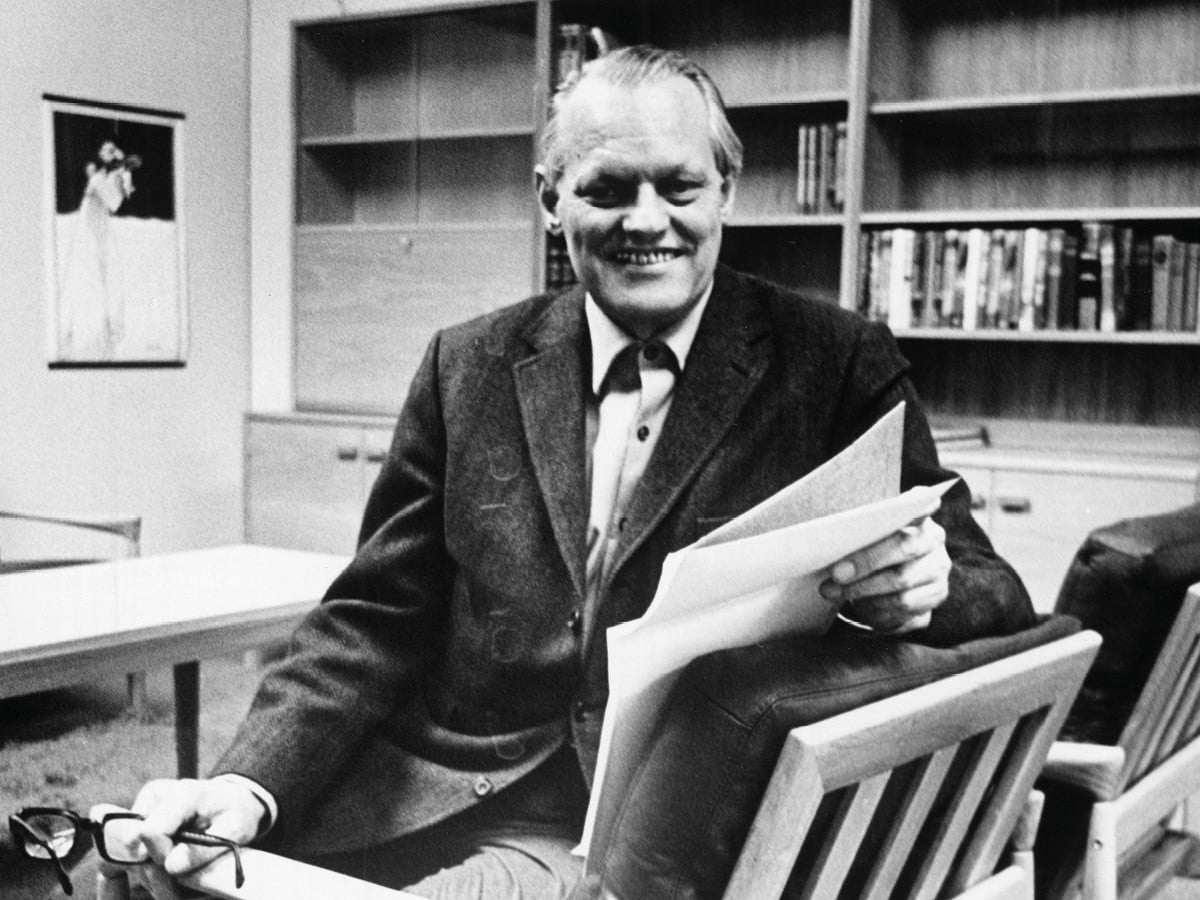
Erik Wørts’ Early Life
Erik Wørts was a Danish furniture designer who combined traditional craftsmanship with modern industrial production methods. He was born in Denmark in 1916 and began his career by working as an apprentice in his father Henrik Wørts’s cabinetmaking business, Wørts Møbelsnedkeri, before going on to study at the Danish School of Crafts in Copenhagen. He completed his studies in 1937 and then started to design furniture in his father’s workshop.
In 1944, Wørts went to Sweden and started working at Nordiska Kompaniet (NK), a well-known Swedish luxury department store. At NK, he worked alongside the designer and architect Elias Svedberg on the Triva furniture series. Triva was Sweden’s first flat-pack furniture range, and Wørts played a particularly important role in its construction.
Designing Furniture that Comes Apart
Erik Wørts spent his childhood at his father’s workshop learning patience, precision and permanence required to build furniture. Rather than abandoning his skills as a traditional craftsman for industrial production, he applied his attention to precision and his understanding of materials to a field which is increasingly focused on standardisation and mass production.
Conventionally, a piece of furniture is conceived taking into account its final form. However, when designing flat-pack furniture, there is an extra layer of complexity and a new set of constraints; its components must be designed so that it can be separated, fit into a smaller package, and eventually assembled by a customer who has no special training.
This involves addressing several challenges at once. Instead of using permanent joints, furniture pieces must be replaced by removable fittings such as cam locks, dowels, and threaded inserts, which are strong enough to carry the structural load yet simple to assemble using a single tool. Materials must be thoughtfully considered, and tolerances should be accurate enough to allow the panels to align. Wørts was dealing with all of these issues long before ‘Design for Assembly’ became a formal concept.
Collaboration with IKEA
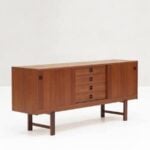
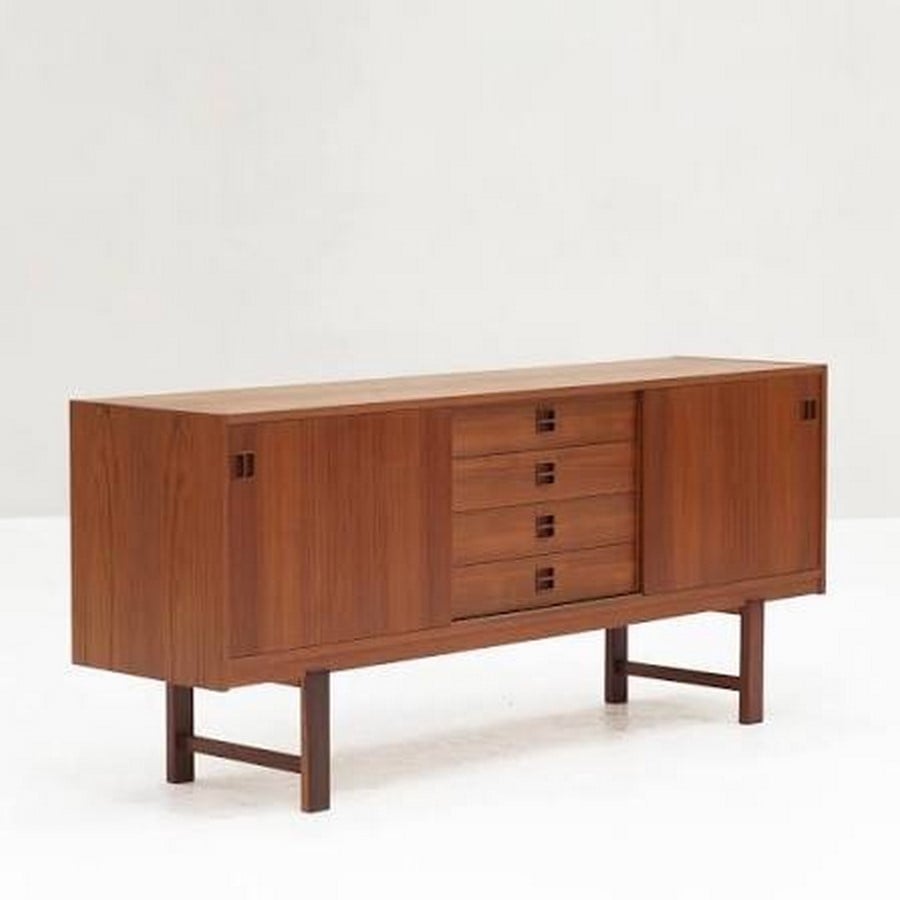
In 1958, Wørts’s knowledge of flat-pack furniture eventually caught the attention of IKEA founder Ingvar Kamprad. Wørts then became one of the early designers associated with IKEA, beginning a collaboration which lasted for many decades. In 1960, Wørts ‘ first design, the DANSKE sideboard, was launched.
Kamprad’s describes Wørts as someone who was “tremendously knowledgeable about furniture culture and tradition, who could gently adapt these aspects to modern needs.”
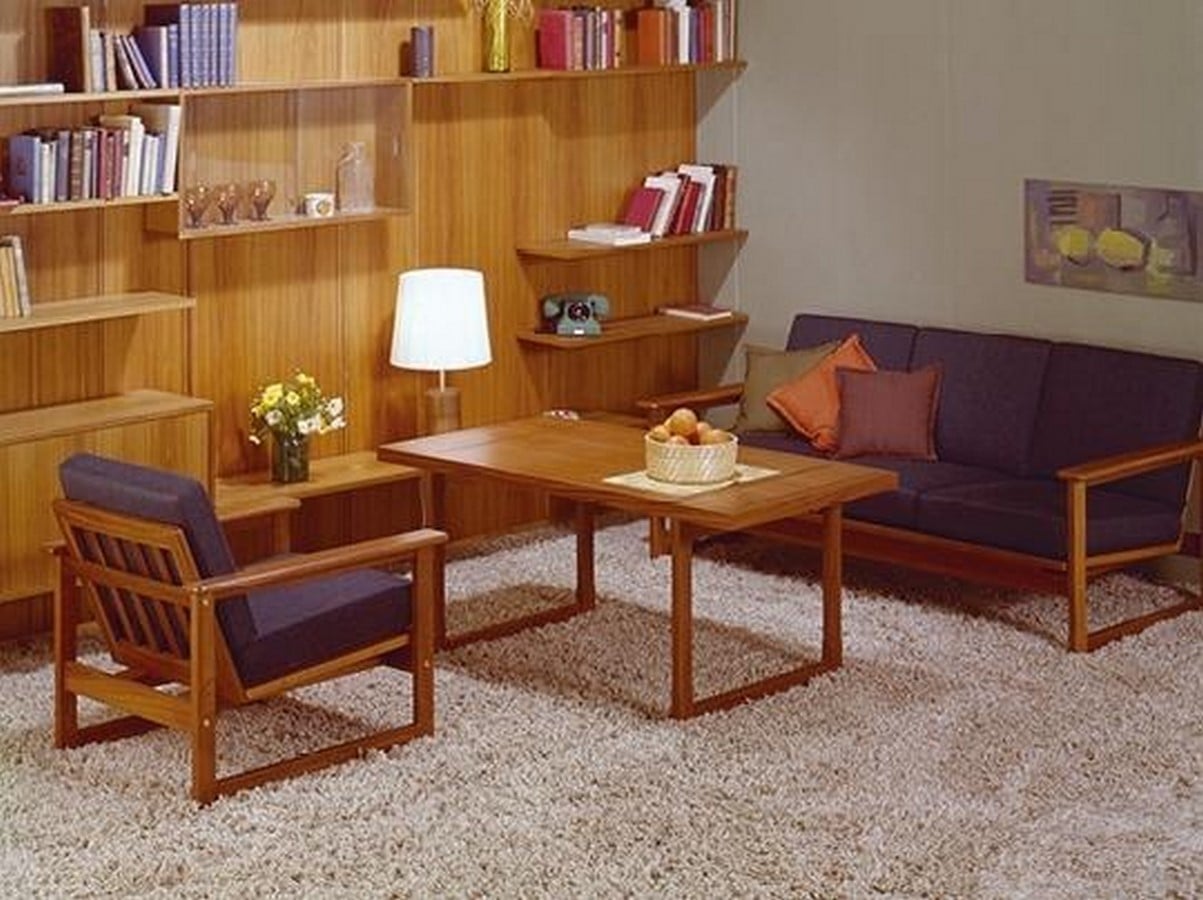
Adaptability is one of the most salient characteristics of a good designer. Wørts aligned his traditional knowledge and adapted it to achieve industrial efficiency. This can be seen in the variety of furniture that he designed for IKEA, including teak sideboards and sofas as well as chairs, tables, and storage furniture.
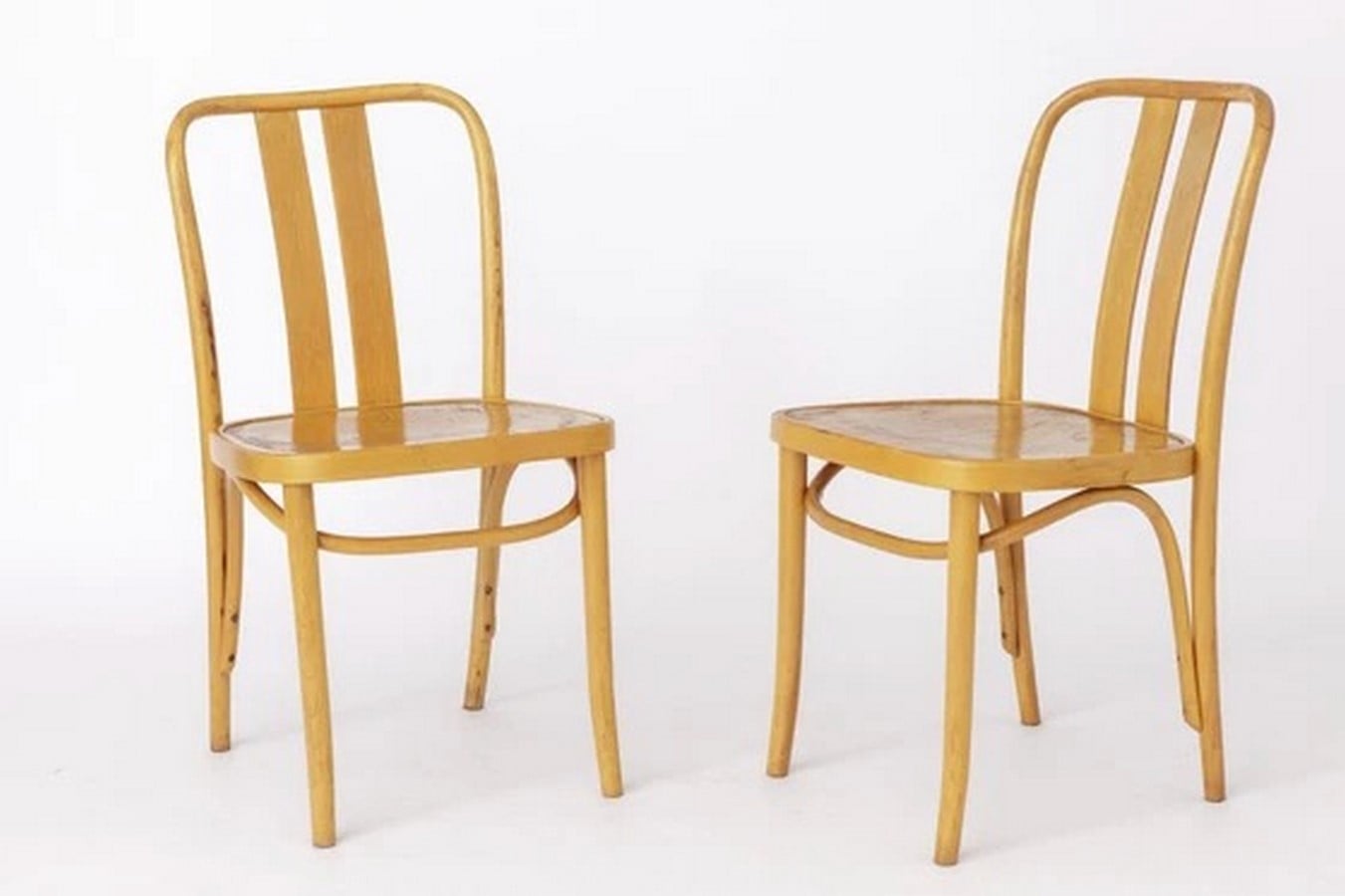
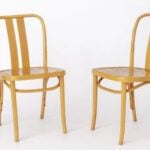
One such example is his LENA chair; the idea came about while he was visiting a factory in Poland and observed workers steaming beech rods in hot furnaces, bending them and assembling them into chairs. The process inspired his design for LENA, which was eventually produced in white, dark blue, and natural beech. This shows a pragmatic side of his design practice where manufacturing was the inspiration behind the idea and not just the last step after an idea was developed.
For over three decades, Wørts created a variety of products for IKEA, such as the GRÅBO sofa bed, the FLORENS furniture series, the LYRAN armchair, the CAMPO chairs, the LENA chair and the GAMMELSTAD bookcase. His designs covered a range of materials, including natural wood, chipboard, bentwood and upholstered furniture, firmly anchored in Scandinavian style.
“Three principles have guided me during 50 years of creating furniture … consideration to function, production and material.”
– Erik Wørts
The above statement seems simple, but its implications are significantly useful for developing a furniture piece.
Function: What does the object have to do?
Production: How can the object plausibly be made?
Material: What substance can give the product the structural and aesthetic qualities needed?
This method also shows a fine difference between simplicity and simplification.
Design That Outlives the Designer
Wørts passed away in 1997, but his work has not been entirely limited to design history. IKEA has continued to re-examine several of his designs, bringing back his 1960s POP 68 table under the name GARNANÄS in 2024 and his 1962 NOVETT benches as the GUTTANE side and coffee tables in 2025.
What makes Erik Wørts so relevant over time is his ability to make the invisible elements of furniture design important. His career occupies a fascinating position lying between the workshop and the factory, between craftsmanship and industrial production, and between the final object and all that is needed in order to bring that object into being.
References:
IKEA Museum (n.d.) Erik Wørts. Available at: https://www.ikeamuseum.com/en/explore/designer-portraits/erik-worts/ (Accessed: 28 September 2026).
Möbeldesignmuseum (n.d.) Erik Wørts. Available at: https://www.mobeldesignmuseum.se/designer/erik-worts (Accessed: 28 September 2026).
Bülow, L. (n.d.) The history behind NK’s Verkstäder. Möbeldesignmuseum. Available at: https://mobeldesignmuseum.se/news-design/the-history-behind-nks-verkstader (Accessed: 28 September 2026).
Klassik.dk (n.d.) Erik Wørts. Available at: https://klassik.dk/en/blogs/designere/erik-worts (Accessed: 28 September 2026).