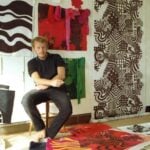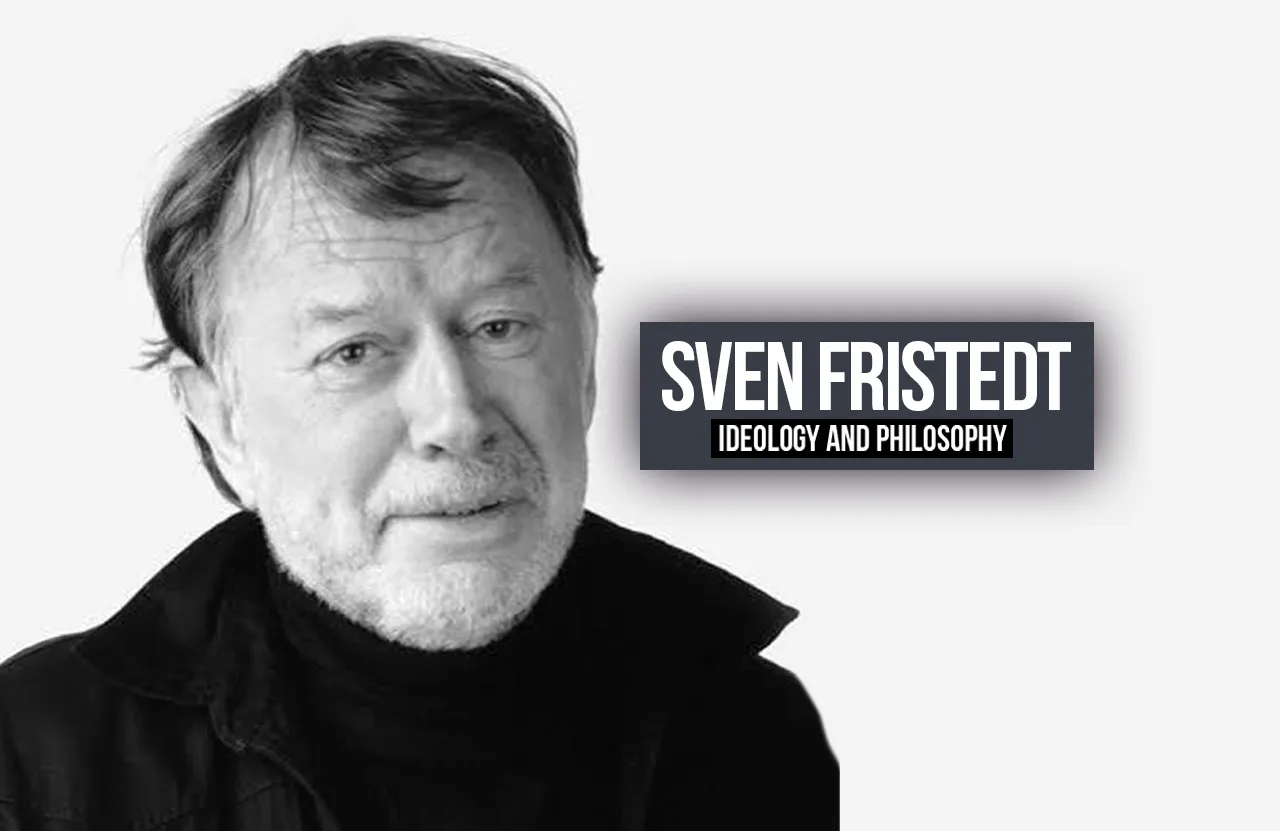
Sven Fristedt occupies an important place in the history of Swedish textile design, particularly through his expressive patterns created from the late 1950s onwards. Born in Sweden in 1940, he developed a practice that moved between industrial textile design, fine art and experimental pattern-making. His work became widely recognised through collaborations with companies including IKEA and Borås Wäfveri, where bold colours, organic forms and playful compositions transformed everyday fabrics. Yet Sven Fristedt’s contribution extends beyond visually striking textiles. His philosophy reveals a belief in spontaneity, usability and the creative potential of ordinary surroundings. His patterns were designed to live with people rather than simply decorate spaces.
Early artistic influences and education
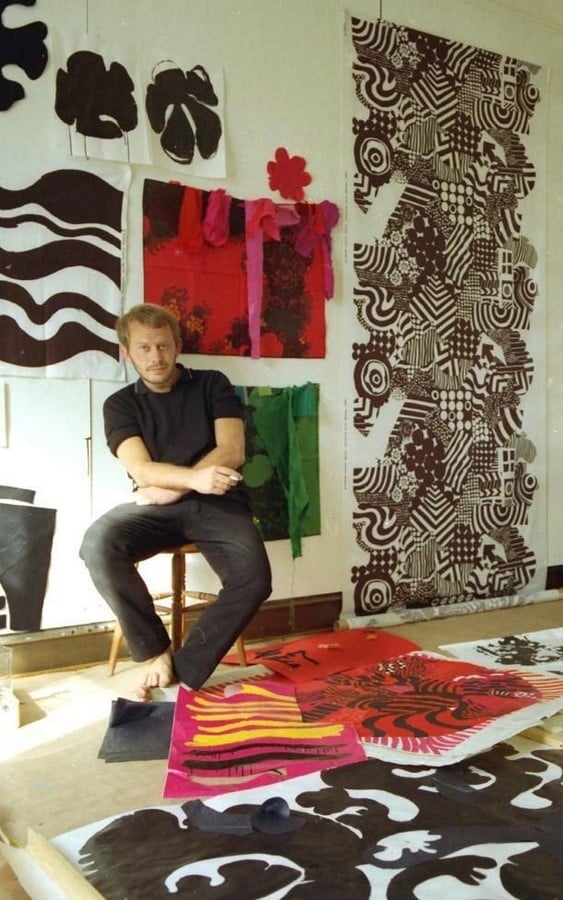
Sven Fristedt’s approach to design began with an early interest in artistic expression. Before specialising in textiles, he experimented with different media, including clay and painting. His education at Konstfack and Beckmans College of Design in Stockholm exposed him to the wider possibilities of art, craft and visual communication. At Beckmans, teacher Göta Trägårdh recognised his ability and encouraged him towards professional experience, including a study trip to Italy. This combination of formal education, travel and practical exposure became an important foundation for his later career.
The influence of this background can be seen in the freedom of Sven Fristedt’s visual language. Rather than treating textile design as a rigid decorative exercise, he approached pattern as an opportunity for experimentation. His work incorporated leaves, lines, dots, abstract forms, doodles and geometric elements. Borås Cotton describes designs emerging from his pens, crayons and scissors, suggesting a hands-on process in which drawing and cutting were equally important. This physical engagement with materials helped create patterns that retained an informal, spontaneous character even when they were later produced industrially.
Pattern as a form of artistic expression
For Sven Fristedt, pattern was not simply the repetition of decorative motifs. It was a visual language capable of creating movement, rhythm and personality within an interior. His patterns frequently combine organic forms with strong contrasts, producing compositions that appear energetic without being dependent on a single central motif. Kulturen’s retrospective exhibition notes that his inspiration came from travels, other artists and the things surrounding him, while humour also played a role in his imaginative world.
An important aspect of Sven Fristedt’s philosophy is his belief in preserving spontaneity. He has explained that a pattern should retain a sense of spontaneity regardless of how much time is spent developing it. This idea helps explain why his designs often feel hand-drawn and instinctive rather than mechanically perfect. He developed numerous small sketches and later combined them into larger compositions or collages. In this way, the finished textile could contain traces of experimentation and discovery.
From small sketches to large compositions
The process also demonstrates how Sven Fristedt connected individual creativity with industrial production. His mock-ups were prepared to correspond with fabric widths and repeat sizes, showing that artistic expression was combined with an understanding of manufacturing requirements. This practical knowledge allowed him to work successfully within the textile industry without completely sacrificing his artistic identity.
Designing for everyday life
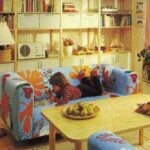
One of the most distinctive aspects of Sven Fristedt’s philosophy is his attitude towards the relationship between art and everyday life. His fabrics were intended to be used. Rather than treating textile design as something precious that should remain separate from ordinary living, he considered fabric part of the everyday environment. This approach can be seen in his work for curtains, sofas, bed linen, tablecloths and other domestic products.
This philosophy is particularly significant within the context of Scandinavian design. Sven Fristedt’s textiles brought colour, movement and visual character into ordinary interiors while remaining functional products. The value of the design was therefore not restricted to galleries or exhibitions. It existed in homes, bedrooms and living spaces, where people encountered the patterns repeatedly. His work demonstrates how everyday objects can carry artistic meaning without losing their practical purpose.
Sven Fristedt and IKEA
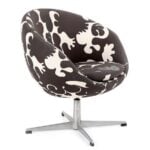
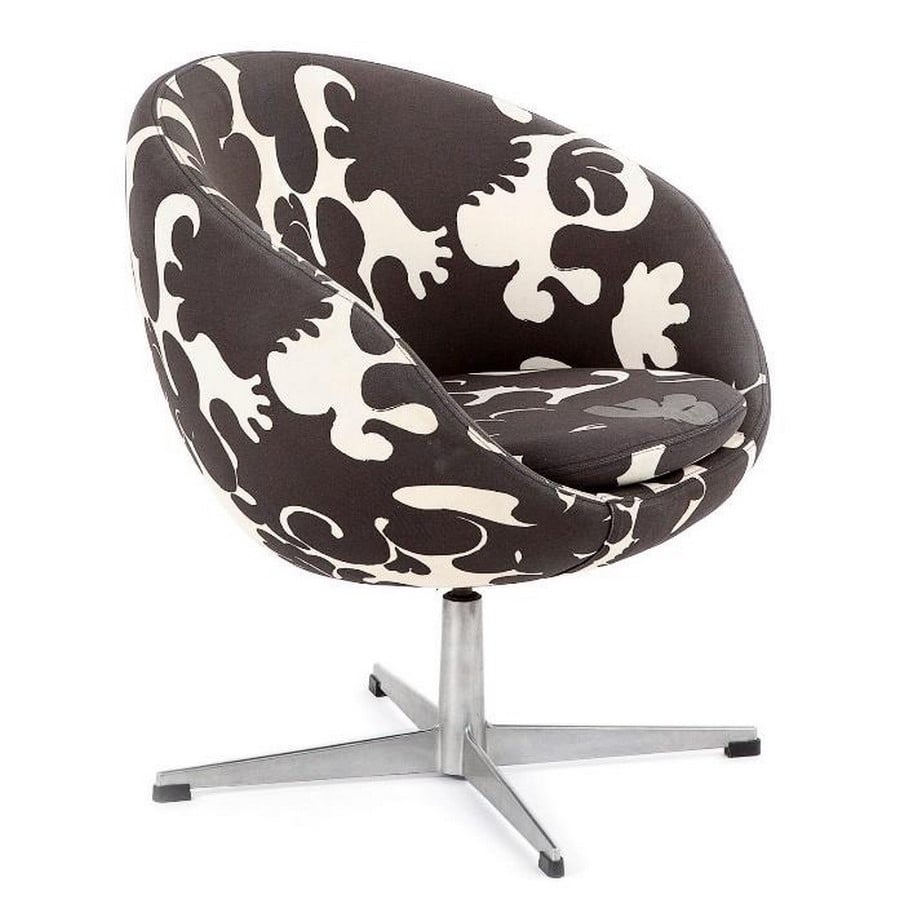
The relationship between Sven Fristedt and IKEA became one of the defining chapters of his career. His first IKEA designs appeared in 1967 after textile designer Inez Svensson introduced him to the company. His large-scale cretonne patterns, including MYRTEN, TARANTELLA and SOMMARGYLLEN, appeared on furniture and home textiles. The following year, MYRTEN was used on the POLO armchair, bringing his distinctive black-and-white pattern into the domestic interior.
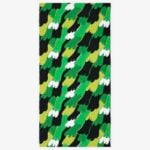
His collaboration with IKEA demonstrates how Sven Fristedt’s philosophy operated at different scales. A pattern could begin as an individual drawing and eventually appear across a sofa, bedspread or other mass-produced product. ALFI, first launched around 1970, became one of his recognisable patterns, appearing in different colour combinations. Later designs such as BLADHULT and ILEX continued this visual language through organic shapes, flowing forms and bold colour relationships.
Colour, nature and organic forms
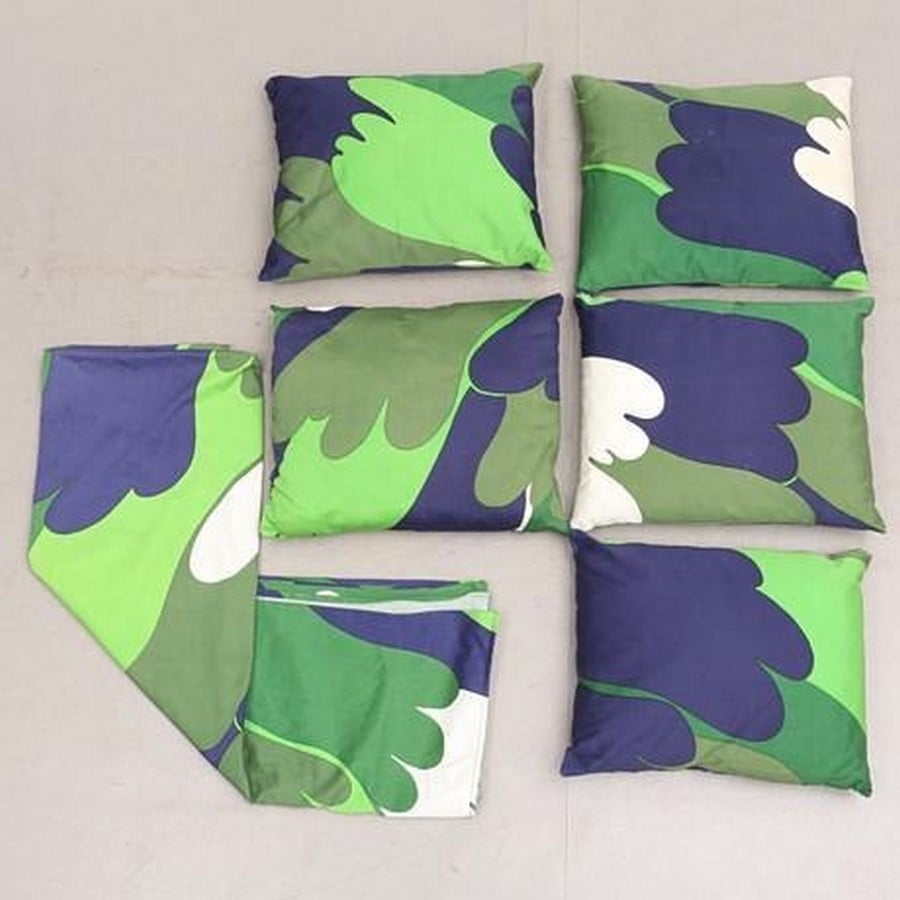
Nature became an important visual source within Sven Fristedt’s work, although his interpretations were rarely literal. Leaves, flowers, clouds and flowing shapes were transformed into simplified motifs. Rather than reproducing nature realistically, he extracted its rhythm and movement. This approach allowed natural references to become abstract visual systems suitable for repeated textile patterns.
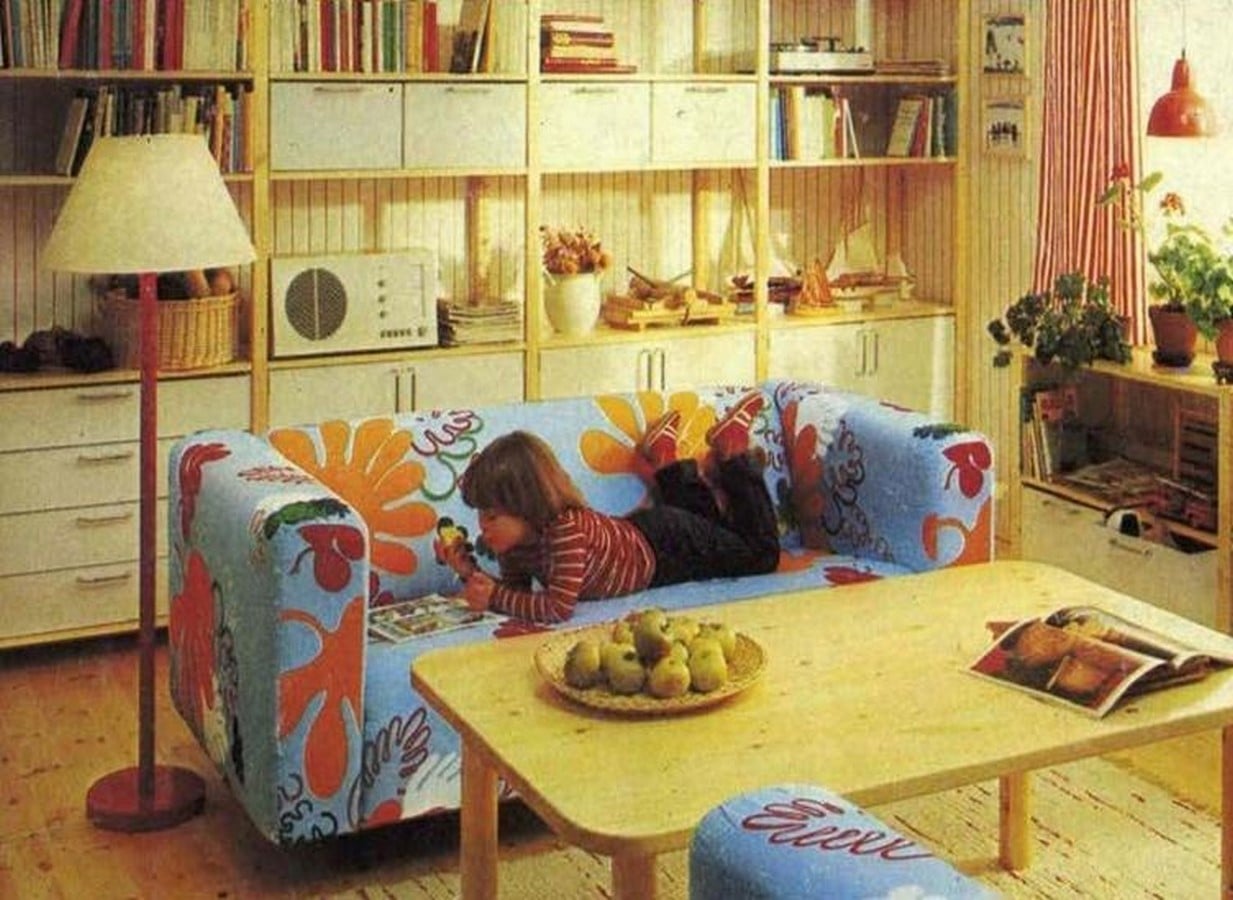
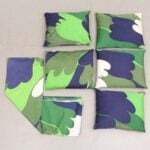
The relationship between nature and abstraction is especially evident in later works such as the LENA series, which used nature-inspired shapes, and BLADHULT, with its flowing leafy forms. The designs demonstrate how organic inspiration could coexist with graphic clarity. This balance between natural irregularity and structured repetition became one of the recognisable qualities of Sven Fristedt’s work.
Balancing creativity and production
Another important element of Sven Fristedt’s design philosophy is the relationship between artistic freedom and industrial production. Textile design requires consideration of scale, repeat, fabric width, colour and printing technology. His work demonstrates that these constraints did not necessarily prevent experimentation. Instead, they became part of the design process.
His experience with Borås Wäfveri was particularly important. The company became a major producer of his designs, and Fristedt served as its artistic director from 1975 to 1977. Many of his patterns were printed using industrial techniques, including screen printing and roller printing. His understanding of these processes allowed him to develop patterns that were both visually distinctive and technically achievable.
A good example is the evolution of the MOLN/SKYAR design. The original MOLN duvet cover was produced using screen printing, but the process was relatively expensive. When the design became successful, Fristedt modified it so that it could be produced using the more economical rotary printing process. The example demonstrates a practical philosophy: artistic ideas could be adapted to production without losing their identity.
From industrial design to independent art
Although Sven Fristedt became closely associated with industrial textile design, his creative practice eventually expanded beyond commercial production. After years of creating patterns for the textile industry, he increasingly worked on unique artworks. His first solo exhibition took place in the mid-1980s, and his later practice included paintings, textile images, sculptures and reliefs.
This transition does not represent a rejection of his earlier design philosophy. Instead, it reveals another dimension of the same creative curiosity. Industrial textiles had taught him to work with repetition, scale and production, while independent art offered greater freedom to explore materials and one-off compositions. Sven Fristedt therefore developed a practice in which design and art could inform one another rather than existing as completely separate disciplines.
A legacy that continues to evolve
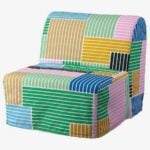
The continuing relevance of Sven Fristedt’s work can be seen in the revival of several of his historic designs. IKEA’s Nytillverkad collections have brought patterns such as ALFI, BLADHULT and ILEX.
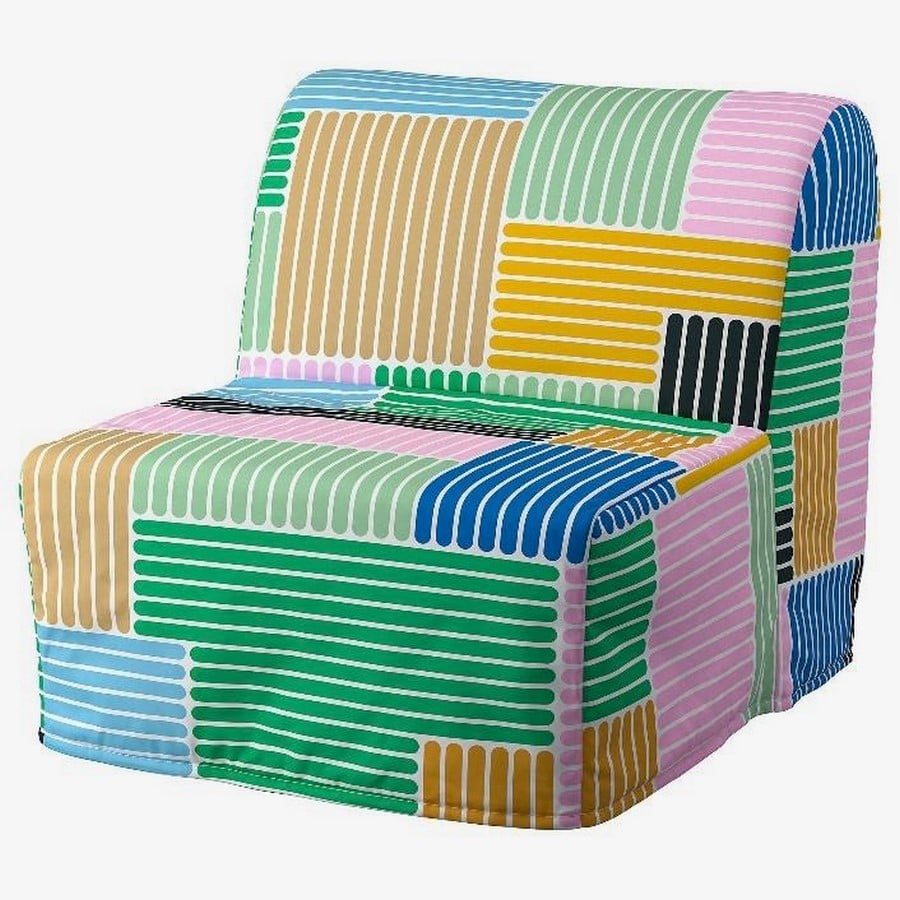
back into contemporary interiors under new names and colourways. BLADHULT, for example, was originally associated with the KLIPPAN sofa in the 1980 IKEA catalogue and later returned as KRYPKORNELL. ALFI has similarly been reintroduced in updated forms.
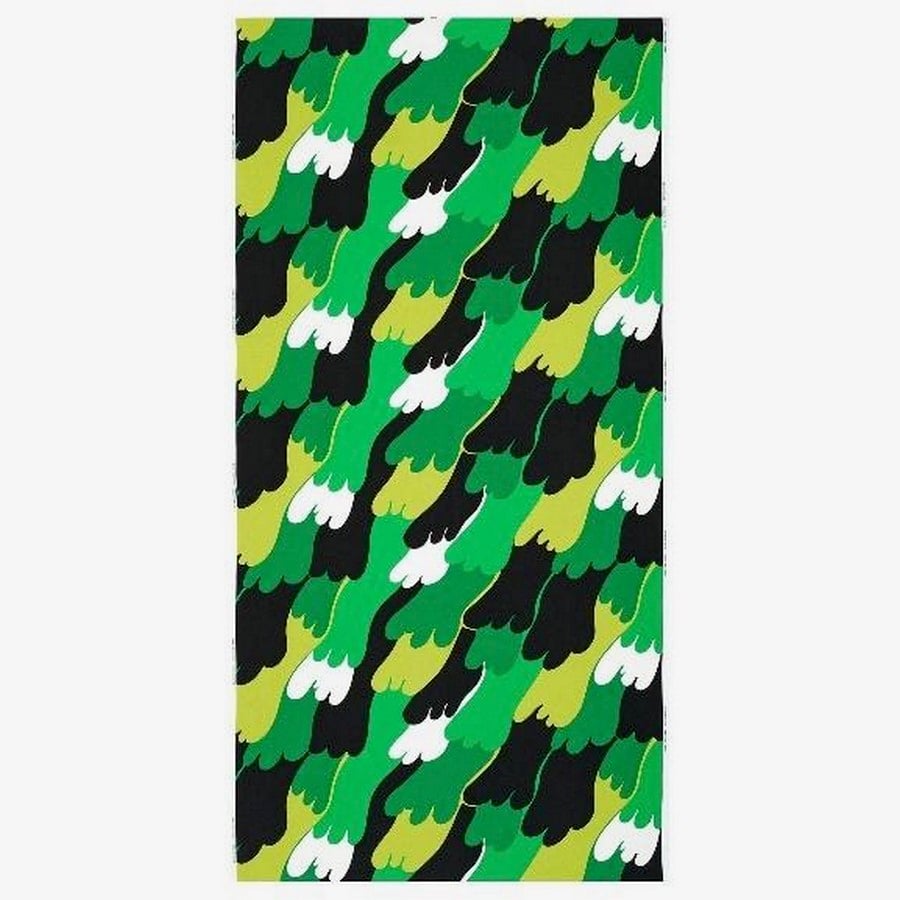
The renewed interest also demonstrates that Sven Fristedt’s work belongs not only to a particular period of Swedish design history but to a wider culture of everyday design. A retrospective exhibition, Sven Fristedt – Master of Patterns, presented at Kulturen in Lund from 2023 to 2024, examined his career from his earliest industrial prints to newer handmade prints and sculptures. The exhibition was developed in close collaboration with the artist and highlighted the relationship between his commercial and artistic practices.
Sven Fristedt’s philosophy can be understood through three interconnected ideas: spontaneity, usability and continuous experimentation. His patterns transformed sketches, observations of nature, humour and everyday surroundings into expressive visual compositions. At the same time, his understanding of textile production enabled those ideas to reach a large audience through industrially manufactured products. His work challenges the distinction between art and everyday design by demonstrating that an ordinary curtain, sofa or bedspread can also become a carrier of visual culture.
Ultimately, Sven Fristedt’s significance lies not only in the recognisable appearance of his patterns but in the way he approached the act of designing. He allowed creativity to emerge from ordinary things, adapted artistic ideas to real-world production and treated textiles as active elements within everyday life. More than six decades after his first industrial designs, the continued revival and exhibition of his work demonstrates the lasting cultural value of his approach to pattern, colour and material.