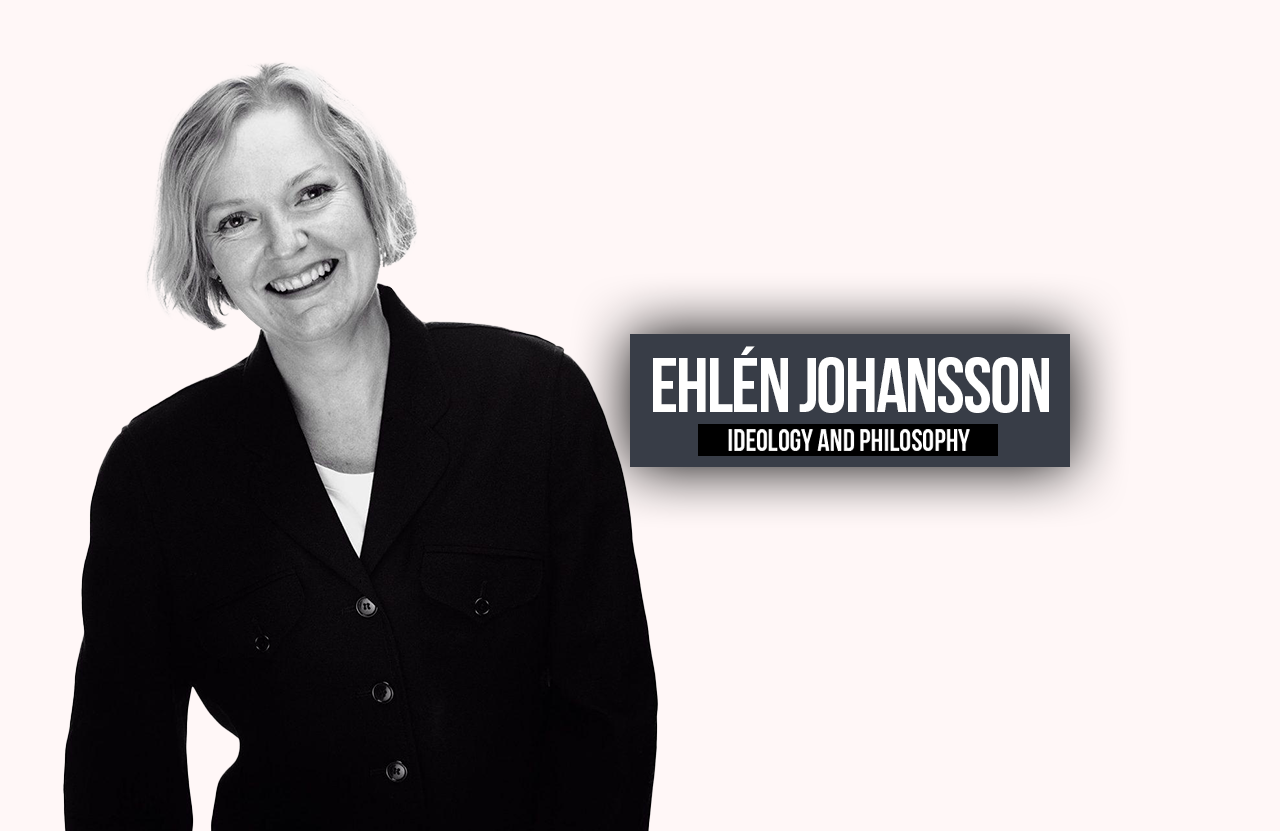
About Ehlén Johansson
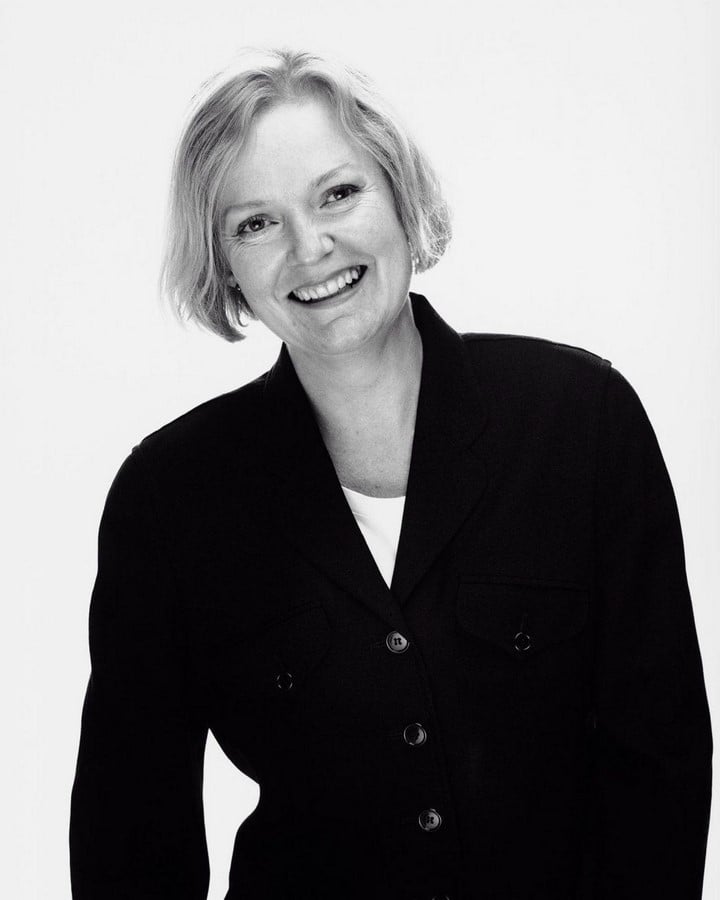
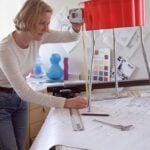
Ehlén Johansson is a Swedish industrial designer, based in Malmö, Sweden. Born in 1958, she graduated from HDK – School of Design and Crafts at the University of Gothenburg, where she developed her interest in crafts and industrial design.
Johansson, best known for her work with IKEA, began initially as an intern in 1984, initially and went on to collaborate with the company for several decades. Her work spans furniture, lighting, storage, glassware and household objects. She was also an important member of the design team behind IKEA’s early PS collections.
In 1996, she founded Pelikan Copenhagen with three partners, and in 2004 she established her own Malmö-based studio, Mejk Design. She has worked as an independent designer for both her established companies and smaller manufacturers while IKEA remains a major client.(“Ehlén Johansson, Designer | Archiproducts,” n.d.)
Her Design Ideology
One of Johansson’s approaches is that good design must work in the real world. She tries to consider appearance, function and manufacturing together from the beginning to the end.
Ehlén has often described how she likes to introduce an “extra” or unexpected function into her products. At the same time, she believes that a product should remain useful, durable and easy to manufacture.
This gives her work a distinctly problem-solving character rather than an exclusively aesthetic one. Ehlen takes inspiration from Sweden’s landscapes, forests, coastlines, and cultivated gardens. Her approach is about adapting nature’s examples of proportions, textures, materials and patterns and converting them into contemporary products.
Johansson talks about using materials in a resource-saving way in the product and packaging and creating nice designs by trying to maximize efficiency while enabling the products to be shipped, stored and packed efficiently. This reduces warehouse and transportation costs and, consequently, it is good for the environment.(“Discover Swedish designer Ehlén Johansson – IKEA Museum,” n.d.)
Ehlén has received several accolades for her design, such as the “Red Dot Design Award ” and ” Elle Decoration Award “ and has participated as a jury member of the IF Design Awards.
Examples of Her Philosophy in Practice
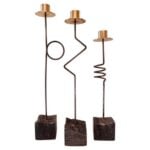
KRÄSEN candleholder, 1987
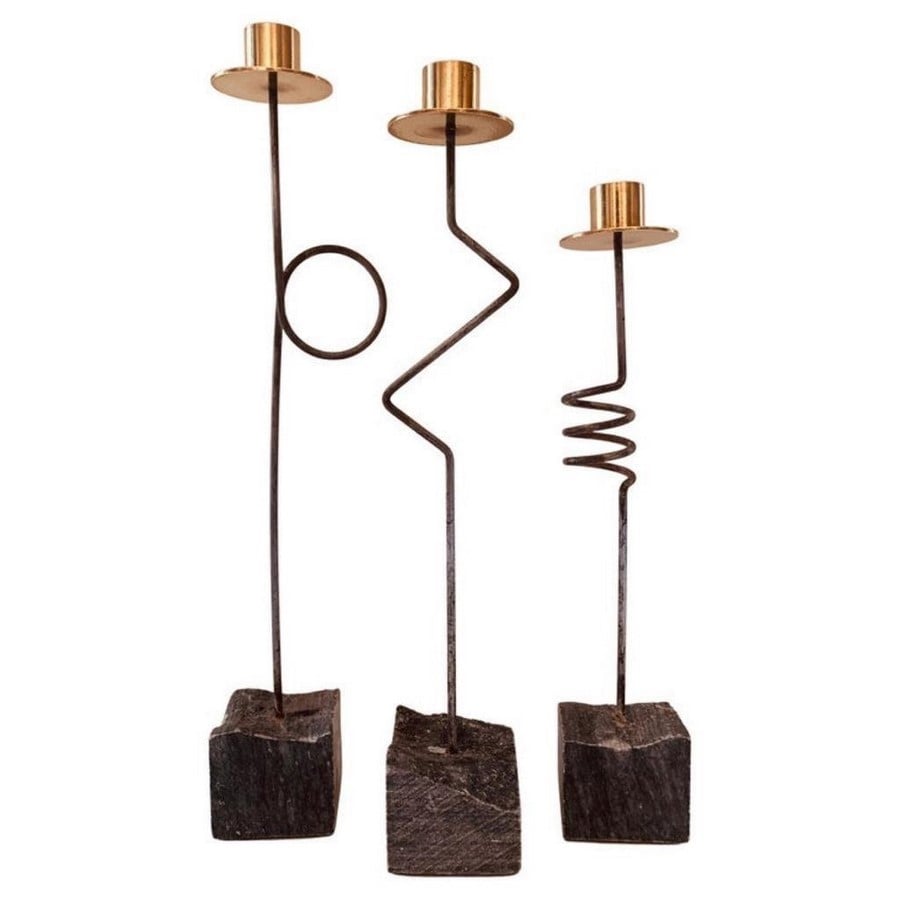
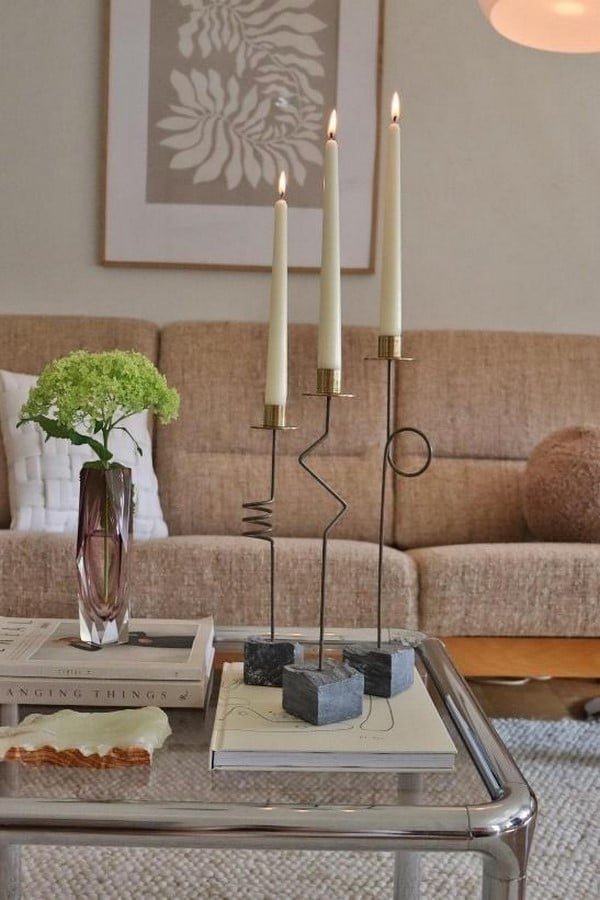
One of her early designs, KRÄSEN, uses dolerite/black granite, a stone associated with southern Sweden.
The choice of dolerite is interesting because Johansson does not try to disguise the heaviness and natural character of the stone. Compared with some of her later plastic and steel products, KRÄSEN demonstrates that her interest in industrial design does not necessarily mean abandoning the qualities of natural materials.
HÄPEN clothes hangers, 1988
These are probably some of her most playful designs. The hangers are shaped as simplified human bodies, one male and one female figure. Instead of making a hanger disappear into the background, Johansson turns it into a character. She likes introducing a small element of personality into mundane objects.
HATTEN Table, 1994
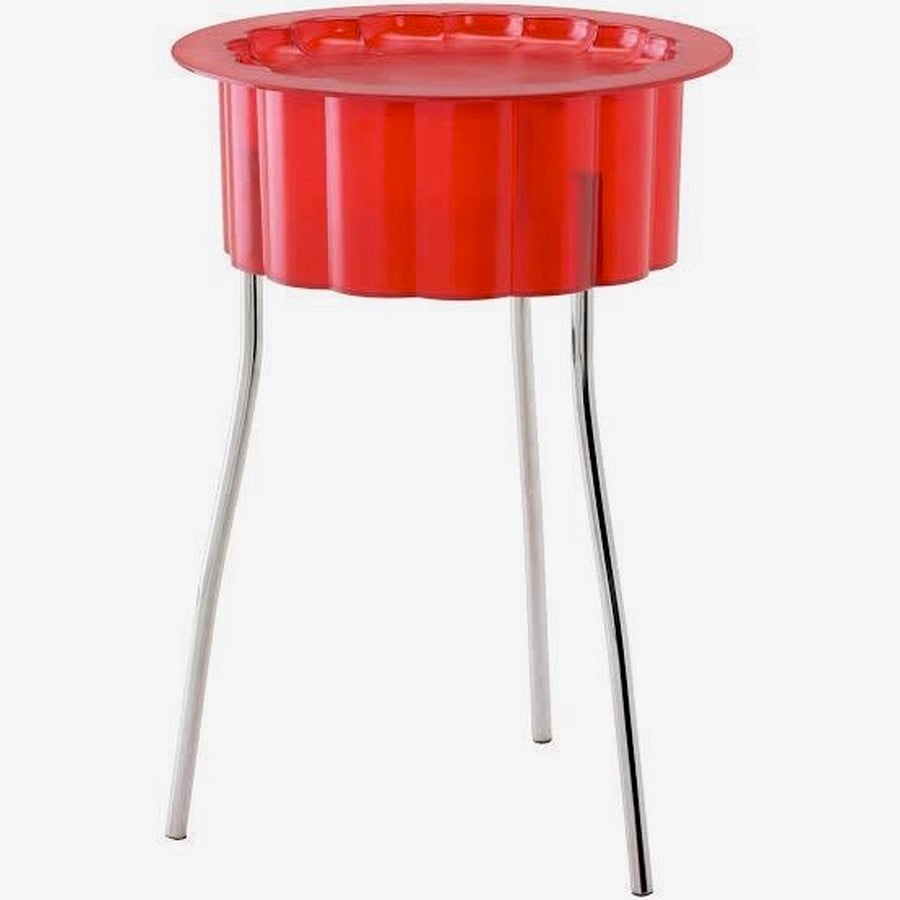
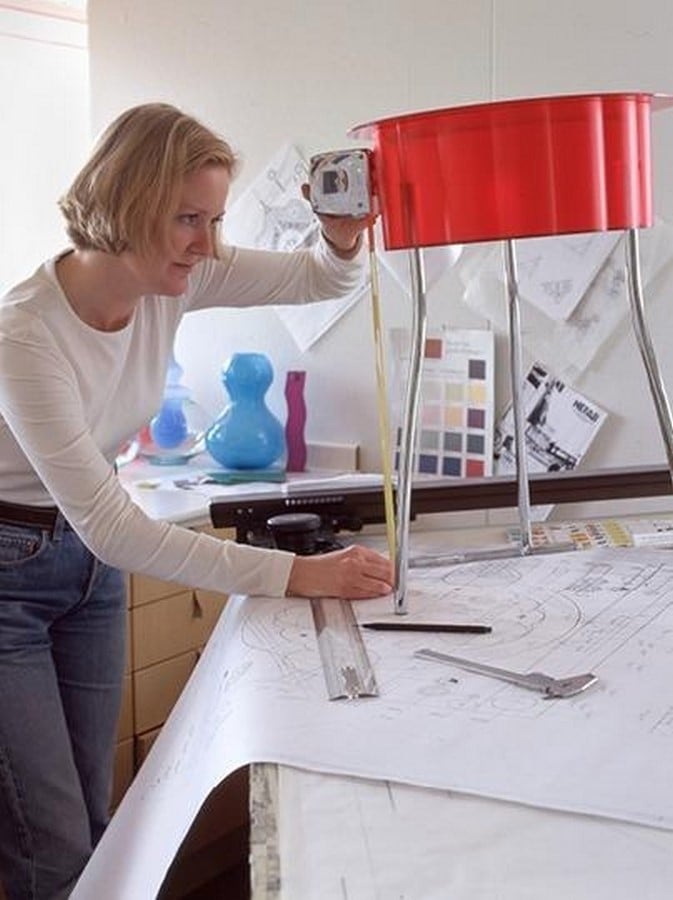
HATTEN is a transparent plastic side table shaped like an upside-down hat. It is essentially a simple side table, but its playful appearance shows Johansson’s interest in giving ordinary furniture an unexpected visual identity while keeping its function straightforward. (“Ehlen Johansson for IKEA Hatten side table – Kuladot,” n.d.)
SKURAR, 2011
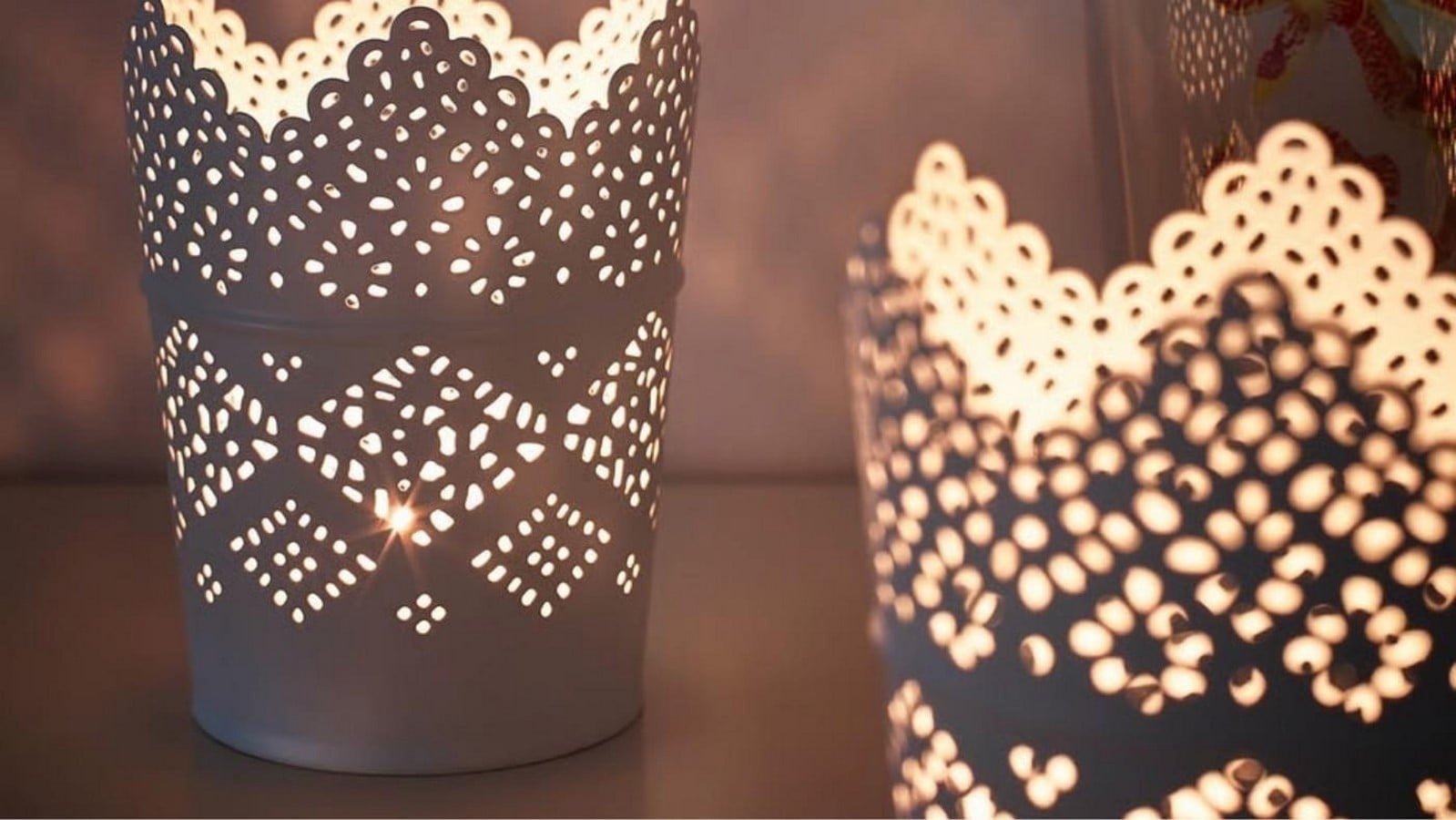
SKURAR is perhaps one of the clearest examples of her ability to translate craft into industrial production. Ehlen took inspiration from lace, traditional handicrafts and bridal crowns and recreated their delicate appearance using cut and painted steel.
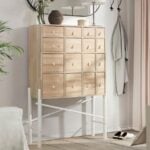
IKEA PS SINKA, 2009
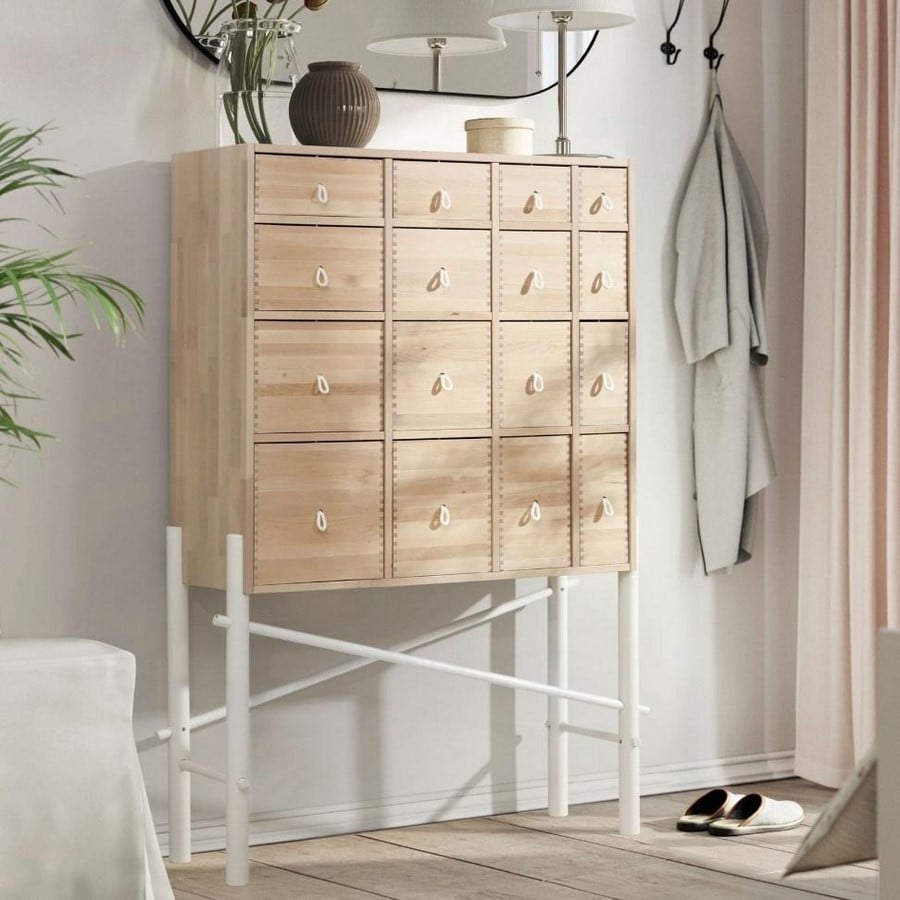
The PS SINKA cabinet contains 16 drawers, responding to the need to organise and store numerous small personal objects. Its design demonstrates Johansson’s interest in transforming a basic functional requirement into a distinctive piece of furniture
SKOGSTUNDRA, 2024
Johansson later revisited her own 1994 OPTIMUM vase series and developed it into the SKOGSTUNDRA collection.
Rather than simply reproducing the original, she used the earlier design as a starting point and reconsidered its material and appearance. The newer versions use stoneware and updated colours. Ehlen described the process as beginning where the earlier design had ended and improving it to create even more creative pieces.

Ehlén Johansson’s work can therefore be understood as an intersection between Swedish design traditions, craft, industrial production, sustainability and everyday life. Her philosophy does not rely on creating spectacular or technologically complex objects. Instead, she finds opportunities for innovation in ordinary things.
Ehlén’s uniqueness lies in her ability to see design potential in the overlooked or underutilized products. She sees a fuse box as a candle holder and lace as steel. Her work suggests that innovation does not always require inventing something exceptional; sometimes it requires looking at something ordinary with a different set of eyes.
Bibliography:
Discover Swedish designer Ehlén Johansson – IKEA Museum [WWW Document], n.d. URL https://ikeamuseum.com/en/explore/designer-portraits/ehlen-johansson
Ehlén Johansson, Designer | Archiproducts [WWW Document], n.d. URL https://www.archiproducts.com/en/designers/ehlen-johansson?srsltid=AU7gw4XqAyJJTvLbgy9Ar3rvNqR-WmBpupeyuB_fVCXdKBcLANFOVBw_
Ehlen Johansson for IKEA Hatten side table – Kuladot [WWW Document], n.d. URL https://kuladot.com/products/ehlen-johansson-for-ikea-hatten-side-table