A Paper Hotel and a Workshop
As a child, Wiebke Braasch built a hotel out of paper. She made things from cardboard, worked with wood in her father’s workshop and once devised tiny blinds operated by strings. These were small experiments, made simply because she wanted to see what she could make. Yet there is something recognisable in them when viewed alongside the objects Braasch would design years later: an interest in how things are assembled, how they behave and what happens when someone interacts with them.
Born in Lübeck, Germany, in 1976, Braasch trained first as a carpenter before studying communication design at Muthesius University of Fine Arts and Design in Kiel. The combination helps explain the way she approaches design. Carpentry taught her to understand materials through making, while communication design made her attentive to how an object looks, feels and is experienced.

Learning Through Making
Braasch’s professional career has moved between these two worlds. She joined IKEA as an intern in 2003 and remained an in-house designer for twelve years. Since 2016, she has worked with innovative concepts and new business possibilities, developing ideas around people’s changing needs.
Braasch often figures things out by making them. She begins with a quick pencil sketch, moves on to a digital model and then makes a physical version to see what actually works. On paper, an idea can seem convincing. Once it becomes an object, it has to hold, stand, stack, bend and feel right in use.
When Play Meets Precision
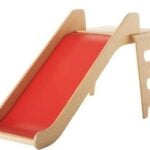
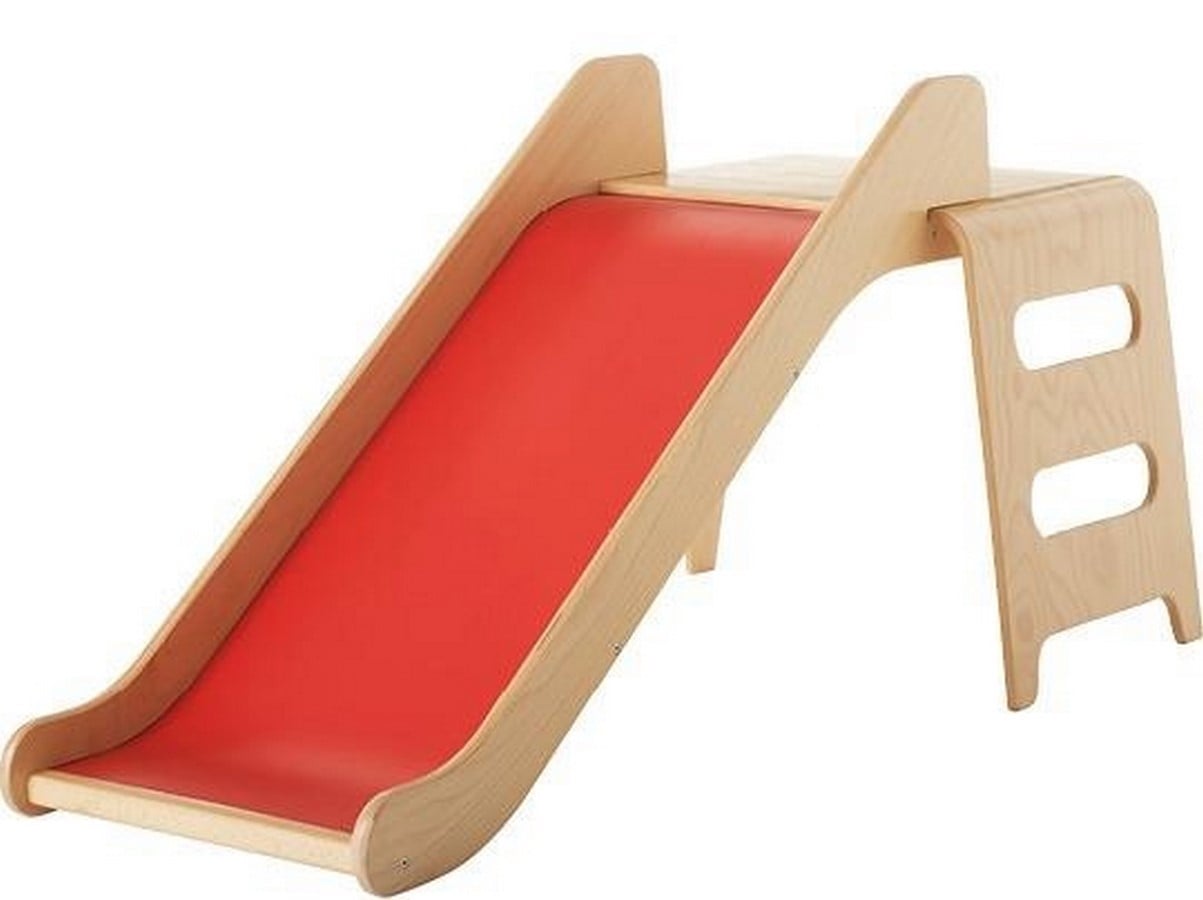
Her graduation project offers an early example. Braasch designed a swing and a slide for IKEA’s 2003 PS Unlimited Play collection, both intended for children. The slide, later developed as the VIRRE, was a simple wooden structure with a red chute, designed to encourage movement and play while also supporting children’s coordination and balance. The objects had to invite play while meeting strict safety requirements.
That tension is important. A children’s product cannot simply look playful. It has to accommodate movement, risk and unpredictability while remaining safe. For Braasch, this meant designing for use even when that use was difficult to predict.
The Freedom of an Ordinary Basket
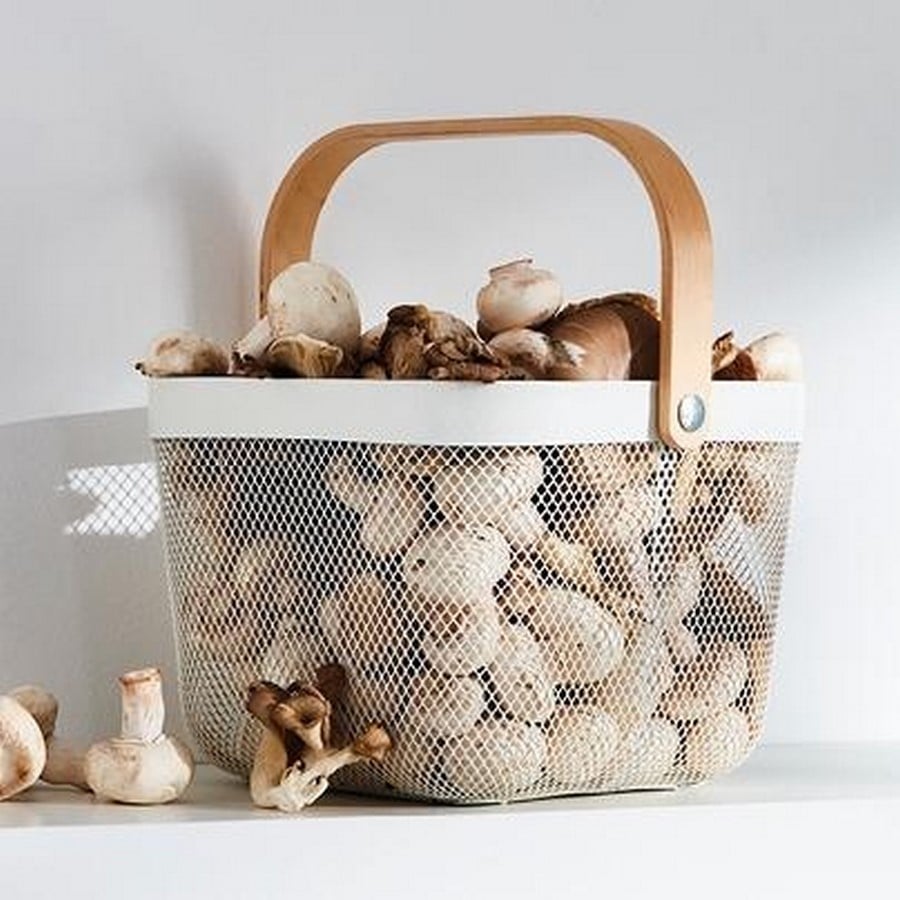
RISATORP, the storage basket Braasch designed for IKEA, takes this thinking into everyday life. Its birch handle gives the metal mesh basket something of the warmth of a traditional willow basket.
Fruit can go inside it. So can socks, children’s toys or whatever else needs a temporary place. Braasch has spoken positively about these unexpected uses. Once an object enters a home, its designer can no longer completely control what it becomes.
The basket therefore remains open to interpretation. Its form establishes a purpose without fixing it too tightly.
A Different Kind of Scandinavian Design
Braasch’s interest in Scandinavian design comes partly through Karin and Carl Larsson and their belief that a home should suit the family living in it. She is drawn to this acceptance of an imperfect home, shaped by daily needs and personal choices. It helps explain why her concern with how people use objects runs alongside her appreciation for simple forms and natural materials.
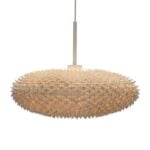
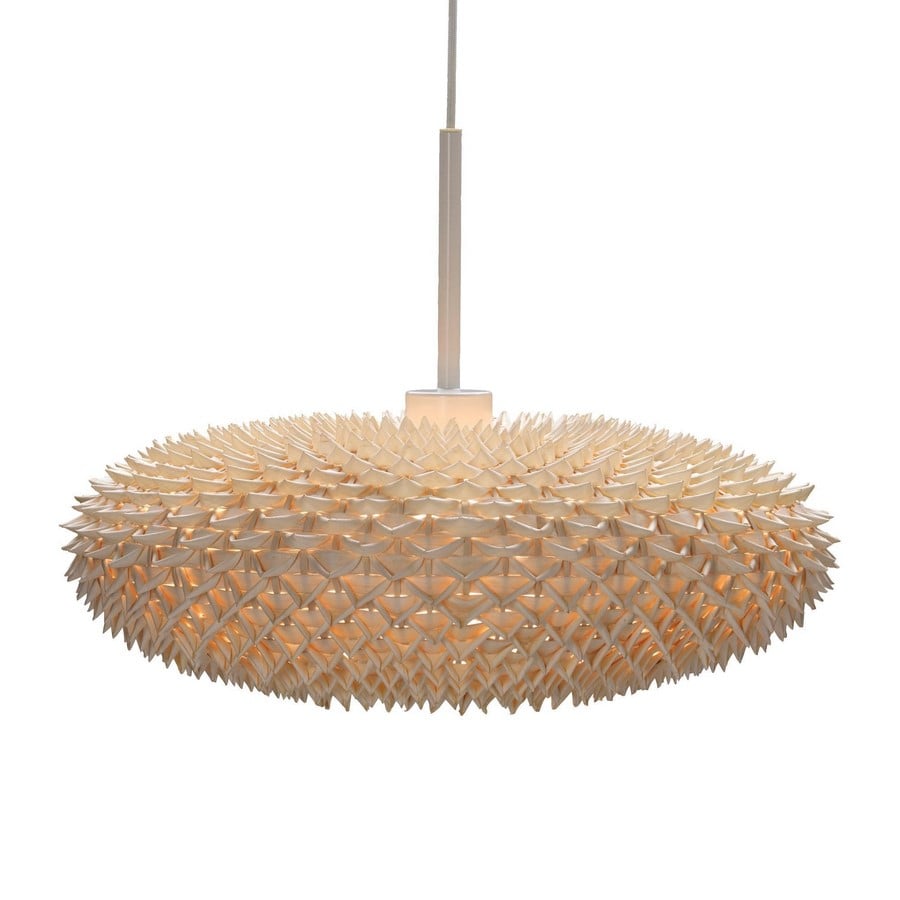
Her work also makes room for unusual sources of inspiration. The woven VÄVA pendant lamp began with a dried sea urchin she remembered from childhood. Its spiky outline gave her a way to reconsider the shape of a lampshade. The object suggests how she works within that Scandinavian tradition: familiar materials and practical purposes give her a starting point, while a closely observed detail takes the design further.
Taking Weight Out of a Chair
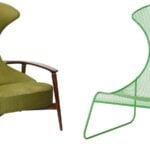
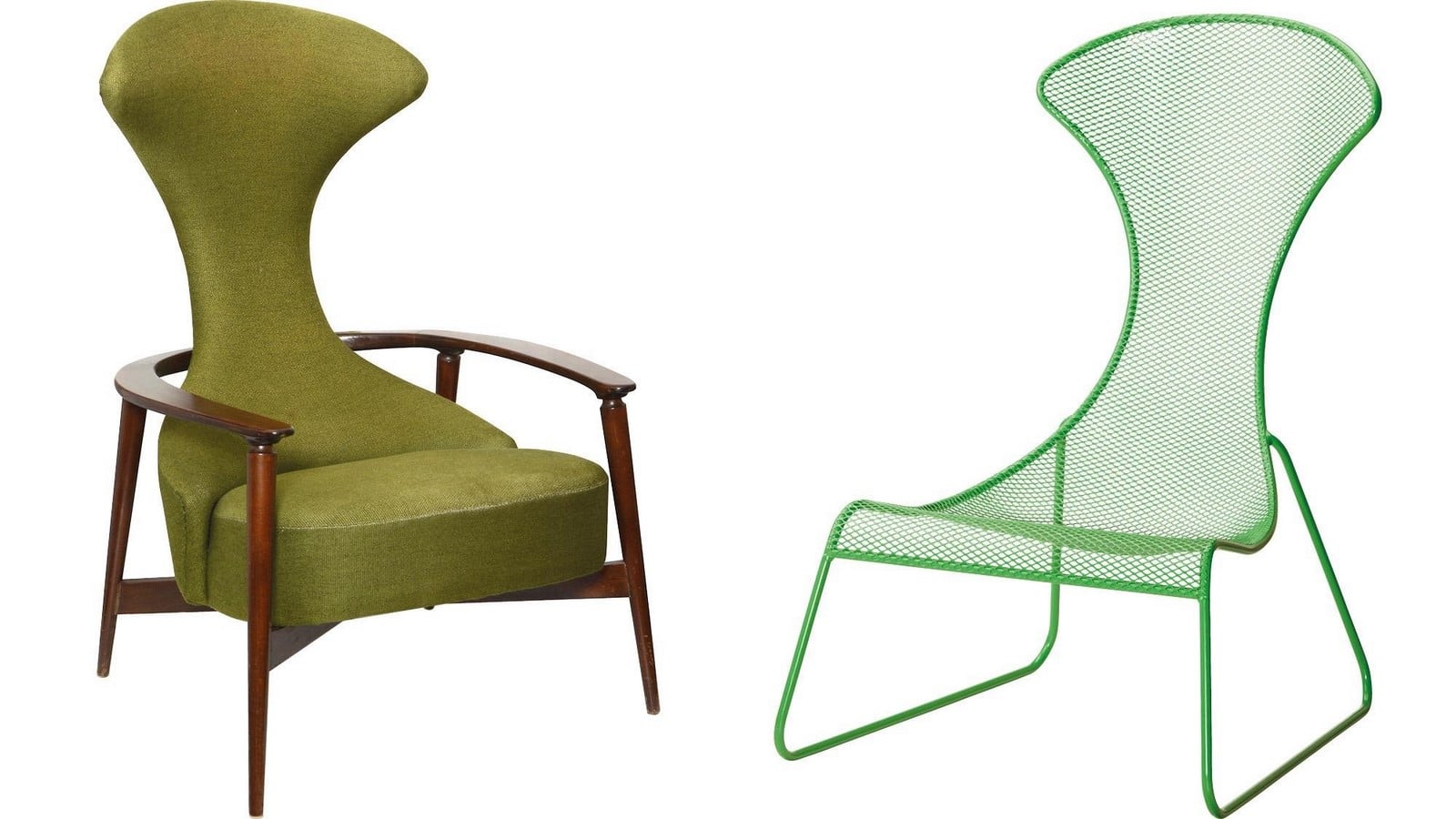
The CAVELLI armchair makes this particularly clear. The original chair was designed by Bengt Ruda in 1958. For the IKEA PS 2012 collection, Braasch reworked it by reducing its weight and replacing its heavier construction with metal mesh.
The new chair could be stacked and used both indoors and outdoors. The reduction in material also made it lighter to manufacture and transport.
The important decision was not simply how to make the chair look different. It was deciding which parts of its construction were necessary and which could disappear. Weight, material, stacking and transportation all became part of the design.
Designing for Small Spaces
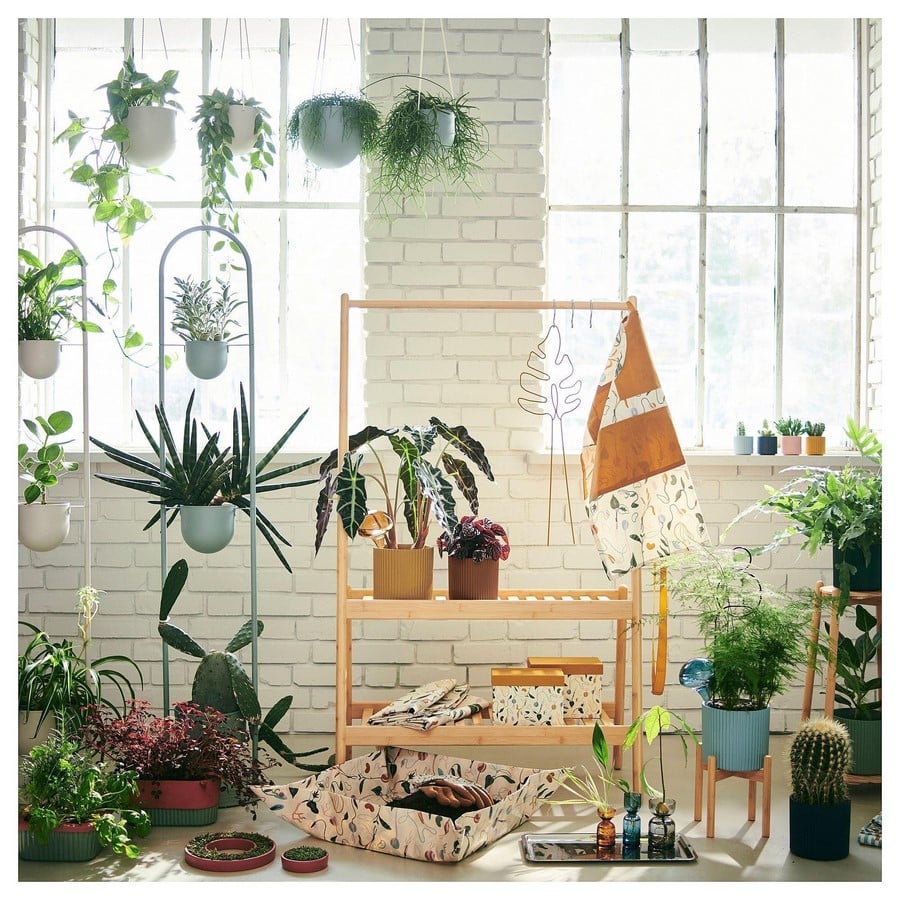
The DAKSJUS collection, developed with Luna Gil, Anna-Maria Nilsson and Iina Vuorivirta, brings the same interest into a contemporary domestic problem. Its compact bamboo plant stand uses vertical space for growing plants, making it suitable for homes where floor area is limited.
It is also light enough to move. Braasch has described the stand as a kind of blank canvas, leaving much of its final expression to the person using it.
That makes the user part of the object’s life. The designer provides the structure; the room, the plants and the person living with it complete the picture.
Leaving Something Unresolved
Braasch’s objects continue to change through use. A basket holds toys instead of fruit. A plant stand takes on a different appearance as things grow. Her designs give these everyday activities a place without deciding every detail in advance.
The work has become more demanding since her childhood experiments with paper, cardboard and wood. There are materials to test, production costs to consider and objects that must withstand years of use. Yet her process still involves making, handling and noticing what needs to change.
Long before those demands, there was the paper hotel she built as a child. Even then, she worked through the details, finding a way to raise and lower its tiny blinds with string.
References:
- IKEA Museum (n.d.) Wiebke Braasch. Available at: https://ikeamuseum.com/en/explore/designer-portraits/wiebke-braasch/ (Accessed: 05 October 2026).
- IKEA (2025) RISATORP is ready for anything. Available at: https://www.ikea.com/global/en/stories/design/risatorp-product-story-250723/ (Accessed: 05 October 2026).
- IKEA (2024) Space to grow: The DAKSJUS collection. Available at: https://www.ikea.com/global/en/stories/design/daksjus-collection-240327/ (Accessed: 05 October 2026).
- IKEA Türkiye (n.d.) DAKSJUS bamboo plant stand, 144 cm. Available at: https://www.ikea.com.tr/en/product/daksjus-bamboo-144-cm-plant-stand-20567011 (Accessed: 05 October 2026).
- IKEA (n.d.) DAKSJUS collection. Available at: https://www.ikea.com/us/en/cat/daksjus-collection-700455/ (Accessed: 05 October 2026).