In places such as Gurgaon, the sky opened up, and in a short time the city ended up being underwater. The heavy rainfall caused traffic on the roads, left stranded school buses and public transport, and forced commuters to wade through water up to their knees. Cars broke down, buses slid into drains that were only half dug, and office workers were instructed to go home early since the city was unable to handle the amount of rain. For many people, a normal journey became a two-hour struggle, and this is the reality in a high-tech city which attracts millions in the hope of finding work and a better way of life.
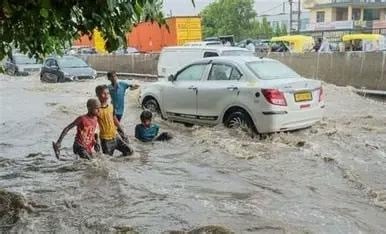
Taking Gurgaon as an example, the area originally had about 60 natural canals and 640 water bodies which functioned as natural storage and drainage systems. For many decades, 389 of these water bodies have been lost, and a large number of the natural drainage channels have either been constructed or blocked, leading to there being fewer sites available for storing or allowing rainwater to percolate and thus causing an increase in the volume of surface runoff.
Permeable areas have therefore been substituted for concrete roads, buildings and impermeable surfaces. Since this change stops water from soaking into the ground, it leads to water overflowing and causes waterlogging.
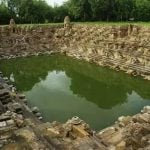
There has been a great surge of innovation in recent modern approaches to fighting floods and preventing poor water drainage, for example with decentralised water systems, green infrastructure, and bio swales. Yet when we look at the strategies used in ancient times, it becomes clear that stepwells were one of the main traditional water systems adapted to the local climate, since they combine water storage, groundwater recharge, passive cooling, and a communal area within a single structure.
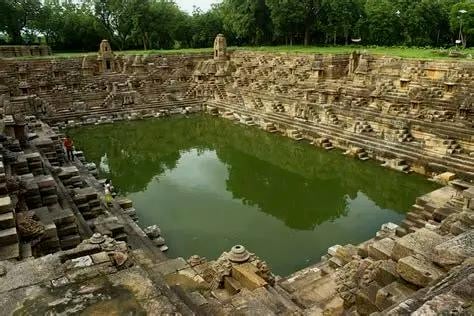
For reliable, year-round access to groundwater, deep trenches are excavated in the earth, forming a series of steps that lead down to the water and thus ensuring their survival as monuments. Archaeological evidence of one of the earliest stepwells was discovered at Dholavira, a site which also features water tanks or reservoirs equipped with steps. Additionally, the Great Bath in Mohenjo Daro has steps running in opposite directions.
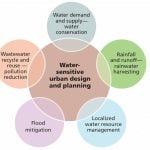
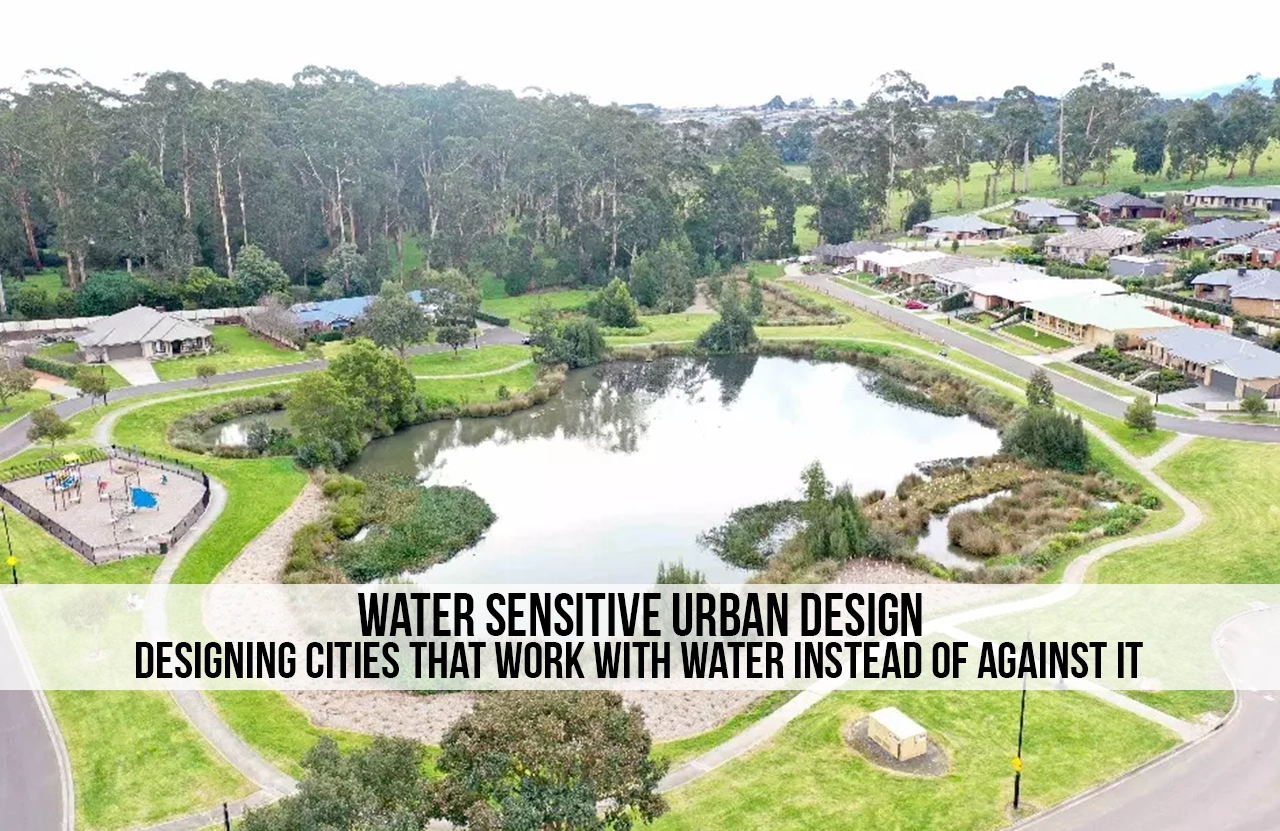
However, when it comes to modern strategies and techniques employed in the design of cities, one design initiative which is commonly adopted – water-sensitive urban planning – is used for the management of stormwater. It is an approach to urban development that integrates water management with urban design in order to produce sustainable, resilient and livable cities. For example, green infrastructure is employed for the management of stormwater in Melbourne, and the ABC Waters programme was introduced as a result of water recycling innovations.
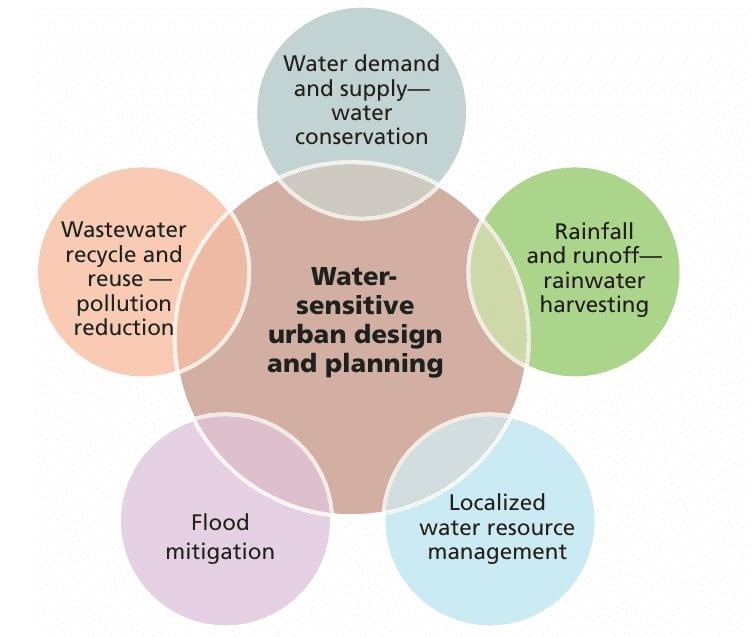
Key features of WSUP include:
- Green Infrastructure: This involves the use of features like green roofs, rain gardens, bioswales, and permeable pavements to manage stormwater at its source, reduce runoff, and enhance water quality.
- Decentralised water systems: This involves putting in place local water management measures such as community-sized wastewater treatment plants, on-site greywater recycling systems, and rainwater harvesting systems to decrease dependence on large centralised infrastructure.
- Stormwater Management: This involves using methods like rainwater harvesting and bio-retention systems to capture, filter and allow stormwater to infiltrate, thus reducing the risk of flooding and improving groundwater recharge.
- Protection of natural waterways: Restoring and preserving natural waterways and wetlands so that they can function as natural filters, enhance biodiversity, and offer recreational and aesthetic advantages.
- Integrated Urban Design: Creating urban landscapes which simulate natural hydrological processes by making use of vegetation and soil to control water flow and enhance environmental quality.
- Community engagement: Ensuring that local communities are involved in both the planning and the maintenance of water-sensitive solutions so that the solutions are socially acceptable and sustainable.
Several cities have been designed with such innovations, for example Melbourne, Singapore, Copenhagen and many others.
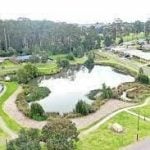
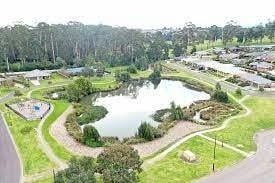
In Melbourne, Australia, green infrastructure is well incorporated into urban planning, as shown by projects such as the Royal Park Wetlands and several rain gardens which capture stormwater; this water is then filtered by plants and soil before it enters the local waterways. The project has increased biodiversity and offered residents recreational areas. Apart from the wetlands, rain gardens that are placed in a strategic fashion across the city also help in managing stormwater runoff from impervious surfaces such as roads. These shallow, planted depressions collect and allow the stormwater to infiltrate; it then percolates slowly into the ground. Consequently, the rain gardens reduce the volume of runoff, alleviate flooding and filter out pollutants such as oils and heavy metals, thus improving water quality. On the other hand, in Singapore, the focus is on water sustainability, as illustrated by the ABC Waters programme and its innovative water recycling measures. A clear example is the change made to Bishan-Ang Mo Kio Park, in which a former concrete canal was turned into a natural, meandering river. This redevelopment successfully solved flood management problems, boosted local biodiversity and created a lively community space. Another example is the Climate Resilient Neighbourhoods project in Copenhagen, which shows the city’s innovative method of dealing with climate change through a careful combination of green and grey infrastructure. At the heart of it are cloudburst boulevards and retention parks, which are effective in managing stormwater and in improving urban green spaces. These important features reflect Copenhagen’s steadfast dedication to establishing a resilient urban environment, smoothly incorporating water management into the city’s landscape.
Therefore, choosing to work with water is more than just a technical decision; it is a cultural one. When cities accept and adapt to their rhythms, they can change from vulnerable landscapes into resilient ecosystems. The future of urban design does not lie in trying to fight floods but in allowing themselves to flow with them.