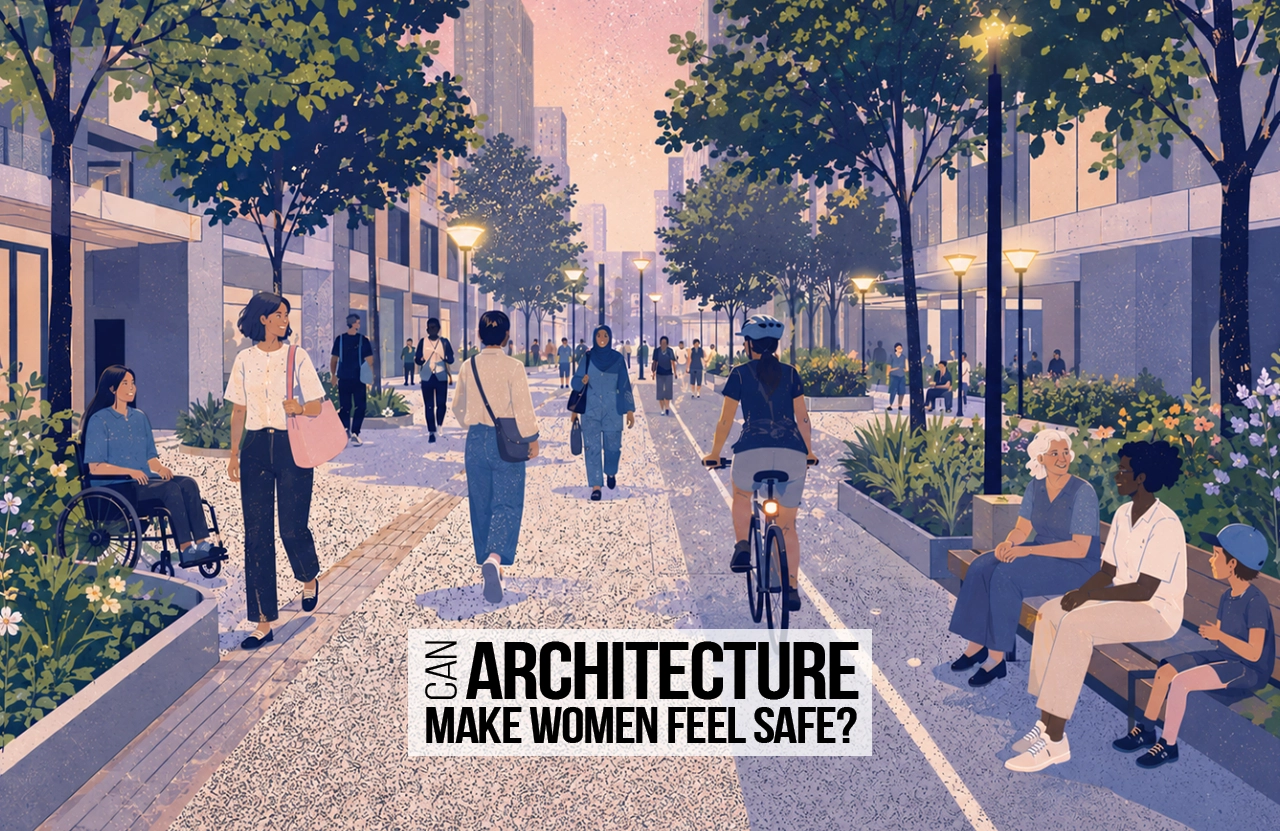
The Same City, Two Different Experiences

Now imagine a woman who leaves her workplace at half past eight in the evening. First, before going out of her office building, she checks the battery of her mobile phone. She shares her current location with one of her friends. She takes out her keys from her bag and places them between her fingers. She knows which way is shorter but she decides to take the longer way since it remains on the road. She moves to the opposite pavement after seeing some men coming towards her way. She calls somebody, both for the sake of companionship and for informing him of her exact location. She takes the bus and searches for a seat among some women. She doesn’t feel relieved until she reaches home through her own front door.
The man who makes the very same trip on the very same night is none of this aware. He takes the quicker route; he doesn’t sort out his keys; he doesn’t share his location. The city which he is walking through is, from an absolute and objective point of view, the exact same city – same streets, same bus, same district. Nevertheless, it is, in terms of experience, a totally new environment. The problem of how, and of why architecture plays an important part in it, is not a marginal issue in urban design. On the contrary.
Women don’t simply occupy cities. They negotiate them step by step, route by route, glance by glance.
A City Designed by Whom, and for Whom?
The history of urban planning has been in no small part the history of a profession in which the default user of public spaces was assumed to be male, gainfully employed in a place other than his house, moving around in an automobile, and traveling from his house to his workplace. This is not a provocative statement; rather, it is supported by the work done in the feminist urban theory movement, such as the works of Leslie Kanes Weisman in “Discrimination by Design” (1992) and Kathryn H. Anthony’s work on gendered space.
The way women travel is completely different. They are more prone to multi-stop journeys, picking up kids from school, dropping by on their grandma, making stops on their way to the market in what is called by urban planners as ‘trip chaining’ and is something that public transport systems designed on the basis of a single commute cannot accommodate easily. They are more prone to traveling at different times, even times where there is very little street activity and people feel more unsafe. They are more prone to taking responsibility for their care work and going through streets and public spaces within the neighborhood rather than the roads that transport planners focus on. The city as it is designed is very different from the city in which half of its inhabitants live in.
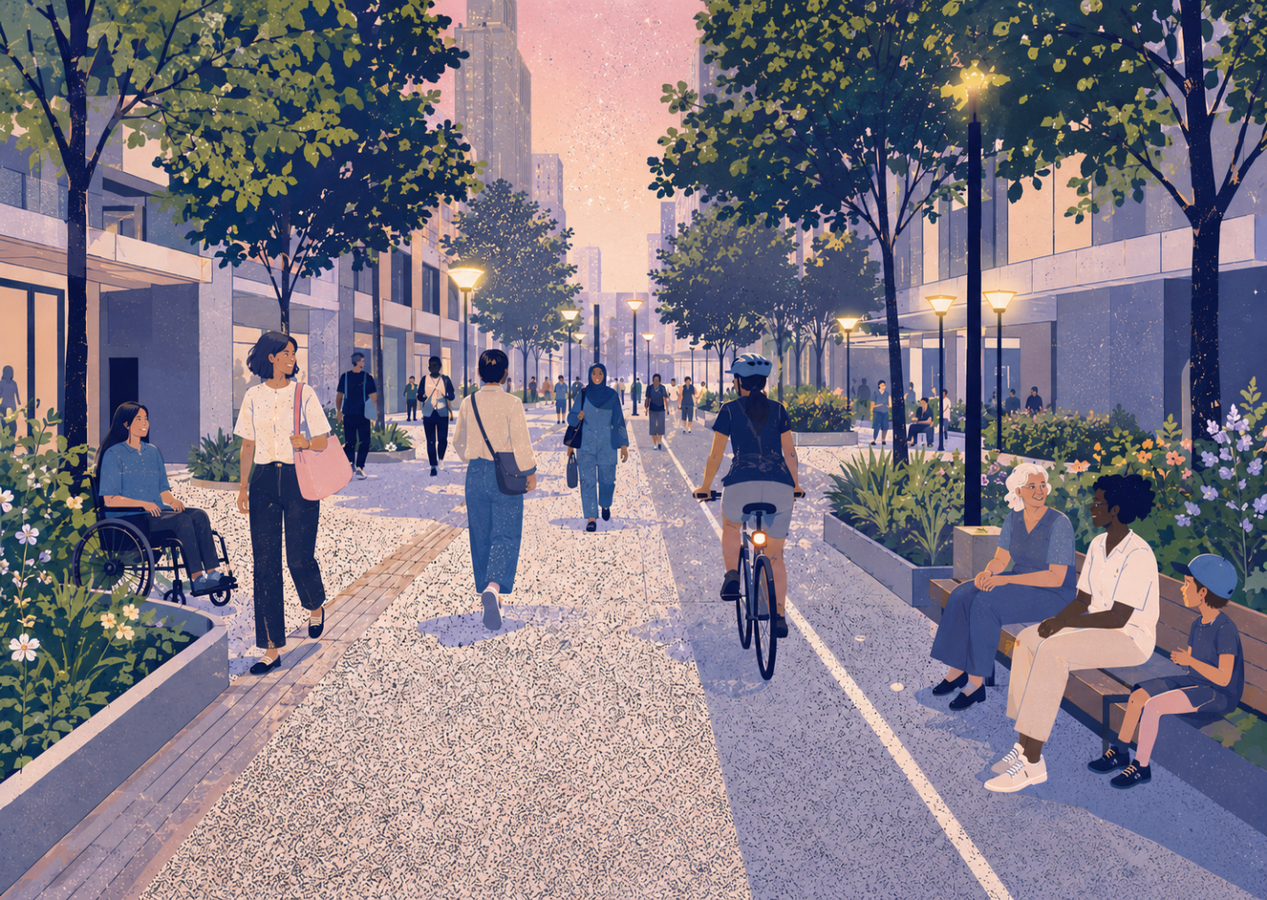
Vienna is often quoted as the best example of a city which has tried to remedy this problem. Since the 1990s, Vienna has conducted a Gender Mainstreaming programme, whereby gender sensitivity is integrated into urban planning for public parks, housing developments, street planning, and transport. Einsiedler Park in Vienna’s 12th district has been refurbished as a result of studies indicating that girls beyond the age of ten stop using public parks – not because they are prevented from using them, but because the way that space has been structured within these public parks, with its emphasis on football pitches and skateboarding ramps appealing to boys, makes girls feel unwelcome. Improvements include the introduction of diverse activity spaces, good visibility, improved lighting, and multiple entrance and exit points. The change was not grandiose. It was detailed.
Safety Is a Design Problem Not Only a Crime Problem
There is a difference in environmental psychology between real and perceived safety, a difference which urban designers should never forget about. Real safety is the statistical probability that something bad will happen in a certain place. Perceived safety is the feeling of security a person experiences in a place, which might or might not be correlated with the statistical information. Both are important. However, architecture affects mostly perceived safety and perceived safety affects behaviour – the decision whether people use particular route in the evening, whether a woman goes to sit alone in a park, whether a girl goes to school on her own. And when the feeling of perceived safety decreases, the freedom of behaviour becomes smaller. Women confine themselves in their movement, avoid some places and experience the psychological burden of continuous assessment of the environment around them.
Crime Prevention through Environmental Design (CPTED), formulated by architect Oscar Newman in the 1970s and later built upon by criminologist C. Ray Jeffery, offers the most widely accepted theoretical foundation for investigating the relationship between built environment and security. The concept of ‘defensible space’, which states that the design of the physical environment could generate spaces of territory and surveillance that would deter crime, emphasized four elements: natural surveillance, access control, territorial reinforcement, and image and maintenance. The last two principles assert the significance of design features that communicate that “someone cares” for the environment, therefore, someone will be watching. While these guidelines persist in modern safe city design, feminist urban scholars have correctly noted that the formulation of CPTED has largely overlooked gender considerations.
The Architecture of Everyday Fear: Streets, Stops, and Staircases
The architect looking at the city and the woman looking at the city will see two very different things. The architect will observe the cornice detailing, the setback, the material composition. The woman will see that there is no window in the 200 meters long blank compound wall facing the street, creating something called a ‘dead edge’ by the urban designer, i.e., an area which lacks eyes, life and natural surveillance. She sees that there is no side wall in the bus shelter, which means she cannot even stand in a place where she can shield her back. She observes that the stairs of the metro station are located at a corner which is out of sight from the platform. She sees that the public toilet, if there is any, is located at the other end of a dark alley.
These are all architectural observations. The blank compound wall is a design choice. The exposed bus stop is a design choice. The incorrectly situated stairs are a design choice. The absence of a public toilet is a planning choice. No one meant for these things to create a situation in which women feel unsafe. This is the crux of the issue, however: none of these decisions considered the experience of women at all. The ‘default user’ of the bus stop, the stairs, and the street did not have to assess the space before using it.

Public toilets should receive special emphasis since it is the least emphasized aspect of women’s safety infrastructure in the city. In the Indian metropolises, the number of toilets available for women compared to those for men has been one to six. The lack of convenient public toilets goes beyond being inconvenient; it reduces the amount of time that women can spend in the public sphere, prevents them from participating in outdoor economy such as markets, and makes it difficult for pregnant women, women with young children, and menstruating women to move around easily. It is first a matter of dignity, and then it is a matter of hygiene, which also has spatial implications – for example, a public toilet in an unlit alley on the outskirts of a park is a dangerous facility.
The Psychology of Space: Why Some Places Feel Like Traps
The concepts of ‘prospect’ and ‘refuge’, which are based on the evolutionary geography of Jay Appleton, are used by environmental psychologists to explain the situations in which people experience the feeling of being secure and at the same time alert. Prospect means the ability to look far ahead, to see what is happening in the environment, and to know what is coming. On the other hand, refuge means the opportunity to find shelter, to be contained, to be protected. Ideal urban environments for perceived security provide both features. Visibility in all directions and a sense of being protected from behind constitute the optimal combination for creating the feelings of safety. Good examples of such spaces are well-designed metro platforms, streets surrounded by trees with ground-floor frontages, parks with good sightlines and several exits. In contrast, a lane that is enclosed by two walls, a stairwell without sightlines to the next floor level, and a dark basement parking area illuminated only at the entrance are examples of pure refuge without prospect.
Women do this kind of assessment all the time. They look at the lines of sight in a space before going into it. They observe the possible ways out. They observe the presence or absence of others, especially of other women. They observe the mix or homogeneity of what is happening around them. These kinds of assessments are not paranoid actions; they are reasonable responses to an urban environment that has been designed without consideration for their safety.
What Research and Real Cities Tell Us
In her work “The Death and Life of Great American Cities,” published in 1961, Jane Jacobs referred to the concept of “eyes on the street” as the main tool that allows for urban safety. The author did not mean by this surveillance systems or police patrol but the creation of a street that would ensure human activity around the clock: mix of land use, short blocks, buildings with active street frontages and dense population. The street that Jacobs talks about can be called a feminist notion of the street, although the author did not consider it so: it is a street whose safety derives from communal life, not from surveillance systems.
The UN Women’s Safe Cities and Safe Public Spaces programme, which was undertaken in Delhi before being rolled out to other cities in India, provided one of the most comprehensive data sets regarding the connection between urban design and women’s safety in India. Audit exercises undertaken in the course of the programme revealed the specific design interventions that led to positive changes in women’s perception of safety, such as improved and reliable street lighting, which made women avoid fewer streets at night; provision of female-only areas in transport hubs, which decreased cases of harassment; and activating the ground floor commercial areas in previously dead-edge streets. Sangam Vihar in Delhi saw a successful combination of community-driven street lighting projects and reconfiguration of public spaces resulting in an increase in women’s ability to use public space at night. The evidence from Delhi is particularly valuable in that it was not collected in Europe, but rather shows how the tenets of feminist urbanism apply globally.
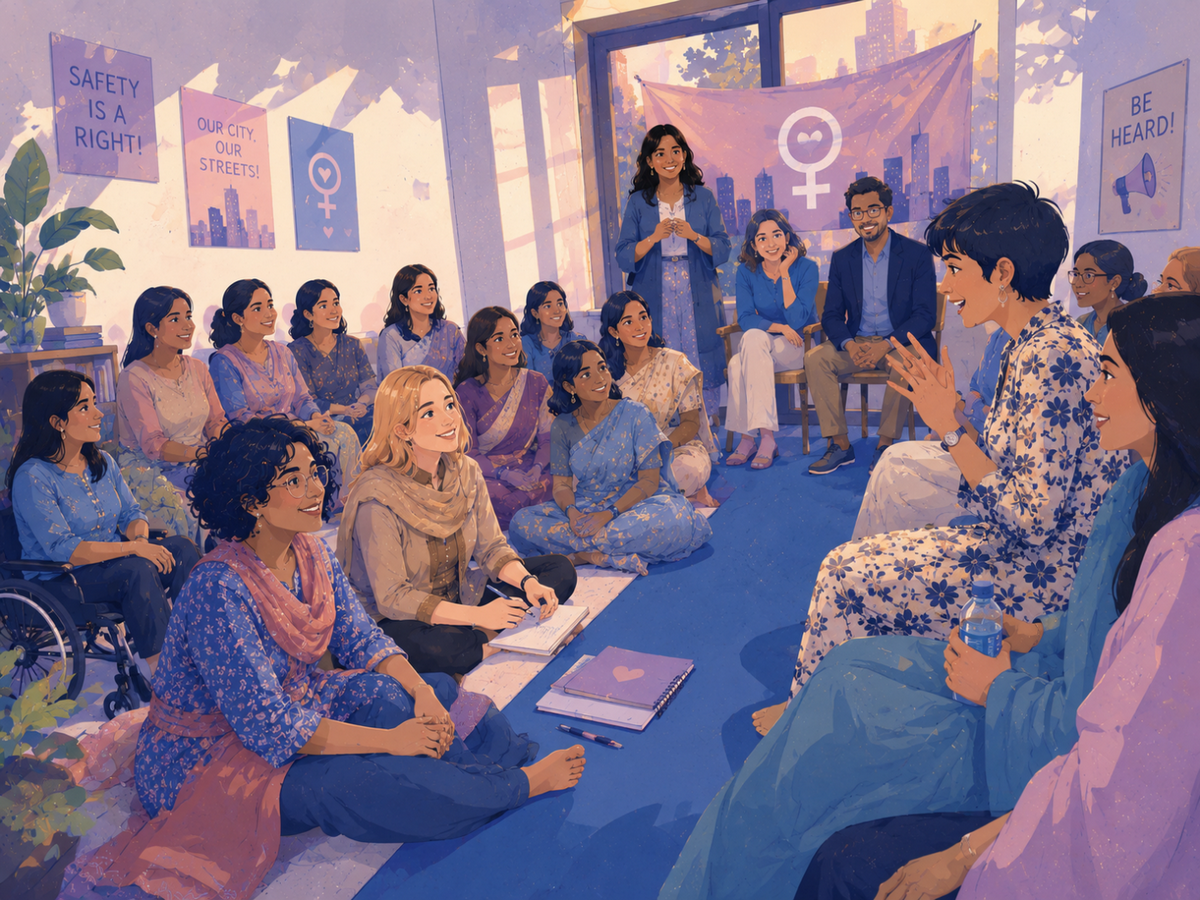
Can Architecture Actually Make Women Safe?
The answer is yes, but only to some extent and under certain conditions. It is obvious that architecture will not be able to stop an act of violence or serve as an alternative to any legislative measures, cultural changes and the observance of the rights of women. To say that good architecture could secure women from violence would be misleading and even harmful, as the act of placing the responsibility on the physical environment alone would mean that the problem could be taken out of the social and political sphere.
However, architecture can change the conditions of visibility, security and freedom for women to move around the city. It can build streets that are under constant surveillance, bus stops where women can feel protected, toilets that can be reached by women, parks where women can rest, and stairways that can be easily seen. The architecture can destroy the blank wall, dark lane, dimly lit underpass and parking structure that makes a woman walk alone in the open space during 300 meters. It can use CPTED approach, feminist urbanism and inclusive design to create better conditions for safety and freedom.
Designing Cities That Women Do Not Have to Fear
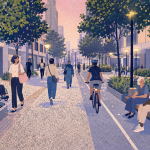
The recommendations made in light of feminist urbanism are neither radical nor costly. In many ways, they represent recommendations that create good cities for everybody: mixing land uses, so that the streets are busy at any hour; active ground-level frontages, replacing blank walls with lively edges; properly lit streets using lighting designed around pedestrians instead of motorists; wide and clear footpaths where one can walk without feeling constrained; public toilets that are clean, easily accessible, brightly lit, and situated at the core of the public realm; rest facilities that increase the length of time women, the elderly, and those with children spend in public; public transportation that is safe, with clear sightlines and direct access from residential areas; and finally, ecological green infrastructure, such as planting trees and maintained parks that lower the heat-island effect while creating the humanized environment in which people want to stay longer.
What is also needed, and what has been slow to materialize in the field of architecture, is the process of designing with instead of for. Safety audits conducted by women – planned walks through which women inhabitants evaluate public spaces according to three criteria of visibility, accessibility, and sense of safety – are a proven method for determining what sort of spaces produce feelings of fear. These audits have been carried out in Vienna, Bogota, Delhi, and Cape Town. They do not cost very much money. They provide specific and locally oriented design advice. And they start off from the premise that women users know best how their spaces feel.
Conclusion: Is the City Ready to Adapt?
Architecture was not responsible for creating the circumstances that put women at risk in cities. That was patriarchy’s doing. But for the vast majority of history, architecture has been reproducing those circumstances without critical analysis – in the solid wall, the dark stair, the missing toilet, the bus stop that provides no cover, the public park that, by definition, is a man’s park. All of these physical conditions are design decisions that could be otherwise. The understanding of how to make these decisions differently is out there. The examples of cities that are trying to do this are out there. What has been lacking is the commitment to take women’s experience of the built environment seriously as a design criterion of equal importance to structure or energy efficiency.
It is not whether women should learn how to adapt to the city, toughening themselves up and finding strategies and shortcuts through spaces never built for them. This has always been the case. The issue is whether the city is ready to adapt to women, taking into account the whole of human experience, in all its complexity regarding gender differences, at the very core of urban architecture rather than at its periphery. For an architectural profession that prides itself on serving humanity, it cannot be more basic.
References:
- Anthony, K.H. (2001). Designing for Diversity: Gender, Race, and Ethnicity in the Architectural Profession. Urbana: University of Illinois Press.
- Appleton, J. (1975). The Experience of Landscape. London: Wiley.
- City of Vienna / MA 18. (2013). Gender Mainstreaming in Urban Planning and Urban Development. Vienna: Municipal Department 18. Available at: www.wien.gv.at/stadtentwicklung/gender [Accessed: 12 July 2026].
- Criado Perez, C. (2019). Invisible Women: Exposing Data Bias in a World Designed for Men. London: Chatto and Windus.
- Foucault, M. (1977). Discipline and Punish: The Birth of the Prison. Translated by A. Sheridan. London: Allen Lane.
- Jacobs, J. (1961). The Death and Life of Great American Cities. New York: Random House.
- Jeffery, C.R. (1971). Crime Prevention Through Environmental Design. Beverly Hills: Sage Publications.
- Mehrotra, R. and Vera, F. (2021). Ephemeral Urbanism: Cities in Constant Flux. New York: Actar Publishers.
- Newman, O. (1972). Defensible Space: Crime Prevention Through Urban Design. New York: Macmillan.
- Ortiz, C. (2009). Women’s Safety Audits: What Works and Where? Nairobi: UN Habitat Safer Cities Programme.
- Peake, L. and Rieker, M. (eds.) (2013). Rethinking Feminist Interventions into the Urban. London: Routledge.
- UN Women. (2017). Safe Cities and Safe Public Spaces: Global Results Report. New York: UN Women. Available at: www.unwomen.org/en/digital-library/publications/2017/10/safe-cities-and-safe-public-spaces-global-results-report [Accessed: 12 July 2026]. Rethinking the Future | Opinion / Critical Essay | Architecture for Women Safety | Architecture & Gender | 2026