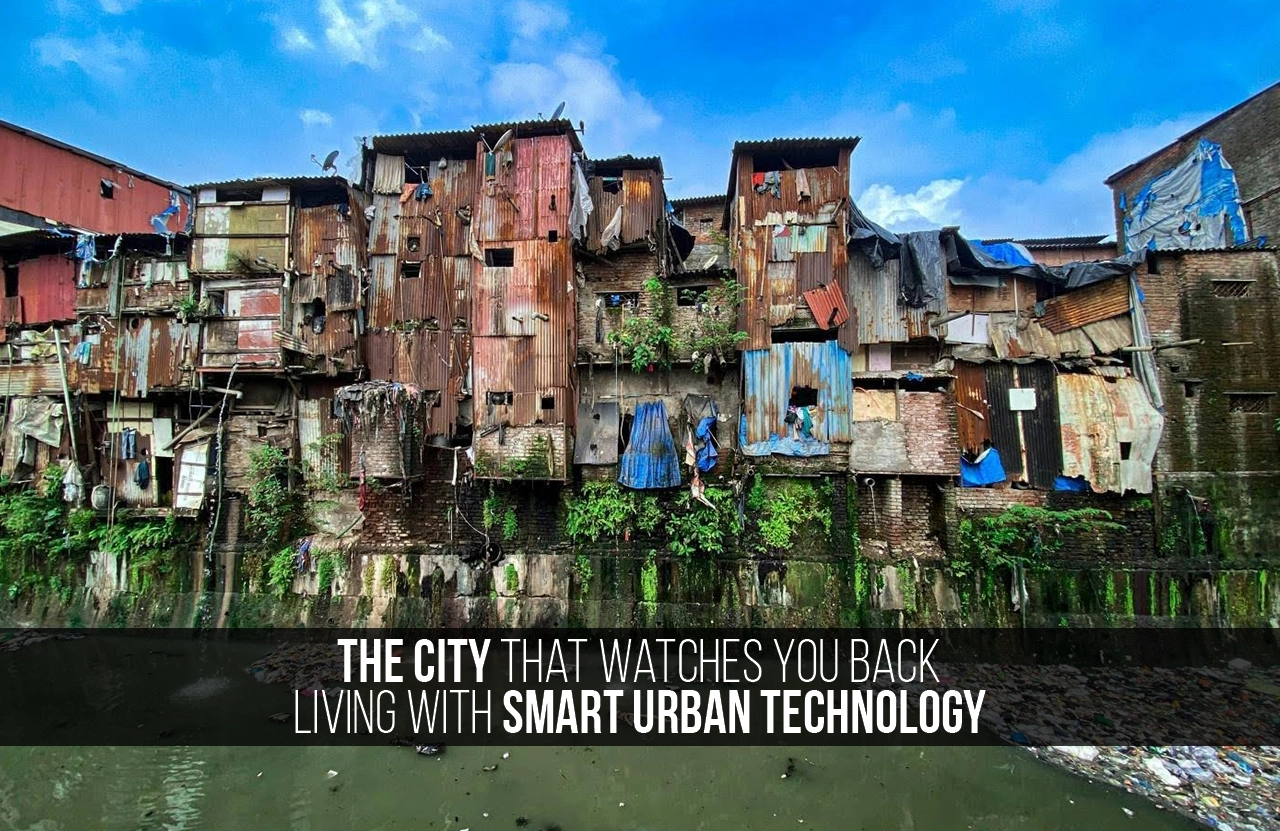
On a weekday morning in Dharavi, one of South Asia’s largest informal settlements, a narrow lane barely three metres wide carries the weight of an entire economy. Handcart vendors, schoolchildren, garment workers, and electricians navigate the same compressed corridor with an intimacy that no urban planner would design and no algorithm would predict. A few kilometres north, in the gleaming precincts of Bandra-Kurla Complex (BKC), a different kind of intelligence is at work. Cameras perched at intersections track vehicle number plates in real time. Sensors embedded in street furniture monitor pedestrian density. An Integrated Command and Control Centre (ICCC) — the digital nerve centre of Mumbai’s smart city ambitions — processes thousands of data points every hour from across the city’s five surveillance zones. These two Mumbais coexist in the same metropolitan region, and the growing distance between them is, in many ways, the central architectural and social question of India’s smart city era.
Smart urban technology — the constellation of sensors, AI systems, CCTV networks, adaptive infrastructure, and data analytics platforms that are increasingly embedded in the fabric of contemporary cities — has arrived in Mumbai not quietly but at scale. The city’s surveillance infrastructure is currently entering its next major phase of expansion, with a consortium comprising GVPR Engineers Limited, Secutech Automation, and CMS Computers deploying approximately 15,000 AI-enabled cameras across five zones — one of the largest single urban surveillance upgrades in the country. The new system will incorporate facial recognition, traffic violation detection, speed monitoring, and advanced behavioural analysis, all integrated into a unified operational framework designed for real-time response. The question that Mumbai’s architects, urban designers, and city planners must now answer is not whether this technology will transform the city. It clearly will. The question is what kind of city it will transform Mumbai into.
The Infrastructure of Efficiency: What Smart Technology Promises
The case for smart urban technology is neither trivial nor insincere, and it would be intellectually dishonest to dismiss it. Mumbai is a city of over 20 million people, a density of approximately 21,000 persons per square kilometre in its island city, and an infrastructure deficit accumulated over decades of under-investment. Its traffic management system routinely struggles with gridlock that costs the regional economy billions of rupees annually in lost productivity. Its public safety record in large public gatherings — the 2013 Elphinstone Road station stampede, which killed 22 people — exposes the lethal consequences of crowd management failures in a hyper-dense urban environment. In this context, the ICCC is not merely a surveillance tool. It is, genuinely, an emergency response infrastructure.
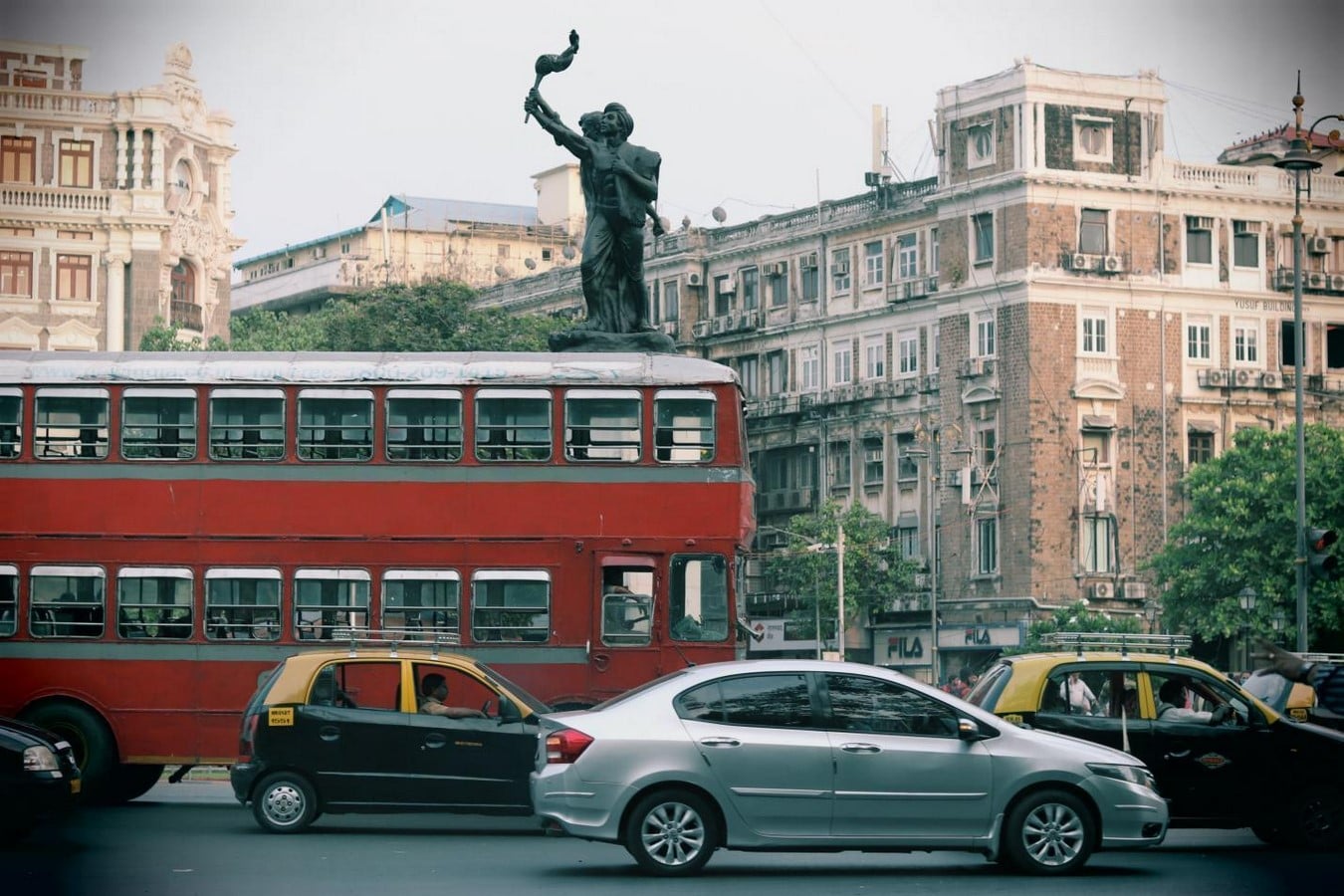
Nationally, the results of the Smart Cities Mission — launched in 2015 under the Ministry of Housing and Urban Affairs — offer concrete evidence of technological gains. Across 100 participating cities, over 84,000 CCTV cameras have been installed, and ICCCs have demonstrably improved coordination in transport management, utility monitoring, and disaster response. In Nagpur, a city that pioneered ICCC integration, crime rates declined by 14 per cent following implementation of the surveillance network, and surveys recorded a measurable increase in women’s confidence in using public spaces at night. These are not trivial achievements in a country where the safety of women in public space remains a critical and unresolved civic crisis. The smart city, in this framing, is the city that works: one that responds faster, wastes less, and protects more.
For Mumbai specifically, the BEST Command and Control Centre offers a prototype of what data-driven urban management can deliver at its most functional. The centre tracks thousands of buses across the metropolitan network in real time, monitoring GPS positions, fare transactions, passenger counts, and service disruptions simultaneously. The result is a more responsive transit system — one where breakdowns are intercepted before they cascade, overcrowding is detected before it becomes dangerous, and operational efficiency is continuously improved through dashboard analytics. This is smart urban technology at its most benign: invisible to passengers, consequential in outcomes, and serving a clear public good.
“A city is not a tree.” ~ Christopher Alexander, 1965. The organic city resists optimisation. The smart city insists upon it.
The Architecture of Watching: What Smart Technology Costs
And yet the story does not end at the BEST control room. Smart urban technology does not merely monitor cities — it produces them. The architecture of a CCTV-dense, sensor-embedded, AI-analysed urban environment is not neutral: it privileges certain kinds of bodies, certain kinds of activity, and certain kinds of space while rendering others legible, suspicious, or invisible in ways that existing inequalities almost always determine.
Michel Foucault’s panopticon — the 18th-century prison design by Jeremy Bentham in which inmates could be watched at any moment without knowing when they were being observed — has become the dominant theoretical lens through which urban surveillance is analysed, and with good reason. The panoptic effect is real and documented: awareness of surveillance modifies behaviour, producing self-policing in ways that may reduce overt transgression but also chill legitimate dissent, spontaneous assembly, and the kind of informal social interaction that Jane Jacobs identified as the true engine of urban vitality. When a camera watches a street corner, the corner changes — not because the camera intervenes but because it is there.
In Mumbai, this dynamic carries particular spatial and social weight. The city’s informal economy — which accounts for an estimated 60 to 80 per cent of urban livelihoods — operates in precisely the kinds of unscripted, semi-legal, spatially ambiguous zones that smart monitoring systems are least equipped to accommodate and most inclined to flag. A hawker operating in a no-vending zone, a handcart blocking a camera’s field of view, an impromptu religious gathering in a street that the system has designated as a traffic corridor: each of these is, from the perspective of an AI-driven urban management platform, an anomaly to be resolved. From the perspective of the people involved, it is ordinary life. The gap between these two readings of the same space is the central political problem of the smart city.
Significantly, Mumbai’s participation in India’s Smart Cities Mission has itself been contested. Unlike Pune, Nashik, and Nagpur — which participated fully — Mumbai and Navi Mumbai withdrew from the national programme, with the MCGM (Municipal Corporation of Greater Mumbai) citing concerns about the financial model and governance structure. This decision, often overlooked in discussions of India’s smart city rollout, is architecturally and politically instructive: it reflects a recognition, at the institutional level, that the smart city framework as nationally designed did not straightforwardly map onto Mumbai’s scale, complexity, and existing governance ecology. The city has instead pursued its own surveillance and smart infrastructure agenda through the MMRDA and the state Home Department — a path that has allowed faster implementation but with correspondingly less public consultation and democratic oversight.
The Unmonitored City: Informality, Spontaneity, and What Technology Cannot See
There is a concept in urban theory — drawn from the work of Henri Lefebvre and elaborated by David Harvey — known as the ‘right to the city’: the idea that urban inhabitants have a legitimate claim not merely to occupy city space but to participate in shaping it, using it in ways that reflect their own needs and cultures rather than those projected onto them by planners, technologists, or governments. The right to the city, in Mumbai’s context, is inseparable from the right to be unobserved — the right to inhabit a lane in Dharavi or a pavement in Dadar or a beach at Juhu without one’s presence, trajectory, and behaviour being processed by an algorithm whose criteria of normality have been set by someone else.
This is not merely a civil liberties argument, though it is also that. It is an architectural argument. The spatial qualities that make Mumbai’s urban fabric extraordinary — its density, its spontaneity, its layering of formal and informal uses, its capacity to absorb and integrate enormous human diversity in tight physical space — are precisely the qualities that a surveillance-optimised urban environment tends to erode. The smart city, in its most thoroughgoing form, is a city of frictionless efficiency: predictable, legible, and controllable. Mumbai, at its best, is the opposite of all three. The city’s legendary resilience — its capacity to absorb shocks, from the 2005 floods to the 2008 attacks, through distributed community action rather than centralised response — is a product of the same informal social fabric that the ICCC’s anomaly-detection algorithms are most likely to misread.
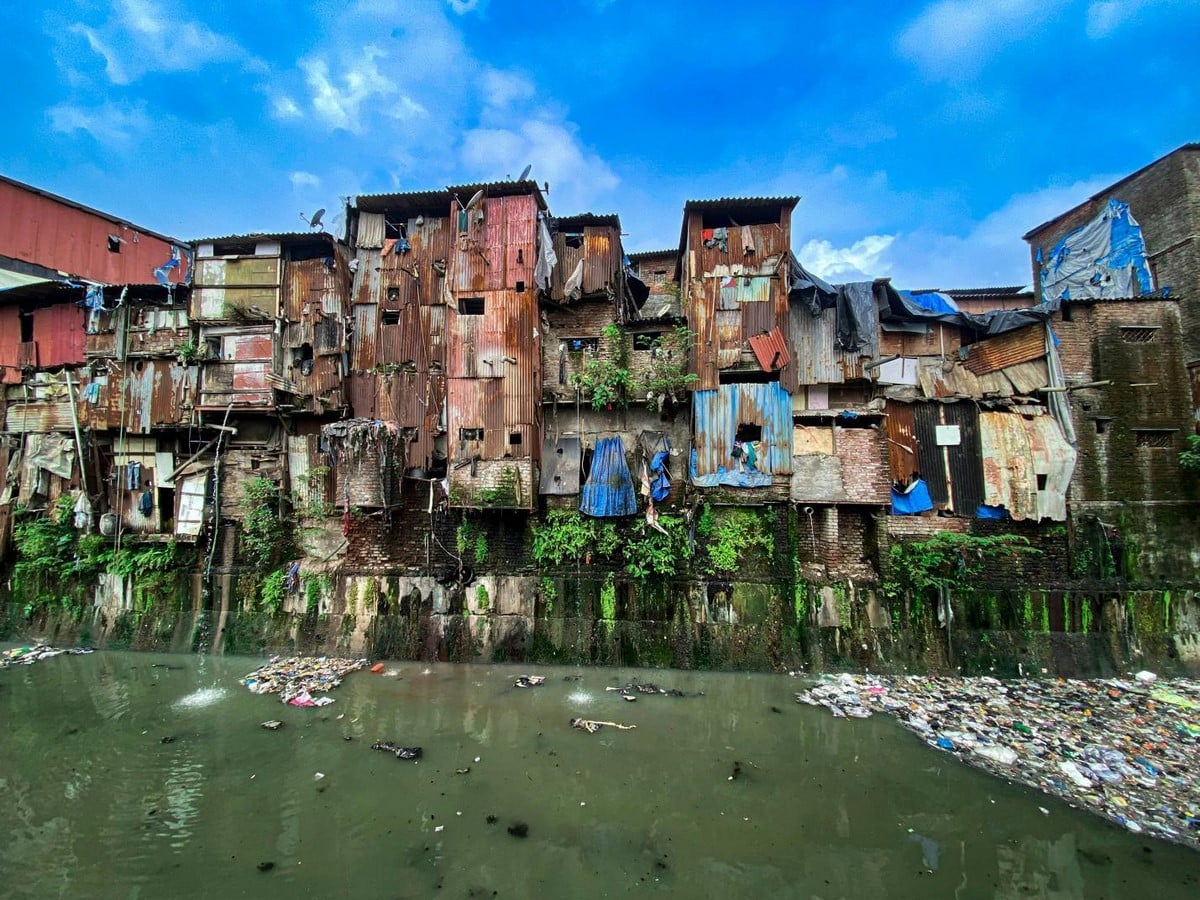
The implications for urban designers and architects are direct. Every smart streetlight, sensor-embedded bus shelter, and CCTV-integrated building façade that a designer specifies in Mumbai is a node in this expanding network of urban intelligence. The designer’s choice of specification — of whether to include a camera in a public toilet block, a motion sensor in a public park, a facial recognition terminal at the entrance to a residential complex — is also a choice about what kind of city Mumbai becomes. These are not technical decisions. They are political and ethical ones, and the architectural profession cannot continue to treat them as otherwise.
Towards a Smarter Smart City: Design Principles for Ethical Urban Technology
The answer to the surveillance city is not the naïve rejection of technology. Mumbai genuinely needs better infrastructure, faster emergency response, and more efficient resource allocation. The question is what governance frameworks and design principles must accompany technological deployment to ensure that efficiency does not come at the cost of equity, safety does not come at the cost of freedom, and the city’s intelligence does not outrun its democracy.
Several principles suggest themselves. First, data minimisation: surveillance systems should collect only the data necessary for a specific, publicly declared purpose, with automatic deletion protocols and independent oversight of retention. Second, spatial equity: smart technology deployment should follow patterns of public need rather than patterns of existing infrastructure, which in Mumbai’s case means prioritising underserved peripheral areas over already-watched commercial precincts. Third, community legibility: residents of any area in which smart monitoring is deployed should have accessible, plain-language information about what is being collected, by whom, for what purpose, and with what safeguards. Fourth, and perhaps most critically for the architectural community, design for the informal: smart city systems in Mumbai must be built with the city’s informal economy and informal spatial practices as design parameters, not as anomalies to be eliminated.
The city that watches you back need not be the city that watches you suspiciously, or selectively, or without accountability. But ensuring that it is not requires deliberate design decisions, robust public governance, and an architectural profession willing to ask uncomfortable questions about the objects it specifies and the systems those objects serve.
Conclusion: The Most Important Building Mumbai Is Not Building
Mumbai is deploying 15,000 cameras. It is building ICCCs and embedding sensors into its street furniture and integrating AI into its traffic management. It is, by any measure, becoming a smarter city. What it is not yet building — and what its architects, planners, and urban designers must urgently advocate for — is the institutional and democratic infrastructure that would make that technological intelligence accountable. A city without a data protection framework, without a right to information architecture for its surveillance systems, and without meaningful public participation in smart technology governance is not a smart city. It is a surveilled one. The difference matters, and it matters most to those whose lives are lived in the lanes that the cameras watch but the algorithms do not understand.
As an architect who has grown up in Mumbai and who has watched the city’s built environment absorb every technology the 20th century threw at it — from the telephone exchange to the flyover to the mobile tower — the temptation is to trust in the city’s resilience. Mumbai has always absorbed and domesticated its infrastructures, bending them to the uses of its people rather than the other way around. But surveillance technology, unlike a flyover, is invisible. Its effects accumulate quietly, in databases and pattern-recognition models and police decision protocols, far from the view of the people it affects. For this technology, resilience is not enough. Attention is required — architectural, civic, and political attention, sustained and unblinking, trained not on the screen in the ICCC but on the street outside it, where the city actually lives.
References
- Alexander, C. (1965). A City is Not a Tree. Architectural Forum, 122(1–2), pp. 58–62.
- CXOToday News Desk. (2026). Mumbai’s City Surveillance Network Expands with Next Phase of AI-Led Integrated Infrastructure. CXOToday, 19 May 2026. Available at: www.cxotoday.com [Accessed: 11 July 2026].
- Foucault, M. (1977). Discipline and Punish: The Birth of the Prison. Translated by A. Sheridan. London: Allen Lane.
- Harvey, D. (2008). The Right to the City. New Left Review, 53, pp. 23–40.
- Jacobs, J. (1961). The Death and Life of Great American Cities. New York: Random House.
- Kitchin, R. (2014). The Real-Time City? Big Data and Smart Urbanism. GeoJournal, 79(1), pp. 1–14.
- Lefebvre, H. (1968). Le Droit à la Ville [The Right to the City]. Paris: Anthropos.
- Ministry of Housing and Urban Affairs, Government of India. (2025). 10 Years of Smart Cities Mission: Key Milestones and Achievements. New Delhi: Press Information Bureau. Available at: www.pib.gov.in [Accessed: 11 July 2026].
- MMRDA. (n.d.). Smart BKC Project Features. Mumbai Metropolitan Region Development Authority. Available at: www.mmrda.maharashtra.gov.in [Accessed: 11 July 2026].
- Praharaj, S. (2021). Building City Resilience Through Integrated Command and Control Centres in India. Smart Cities, 4(3), pp. 1141–1158.
- Press Information Bureau. (2025). Integrated Command and Control Centres (ICCCs): Smart Cities Mission. New Delhi: Ministry of Housing and Urban Affairs. Available at: www.pib.gov.in [Accessed: 11 July 2026].
- Sharma, S. and Chatterji, T. (2024). Driving Urban Digitalisation Through a National Mission. Asia Pacific Journal of Public Administration, 46(4), pp. 392–421.
- Wikipedia. (2025). Smart Cities Mission. [online]. Available at: en.wikipedia.org/wiki/Smart_Cities_Mission [Accessed: 11 July 2026].
- Rethinking the Future | Opinion / Critical Essay | Smart Urban Technology | Mumbai, India | 2026