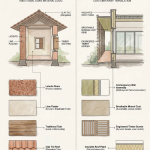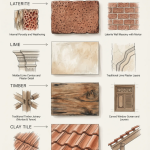
Walk into an old courtyard house just after the rain. The walls breathe quietly, the floors remain cool beneath bare feet, and the air carries the earthy fragrance of lime and wet clay rather than synthetic paint or concrete dust. There is something strangely comforting about such places. They feel less like manufactured objects and more like living companions that have aged alongside the people who inhabit them. It raises a simple yet profound question: What makes a building feel alive? Increasingly, architects are discovering that the answer lies not in spectacular forms or advanced technology, but in the material choices that shape every surface we touch. Around the world, lime, laterite, terracotta and timber are quietly returning to architectural practice, not as nostalgic reminders of the past but as thoughtful responses to an uncertain future.
The Age of Concrete Is Being Questioned
Concrete transformed the twentieth century. It enabled cities to rise rapidly, bridges to span impossible distances and skylines to grow taller than anyone once imagined. Yet every innovation eventually invites reflection. Today, the environmental cost of concrete has become impossible to ignore. Cement production alone contributes nearly 8% of global carbon dioxide emissions, while the extraction of aggregates continues to reshape landscapes and ecosystems. As climate concerns become central to design considerations, architects are beginning to ask whether efficiency alone should define progress. The discussion is no longer about replacing one technology with another. Instead, it is about rediscovering material intelligence and understanding how locally available resources can reduce environmental impact while reconnecting buildings to culture, climate and craftsmanship.
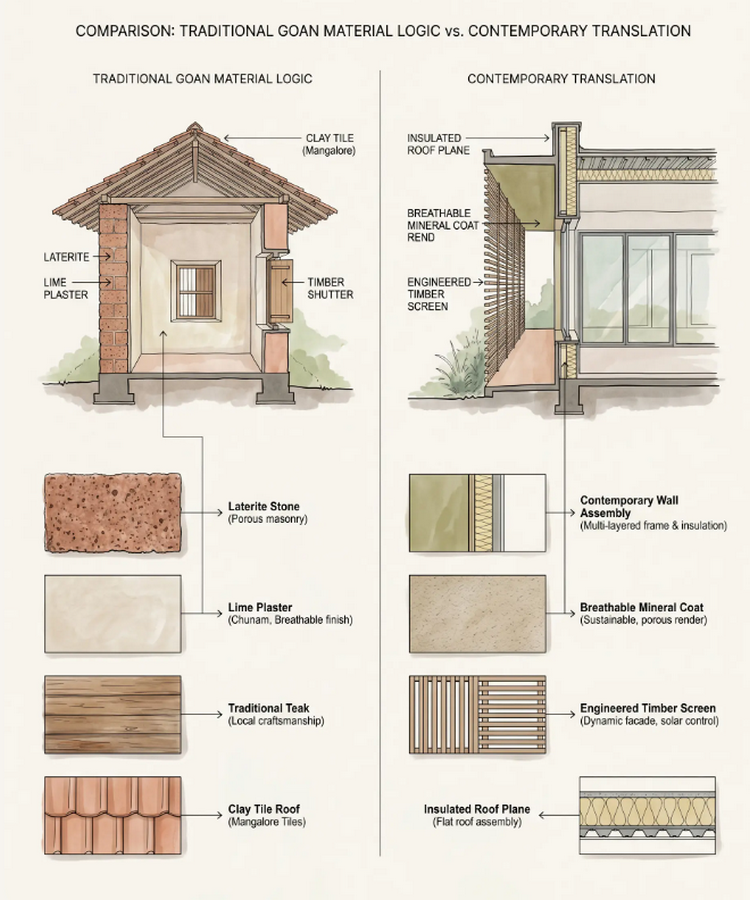
The Return of Lime as a Living Surface
Lime was once dismissed as outdated, replaced by cement because it promised speed and strength. Yet contemporary conservation projects and sustainable architecture have revealed qualities that modern construction had forgotten. Lime plaster regulates indoor humidity, absorbs a portion of atmospheric carbon dioxide during curing and develops a rich patina that improves with age instead of deteriorating rapidly. Unlike rigid cement finishes, lime accommodates minor structural movement, reducing cracks while allowing walls to breathe naturally.
The renewed appreciation of lime is not driven by nostalgia. Architects restoring heritage structures often discover that traditional material systems perform remarkably well in hot, humid climates without relying heavily on mechanical cooling. New projects are now borrowing these lessons, blending lime with modern engineering to create buildings that are both durable and environmentally responsible. In many ways, lime demonstrates that innovation sometimes begins by paying closer attention to history
Laterite: A Landscape Carved Into Architecture
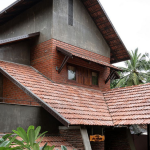
Drive through parts of Kerala, Goa or coastal Karnataka and the landscape slowly transforms into warm shades of deep red. The same earth that colours the terrain becomes the walls of homes, schools and public buildings through laterite stone. Unlike imported construction products, laterite requires relatively little processing, reducing embodied energy while preserving a close relationship between architecture and its surroundings.
What makes laterite remarkable is not only its appearance but also its story. Every block reflects the geology of its region, making each building an extension of the landscape itself. This material offers excellent thermal performance, helping interiors remain comfortable even during intense summers. Architects increasingly value laterite because it creates buildings that belong to their place rather than appearing identical across geographies. In an era of globalised architecture, laterite reminds designers that identity can emerge directly from the ground beneath their feet.
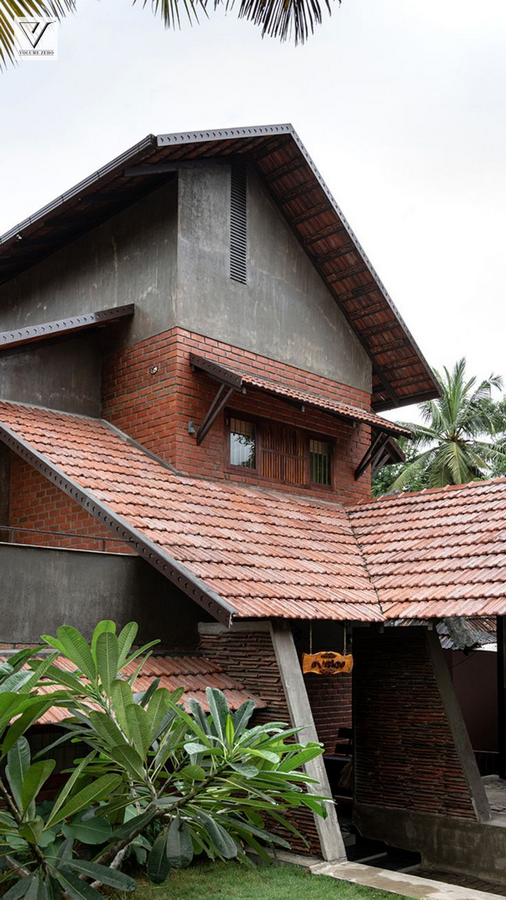
Terracotta Brings Back Climate Intelligence
Few building elements reveal the intelligence of traditional architecture as beautifully as terracotta. From handcrafted roof tiles to perforated facade screens and ventilated wall systems, terracotta has served communities across Asia for centuries. What once appeared to be decorative craftsmanship is now understood as sophisticated environmental design.
Modern architects are rediscovering how this material naturally cools buildings through ventilation, shading and thermal mass. Terracotta screens filter harsh sunlight while encouraging airflow, reducing dependence on air conditioning without sacrificing visual warmth. Contemporary educational campuses, cultural centres and residences increasingly integrate terracotta into facades that respond dynamically to the climate rather than resisting it. Rather than competing with technology, terracotta complements sustainable design by allowing buildings to work with nature instead of against it. The beauty of these spaces comes not from excessive ornamentation but from thoughtful environmental performance expressed through craftsmanship.
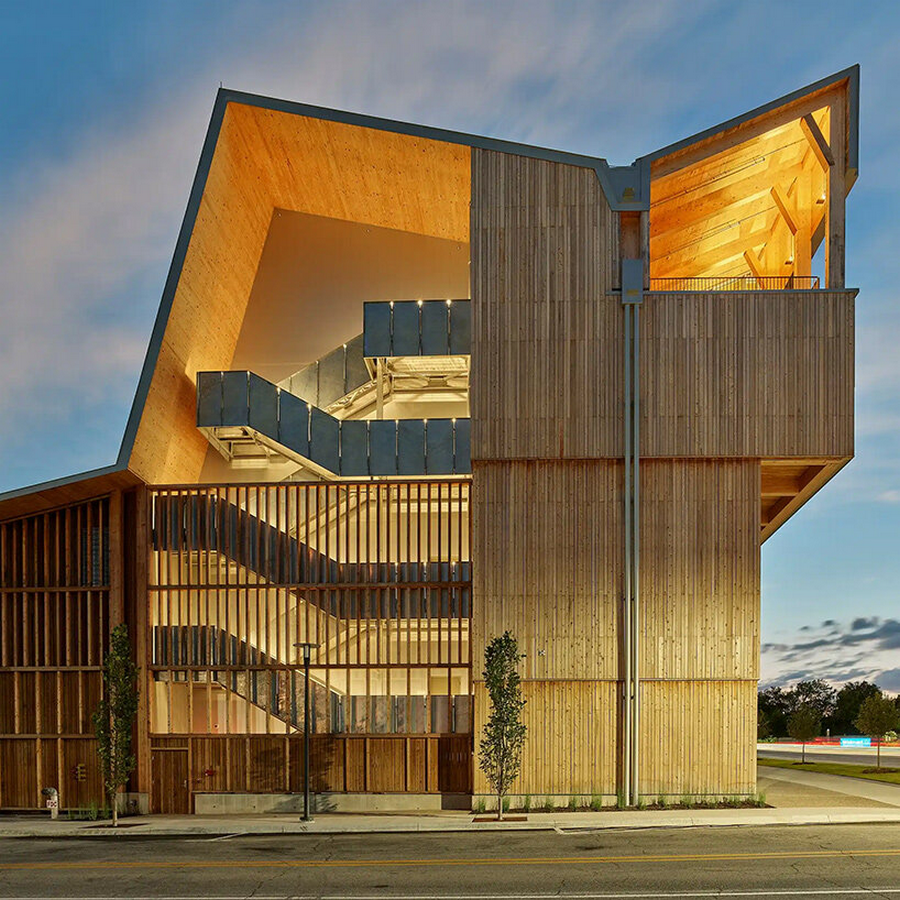
Timber as a Low-Carbon Structural Choice
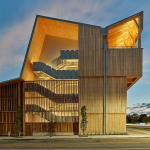
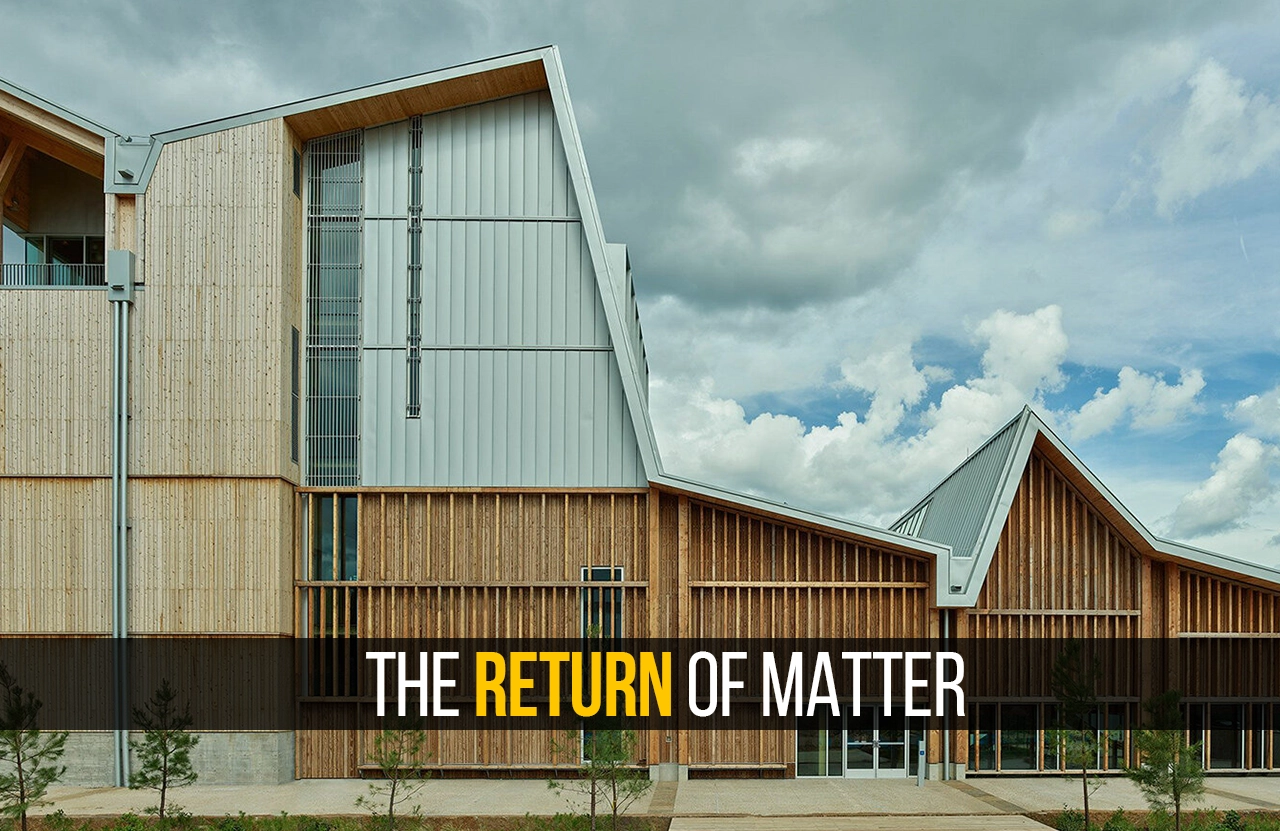
Perhaps no material symbolises the shift towards responsible architecture more clearly than timber. For decades, concerns about durability and fire have limited its use in large buildings. Today, advances in engineered wood products such as cross-laminated timber have transformed those assumptions, enabling timber structures to compete with steel and concrete in both strength and safety.
Beyond structural innovation lies a deeper ethical argument. Responsibly sourced timber stores carbon throughout its lifespan while requiring significantly less energy to produce than conventional structural systems. Walking through a timber building often creates a psychological warmth that cannot easily be measured by technical performance alone. Occupants consistently describe such spaces as calmer, healthier and more welcoming. The growing popularity of timber reflects a broader understanding that architecture should nurture emotional well-being alongside environmental responsibility. Buildings, after all, are experienced not only through numbers but also through human senses.
Beyond Sustainability: Material as a Moral Decision
The conversation surrounding sustainable architecture has evolved beyond energy ratings and certifications. Increasingly, architects recognise that every material carries social, cultural and environmental consequences. Choosing locally available lime supports regional craftsmanship. Selecting laterite reduces transportation impacts while strengthening local economies. Specifying terracotta keeps traditional ceramic industries alive and responsibly harvested timber encourages sustainable forest management.
These decisions influence far more than construction budgets. They shape employment, preserve disappearing knowledge systems and encourage communities to value regional resources rather than imported alternatives. Architecture therefore becomes an ethical practice as much as a technical one. Buildings no longer stand apart from society; they become active participants in environmental stewardship and cultural continuity. The return of natural materials reflects an awareness that responsible designing begins long before the first foundation is excavated.
Learning from Buildings That Already Knew
Many celebrated contemporary projects quietly demonstrate this philosophy without announcing it as a manifesto. Visitors often notice how naturally cool the interiors feel, how daylight filters softly across textured walls, or how local craftsmanship becomes inseparable from architectural experience. The building never lectures about sustainability; it simply performs with quiet confidence.
This subtlety is perhaps the greatest lesson of thoughtful material selection. Rather than overwhelming occupants with technological complexity, these buildings allow natural processes to become visible again. Rain leaves gentle marks on lime walls, timber develops character over time and terracotta deepens in colour through changing seasons. Age becomes an asset instead of a defect. Architecture regains the ability to tell stories through weathering, texture and touch.
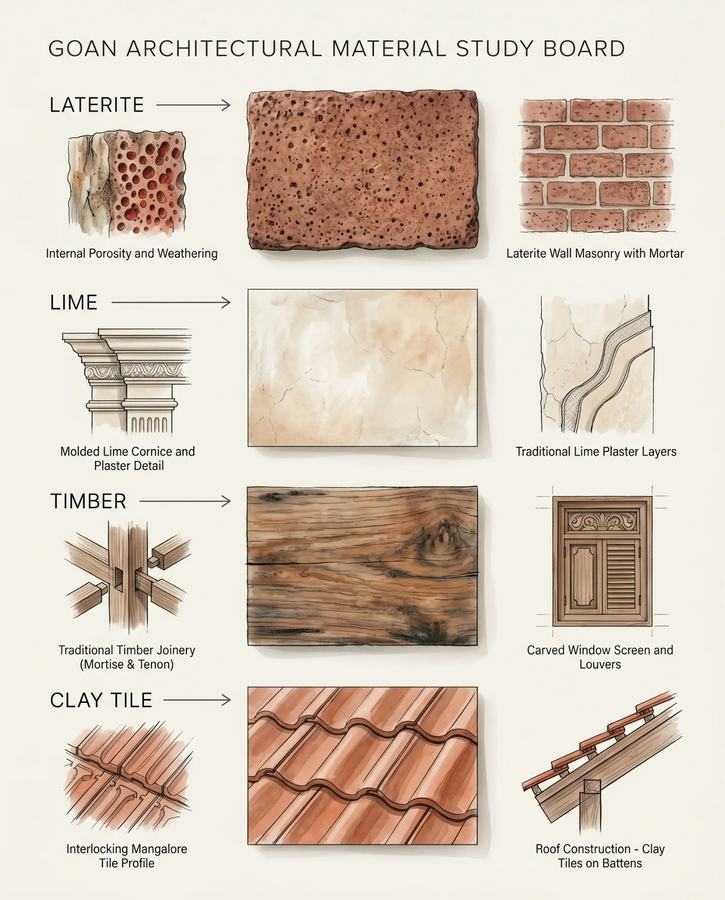
The Future May Look Surprisingly Familiar
As architects confront climate change, resource scarcity and the demand for resilient cities, the search for innovation is leading in an unexpected direction. The future of architecture may not be defined by entirely new inventions but by a wiser understanding of materials that humanity has trusted for centuries. Lime, laterite, terracotta and timber are not replacing concrete simply because they are traditional. They are returning because they respond intelligently to environmental realities, celebrate regional identity and encourage a more respectful relationship between people and place.
Perhaps the greatest question facing architecture today is not what buildings should look like, but what values they should embody. Every material selected reflects a belief about the future we wish to create. If buildings are ultimately expressions of society, then the return of these humble, earth-born materials suggests a hopeful shift, one where architects, designers and communities measure success not only by height or speed, but by responsibility, memory and care. In that sense, the future of architecture may begin with rediscovering the wisdom that has quietly existed beneath our feet all along.
References:
Addis, B. (2006) Building with Reclaimed Components and Materials. London: Earthscan.
Ching, F.D.K. (2020) Building Construction Illustrated. 6th edn. Hoboken: Wiley.
Fathy, H. (1986) Natural Energy and Vernacular Architecture. Chicago: University of Chicago Press.
McDonough, W. and Braungart, M. (2002) Cradle to Cradle: Remaking the Way We Make Things. New York: North Point Press.
Pallasmaa, J. (2012) The Eyes of the Skin: Architecture and the Senses. 3rd edn. Chichester: Wiley.
Ratti, C. and Claudel, M. (2016) The City of Tomorrow. New Haven: Yale University Press.
United Nations Environment Programme (2023) 2023 Global Status Report for Buildings and Construction.
World Green Building Council (2019) Bringing Embodied Carbon Upfront.