Grammarly: 93
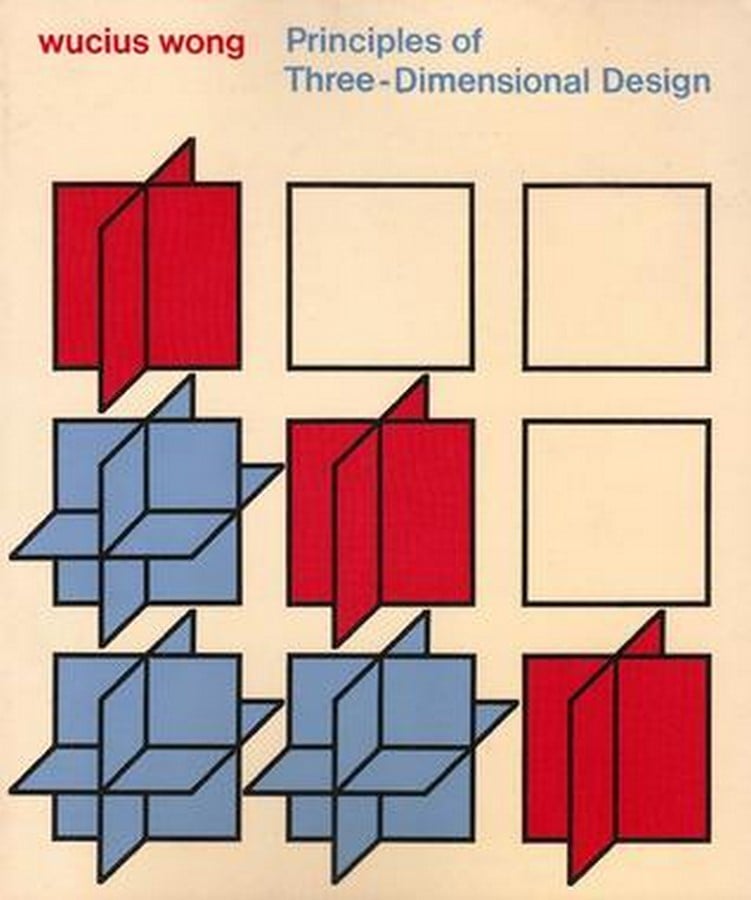
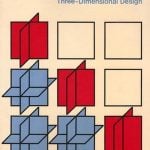
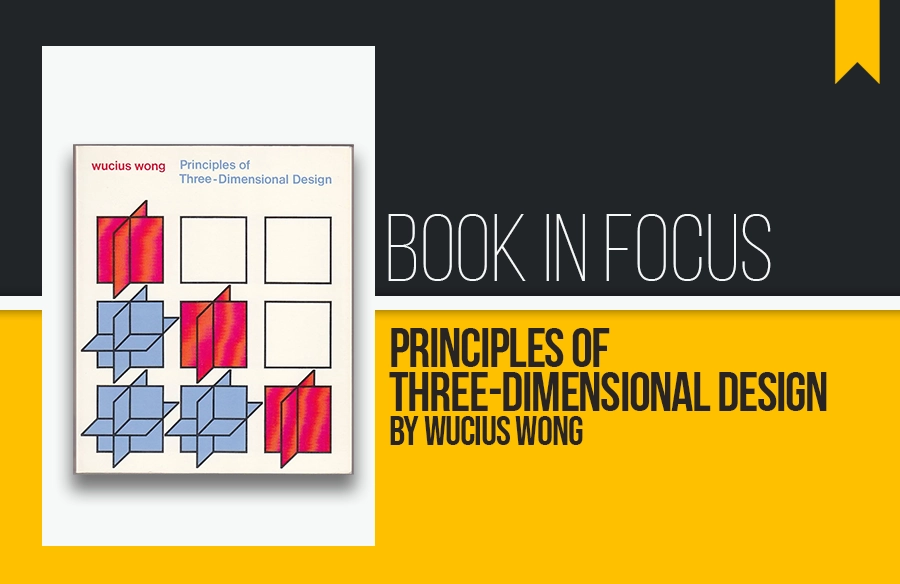
Literature on design thinking often oscillates between technical instruction and theoretical exploration. Wucius Wong’s principles of three-dimensional design strike a remarkable balance between both. First published in 1977, the book offers key insights into the logic behind three-dimensional construction using planes and linear frameworks.
Born in 1936 in Guangdong, China, Wucius Wong is a celebrated ink painter and design educator. He trained in fine arts at the Maryland Institute of Art in Baltimore before returning to Hong Kong, where he taught design at the Hong Kong Polytechnic for nearly two decades. His works are displayed in collections at the British Museum of Art and the Art Institute of Chicago. As an educator, Wong authored texts on two and three-dimensional design, colour, and form. Principles of three-dimensional design are perhaps the most technically focused.
For most nascent designers, the two-dimensional world comes instinctively. Drawings, paintings, prints or any other graphic representation are generally expressed in a two-dimensional world. Very few think sculpturally. What results is the absence of spatial thinking. Initially, designers find it difficult to visualise a form three-dimensionally. (Wong ,1977)
The book elaborates on 3D visualisation, calling it misleading. A view from a fixed angle may be deceptive, it states. What may appear circular may turn out to be a cylindrical surface on closer inspection. The author approaches the subject analytically by studying visual situations and possibilities.
Wong is candid about what the book sets out to do and what it does not. The preface explains that the work does not explore materials, surface textures, and the process of form-making. These, Wong concedes, require hands-on experimentation. What the book undertakes instead is more specific and, in its own way, more stimulating. It traces the logic of three-dimensional construction using planes and linear frameworks, asking the reader to observe how form behaves before they attempt to construct it. The primary tools envisaged are cardboard and wooden sticks. This is not because the problems are simple, but because the material simplicity clears the way for conceptual clarity.
What a reader gains from this page-turner are not a set of design solutions, but it teaches something much more rudimentary: a way of reading form. It does this by initially classifying three basic views, i.e. plane, front, and side. Thereafter, expanding this classification to include conceptual elements of point, line, space, and volume. The book further amplifies the elements to include size, colour, their relative position, and direction with respect to gravity and space. This is perhaps Wong’s most important contribution as a teacher. Where most design texts show what can or cannot be achieved, Wong insists on showing why a form holds together, or a particular configuration feels stable. The book explores the role repetition plays in creating spatial rhythm and how the relationship between solid and void defines the character of a volume. These are perceptual skills that professionals develop over years of practice
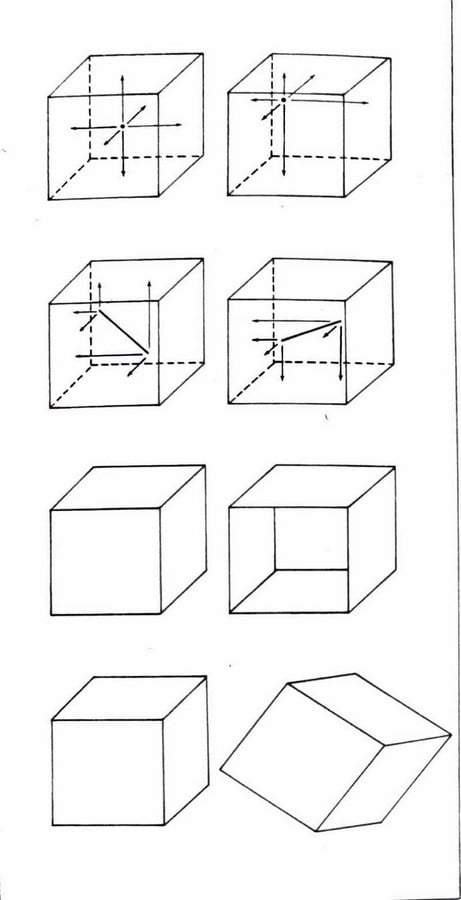
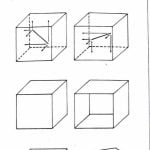
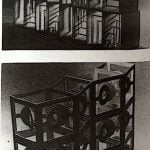
Using simple line diagrams, the book explores how planes achieve the third dimension. The cardboard models explore complex forms and how to visualise each facet of the design. For an architecture student navigating their early design studios, the book functions as a kind of spatial grammar course, the equivalent of learning parts of speech before attempting to write essays.
There are, of course, some limitations. The very restraint that makes the book so focused also makes it incomplete as a design education. The book does not directly address context, culture, or user experience. There is no mention of the built environment, no reference to architecture’s social responsibilities, and no guidance on how the analytical principles translate into real-world spatial decisions. For a reader seeking those connections, the book may feel truncated. Additionally, without the scaffolding of a studio course around it, the exercises can feel abstract. Wong writes as a pedagogue and not a raconteur. And yet, none of that diminishes what the book achieves. In an era of design education saturated with imagery and digital simulation, Principles of Three-Dimensional Design offers something profoundly rare: a demand for slowness. It asks the reader to hold a geometric principle in mind long enough to understand it, to build with cardboard before building with software, and to see space as a field of relationships rather than a backdrop. The exercises illustrated in this book are not nostalgic habits. They are foundational skills that help designers develop an understanding of what they are building.
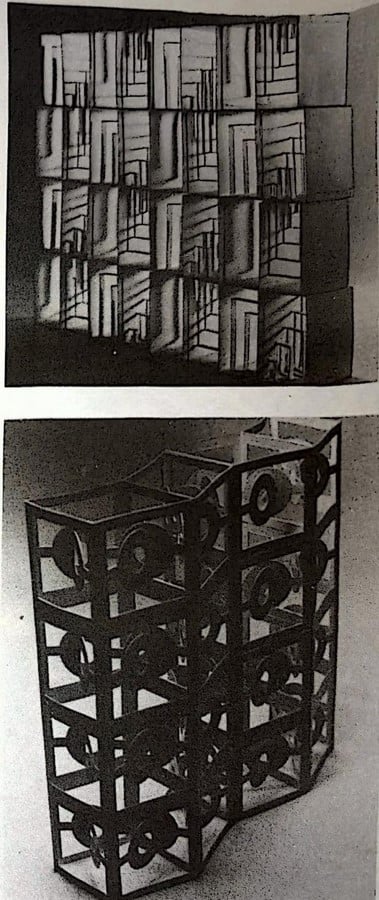
There is also something quietly radical about the book’s cross-disciplinary reach. Though Wong is addressing students and young designers, the book’s teachings are equally relevant to sculptors, installation artists, furniture designers, and set designers alike. The vocabulary of plane, frame, enclosure, cell, and structural variation does not belong to any single discipline. Wong seems to understand this, and through the neutrality of his examples allows the reader to project the principles onto their own practice. The book does not tell anyone what to design. It sharpens the eye through which design decisions are made.
Wucius Wong’s Principles of Three-Dimensional Design is the kind of book that rewards patience. It will not dazzle on the first read. It quietly and consistently builds the reader’s capacity to make spatial decisions. For students of architecture and design, that capability is not optional. It is the foundation upon which everything else is built. This book earns its place on the shelf, and more importantly, within the routine of design thinking.
Citations:
Wong, W. (1977). Principles of Three-dimensional Design.