Picture a royal woman in Rajasthan staring down through the jharokhas of Hawa Mahal at the festivities and processions. She complies with the social order of purdah, where a woman is not to be seen. But, at the same time, because of the jharokhas and the jaalis, she can witness the world. The 953 small jharokhas of Hawa Mahal also catch wind, working on the principle of Venturi Effect and Bernoulli Theorem. Hawa Mahal shows us that vernacular architecture was often in harmony with the climate and the culture. Due to globalization, we have embraced a “one-size-fits-all” approach. But what is lost on the way?
International Style Architecture and Climate

International Style Architecture can be characterised by its usage of rectilinear forms, minimal ornamentation, flat roofs without a ledge and glass curtain walls. This style was supposed to be universally applicable as it made no reference to local climate or inhabitants. However, this was its weakness. It became uniform in urban spaces to the point that these structures look exactly the same, whether it be London, New York or Mumbai.
Climate Impact of Glass Curtain Walls
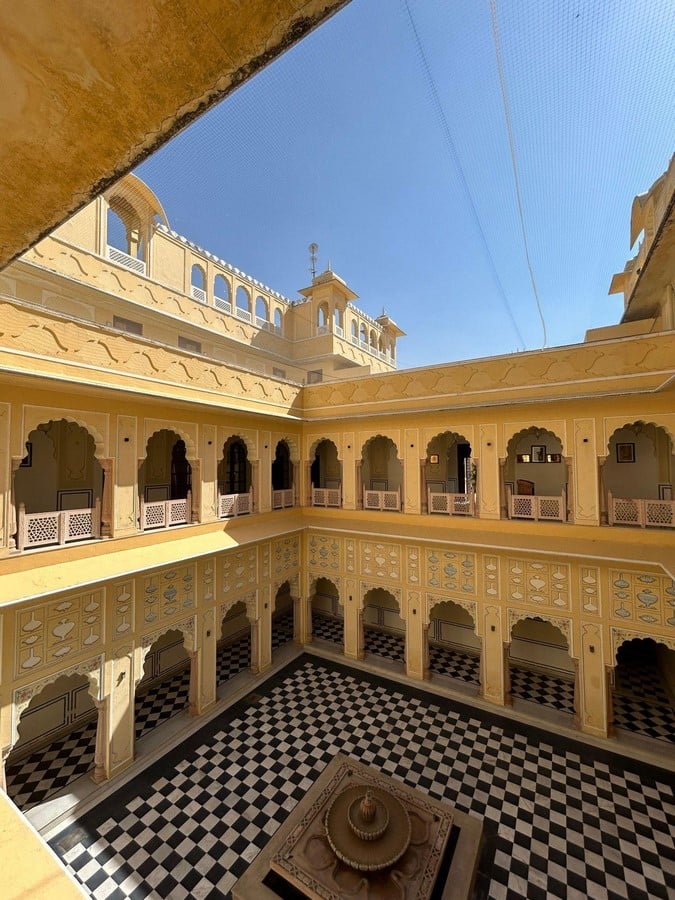
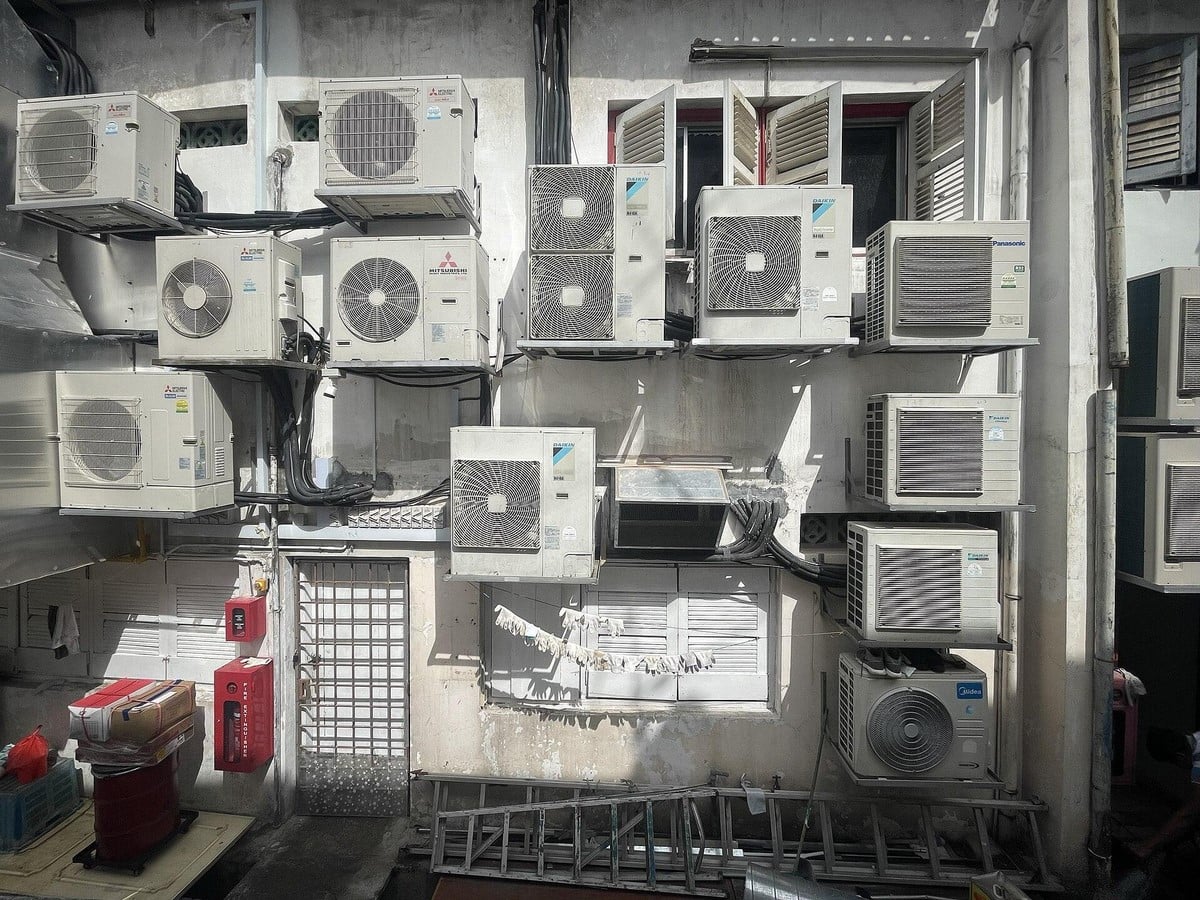
Glass curtain walls, a key stylistic choice of the International Architecture Style, cause greater environmental harm. Heat is easily transferred by typical metal-framed glass walls, which raises the need for Air Conditioning systems. Contrast this with jharokhas and jaalis. The architecture worked with the local climate. Whether it’s the courtyards in Rajasthan that offer nighttime coolness or the stilted buildings in Kerala that drain rainwater. These are only some solutions that a glass tower in the same city cannot offer.
Architecture Before Air Conditioning
Before air conditioning, there were jharokhas, jaalis, courtyards, overhangs, verandas and wind catchers (badgirs). Courtyards were equipped with vegetation and water bodies that provided cooling at night. Water bodies, especially in hot and arid regions, were a passive method of cooling. Verandas were such that sunlight never hit the walls of the house. There was a lot of thought put into the orientation of the building as well. Buildings positioned in a manner that allows minimum solar absorption in summer and maximum in winter.
Inhabitants also used readily available materials in their surroundings, again complying with nature and climate. For example, Rajasthan is the largest producer of sandstone in India and is extensively used in that state. It can be recognised in Bagore Ki Haveli, Udaipur.
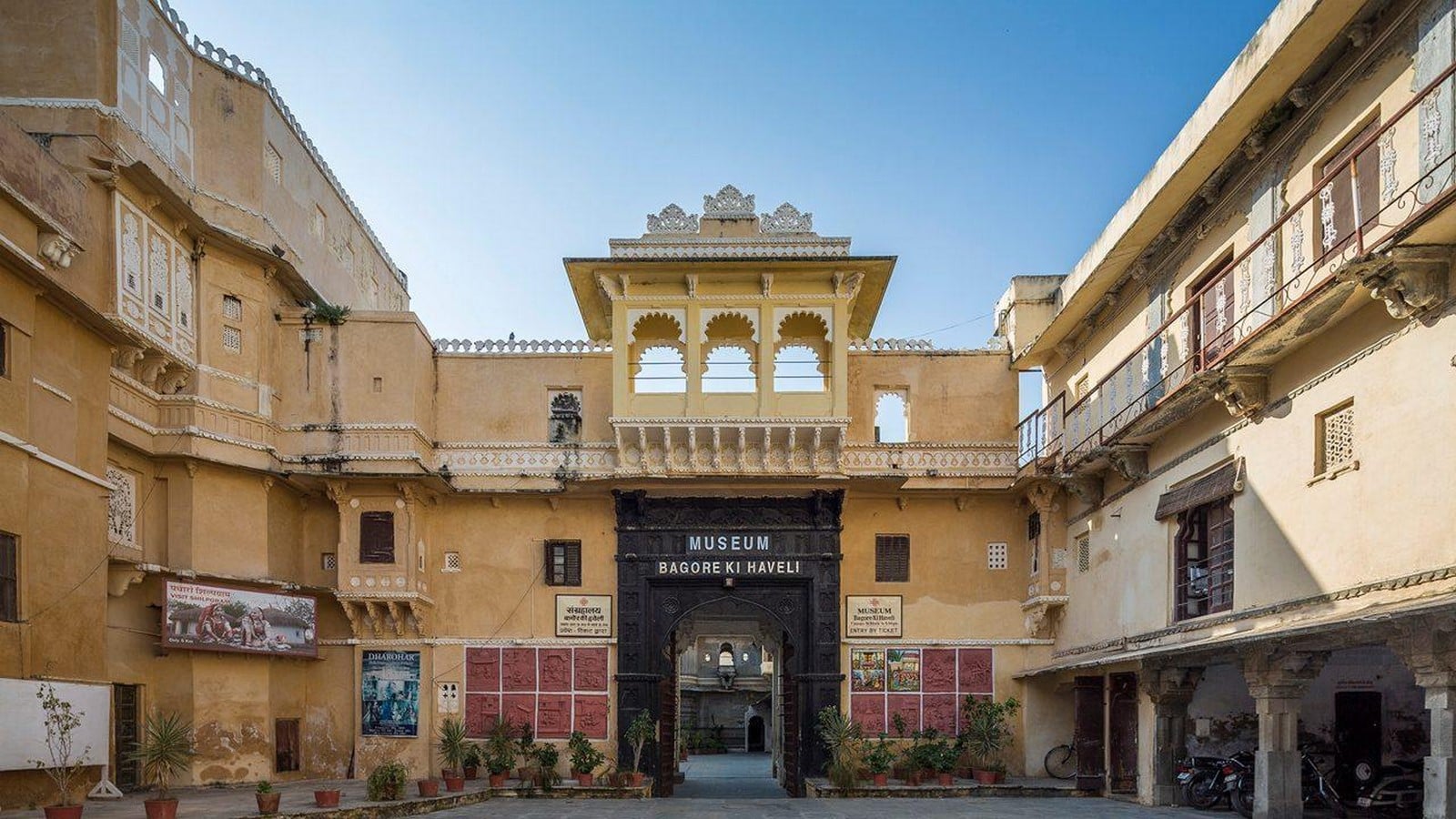
There was a shift in the thought process. To design architecture not as per the climate, but to artificially create a thermally comfortable environment inside the building. The world is facing consequences now. The gas which is used in air conditioning is depleting the ozone layer and causing the ultraviolet rays to enter the atmosphere.
So, has technology failed in finding sustainable solutions? Does this mean vernacular architecture is the best way forward? Should International Style Architecture be abandoned?
Striking Balance – Place-Based Modernism
As put by Benny Kuriakose, “Vernacular Architecture need not be copied as a style but as a knowledge system.” There are downfalls to Vernacular Architecture as well. For example, stone walls, which are used in mountainous regions, have now been shown to cause landslides.
Bharat Bhavan was designed by Charles Correa, one of the most important architects of post-Independence India, designed around “place-based modernism” that honours local traditions and incorporates environmental logic.
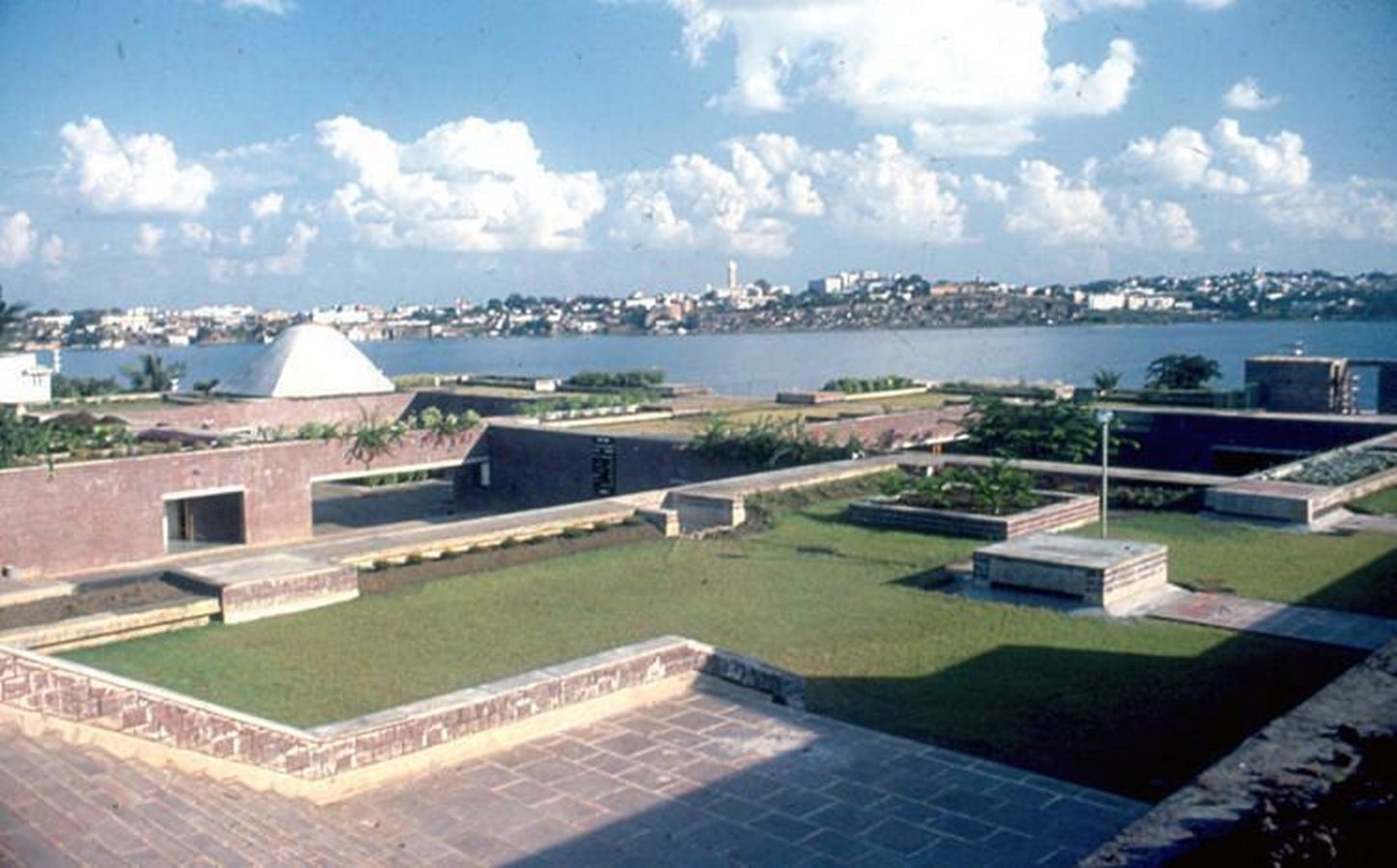
Bharat Bhavan has a terraced layout while also having stepped ghats and chattris. It also uses passive cooling techniques like open courtyards. There is emphasis on light and ventilation. The terraced layout reduces the need for artificial levelling. The stepped ghats, borrowed from traditional water systems, allow for rainwater to be absorbed and used rather than flood. The open courtyards work much like the courtyards in Rajasthan, reducing dependence on mechanical ventilation.
Bharat Bhavan suggests that form can still follow weather, even when steel and concrete replace stone and sandstone.
It is limiting to think that addressing climate change requires something new. Proven modern technologies and design solutions, such as glulam beams and solar panels, can respond to climate change just as effectively, without abandoning vernacular architecture.
Architecture students, when designing in harmony with the climate, should say no to glass curtain walls, no to turf lawns and no to roofs that can neither shed water nor generate electricity. Instead, they should ask the same question Hawa Mahal’s builders once did: what does this place, this light, this climate, this culture actually demand of the form we build? Architecture’s task was never to defeat the weather; it was always to listen to it.
References:
Wikipedia. (2023). International Style. [online] (Last updated 14 June 2026). Available at: https://en.wikipedia.org/wiki/International_Style. [Accessed 20 June 2026]
Adwani, M. and Singh, V. (2021) Architecture before Air Conditioning in India. Quest Journals, 6(4), pp. 25–33. Available at: https://questjournals.org/jace/papers/vol6-issue4/D06042533.pdf [Accessed: 20 June 2026]
Kuriakose, B. (2021) The need for contemporary vernacular architecture today, Benny Kuriakose & Associates . Available at: https://www.bennykuriakose.com/post/the-need-for-contemporary-vernacular-architecture [Accessed: 20 June 2026]
Bharat Bhavan (no date) Urban Design Case Study Archive. Available at: https://udcsa.gsd.harvard.edu/projects/25 [Accessed: 20 June 2026]