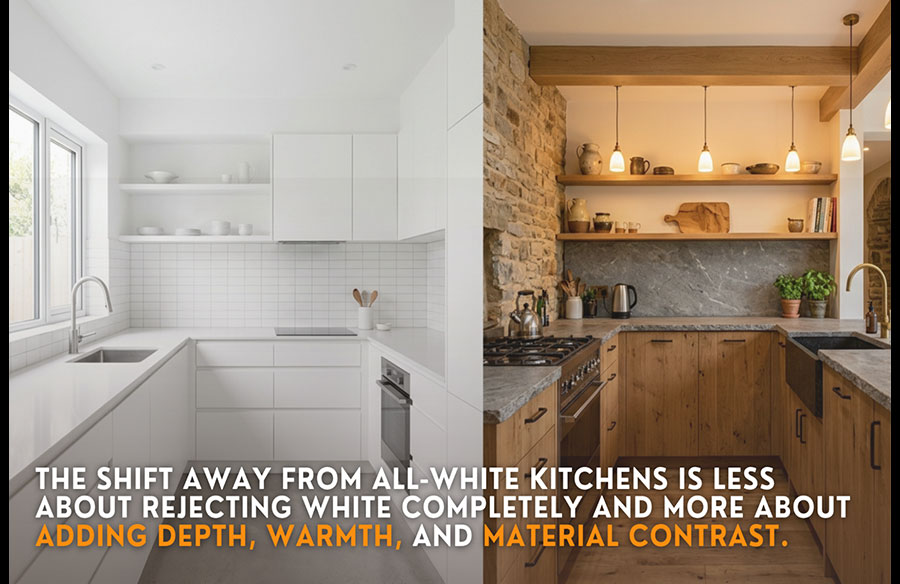
The all-white kitchen is not vanishing.
It is still clean, bright, familiar, and easy to sell.
But in 2026, it no longer feels like the automatic mark of a “finished” remodel. The kitchen conversation has shifted from brightness at all costs to warmth, tactility, and rooms that feel more lived-in from the first day.
The data backs up what designers have been seeing in the field. Houzz’s 2026 Kitchen Trends Study found that wood is now the most popular cabinet color in renovated kitchens, chosen by 29% of homeowners, just ahead of white at 28%.
Houzz also frames the broader 2026 kitchen direction around warmth, smarter storage, and spaces that support daily life more comfortably.
That one-point difference may sound small, but the design signal is meaningful.
For years, white cabinetry was treated as the safest renovation choice, especially in resale-minded homes.
Now, homeowners are asking for kitchens that feel less sterile and more specific. Natural wood does that without necessarily making the room dark, rustic, or traditional.
The all-white kitchen started to feel too flat
All-white kitchens became popular for understandable reasons.
They photograph well, make small rooms feel brighter, and create a neutral backdrop for counters, tile, hardware, and appliances. In many remodels, white cabinets also helped older kitchens feel clean and updated without requiring risky color decisions.
The problem is repetition. After years of white shaker cabinets, white quartz counters, white subway tile, and pale gray flooring, many remodels began to feel interchangeable. The finishes looked correct, but not personal.
Recent design coverage reflects that fatigue. Forbes reported in March 2026 that interest in wood kitchens is rising among both consumers and the trade, and cited the NKBA’s 2026 Kitchen Trends Report finding that 51% of designers expect white oak to be the most popular kitchen cabinet wood type for 2026. These trends reports also described the end of the long-running all-white kitchen trend and emphasized richer wood stains, bolder paint finishes, and more personalized combinations.
White is still useful. It just needs support. In 2026, the most successful white kitchens often include wood islands, wood pantry walls, stained open shelving, plaster hoods, stone slabs, or hand-glazed tile to keep the room from feeling overly flat.
Natural wood answers the demand for warmth
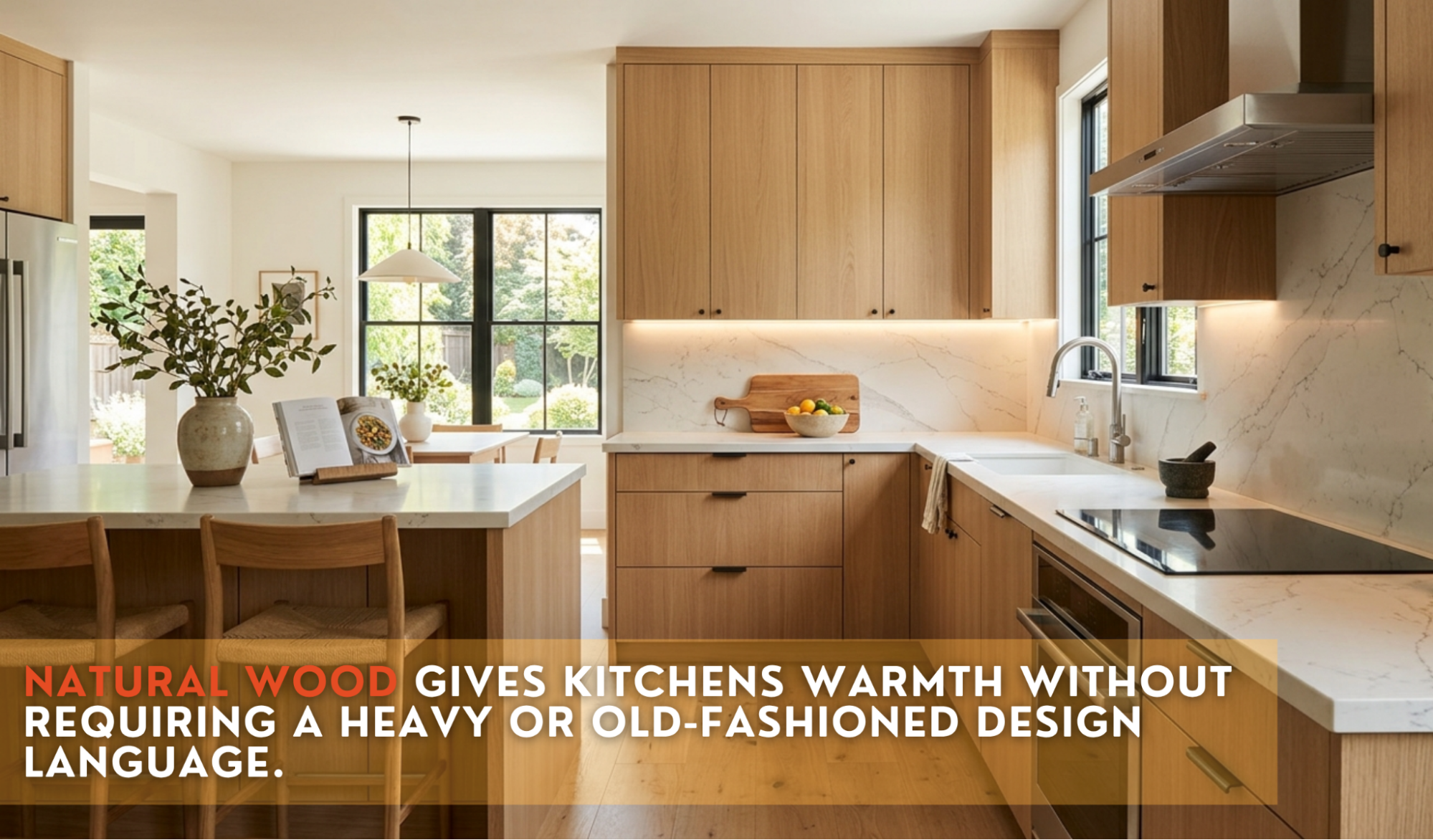 Natural wood has a quality painted cabinetry cannot fully imitate: it changes the emotional temperature of a room. Grain, tone, and texture make a kitchen feel warmer before any furniture, art, or styling is added.
This is especially important because the kitchen is no longer just a cooking space. It is a homework zone, coffee station, entertaining area, work-from-home landing spot, and family hub. A stark all-white room can feel crisp in photos but harsh in daily life. Wood softens that edge.
The current preference is not a return to the heavy orange, red, or glossy wood kitchens many homeowners associate with dated remodels. The 2026 version is more restrained: white oak, rift-cut oak, natural walnut, pale ash, lightly stained maple, and medium-toned woods with visible but controlled grain.
Designers are also using wood more selectively.
The renewed interest in wood kitchens is also changing how homeowners evaluate cabinetry brands. Instead of looking only at door color or cabinet style, they are paying closer attention to how the cabinets are built, how samples look in real light, and whether the supplier offers enough guidance before purchase.
RTA Wood Cabinets, a standing name in the ready-to-assemble category, fits into this shift. The brand offers ready to assemble cabinet samples by RTA Wood Cabinets, giving homeowners a way to review natural finish, tone, and construction before committing to a full kitchen order.
That matters with natural wood kitchens, where grain, stain, and cabinet quality are central to the final look.
Many of the brand’s cabinets also note plywood cabinet boxes, solid wood face frames, dovetail drawer construction, soft-close doors, and full-extension soft-close drawers, the kinds of details that help RTA cabinetry feel sturdy, sharp, and closer to a serious kitchen upgrade than a temporary shortcut.
Afterall a full wall of natural wood cabinets can feel architectural.
A wood island can ground a white perimeter.
A walnut pantry zone can make a compact kitchen feel richer. This flexibility is part of why the trend is replacing the all-white default rather than simply swinging to another one-note look.
Wood makes storage feel more integrated
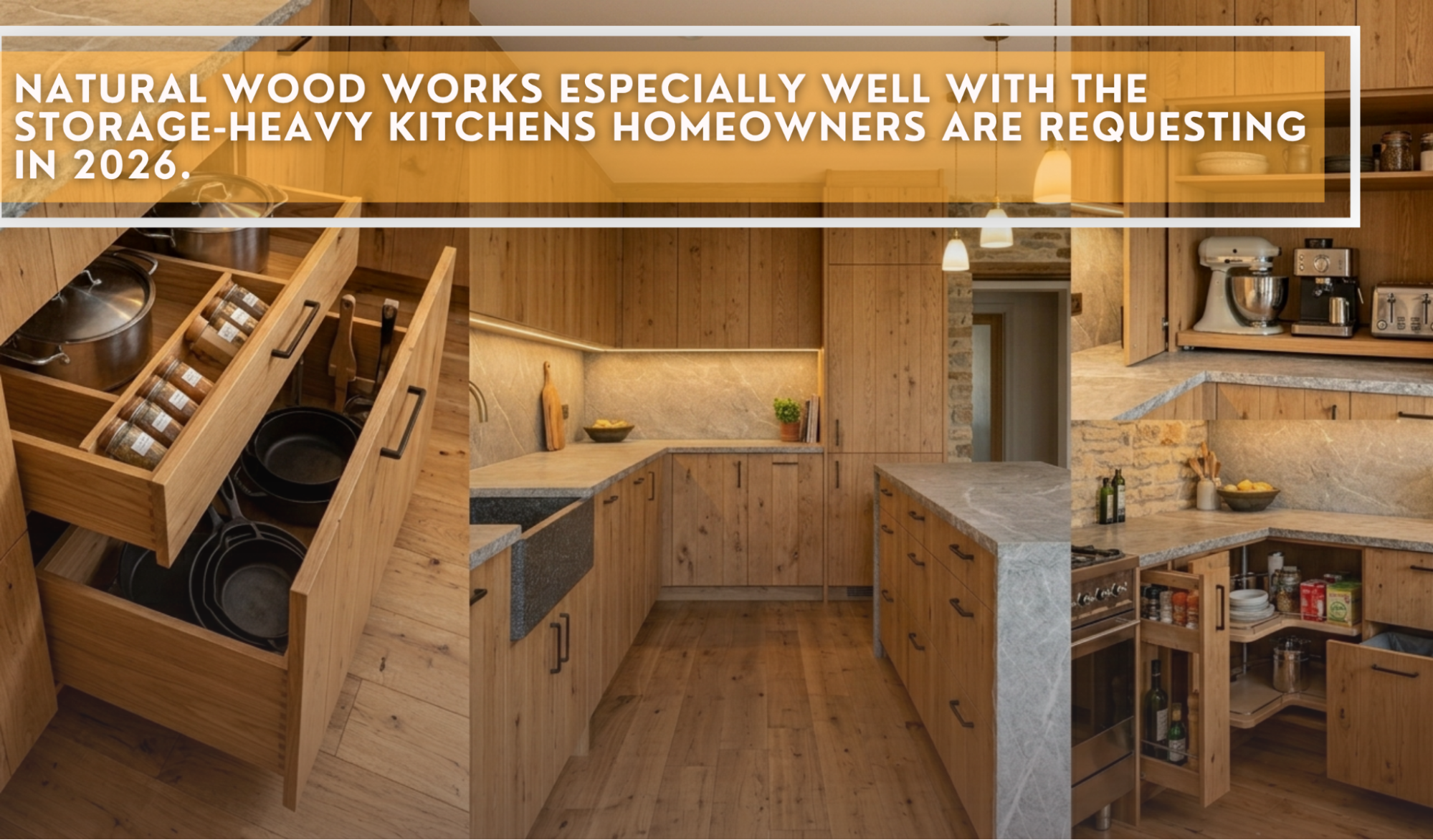 The move toward wood is happening at the same time as homeowners are asking for smarter storage. Built-in storage is a major priority, with details like coffee stations, slab backsplashes, and organized cabinet interiors turning daily routines into stronger design moments.
Wood cabinets help these storage elements feel less utilitarian. A tall pantry wall in painted white can read as a blank block. In white oak or walnut, the same wall can feel like built-in furniture. Deep drawer banks, appliance garages, panel-ready refrigerators, and integrated coffee stations often look more intentional when the cabinetry has visible material character.
This is also where construction quality matters. Natural finishes draw the eye to joinery, grain direction, reveals, and cabinet alignment.
A wood kitchen exposes sloppy planning more quickly than a flat painted surface. Grain matching, consistent panel spacing, drawer alignment, and finished end panels become part of the visual language.
That means the cabinet decision should not stop at color. It should include box construction, drawer hardware, hinge quality, finish durability, and how the cabinet layout supports actual kitchen habits.
The new wood kitchen is not necessarily rustic
One reason wood is replacing all-white remodels is that it now works across more design styles. A natural wood kitchen can be Scandinavian, organic modern, midcentury, coastal, traditional, Japanese-inspired, or transitional depending on the door style, stain, hardware, and surrounding materials.
Flat-panel white oak cabinets with integrated pulls feel modern. Inset walnut cabinetry with unlacquered brass feels tailored. Rift-sawn oak with a stone slab backsplash feels architectural. Slim shaker maple can feel classic without leaning farmhouse.
This is a major difference from the wood kitchens homeowners often remember from the early 2000s. Those rooms frequently combined raised-panel doors, busy granite, ornate corbels, heavy moldings, and warm-toned floors.
The 2026 wood kitchen is cleaner. It relies on proportion, grain, and restraint rather than decoration.
The most current versions also avoid matching every wood surface.
Designers are comfortable mixing wood with painted cabinetry, stone, metal, plaster, ceramic tile, and even color. A kitchen may pair white oak lower cabinets with plaster upper walls, a dark green island, or a stone range wall. The effect is layered instead of uniform.
Homeowners want materials that age with the house
 A major reason all-white remodels became so dominant was resale safety. White felt neutral and therefore durable. But many homeowners are now questioning whether neutral always means lasting.
A white kitchen can age poorly when the finish yellows, the painted doors chip, the quartz pattern dates, or the entire palette feels tied to a specific renovation era.
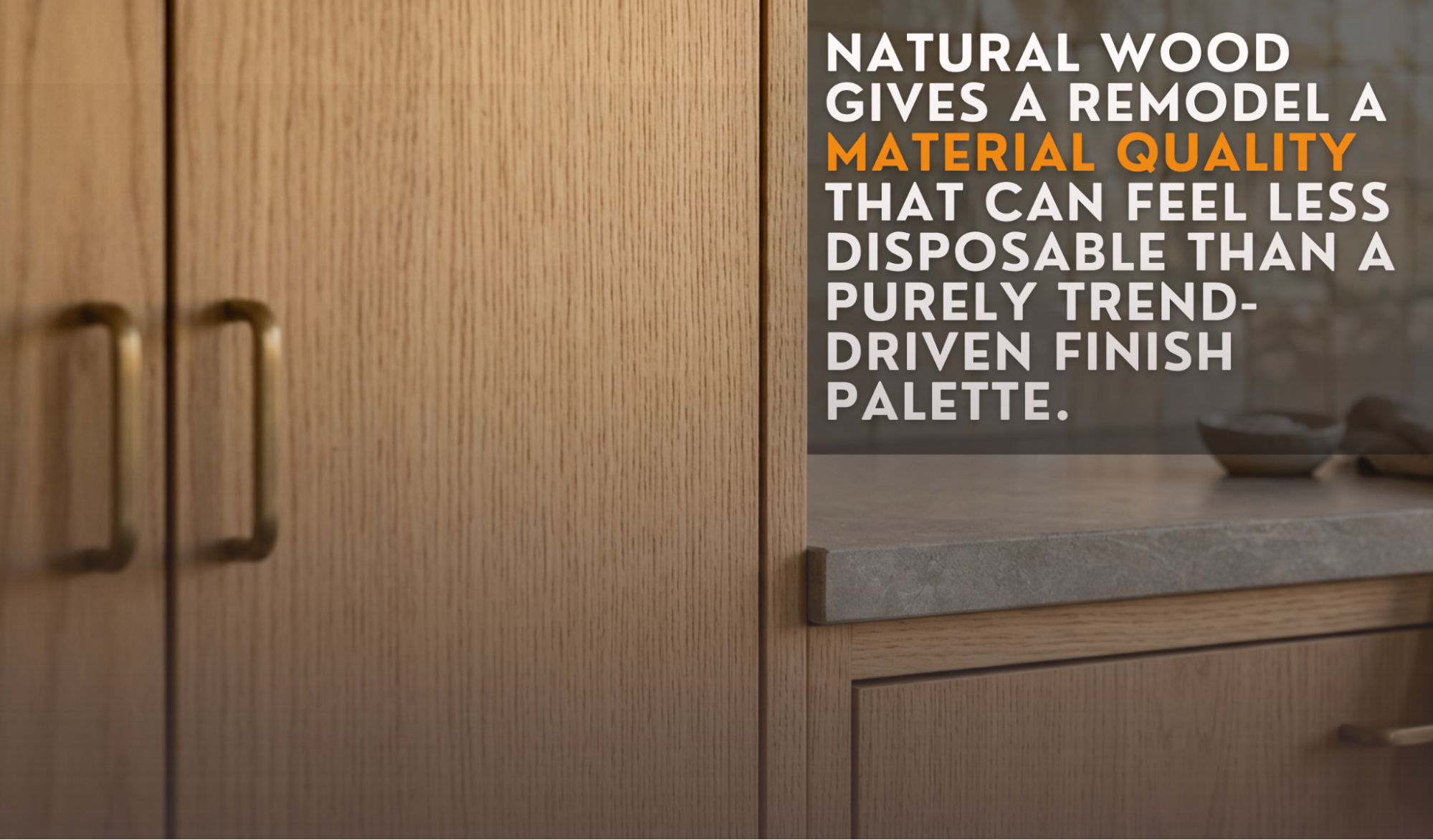
Natural wood, when chosen well, can feel less like a trend finish and more like a building material. It has grain, variation, and a relationship to other architectural elements in the home.
This aligns with the design/build principle that high-trust renovation content should address longevity, installation realities, and material behavior, not only surface appearance.
The detail-obsessed material discussion, including substrate preparation, tolerances, and the kind of construction specifics that help homeowners understand why a finish lasts.
Natural wood still requires maintenance and good selection. It can fade in direct sun, show water damage if poorly protected, and vary between batches or species.
But those realities are part of its appeal for design-forward homeowners. They would rather understand a material than live with a surface that looks perfect but feels anonymous.
White oak is leading, but it is not the only answer
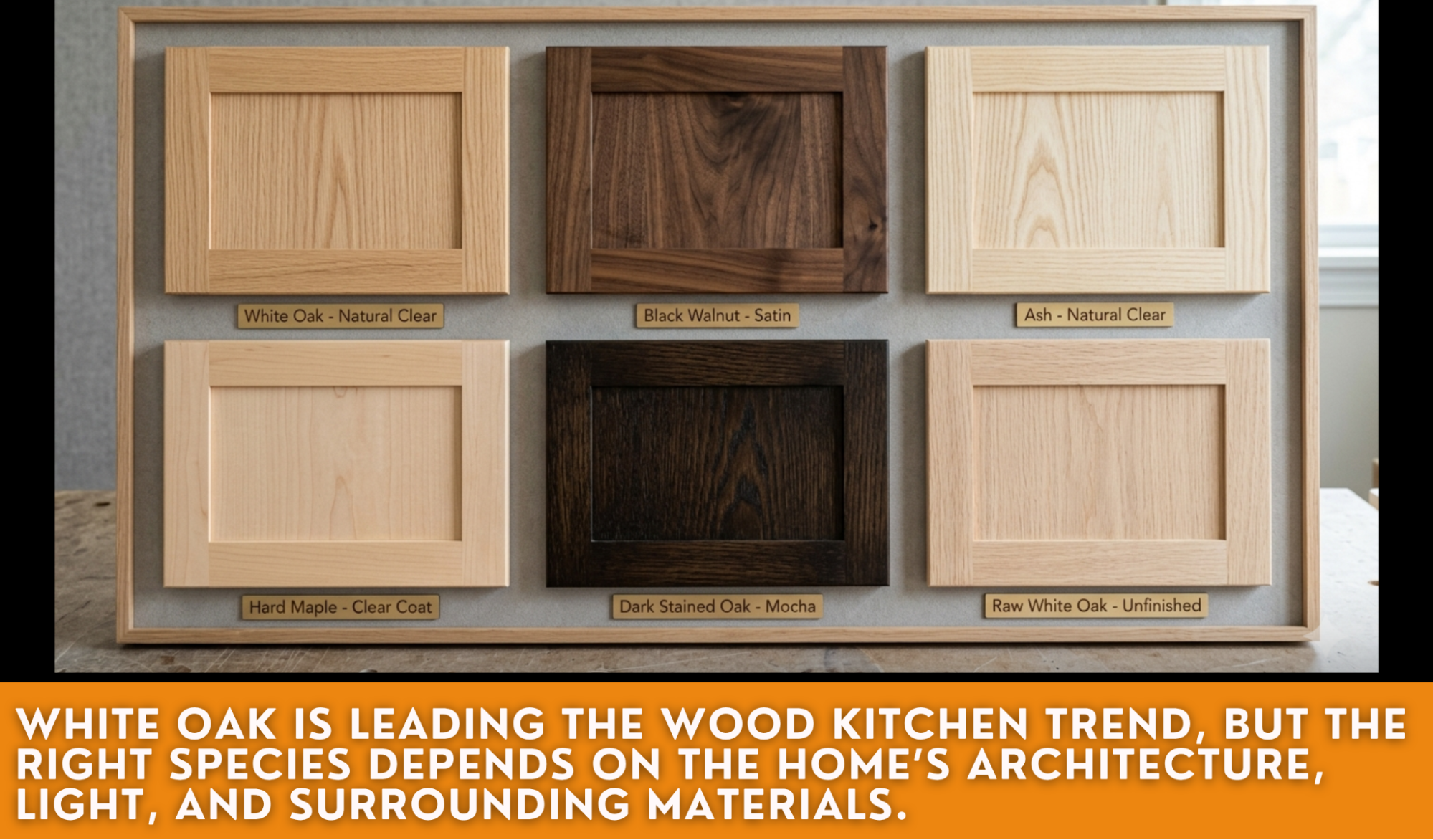 White oak is the headline wood for 2026, but it should not be chosen automatically. It is popular because it has a balanced grain, works with light and medium stains, and feels warm without becoming too yellow. It also pairs well with stone, plaster, handmade tile, black accents, and soft painted finishes.
But walnuts bring richness. Ash can feel pale and Scandinavian. Maple can look clean and quiet when finished thoughtfully. Rift-cut oak can reduce cathedral grain and create a more linear, architectural effect. Stained wood can help homeowners achieve deeper tones without committing to a very dark species.
The key is sampling. Wood changes dramatically under different lighting.
A white oak sample that looks calm in a showroom can appear yellow next to warm floors or gray next to a cool countertop. Homeowners should view cabinet samples beside the actual counter, backsplash, floor, hardware, and wall color before final approval.
The best 2026 kitchens mix wood with contrast
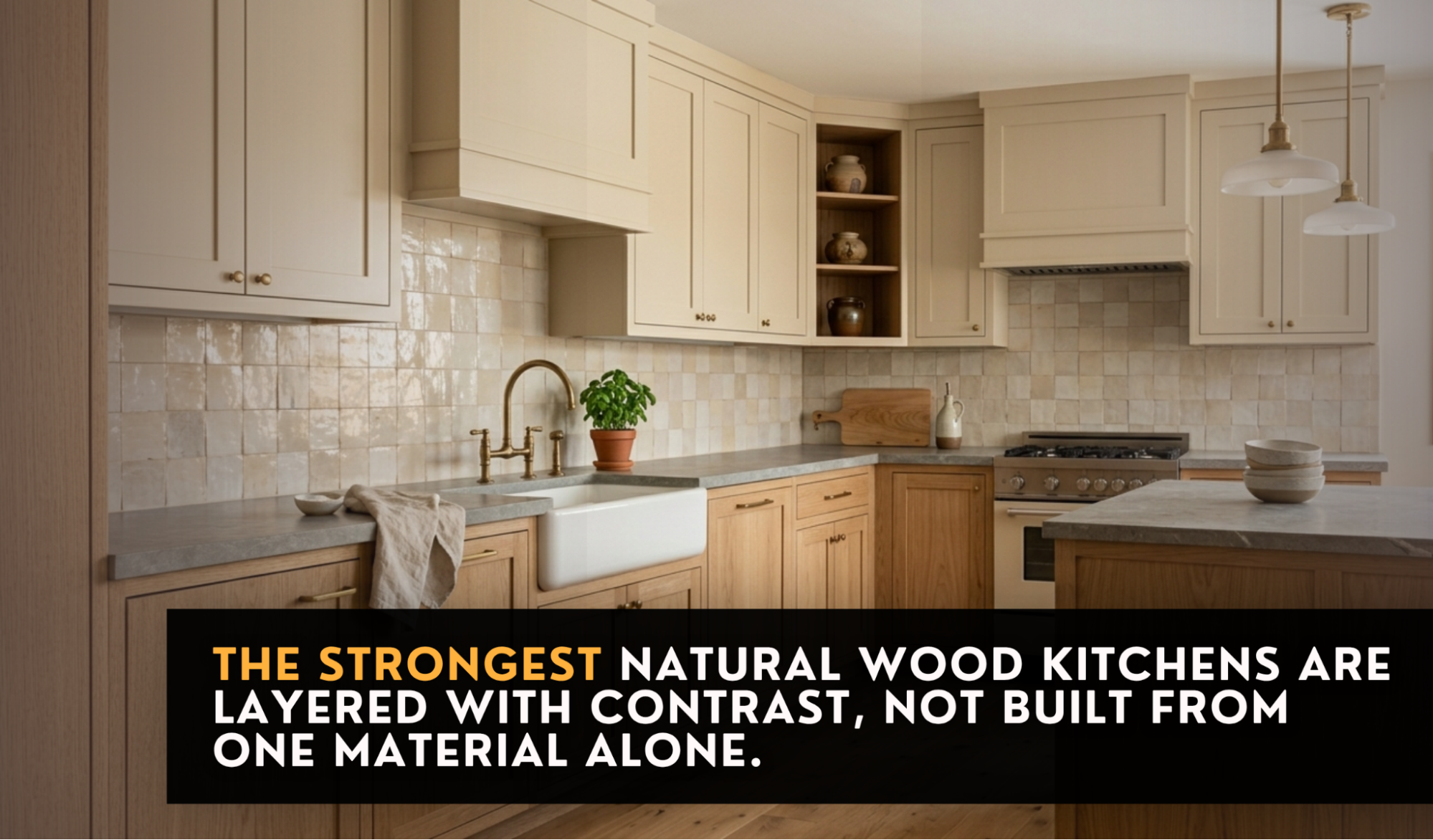 A full natural wood kitchen can be beautiful, but the best 2026 examples usually include contrast. Wood needs surrounding materials that help it breathe.
- Cream or off-white walls can keep the room bright.
- Honed stone can bring a quieter, more tactile counter surface.
- Handmade ceramic or zellige tile can add light movement behind the range.
- Blackened metal hardware can sharpen pale oak.
- Brass can warm walnuts.
- A painted island can break up a large room.
This is where natural wood becomes a replacement for the all-white kitchen rather than a complete rejection of it. White still appears, but as balance. Instead of white cabinets, white counters, and white tile doing all the work, white becomes one supporting element in a more material-rich palette.
The result is more forgiving and more personal. A wood kitchen can absorb a ceramic lamp, a vintage runner, stoneware, open shelves, or changing wall colors more naturally than a highly controlled all-white remodel.
What homeowners should consider before choosing natural wood cabinets
Natural wood cabinetry is not only an aesthetic decision. It affects budget, maintenance, lead times, and detailing.
- First, decide between solid wood, wood veneer, and wood-look alternatives. Many high-quality modern cabinets use veneer panels because they can provide more consistent grain and better stability across large slab doors. Solid wood may be used for frames, doors, or drawer fronts depending on the construction method.
- Second, ask about finish durability. Kitchens are exposed to steam, grease, cleaning products, sunlight, and repeated touch. The finish should be appropriate for daily use and easy to clean according to the manufacturer’s guidance.
- Third, review grain direction. Horizontal grain on slab doors can make a kitchen feel wider. Vertical grain can make tall pantry runs feel cleaner and more architectural. Mismatched grain may not matter in a rustic kitchen, but it is noticeable in a refined modern one.
- Fourth, coordinate the floor. A wood kitchen with wood flooring can look beautiful, but the species and stain should not fight each other. Exact matching is rarely necessary. A controlled contrast often looks better.
Finally, consider where wood makes the biggest impact. Homeowners who are nervous about a full wood kitchen can start with an island, pantry wall, lower cabinets, open shelving, or a coffee bar.
The bottom line
Natural wood kitchens are replacing all-white remodels because they answer a broader cultural and design shift. Homeowners still want clean kitchens, but they also want warmth, texture, storage, and individuality. Wood delivers those qualities without requiring the room to feel busy or heavily decorated.
All-white kitchens offered a sense of safety. Natural wood kitchens offer something more layered: a connection to material, a softer daily atmosphere, and a kitchen that feels less like a template.
The best version is not a nostalgic wood kitchen and not a trend-chasing one. It is a carefully detailed room where grain, finish, hardware, storage, tile, stone, and lighting work together. In 2026, that is what more homeowners seem to want from a remodel: not just a brighter kitchen, but a better-resolved one.