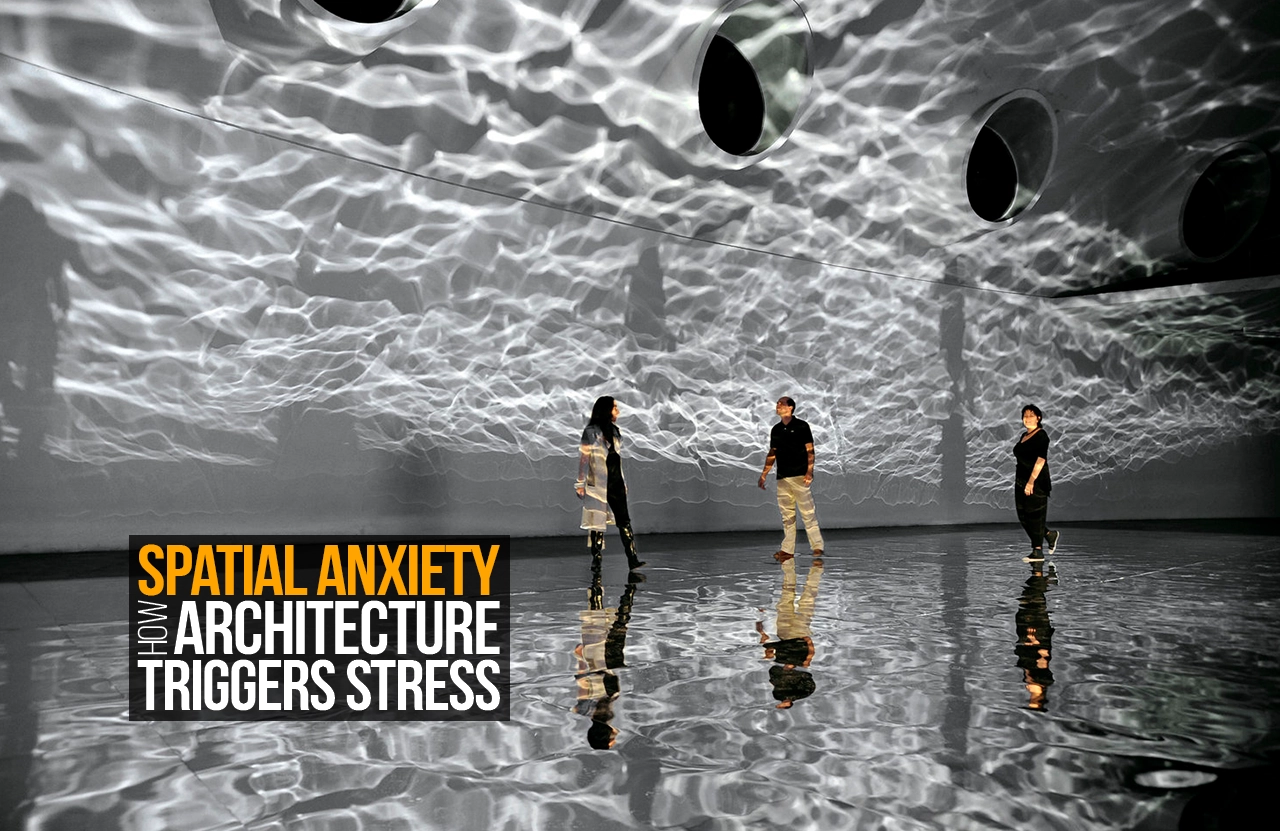
Spatial anxiety is the name given to this more subtle but equally powerful form of stress reaction that people experience in response to their surroundings.” While many stresses that people encounter are directly related to physical issues like pain and discomfort, spatial anxiety is an entirely psychological response involving scale, proportion, light, enclosures, and movement. Although architecture has always been revered as both beautiful and functional, its design may unintentionally induce feelings of uneasiness or stress in some people. Spatial anxiety is particularly important in modern-day settings.
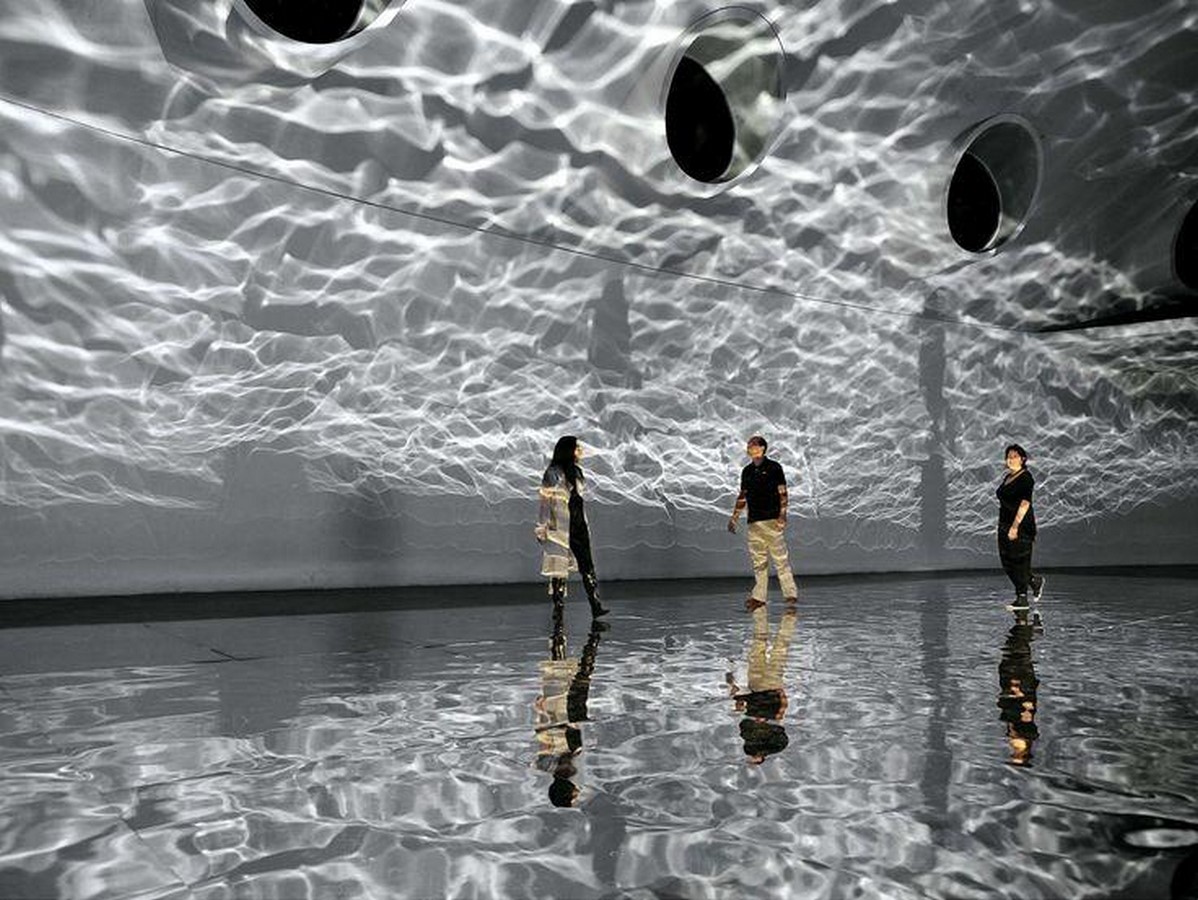
Spatial Anxiety and the Psychology of Enclosure
A major reason for the emergence of spatial anxiety arises from confinement. Areas that are too cramped, have ceilings that are too low, or offer restricted visual space can trigger claustrophobic reactions. This occurs in corridors that are not designed properly, basements, or crowded spaces. It is in the nature of human beings to maintain a delicate equilibrium between seeking shelter and opening up. If this equilibrium is disturbed, there is an instant reaction to stress. An inability to find escape routes and visual space adds to this problem.
Spatial Anxiety and Sensory Overload
The connection between spatial anxiety and sensory input is tight. Architectural design regulates not only our movements but also sound and visuals. Unpleasant lighting, bad acoustics causing an echo effect of footsteps, and visual overload due to complicated geometries affect our nervous system negatively. When people feel crowded within dense urban landscapes by high-rise glass buildings, there emerges a notion of oppressive verticality. All these sensory perceptions prevent people from concentrating their attention on something and create a sensation of fragmentation and anxiety.
The scale of Spatial Anxiety
Scale is an important element of our perception of safety in a space. “De-humanizing” scales, such as large governmental buildings or huge factories, can make a person feel small and insecure. “Agoraphobic anxiety” happens when spaces are so large the body feels de-scaled, while too confined spaces with low ceilings produce “claustrophobic anxiety.” Achieving the Goldilocks principle regarding architectural scale is crucial.
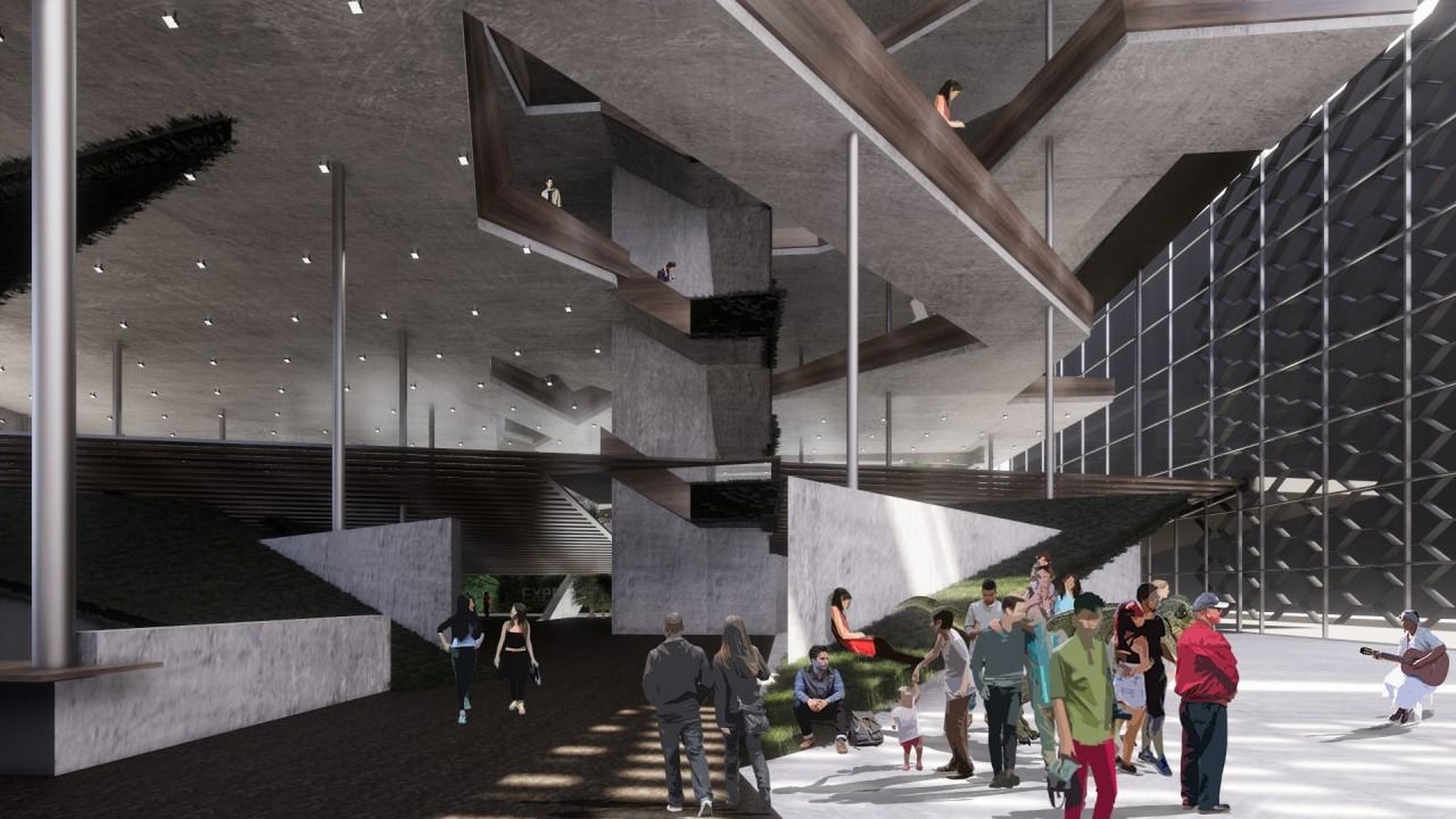
Where smaller spaces can become claustrophobic, larger spaces, too, can become just as alienating. Monumental architecture, characterized by expansive interiors and soaring roofs, tends to create an overwhelming sense of scale that is detrimental to the human psyche. Such places can induce a feeling of insufficiency, helplessness, and confusion within individuals. Airports, shopping complexes, and institutional structures are among those places that fall into this category. Without proper modulations such as partitions and textures, people can feel overwhelmed by the space due to the absence of a proper connection with the place.
Spatial Anxiety and Disorientation in Navigation
Wayfinding is important for creating an impression about the space. If the wayfinding system is unclear or the user does not receive enough signs or repetitive design cues, it will cause him/her to feel lost, causing distress and irritation. Wayfinding issues can be found in hospitals, public transport systems, and university campuses. The inability to create a cognitive map of the surrounding environment means the person has no control over it, which can result in anxiety.
The labyrinth effect is one of the principal factors causing architectural stress. “Labyrinth” means the building fails to offer visual clues for orientation. Complicated buildings with many identical corridors, like hospitals and airports, impose additional workload on the brain, forcing it to construct a mental map and potentially leading to spatial anxiety. As soon as a person finds themselves lost, the body starts releasing cortisol.
Spatial Anxiety in Lack of Natural Elements

The construction materials can help in reducing or increasing spatial anxiety. The cold, hard material, such as concrete, metal, and glass, reflects both light and sound. They do not provide any form of “softness,” which people crave, as it provides an anchor for human beings. Biophilic design incorporates natural elements such as wood and plants that serve as a remedy for this problem. Biophilic design has revealed that humans have an innate desire to bond with nature. When buildings lack any form of softness using biophilic design, they create a non-place feeling for the occupants. When there is a lack of sunlight, fresh air, plants, and natural materials, the space tends to become impersonal and demoralizing.
Spatial Anxiety in Transitional Spaces
Transitioning elements like stairways, lifts, walkways, and entrances are frequently neglected while designing, but they hold great importance for establishing the experience of users. Transitional spaces that are badly lit, constricted, or isolated can create fear or a sense of uneasiness among users. They work as psychological barriers, and if not designed well, they may hinder the whole experience of space. The experience of spatial anxiety in these regions occurs because of their invisibility, insecurity, or discontinuity.
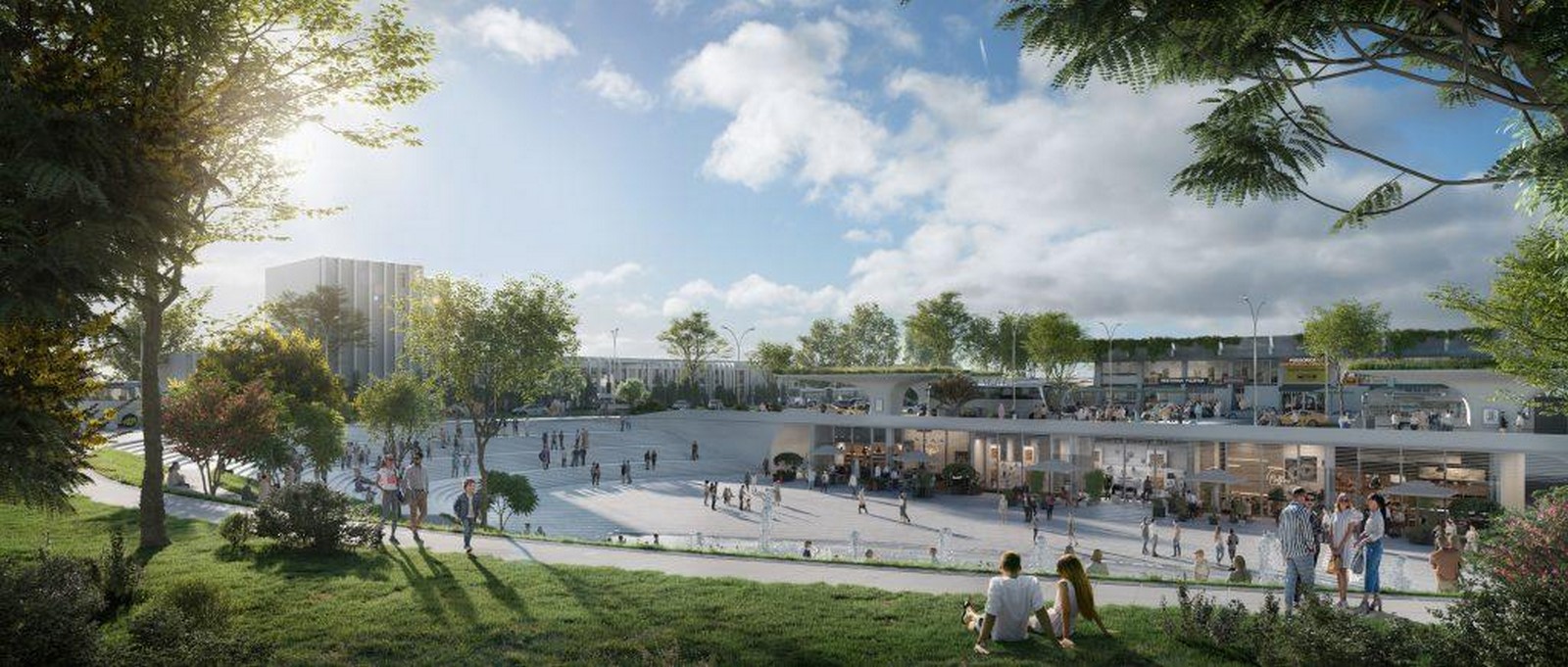
Solving spatial anxiety means moving away from a functionally and aesthetically oriented architectural practice towards something more user oriented. The psychological well-being of the user should be taken into consideration at the stage of designing the space. Measures such as bringing nature into architecture, visual linkage, human scale, and good wayfinding could help overcome this type of anxiety. In conclusion, architects have the power to create spaces both physically and mentally.
As we enter the era of more advanced and “smart” environments, the way we experience spatial anxiety may also change. The application of virtual reality technology has already been introduced to architects to help them determine how inhabitants will perceive the environment before it becomes a reality. With the empathic architecture, it is possible to spot “stress hotspots” in any layout. Ultimately, the goal of architecture should be to create an environment that reflects the human spirit and enables us to live freely and confidently.