Architecture has never been politically neutral. Buildings and cities are frequently influenced by the experiments and ideologies of the governments that build them. Even though architecture is often discussed in terms of aesthetics or functionality, it also serves as a physical record of political change. Urban plans, civic buildings, and monuments often reveal their identity in society after significant events, such as revolutions, independence, or ideological conflicts. In this sense, Architecture becomes a palimpsest through which political transition can be read and interpreted. (Vale,2008).
Throughout history, political authorities have always influenced architecture to convey their power and legitimacy. From grand government buildings to plazas and national institutions, structures are designed to promote stability and authority. Their size and prominence help craft a visual story of the city’s strength. Architecture frequently serves as a platform for political leaders to demonstrate authority, using buildings as symbols to strengthen influence and shape national identity. As a result, the built environment serves both as functional infrastructure and as political propaganda.
Examples
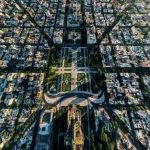
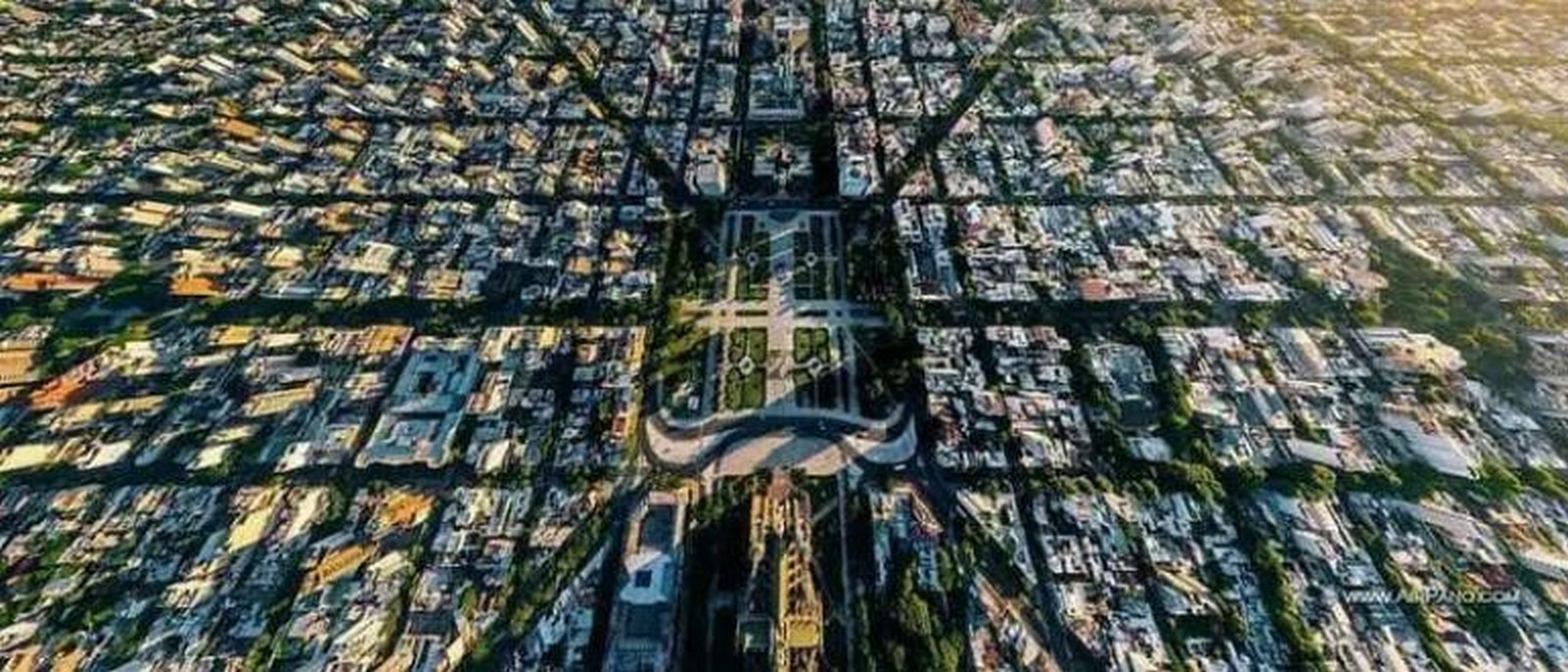
One of the greatest examples of architecture reflecting political change is Chandigarh, India. (See fig 1). After India’s independence in 1947, Punjab needed a new capital city since Lahore, the former capital, was now in Pakistan. India’s first Prime Minister, Jawaharlal Nehru, famously saw Chandigarh as a city that would symbolize a break from the past during its inauguration. Nehru declared, “Let this be a new city unfettered by the traditions of the past,” a bold, modernist statement of a new, secular, and forward-looking India (Prakash, 2002). After losing Lahore, the heart of undivided Punjab, Nehru hired Swiss-French architect Le Corbusier to design a city that would be a complete departure from the chaotic, “contaminated” history of the old cities. He made it clear that he wanted to replace the ancient city of Lahore; nostalgia had no place in Chandigarh. He did not want an old city to symbolize the new nation because he believed that the weight of tradition, represented by old cities, was holding India back. (Zariwala, 2026) In this way, architecture was not just a response to urban needs but a deliberate political statement about India’s postcolonial identity.
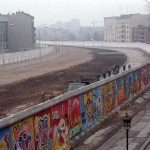
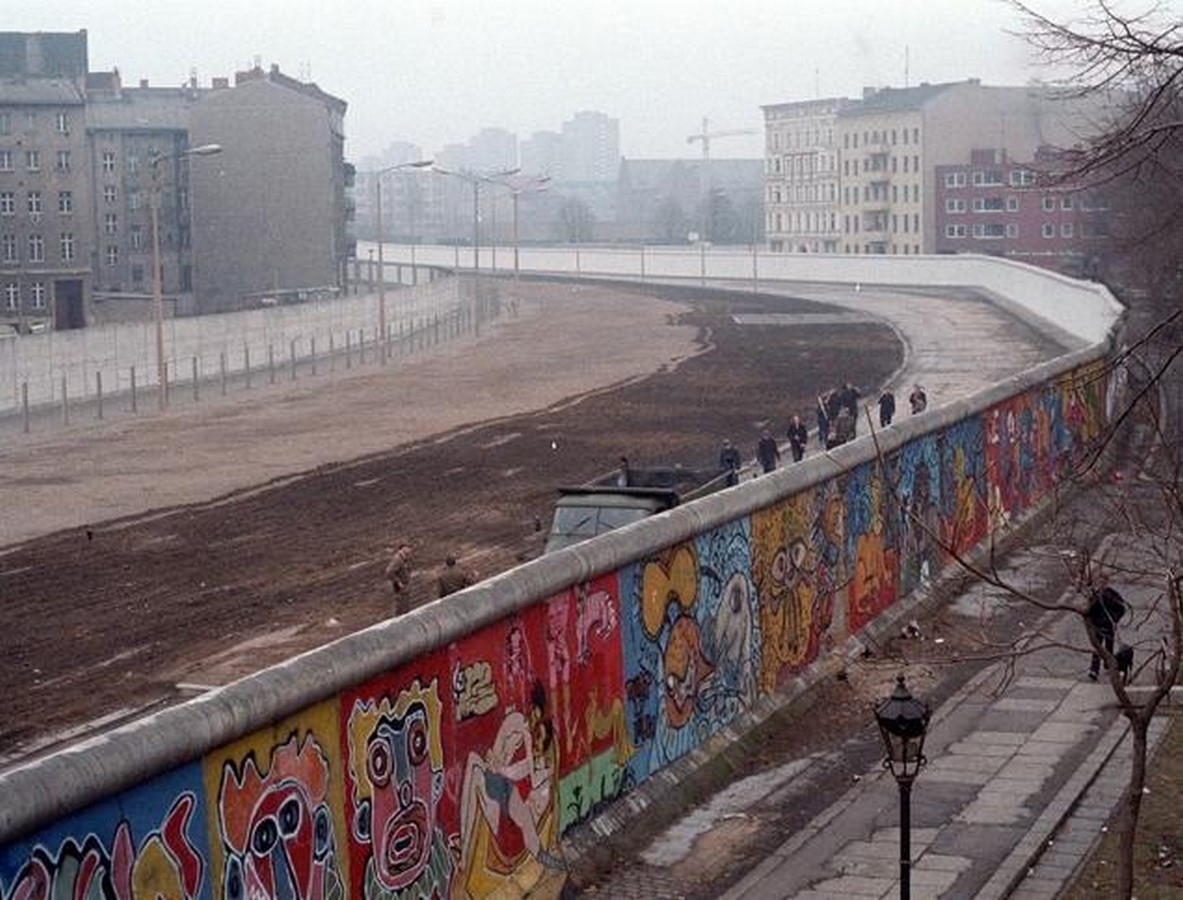
The next example of a political shift in Architecture is the Berlin Wall, built in 1961. Rather than being a typical architectural project, the wall completely changed the city’s urban landscape into a physical barrier dividing two political systems. Neighborhoods were divided, streets were interrupted, and public spaces became control zones. The wall highlighted how architecture could serve as a tool for national authority, transforming urban space into a means of political division. When it collapsed in 1989, a geopolitical system that characterized the Cold War era came to an end, and Germany was reunited (Till,2005)
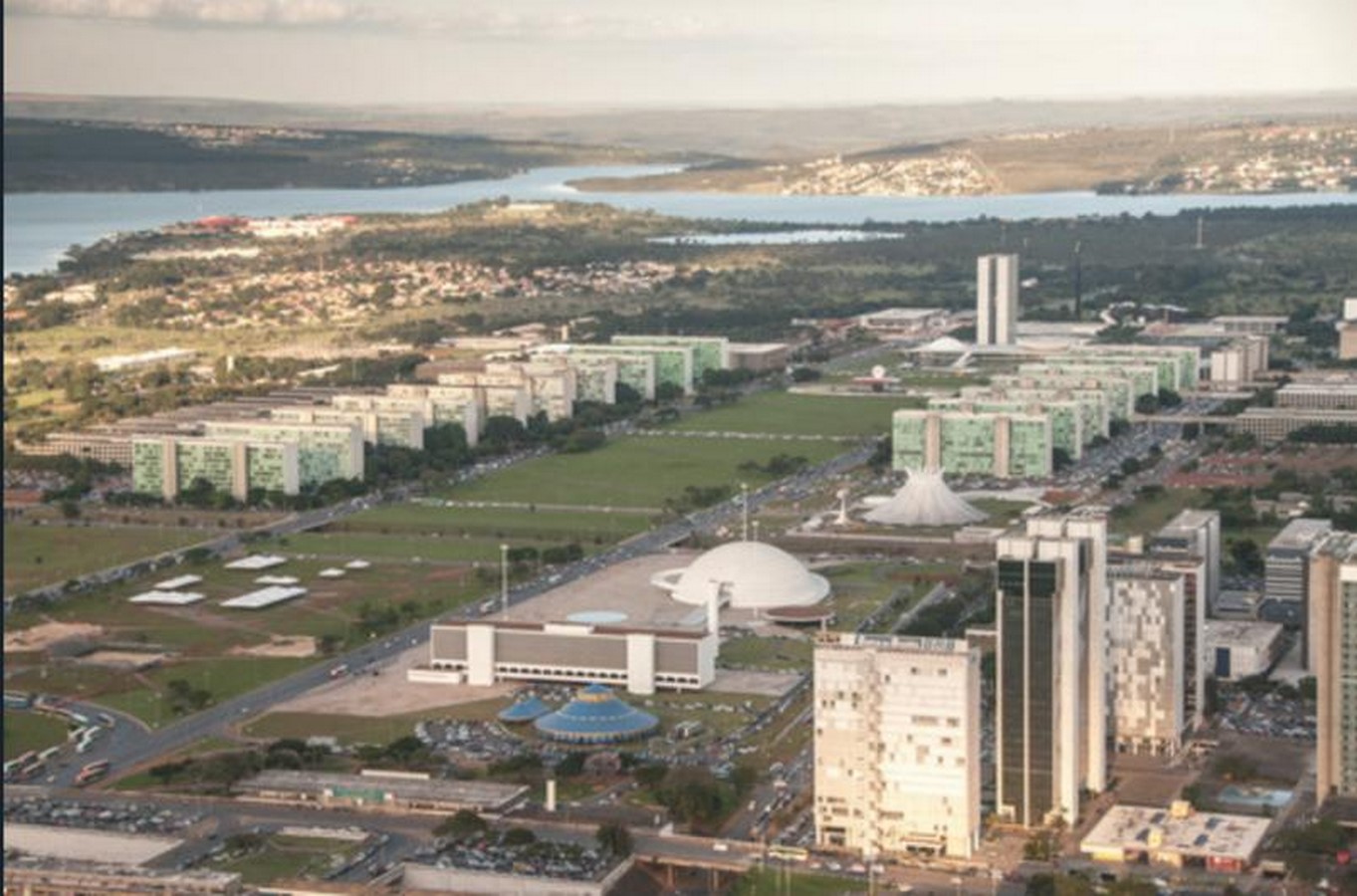
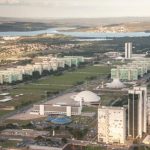
Another great example of the political shift through its architecture is Brasilia, the capital of Brazil. Constructed in the late 1950s, Brasilia was designed as a revolutionary national project to promote modernization and economic growth. President Juscelino Kubitschek envisioned the city as a symbol of Brazil’s future, relocating the capital from Rio de Janeiro to the interior. Its futuristic modernist design was approached to showcase Brazil’s rise as a modern nation on the world stage (Holston, 1989). However, critics argue that Brasilia’s massive scale and strict urban planning have resulted in social and spatial inequalities within the city, highlighting the complexity of political architecture.
Architecture also plays a crucial role in reflecting the aftermath of political conflict. In numerous post-war societies, damaged urban areas become places of remembrance and reconciliation. Museums, memorials, and restored structures serve as sites where communities confront their histories and reshape their collective identities. These architectural projects show how the physical environment can both preserve memories and promote aspirations for political stability and unity.
Beyond large-scale projects, everyday urban spaces also reveal political dynamics. For instance, colonial cities were often designed with segregated districts that separated colonial authorities from local populations. Such spatial arrangements reflected political hierarchies embedded in urban design. Additionally, architecture serves as a tool of political control. According to Michel Foucault (1977), spatial design can regulate behavior through surveillance and discipline. Structures like checkpoints and prison walls show how architecture can organize movement and strengthen systems of authority. In this regard, architecture does not merely symbolize power but actively participates in shaping social and political interactions.
However, Architecture is not exclusively governed by political elites. Public spaces often serve as sites where citizens contest or redefine official stories. Squares, streets, and civic structures regularly host protests, demonstrations, and communal events that influence their political significance. Over time, these social activities contribute additional layers to the architectural history of a location, turning buildings and spaces into venues for civic participation and political expression.
In conclusion, architecture acts as a powerful record of political shifts, illustrating changes in governance ideology and national identity through physical structures. From the modernist planning of Chandigarh to the ideological division represented by the Berlin Wall and the ambitious national vision expressed in Brasília, the built environment shows how political systems influence urban landscapes. Architecture not only mirrors political change but also shapes how societies remember their past and envision their future. By examining architecture as a historical and political artifact, we gain a deeper understanding of the complex relationship between power, space, and society.
Reference List:
Fig 1: Ghosh. P (2020) Chandigarh- A City for the People. Available at: https://khalsachronicle.substack.com/p/le-corbusiers-chandigarh (Accessed on 15 March 2026)
Fig 2: Noir, (1986) The Berlin Wall. Available at: https://commons.wikimedia.org/w/index.php?curid=1402275 (Accessed on 15 March 2026)
Fig 3: Archdaily (2023) Esplanada dos Ministérios – Brasília,(Year 1960) Available at: https://www.archdaily.com/995055/brasilia-architecture-guide-16-projects-to-understand-the-scale-of-the-brazilian-capital (Accessed on 15 March 2026)
Foucault, M. (1977) Discipline and Punish: The Birth of the Prison. Available at: https://monoskop.org/images/4/43/Foucault_Michel_Discipline_and_Punish_The_Birth_of_the_Prison_1977_1995.pdf (Accessed: 12 March 2026).
Holston, J. (1989) The Modernist City: An Anthropological Critique of Brasília. Available at: https://www.researchgate.net/publication/264754219_The_Modernist_City_Holston (Accessed: 12 March 2026).
Prakash, V. (2002). Chandigarh’s Le Corbusier: The Struggle for Modernity in Postcolonial India. Seattle: University of Washington Press. Uploaded by Tsuki Koon Nov 05, 2021 Available at: https://www.scribd.com/document/537471791/Chandigarhs-Le-Corbusier-by-Vikramaditya-Prakash-Z-lib-org (Accessed: 12 March 2026).
Till, J. (2005) ‘The Negotiation of Hope’, in Architecture and Participation. London: Spon Press. Available at: https://jeremytill.s3.amazonaws.com/uploads/post/attachment/19/2005_The_Negotiation_of_Hope.pdf (Accessed: 13 March 2026).
Vale, L. (2008) . Architecture, Power and National Identity. Available at: https://sites.dwrl.utexas.edu/visualrhetoric/wp-content/uploads/sites/25/2016/03/Vale-Capitol-and-Capital.pdf (Accessed: 13 March 2026).
Zariwala, A (2026) “To what extent does the 1947 Partition’s sociopolitical and cultural consequences affect India and Pakistan’s urban structure, social cohesion, and architectural identities”? Available at: https://docs.google.com/document/d/1-8Yu7LZUGAqyVBdKxeXpluGtXeovZomH/edit?usp=share_link&ouid=106902731231622980474&rtpof=true&sd=true (Accessed: 13 March 2026).