‘A passage between Realms’
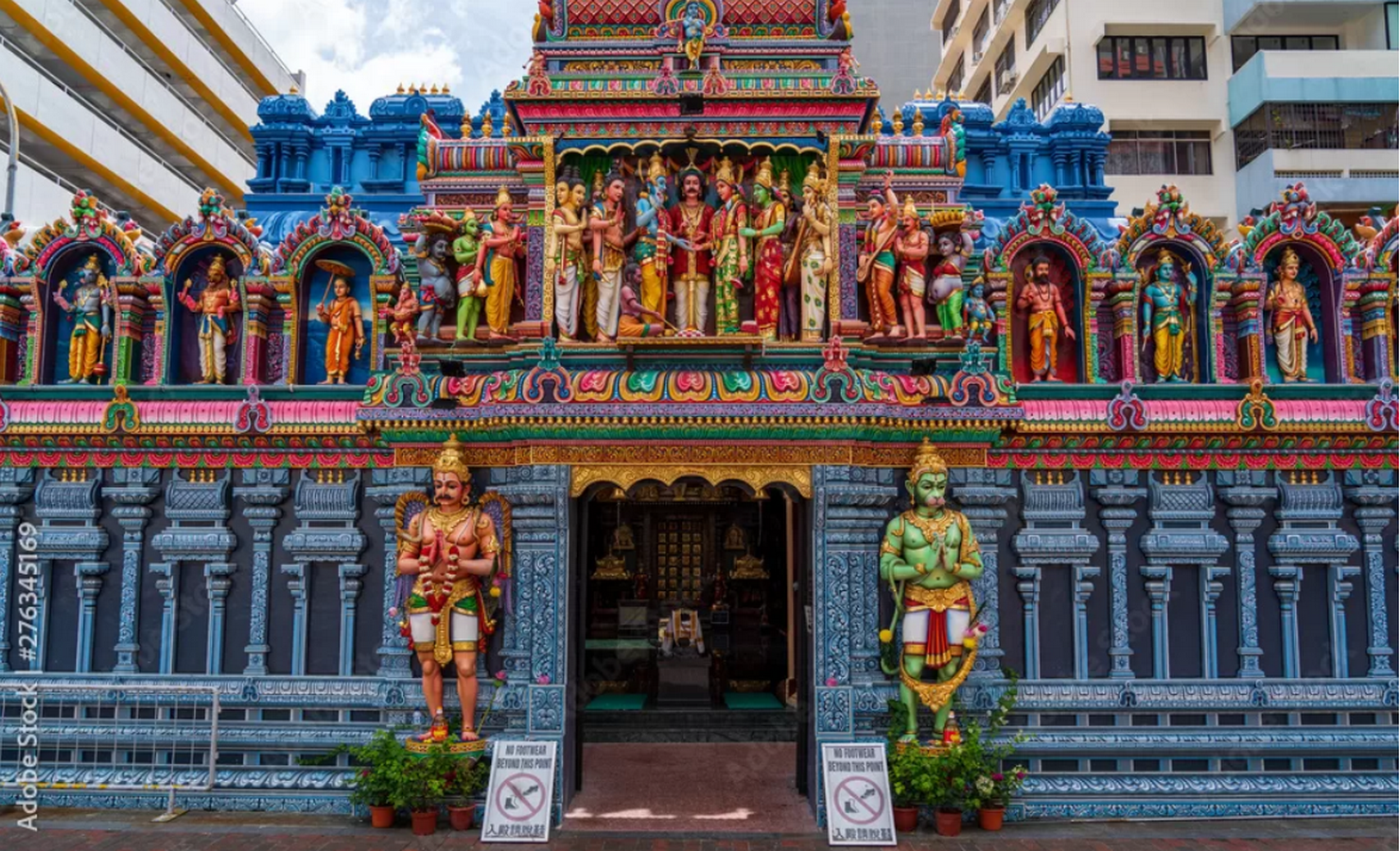
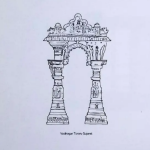
“Originating from the Japanese turii, meaning gateway leading to heaven. Its Sanskrit synonym for a door is Dwara, from the word Dwi, meaning ‘two’. This refers to the two realms, within and without. It is often seen as an entry into darkness (inside) and an exit into light (outside).” (Yatin Pandya , 2012)
How did this passage come into being?
The earliest example is in reference to the hostile times of primitive life, during which period the primary form of shelter was caves. When one pictures a cave, a naturally formed opening in the earth comes to mind. For early man, the single entryway reduced vulnerability and increased the likelihood of creating a barrier separating the outer environment from the one within. (Yatin Pandya , 2012) In Indian Architecture, initial forms of a defining element separating two realms are seen in Vedic Altars, where trees with low-hanging branches served as markers for the altar, demarcating the sacred area from common use. (Nangia , 2026)
Evolution of Entrances
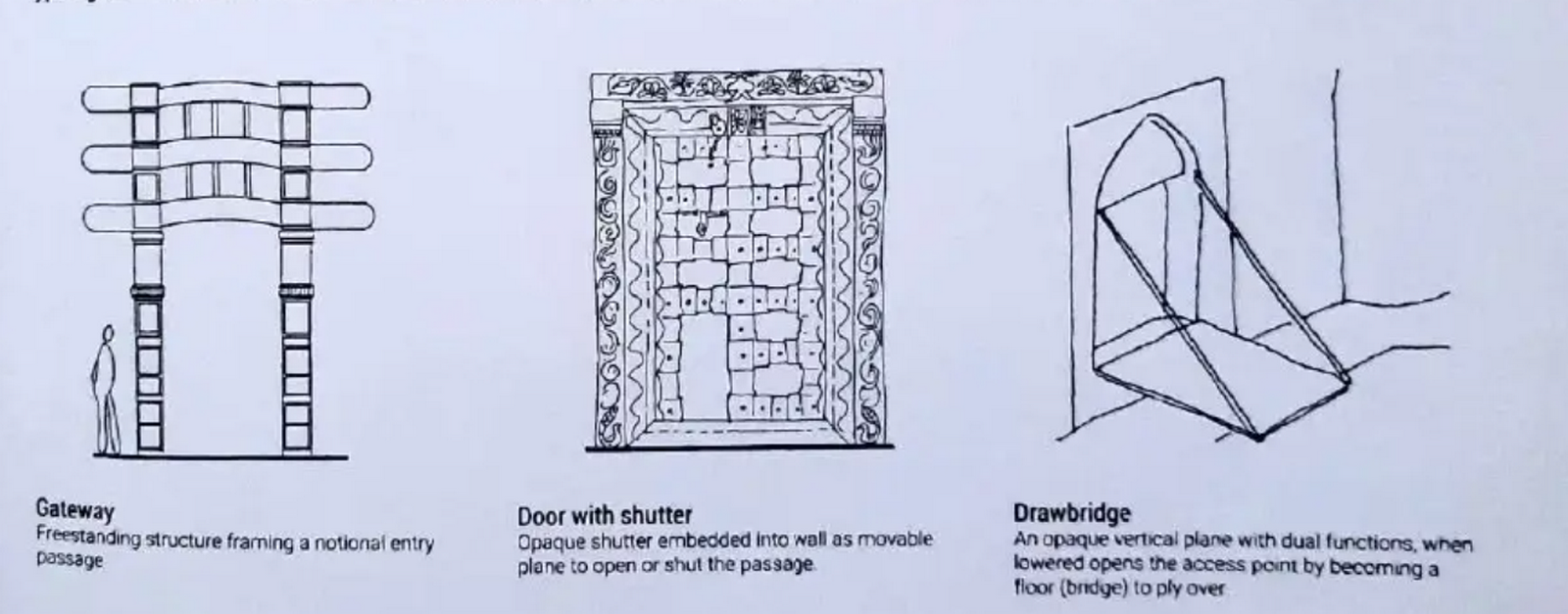
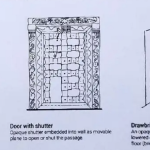
Doors originally served two purposes: providing access and protecting what was inside. Over time, doors evolved from removable barriers to solid shutters attached to frames and built into walls. During the Dark or Middle Ages, doors became vital for defence. For example, a moat would surround the main entryway, and a drawbridge gate would lie over the moat. (Yatin Pandya , 2012)
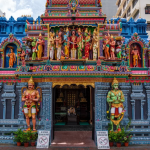
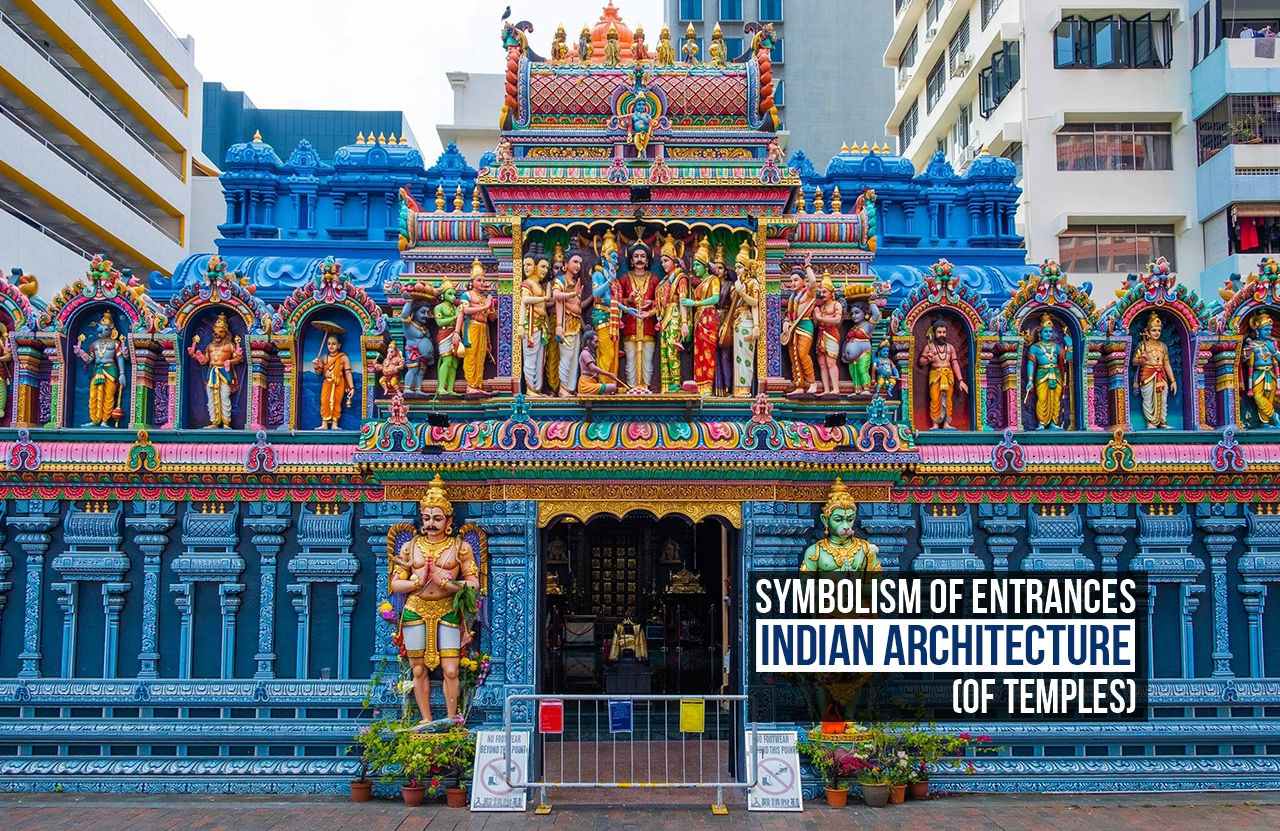
Indian temple architecture symbolically represents deities, celestial beings, and cosmic principles. A deity is often depicted in various forms, either human, animal or hybrid, whereby giving a physical form to it helps represent the universe and link the divine and human realms.
Doorways in Temples are usually positioned along the four cardinal directions and serve as a single-entry point, signifying communication between the deity and the outer environment.
Indian Architectural Elements
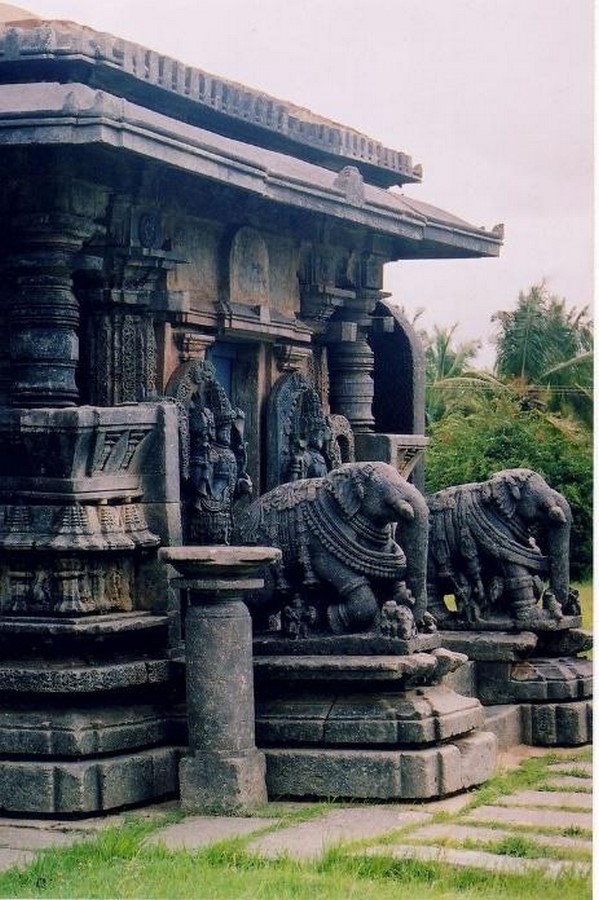
Indian Architecture is a combination of heavily detailed elements rooted in cultural, historical and spiritual significance. Each element is unique to an architectural style that has emerged and goes beyond mere visual aesthetics. Where can one observe these symbolic elements?
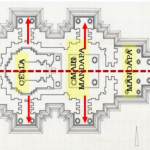
Most often seen in temple architecture, each space is a vessel of learning and a link between the spiritual and human worlds. A general view of the structure draws one to the towering Shikara, a representation of the universe’s mythological axis. Mandapas, or pillared halls, help shield the entrance from the sun while also serving as a transition space for users. These transition spaces served as gathering spaces for devotees and pilgrims, and as a breathing space before appearing before the deity. (Biswal, 2025)
Elements Supporting and Defining an Entrance in Temple Architecture
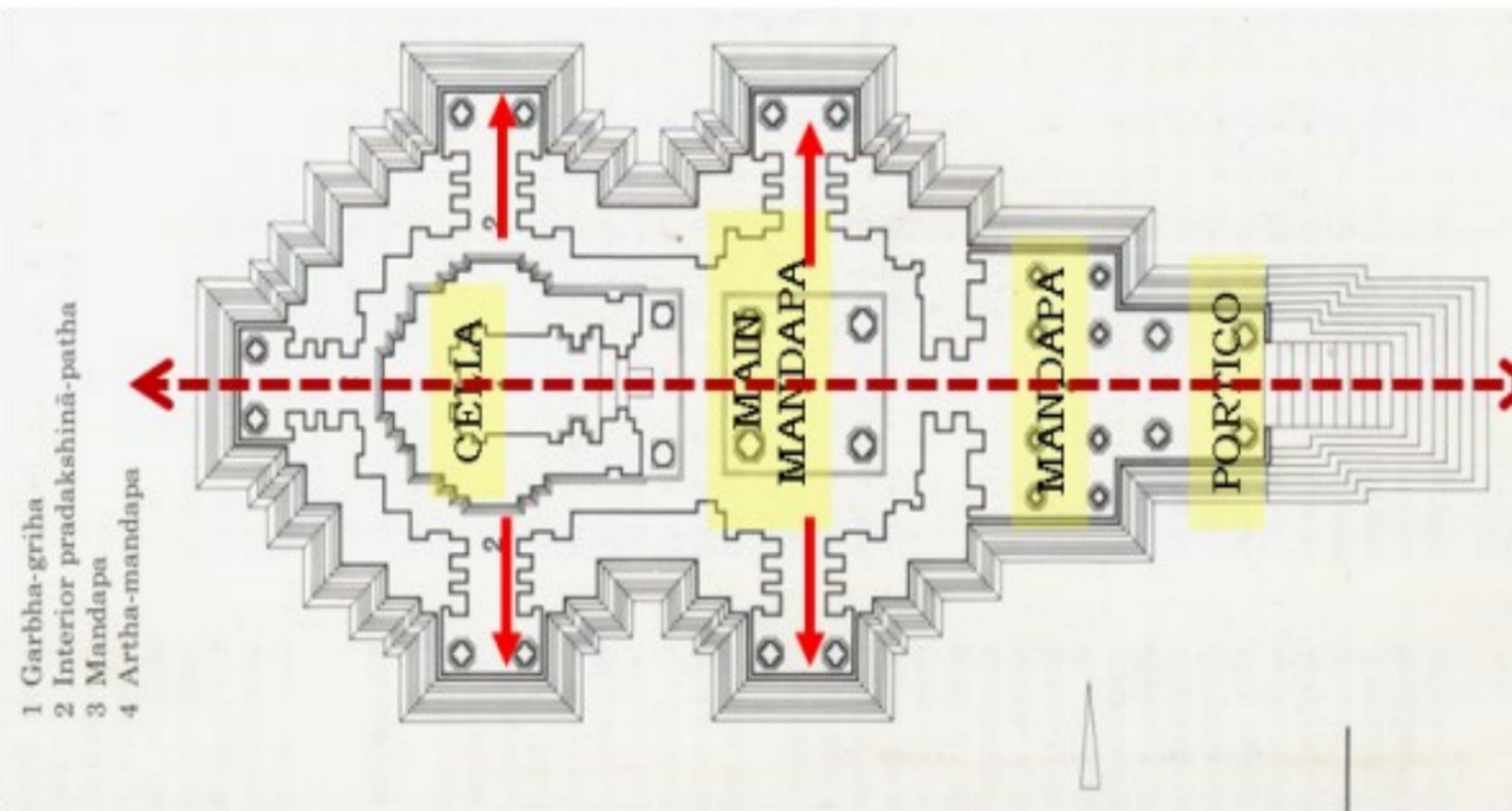
Rows of pillars enhance a temple entrance by defining the journey toward it. They direct movement and encourage a gradual transition. Pillars feature motifs and symbols of local flora and fauna, as well as mythological scenes, showcasing rich craftsmanship.
1) Sanctum (Garbhagriha):
The core sacred space of a temple, housing the primary deity. This space is equivalent to the cosmic womb, and is a reflection of the shape of a cave (the universe’s centre).
2) Temple tower (Shikhara):
Symbolic of Mount Meru, which is the cosmic axis, this tower lies above the sanctum; a representation of the spiritual journey upwards.
3) Mandapa (Pillared Hall):
This hall is a meeting point for gathering rituals featuring pillars that are carved with mythological scenes. Rich in sculptural imagery, deities, celestial beings, and animals, they reflect the layers of life.
4) Iconography and Sculpture:
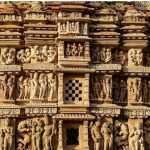
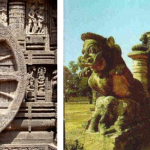
An example of these is a depiction of cosmic balance through a sculpture of Lord Vishnu and Lakshmi, and sculptures of Ganesha signifying the removal of obstacles. This strong use of sculptures and their symbolism is seen in the Brihadeswara Temple in Thanjavur and the Kailasa Temple at Ellora. (Team Kaarwan, 2025)
Symbolism in the Iconography of Temples
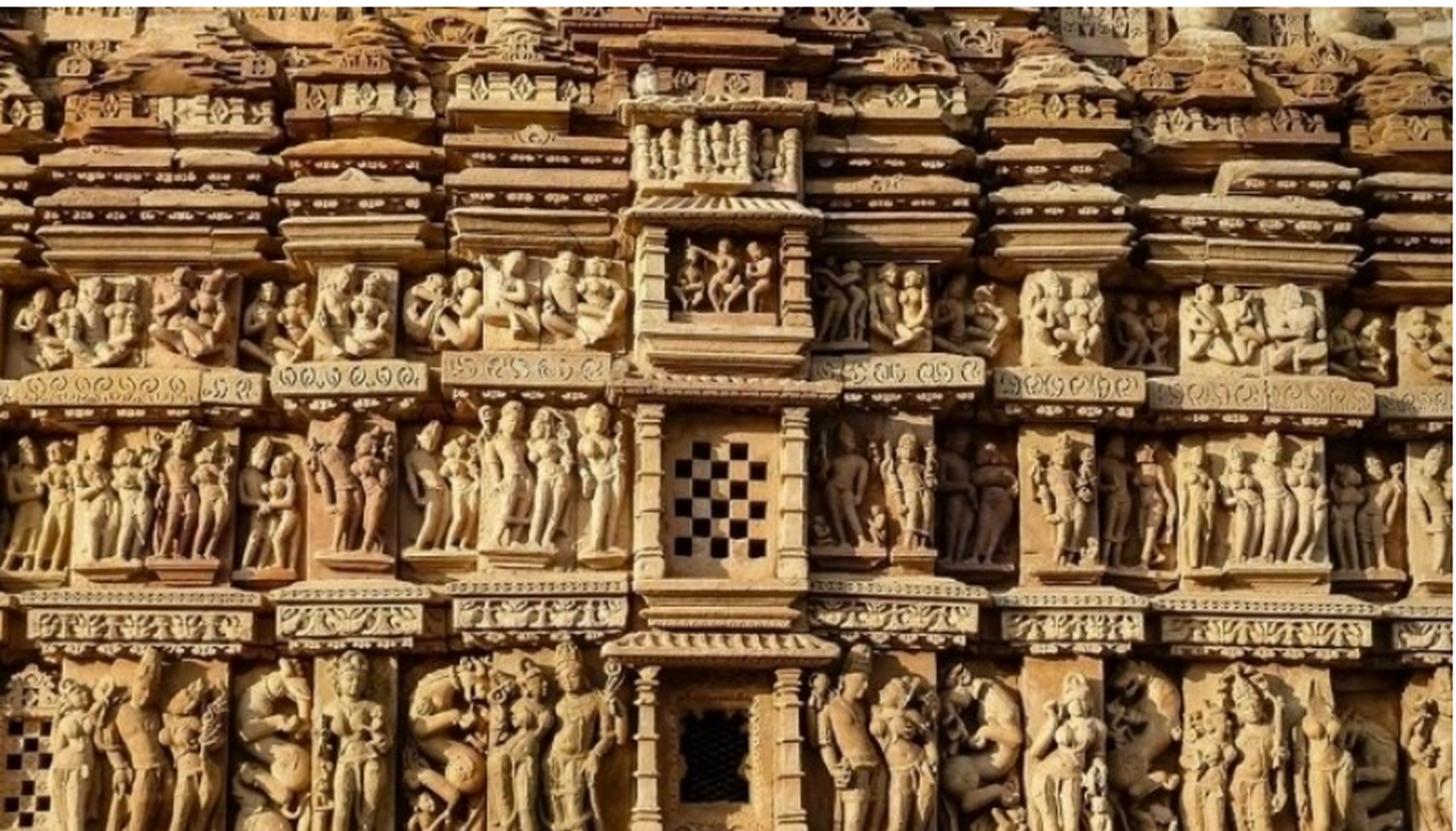
Detailed narratives from Mythology, where the deities and sculptures present act as the middle ground between the two realms.
Deities are often shown in various postures (asanas). Take, for instance, Lord Shiva, often shown in the Nataraja pose (Lord of dance), symbolising the cosmic dance of creation, preservation, and destruction. Lakshmi, the goddess of wealth, is frequently shown in a posture of blessing and giving, symbolising abundance and prosperity. (Sharanappa Sompur, 2024)
Similarly, animals and mythological creatures present as details in the architectural elements symbolise the different forces in nature- like the bull Nandi, vehicle of Shiva, representing strength, loyalty and righteousness or Garuda, the eagle, vehicle of Vishnu, representing divine power and speed. (Biswal, 2025)
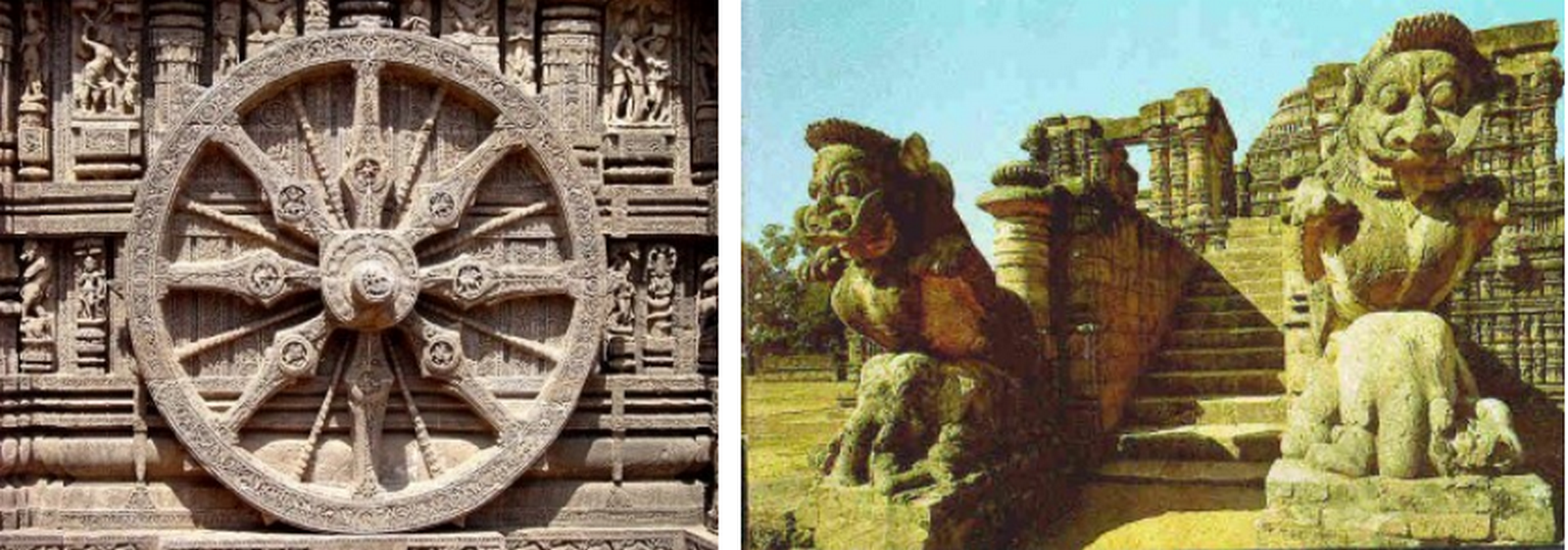
Symbolism is not just for visual appeal. Its imagery is deeper, with every posture, gesture, creature, or person designed to carry meaning. Symbolism also guides people toward understanding and wisdom. This diversity helps users reflect on life, engage deeply with surroundings, and experience what is sacred within architecture. (Sharanappa Sompur, 2024)
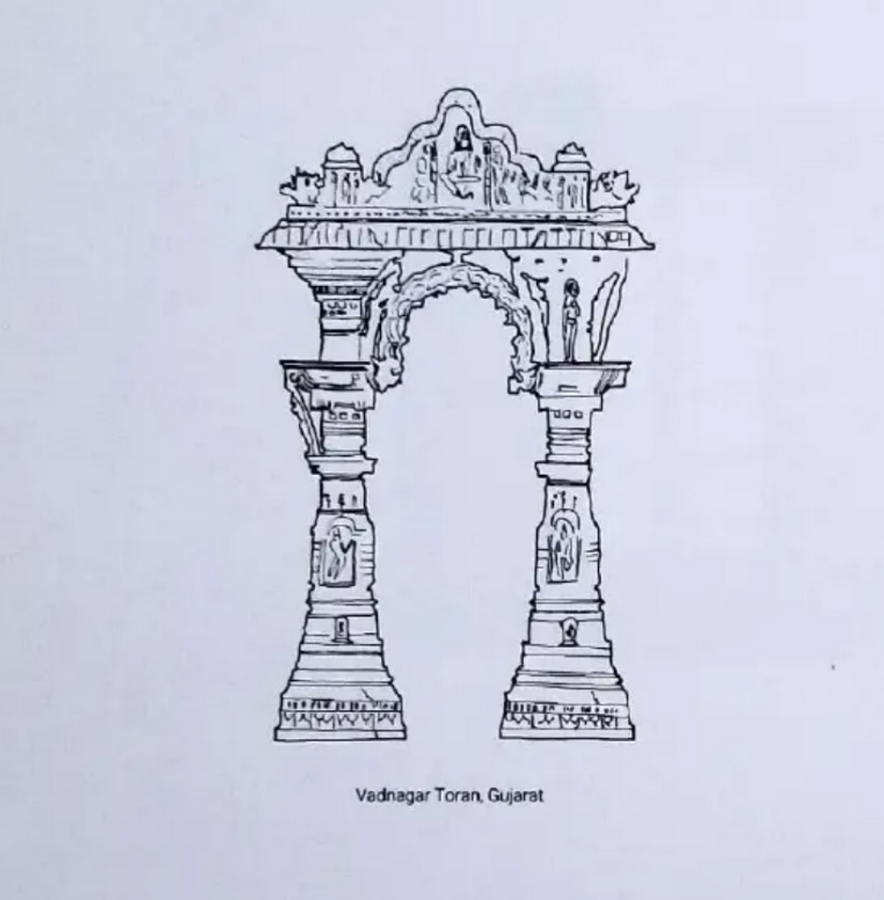
These architectural art forms help people visualise the divine. At the same time, they teach about the culture, myths, and history that the architecture conveys. The presence of an entrance ensures a transition between two spaces. This transition is further enhanced by the presence of visual elements such as symbols, signs, or motifs, which help complete the idea of moving from one realm to the next, physically and mentally. An entrance conveys more meaning by acting as an image-maker, serving as a marker or focal point on a facade, thereby increasing a user’s curiosity to travel beyond the entrance and discover what lies ahead.
- Books
Yatin Pandya (2012). Elements of spacemaking. Mapin Publishing.
- Articles
Citations for Journal Articles accessed on a website or database:
Sharanappa Sompur, S. (2024). Iconography and Symbolism in Indian Temple Architecture. [online] Available at: https://www.ijert.org/research/iconography-and-symbolism-in-indian-temple-architecture-IJERTV13IS090056.pdf [Accessed 5 Mar. 2026].
- Online sources
Citations for websites:
Gopika Pramod (2023). Gopuram Temple: 5 Fascinating Gateways of Southern India. [online] The Architects Diary. Available at: https://thearchitectsdiary.com/gopuram-temple-5-fascinating-gateways-of-southern-india/ [Accessed 6 Mar. 2026].
Team Kaarwan (2025). Decoding Symbolism in Indian Architectural Elements. [online] Kaarwan blogs. Available at: https://www.kaarwan.com/blog/architecture/symbolism-in-indian-architectural-elements?id=647 [Accessed 5 Mar. 2026].
Nangia , A. (2026). Entrances and Doorways. [online] Boloji.com. Available at: https://www.boloji.com/articles/15157/entrances-and-doorways [Accessed 6 Mar. 2026].
- Images/visual mediums
Citations for images/photographs – Print or Online:
Last name of artist/photographer, first initial (if known). (Year of production). Title of image. [type of medium] (Collection Details if available – Document number, Geographical place: Name of library/archive/repository).
For example:
Hewer, D. (1995). Women enjoying a cup of tea. [Photograph]. (Document number 345, London: Food Photography Library).