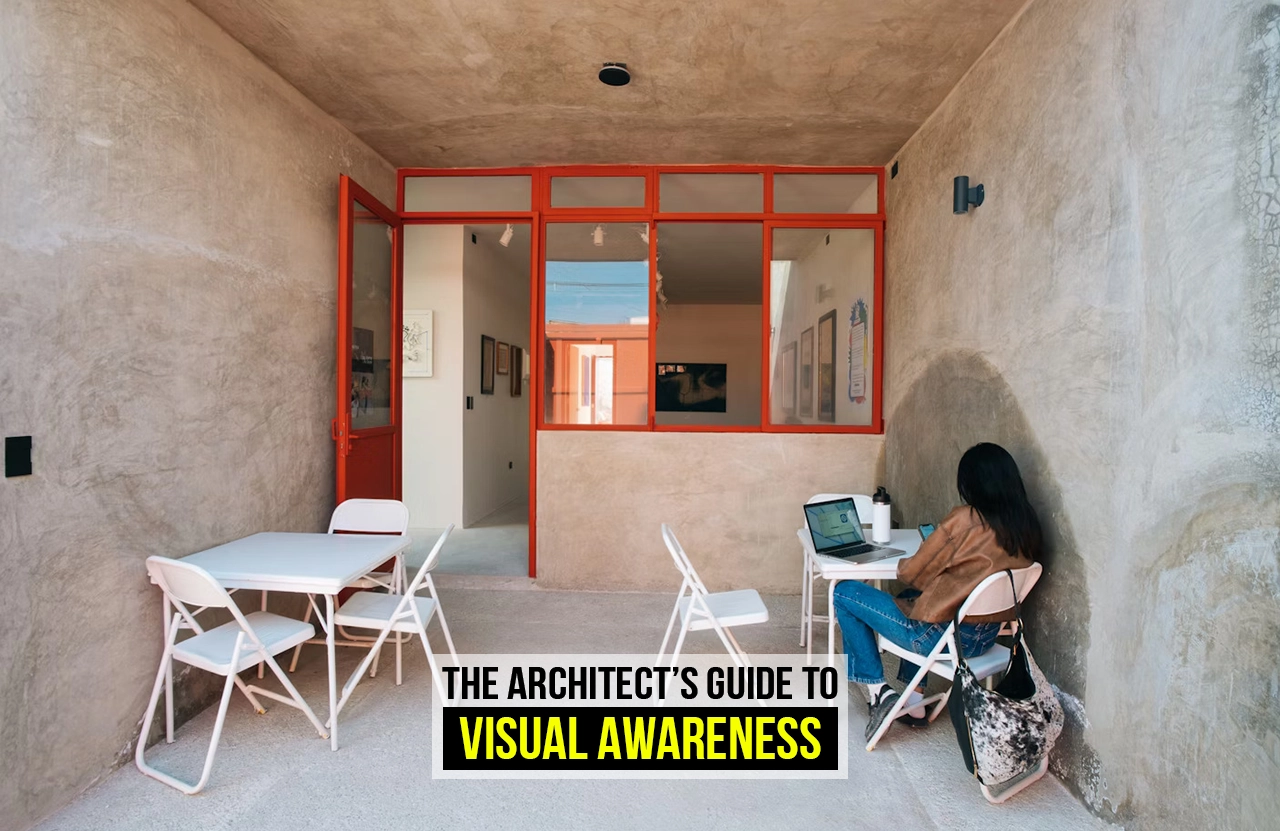
Architecture is not only about designing buildings, it’s also about understanding how people perceive and experience space. An architect’s ability to observe, interpret, and imagine the built environment plays a fundamental role in shaping meaningful design. In this sense, visual awareness and cognitive imagination are two essential capabilities that form the foundation of Architectural thinking.

The Architect’s Guide to visual awareness begins with learning how to see. Architects must train their eyes to observe spatial relationships, materials, light, and human interaction with the environment. At the same time, they must develop cognitive imagination, two essential capabilities that form the foundation of Architectural thinking.
Cognitive imagination and visual awareness

Developing multiple skills is essential for the architectural profession, visual awareness and cognitive imagination remain most important. These skills influence how architects perceive the world and how they create spatial solutions. Visual awareness defines the training of the eye to observe, interpret, and analyze spaces, forms, light, and human interaction with the built environment. It helps architects to identify design elements, including line, shape, form, texture, space, color, and light. Cognitive imagination, the other side, is a manipulative mental process of “viewing, altering, and combining images are called cognitive imagination (McGinn, 2004). Through the process, one shapes and unifies distinct images or parts of images, forming them. This allows a creation via empathy and designing for cultural context. (Dudzik, n.d.)
The ability of well-built cognitive imagination and visual awareness leads to visual literacy. Creating a new kind of design based on sketching and implementing from memory. According to Matthew Dudzik’s paper, there is an intimate relationship between the cognitive and perceptual processes that are brought to bear on the recall and design tasks and idea sketching” (Kavakli & Ball, 1998, p.485). This process of dissection and recreation, made possible by visual literacy, can help the designer comprehend the numerous influences at play in the design of the built environment. (Dudzik, n.d.)
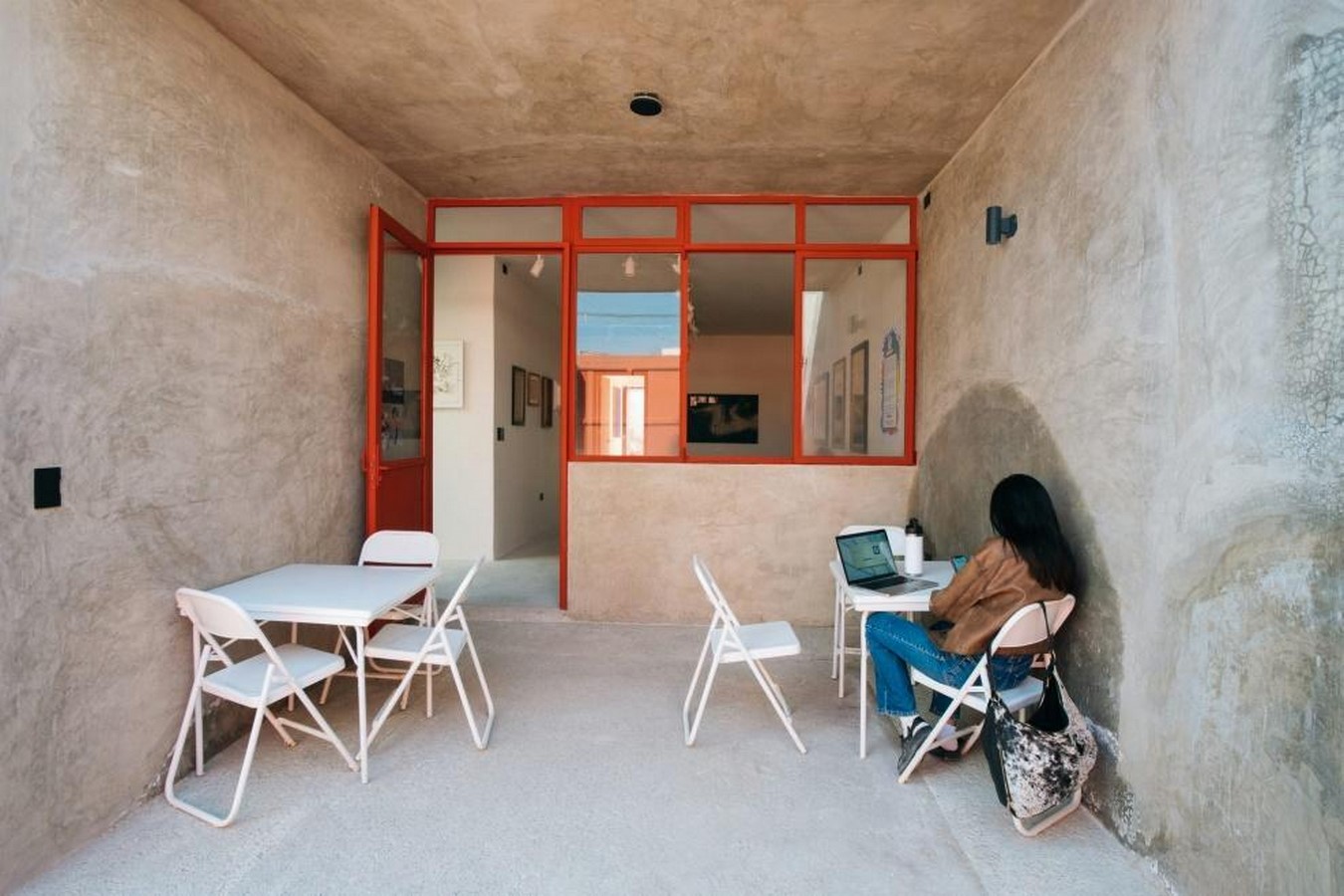
The Architects’ Guide to Visual Awareness showed that architects showed focused and systematic gaze behavior, and their attention was consistently drawn to building structures. In contrast, laypeople exhibited more variable and less organized scanning patterns, with greater individual differences. Moreover, architects demonstrated higher intra-group similarity in their gaze behavior, suggesting a shared attention schema shaped by professional training. These findings highlight that domain-specific expertise deeply influences perceptual processing, resulting in systematic and efficient attention allocation. The visual patterns exhibited by architects are interpreted to reflect a “Grammar of Space”, i.e., a structured way of visually parsing spatial elements. (Delucchi Danhier et al., 2025) Most empirical studies in architecture rely on evaluative methods such as questionnaires or preference ratings. The Visual effect of light and shadow on a built structure and its perception creates a big difference. Understanding contrast, depth, and texture.
Culture and Visual Understanding

As global standards become more influential, they influence both architects and users to design something international and commonly accepted. Though the architects are guided to practice globally as the users are individuals inside a local context, it requires a design responsive to that context. Visual literacy, ability of cognitive imagination, and visual awareness are utilized for a process of designing, critiquing, and altering based on new information, which, when coupled with traditional research methods, aids the architect in cultural perspective in their designs. While both visual awareness and cognitive imagination are formed through the global standard, the real experience is built through the cultural and physical experience of the individual. Based on traditional research methods, intentional exploration can be done through experience and hand drawing, while digital media gives a different culture and visual understanding. Three-dimensional modeling, physical prototyping, and other virtual or analog tools of investigation allow for exploring critical issues discovered through research and visual study. These technological tools changed the visual literacy, pace of the design process, and technical realities given for culture.
Evaluations of Architecture
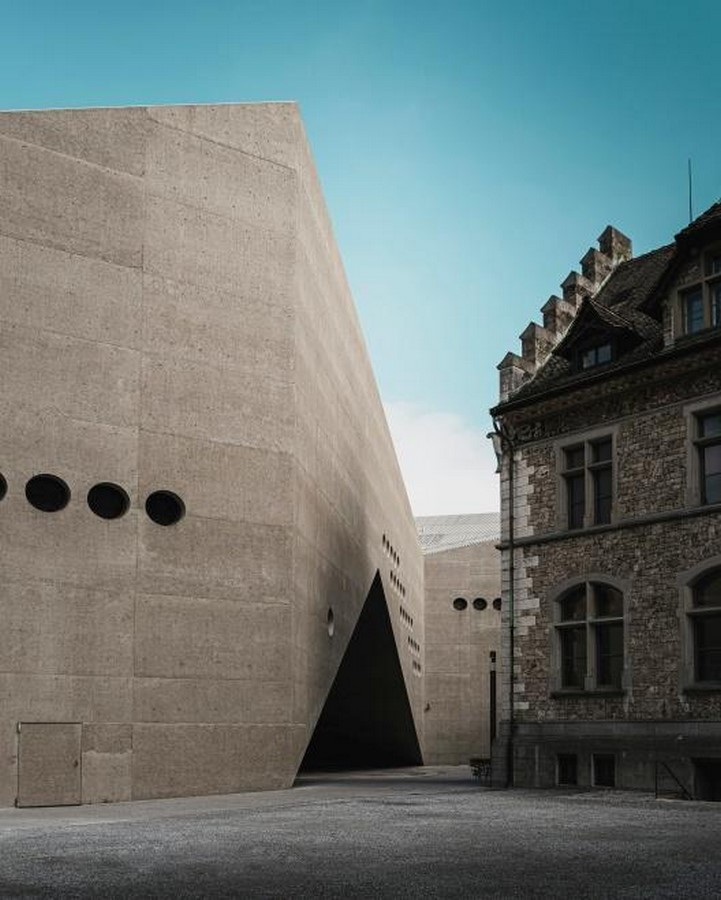
Architects guided not only visual literacy but also built their cognitive memory. Visual literacy, by default, creates an evaluation of their surroundings too. The observation, the understanding, and the alteration should align with the principle and cultural setup of the users. For this, modern architecture usually lacks a local understanding of the role of the built environment, identities, and the larger cultural context. Robert Venturi (1966) addressed this topic in his book, Complexity and Contradiction. He stated, “a valid architecture evokes many levels of meaning and combinations of focus: its spaces and its elements become readable and workable in several ways at once.”
When architecture fails to acknowledge cultural complexity, buildings risk becoming abstract representations of functional programs rather than rich spatial environments. Architects must therefore consider cultural context, human experience, and spatial interpretation when evaluating and designing the built environment.
The Architect’s Guide to visual awareness highlights the importance of perception, imagination, and cultural understanding in architectural practice. Visual awareness trains architects to observe spatial relationships, materials, and environmental conditions, while cognitive imagination allows them to reinterpret these observations into new design possibilities.
Together, these abilities form visual literacy, the capacity to read and interpret the built environment. Through sketching, modeling, and critical observation, architects transform visual impressions into creative architectural solutions. In an increasingly globalized and technologically driven world, maintaining this awareness becomes even more important. While digital tools continue to expand design possibilities, meaningful architecture still depends on the architect’s ability to see, interpret, and imagine space within its cultural and human context. Ultimately, the strength of architectural design lies not only in technical expertise but in the architect’s capacity to observe the world carefully and translate that understanding into spaces that resonate with people and place.
References:
- Delucchi Danhier, R., Mertins, B., Mertins, H. and Schneider, G. (2025). Entropy as a Lens: Exploring Visual Behavior Patterns in Architects. Journal of Eye Movement Research, 18(5), p.43. doi:https://doi.org/10.3390/jemr18050043.
- Dudzik, M. (n.d.). International Visual Literacy Association Visual Literacy in Architecture Education. [online] Available at: https://ivla.org/wp-content/uploads/2021/04/C7-FINAL-TBSR-2019-DUDZIK FINAL.pdf?utm_source=copilot.com [Accessed 5 Mar. 2026].
- Kavakli, M. and Ball, L. (1998) ‘Structure in idea sketching behaviour’, Design Studies, 19(4), pp.485–517.
- McGinn, C. (2004) Mindsight: Image, Dream, Meaning. Cambridge, MA: Harvard University Press.
- Venturi, R. (1966) Complexity and Contradiction in Architecture. New York: Museum of Modern Art.