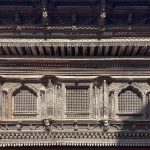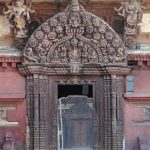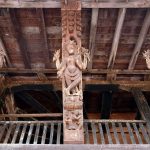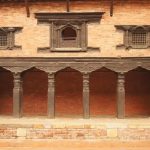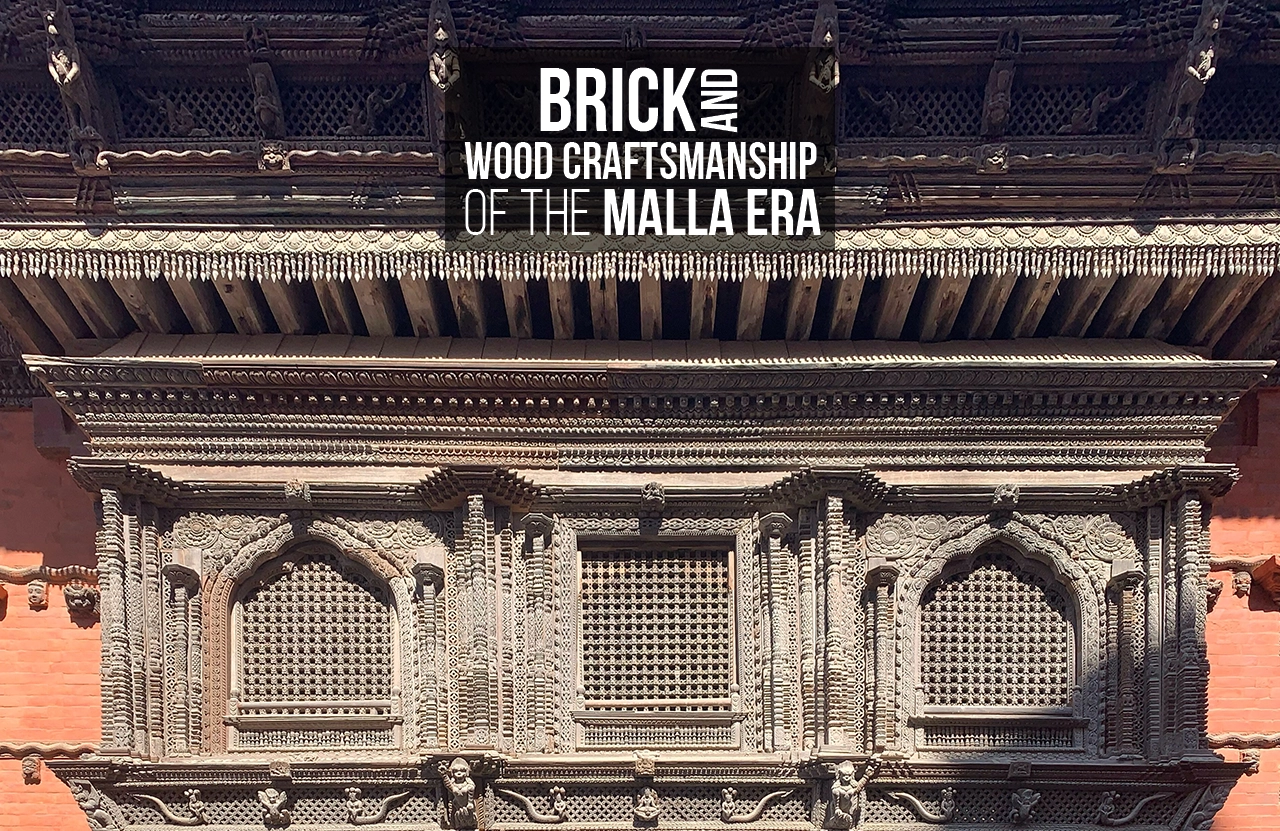
Isn’t it disheartening that these days, in the name of modernism, humans have started constructing plain, unornamented box-like buildings? On the contrary, if we go back to the Malla Era of Nepali architecture, even the tiniest building structure, for instance, door frames, were beautifully carved with such effort and dedication that their details are not visible from a distance and require a close-up view to be fully appreciated. Their architecture still leaves a remarkable mark on durability, aesthetics, and functionality. These masterpieces, built with brick and wood, continue to stand as great examples of craftsmanship excellence.
Intricate Wood Craftsmanship
The Malla era is renowned for its extraordinary wood craftsmanship, where an ordinary piece of timber was converted into a sculpture like masterpieces by people working hours and days of constant dedication and passion. These pieces are found in various building structures like windows, doors, struts, and columns that combine symbolism, aesthetics, and functionality.
Jhyals: Eyes of Malla architecture
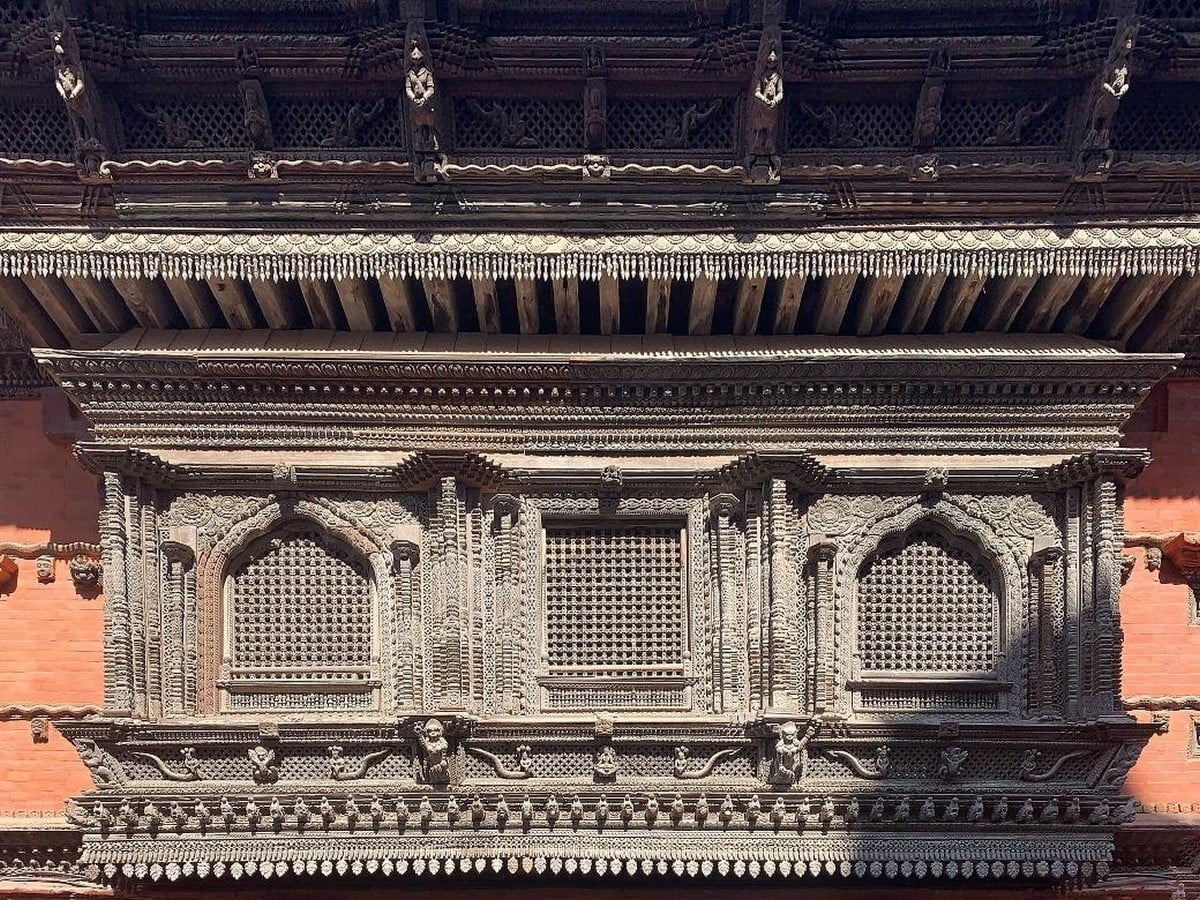
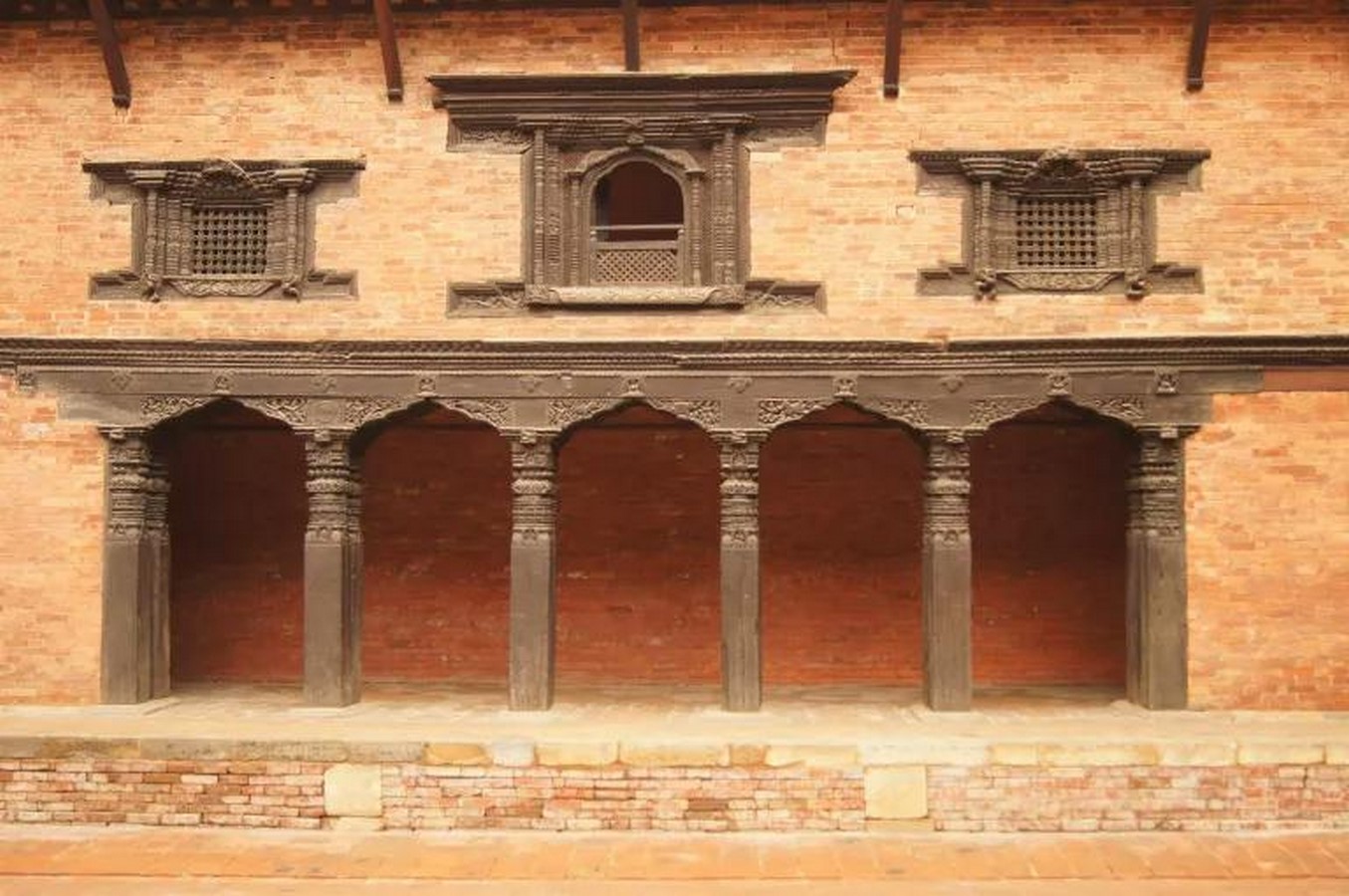
The windows are still the most exquisite features of the Malla architecture. Several examples of these windows differ according to the type of building and the number of floors of the building. For instance, Tiki Jhya are the lattice windows that are located on the second floor in the bedrooms for privacy, allowing light and ventilation, whereas Sanjhya, bay windows are located in the living rooms from where people could look outside to the streets to observe festival celebrations. The lintel, sill, and jamb are intricately carved with figures of deities, mythical beings, peacocks, jars, and other motifs. Most of the windows are carved from Sal wood as it is both strong and can hold fine details.
Doors: Thresholds of Spiritual and Social Meaning
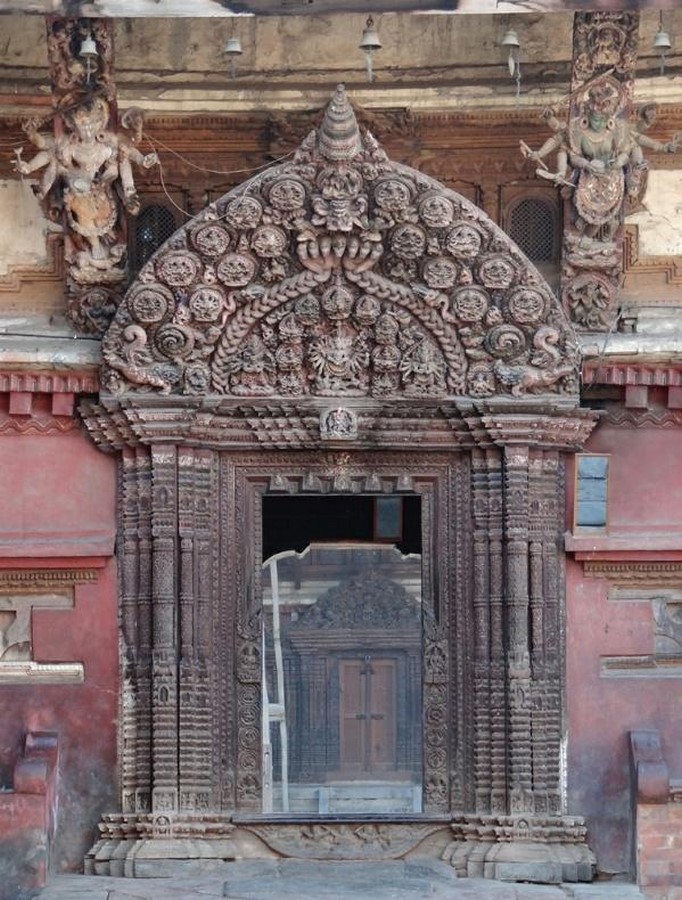
The traditional doors of the Malla era were considered thresholds between the profane and the sacred, found in buildings such as temples and in public and private areas of residences. The doorways are elaborately carved with guardian figures like Dvarapalas and other auspicious symbols. These doors were made small in height, which made the visitors vow as a social gesture of humility. Some doorways consist of Toranas, which are carved wooden structures that depict a central deity surrounded by mythological figures or narratives, acting as protective and decorative elements.
Tundals: The Structural Sculpture
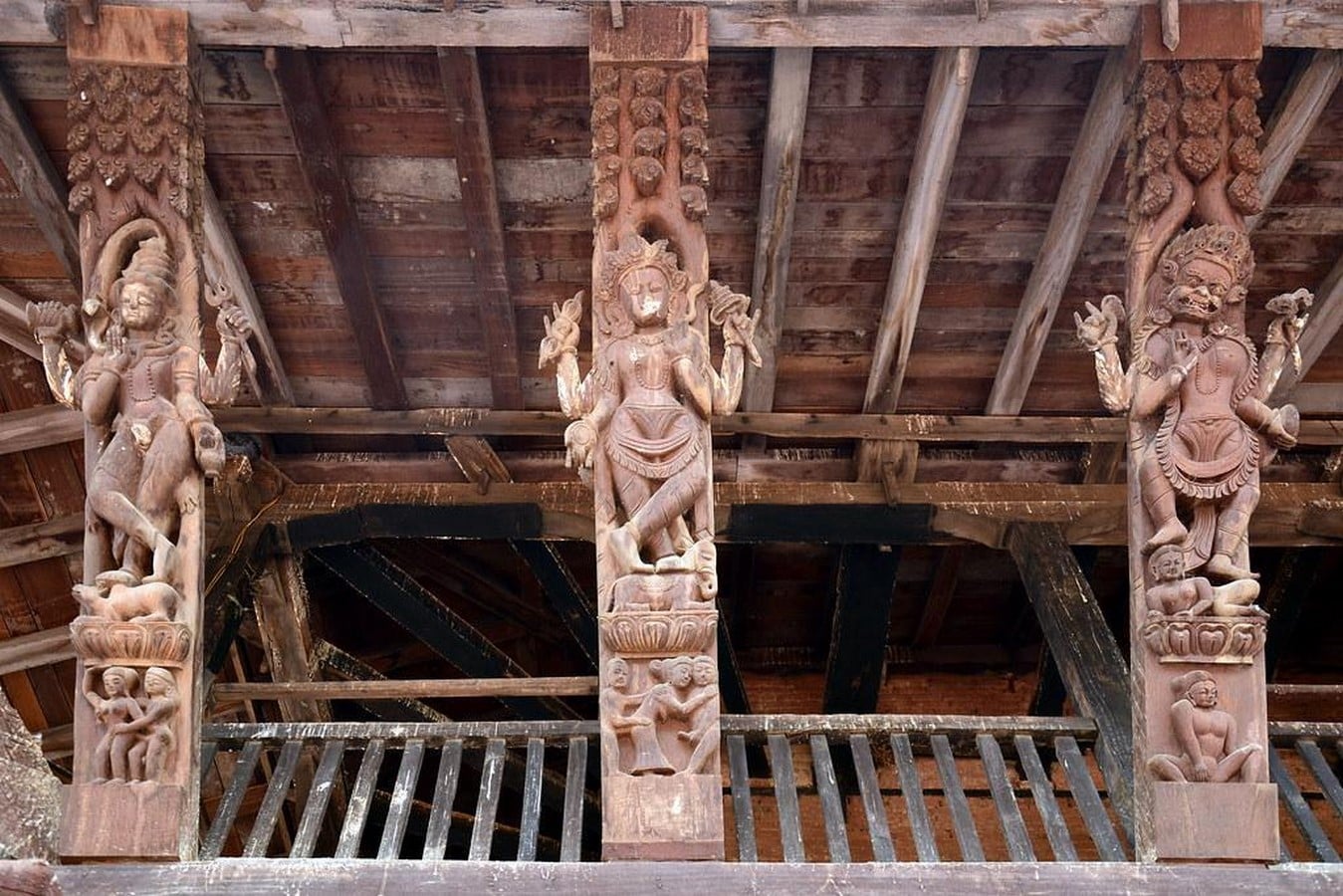
The Tundals are basically diagonal wooden struts that support heavy overhanging roofs in pagoda temples. This acts as both a structural and aesthetic element in the building. The struts are divided into three parts in terms of designs and carvings. The top is carved in a simple manner that replicates tree branches, the middle part is the main emphasized part that has deities carving and the bottom that contains the carving of rocks or erotic scenes. These structures act as a reminder of the masterful, expressive sculptural art of Kathmandu Valley during the Malla era.
The Timber Posts
The timber posts are made up of Sal wood and other durable hardwoods, which are carefully seasoned to resist moisture. These posts are the vertical load-bearing elements that support beams, floors, and overhanging roofs in palaces, temples, patis, etc. The posts are placed on stone bases (plinth) to prevent decay. The capital of the post is richly carved with floral motifs, mythical creatures, or deities, while the vertical square or rectangular shaft is kept simple in houses but richly carved in palaces and temples.
Mastery of Brickwork: Structure and Aesthetics
In addition to the intensive wood and stone carvings, one of the major materials that make up the architecture during the Malla era is the bricks. It can be divided into two main kinds: the Dachi Appa or Teliya Ita, and the Ma Appa, also known as structural bricks.
Dachi Appa Bricks
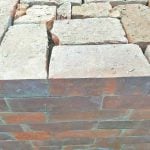
The Dachi Appa, also known as decorative bricks, is achieved after being fried at a high temperature to obtain a dark red colour and glossy finish. The shape of the brick is very unique and is achieved through an extensive trial-and-error process. The front, exposed part is a perfect rectangle, while the sides taper in width. Due to the shape, the mortar is hidden on the back side, giving it an elegant finish. For this reason, these bricks are often used for the outermost façade of buildings, providing a distinctive polished appearance.
Ma Appa Bricks
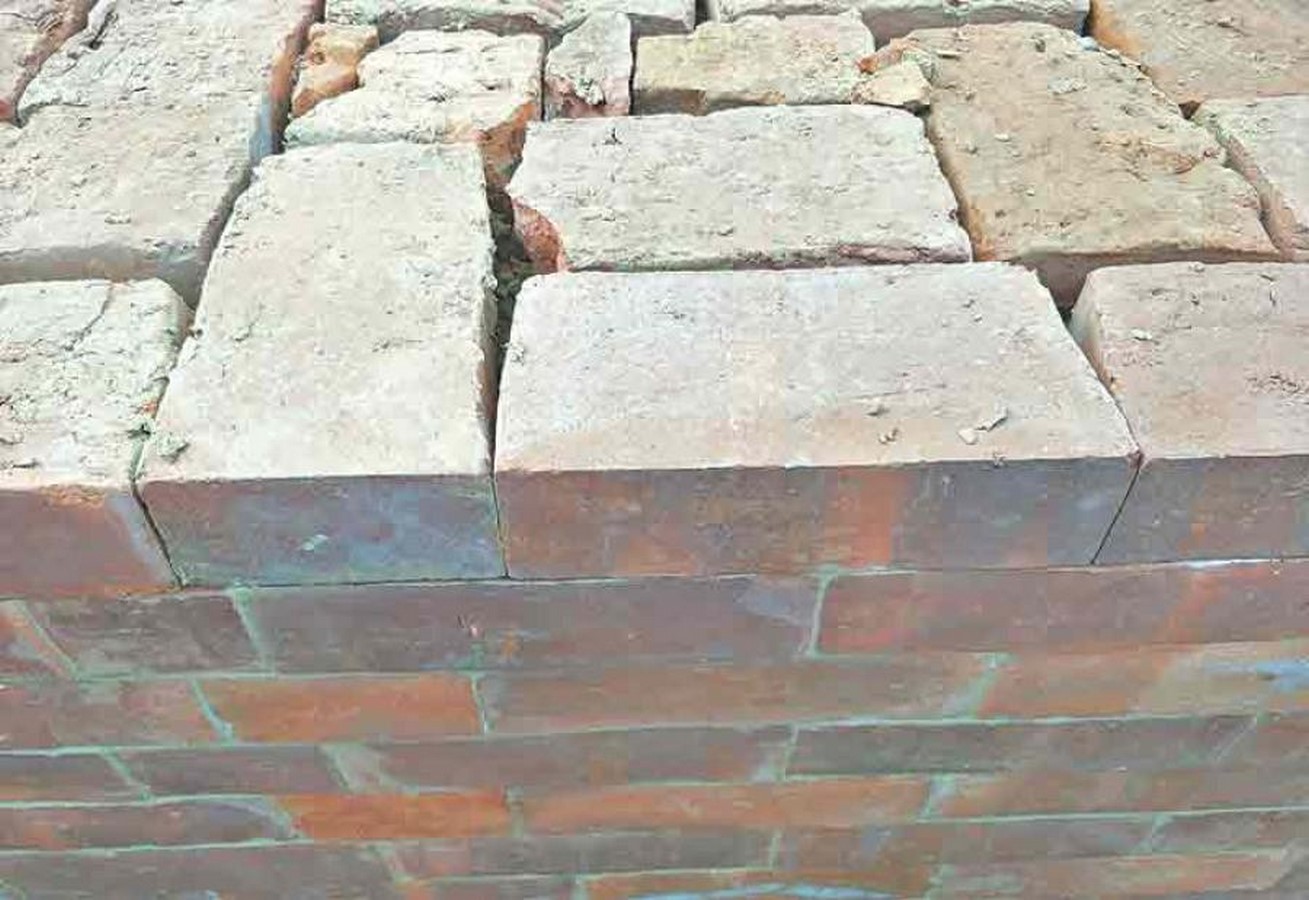
In traditional construction, walls were often constructed in different layers. The structural interior layer of bricks is the Ma Appa bricks. These bricks were generally larger and less refined than the exposed decorative bricks; Dachi Appa. These two layers of brick were combined by a rubble core to improve stability.
This combination of bricks allowed buildings to achieve both structural integrity and refined aesthetic expression, which became an outstanding feature of the architectural excellence of the Malla era.
Legacy and Continuity
During the Malla Era, brickworks formed the body of the structure, while wood carvings gave it a soul. This craftsmanship has outstripped the other building typologies around the world. Preserving the architecture is safeguarding cultural identity and supporting traditional skills. But, due to the devastating earthquake of 2015, many such iconic buildings were damaged. However, efforts are ongoing to train the new generation of craftsmen, document traditional building practices, and find ways to maintain its legacy by using different interventions of conservation.
Reference:
Wikipedia, Newar Window. Available at: https://en.wikipedia.org/wiki/Newar_window
Prayag Samgam (2025). The Soul Woven in Wood and Brick: Exploring Traditional Newari Architecture in the Kathmandu Valley. Available at: https://prayagsamagam.com/newari-architecture-in-kathmandu-valley/
- Maharjan (2010). Tundals: More than Struts. Available at: https://ecs.com.np/features/tudals-more-than-struts
Wonder Nepal (2025). Malla Era Art and Architecture: The Golden Age of Nepali Culture. Available at: https://thewondernepal.com/articles/malla-era-art-and-architecture-the-golden-age-of-nepali-culture/
Pande, S. (2018). The History of Dachi Appa and Ma Appa Bricks. Available at: https://kathmandupost.com/art-entertainment/2018/02/18/the-history-of-dachi-appa-and-ma-appa-bricks (Accessed: 28 February 2026)