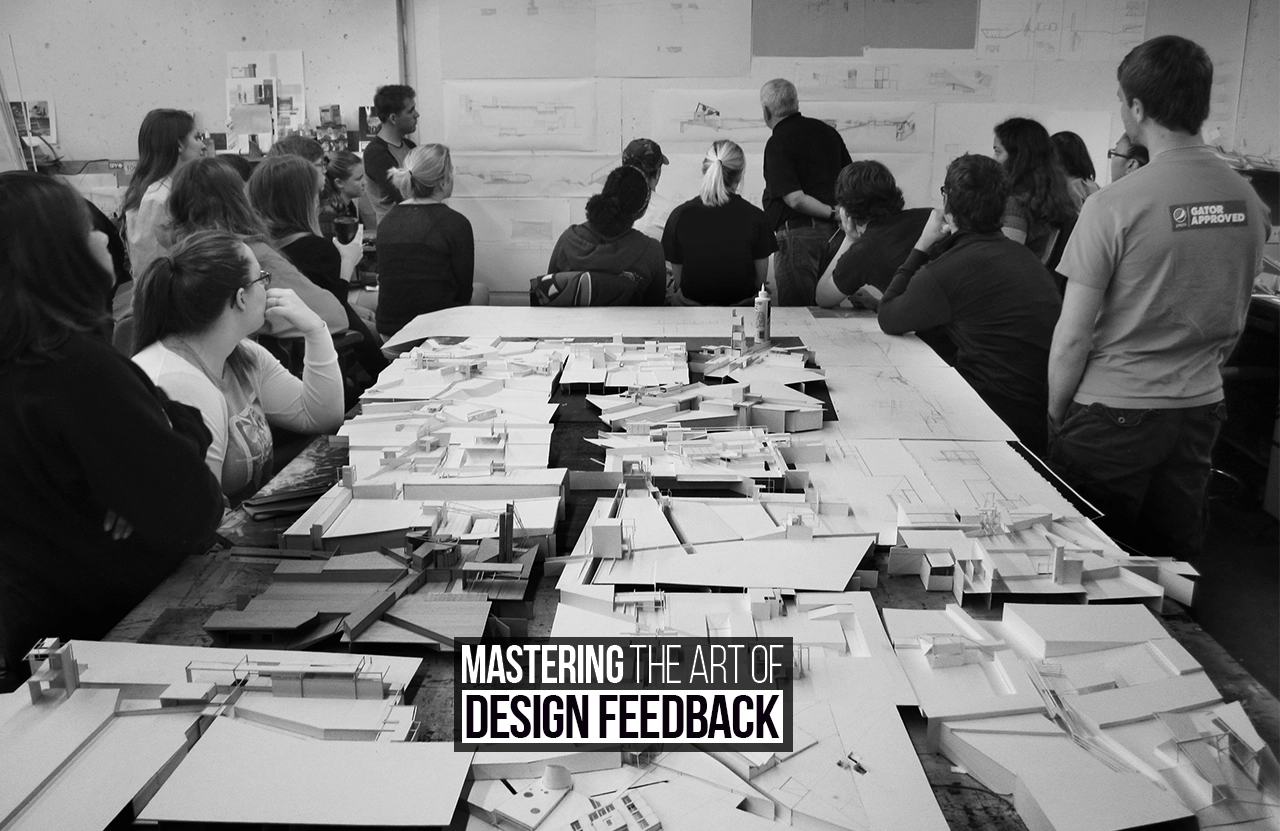
Design feedback doesn’t necessarily mean pointing out flaws in one’s design. It is an exercise that involves collaboration, analysis, and strategic alignment of thoughts and ideas. If perceived and executed properly, feedback received can transform a series of opinions and suggestions into powerful innovation and excellence. Even experts have mentioned that design feedback is a crucial step that acts as a bridge between a raw design concept and a solution. In any creative field or profession, not just architecture or design, the ability to give and receive feedback is not just a soft skill but an important aspect that determines the success or failure of a design.
Whether you are a student standing before a jury or a professional presenting to the principal architect, design feedback can be used as an important tool to test logic before it actually becomes a reality. Mastering this art is a career-long journey of balancing the ego’s desire for creative expression with the project’s need for functional excellence. In order to understand this, let’s have a look at how one can deal with it as a student and as a professional.

For Students: Weaponing the Critique
As students, we often see design critique as a hurdle or something similar to going to war, where you have to defend your design. However, in reality, one must understand and treat experience designers as expert consultants rather than judges. Here is step by step breakdown of mastering feedback from the student’s perspective. As a student, one must not view design as a mere drawing or design project but treat it as a living argument.
The mind-set shift: from Defence to Diagnostic
The biggest hurdle in case of students is the ego. When a juror says a particular issue seems to be unresolved, what many students hear is someone questioning their compatibility as a designer.
The professional pivot
First advice as a fellow designer would be to separate yourself from the paper. One should view a jury as a highly paid consultant providing you free advice. One should also note that your job isn’t to protect your project or design from changes; it is to extract the most useful information possible to make the next iteration better.
Phase I: The Pre-Review
Don’t walk into a review and ask what your jurors think about your design; there is a chance this will invite subjective and useless opinions.
Direct energy: Tell the jurors exactly where you are struggling. This will help to provide constructive feedback on specific issues, which would help you improve your design.
Control the Narrative: By highlighting a specific problem, you prevent the jury from tearing apart parts of the projects you already know are working on.
Phase II: During the Review
It’s always seen that Jurors often speak in metaphors. It is your responsibility to translate their abstract feedback into a design adjustment.
The Clarity Check: When a juror questions an aspect of your design, make sure to ask for clarification about the question raised. As this would help you understand criticism rather than struggling to interpret comments later.
For example, if a juror says, “the colour scheme feels off,” don’t get offended; instead, ask: “By timid, do you mean the material palette is too muted or to showy and does go well with product?”
Active Note taking: Never trust your memory. The Adrenaline of a jury wipe-out causes “Critique Amnesia”. Have a friend take notes for you or record the session. Seeing the feedback in written form will help you to strip away the harsh tone and find the logical signal inside the noise.
Phase III: The post-review synthesis
Not all feedback can be considered valuable. That may be because some jurors contradict each other; others haven’t read your brief.
The 24-Hour Rule: After a major review, avoid making changes to your model or drawing for at least 24 hours. Allow time for any emotional response to subside so you can revisit your notes with a clear objective perspective.
Filter comment received into following categories:
The non-negotiable: A structural failure or code violation is something that needs to be dealt with on a priority basis and cannot be ignored in case of architecture. But when it comes to other design professions you’re at most priority should the brand or product identity. Design should not be about aesthetics but should create unforgettable user experience.
The Suggestions: Subjective Ideas that might improve the soul of the project.
The Outliners: If a particular comment is contradicting your ideas, you can give it second thought rather than completely scrapping your design.
For Professionals
In the professional practice especially in architecture, design feedback is considered a creative business process. To master it, one needs to move beyond the academic “critique” and into a domain where feedback is considered as a tool for understanding risk mitigation, client requirement, and technical excellence. While in any design profession design critique at a professional setting should be treated as an opportunity for group conservation to improve design.
For the professional, the “Art of Feedback” is the ability to navigate the tension between a high-level design vision and the uncompromising constraints of budget, code, and occupant needs.
Shift from critique to redlining for technical design based profession
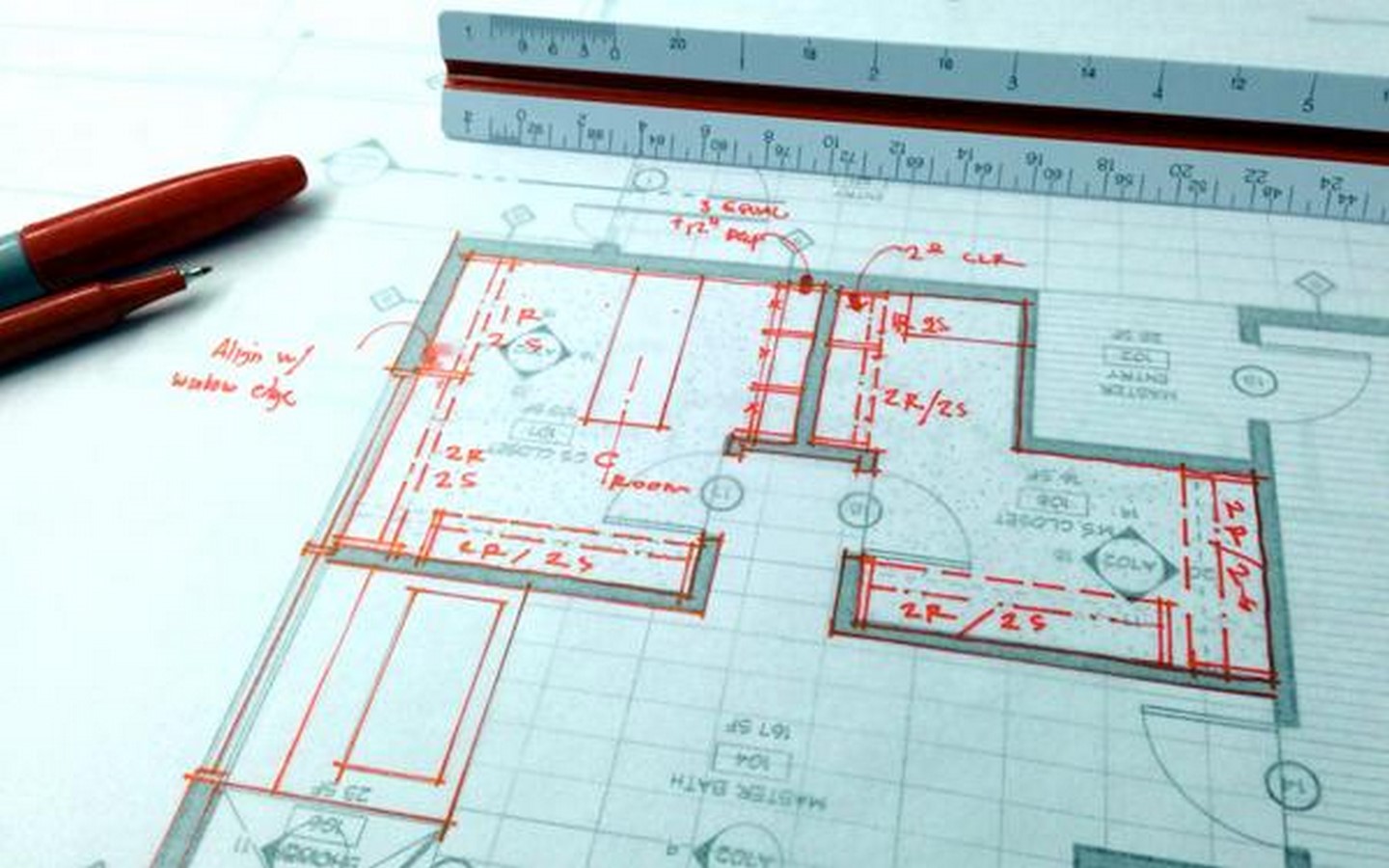
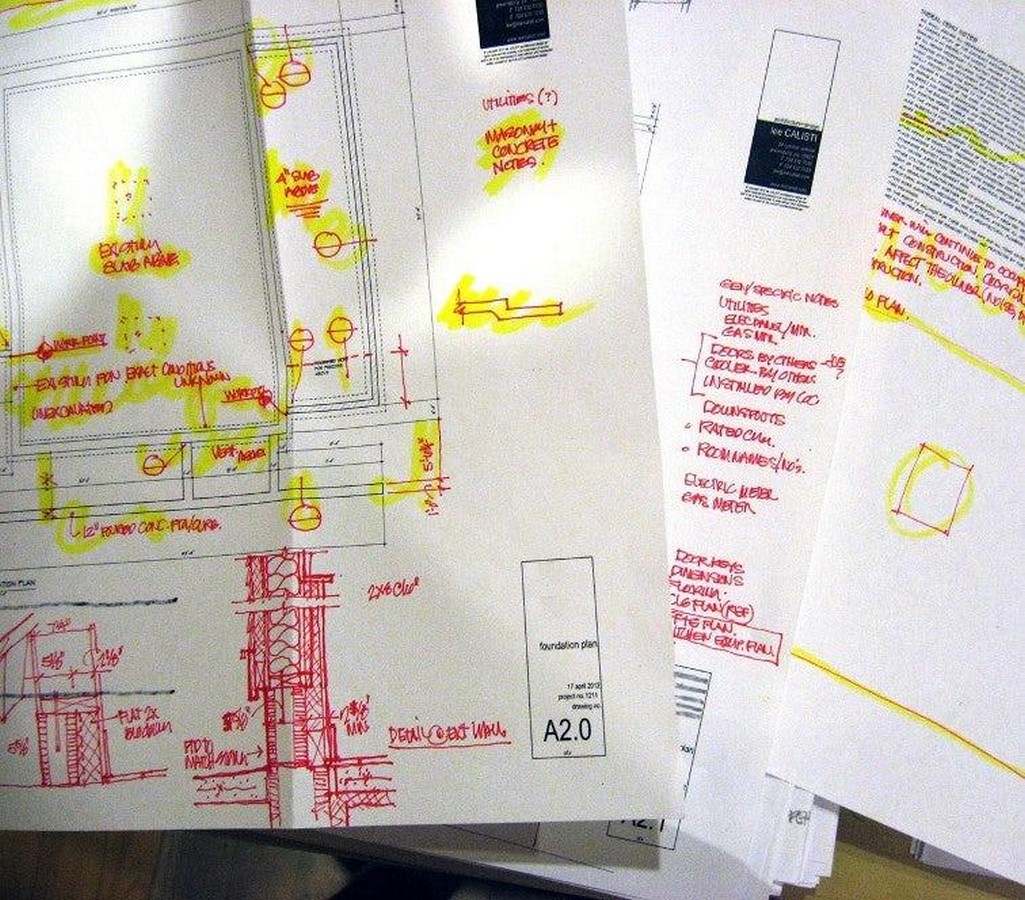
In a professional setting, especially in an architectural firm, feedback is often delivered through infamous redlines, which are marked up on drawings. The redline approach in a professional architecture firm refers to the practice of using redline drawings to indicate any errors, changes, and revisions. The redline method is crucial to make sure that all parties involved in a project have a clear understanding and are aware of the design intent and any necessary revisions.
The Golden Rule: Never make or mark any changes in drawing without asking the question why and providing a valid explanation.
Professional Detail: The Redline technique helps to bridge the gap between a drawing and a building. This helps in achieving the shift from abstract possibilities to the actual execution of the task.
Shift from critique to conscious effort leading to solid conclusion especially in design profession
After a design review, every designer should welcome the perspective of each individual involved in the project, much like a roundtable discussion. It’s an important practice from the point of view of team building and management. Establish the rule and outcome you expect from the discussion at the very beginning. This approach allows designers to incorporate feedback and adjust the design before finalization, potentially reducing project costs and delays. The ultimate goal is to ensure the product meets the client’s original requirements. The team should also ensure design quality remains consistent across all areas of the product.
The Standardized colour vocabulary
One will notice in a professional firm that a universal colour language is used to ensure that everyone involved or working on a project, from an intern to a project manager, understands feedback received without meeting.
Red (Changes): use for deleting or correcting. It used to indicate an error or mandatory design changes.
Green (Question/Comment): used to indicate internal notes between reviewer and drafter. It’s where the why is explained.
Yellow (Verification): Once the drafter makes necessary changes, all red lines are converted to yellow. This is important to ensure 100% feedbacks have been captured.
The Objective Subjective Filter
This section mainly focuses on the hierarchy in which feedback received should be categorised. This method helps in categorising changes based on priority.
Objective (must): This section focuses on any changes that need to be made as per the National Building Code or any necessary structural changes, which are crucial for any structure. While in other design professionals one can go back to design basics of less is more or functionality and try to keep your design simple.
Strategic (should -haves): This section is based on the client’s brief. Just in case the client wants any changes with respect to the design.
Subjective (Could-Haves): These are mostly aesthetic preferences. Master this section by using basic design principles.
Each of us as designers should keep in mind following non-negotiable design principles: applied exploring ideas, feedback and repeat.
Implementing the feedback log (the Audit trail)
A professional log isn’t just a list of notes; it is a structured database which is an important part of a design feedback system like a digital inventory. The audit trail is your firm’s legal protection or data backup. In architecture, if a building failure occurs, the trial proves whether the design team addressed the risk and whether those changes were incorporated. While in any other design firm client dissatisfaction may lead to loss of important cliental because of mouth publicity and may also cause legal and financial loss. During weekly coordination meetings, the focus shifts from design discussions to systematically reviewing open issues in the log. This process ensures that expert feedback is thoroughly integrated into designs.
Managing client feedback: The “Yes ‘And” Technique
In a professional setting, the “Yes, and” technique is a sophisticated communication tactic used to meet complicated customer requests that may be structurally impossible, beyond budget, or unappealing visually. Rather than a no, which may cause tension or seem defensive, the “yes, and” positions the architect as a strategic consultant rather than a just service provider. When a customer requests a change, designers should consider one of three professional risks: regulatory codes if applicable, structure, timeline or finance. This strategy does not mean you are defending your design; rather, you are explaining the laws and facts.
Finally, understanding the art of design feedback marks the shift and individuals’ growth as a designer from defending an artistic vision to advocating for a technological answer. While students utilize feedback to discover their own creative voice, professionals use it as an important tool for risk management, code compliance, and interdisciplinary collaboration. By sorting subjective ideas through objective facts and keeping a clear audit trail, the architect assures that the final created form is not only visionary, but also safe, constructible, and legal. Even while sometimes critique can be brutal and might make one question their artistic talent, that input ultimately helps bring the concept into reality. This also helps to create an environment for constant innovation and improvement as an individual and team.
Reference List:
icreatives blogger (2024). Mastering Feedback: Unlock the Secrets to Giving and Receiving Constructive Critiques with Our Creative Staffing Insights – Creative Staffing. [online] Creative Staffing. Available at: https://www.icreatives.com/mastering-feedback-unlock-the-secrets-to-giving-and-receiving-constructive-critiques-with-our-creative-staffing-insights/ [Accessed 1 Mar. 2026].
During, E. (2026). How to Manage Client Feedback During Design Delivery. [online] Capital Numbers – Let’s Do Digital. Available at: https://www.capitalnumbers.com/blog/managing-client-feedback-during-design-delivery/ [Accessed 1 Mar. 2026].
Silver, S. (2026). Design Feedback Loops That Actually Improve Work. [online] Vizcom.com. Available at: https://vizcom.com/blog/design-feedback-loop [Accessed 1 Mar. 2026].
Images:
Borson, B. (2015). Architectural Redlines | Life of an Architect. [online] www.lifeofanarchitect.com. Available at: https://www.lifeofanarchitect.com/architectural-redlines/.
Archinect. (2018). The Architecture Student’s Guide to Studio. [online] Available at: https://archinect.com/features/article/150139021/the-architecture-student-s-guide-to-studio.
Journal. (2016). Young Architect Guide: Architectural Redlines – Architizer Journal. [online] Available at: https://architizer.com/blog/practice/details/young-architect-guide-architectural-redlines/.