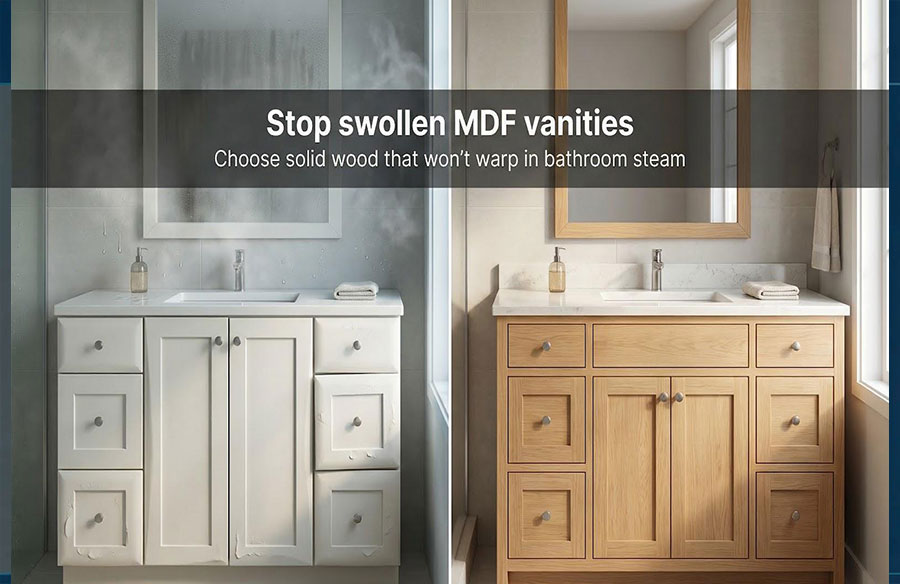
Steam turns most MDF vanities into swollen, peeling eyesores within two years. Those puffed-out door edges give it away: moisture slipped under the paint and the core drank it up.
Skip that short shelf life. We tested 36 cabinets—checking specs, finishes, and owner reviews—to surface eight 48-inch vanities built from solid wood or marine-grade plywood that shrug off humidity.
In the next few minutes, you’ll see how each pick scores for moisture defense, storage, style, and value, so you can choose a centerpiece that stays crisp long after the warranty ends.
How we built our warp-resistance scorecard
We skipped glossy catalog photos. Instead, we pulled specs, zoomed in on drawer boxes, read warranty PDFs, and talked to installers. That research became a single scorecard that predicts which 48-inch vanities survive real bathroom steam.
Moisture resistance makes up 30 percent of the grade, because top-tier hardware is useless if the cabinet core swells. Solid hardwood frames and marine-grade plywood panels beat MDF in wet areas when the finish seals out vapor (see the Edward Martin guide to durable bathroom vanities).
Build quality is worth 25 percent. We checked for dovetail drawers, internal corner bracing, and cabinets that arrive perfectly square. Weight alone is not durability; heft combined with smart joinery often signals a rigid carcass.
Design and aesthetics contribute 15 percent. Wood tones now edge out plain white; according to House Digest, 33 percent of recent remodelers chose a wood vanity, while 29 percent picked white. Warm grain also hides fingerprints and stays stylish longer than factory paint.
Storage and functionality add 10 percent. Soft-close doors are a given; we rewarded touches such as U-shaped top drawers that dodge plumbing and hidden outlets that keep hair tools off the counter.
Sustainability carries 10 percent. FSC-certified lumber, low-VOC finishes, and reclaimed timber signal brands that look beyond the first sale and tend to finish pieces better.
The last 10 percent goes to warranty and overall value. A longer guarantee shows the maker trusts its materials, and a fair price shows the premium is in the cabinet, not the marketing.
 Every vanity on our list clears these hurdles. The scorecard only ranks them, so you can shop with data instead of guesswork.
Segment 1. Performance comes first: two vanities that resist heavy steam
Those oils protect Manhattan’s frame and panels, so steam cannot slip under the finish and swell the wood.
Willow Bath + Vanity “Manhattan” 48-inch teak
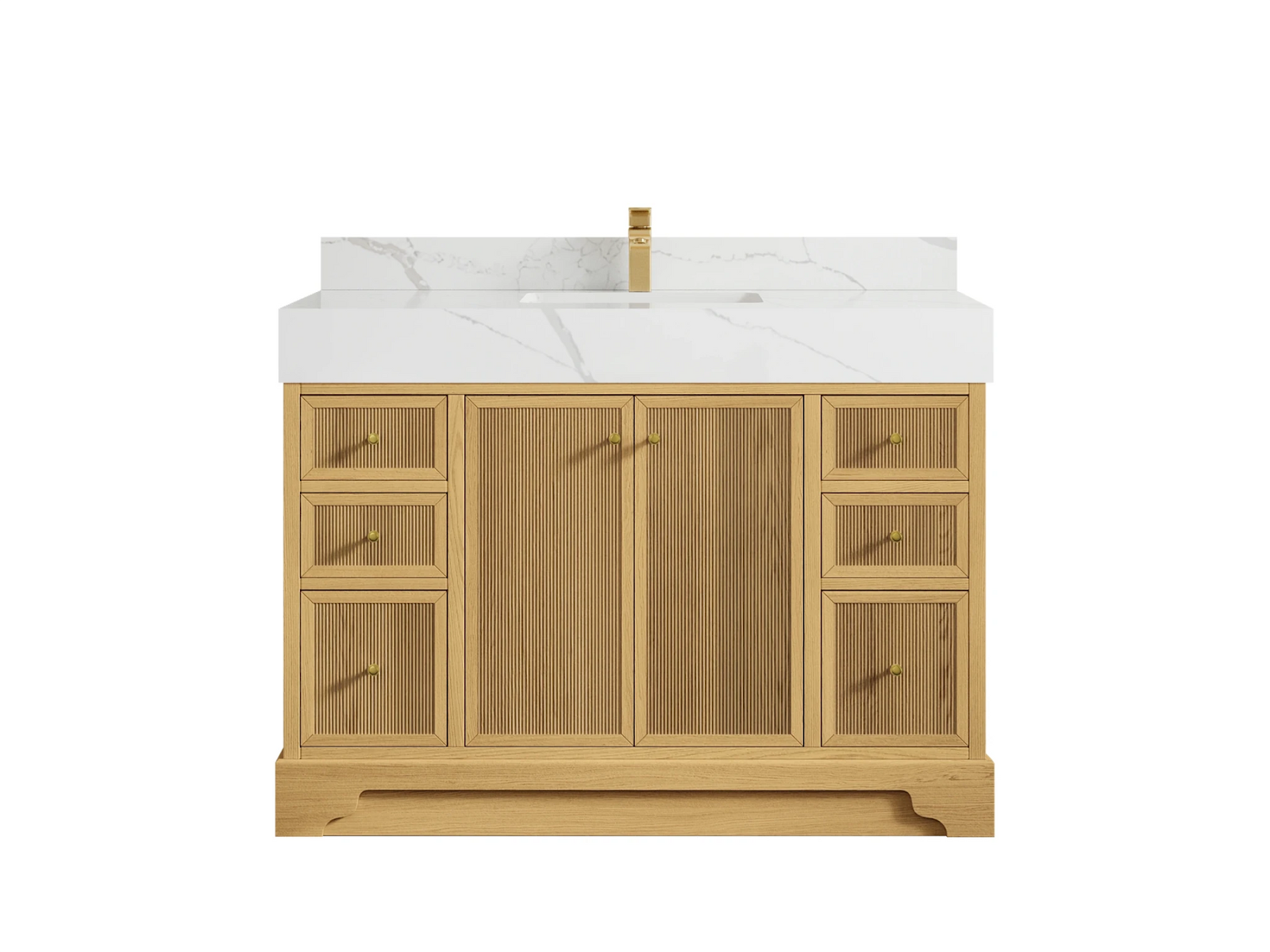 Willow Bath and Vanity Manhattan 48-inch teak solid wood bathroom vanity
Willow Bath and Vanity’s spec sheet shows the 48-inch model pairs a solid-teak frame with furniture-grade plywood panels and all-hardwood, dovetailed drawer boxes—the same mix pro installers look for when a cabinet must handle years of humidity swings.
The company backs that construction with a one-year limited warranty, longer than the 90-day coverage common on budget imports.
The 48-inch Manhattan vanity is a standout in its category, offering a blend of style and durability that is hard to match. Its design incorporates both traditional and modern elements, making it a versatile choice for any bathroom decor. The attention to detail in its construction ensures that it will remain a centerpiece in your bathroom for years to come.
Willow Bath + Vanity “Manhattan” 48-inch teak
Teak’s tight grain and natural oils repel water, the same reason it covers yacht decks. Those oils protect Manhattan’s frame and panels, so steam cannot slip under the finish and swell the wood. Owners note its heft at 193 pounds before the quartz top, and the dovetail drawers still glide after months in humid rooms. Inside, a deep drawer hides a power outlet that keeps hair tools charged yet off the counter. The price sits near the top of the range, but you get a cabinet engineered for spa-level moisture.
Why it leads this segment: Teak’s oil content plus a factory low-VOC seal creates genuine “spa proof” construction. Solid hardwood absorbs moisture slowly and predictably, which prevents sudden warping, according to Edward Martin.
James Martin “Columbia” 48-inch latte oak
Columbia pairs kiln-dried birch for the frame with white-oak veneer on visible faces to deliver consistent grain. Veneer over hardwood may sound like a shortcut, yet here it balances strength and stability; the engineered panel expands evenly, so finishes stay smooth. The open metal base lifts the cabinet off the floor, removing the risk zone where mop water lingers. Soft-close doors hide an optional power-USB strip, and an add-on LED underlights the shelf as a night light.
Why it shares the podium: Thoughtful engineering beats sheer mass. A stable core, water-resistant seal, and raised base let Columbia resist swelling without the weight of solid teak. The warm oak finish aligns with the shift toward wood tones reported by House Digest.
Choose Manhattan for maximum durability in a high-humidity primary bath, or pick Columbia when you want a lighter, design-forward piece that still shrugs off daily steam.
Segment 2. Budget-smart workhorses: quality without sticker shock
Woodbridge “Sydney” 48-inch with Carrara marble
Sydney keeps the price under a grand while delivering a frame and drawers cut from solid hardwood, not particleboard. That choice matters the first time you nick the paint, because raw wood stays stable while MDF swells and peels, according to Flowform Bathrooms.
A 12-step low-VOC finish seals every surface, inside and out. The top arrives pre-sealed Carrara marble, so installation is straightforward. Four dovetail drawers glide on soft-close slides beside a two-door center cabinet, a simple layout that maximizes space.
Owners describe the cabinet as heavy, a signal of dense lumber and solid joinery. Adjustable feet keep it level on uneven tile, and careful packaging helps it arrive without damage. Re-seal the marble once a year to lock in a decade of reliable service.
Ariel “Cambridge” 48-inch shaker
Cambridge blends classic lines with furniture-grade construction. The entire box—frame, doors, and drawers—is kiln-dried solid birch that controls seasonal movement. A silky, low-sheen paint wraps the wood so humidity cannot seep into the grain.
Storage is the standout: nine functional drawers and a double-door cabinet give every family member a spot. Top drawers are U-shaped to dodge plumbing, a small design choice that saves otherwise wasted space.
Ariel ships Cambridge with quartz or sealed Carrara marble. Choose quartz if no-maintenance counters appeal to you, or pick marble if natural veining is worth an annual re-seal.
Value shows in the details: soft-close hardware, finished drawer interiors, and a two-year warranty that outlasts many premium lines. Homeowners report no swelling or sticky drawers in steamy baths—proof that solid wood plus a tough finish can handle daily moisture.
Pick Sydney when you want real stone at a starter price, or choose Cambridge if maximum drawer space and a proven track record matter most. Either way, you avoid budget-vanity pitfalls and gain a cabinet built to last well beyond the current trend cycle.
Segment 3. Style statements: vanities that dress the room
Sometimes a vanity is more than storage; it anchors the entire design. These two picks turn functional cabinetry into conversation pieces while keeping the solid-wood core you need for humidity.
Deluxe Living “Richfield” 48-inch farmhouse apron
Richfield leads with personality. A fireclay apron-front sink projects slightly past the Shaker cabinet, adding farmhouse charm to a space often ruled by straight lines. Fireclay is non-porous, so splashes wipe away without staining.
Deluxe Living ties that character to real substance. The frame uses solid hardwood, side panels are furniture-grade plywood, and a twelve-coat paint seals every surface. Six drawers—four small up top, two deep below—flank a two-door center cabinet, so the stylish sink costs you no storage.
At about 200 pounds with the quartz top attached, Richfield feels substantial. Adjustable legs hide behind a toe-kick to keep the cabinet level on uneven tile, and soft-close hardware adds a premium touch. The result is instant character without custom-millwork pricing.
Virtu USA “Caroline” 48-inch shaker
Caroline shows that restraint can still impress. Clean Shaker doors, balanced drawer lines, and a satin finish fit almost any décor. Swap the chrome knobs for matte black and it leans modern; add aged brass and it reads quiet luxury.
Under the paint sits kiln-dried solid oak—a wood once used for whiskey barrels because it resists moisture—paired with dovetail drawers and soft-close slides. Nine drawers give everything from makeup palettes to spare razors a spot, keeping the counter as uncluttered as the design.
Choose bright-white quartz for a crisp look or soft-veined Carrara marble for classic warmth. Either way, the sink arrives installed, and a two-year warranty beats many luxury lines.
Reach for Richfield when you want farmhouse flair with real substance, or pick Caroline when you need a chameleon that adapts to future remodels. Both prove style and strength can share the same cabinet.
Segment 4. Niche solutions: when your bathroom has special demands
Some projects need features beyond the usual single-sink cabinet. Whether you share the mirror every morning or want a vanity with a backstory, these two models solve challenges the mainstream market often misses.
Eviva “Aberdeen” 48-inch compact double
Fitting two sinks into four feet sounds unlikely until you see Aberdeen’s layout. Eviva tucks twin 14-inch basins under a single Carrara-look quartz slab, leaving just enough counter between them for soap and toothbrushes. That means no more jockeying for faucet time when a 60-inch cabinet will not fit.
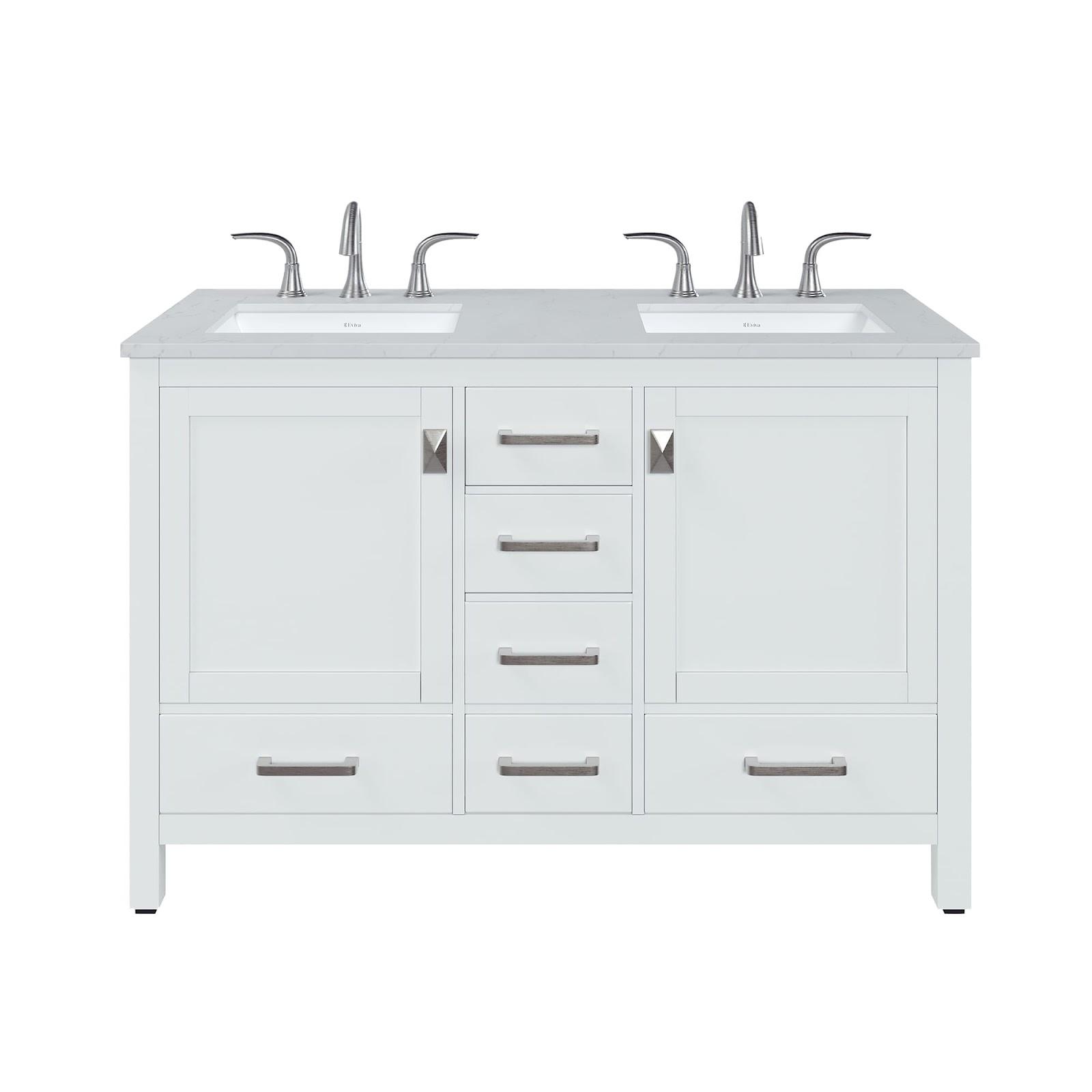 Eviva Aberdeen 48-inch compact double sink bathroom vanity
The cabinet uses solid hardwood throughout, so the frame stays rigid despite extra plumbing cutouts. Six drawers give each user dedicated storage, and soft-close hardware keeps early-morning routines quiet. At roughly 257 pounds shipped, the unit feels like furniture, yet installation is plug-and-play because the top and sinks arrive factory mounted.
Pick Aberdeen if you refuse to trade dual-sink convenience for wall space. Smart engineering lets a 48-inch vanity perform like a 60.
Native Trails “Americana” 48-inch reclaimed heirloom
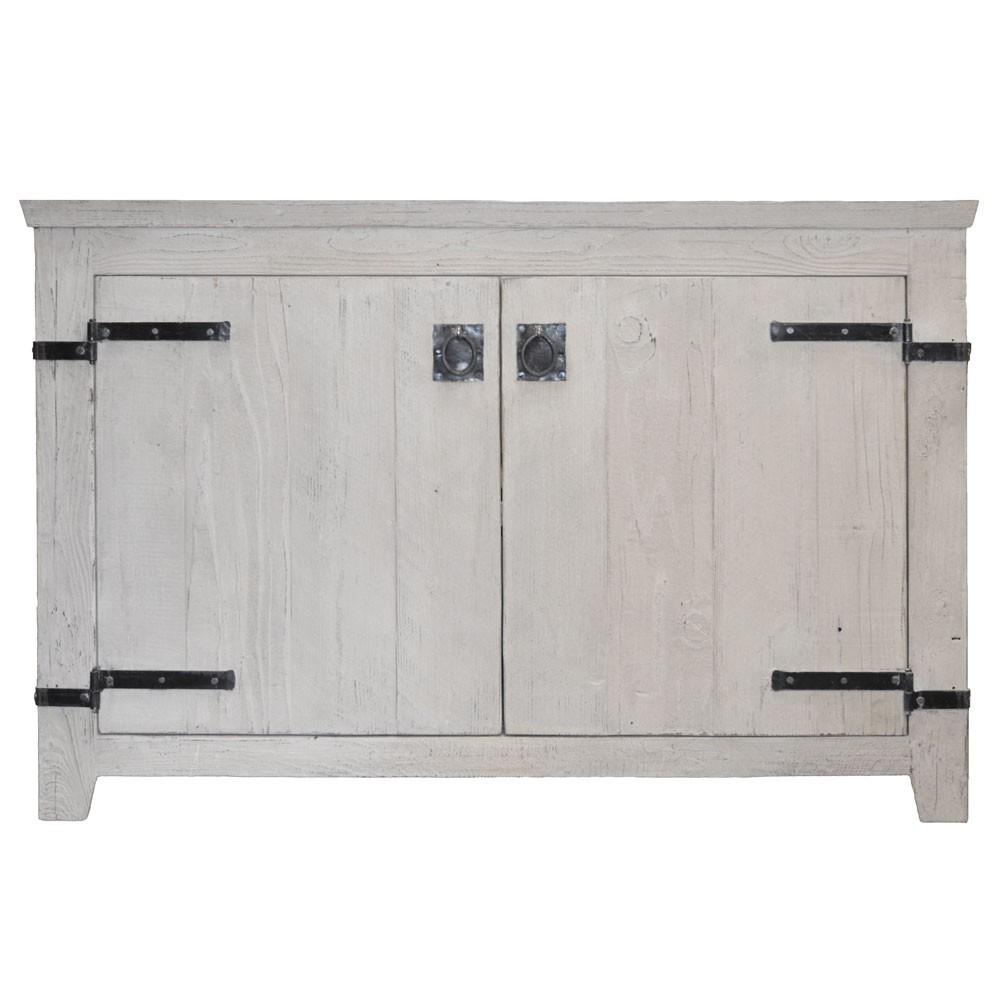 Native Trails Americana 48-inch reclaimed wood bathroom vanity
If sustainability tops your brief, Americana is the conversation piece that checks every eco box. Each vanity is hand-built from boards salvaged from century-old barns, then sealed with a hand-rubbed low-VOC finish. Reclaimed wood has already cycled through decades of humidity swings, so it remains stable when bathroom steam rolls in.
Design stays intentionally open: cabinet doors above and a slatted shelf below promote airflow and discourage mildew. Native Trails coats its iron hardware with wax to block rust while matching the rustic vibe.
You buy the base only and add a stone, concrete, or trough sink of your choice. The initial outlay is higher, yet the lifetime warranty and one-of-a-kind character justify the splurge, especially for clients who prioritize green materials.
Choose Aberdeen for dual-sink efficiency in tight quarters, or select Americana when sustainability and storytelling matter more than plug-and-play convenience. Either way, you solve a niche problem without sacrificing the warp-proof construction at the heart of this guide.
Buyer’s guide: choosing a cabinet core that won’t betray you
1. Solid wood, plywood, or MDF: how each behaves in steam
A vanity looks only as good as the substrate beneath its finish. Before you fall for a paint color, check what the box is made of.
Solid hardwood is the benchmark. Kiln-dried oak, teak, or maple may swell slightly with seasonal humidity, but movement stays gradual and predictable. When the wood is sealed on all sides, doors stay square and paint holds tight. If you chip the finish, the exposed fibers will not balloon overnight.
Furniture-grade plywood is a practical middle ground. Cross-laid veneers pull against each other, so each sheet resists warping when shower vapor spikes. Premium brands bond the plies with marine or exterior glue for another moisture barrier. Many pro shops pair a solid-wood frame with plywood sides for maximum stability at sensible weight.
MDF, by contrast, soaks up water fast. One scratch through the lacquer and the core swells like a sponge, pushing paint upward and curling the edges. Even high-end thermofoil cannot save MDF once steam finds an open edge or plumbing cut-out. MDF belongs in climate-controlled rooms, not a bath that hits sauna levels twice a day.
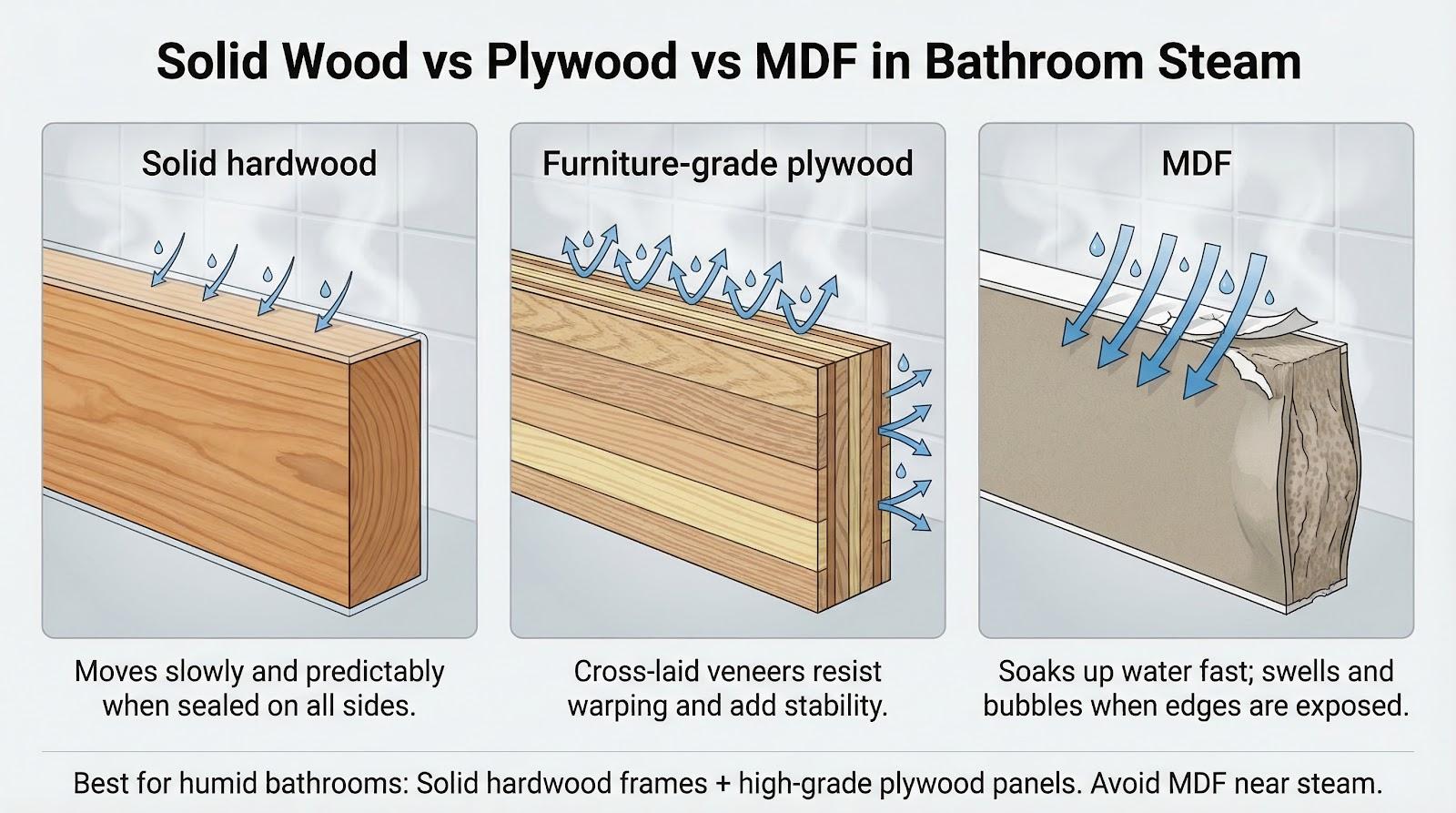 Bottom line: pay for solid hardwood on the frame, doors, and drawer fronts, accept high-grade plywood for large side or back panels, and skip MDF if you want your vanity to look as crisp on its fifth birthday as it did on day one.
2. Which wood species shrug off steam the best?
- Teak sits at the top. Boat builders favor it because dense grain and natural oils block water and mildew; a teak vanity can cruise through years of steam with little more than an occasional wipe of teak oil.
- White oak follows close behind. The same closed cellular structure that keeps whiskey inside barrels keeps vapor outside the wood. Quarter-sawn boards are even more stable, expanding evenly across the grain.
- Maple and birch land in the middle. They lack teak’s oils, yet their tight pores slow absorption. With every edge sealed, these woods behave predictably.
- Poplar and soft pines round out the list. They paint well and cost less, but open grain drinks water if the finish chips. Choose them only when the factory applies a tough lacquer and you are ready to touch up nicks fast.
If sustainability matters, reclaimed timbers deserve a look. Barn boards have already cycled through decades of humidity swings, so they resist new movement. A fresh sealer puts them on par with premium hardwoods while sparing new trees.
In short: pick teak or white oak for set-and-forget durability, trust maple or birch with a proven factory finish, and reserve softer species for low-traffic powder rooms or tight budgets.
3. Construction clues that separate heirlooms from throwaways
Even the best wood fails if the maker cuts corners. Use this checklist when you open a drawer or peer behind the back panel.
Start with joinery. Dovetail drawer boxes interlock like puzzle pieces and stay tight after thousands of openings. Mortise-and-tenon frames or well-driven pocket screws keep the case square, so doors stay aligned and moisture stays out.
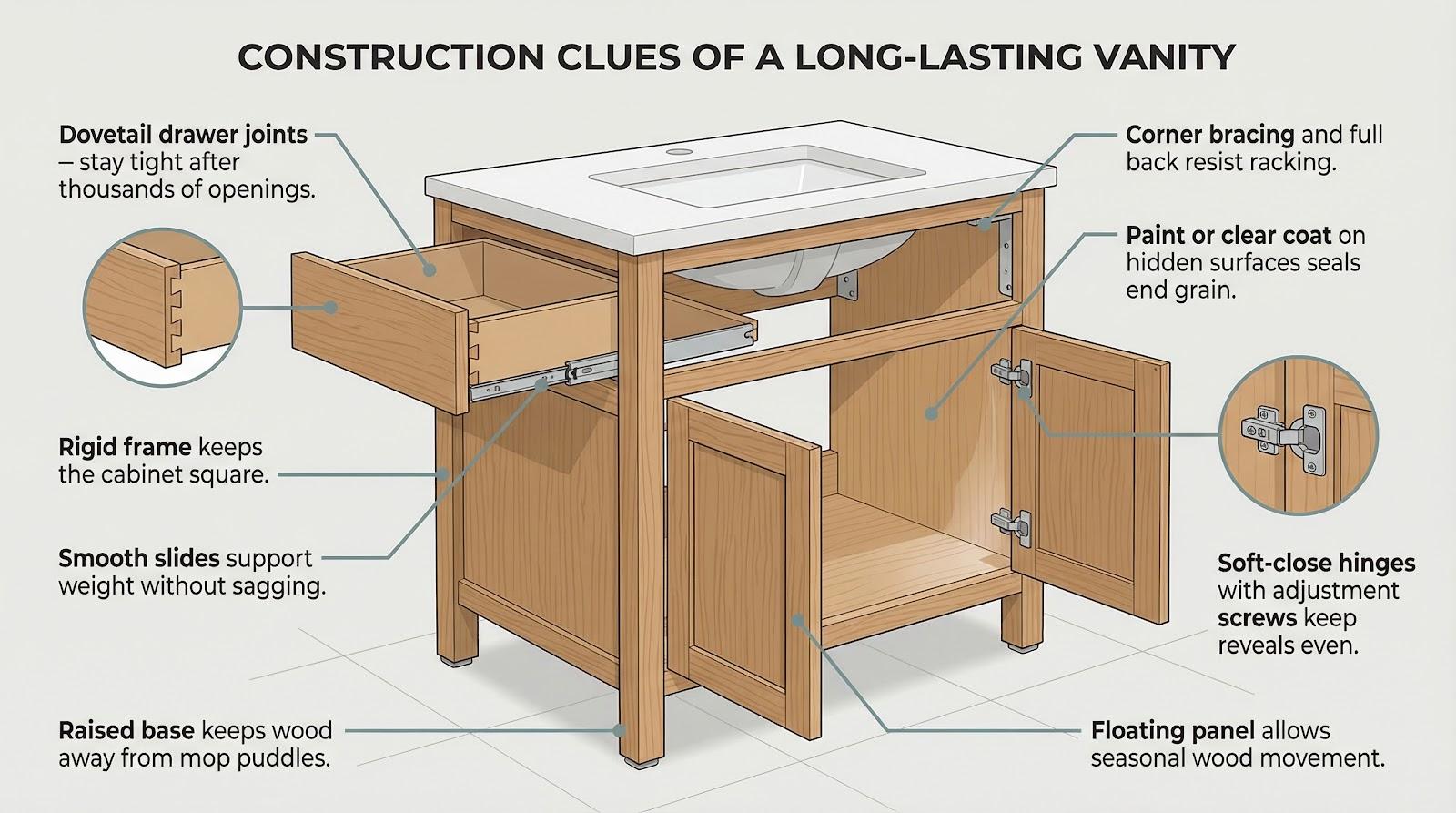 Run your hand underneath. A quality vanity is finished on hidden surfaces, not just show faces. Paint or clear coat on the underside, inside panels, and even drawer bottoms seals end grain that would otherwise wick water.
Check for corner bracing. Metal L-brackets or a full-width plywood back prevent racking when the cabinet is nudged during plumbing work. If you can flex a side panel by hand, years of steam will do far worse.
Look at the base. Legs or an inset toe-kick lift wood off tile and away from mop puddles. If the box sits flush to the floor, confirm the lower edge is sealed and fitted with nylon glides.
Open the doors. Floating center panels should move slightly inside the frame, allowing seasonal expansion without splitting the stile. Soft-close hinges with adjustment cams let you fine-tune alignment later, keeping reveals even.
These small clues show whether a vanity is built for real life or built only for photos. Choose the one that feels like furniture, not flat-pack cabinetry.
4. Five habits that keep any wood vanity looking factory-fresh
Run the exhaust fan for at least twenty minutes after every shower. Clear air limits the time steam can soak into finish cracks and drawer joints. If mirrors stay foggy, extend the cycle or upgrade the fan.
Wipe standing water fast. Toothbrush splatter, a dripping soap dispenser, or a faucet puddle can seep into seams overnight. A quick swipe with a microfiber cloth stops damage before it starts.
Touch up dings the day they happen. Keep matching paint or a clear polyurethane pen in the vanity. Seal exposed fibers while the nick is microscopic instead of waiting for swelling to appear.
Tighten hinges and slides every six months. Soft-close hardware relies on tiny set screws that back out with daily use. Snug them and doors will keep closing square, blocking steam from entering the box.
Re-seal stone tops annually. Carrara marble needs a five-minute wipe-on sealer each year to block stains and stop moisture from wicking into the wood below. Quartz and porcelain need no extra care, but marble rewards the ritual.
Each task takes less time than brewing coffee, yet together they buy you years of flawless finish and frustration-free function.
Quick answers to questions homeowners ask every week
Does solid wood outperform MDF in a bathroom?
Yes. Solid hardwood absorbs moisture slowly and returns to shape when air dries. MDF swells fast once water breaches the paint and never fully contracts, leaving permanent bulges and peeling edges.
Is 48 inches wide enough for a true double sink?
Barely, but smart design makes it work. A model like Eviva’s Aberdeen fits two 14-inch basins under one stone slab. Counter space is tight, yet couples often prefer that trade-off when a 60-inch cabinet will not fit.
Do I need to seal a quartz countertop?
No. Engineered quartz is non-porous, so coffee, makeup, and mouthwash wipe away without a protective layer. Save the yearly sealer for natural marble or granite.
How heavy is a typical 48-inch solid-wood vanity?
Most fall between 180 and 260 pounds with the top attached. Standard floor joists handle that load; think of it as two adults standing in the same spot. Recruit helpers and use furniture sliders to protect flooring on delivery day.
What single maintenance task matters most?
Run the exhaust fan every time you shower. Ventilation removes humidity before it seeps into wood fibers or stone pores, protecting the vanity, mirror, and wall paint better than any after-the-fact sealer.
Conclusion
Solid-wood and marine-grade plywood vanities cost more up front, but they repay the investment by staying square, smooth, and stylish long after MDF rivals have puffed and peeled. Use the scorecard, product rundowns, and buyer’s guide above to match a 48-inch cabinet to your budget, style, and bathroom demands—then follow the care tips so your new centerpiece looks showroom-fresh for years.