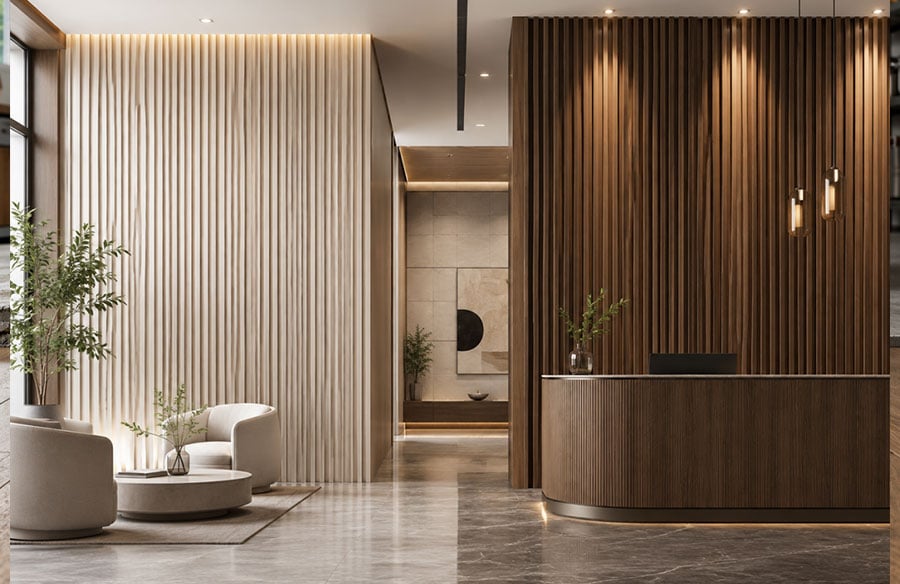
For a bulk interior project, the choice between PS and WPC wall panels usually comes down to more than appearance. PS wall panels make sense when lightweight handling, decorative flexibility, and efficient installation are high on the project list. WPC wall panels deserve closer attention when the brief calls for a wood-like finish, deeper fluted profiles, stronger resistance to moisture and everyday wear, or a more substantial surface feel.
For distributors, contractors, and importers, however, material choice is only the first decision. A workable order also depends on panel dimensions, profile depth, finish approval, carton configuration, substrate conditions, installation method, replacement planning, and whether the supplier can reproduce an approved appearance for later phases.
The safest way to compare the two is to start with the room and the project requirement, then move to the product specification and supply conditions.
Why Does the PS vs WPC Decision Change for Bulk Orders?
A single feature wall can tolerate some trial and error. A hotel corridor, apartment package, retail rollout, or distributor inventory order cannot. Once hundreds or thousands of metres are involved, small differences in profile, handling, packing, and installation become procurement issues.
How Do PS Wall Panels Affect Handling and Installation?
PS wall panels use modified polystyrene and are commonly selected for interior decorative applications such as fluted walls, feature walls, hotel renovations, and retail interiors. Their relatively lightweight construction can simplify transport around a jobsite and reduce the physical handling burden during installation.
HUAHONG DECOR’s F16002, for example, is specified at 160 × 10 × 2900 mm, with 20 pieces per carton. That gives procurement teams a concrete basis for calculating carton quantity, storage space, wall coverage, and expected cutting waste rather than ordering from appearance alone.
For projects where installation speed matters, buyers should still check the substrate before assuming a lightweight panel automatically means an easy installation. Wall flatness, corners, openings, fixing method, and trim details can change the amount of labour required.
 What Changes When Buyers Move to WPC Wall Panels?
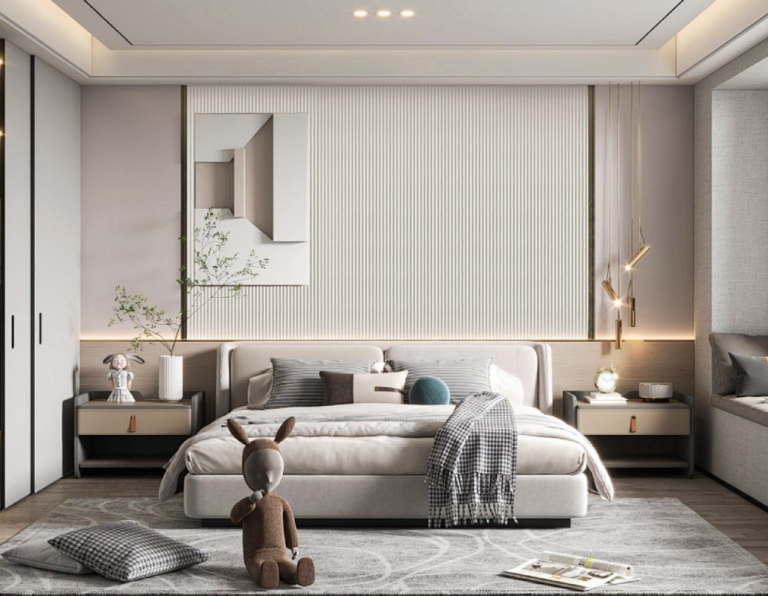
WPC wall panels combine polymer-based material with wood content and are commonly produced with wood-grain decorative finishes and fluted or grooved profiles. For interior projects, this makes them useful where the wall itself needs to provide a stronger visual rhythm instead of acting as a flat background.
Profile geometry matters. HUAHONG DECOR’s WP15001 is approximately 150 mm wide and 18 mm thick, with a rounded fluted form. Other interior WPC references in the product range span different widths, depths, and back structures, so buyers should avoid comparing quotations only by price per piece.
A deeper profile can change material consumption, carton weight, cutting behaviour, edge treatment, and the final shadow effect on the wall. Those differences become more important when the same finish has to run across multiple rooms.
| Procurement point | PS wall panels | WPC wall panels | What buyers should confirm |
|---|---|---|---|
| Typical priority | Lightweight decorative renovation | Dimensional wood-look interior cladding | Actual room and traffic conditions |
| Profile | Slim, decorative profiles available | Flat, grooved and deeper fluted profiles | Width, depth and usable coverage |
| Handling | Generally lighter | Profile-dependent, often more substantial | Carton weight and site handling |
| Finish | Multiple decorative finishes | Wood-grain and other decorative finishes | Approved physical sample |
| Installation | Substrate and fixing method still matter | Alignment and profile joints need attention | Wall flatness, trims and openings |
| Bulk planning | PCS/CTN helps quantity planning | Compare usable metres and profile structure | Packing, waste and reorder quantities |
Which Material Fits Different Interior Project Zones?
There is no useful reason for a procurement team to declare one material universally better. The right answer depends on where the panels are going and what can go wrong after installation.
When Does PS Make More Sense?
PS is worth shortlisting for dry interior decorative zones where the main goals are visual texture, relatively light handling, and a faster renovation process.
Hotel bedrooms, reception backgrounds, retail displays, apartment feature walls, and office decorative areas are typical examples. In these spaces, the buyer may care more about color, profile rhythm, installation speed, and cost per finished wall than heavy-duty material performance.
A buyer considering this route can review the PS wall panel F16002 after the room dimensions and desired profile have been defined.
Before releasing a bulk PO, approve the physical finish under lighting similar to the final space. A small color difference that seems minor on one sample can become obvious across a long wall or repeated hotel rooms.
When Does WPC Deserve Priority?
WPC becomes a stronger candidate when the project needs a more substantial fluted surface, a wood-like appearance, or greater tolerance for moisture exposure and everyday wear.
That does not mean every WPC profile should automatically be specified for every wet area. Direct-water locations, special cleaning regimes, or unusual temperature conditions still need confirmation for the exact product and installation system.
For commercial interiors, the useful purchasing question is simpler: what will happen to the wall during normal use? If luggage, furniture movement, regular wiping, fluctuating humidity, or repeated public contact are expected, those conditions belong in the RFQ before a material is approved.
 Can One Project Use Both?
Yes. Large interiors often become easier to specify when the project is divided by zone instead of forcing one panel material across every wall.
A hotel could use lightweight decorative PS in guestrooms and a deeper WPC profile on selected public feature walls. A retail project might use one material behind product displays and another in circulation areas.
For distributors, carrying both categories can also make the product range easier to position. Instead of asking customers to choose between two similar-looking boards, sales teams can explain each option by project condition, profile depth, finish, handling, and installation requirement.
What Specifications Should Be Locked Before Asking for a Quote?
A quotation is only useful when suppliers are quoting the same requirement. Sending a product photo with a square-metre quantity leaves too much open to interpretation.
Which Dimensions Belong in the RFQ?
At minimum, buyers should specify:
- panel width and thickness;
- required or standard length;
- visible profile shape;
- total wall area;
- expected cutting and spare quantity;
- number of rooms or project zones;
- corner and end conditions;
- required accessories.
The F16002 reference of 160 × 10 × 2900 mm and 20 pieces per carton illustrates why carton information matters. Two products with a similar face width can create different freight, storage, handling, and coverage calculations when their lengths or carton quantities differ.
How Should Finish Approval Be Controlled?
Do not approve a bulk wall panel order from a screen image alone.
A sample should establish the color, surface pattern, sheen, profile shape, and overall visual effect expected in production. For a long wall, check how several pieces look beside one another rather than judging one isolated strip.
Lighting matters as well. Warm hotel lighting, daylight from shopfront glazing, and cool office lighting can make the same wood grain appear different.
For buyers still comparing several materials or profiles, the HUAHONG DECOR wall panel range provides PS, WPC, MDF acoustic, SPC and other wall-panel options that can be shortlisted before sample approval.
What Installation Information Should the Supplier Receive?
Send the wall condition together with the product request.
Useful details include substrate type, wall flatness, current finish, room height, corners, columns, doors, electrical openings, expected fixing method, and any trim requirement. If the installer has already been appointed, involve that team before the order is finalized.
A profile that looks straightforward on a sample may require extra cuts around columns or service openings. Those details affect waste and labour, so they belong in procurement planning rather than being left for installation day.
How Should Buyers Compare Two Wall Panel Quotations?
Price per piece is an incomplete comparison.
One supplier may quote a different profile depth. Another may use a different carton quantity. Samples, labels, trims, packing protection, or delivery conditions may also vary. Put all quotations back onto the same specification before deciding which offer is commercially stronger.
What Should a Quote Comparison Sheet Include?
A practical comparison can use the following structure:
| Item | What to compare | Why it matters |
|---|---|---|
| Material | PS, WPC and exact construction | Prevents unlike-for-like comparison |
| Profile | Width, depth, shape and usable coverage | Changes appearance and material use |
| Finish | Color code and approved sample | Controls visible consistency |
| Quantity | Metres, pieces and spare percentage | Prevents shortage during installation |
| Packing | PCS/CTN, surface protection, carton marks | Affects shipping and site receiving |
| Accessories | Corners, skirting, finishing trims | Prevents incomplete installation |
| Sample process | Approval method and retained reference | Supports bulk consistency |
| Lead time | Sample plus production schedule | Protects handover date |
| Reorder | Finish identification and later supply | Important for phased projects |
The cheapest quotation can still create the highest project cost if it produces more cutting waste, damaged corners, color sorting, site delays, or difficult replacement orders.
What Should Buyers Check in a Wall Panel Supplier?
Once PS or WPC has been shortlisted, the supplier should be evaluated as part of the material decision.
A useful supplier discussion covers samples, finish identification, production quantity, packing, installation support, documentation, and what happens if the project needs another batch later.
HUAHONG DECOR works across several decorative building-material categories rather than one isolated wall-panel profile. This gives distributors and project teams room to compare PS, WPC, acoustic and other panel families within one sourcing conversation.
For buyers who want to inspect a more dimensional WPC option, WPC wall panel WP16702 provides a long square-hole grille profile with a wood-grain decorative appearance for interior feature applications.
For initial order planning, HUAHONG DECOR uses a general MOQ of 1,000 metres and a 15–45 day lead-time window, with final timing affected by design complexity. Sample confirmation and installation guidance are also available for bulk projects. These terms should still be reconfirmed against the selected model, finish, quantity, and delivery requirement before the purchase order is issued.
A distributor building a local range should also discuss mixed requirements, packaging labels, repeat-order identification, and whether the same approved finish can be referenced when future stock is required. For contractors, the discussion should focus more heavily on installation drawings, accessories, site schedule, spare panels, and replacement planning.
Conclusion
PS and WPC wall panels solve different procurement problems. PS is a practical candidate for lightweight decorative renovation and feature-wall projects, while WPC is worth closer consideration when a project needs deeper profiles, wood-like finishes, moisture resistance, and a more substantial cladding surface.
Bulk buyers should make the final choice from project conditions rather than one marketing feature. Define the room, profile, dimensions, sample, substrate, accessories, packing, quantity, installation method, and reorder requirement first. Then compare quotations on the same basis.
If a project is already at the material-comparison or RFQ stage, buyers can request wall panel samples and a project quote with wall dimensions, project photos, target material, finish preference, quantity, packing requirements, and required delivery date.
FAQs
Q1: Is PS or WPC better for a large commercial interior project?
A1: It depends on the project zone. PS can suit lightweight decorative walls and fast interior upgrades, while WPC may be more appropriate where deeper profiles, a wood-like finish, moisture resistance, or higher everyday wear are priorities.
Q2: What should buyers send when requesting wall panel samples?
A2: Send the target material, profile or reference image, required color or finish, room type, wall dimensions, project quantity, substrate information, and expected delivery schedule. The sample should be approved before bulk production.
Q3: Should bulk buyers compare PS and WPC wall panels by unit price?
A3: Unit price is only one part of the comparison. Buyers should also compare usable coverage, profile dimensions, carton configuration, installation labour, expected waste, finish consistency, accessories, packing, delivery timing, and reorder support.