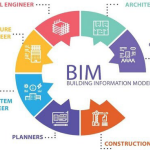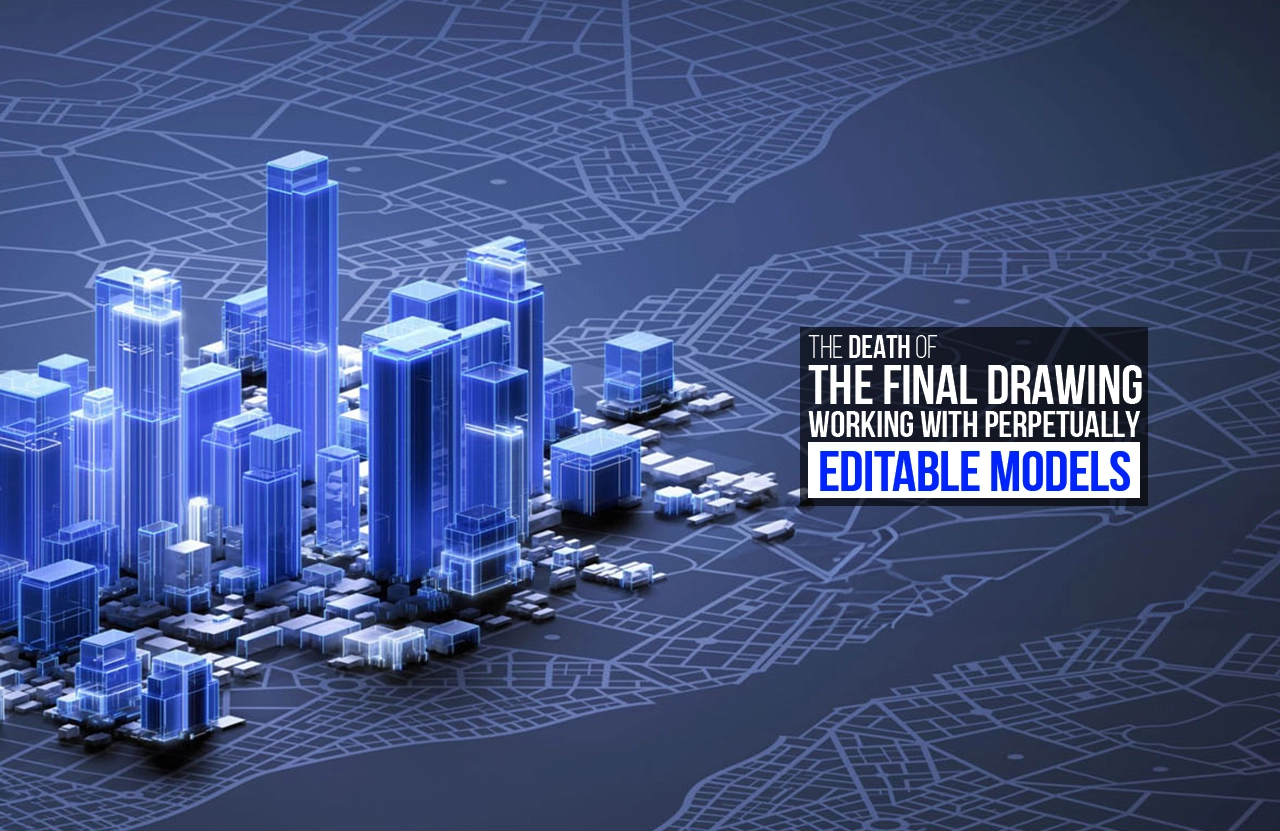
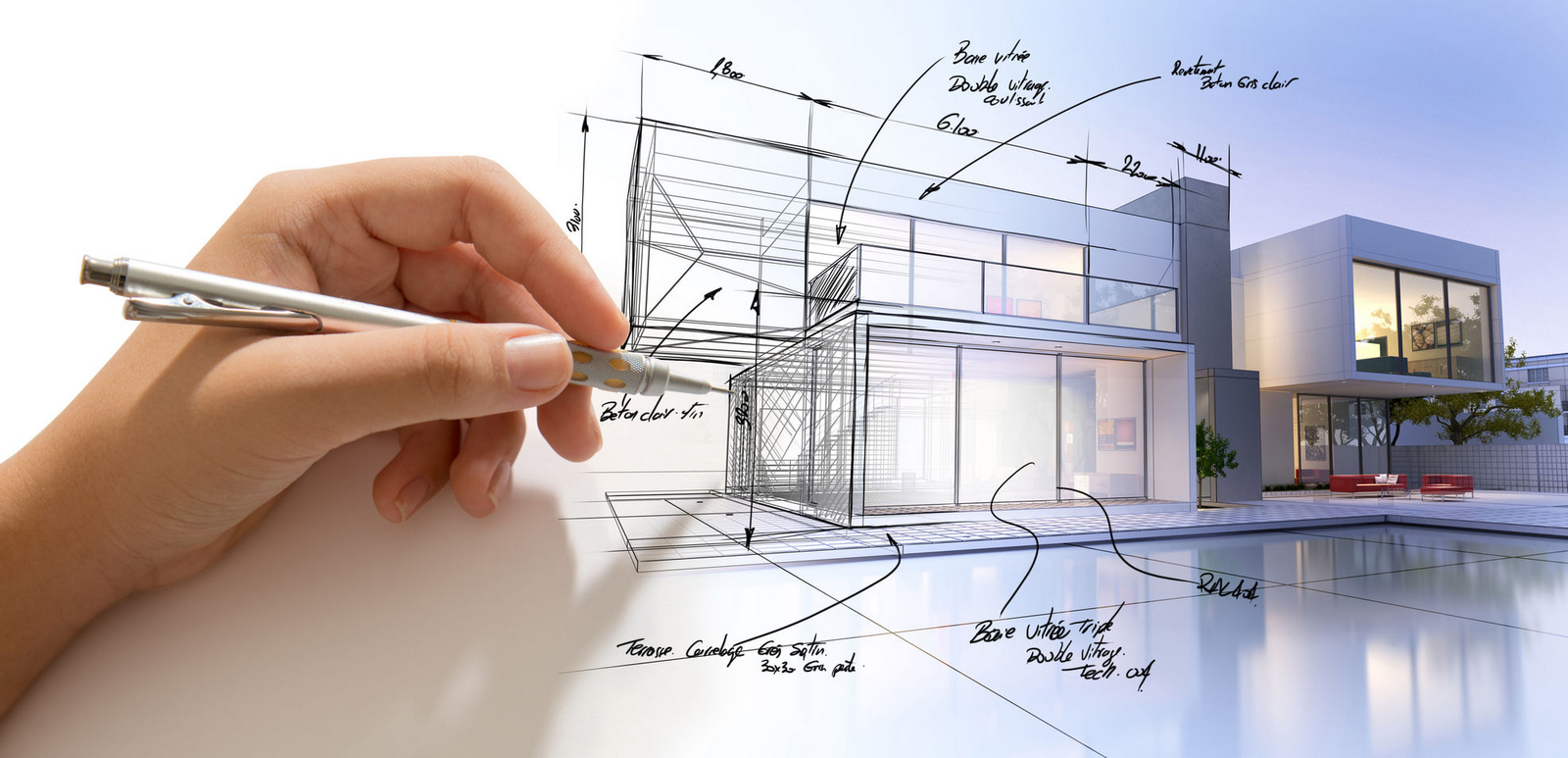
History is inextricably linked to the history of drawings. From the “lineaments” of Leon Battista Alberti, that did represent the real Renaissance, up to the early 20th-century hand-drafted calfskin, the architectural drawing served as an artifact that defines this as the end of Design and the beginning of construction. However, in the present, the contemporary digital revolution has systematically dismantled this tradition of final drawing. The era of the ever-editable model has dawned with the introduction of Building Information Modeling (BIM) and high-fidelity Digital Twins. Thus, there is a conceptual shift from architecture as a “product” to architecture as a “continuous process”.
Authority of Final Draft
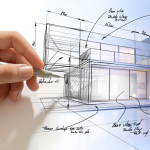
For centuries, the “Final Drawing” was the validating instrument of architectural authority. This demarcated the concept from the material. According to David R. Scheer in his book, “The Death of Drawings”, the static nature of paper-based drawings demanded a degree of precision in thinking; it had depth and emotion associated with an architect’s thought process towards his drawings. In addition, once a drawing was “issued for construction”, architects had to resolve complex spatial and structural problems with absolute finality, since modifications were physically cumbersome and legally expensive. The “frozen drawing” provided an accountability model. The responsibility of the architect remained to ensure that a set of guidelines was developed that ensured a stable structure if appropriately followed.
The Rise of Simulation over Representation:
The move towards digital models has “eliminated the concept of representation” in favor of a “simulation” of a building instead of a “representation” of one, where instead of drawing lines to “represent” a wall, architects simply drag objects into a “virtual space” to automatically add a “realistic” touch to it. As such, a change in a structural grid can automatically alter any section, plan, schedule, and so forth instantly: its adaptability leads to it being “changed” in any desired way without problems arising from such an act. (Frazer, 2016)
And that, in turn, is telling us that “the” design is never, ultimately, “final”. It is merely recorded in that state for procurement purposes. But to enable these real-time alterations, increasingly, the design process is utilizing, e.g., lasers/drones to record the site, etc., and then using that information to further modify. Which is why, today, “as designed” vs. “as built” is increasingly no longer an absolute distinction.
The Problem of Infinite Corrections
This model, which is constantly being updated, is a disadvantage when viewed in a professional light. Such a practice results in a “loss of decision-making.” Consequently, this is a form of “infinite versioning,” which might compromise the initial vision of the model. As a point of reference, the changes made prioritize “the search for the optimum by calculation” compared to “the commitment to a vision by standard deduction,” as discussed by Carpo in 2017.
Moreover, when considering legality, its consequences are equally profound. Insofar as this is a shared cloud-based model wherein architects, engineers, contractors, etc., are constantly revising “the single source of truth simultaneously” (ISO, 2018). To the extent that this encourages teamwork because responsibilities are collectively being shared across these networks, it nonetheless dismantles any lines of responsibility that were prescribed earlier by the individual’s version of the stamped drawing. In a model wherein it is constantly revised as a collaborative entity across these networks, its source of error remains extremely hard to pinpoint because responsibilities are collectively shared.
The Digital Twin and The Extended Lifecycle
The death of the final drawing is most evident in the rise of the Digital Twin. Ideally, the involvement of the architect and relevance of their drawings decreased once the building was occupied; the drawings were filed, and the architect’s job was done. But at present, with features always editable, the model lives on throughout the life of the building.
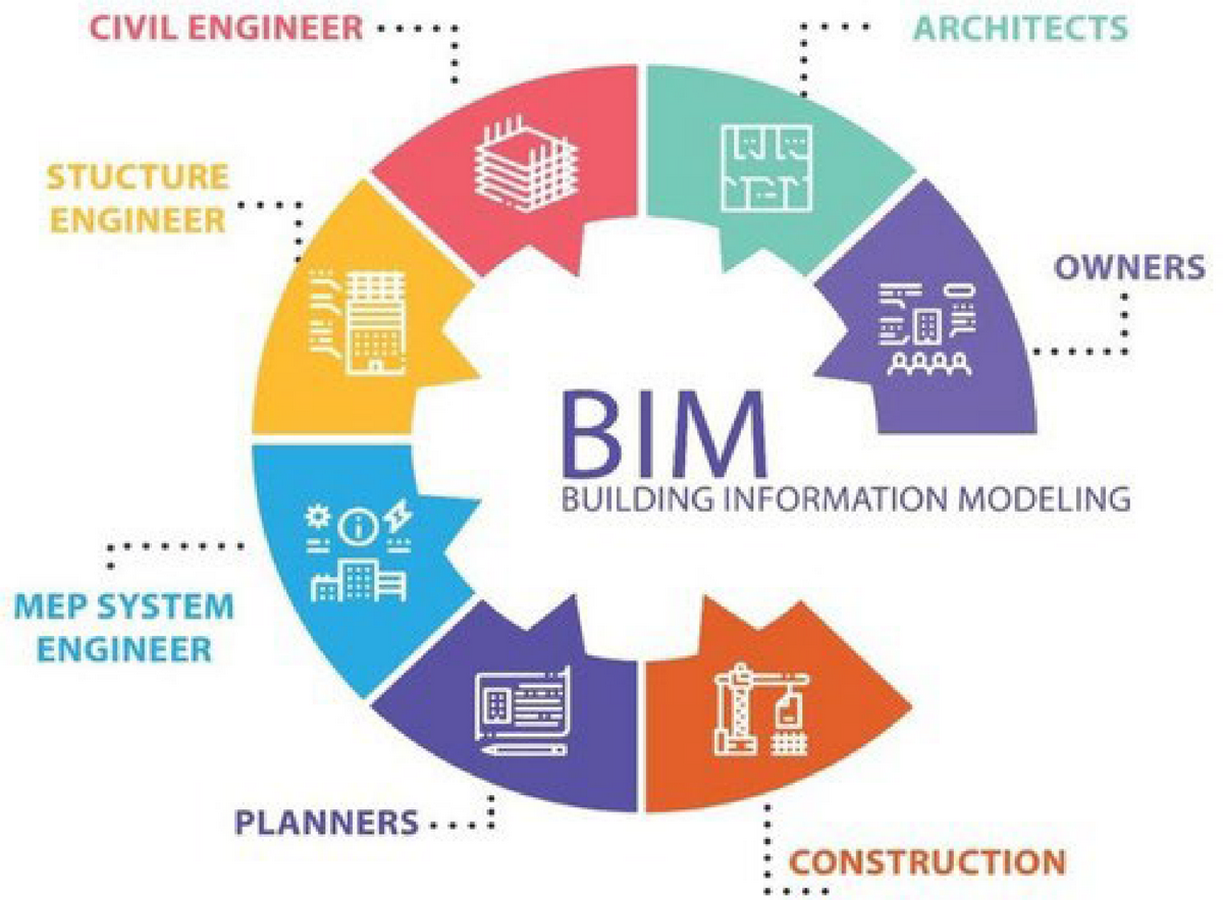
The model now becomes a live dashboard, pulling data from the IoT sensors embedded in the physical structure. It is with this IoT energy performance that occupancy patterns and structural maintenance are regulated. Even though the original team is long gone, several years down the line, the model remains very active and continuously edited by the building’s own performance data. What began as a final drawing, i.e., an instruction manual, was now a dynamic management tool that lasts just as long as the building lasts.
The shift in the final drawing does not mark a decline in architectural practices; it is instead marking a shift in definition for architects. Architects are evolving as curators of dynamic systems, having moved away from their role as authors of static works. This editable version recognizes that a building is a dynamic system that never stands still; it is a state of constant flux. For this new version of a prototype to flourish, new examples will need to be developed for liability, for decision-making, and for creative intent.
Reference List:
Batty, M. (2018) ‘Digital twins’, Environment and Planning B: Urban Analytics and City Science, 45(5), pp. 817–820. (online)
Available at: https://www.ucl.ac.uk/bartlett/sites/bartlett/files/casa_working_paper_237.pdf
Carpo, M. (2011) The alphabet and the algorithm. Cambridge, MA: MIT Press. (Offline)
Carpo, M. (2017) The second digital turn: design beyond intelligence. Cambridge, MA: MIT Press. (online) https://ebookcentral.proquest.com/lib/dmu/reader.action?docID=5106167&c=RVBVQg&ppg=6
Frazer, J. (2016) ‘Parametric computation: history and future’, Architectural Design, 86(2), pp. 18–23. (online)
https://miatedjosaputro.com/uploads/sites/2/2020/03/Parametric-computation-history-and-future.pdf
ISO (2018) ISO 19650-1:2018. Organization and digitization of information about buildings and civil engineering works, including building information modelling (BIM). Geneva: International Organization for Standardization. (online)
https://www.scribd.com/document/782095347/ISO-19650-1
Love, P.E.D., Matthews, J., Simpson, I., Hill, A. and Olatunji, O.A. (2014) ‘A benefits realization management framework for building information modelling’, Automation in Construction, 37, pp. 1–15.
https://ictib18.wordpress.com/wp-content/uploads/2019/08/bim_fm_main.pdf
Scheer, D.R. (2014) The death of drawing: architecture in the age of simulation. London: Routledge. (online)
https://ebookcentral.proquest.com/lib/dmu/reader.action?docID=1707448&c=RVBVQg&ppg=10