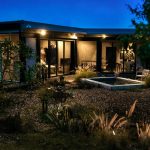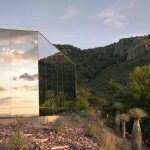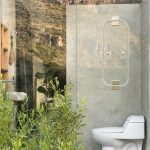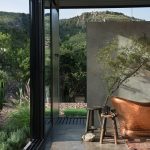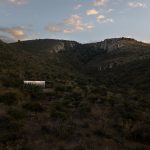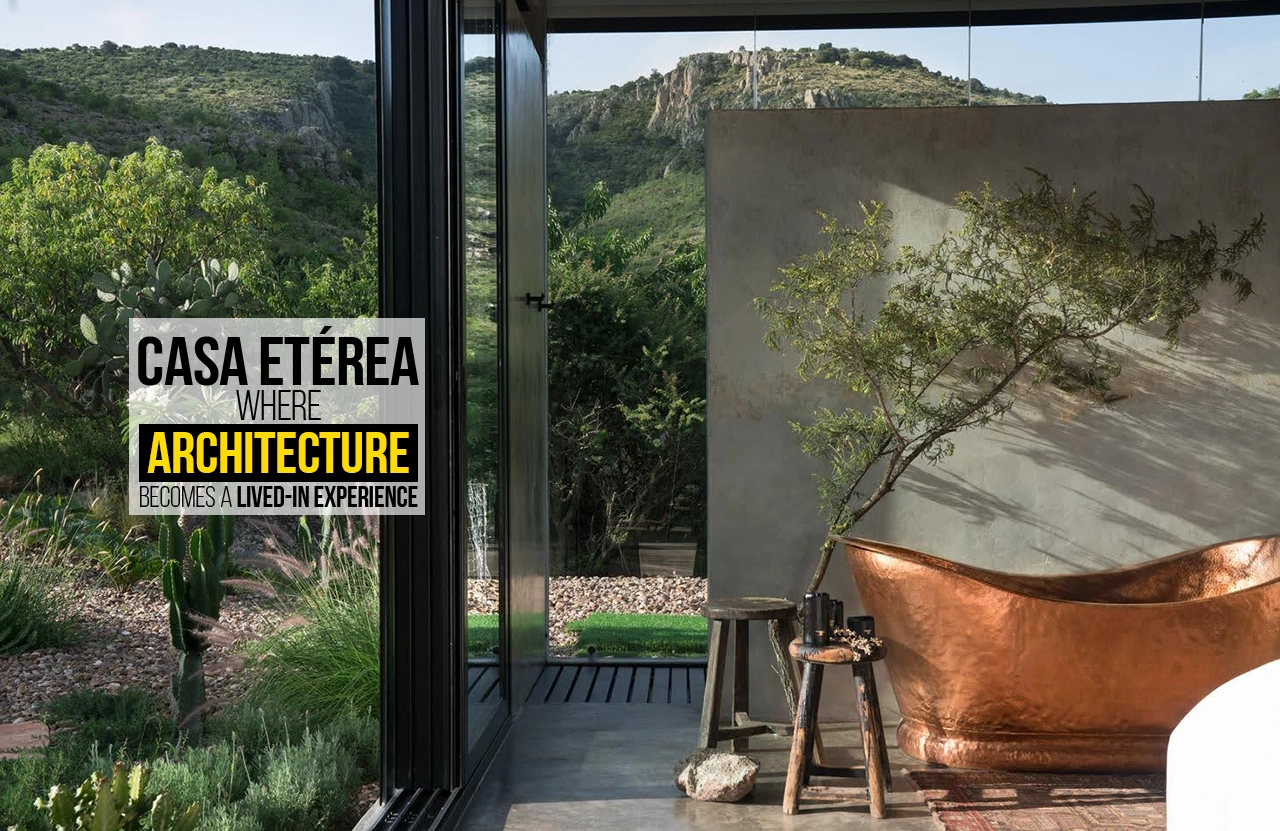
Casa Etérea is a mirrored cabin perched on the slopes of an extinct volcano in Mexico’s Los Picachos highlands near San Miguel de Allende. It is one of the projects that transforms the abstract idea of lived-in experiences into a tangible reality. This 75-sqft off-grid retreat invites visitors to live in a space that largely shapes their perceptions of nature, time, and themselves rather than using architecture to act as a neutral backdrop for tourism. The project is designed by a Singaporean writer, Prashant Ashoka, based in Mexico. This project stands as the first architecture project designed by him. It is a meticulously crafted architectural story, which illustrates how lived-in experiences can emerge when design, purpose, and leisure travel come together in one location.
Why travellers are chasing lived-in experiences
Surveys conducted in 2025 show that the trends in travel have shifted towards authenticity, with tourists largely favouring the immersive experience and interactions with the local cultures and nature over the conventional sightseeing activities. Therefore, travellers are moving away from the predictable holidays planned around checklists of landmarks and shopping streets. Tours curated for experience are reshaping the destination choices, nearly two-thirds of the travellers who choose to travel for the lived-in experiences say that activities, encounters and stories now play an important role in where they choose to travel. For many such travellers, staying in real neighbourhoods, cooking and consuming local produce, and learning local rhythms feels richer and more heavy with memories than just ticking off the list of famous tourist spots. Rather than passively consuming a destination, these travellers want to engage in it, even if it means only momentarily.
Casa Etérea is situated precisely at the crossroads of design and desire, offering a lived-in experience that is intentionally tiny in scale but has an expansive impact.
Casa Etérea’s setting: a theatre to nature
Casa Etérea, designed as an off-grid refuge for two, is situated on the slopes of an extinct volcano within an area of approximately 10,000 hectares of rocky, largely undisturbed terrain.
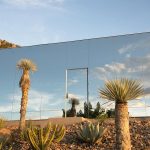
Ashoka designed the house with an ambition of the project being conceived as if it were “birthed from the mountainside itself”. This phrase has been the guiding principle to his use of local materials, volcanic stone foundations and brick walls finished with micro cement and then clad with mirror panels. The result of this choice of materials is a space that appears and disappears with light, sometimes read as an abstract reflective object and at other times, an object dissolving into the terrain.
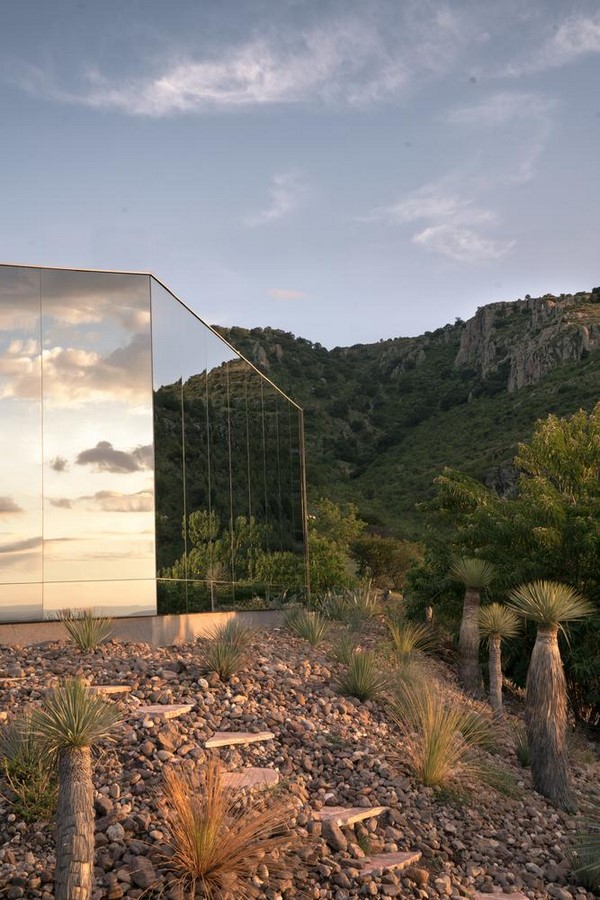
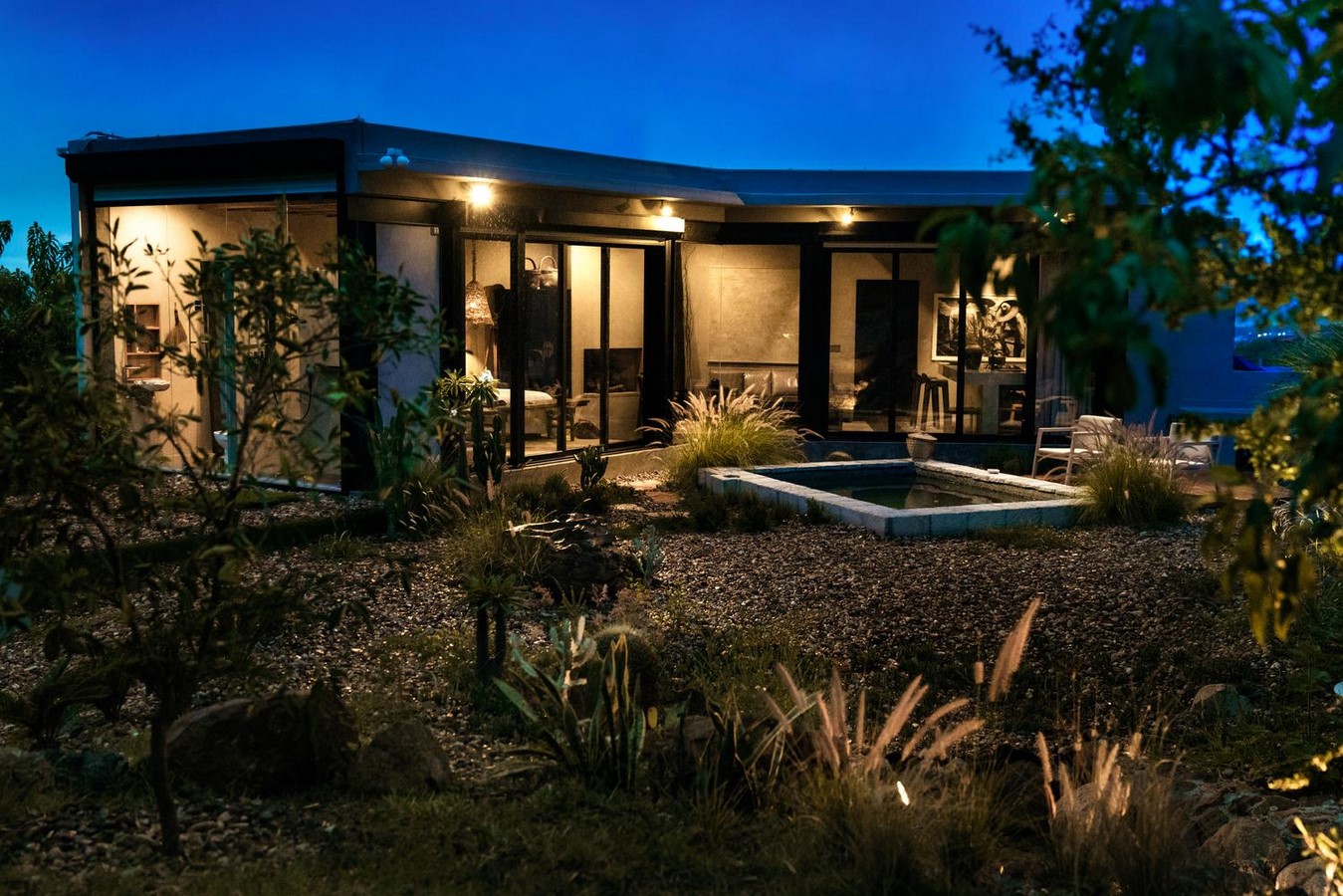
Two rectilinear volumes come together to form a wide V-shape in the plan, creating an internal courtyard with a mosaic tile plunge pool and a patio. The facade facing Palo Huerfano volcano is installed with panoramic floor-to-ceiling high glass doors, which Ashoka describes as a “theatre to nature”, while the other facade facing towards the valley is completely clad with mirrors. Light acts as a structural element in this composition, as it constantly distorts the definition of a boundary between an observer and the landscapes surrounding it, reinforcing a feeling that the house is not only placed in nature, but is actively shaping the experience of how travellers live within the landscapes day after day.
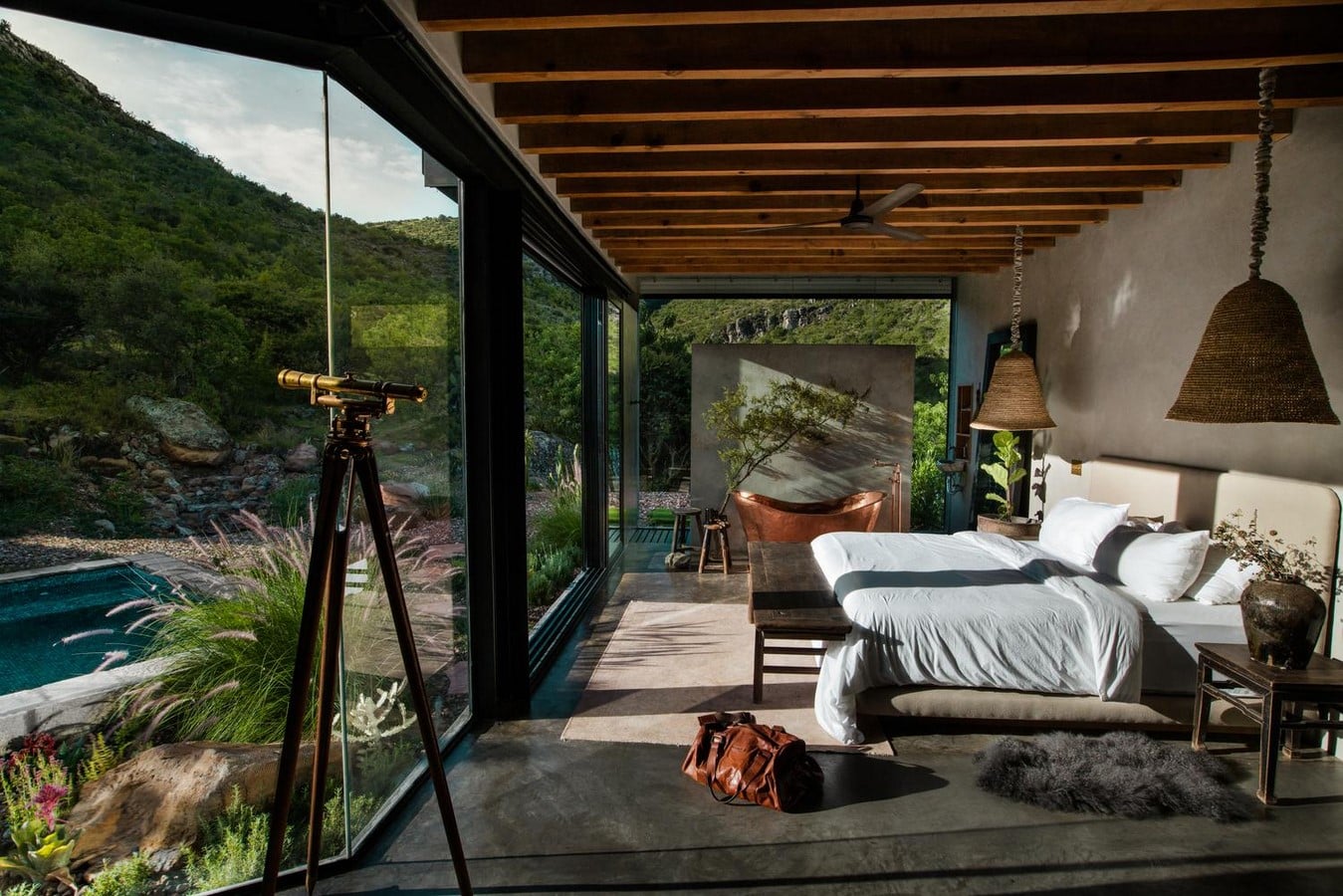
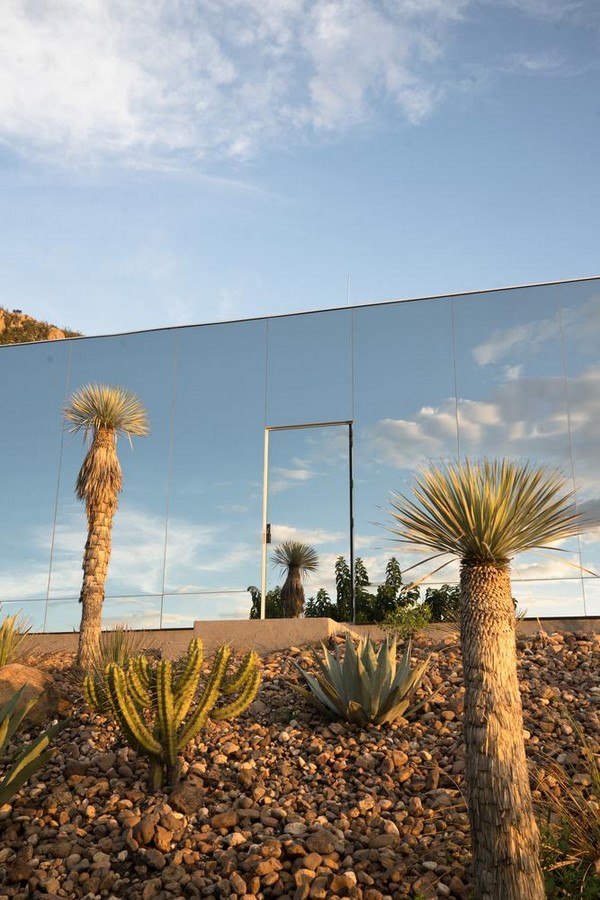
The facade facing Palo Huérfano volcano is installed with floor-to-ceiling high glass doors, which the designer illustrates as a “theatre to nature”, while the facade on the other side facing the valley is completely clad with mirrors. Light acts as a structural element in the composition, where the constant distortion of the boundary between an observer and the surrounding landscapes evokes a feeling that the structure is not simply placed in nature, but is an active part in shaping the experience of the travellers who live within these landscapes day after day.
Mirrored architecture with an ecological conscience
Casa Etérea resists the tendency of risks of mirrored architecture acting like a visual trick, which prioritises appearance over ecology in remote locations. In order to make sure that wildlife is not harmed, Ashoka designed patterned UV coatings which are invisible to humans, but can be seen by birds, therefore minimising collisions, along with maintaining the continuous visual of the facade. This solution subtly underlines an important aspect of lived-in experiences: understanding that comfort and aesthetics should not come at the expense of the surrounding ecology.
As the cabin is placed completely off-grid, it draws electricity from solar panels placed on the rooftop and sources water from the rainwater collection system installed. By placing the structure in a direction so that it gains full morning light until midday, solar heat naturally builds up in the interiors, which is later preserved through the double-glazed and insulated sliding glass doors. Therefore, the orientation of the structure plays an important role as a climatic tool. This system declines any dependency on mechanical cooling or heating systems and frames the daily comfort as a lesson in passive environmental design. Travellers who come here live through the rhythms and limits that real self-sufficiency involves, rather than just staying in a “sustainable house”.
Emotional architecture as a lived-in experience
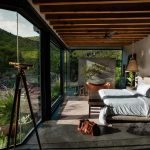
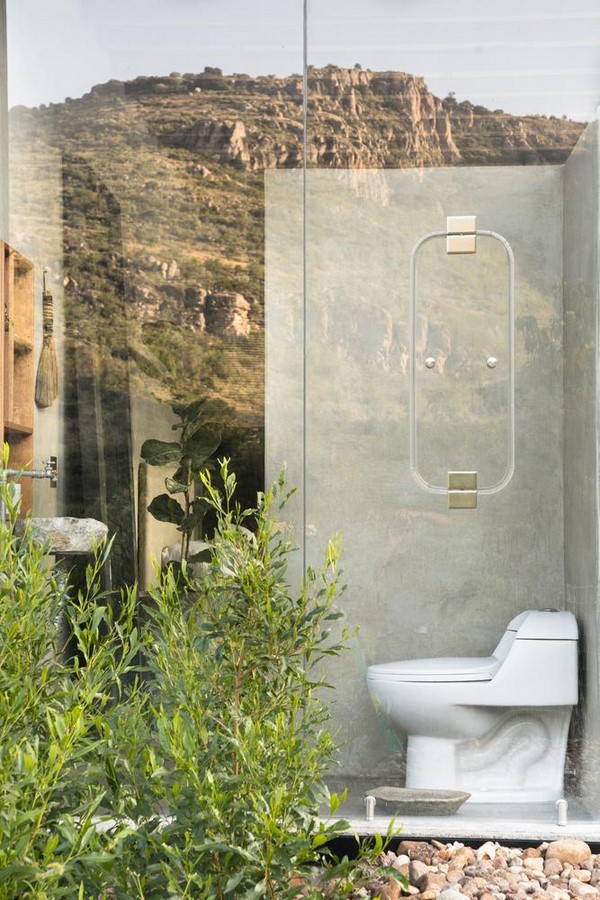
“Emotional Architecture” is a term popularised by Luis Barragan, a Mexican Architect. This concept is cited as the central influence by Ashoka in his project. Emotional architecture stimulates contemplation, quietude and an increased awareness of light, texture and proportion. Casa Etérea houses interiors designed by a local studio, NAMUH. The use of exposed ceiling beams, stone, wood, jute and leather to form a colour palette which is tactile yet subdued. The choice of materials feels purposefully honest as they support the landscapes rather than competing with them.
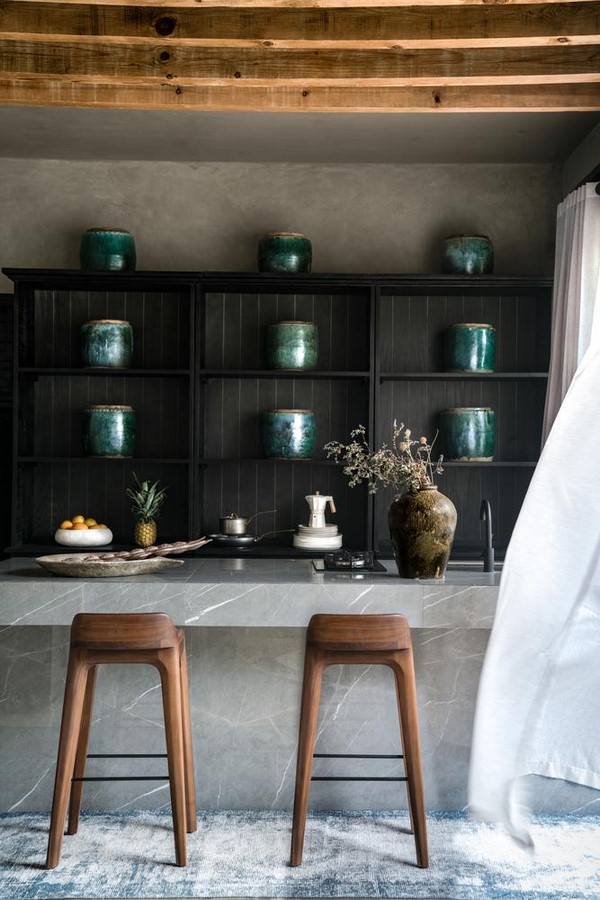
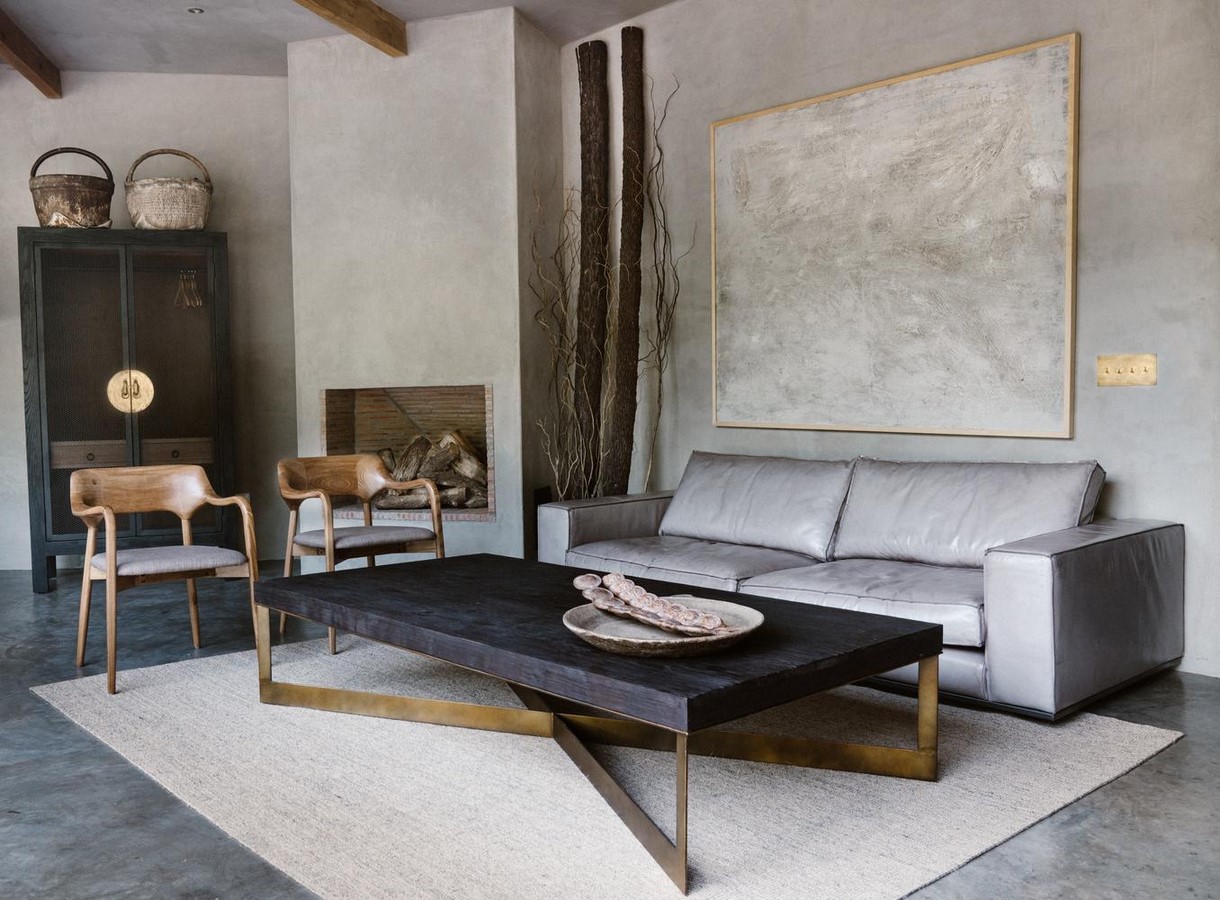
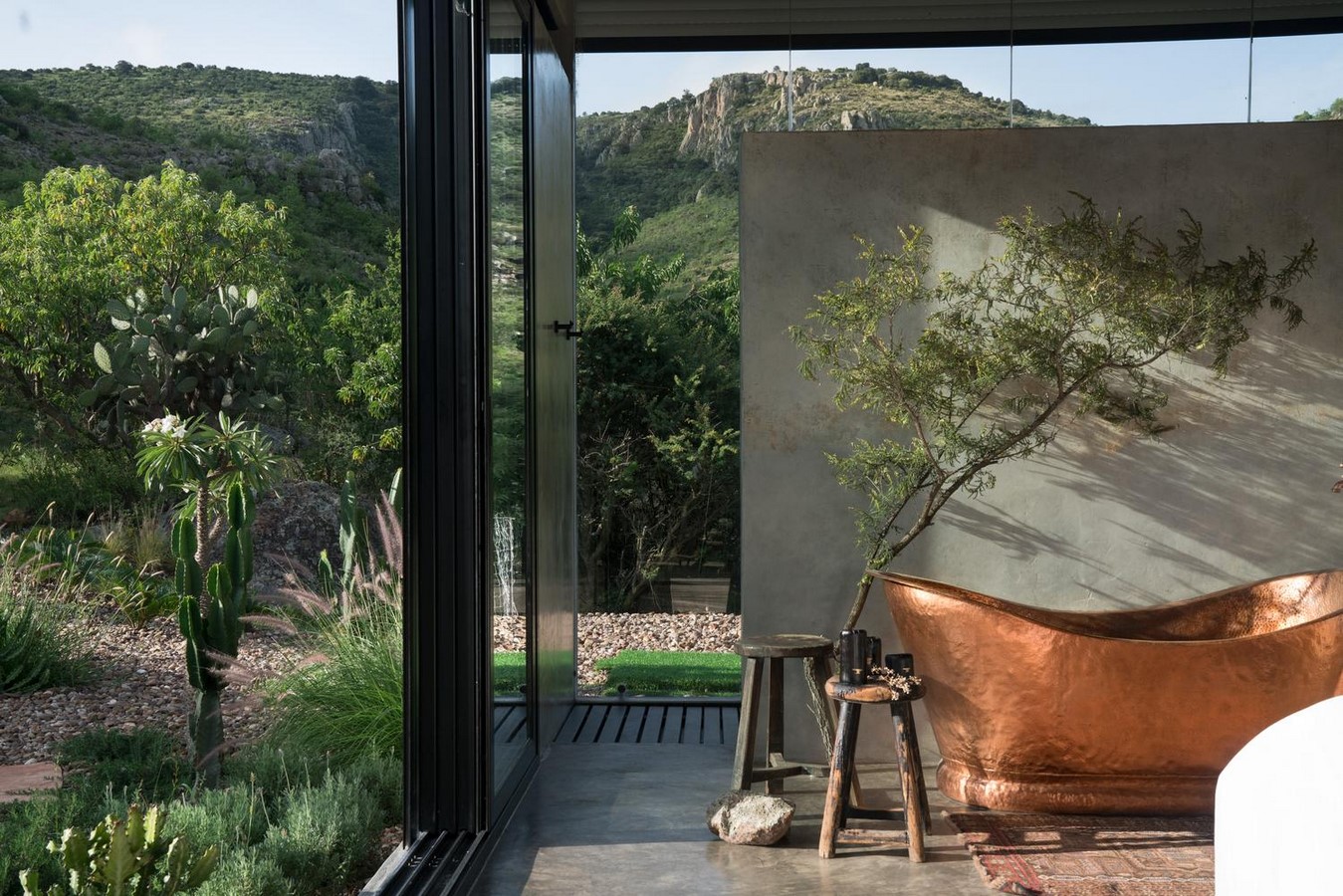
The interior spaces of the house read as a single and continuous open plan format rather than a sequence of divided rooms. The layout incorporates a handmade copper bathtub adjacent to the bed, with both elements gaining uninterrupted views of the landscape through the glazed floor-to-ceiling high glass doors. Daily activities of waking up, bathing, and cooking are enhanced with moments of conversation with the outside world. This is the core definition of lived-in experience for travellers, the architecture that does not mask the environment but continually reinstates it into everyday routines.
From writer’s cabin to global retreat
Ashoka is originally a writer and a photographer. He moved from Singapore to Mexico in the year 2017, determined to build an off-grid cabin for writers’ on the mountainside, therefore Casa Etérea began as a personal experiment. Despite having no formal background in architecture, he spent over three years working in a small team of six people, learning to deal with indigenous building techniques, structural challenges, and the reality of constructing in a remote location. This unconventional path contributes to the project’s appeal to travellers: it is not a company owned/ corporate resort but rather is a result of a single idea honed through trail on-site, errors and adaptation.
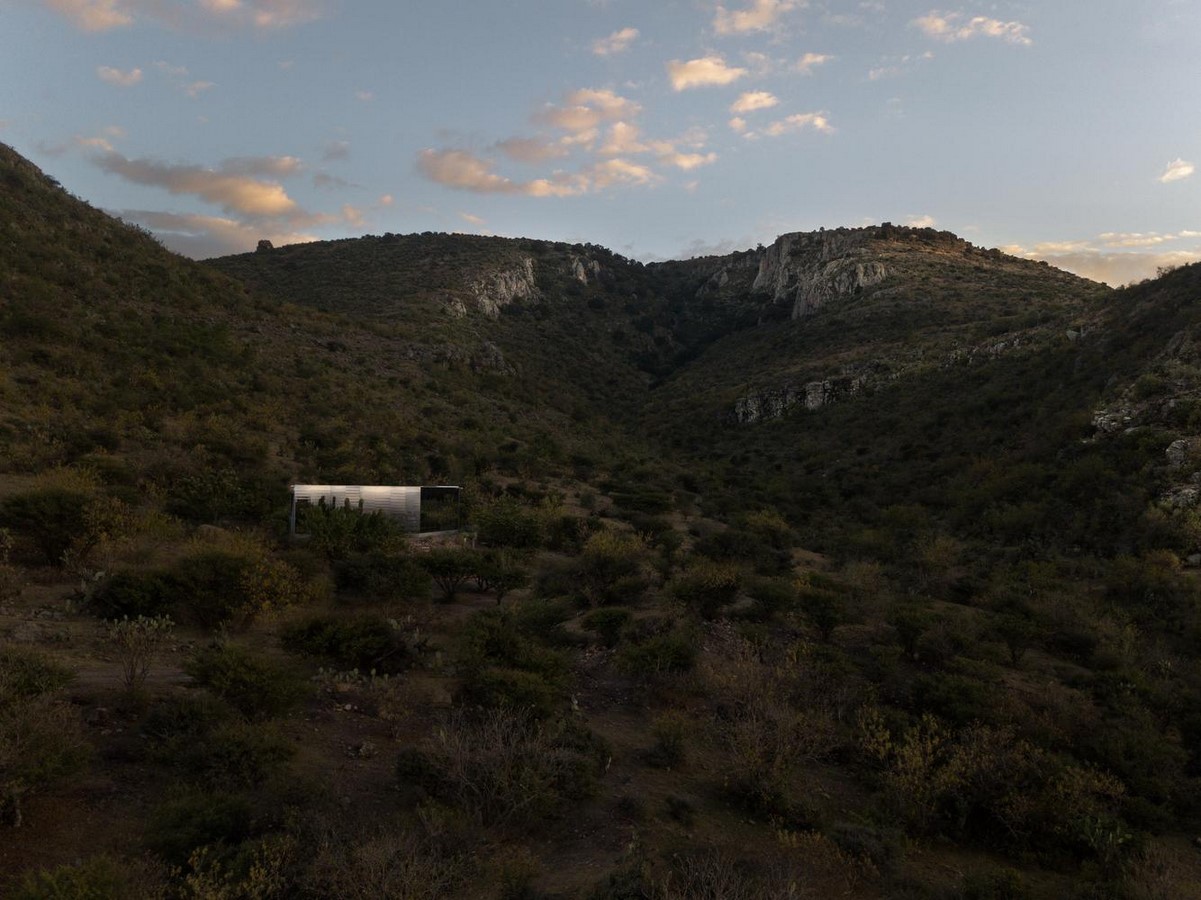
Over the years, Casa Etérea transformed into a holiday rental, marketed as a self-sufficient retreat for a couple and featured on websites like Airbnb as a “mirrored house on the volcano”. When this project was opened for visitors, it fell into a form of architectural narrative. Travellers enter a setting created by an individual’s questions about isolation, beauty, and climate, and momentarily immerse themselves in that narrative. This stands as a unique form of lived-in experience for tourists who are design-conscious, as they come to stay in a prototype rather than just a finished product and contribute to its ongoing upkeep.
The growth of properties like Casa Etérea correlates with the larger trends in how travellers envision their impact on places. Experience-based travel is likewise becoming more about personal significance.
Casa Etérea does not offer a long list of planned itineraries; it provides time and space for less scripted experiences, like watching storms roll across the valley, cooking with the landscape view, and observing the shift of reflections on the facade through the day. Visualising Casa Etérea as a future of residential architecture, whether it is a weekend getaway or permanent residence, will be evaluated more on how effectively it supports the concept of lived-in experiences rather than by its form alone. The mirrored facades, volcanic stone foundations and well-designed interiors are all visually captivating, but their significance is found in a way that they inspire travellers to see themselves as temporary stewards of a location.
Such projects serve as a reminder to the architectural community that small and carefully planned houses may test novel lifestyles, which later influence mainstream housing. Travellers also involve living in experimental buildings, which reflects the ideals of a more ecological, introspective, and experience-driven society, as it affirms that lived-in experience is more than just “living like a local” in an urban location. Through this lens, Casa Etérea is beyond an exceptional Airbnb; it serves as a prism through which the evolving relationship between travel, design and the environment can be clearly pictured.
References:
Ashoka, P. (2020) Casa Etérea sits on the slope of an extinct volcano. DesignWanted. Available at: https://designwanted.com/casa-eterea-prashant-ashoka-namuh/
Booking.com (2025) Booking.com’s 2025 research reveals growing traveller awareness of tourism’s impact on communities. Booking.com. Available at: https://www.hoteliermagazine.com/booking-coms-2025-research-takes-a-community-centric-lens/
Dezeen (2021) ‘Casa Etérea is a mirrored off-grid cabin on the slopes of a volcano’, Dezeen, 23 January. Available at: https://www.dezeen.com/2021/01/24/casa-eterea-prashant-ashoka-mirror-off-grid-cabin-mexico/
Polaris Market Research (2025) Experience travel services market size worth USD 372.93 billion by 2034. Polaris Market Research. Available at: https://www.polarismarketresearch.com/press-releases/experience-travel-services-market
Vintfint (2025) ‘Experience travel services market size | industry report ’, Vintfint. Available at: https://vintfint.com/posts/58489
Accor Group (2025) 2025 travel trends. Limitless by Accor. Available at: https://all.accor.com/a/en/limitless/thematics/lifestyle-trends/travel-trends-2025.html
World Architecture Community (2021) ‘Prashant Ashoka designed a mirrored cabin on the central Mexican highlands’, World Architecture Community. Available at: https://worldarchitecture.org/architecture-news/egvvf/prashant-ashoka-designed-mirrored-cabin-on-the-central-mexican-highlands.html
Yatzer (2024) ‘Casa Etérea: a mirrored hideaway in Central Mexico evokes awe in the wild’, Yatzer, 31 October. Available at: https://www.yatzer.com/casa-eterea
ArchDaily (2021) ‘Eterea House / Prashant Ashoka’, ArchDaily, 27 January. Available at: https://www.archdaily.com/955816/eterea-house-prashant-ashoka
Archello (2021) ‘Casa Etérea | Prashant Ashoka’, Archello, 2 February. Available at: https://archello.com/de/project/casa-eterea