India is a country of vast and rich heritage that is not unknown at all. Heritage is the backbone of her identity. And forming the rich fabric of this heritage are gems that all shine equally. Some are easily visible while others are less so. Following the threads of this rich heritage, we encounter many hidden gems that deserve more recognition. Vontimitta, Kadapa is one such structure.
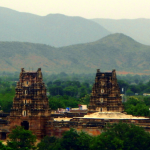
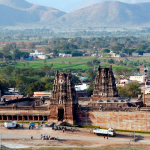
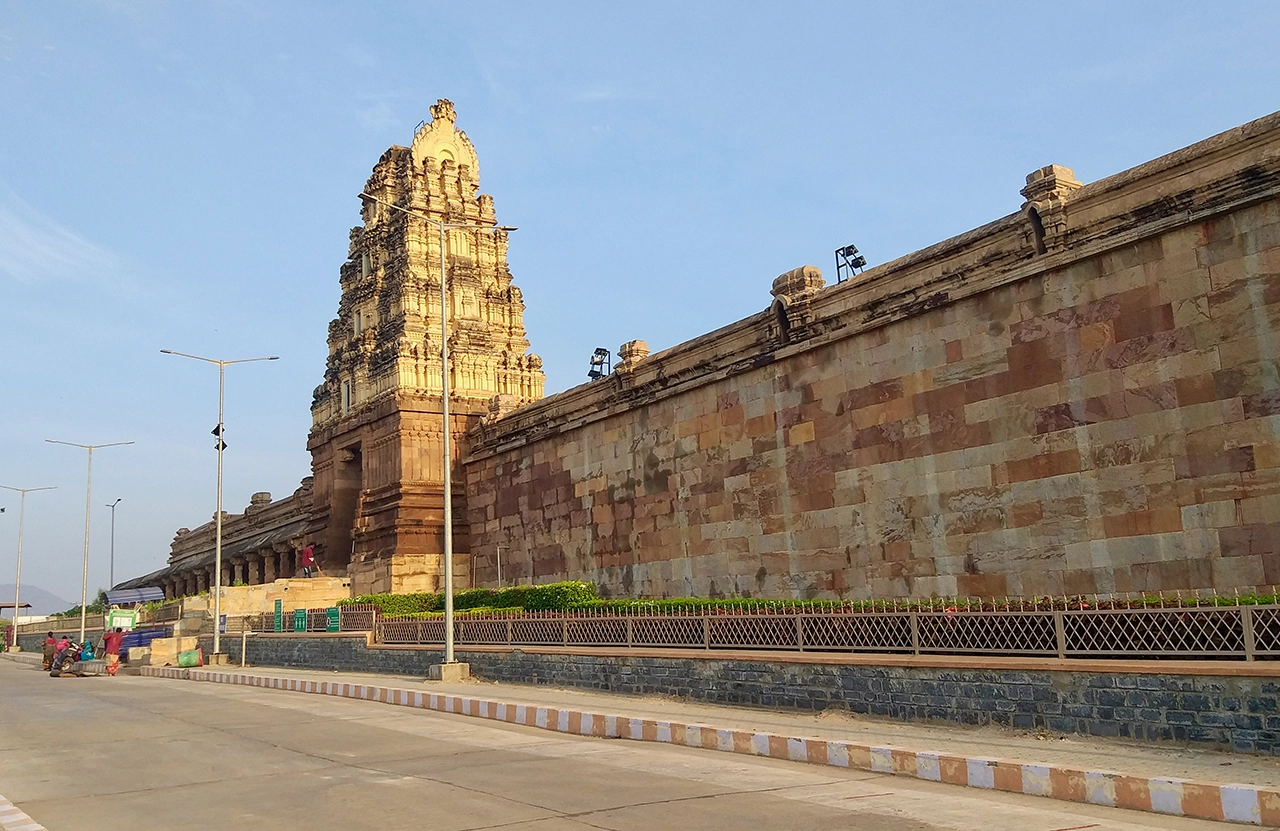
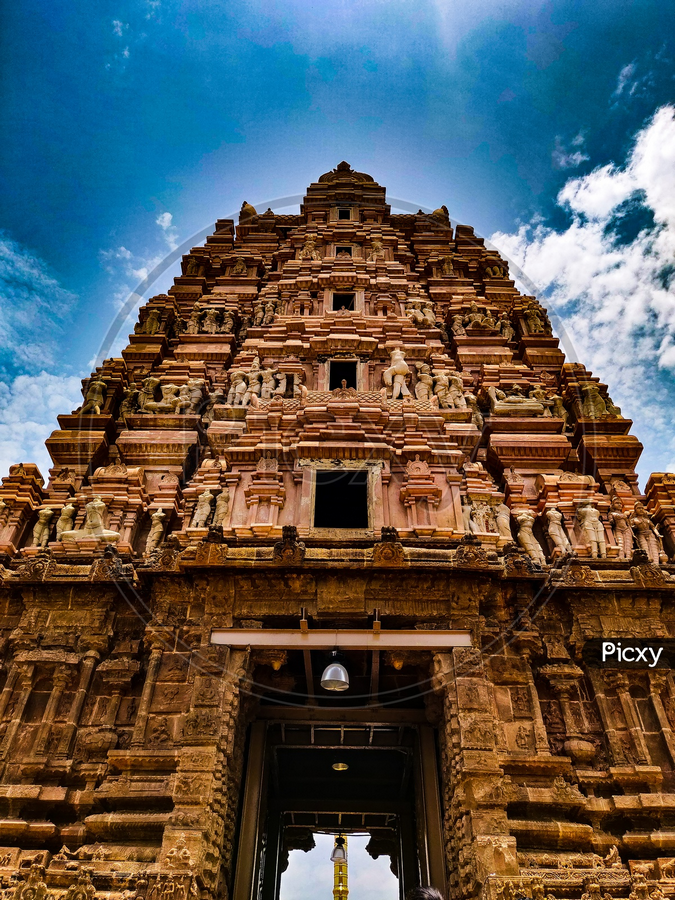
Located deep within the arid land of the Kadapa district in Rayalaseema, Andhra Pradesh, this temple is a mighty structure representative of Vijayanagara Architecture- evident of Rayalaseema having been under Vijayanagara rule for much of the later years until British colonization. It is dated to have been built around the 14th-16th centuries and is the largest in the region. At a distance of 25 kilometers from Kadapa, the temple and its adjoining buildings are archeologically protected and a monument of national importance.
The Origin Story- Vontudu and Mittudu
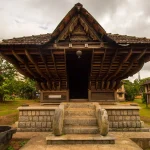
The Vontimitta temple, dedicated to Lord Rama, is a peculiar architectural wonder in Andhra Pradesh, has its mythological roots across ages, from the Treta Yuga to the Vijayanagara Empire. Renowned as “Jambavantha Pratishta,” the central idols are said to have been installed by the bear-king Jambavan, a legend of the epic Ramayana. The name of the temple is a tribute to Vontudu and Mittudu- these two robbers-turned-devotees are said to have built the 32-pillared shrine in one day and then turned into stone statues, still standing at the entrance. Mythologically, this site has been known as “Srungi Saila”, where Sage Srungi performed penance, and “Bhargava Puri”, the abode of Lord Parashurama.
One of the peculiar characteristics of the Ekashila monolithic idol is the image of Rama, Sita, and Lakshmana carved on the same stone. Distinctly, there is no image of Hanuman in the main sanctum, since the history of the site is associated with the Kishkinda Khanda epoch, a period when Rama had not yet met Hanuman. Its origins trace back to the Chola dynasty, and yet, much of its grandeur exhibits the Vijayanagara style, around the reign of Emperor Sada Siva Raya II. Its magnificence was so great that the French traveler Tavernier described it in 1652 as one of the most beautiful temples in India.
Vontimitta is also considered a haven of Telugu literature because it was here that Bammera Potana wrote the Maha Bhagavatham, the Telugu translation of the Bhagavat Purana. The temple stands as a testimony to the spirit of communal amity, enshrining the reverence felt by Imam Baig and Obanna, persons from other faiths and caste, unto the Lord. During the 19th century, it was Vavilakolanu Subba Rao who, in extreme devotion, passed around coconut shells to collect donations in his effort to restore the glory of the temple- a journey that is chronicled in his work called Tenkaya Chippa, that literally means “the coconut shell”. The saint Annamacharya, a celebrated poet in carnatic music, is said to have visited the temple and composed and sang songs or kirtans in praise of Rama. Even today, the temple is an intriguing point of junction between history, faith, and poetic heritage. The temple’s sanctity and significance is further enhanced by nearby sacred tanks which include Rama Theertham and Lakshmana Theertham, drawing pilgrims for rituals and festivals centered on Rama’s iconography.
Vontimitta over the centuries
Imperial Origins – Stylistic Evolution
The Vontimitta Kodandarama Swamy Temple reached its architectural zenith in the mid-16th century under the Aravidu dynasty of the Vijayanagara Empire. While local tradition ascribes its foundation to the 14th century by Kumara Kampana, verifiable inscriptions from 1554 and 1558 CE record its active patronage by Araviti chiefs. Stylistically, the evolution from Dravidian archetypes and Chola designs contain composite pillars and grand gopura gateways, reflecting the stark cultural influence of the empire. These structural elements served as resilient focal points for Hindu devotion even when political decline overtook the empire following the Battle of Talikota in 1565.
After the Empire, Resilience, and Foreign praise
After the collapse of Vijayanagara, it was preserved by the ruling powers of Qutb Shahi or Golconda, and later by the Mughal Empire. The rulers benefitted through the immense pilgrimage economy and thus left it intact instead of tearing it down.During the year 1652, it was later hailed by a Frenchman named Jean-Baptiste Tavernier as one of “India’s most magnificent pagodas”. During the period of the 18th and 19th centuries, despite continuous changes in ruling powers, with the introduction of British revenue surveys, the monolithic statues and mandapas of this temple were well-maintained by their caretakers.
Modern Conservation
After a few years of being neglected during and post the colonial era, Vontimitta Kodandarama Swamy Temple was brought under the protection of ASI. Major works in order to stabilize, to ensure structural integrity, started in 2006, while a comprehensive restoration from 2023-2025, led by TTD, involved chemical cleaning and structural reinforcement strictly in line with heritage principles. This restoration finished in March 2025 with the Maha Samprokshanam rituals, successfully reconsecrating the ancient site for modern worship.
The Vijayanagara Art and Architecture in Vontimitta
The Chola and Vijayanagara kings constructed the oldest Hindu temple of the region, the Vontimitta Temple, in the sixteenth century. The 500-year-old temple is renowned for its opulent embellishments and magnificent construction.
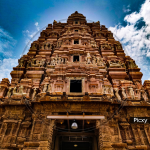
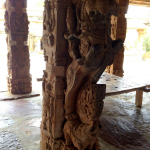
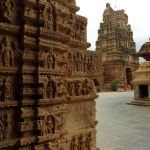
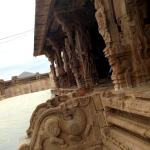
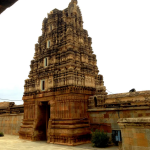
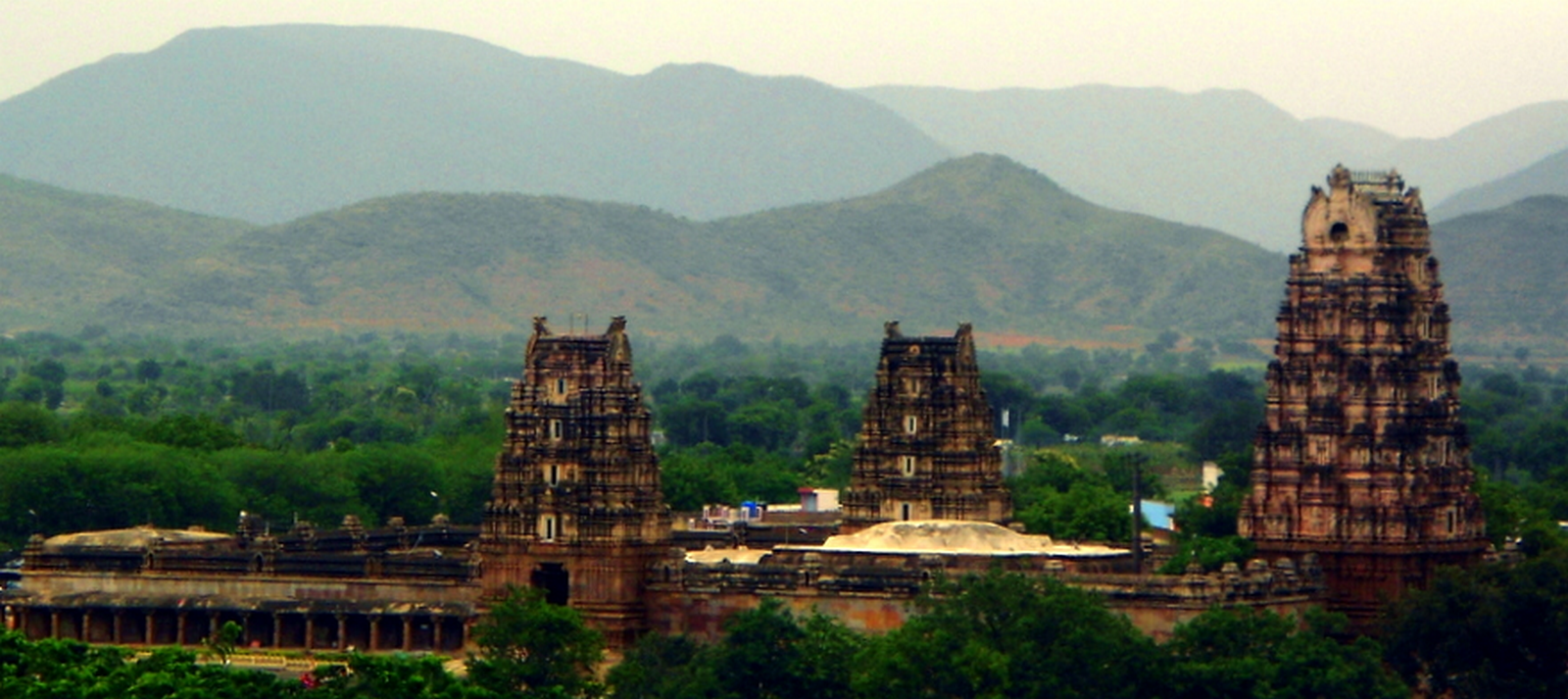
Despite being constructed by the Cholas, the temple features conventional Vijayanagara architecture. This architectural marvel features three opulent Gopurams facing east, north, and south, as well as a rectangular courtyard surrounded by walls. The temple’s entrance faces Gopuram to the east. The mandapa, an outdoor space with exquisite sculptures, is supported by more than thirty-two pillars, and the center tower was constructed in five stories.
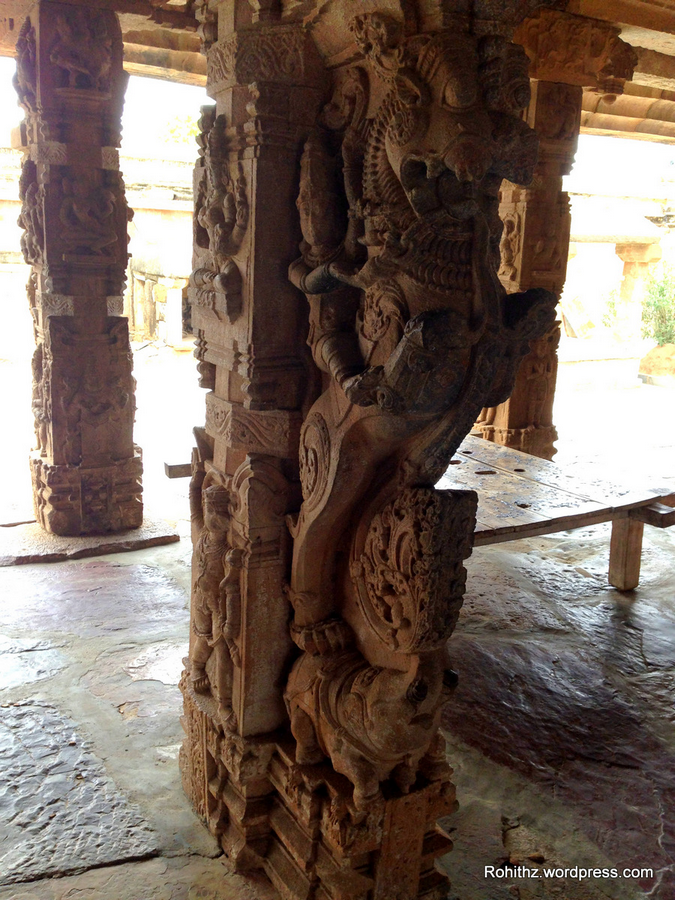
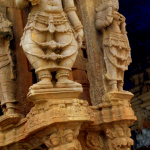
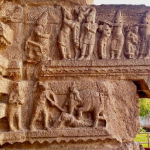
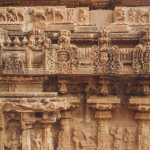
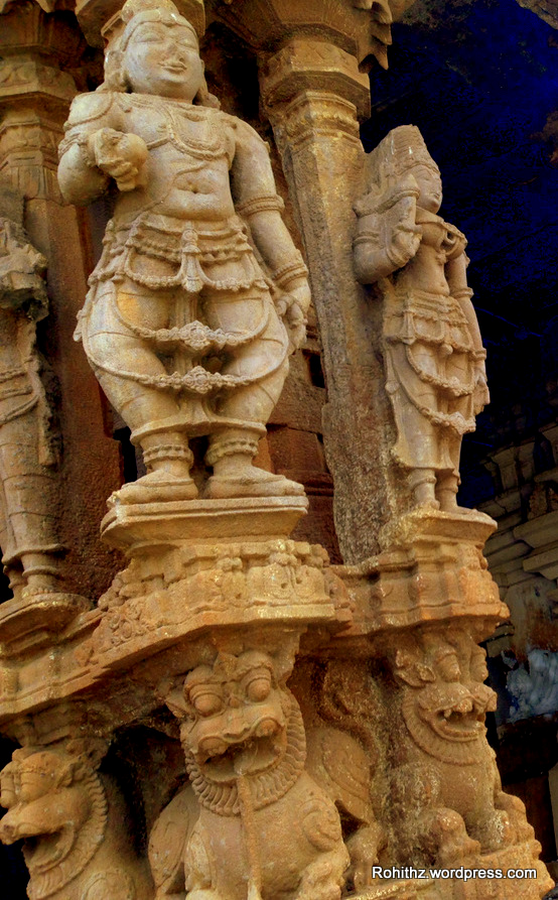
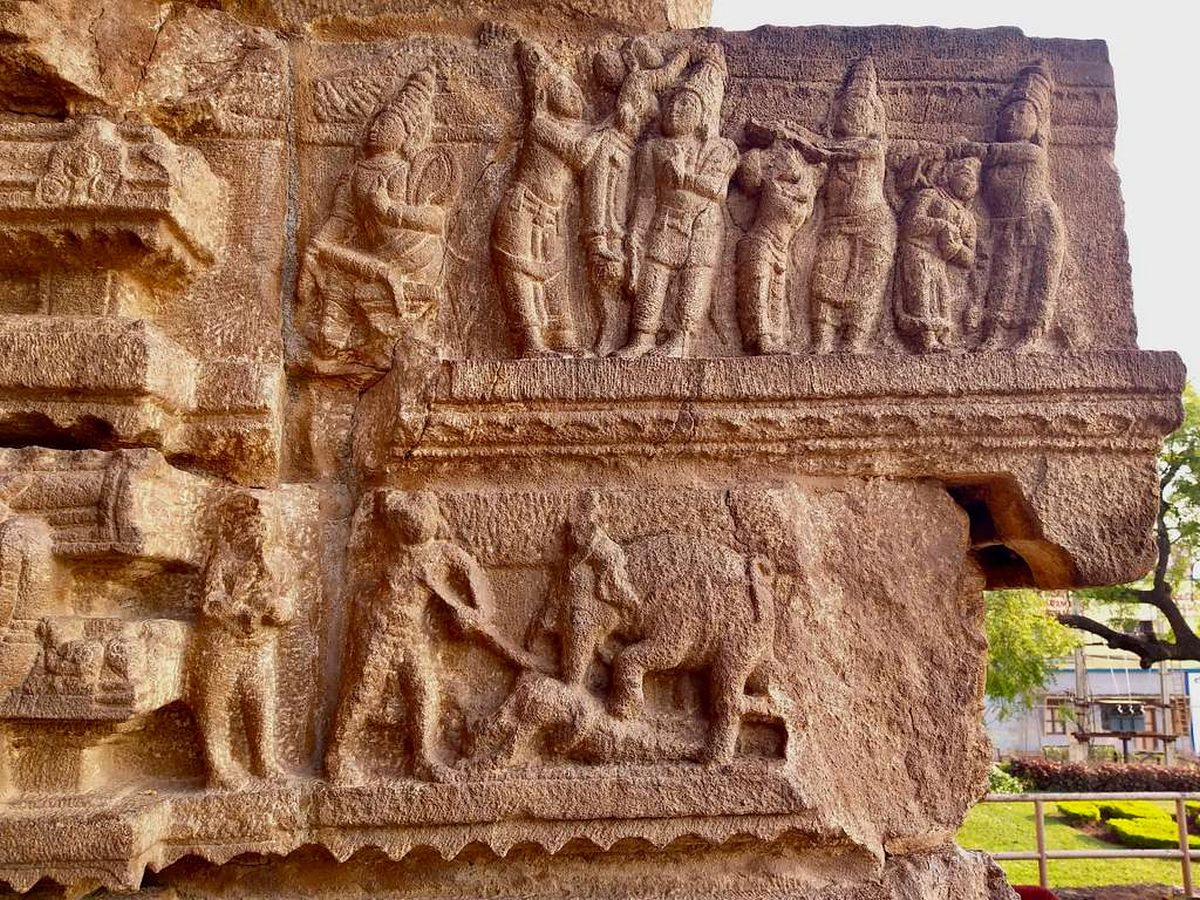
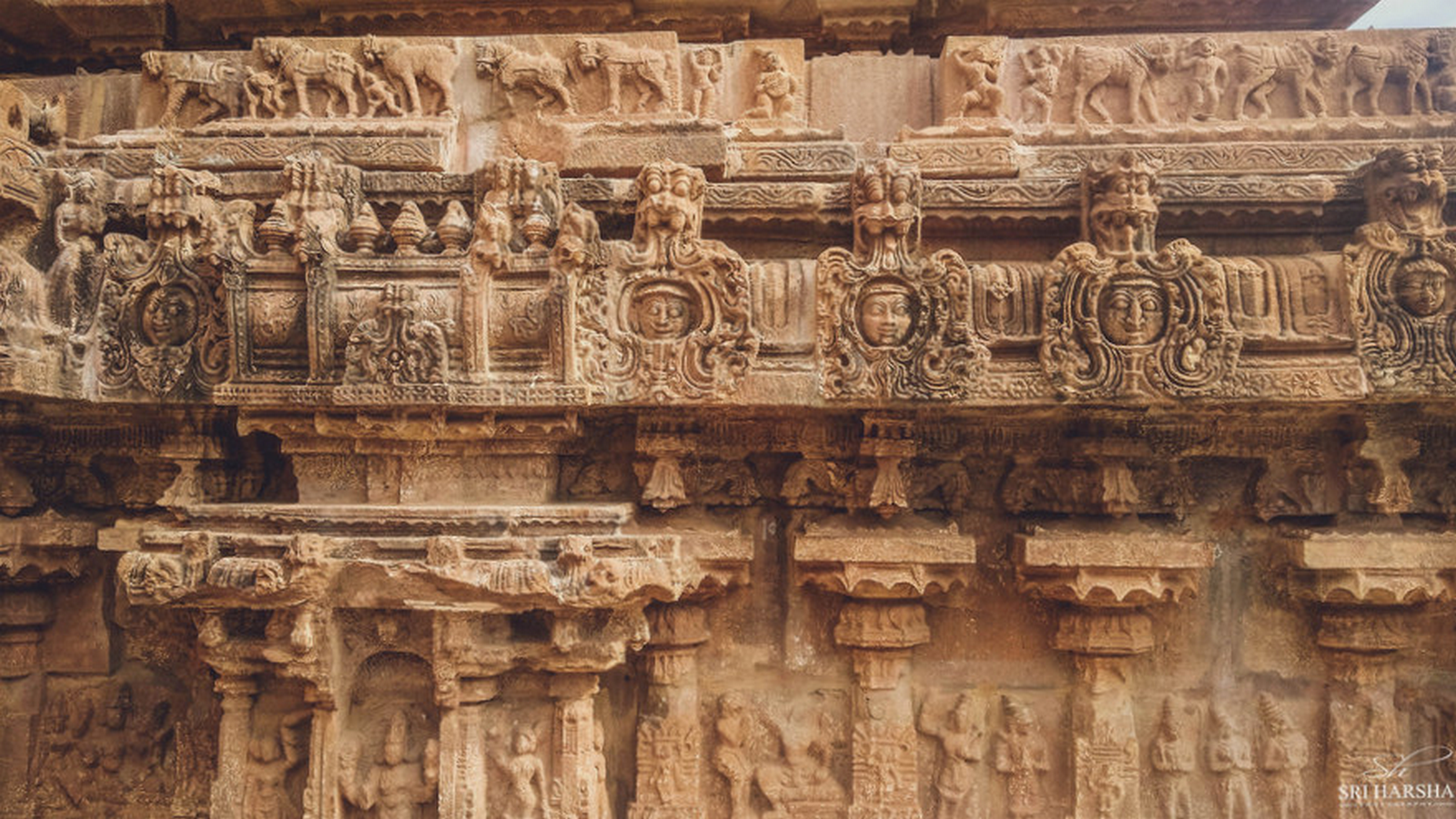
The artistic style and sculpture of the Vontimitta Kodandarama Swamy Temple shed light on the artistic flourish of the Vijayanagara period, demonstrating the transition from ornate styles to the imperial style- a style that is fluid and grand. This temple is characteristic of its composite columns where the pillars are converted into “yalis” or lion-headed figures that are trademarks of the Vijayanagara style, ‘horse leaping over dwarfs,’ or musketcars or musicians or dancers executed on high relief. The mandapas of the temple are a lithic storybook wherein a sort of continuous narration has been employed through inscriptions and paintings. This includes highly detailed relief panels of the Ramayana, ‘The blessed union of Rama and Sita,’ as well as the ‘fight between Rama and the powerful prince Vali’.
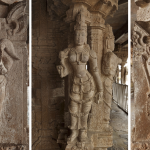
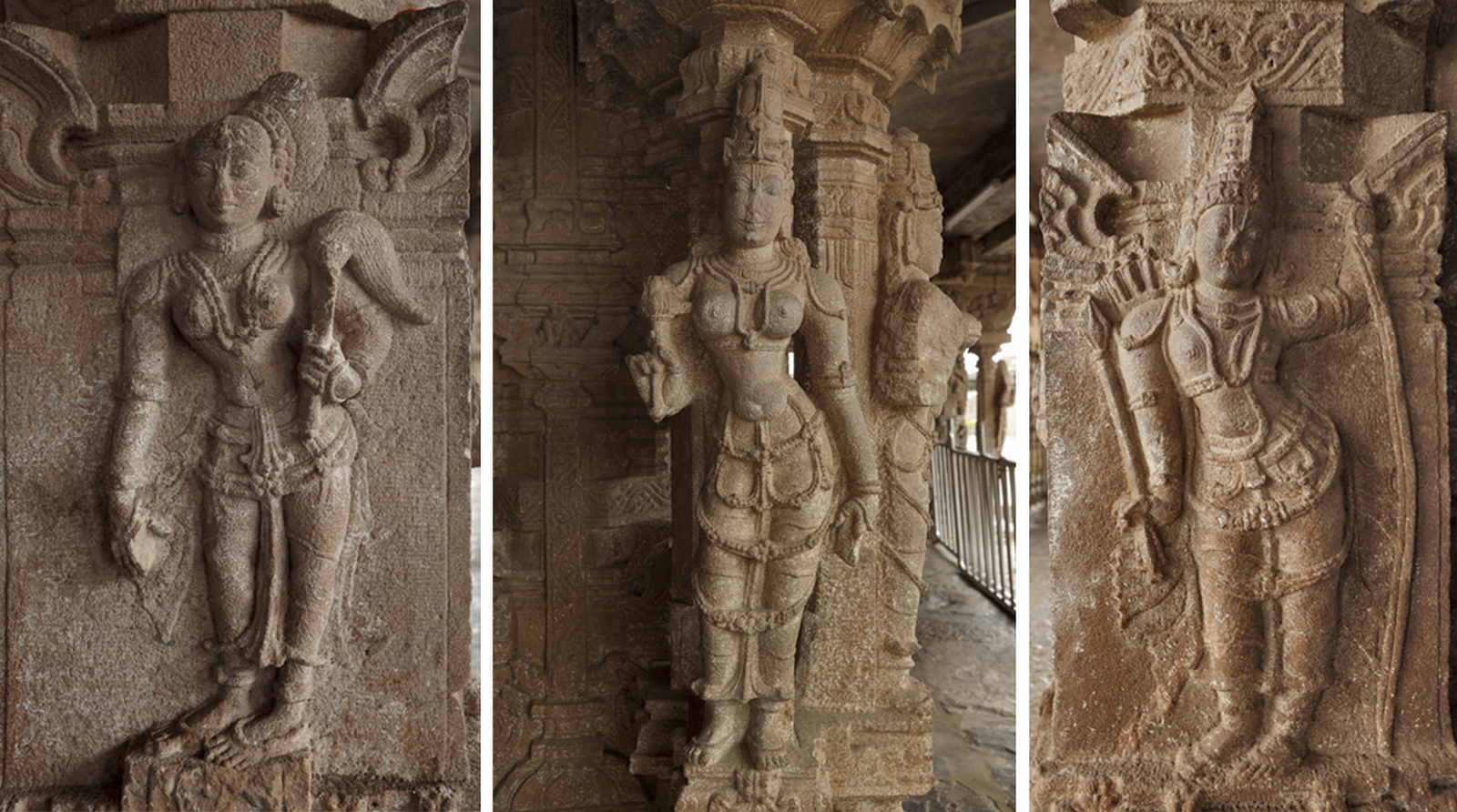
One of the distinctive features of the 16th-century style found at Vontimitta is the introduction of royal patronage figures, believed to be chieftains or patron-supers, along with deities, on the pillar shafts, carved in anjali mudra, decorated in kullayi headgear of contemporary design, to emphasize their religiosity. This is further filled with an iconographic presentation of extreme richness, especially in the massive gopuras, where the door jambs provide statues of the river goddesses Ganga and Yamuna, elegant in four-foot tall figures of resplendence. Throughout the interior, statuesque pilasters adorn an array of Vaishnavite themes, including the Dashavatara, rishis and devotees, all originally painted in bright colors, forming an aesthetic transition between structural strength and deity elegance.
Hierarchical Organization and the Usage of Granite
The Vontimitta Kodandarama Swamy Temple is a fine example of the mature Vijayanagara style, where Deccan and Tamil styles were fused into a style that returned to simple and quiet beauty featuring hierarchical elements like the towering gopurams, expansive pillared halls called mandapas for assembly, and a pyramid shaped vimana over the sanctum. The basic plan would usually have one to three shrines opening from a central, columned mandapa, sometimes blended with a porch and seating ruggedness on the periphery. As was characteristic of the earlier Deccan style, the sides of the vimana were left undecorated and topped with pyramidically constructed superstructures of brick and plaster. But eventually, as the Tamil element accrued to it, these sides were effectively divided into rhythmic patterns of projections and recesses, housing sculpted niches and pediments.
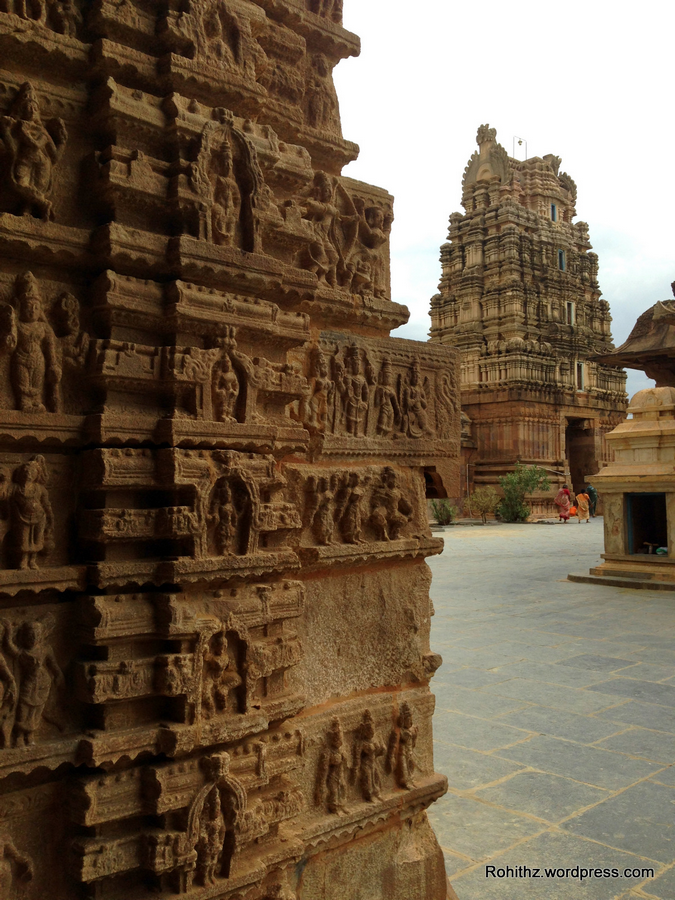
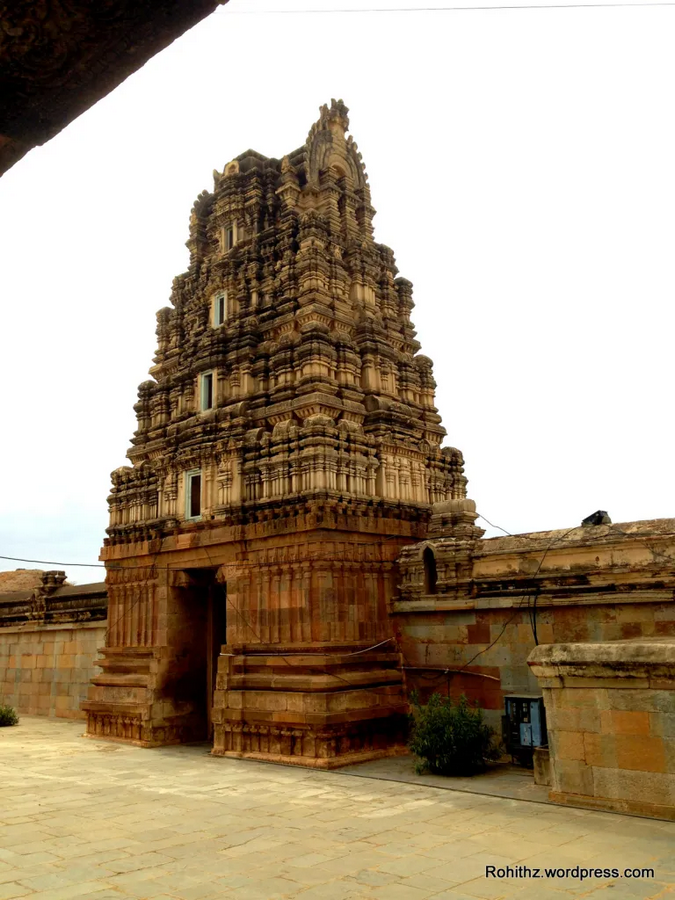
The hallmark of the internal arrangement of the sanctum would be the navaranga pattern, where a square hall would be divided into nine squares by four central pillars, with the characteristic difference of having a distinct base and a unique doubly formed capital on each pillar. The resplendent entry to the spacious temple would be demarcated by a solid gopura, on which rested a giant pyramidally constructed tower made of brick and plaster, topping it with a barrel-vaulted roof structure. These structural demarcations, namely the gopuras faced all the cardinal directions, and the expansive mandapa offered unobstructed views of the vimana, natural ventilation and efficient dispersal of participants during events, aligning with the spatial progression characteristic of contemporaneous Vijayanagara styles. The eastern gopura is the primary entrance and features a solid granite base. It also has a towering brick-and-plaster structure capped with a barrel vaulted sala roof.
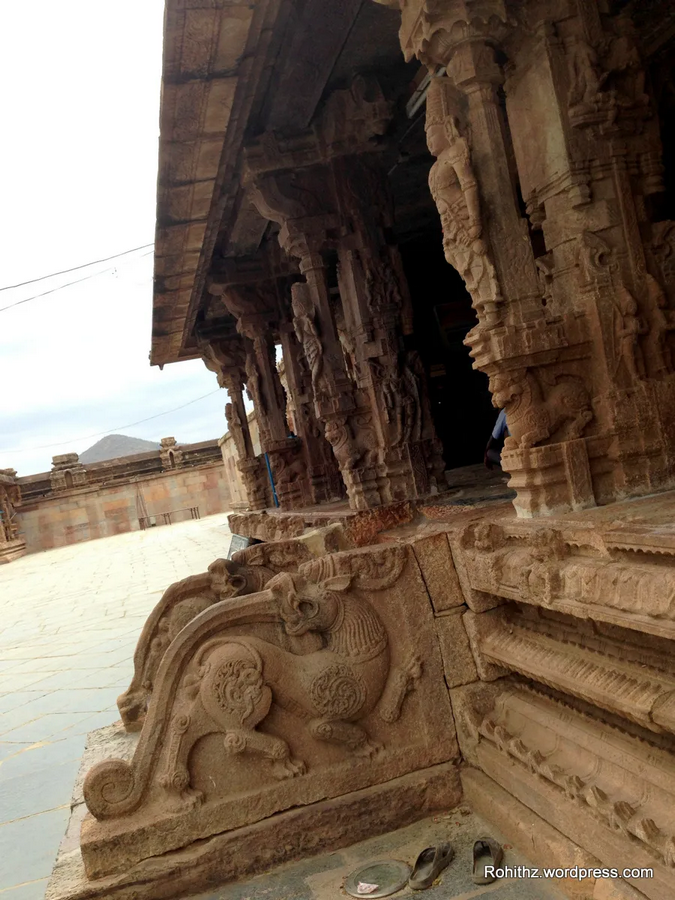
In contrast to earlier empires, where soapstone was preferred, during the construction of Vontimitta Kodandarama Swamy Temple, granite was prioritized for construction. This was because, compared to soapstone, granite was not only more resilient, but also more long-lasting as a structural element for buildings- an ode to its compressive strength and low porosity. Granite was also inherent to the Deccan plateau’s geology. It reflects the builders’ empirical adaptation of quarried stone assemblage, thereby interlocking blocks without mortar in loadbearing sections for enhanced stability.
However, working with granite was not as easy as working with soapstone, given that soapstone was rather soft, as opposed to granite, which was also too hard and tended to scale off, making it difficult to carve and shape, as was common in earlier centuries. To counteract these difficulties posed by granite, one particular method was adopted by craftsmen: applying a layer of plaster over the upwind, rudimentary granite, making it smooth and workable as a material for construction. This allowed for paintings depicting colorful, lively designs on these surfaces, effectively bringing paintings to life.
Influence on People, Customs and Politics
The temple and its surrounding buildings are so exceptional that they are recognized as one of the nationally significant monuments that are centrally protected. The best illustration of the Deccan Vijayanagara architectural style, which is clearly visible in the temple’s design, is Vontimitta Temple.
In the combined state of Andhra Pradesh, the location of the official Ramanavami festival in the state was in Bhadrachalam. In 2014, the state was bifurcated. During the bifurcation of the state, Bhadrachalam was retained in Telangana, and therefore the rest of the state of Andhra Pradesh began Ramanavami festivities at the temple in Vontimitta. This was the direct cause of the temple’s popularity. The location of the town and temple is easily reachable by flights, trains, and roads.
Lord Rama’s birthday is celebrated on Sri Rama Navami and the Seetha Rama Kalyanam is a custom that begins at noon in nearly all Indian temples at Abhijith Lagnam. However, on the day before the full moon, the Kalyanam is conducted at Kodandarama Swamy Temple. This is the only temple where Rama and Sita are annually married in a lavish ceremony outside the sanctuary at midnight.
Other celebrations include Vaikuntha Ekadashi, a significant carnival event held at the temple. The temple hosts unique pujas and ceremonies to commemorate Ugadi, Diwali, and other Hindu holidays. Another significant celebration here is Brahmotsavam, which is observed on Sri Rama Navami. On behalf of the government, the Andhra Pradesh Chief Minister offers silk garments to the Lord at the Brahmostavsam. Following the state’s split in 2014, this became a custom in this temple.
The Andhra Pradesh government has given the Tirumala Tirupati Devasthanams (TTD) the responsibility of managing the what was previously almost unknown temple. On July 29, 2015, the TTD board voted a motion to take administrative management of the temple. The Kondandarama Swamy temple has since brought to light, increased tourism and has successfully survived the transition from a royal monument to public heritage.
Relevance in the Urban and Heritage Framework
Nicknamed “Dakshina Ayodhya,” the Vontimitta Kodandarama Swamy Temple has been designated as the state arena for celebrating Sri Rama Navami in Andhra Pradesh. To exploit and increase its popularity in South India, it has been planned to be developed as part of a triangular religious circuit along with Tirupati and Gandikota. There have been development plans for “Dakshina Ayodhya,” such as the installation of a 108-foot Jambavan, 5D devotional shows, and a direct train to Ayodhya, which would convert it into a world-class pilgrimage center.
A 50-year master plan acts as an anchor for development in the area. This has involved huge infrastructure developments such as the establishment of a 24-km green corridor, a festival tank, and the construction of Mada streets. There have been proposals for the construction of more accommodation facilities and Annaprasadam dining halls,through which Vontimitta becomes a planned urban pilgrim center. This benefits the Kadapa district and the state by boosting its local economy.
Updating and developing a protected site depicts a fine line between developing infrastructure for pilgrims and adhering to strict archaeological regulations. Being an ASI-protected monument, the Vontimitta Kodandarama Swamy Temple is preserved through ASI-controlled restoration works, helping retain its 16th-century Vijayanagara style. Current restoration activities initiated by the TTD and the ASI involve structural repairs and exterior makeovers of the monument following the concept of “minimal intervention.” This also boosts its status albeit indirectly to be recognised as one of the monolithic architecture monuments in a World Heritage site.
Transcendental Icon
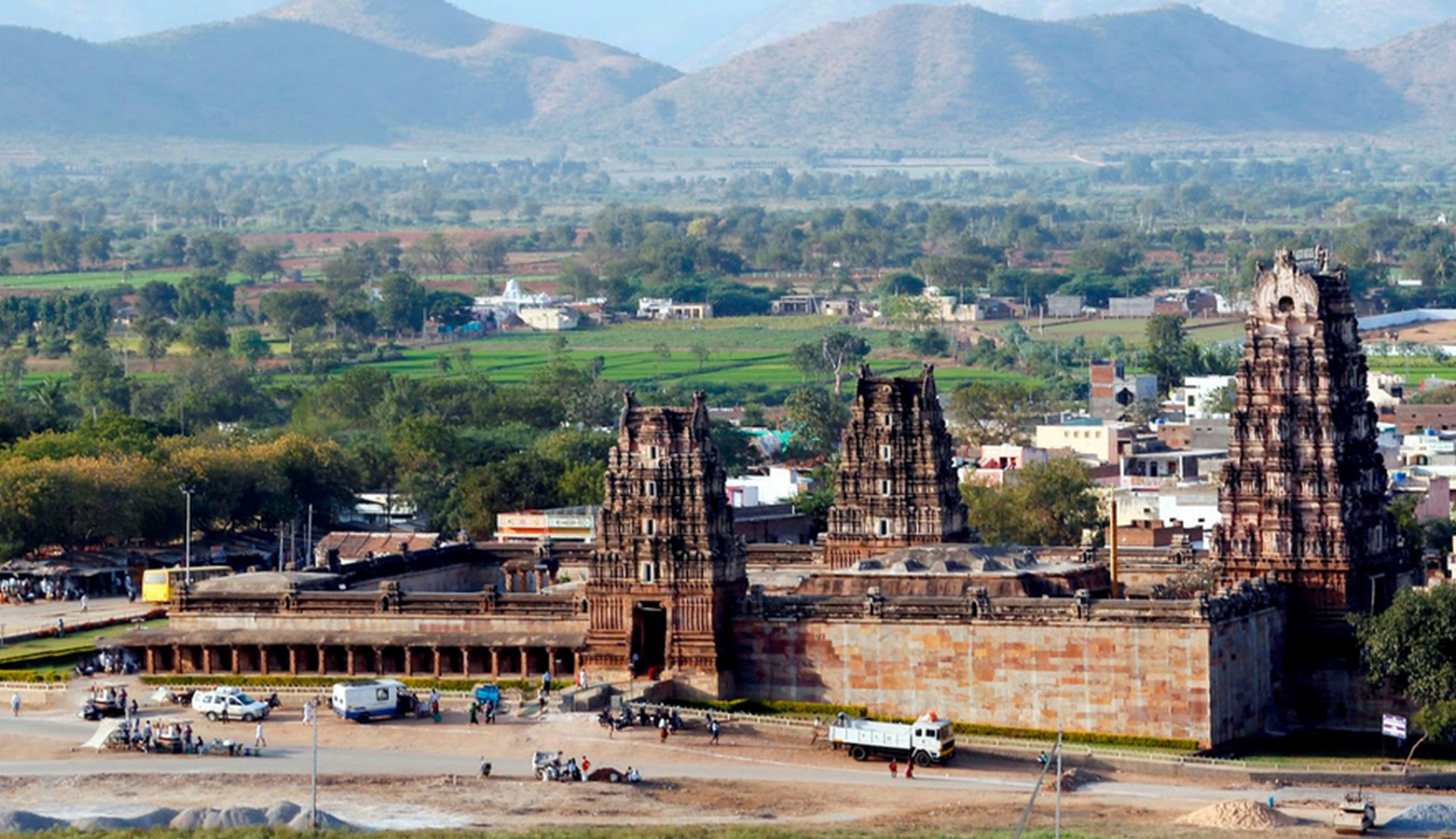
The Vontimitta Kodandarama Swamy Temple is proof of the brilliance of the Vijayanagara artisans and builders in a way that combines the mighty strength of granite architecture indigenous to the region with the fine arts of the Tamil and Deccan styles, transitioning and blending both. Through its “Ekashila” icons and towering gopuras, narrative pillars and inscriptions, it is not just a piece of antiquity but a live bridge that transports observers into a period of historical imperial magnificence and devotional excellence. As it is preserved in its serenity through modern conservation efforts, it continues to remain a cultural anchor that ensures “Dakshina Ayodhya” remains alive in the annals of history.
Citations:
- Rao, K. M. (2019). The Art and Architecture of Kodandaramaswami Temple, Vontimitta of Kadapa District, Andhra Pradesh. Online International Interdisciplinary Research Journal, 09 (Special Issue 02).
- Reddy, I. N. (2016). Art and Architecture in Vijayanagara Period- Some Reflections. Review of Research, 6 (3), 1-3.
- talesofbackpacker. (2024). Vontimitta Temple – Kodandarama Swamy Temple History, Timings, Entry Fee. [Online article]. Available at: https://www.apsense.com/article/809133-vontimitta-temple-kodandarama-swamy-temple-his.html. [Accessed: 16/ 01/ 2026].
- Rajendran, A. (2017). Vontimitta Temple in Andhra Pradesh – Sri Rama – Sita and Lakshmana Worshipped on a Single Stone. [Online blog]. Available at: https://www.hindu-blog.com/2017/04/vontimitta-temple-in-andhra-pradesh-sri.html. [Accessed: 16/ 01/ 2026].
- Grokipedia. (2026). Kodandarama Temple, Vontimitta. [Online article]. Available at: https://grokipedia.com/page/Kodandarama_Temple%2C_Vontimitta. [Accessed: 16/ 01/ 2026].
- Express News Service. (2025). Andhra CM Chandrababu Naidu reviews Vontimitta temple development. [Online article]. Available at: https://www.newindianexpress.com/states/andhra-pradesh/2025/Apr/13/andhra-cm-chandrababu-naidu-reviews-vontimitta-temple-development. [Accessed: 17/ 01/ 2026].
- Express News Service. (2025). Vision 2047: Focus sought for Vontimitta Rama temple. [Online article]. Available at: https://www.newindianexpress.com/states/andhra-pradesh/2025/Feb/03/vision-2047-focus-sought-for-vontimitta-rama-temple. [Accessed: 17/ 01/ 2026].