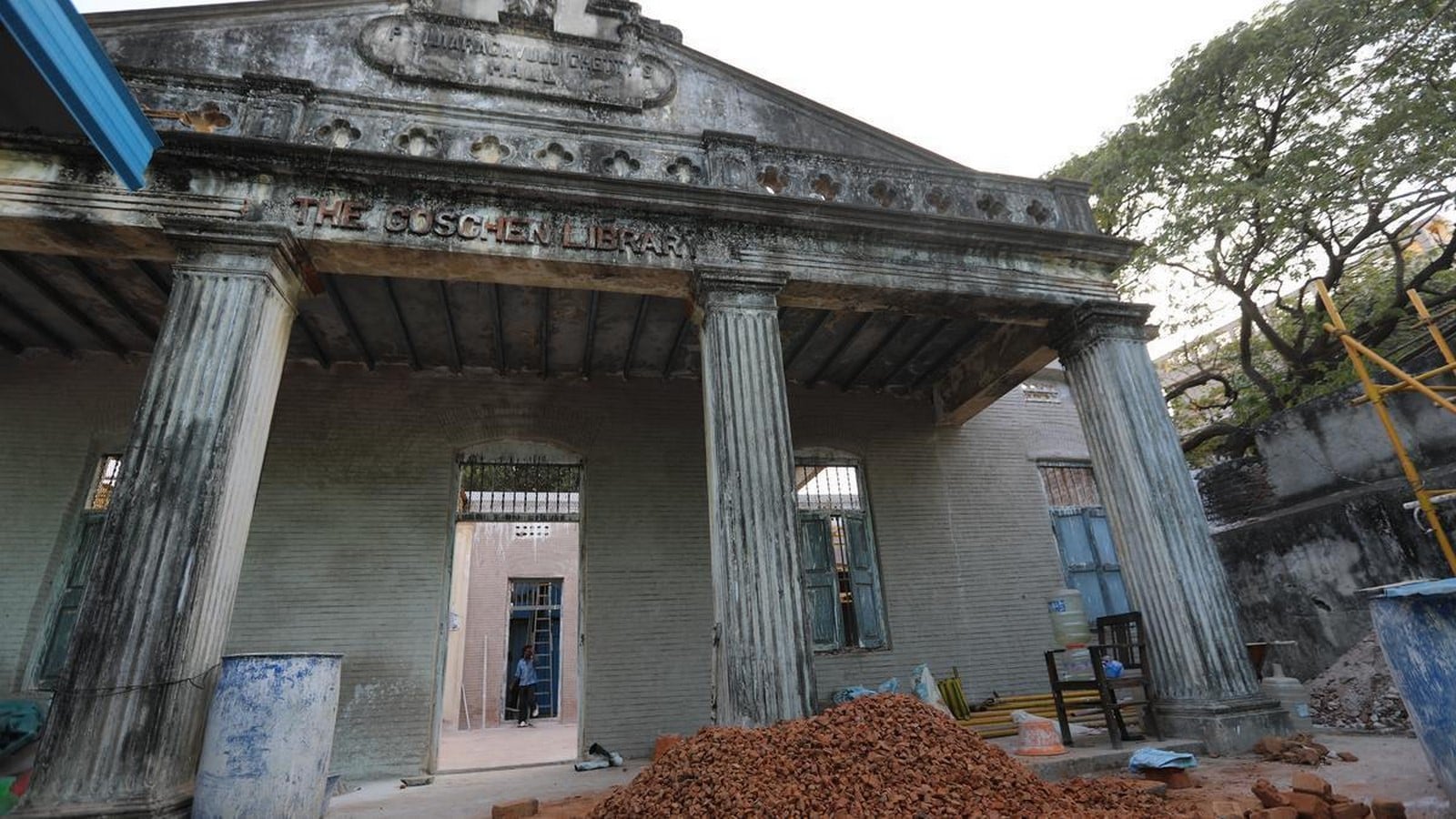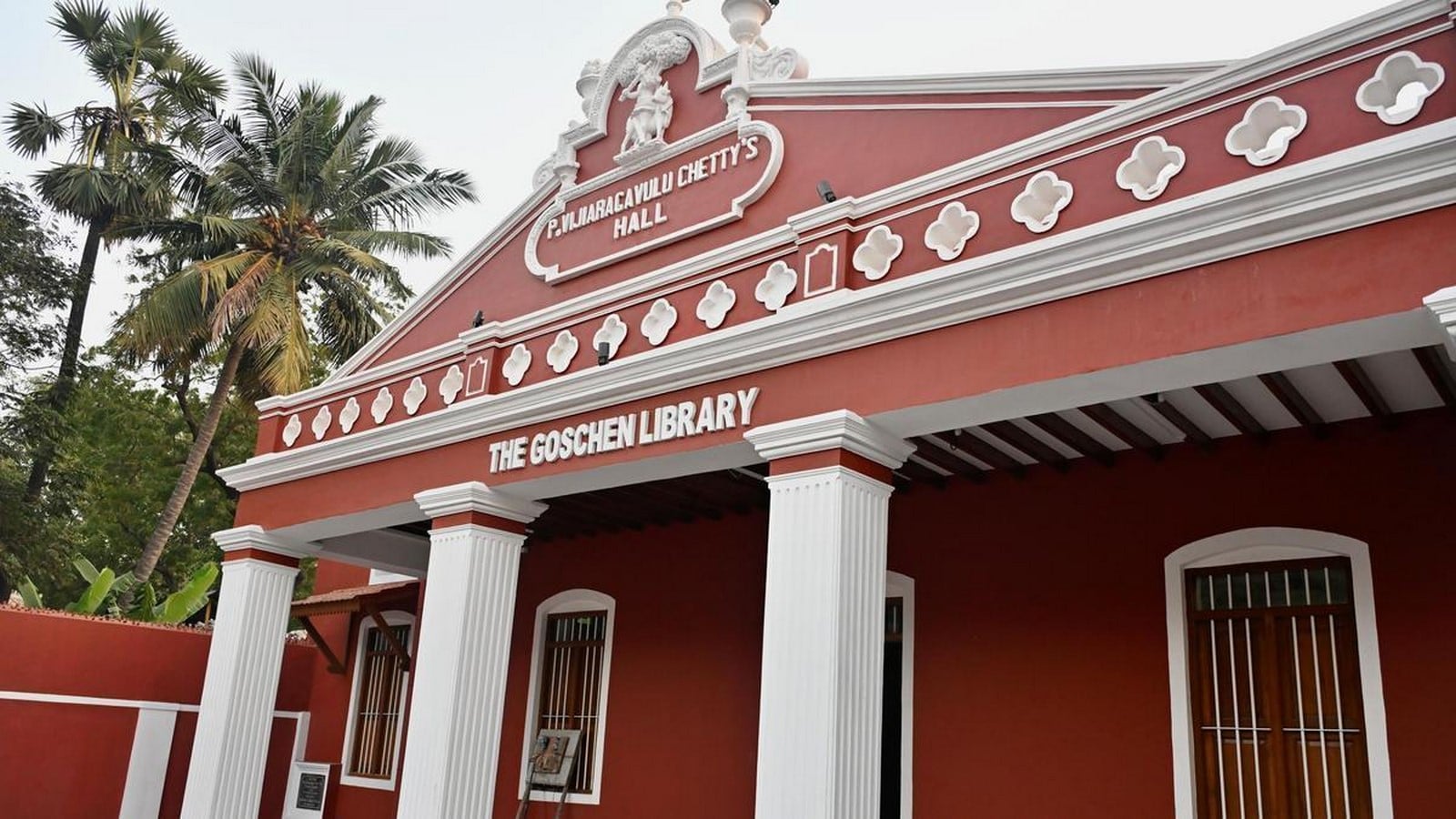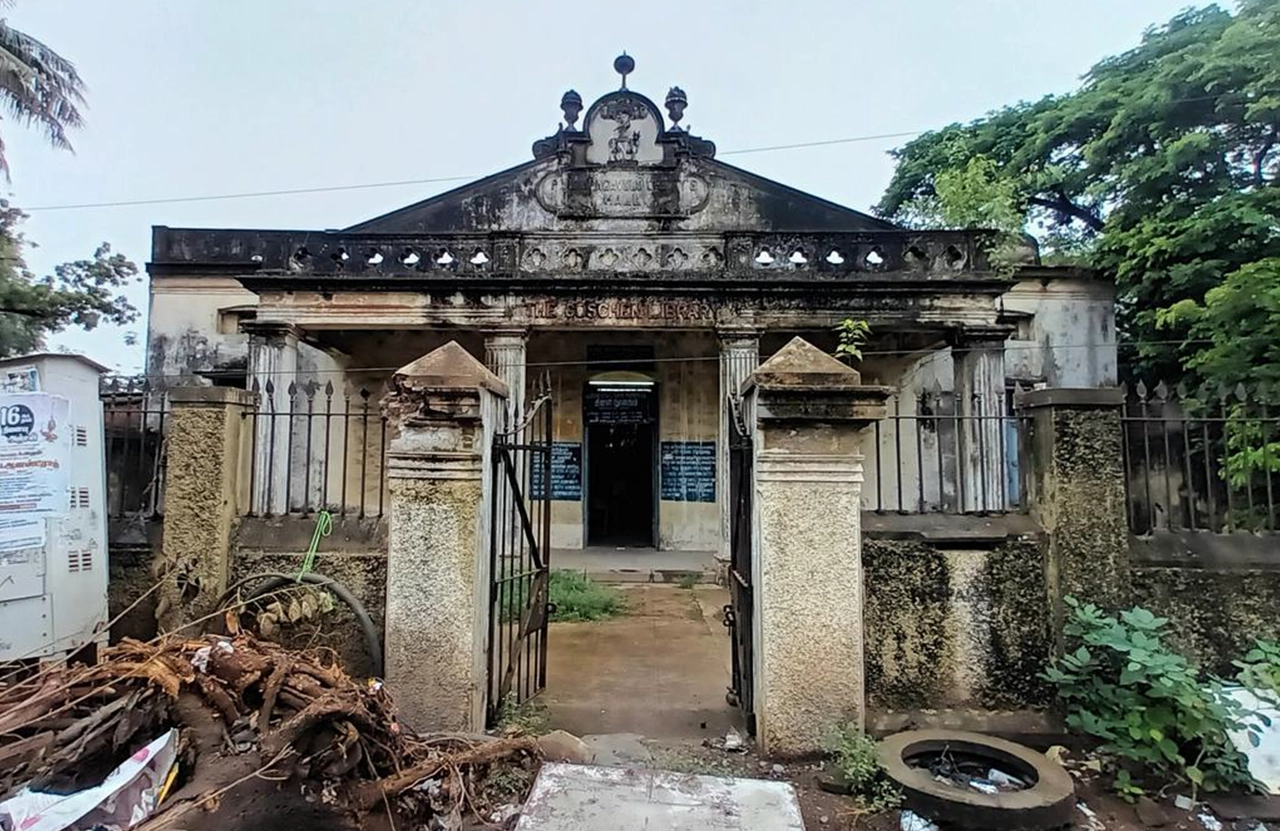
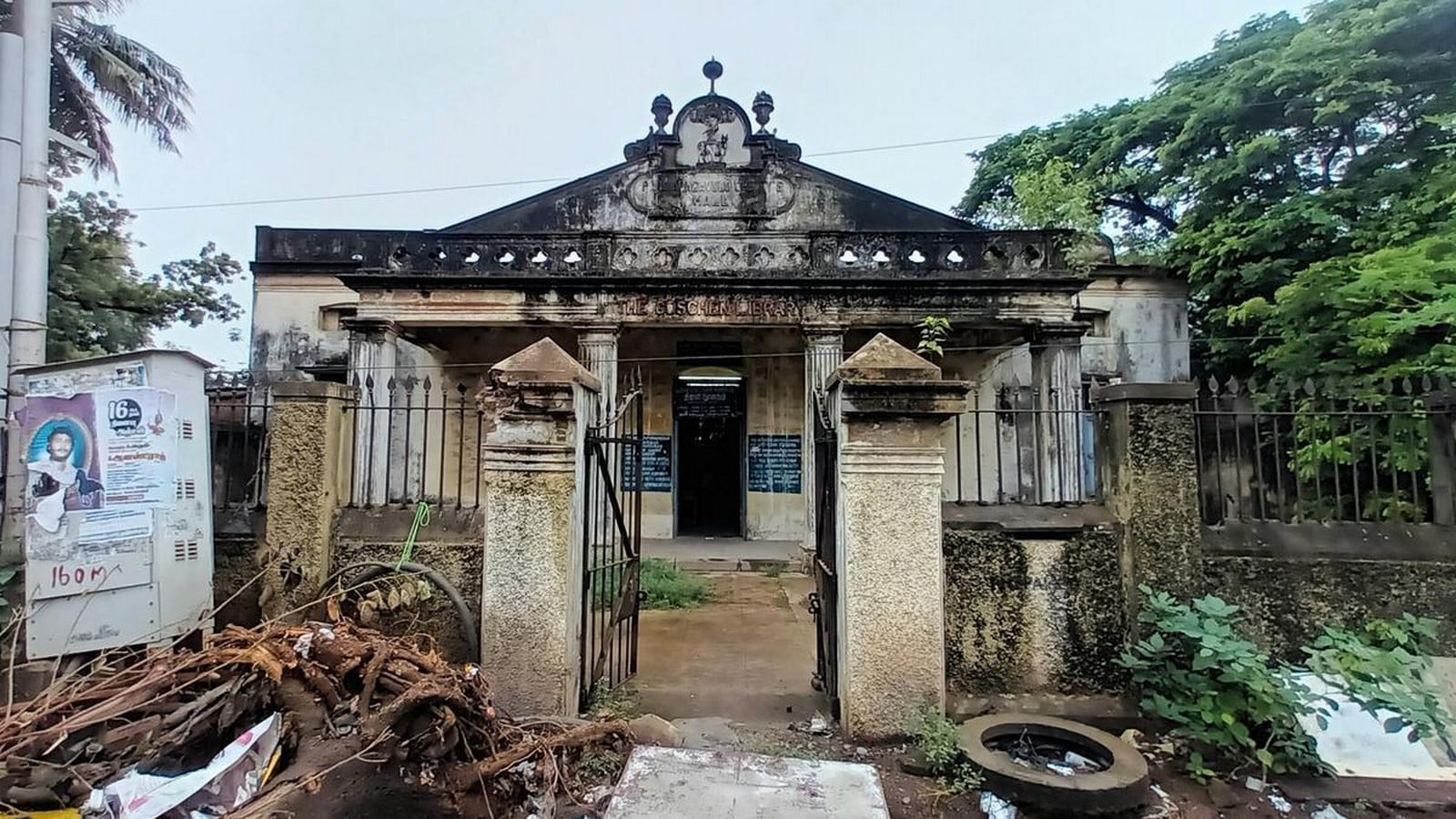
Located on Arunachalam Street in Chintadripet, adjacent to May Day Park, the Goschen Library is a hidden gem often missed amidst the chaos of the main road. This library can claim a rich history dating back to its foundation in 1926.
The building was initially used as a public hall and library, set up by Shri Vijayaraghavulu Chetty, who wanted to encourage reading among local residents. The hall was also used for nationalist meetings and public gatherings. Later, it was named after Lady Goschen, wife of then Governor of Madras George Goshen, who laid the foundation stone for the public library.
Opening Hook
Forget the flashy buildings you always see online. The Goschen Library in Chennai shows that good architecture isn’t just about looking cool. It’s about helping people, lasting a long time, and being a good part of the community. This library has quietly fulfilled its role for over a century, giving people a place to learn and grow, no matter the new technologies or social changes that come along. It hasn’t lost sight of its original purpose.
The Goschen Library stands as a reminder that some of the most successful buildings are not those that dominate skylines, but those that embed themselves into the daily intellectual life of a city.

Historical Context and Urban Setting
Established in 1907, the Goschen Library was created when public institutions were being developed to promote education and improve civic life in colonial Madras. Unlike the grand administrative buildings of that time, the library was designed as an open space for learning, available to a diverse range of people.
Located in Chennai‘s changing urban landscape, the library has observed the city’s shift from colonial rule to a modern metropolis. Still, it maintains its role as a center of knowledge, quietly supporting generations of readers, students, and researchers.
Design Philosophy: Architecture as an Enabler of Learning
The design philosophy of the Goschen Library focuses on clear function and user comfort. The architecture avoids elaborate decoration and instead creates an environment that encourages extended reading, contemplation, and intellectual engagement.
The building shows that libraries serve as places for concentration and quiet, where design choices must promote calmness, not distractions. This idea is clear in the building’s layout, material choices, and environmental strategies.
Instead of presenting architecture as a spectacle, the Goschen Library demonstrates how it can serve as a supportive framework that quietly facilitates learning.
Planning and Spatial Organization
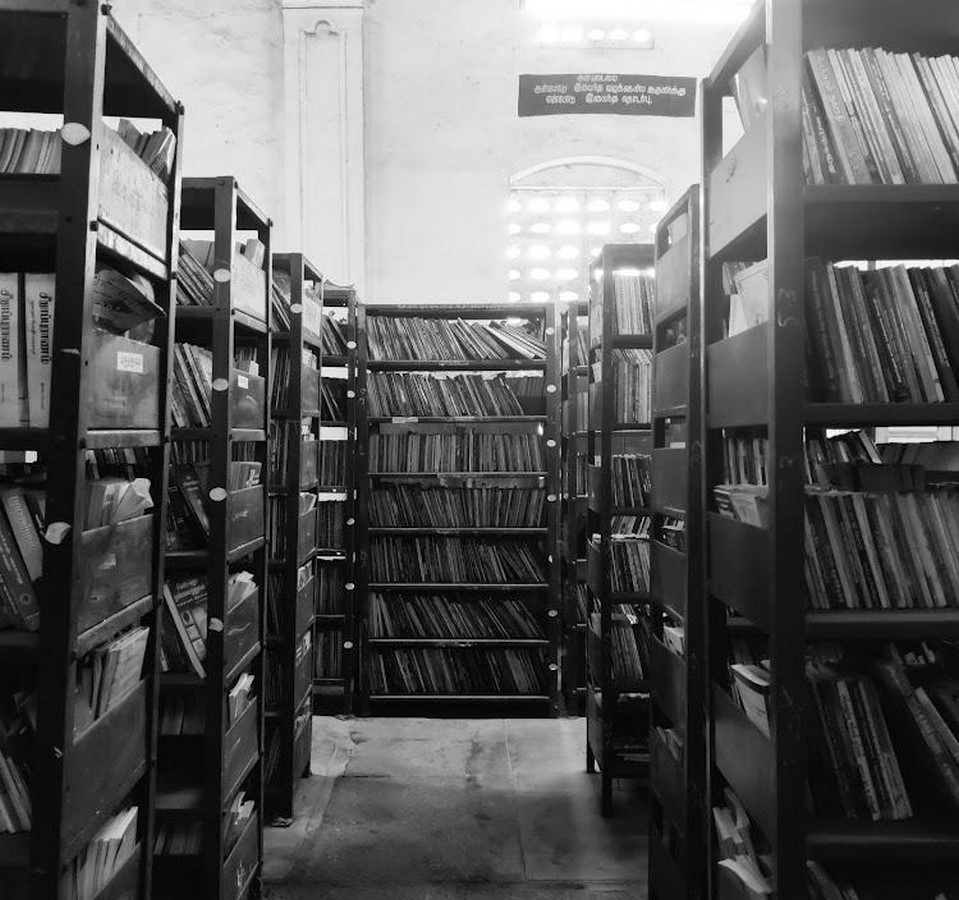
The design of the Goschen Library is straightforward, clear, and effective. It helps users easily move around the space.
Key Planning Characteristics:
- Clear zoning between reading areas, book stacks, and administrative spaces
- Wide circulation paths to reduce congestion
- Large reading halls designed for visual comfort and sound control
- Minimal internal partitions for spatial flexibility
High ceilings are important for creating a sense of openness and for improving thermal comfort. The layout shows a strong grasp of how people behave in learning environments, highlighting ease of movement and extended stay.
Architectural Style and Expression
The Goschen Library has a simple colonial institutional style. It is adapted to the local climate and culture.
Defining Features:
- Symmetrical façade composition,
- Raised plinth responding to site and climate conditions,
- Tall arched openings facilitating ventilation and daylight,
- Minimal decorative detailing.
This architectural style focuses on durability, proportion, and responsiveness to the climate instead of decorative excess. The result is a building that feels dignified yet welcoming, supporting its civic role without being overly assertive.
Materials and Methods of Construction
The Goschen Library is an example of the type of building that showcases the construction techniques employed in institutional buildings of the early 20th century in South India.
Primary Materials:
- Load-bearing brick masonry,
- Bonding of lime mortar,
- Wooden roof structures,
- Stone and cement flooring for main spaces.
The lime mortar ensures that the structure has some ventilation, thus eliminating the accumulation of moisture. The thick walls made from masonry help to act as heat barriers, thus reducing the heat retention effects inside the structure. The material used in constructing the building is based on colonial architectural adaptations that consider the local climate conditions.
Climate – Responsive Design Strategies
Before the discourse of sustainability gained mainstream recognition in the field of architecture, the Goschen Library had already incorporated principles of passive environmental design. The strategies that the building uses in relation to the climate are: high ceilings that allow for easy heat removal; large openings that promote cross-ventilation; thick walls that inhibit heat flow; and generous daylighting that reduces the need for lighting. The building therefore provides a very important case study in how institutional architecture of the past has taken into consideration climatic factors, providing lessons for sustainable architecture today.
Adaptation, Technology, and Modern Usage
Despite the fact that it is a building that is more than a century old, the Goschen Library has managed to remain relevant to the current needs through interventions that are subtle and non-invasive. The current improvements include:
- Digital cataloging systems
- Reading zones with wireless connectivity
- Improved artificial lighting
- Service enhancements that seamlessly interface with the existing environment In contrast to radical reconstruction, the library follows a pattern of adaptive continuity. New technologies are integrated into existing spaces without damaging the architectural structure.
Social and Cultural Significance
The actual worth of Goschen Library lies not only in its material existence but also in its social role.
Social Impact:
- Provides free and universal access to knowledge
- Catering to various groups of users across different generations
- Serves as a neutral public space in a commercialized urban setting that is otherwise dominated by commercial interests In a period where digital consumption is the norm, the library ensures the continued relevance of physical public knowledge spaces and remains a shared intellectual resource that reinforces the social fabric of the city.
Urban Role and Identity
In the context of Chennai, the Goschen Library is a quiet landmark. It may not be a tourist destination or a place that architecture buffs make a pilgrimage to, but its presence is a part of the intellectual landscape of Chennai.
In retaining its original function during the rapid change of the urban environment, the library emphasizes the significance of institutional continuity in creating a meaningful urban environment.
Sustainability and Contemporary Relevance
In the modern-day sustainability paradigm, Goschen Library is a great example of effective performance in relation to a number of key principles. The longevity of the library is a factor in the reduction of embodied carbon emissions, and the use of passive environmental design reduces the energy demand. The library is a great example of adaptive reuse rather than demolition and the use of materials that have a low maintenance requirement. Taken together, these points serve to support the argument that the architecture that is most sustainable is often that which is long-lived.