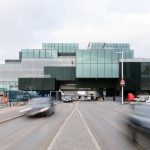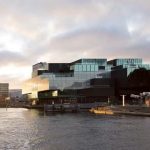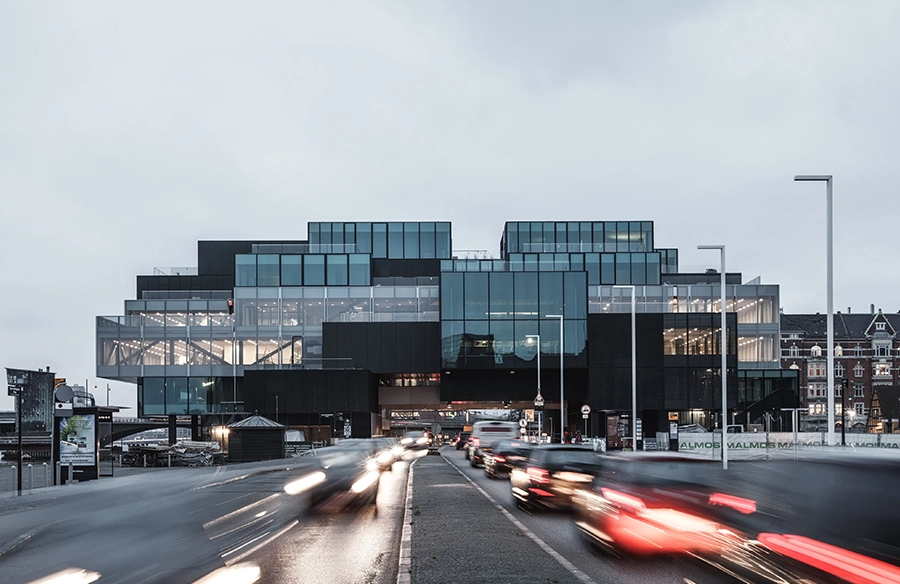
BLOX is an urban intervention designed by OMA. The project was completed in 2018 and serves as the home for the Danish Architecture Centre, located on the Copenhagen waterfront. We are analysing how ambitious philosophy can be translated into a physical structure and evaluating its tangible social and economic outcomes as a model for urban development.
Design
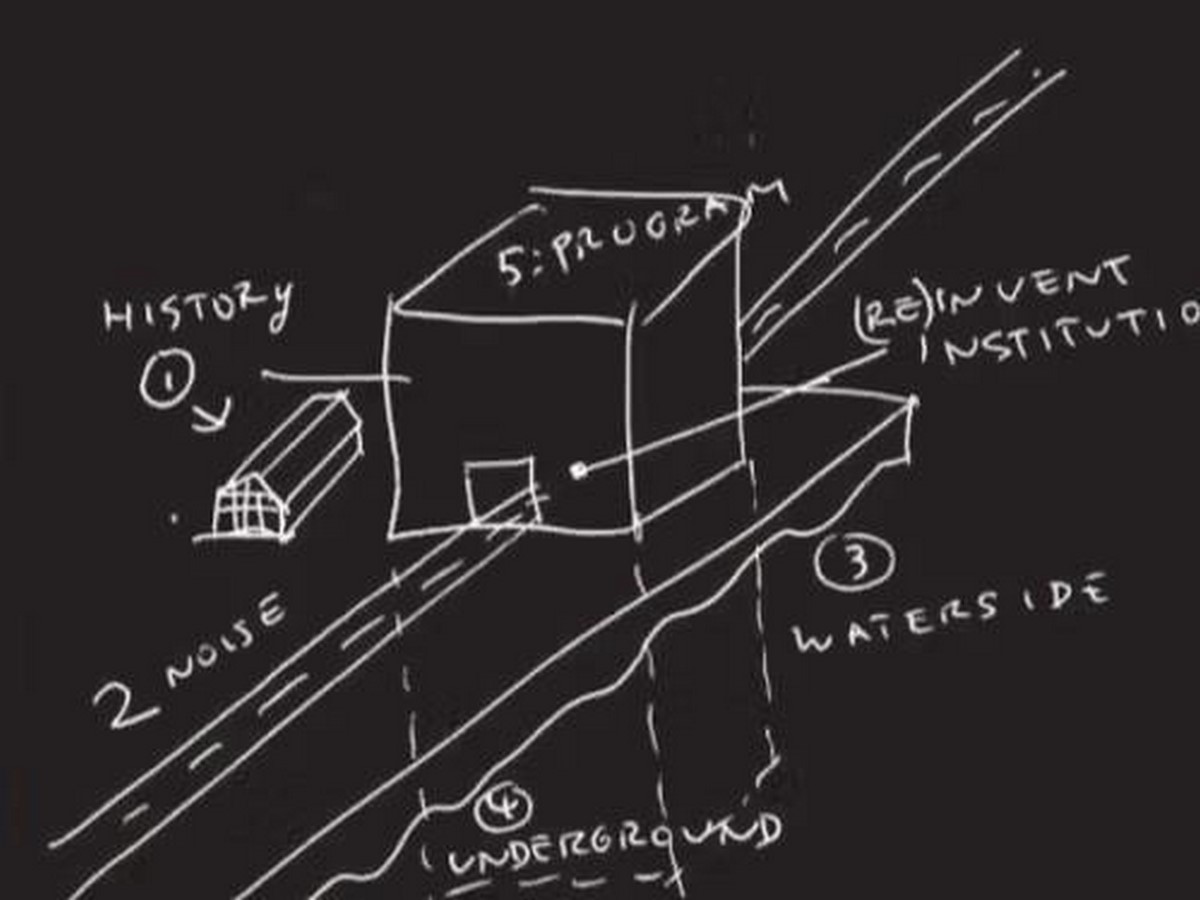
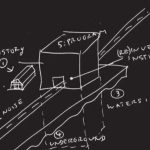
The BLOX centre was envisioned as an urban connector. In the words of lead architect Ellen van Loon, it was a very complicated and very desolate place, a void on the Copenhagen waterfront, as the site was a parking lot dominated by heavy traffic. This combination of infrastructural dominance and a lack of human-centric purpose rendered the location a civic non-place, a transitional zone people passed through but never inhabited. By analysing this pre-existing urban challenge, the radical nature of the solution became clear.
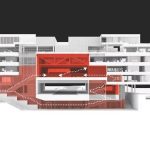
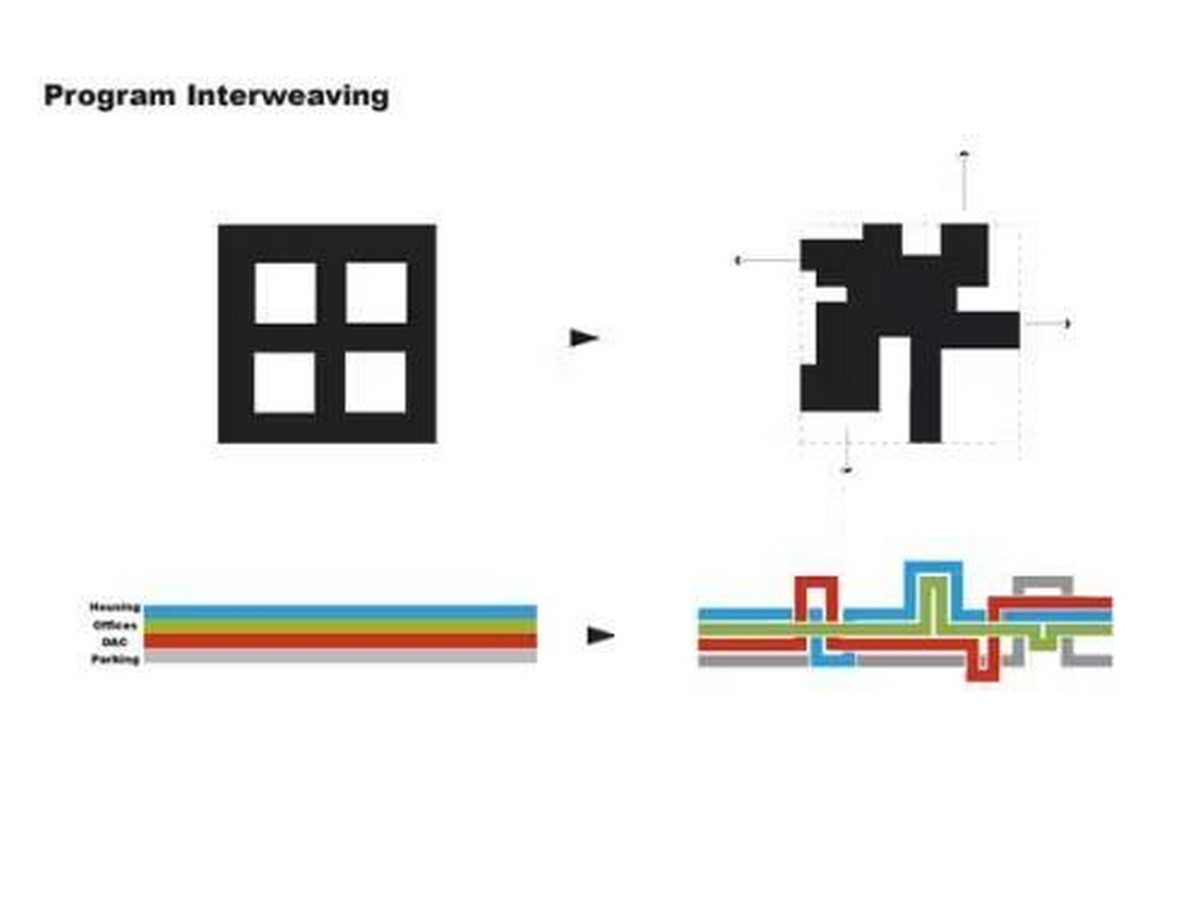
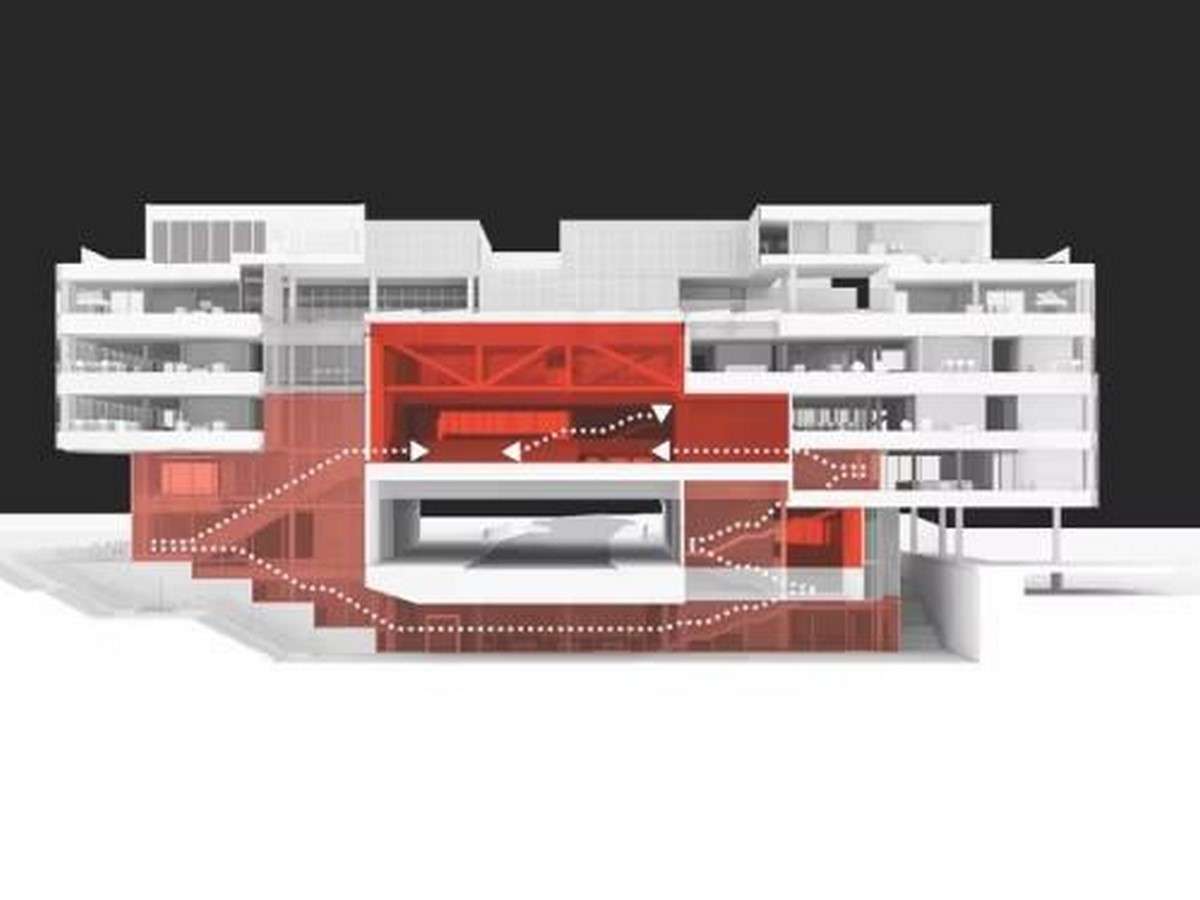
Today, in its place stands BLOX, a multifaceted building. That houses many programmes, though it primarily serves the DAC, contains offices, cafes, co-working spaces, private offices, exhibition spaces, 22 rental apartments with roof terraces, a public playground, basement parking and fitness centres. The DAC was at the centre of the function, and it would contaminate all the other functions. In the conventional planning, where public functions occupy the ground level with private uses stacked above. The BLOX centre explores the idea of architectural contamination, where the DAC would be at the heart of the building that would influence and interact with other programmes. This radical placement ensures the institute is embedded in its own field of study, surrounded by housing, office and coworking spaces. This argument between programmes makes sure that there is interaction between different user groups throughout the building’s vertical space. The BLOX centre, with its spatial configuration like an octopus, starting in the building’s centre and pushing outward, creates a connection with the surrounding environment.
The building is designed for programmatic adaptability. The auditorium, for example, is not a static space but can be transformed to serve as an exhibition hall or an event venue. This flexibility is intended to “stimulate visitors to think about doing things they are not used to” by presenting them with a dynamic environment where activities and users overlap, breaking down conventional expectations. Through these deliberate design strategies, BLOX becomes more than a collection of uses; it becomes an active instrument for urban connection and social engagement.
Materials and Construction Technique
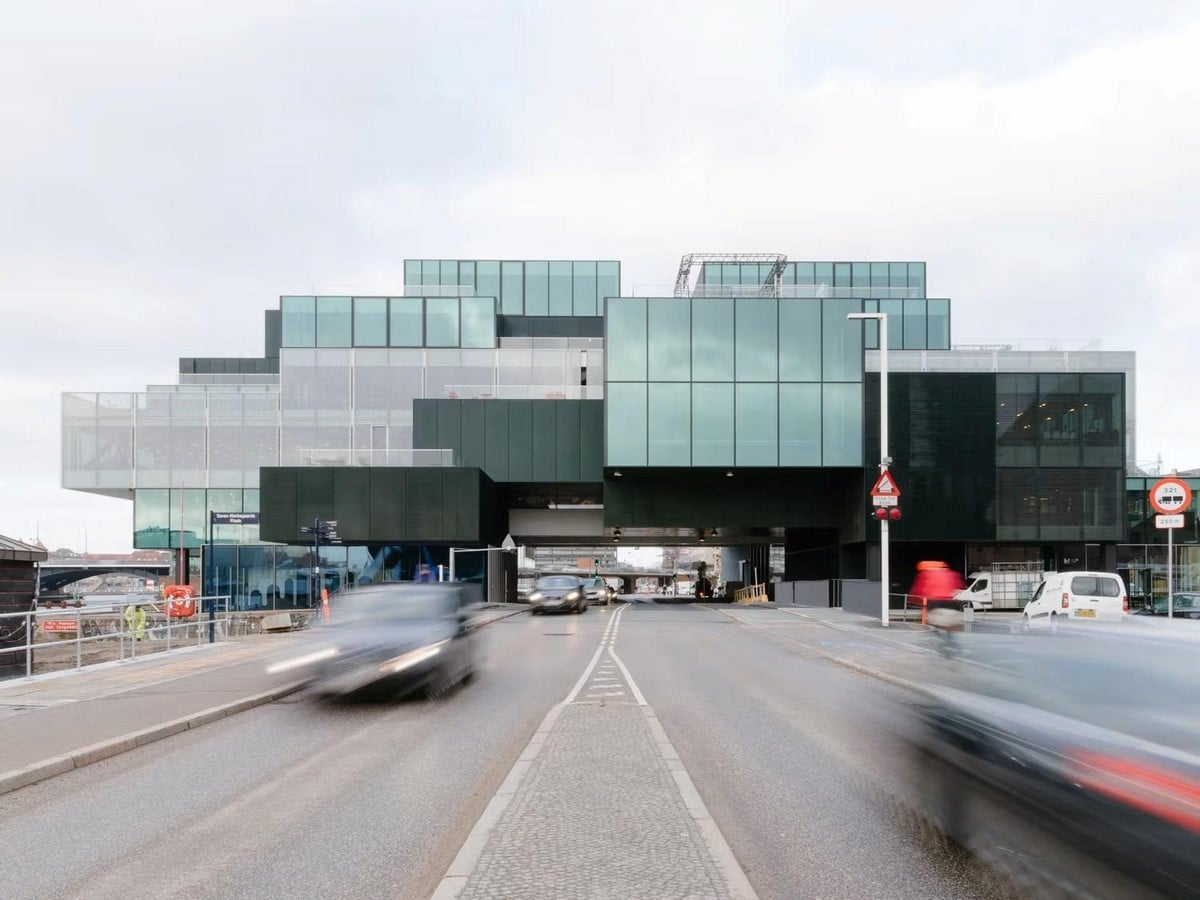
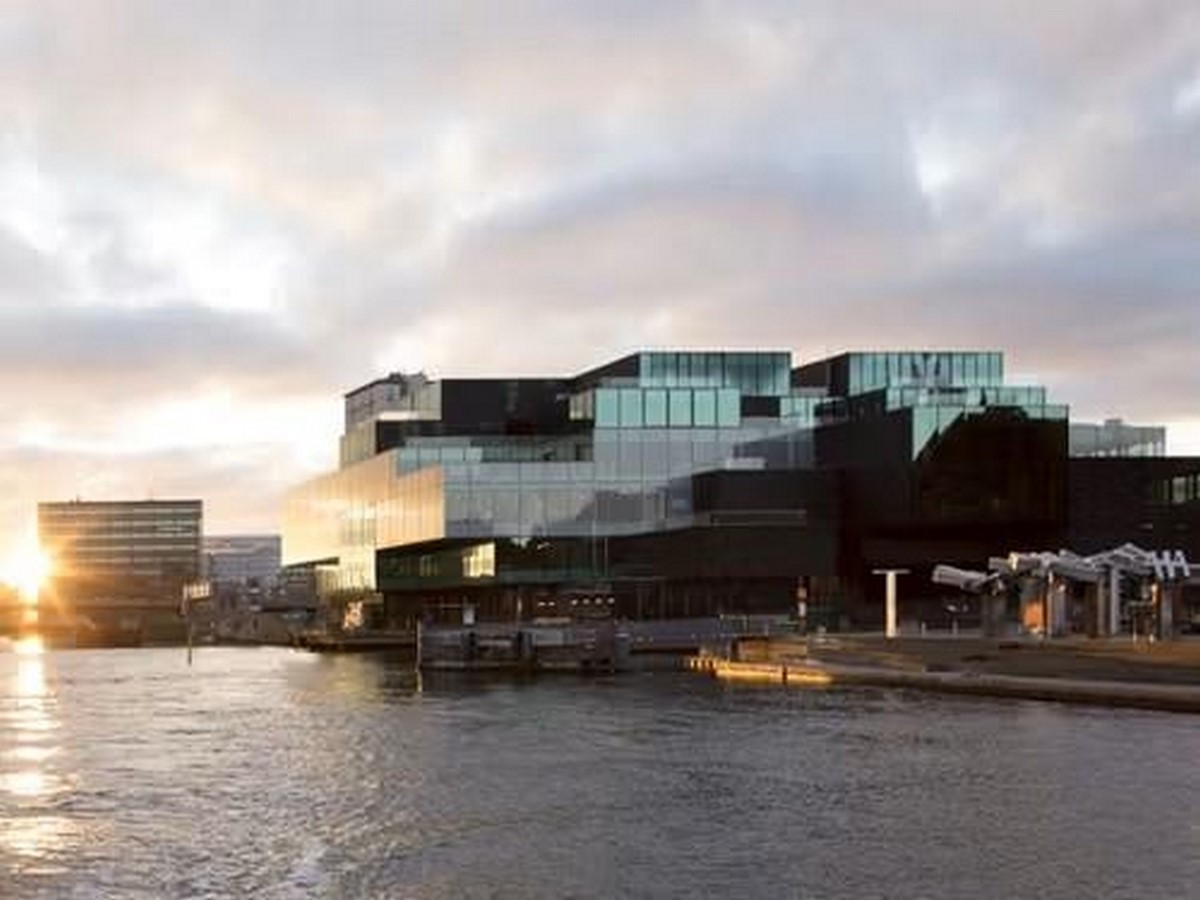
The structure is primarily composed of glass, steel and concrete. Its most striking feature is its opaque frosted glass face, which forms a series of interlocked geometries. This material palette is a contrast to the traditional red brick building in the context of Copenhagen’s historic old town. Inside the Danish architecture centre’s warehouse aesthetic featuring high clearance allows the centre to move away from a 2D experience by hanging heavy objects and large-scale models from the ceiling. The golden room is the most secured room in the building, designed to exhibit high value art and architecture.
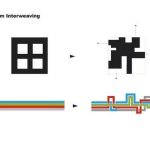
The BLOX houses any programmes on a complex site; the architect uses a pixelated cubic volume. As the centre is situated in a historic city, the architects don’t want the form of the building to be the focus or too distracting, so they tried to reduce the building’s scale by taking pixels out of the cube, which better connects with the neighbouring yellow houses and historical city blocks. The architects created a rational, uniform white band for the offices in the middle of the building. This pixelation serves a distinct purpose for the different functions. This approach breaks down the building mass and provides the apartments with a private terrace, and the latter reason, on the ground level, this pixelation carves out inviting public spaces and dramatic cantilevers, making the form more porous rather than monolithic and intimidating.
The building cantilevers over the waterline, breaking Copenhagen’s six-meter setback rule. Positioned at the water’s edge, pedestrians are forced to interact with or move through the building instead of simply passing by.
Sustainability
The BLOX centre is a broader sustainable vision addressing social and economic impact. The BLOX centre functions as a Living Laboratory. Its sustainability and engineering strategies were developed by Arup and COWI. User comfort and spatial flexibility are important elements of BLOX. The high insulted face acts as an acoustic barrier against the traffic and construction noises. To have a minimal energy wastage, the building relies on low energy lighting, task lights, fully glazed faces to provide a generous view of the outdoors and to reduce lighting energy usage. The building takes advantage of the on-site renewable energy source to achieve energy usage of under 40kwh/m2/yr. The facility uses Copenhagen’s district system, which incorporates seawater cooling and residual heat from electricity generation.
BLOX is far more than a collection of functions in a glass box. It is a built argument for a new kind of urban building, driven by three core concepts: the building as an urban connector, the interior as a “mixing chamber” for architectural contamination, and the exterior as a context-responsive form that talks with its city. The success of its philosophy and strategy provides critical, actionable lessons for creating more resilient and synergistic urban environments.
Reference:
OMA. (n.d.). BLOX / DAC. [online] Available at: https://www.oma.com/projects/dac-blox.
Louisiana Channel (2018). Ellen von Loon Interview: Contaminating Architecture. [online] YouTube. Available at: https://www.youtube.com/watch?v=ZEF8D8t7tTA [Accessed 18 Jan. 2026].
ArchDaily. (2018). BLOX / OMA / Ellen Van Loon. [online] Available at: https://www.archdaily.com/893920/blox-oma-ellen-van-loon.
blox.dk. (n.d.). BLOX – urban life, architecture and sustainability. [online] Available at: https://blox.dk/english/.
G-u.com. (2026). BLOX – Danish Architecture Center | GU Herrajes SA. [online] Available at: https://www.g-u.com/ar-en/referenzen/blox-danish-architecture-center/217987 [Accessed 18 Jan. 2026].
Danish Architecture Center – DAC. (2026). Guided Architecture Tour of BLOX at Copenhagen Harbor. [online] Available at: https://dac.dk/en/guided-architecture-tour-of-blox-at-copenhagen-harbor [Accessed 18 Jan. 2026].
Images:
OMA. (n.d.). BLOX / DAC [Photograph-1] Available at: https://www.oma.com/projects/dac-blox.
OMA. (n.d.). BLOX / DAC. [Photograph-2] Available at: https://www.oma.com/projects/dac-blox.
OMA. (n.d.). BLOX / DAC. [Photograph-3] Available at: https://www.oma.com/projects/dac-blox.