Reimagining Architectural Intervention
Fred Scott’s pioneering work “On Altering Architecture” stands as a seminal contribution to the course of architectural theory that offers readers a comprehensive exploration of building modification that poses challenges to the conventional methods of restoration and preservation (Scott, 2008).
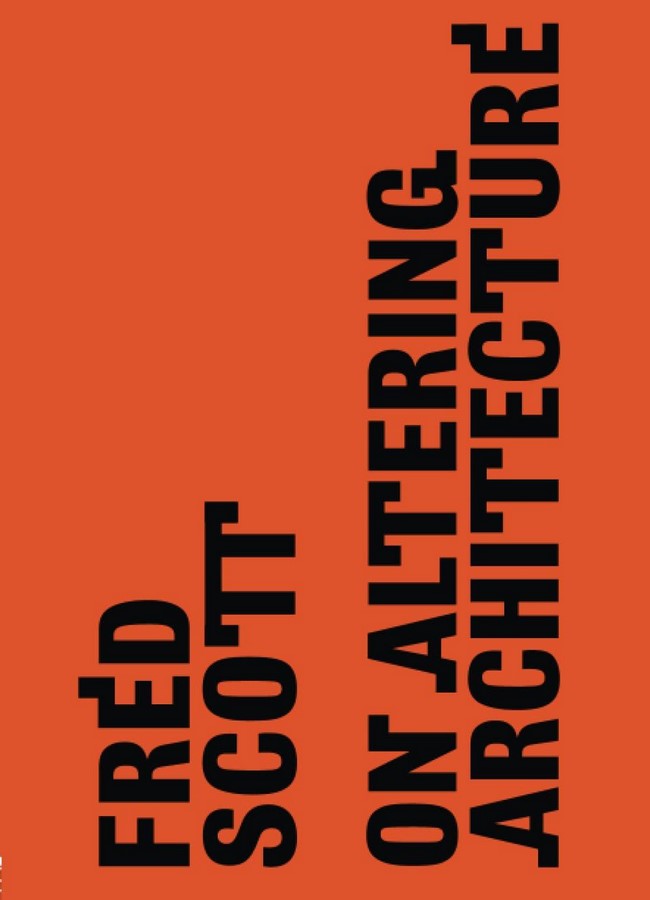
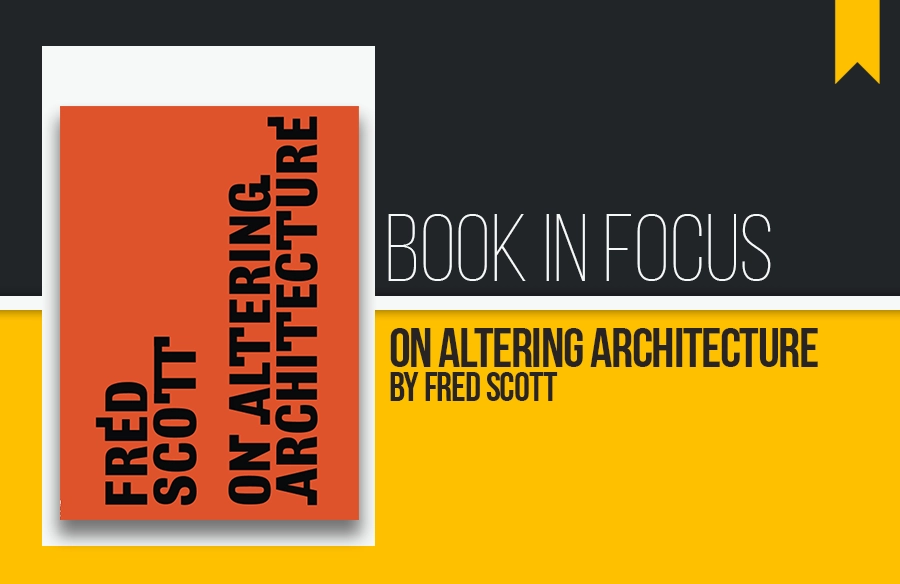
This influential book was published in 2008 by Routledge and has gained a significant amount of academic attention. It has gathered over 223 citations and has established itself as an essential reading for audiences interested in interventional design (Academia.edu, 2019). This comprehensive book review investigates Scott’s theoretical framework, key arguments and lasting impact on contemporary architectural practice. The academic relevance of this book makes it an essential reading for students, critics, and practitioners who are interested in the evolving relationship of architecture with existing buildings, social change and historical continuity.
Theoretical Foundation
The central argument placed by Scott in this book is about altering buildings, whether it is through insertion, extension or restoring elements and details, it deserves acknowledgement as a potential form of architectural innovation compared to that of new constructions. Studying figures like John Ruskin, who was against the idea of restoration as he believed it destroyed the historical authenticity, and Eugène Viollet-le-Duc, who strongly believed restoration is a way of improvement rather than demolishing the ancient buildings, Scott brings out a “third way” which neither objectifies the new nor impulsively preserves the old. Alteration is positioned as a form of “intervention and change,” as he recommends designers to critically engage with the existing fabric instead of following the conventional tabula rasa or the conservationist approaches (Scott, 2008).
Scott believes that the work of alteration is profoundly cultural, sociological and psychological, which exposes the foundational surreality in even the most basic transformations in architecture (Youthed, 2018). In an attempt to illustrate how interventions alter the meaning and experience of architecture, Scott uses the idea of collage and art conservation throughout. He also examines the idea that buildings as ‘unfinished’, always available for modifications, expansions and re-imagination.

Alteration as Translation: Theory in Practice
Conceptualisation of alteration as an act of “translation” is a process that connects past, present and future by defining and evolving existing structures. Scott’s idea of conceptualisation is amongst the book’s most significant contributions. This method extends beyond the simple dichotomy of preservation and destruction. It urges the practitioners to see change as an innovative conversation between the old and new (Lanz and Pendlebury, 2022; Stone, 2020).
The author has examined case studies from the United States, Europe, and Japan, which display illustrations of how theory is manifested in practice. Scott’s discussion on Villa Savoye (preserved as a pristine modernist monument) in contrast with Pessac, where Le Corbusier’s housing estate has taken shape and is personalised by its users. It tells us how important user agency is and the positive repercussions of letting buildings adapt and evolve through occupation and use (Scott, 2008; Boudon, 1972). He contends for a more democratic and dynamic model of architectural change by advocating vernacular over literate design and supporting designs that allow adaptation rather than strict preservation.
Social, Political, and Environmental Contexts
The book, “On Altering Architecture”, places the concept of alteration within a broader framework of political and social change. The author examines how design interventions act as tools for modern needs, responding to the changing patterns of urban living, changing technologies, and new social values (Scott, 2008; Barnes and Noble, 2007). Scott analyses the practical obstacles along with the questions of ethics and meaning, and highlights concerns about the excessive resource consumption and the harm it causes to the environment when alteration is sidelined, and instead, demolition is favoured.
Scott’s works surfaced when the architectural profession was exposed to the impacts of the financial crisis in 2008, which imposed a need for rethinking working with the existing structures, since it was an economic necessity and environmentally crucial. The book stresses sustainability and the re-colonisation of old spaces, which aligns with the present discussions about the climate emergency and requirements for conservation of resources in construction.
Reception and Critique
Scott’s works have been widely received in the academic and professional fields with an overwhelmingly positive impact. His work is praised by various critics because of the rigorous theoretical grounding, originality and the significant role it plays in framing a body of architectural thought about the intervention and change for students, professionals and planners. Scott’s ability to bring out a large part of unexplored territory within architecture, specifically the “transgressive” nature of alteration, which breaks the established taboos of restoration and conservation, has been highlighted by scholars. Yet, the book has received some criticism. The audiences from the platforms of Goodreads mention that the reading is heavy theoretically, and the dense philosophical style does pose some challenges for people looking for practical advice. Scott’s compassion towards Viollet-le-Duc and his liberal outlook towards alteration is perceived to have overshadowed the variations of effective conservation and preservation, which leads to unclear instructions for the real-world projects.
Nevertheless, the positive attributes overshadow the negatives. The book has been frequently acknowledged by UK-based firms such as David Chipperfield Architects and Caruso St John for its intellectual legitimacy underpinning high-profile interventional projects, which have also shaped the practice and pedagogy in architectural schools (Youthed, 2018).
Influence and Contemporary Significance
Emphasising the open-ended nature of buildings along with promoting a “collage” approach to design, Scott’s book informs the ongoing shift in architectural thinking, from fixating on novelty to valuing continuity, care, and adaptation. This informs the major projects such as Berlin’s Neues Museum and the UK’s Astley Castle, where thoughtful additions have created vibrant new spaces while maintaining their architectural heritage (Youthed, 2018).
Scott’s framework is highly relevant in the context of sustainability, heritage and the ethics of altering existing buildings. His ideas provide architects and academics with a way to assess interventions in technical terms, also in relation to their cultural and social consequences.
Conclusion: Author’s Perspective
“On Altering Architecture” is a strong argument for creativity, sustainability and inclusivity for processing the built environment and not just any manual or a history of built interventions. Scott’s work is important for anybody trying to comprehend the opportunities and obligations of changing the built environment because of his intellectual rigour and vision for an “unfinished,” evolving architecture, even though some people find his heavy theoretical style challenging. Scott inspires architects to go beyond preservationist belief or short-sighted progressivism, recommending, in place of responsible design by situating alteration as a “double ecstasy” and concurrently honouring the past while building for the future.
References:
Boudon, P. (1972). Lived in Architecture. Cambridge, Mass.: MIT Press.
Lanz, F. and Pendlebury, J. (2022) ‘Adaptive reuse: a critical review’, Building Research & Information, 50(1-2), pp. 85-101.
Misirlisoy, D. and Günçe, K. (2016) ‘Adaptive reuse strategies for heritage buildings: A holistic approach’, Sustainable Cities and Society, 26, pp. 91-98.
Popescu, M. (2019) ‘Review of On Altering Architecture’, Goodreads. Available: https://www.goodreads.com/book/show/7415431-on-altering-architecture [Accessed 13 November 2025].
Scott, F. (2008). On Altering Architecture. London: Routledge.
Stone, S. (2020) ‘Fidelity and freedom in the theory of adaptive reuse’, Writing Place Journal for Architecture and Literature, 3, pp. 23-35.
Youthed, P. (2018) ‘Fred Scott: The double ecstasy of altering architecture’, Building Design, 17 October. Available: https://www.bdonline.co.uk/briefing/fred-scott-the-double-ecstasy-of-altering-architecture/5096079.article [Accessed 13 November 2025].
buildingonthebuilt.org (2018) ‘Fred Scott: The Double Ecstasy of Altering Architecture’. Available: https://www.buildingonthebuilt.org/on-altering-architecture-review [Accessed 13 November 2025].
bdonline.co.uk (2018) ‘Fred Scott: The double ecstasy of altering architecture’. Available: https://www.bdonline.co.uk/briefing/fred-scott-the-double-ecstasy-of-altering-architecture/5096079.article [Accessed 13 November 2025].
perlego.com (2025) ‘On Altering Architecture by Fred Scott’. Available: https://www.perlego.com/book/1555347/on-altering-architecture-pdf [Accessed 13 November 2025].
goodreads.com (2007) ‘On Altering Architecture by Fred Scott’. Available: https://www.goodreads.com/book/show/7415431-on-altering-architecture [Accessed 13 November 2025].