Net-Zero Building
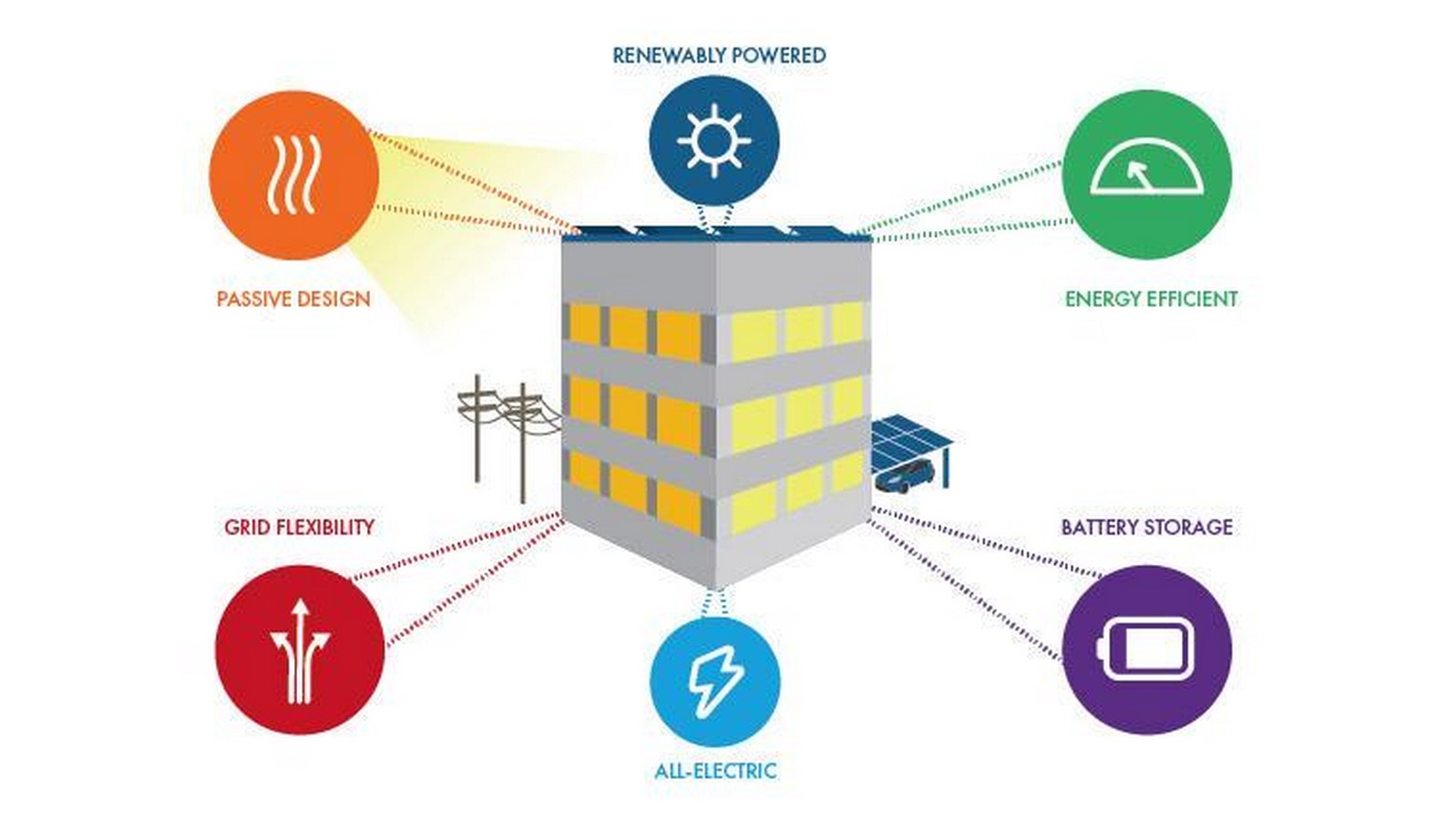
Net-zero, also known as carbon neutrality, is the act of cancelling out greenhouse gases produced by human activity, by reducing existing emissions and implementing methods of absorbing carbon dioxide from the atmosphere. When a building can mitigate or counterbalance the amount of energy needed to construct and run it throughout the course of its lifetime in terms of site, source, cost, and emissions, it is said to have net-zero energy. In other words, the building can generate enough energy to zero out or cancel out the energy required for everyday operations.
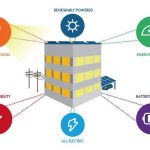
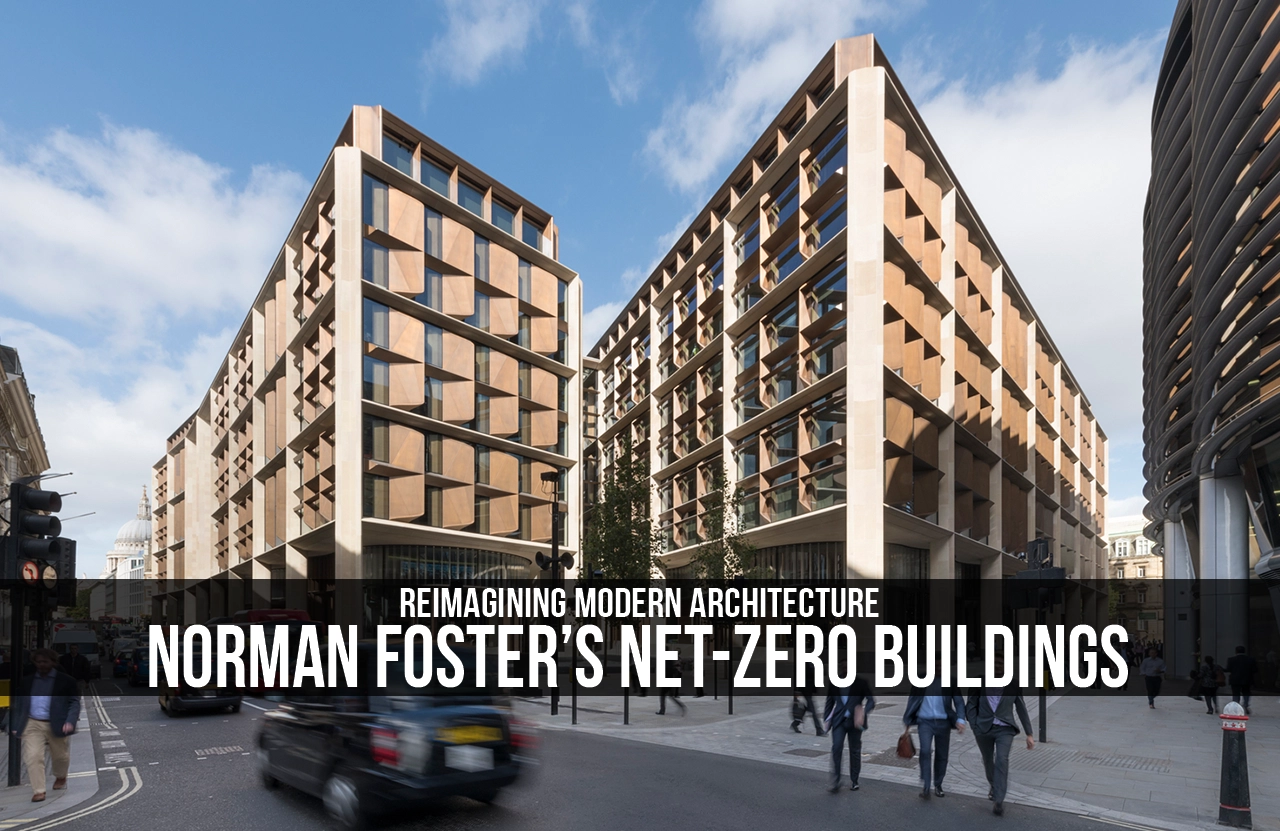
Net-Zero buildings are constructed with these design criteria: producing energy onsite via equipment such as solar panels or wind turbines, accounting for their energy use through clean energy production offsite, and reducing the amount of energy required through design optimization. To complement on-site renewable energy resources, such as solar energy, designers typically incorporate passive design elements into the building envelope. Within this evolving shift toward high-performance architecture, Norman Foster has emerged as one of the leading figures pushing the boundaries of sustainable and energy-efficient building design.
Norman Foster’s Sustainable Design Philosophy
Norman Foster’s architectural philosophy reflects his commitment to innovation and sustainability. By integrating technology and respecting nature, Foster has revolutionized modern architecture. Utilizing passive solar heating and natural ventilation exemplifies his dedication to eco-friendly solutions. Norman Foster’s architectural vision has significantly shaped modern architecture and urban planning. His innovative designs and sustainability-focused approaches set new benchmarks in the industry.
Building upon this basis, Foster has made a significant contribution to the development of Net-zero building design. To reduce the negative effects on the environment, his designs increasingly use energy-efficient materials, high-performance facades, sophisticated ventilation techniques, and renewable energy systems. Notable examples such as The Gherkin, Apple Park, Hearst Tower, etc, demonstrate how Foster integrates passive and active strategies to drastically reduce operational energy use.
The Gherkin, London
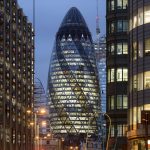
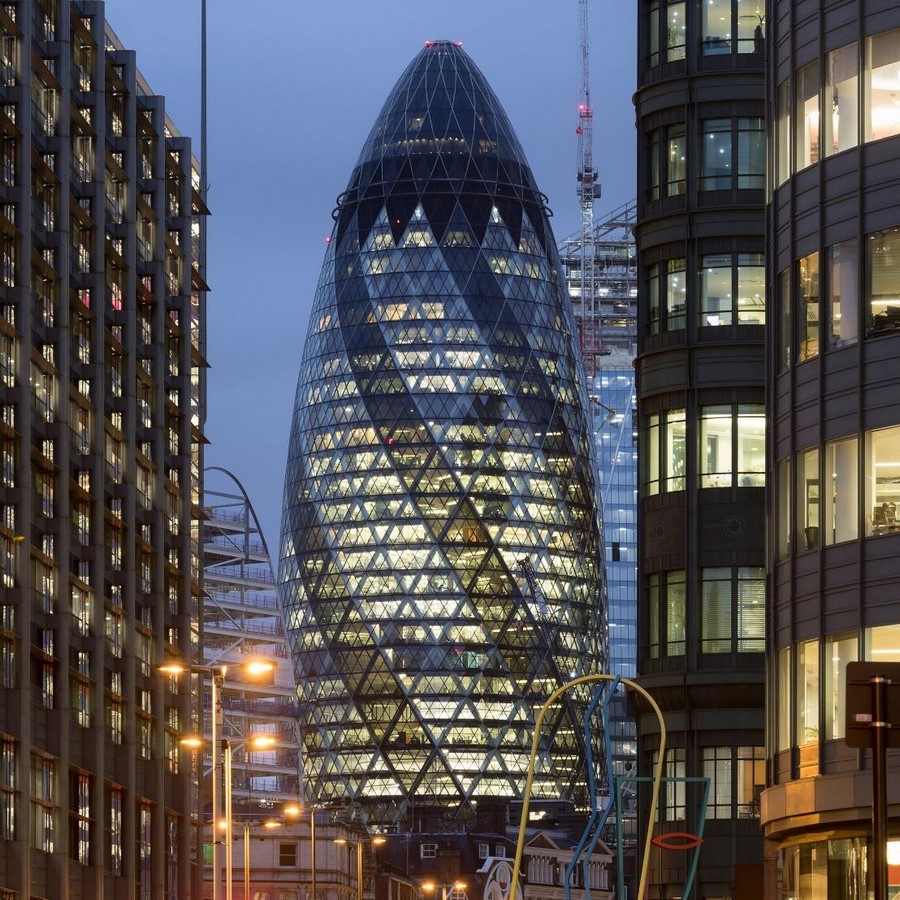
The Gherkin, also known as 30St Mary Axe, is one of London’s most distinctive landmarks. The skyscraper was constructed to high sustainability standards, groundbreaking for its time. The tower embodies a highly progressive environmental strategy, with its aerodynamic shape maximizing the amount of natural lighting and ventilation, thereby significantly reducing the building’s energy consumption. The double-glazed, circular outer envelope incorporates a diagrid structural system, a single-glazed inner envelope, and asterisk-shaped floor plates. Each floor is rotated five degrees from the floor below.
The building uses energy-saving methods, which allow it to use only half the power that a similar tower would typically consume. Gaps in each floor create six shafts that serve as a natural ventilation system for the entire building. The shafts pull warm air out of the building during the summer and warm the building in the winter using passive solar heating.
Bloomberg’s European HQ, London
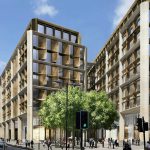
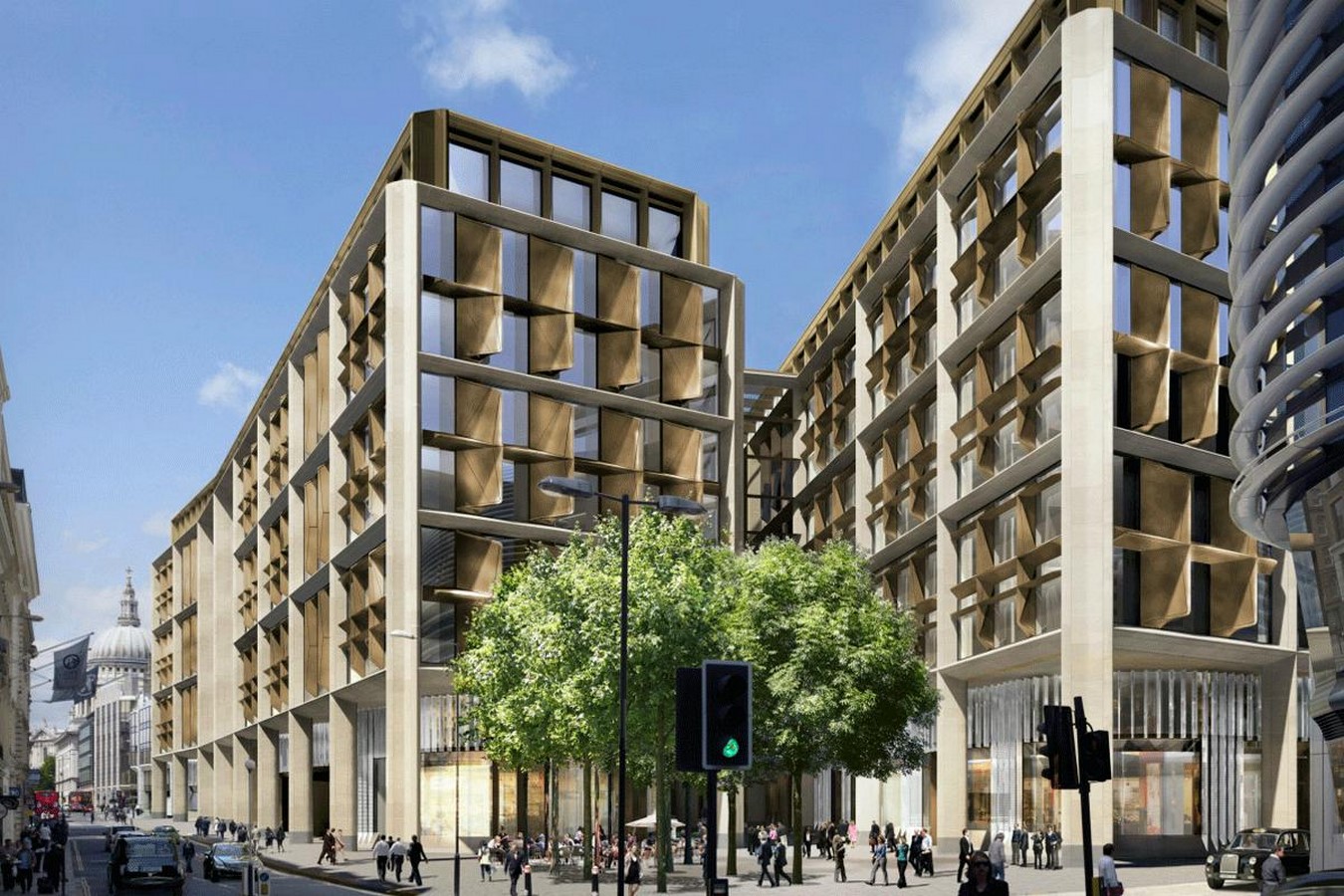
One of the most environmentally friendly office buildings in the world, the Bloomberg European Headquarters in London demonstrates Foster + Partners’ skill in fusing architecture with environmental performance. The building’s design revolves around a distinctive “breathing” façade with bronze fins and sandstone panels that control daylight and minimize solar gain while permitting natural ventilation through movable components. At its core is a dramatic, top-lit atrium anchored by a spiraling ramp that promotes movement, connectivity, and interaction across the workplace. Inside, a highly innovative ceiling system made of aluminium “petals” provides integrated lighting, cooling, and acoustic control, significantly reducing energy demand.
Compared to ordinary office buildings, the headquarters uses around one-third less energy and more than two-thirds less water, demonstrating remarkable efficiency. Greywater recycling and rainwater collection enable vacuum-flush toilets, which significantly reduce water usage, and smart ventilation systems react to occupancy levels. The Bloomberg HQ sets a standard for modern office sustainability with its on-site combined heat and power plant and thoughtfully planned building orientation. It shows how architectural form, materiality, and technology can coexist harmoniously to create a high-performance, low-impact workplace.
Redefining Modern Architectural Practice
Norman Foster’s net-zero buildings have changed the way modern architecture works by showing that technology, beauty, and sustainability can all work together without any problems. His designs include passive environmental techniques, modern energy systems, and places that are good for people. This shows that being environmentally responsible can lead to new ideas instead of holding them back. Foster has established a new standard by demonstrating that contemporary architecture can be both iconic and ecologically responsible via projects like Apple Park and Bloomberg HQ. His work pushes architects to reconsider conventional methods, motivating a new generation to create structures that intelligently adapt to their surroundings, their occupants, and the environment.
References:
Stouhi, D. (2022). What is Net-Zero Architecture? Terms and Design Strategies. ArchDaily. Available at: https://www.archdaily.com/977740/what-is-net-zero-architecture.
Paulus, C. (2024). Unveiling the Design Secrets of Norman Foster: Innovation, Sustainability, and Functionality | illustrarch. illustrarch. Available at: https://illustrarch.com/articles/31246-unveiling-the-design-secrets-of-norman-foster.html.
Skanska (2019). 30 St Mary Axe, London | www.skanska.co.uk. www.skanska.co.uk. Available at: https://www.skanska.co.uk/expertise/projects/57248/30-St-Mary-Axe%2C-London.
ArchDaily (2017). Bloomberg’s European HQ / Foster + Partners. ArchDaily. Available at: https://www.archdaily.com/882263/bloombergs-european-hq-foster-plus-partners.