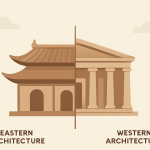
Architecture has always been one of the most powerful storytellers of human movement, of trade, migration, conquest, curiosity, and cultural exchange. While much of architectural history is narrated through the spread of Western styles across the world during colonial expansion, an equally compelling and often undervalued narrative moves in the opposite direction: the journey of Eastern architectural ideas, crafts, and spatial philosophies into the West. This is a layered dialogue where Asia’s traditional and artistic vernacular brilliance has deeply influenced Western architectural imagination.
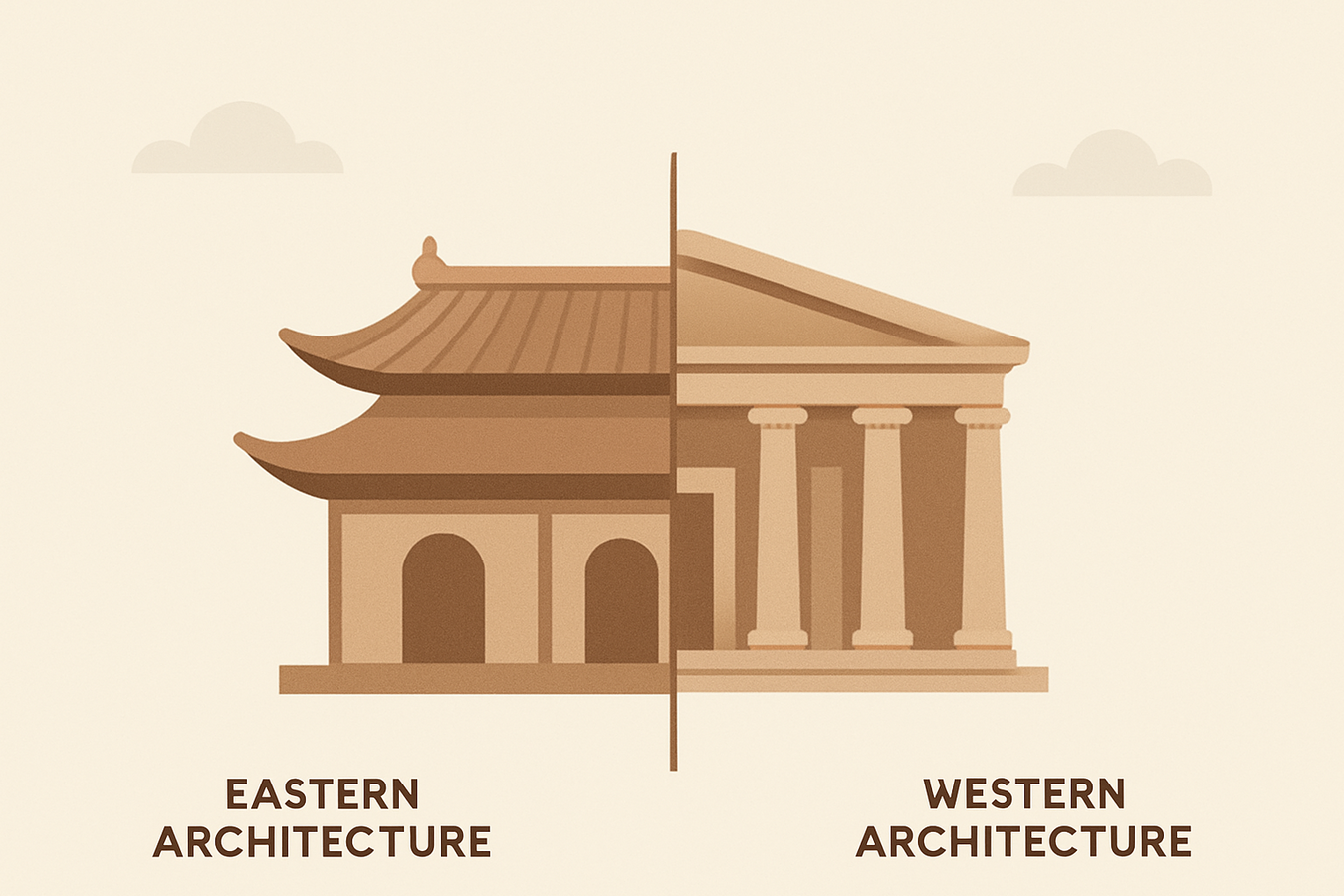
Today, as globalization dissolves geographical boundaries, this exchange has become more fluid than ever. East meets West ambition; vernacular wisdom confronts modern technology; and together, they form a hybrid architectural language that is increasingly universal.
The Philosophy of Space: Stillness, Balance, and Nature
One of the most profound contributions from Eastern architecture to the West is the philosophy that space is not merely built, it is felt. This is especially visible in traditional Japanese and Chinese design principles. Concepts like Zen aesthetics, ma (the space between), and the use of courtyards to regulate light and air have slowly seeped into Western spatial thinking.
Western wellness architecture, meditation retreats, spas, and even minimalist residences are now deeply influenced by the Tokyo-style Zen courtyard, minimal and deeply connected to nature.
This philosophical approach stands in contrast with the Western tradition that historically emphasized grandeur and dominance. The integration of Eastern calm into Western architecture has led to a more holistic approach to design, one that acknowledges the emotional and spiritual dimensions of built environments.
Material Wisdom
Perhaps one of the most exciting aspects of the East-to-West architectural movement is the global rise of bamboo architecture, rooted deeply in Southeast Asian vernacular traditions. For centuries, Balinese and other Southeast Asian communities have used bamboo as a structural material due to its strength, flexibility, and ecological efficiency.
Today, Western architects, especially in cities exploring sustainable futures, are drawing inspiration from Balinese bamboo houses. This influence goes beyond visual mimicry. Western engineering firms are experimenting with bamboo as a primary structural element in pavilions, eco-resorts, and experimental housing.
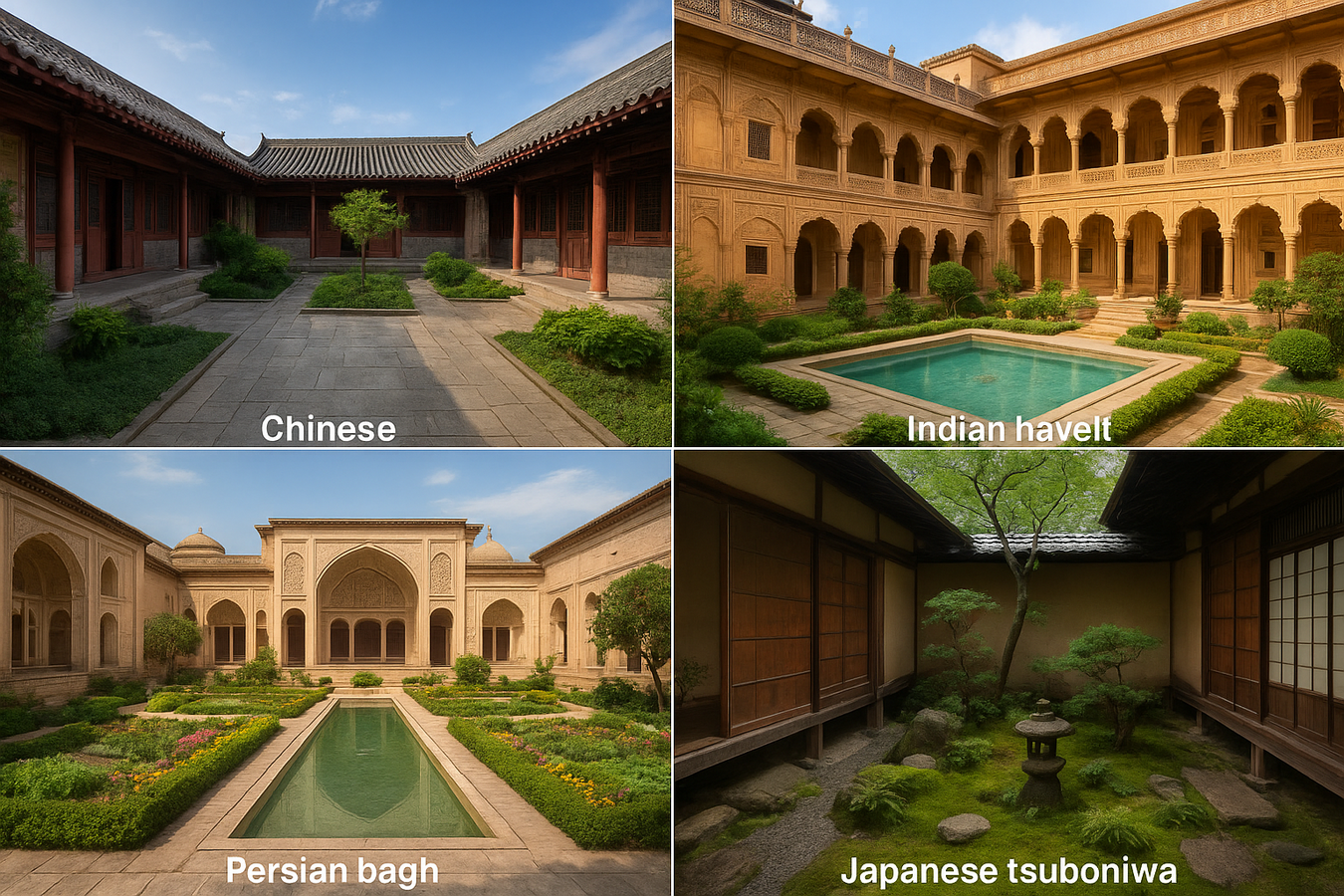
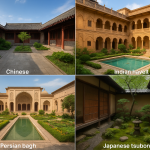
The courtyard, found across Asian, Middle Eastern, and Mediterranean traditions, has always been an architectural gem. Chinese siheyuan, Indian havelis, Persian baghs, and Japanese tsuboniwa all use the courtyard as an internal world, a microcosm of climate control and social interaction.
While courtyards existed in the West historically, their role diminished over time with the rise of high-density living. Today, however, Western architects are rediscovering the courtyard as cities struggle with heat islands, lack of green space, and mental fatigue. The modern Western courtyard is undeniably Asian in spirit: quieter, smaller, introverted, and designed to evoke emotional presence rather than simply provide air and light.
This shift symbolizes how Eastern spatial understanding, particularly its climate-responsive and human-centric design ideas, is influencing the future of Western architectural frameworks.
East Reflecting the West
Interestingly, while the West looks East for philosophical grounding, the East also mirrors Western architectural forms in a phenomenon known as duplitecture. In China, entire replicas of Western towns, like Thames Town in Shanghai or the Austrian village of Hallstatt, recreated in Guangdong, testify to this reverse flow. While this may seem superficial, duplitecture is also a form of cultural dialogue: the East studying, experimenting, and occasionally playfully reinterpreting Western urbanisms.
This cross-reflection highlights a broader truth: architecture is not a one-way stream of influence but an ongoing conversation.
When East Meets West on the Same Street
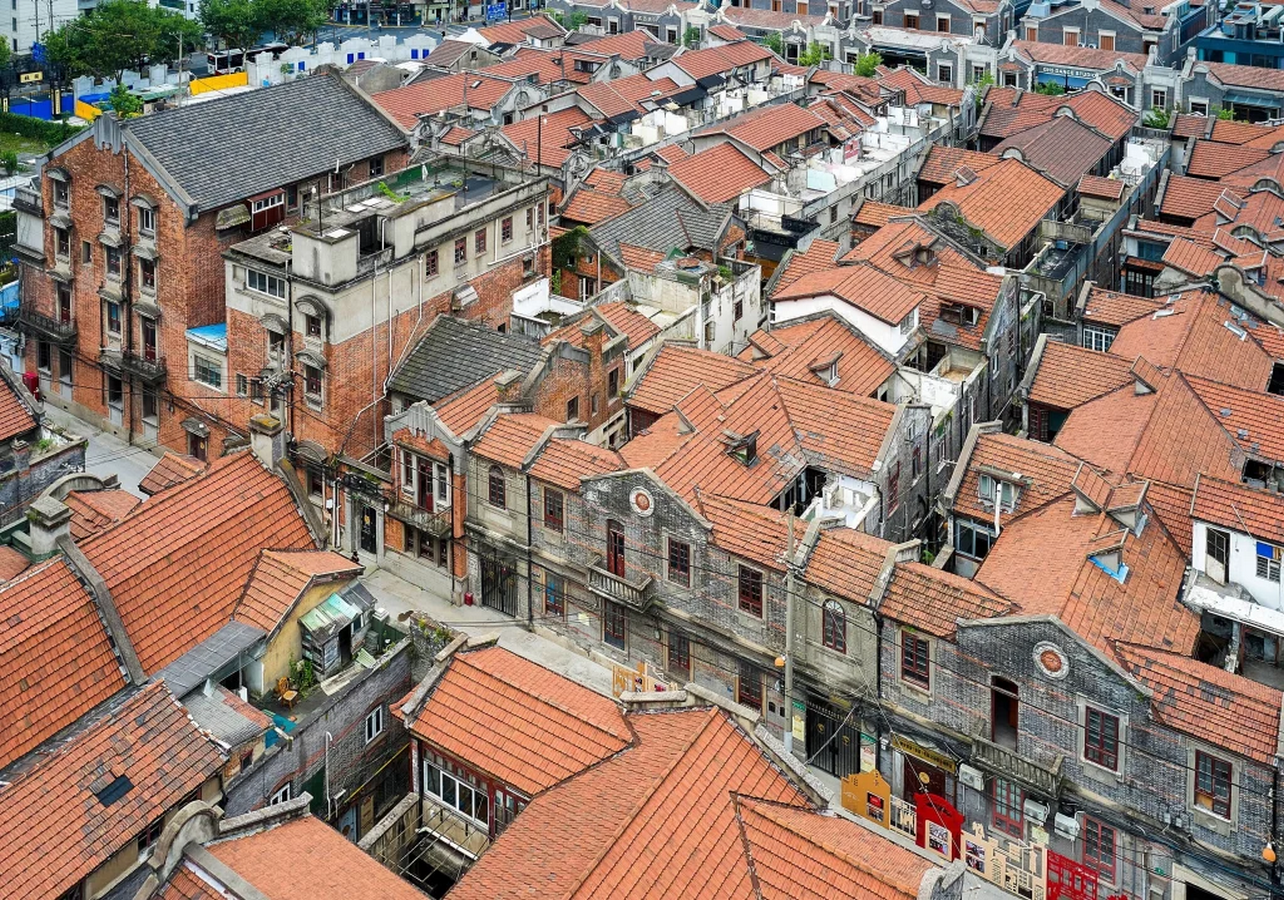
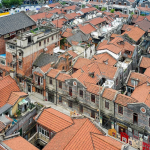
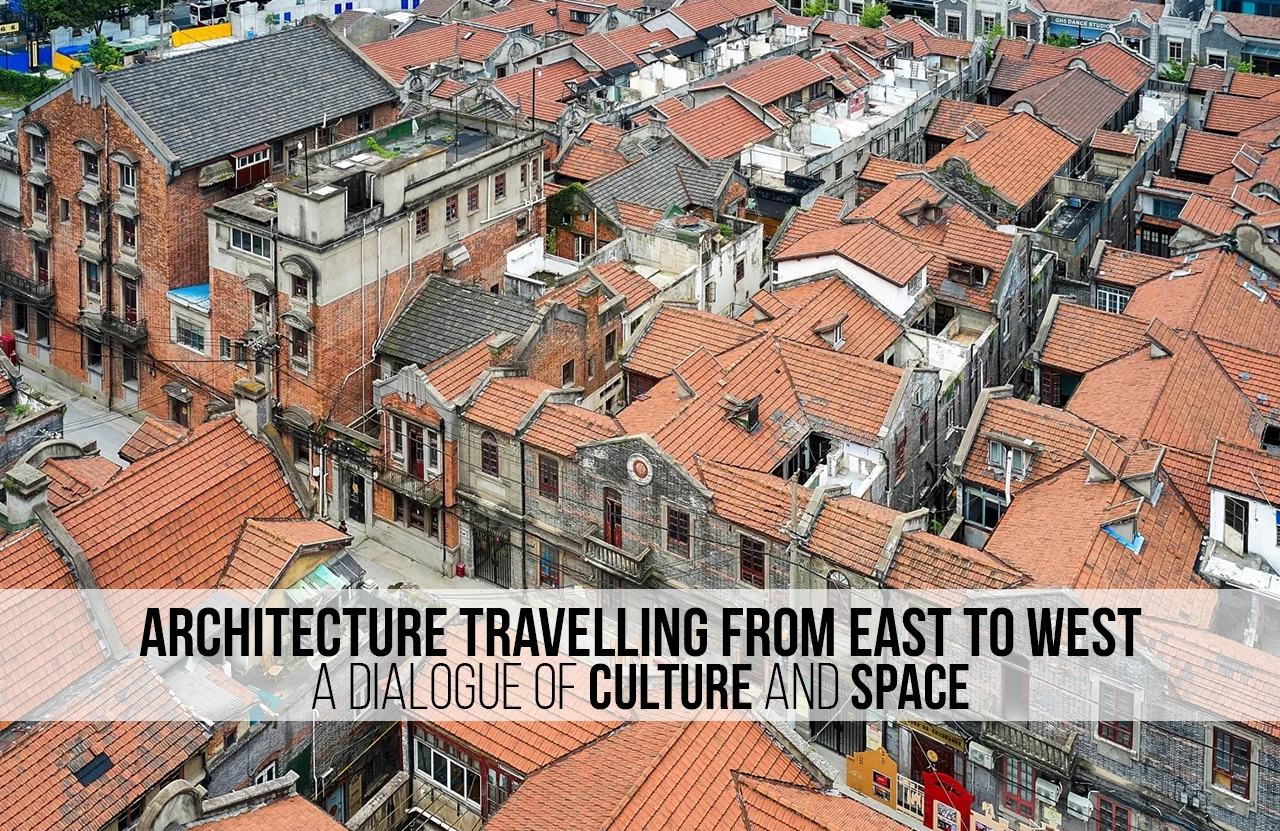
Hybrid architecture is not new. The Shikumen houses of Shanghai, for instance, merge Chinese courtyard life with French colonial facades. These buildings are cultural negotiations materialized in brick and timber. They show how two architectural languages can coexist without losing their identity.
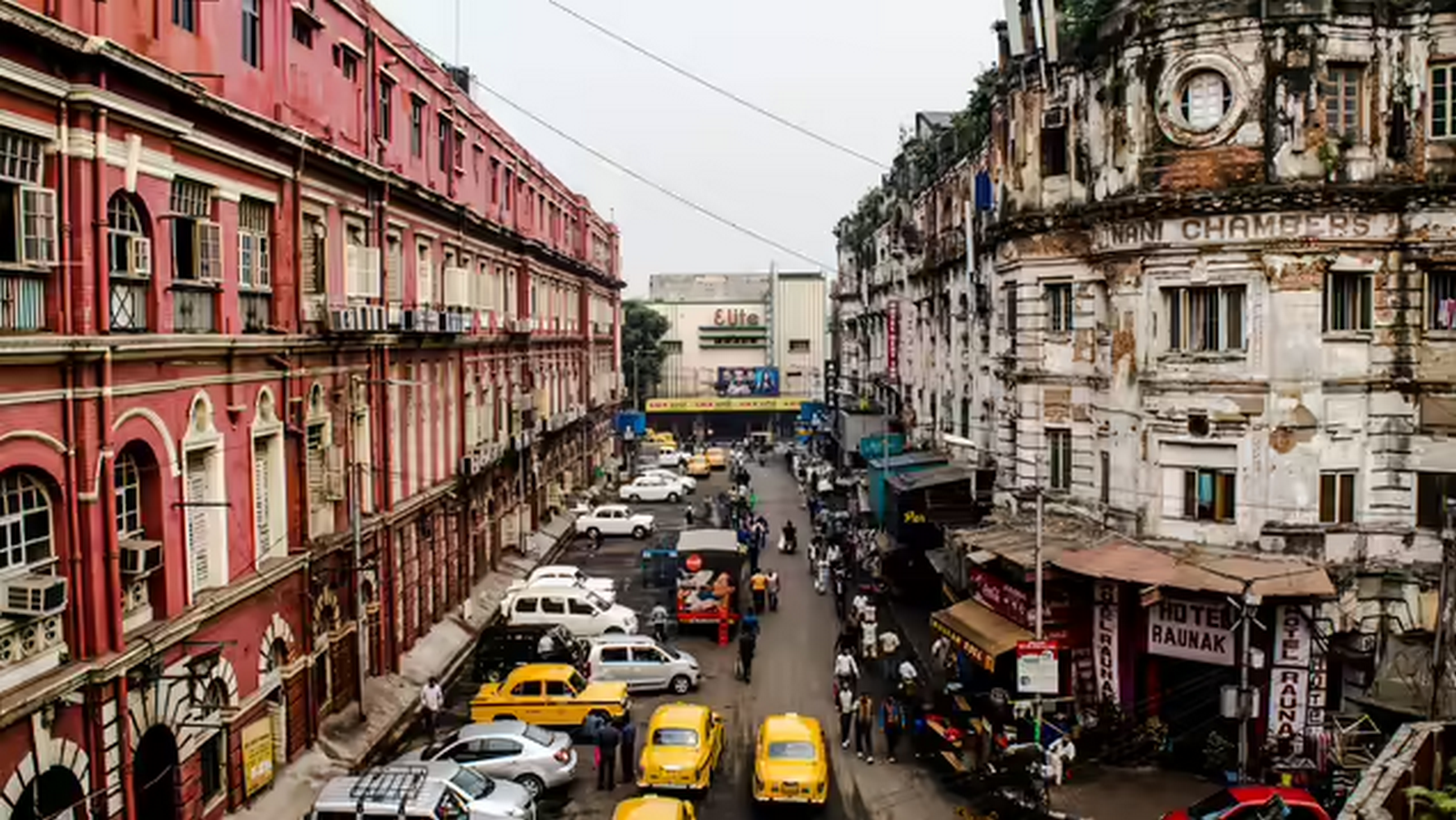
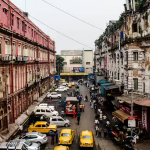
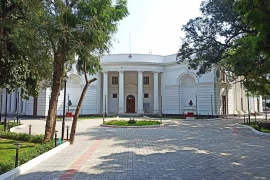
Kolkata offers another example: once a centerpiece of British colonial planning, its architecture now represents a uniquely South Asian expression of Western classical forms. Local adaptations, verandas, lattices, and climate-sensitive modifications make these structures distinctly Eastern despite their colonial roots. Every borrowed idea adapts and renews when it lands on different soil.
Global Contemporary Design: A Boundaryless Exchange
In today’s world, architects no longer work within geographical silos. Digital tools, parametric design, and global education have created a new architectural vocabulary that is both East and West. A New York skyscraper may borrow the fluidity of a Balinese bamboo pavilion, while a Singaporean home may reinterpret Scandinavian minimalism.
This boundaryless exchange does not erase cultural identity; instead, it expands it. Eastern architecture brings the West: ecological intelligence, spiritual depth, craft-driven detail, and a centuries-old understanding of climate and community. While the West brings the East: technological innovation, structural experimentation, and global-scale ambition.
Architecture travelling from East to West reveals how deeply Asia’s vernacular and traditional architectural wisdom has shaped the modern architectural imagination worldwide. In an era of climate crises, mental health concerns, and urban density, the world is turning to the East out of design necessity. Eastern architecture teaches that sustainability is a vernacular tradition. It teaches that beauty lies in balance and that a building is more than a built space; it is an experience, a feeling, and a relationship with the community and nature beyond its walls.
As East and West continue to inspire each other, the homogeneous mixture of each side’s design ideas forms a shared architectural language capable of addressing contemporary challenges.