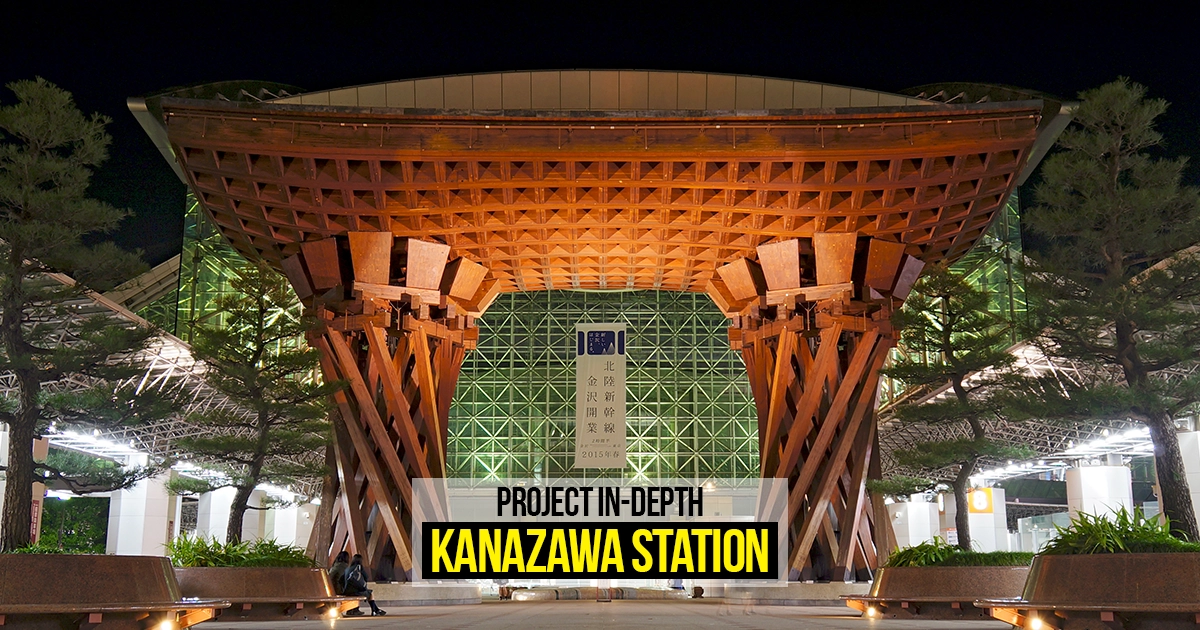
Kanazawa Station is one of Japan’s major railway stations located in Ishikawa Prefecture. Originally, it was built in 1898 and was operated by West Japan Railway Company (JR West), the private railway operator Hokuriku Railroad, and the third-sector operator IR Ishikawa Railway. It was opened as a part of the Hokuriku Main Line, serving as a vital transportation hub for the region. Throughout the 20th century, the station underwent several transformations to cater to the growing passenger demand and technological advancement. This transformation is marked as a turning point in the station’s history, blending modern aesthetics with traditional influence.
Project Development Phases
First Phase
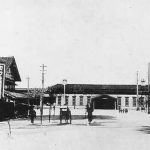
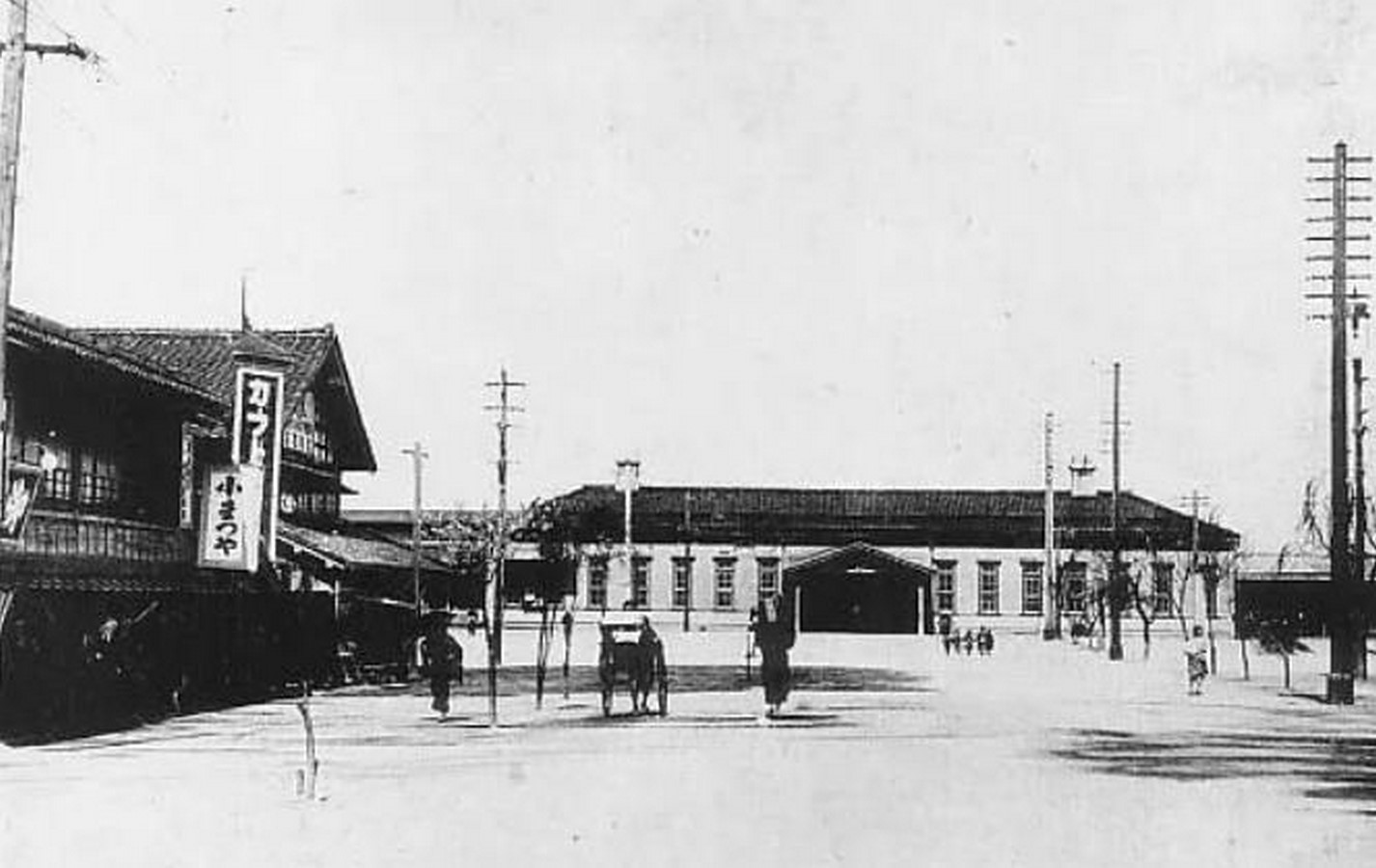
The first Kanazawa Station in 1898 was a one-story wooden building with a chimney at each end. The station was built in a rather isolated area surrounded by fields. By the 1930s, the number of passengers had increased to the point where a larger and new structure was in demand. Minor additions were made, which only helped a little to accommodate the large crowds, like platform extensions and functional enhancements. After World War II, the original wooden building suffered from aging and wartime wear. Significant modifications were postponed due to a lack of funding and focus on post-war reconstruction across Japan.
Second Phase
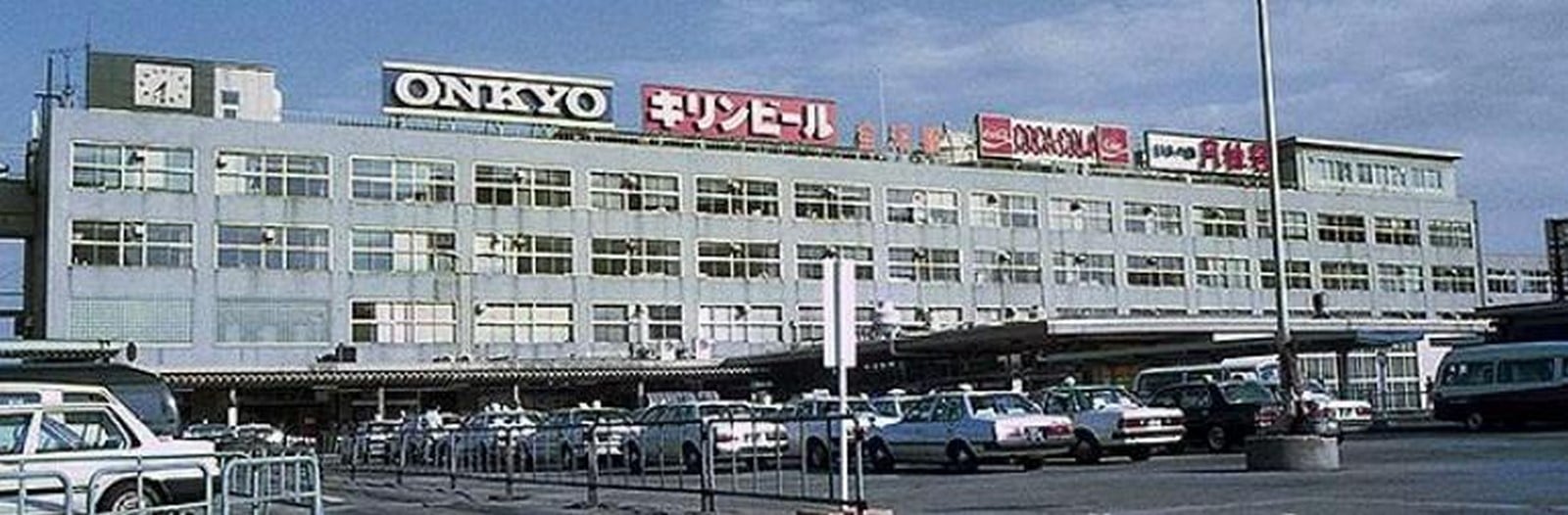
However, in 1950, the local government of Kanazawa City and Ishikawa Prefecture, along with the local citizens, came up with a plan to rebuild the station. The second phase of Kanazawa Station was called “Kanazawa Minshu Eki,” which means “Kanazawa People’s Station,” because it was built with people’s support. This concept meant that the local government, with the help of local citizens, would finance the building, and after completion, they were permitted to have restaurants and shops inside the station. The construction of the new station began in 1951 and was completed in 1953. The new station was a four-story building made of concrete reinforced with steel. In the beginning, only 44 shops were in the building, but later, more space was added on the basement level. This involvement of local businesses transformed the station into a major retail center.
The Contemporary Phase
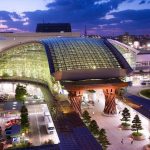
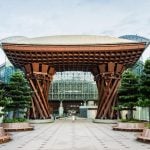
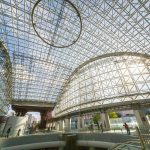
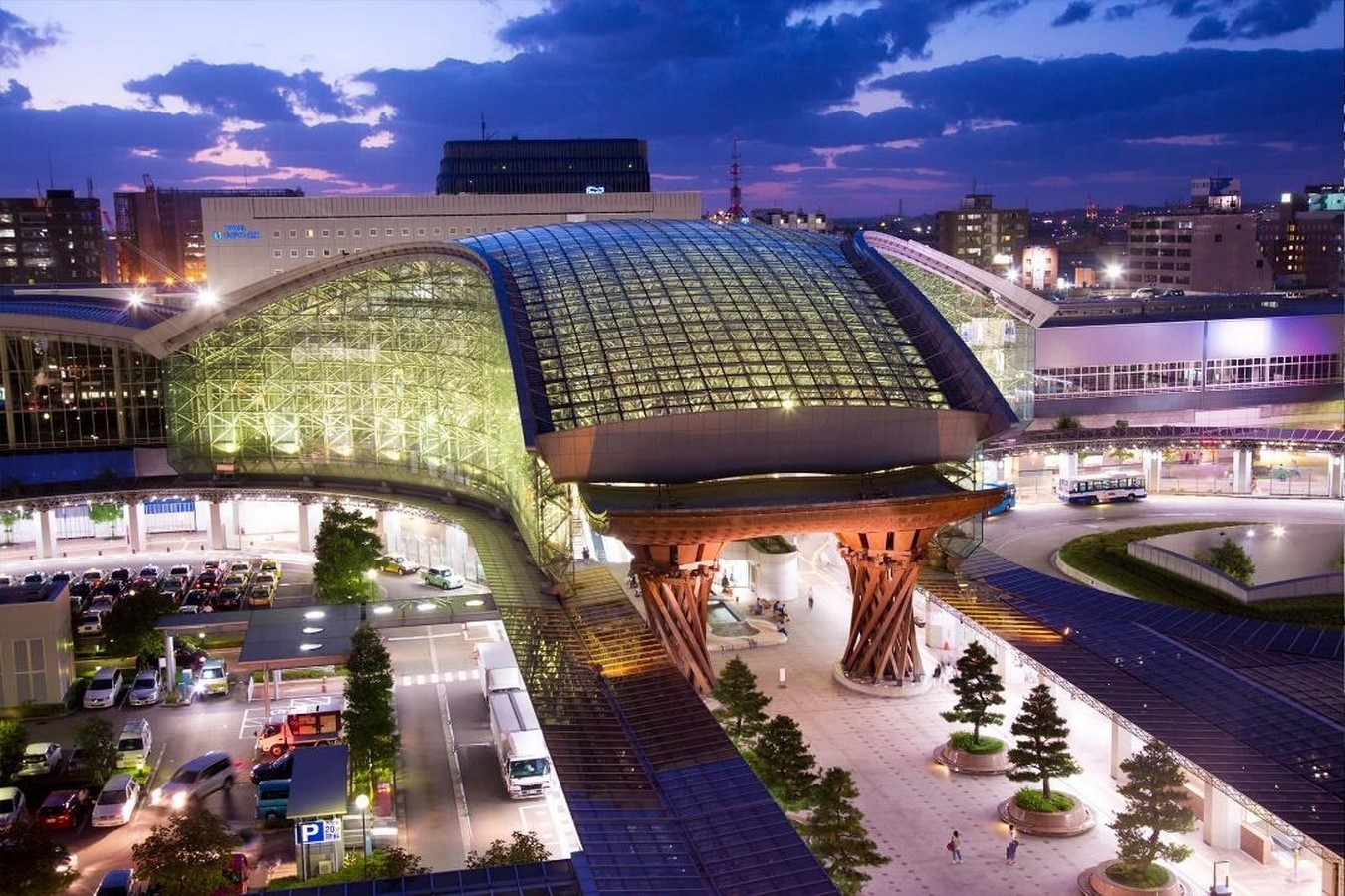
In 1998, a comprehensive reconstruction program was initiated to make room for additional rail lines. The station was designed by architect Ryuzo Shirae and completed in 2005. The old utilitarian rectangular building was replaced by new, culturally sensitive, modern architecture. The design aimed to respect the local context while addressing practical concerns such as passenger flow, safety, and commercial integration. One of the most iconic features is the massive Tsuzumi-mon gate, inspired by traditional Japanese hand drums, which serves as a welcoming symbol for visitors. Also, the glass and steel roof, known as the Motenashi Domes, blends structural economy with modern design to offer natural light and protection.
Design Phase
Tsuzumi-mon gate
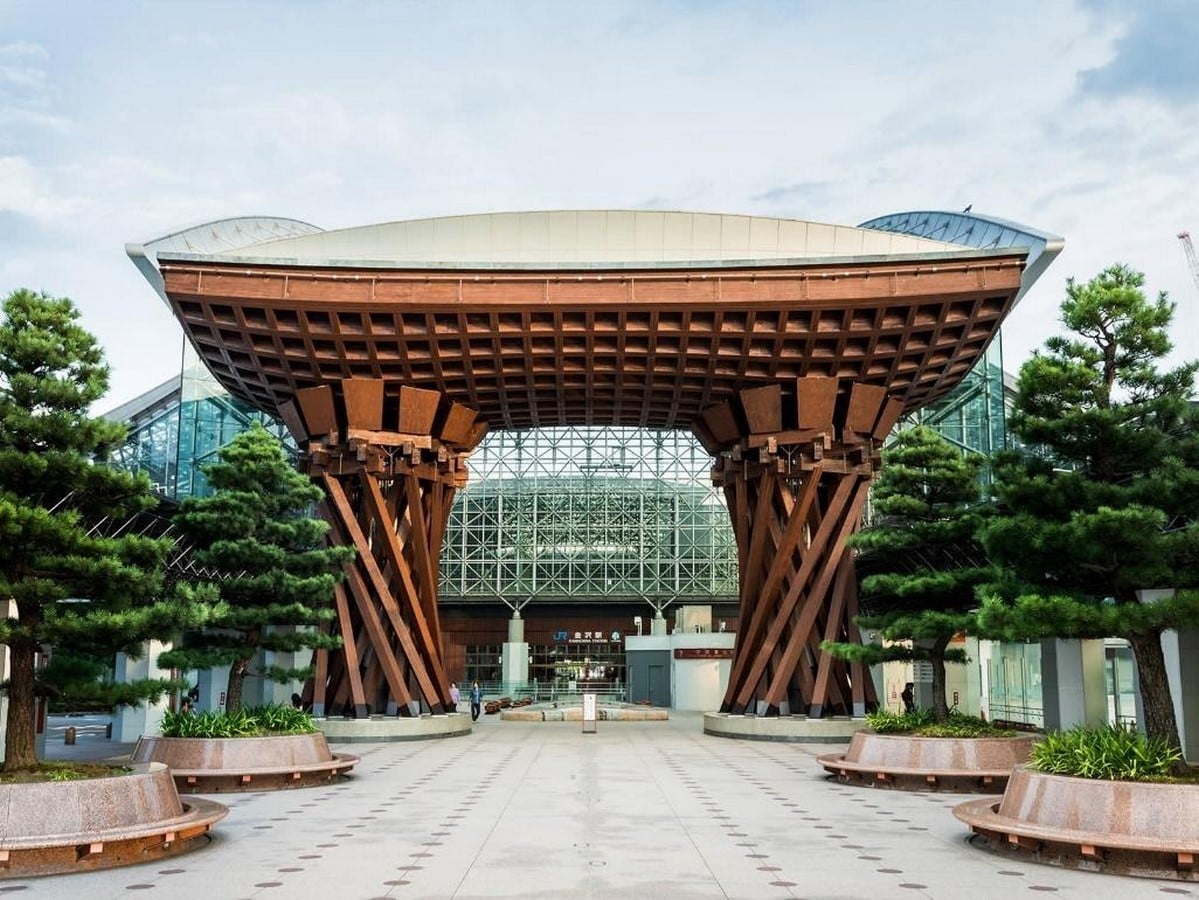
Inspired by the traditional tsuzumi, a hand drum used in Japanese culture, the Tsuzumi-mon Gate symbolizes a beautiful blend of tradition and modernity. The gate is built in the form of a torii gate, which usually stands at the entrance to a Japanese shrine. They are intended to serve as a marker for the boundary between the regular, everyday life and the sacred setting. The gate’s unique style has become a contemporary symbol of Kanazawa. It is 13.7m tall and made from red-hued laminated wood, a modern reinterpretation of Japan’s traditional carpentry techniques. Two massive wooden curved pillars resemble the body of the drum, while the open canopy above them suggests both movement and welcome. In addition to its symbolic significance, the Tsuzumi-mono gate is precisely constructed using advanced timber engineering to provide strength and longevity despite its organic form.
Motenashi Dome
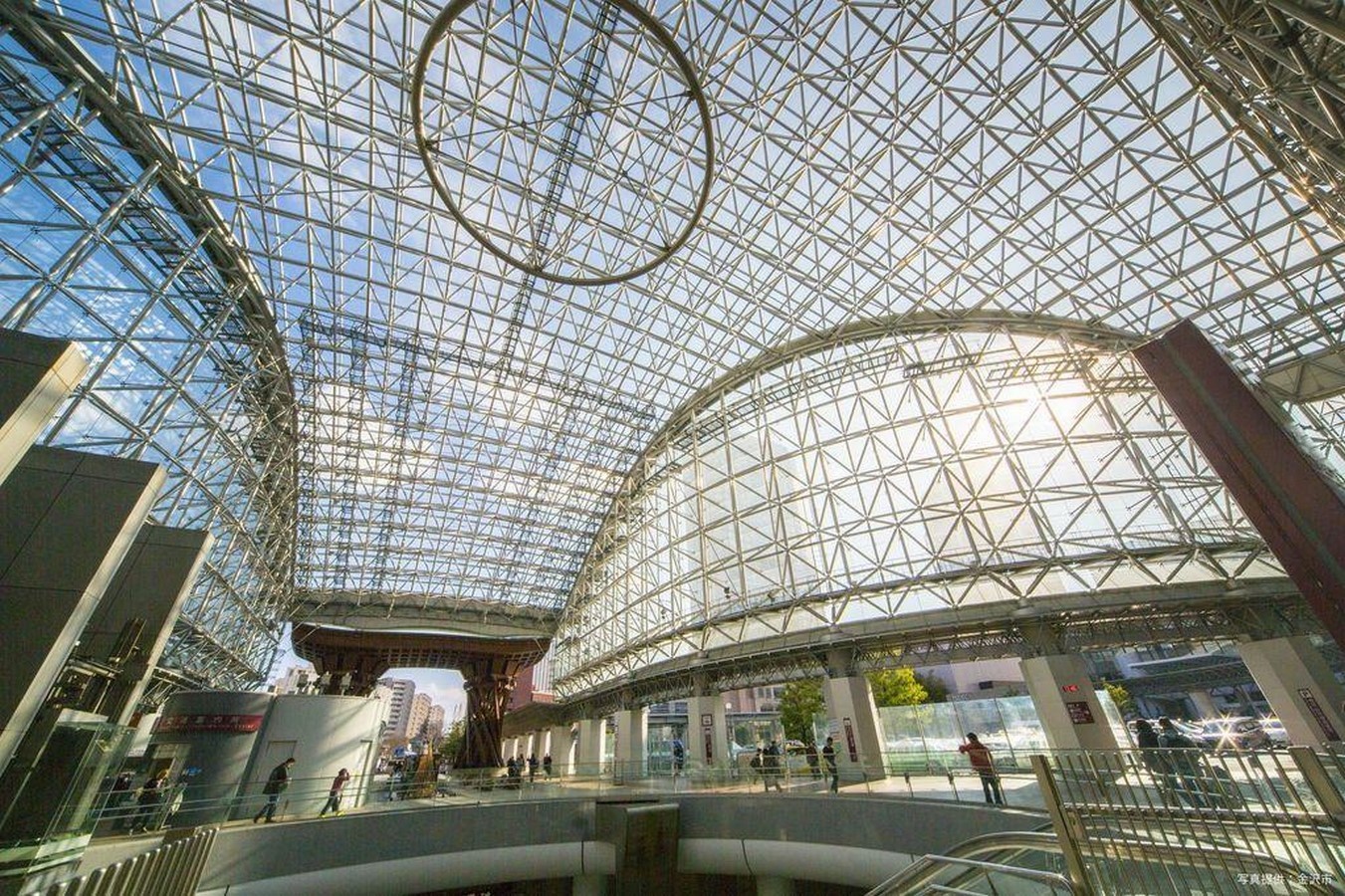
Located adjacent to the Tsuzumi-mon gate, the Motenashi dome is a stunning glass and steel building that completes the architectural composition of Kanazawa Station’s east entrance. It was designed with the concept of hospitality, symbolizing offering an umbrella to travelers arriving at the station. Since Kanazawa is prone to frequent rain and snow, the dome that covers the station plaza offers shelter. The roof consists of solar cells integrated with glass panels, which allows natural light to filter through while generating renewable energy for the station.
Legacy and Impact
Kanazawa Station is one of the city’s many modern, inventive structures. It is a symbol of the city’s culture and innovative vision. From its post-war redevelopment to the modern transformation in 2005, the station has reflected Kanazawa’s dedication to blending heritage with innovation. With their unique architecture, the Tsuzumi-mon Gate and Motenashi Dome have drawn people from all over the world and instilled a sense of pride in locals. Its redevelopment and design have set an example for how public areas may successfully combine sustainability, cultural identity, and utility, leaving a lasting legacy.
References:
Wikipedia Contributors. “Kanazawa Station.” Wikipedia, Wikimedia Foundation, 17 Sept. 2025,en.wikipedia.org/wiki/Kanazawa_Station. (Accessed: 17 Oct. 2025).
“The History of Kanazawa Station – Kanazawa Station.” Kanazawastation.com, 2015,http://www.kanazawastation.com/the-history-of-kanazawa-station/. (Accessed 17 Oct. 2025).
Japan National Tourism Organization. “Kanazawa Station | Travel Japan – Japan National Tourism Organization (Official Site).” Travel Japan, 2015, http://www.japan.travel/en/spot/1401/. (Accessed 17 Oct. 2025).
“Kanazawa Station.” VISIT KANAZAWA, JAPAN – Official Travel Guide, 2022, visitkanazawa.jp/en/attractions/detail_10050.html. (Accessed 17 Oct. 2025).