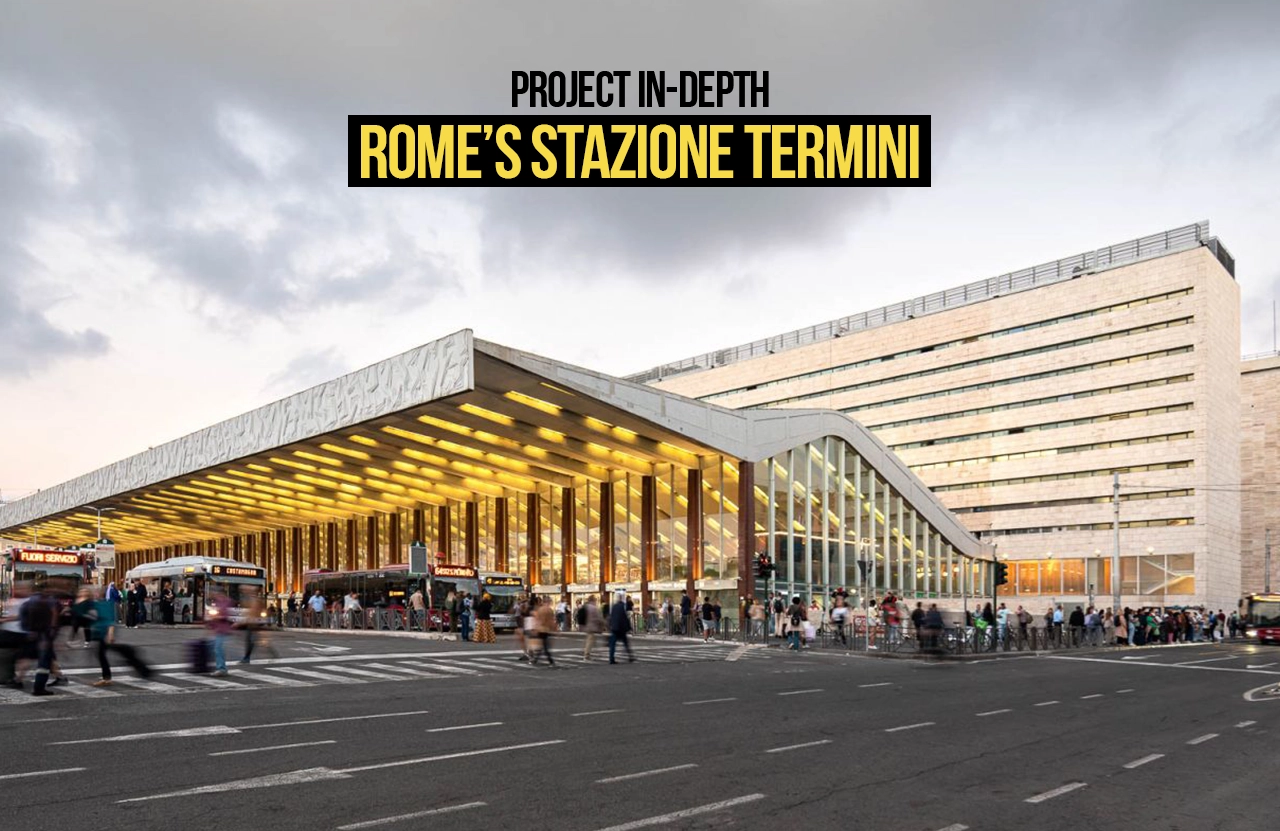
Rome’s Stazione Termini has not just been a transportation hub, it serves as a symbolic linkage between ancient Rome and its modern metropolitan era. It was initially opened in 1950 and rebuilt post war. The station’s striking modernist entrance hall and curving concrete awning symbolizes optimism and advancement in the city. More than seven decades on, the station is once more being transformed on a massive scale, one that reflects current values of connectivity, heritage synthesis, and urban sustainability.
Historical Context
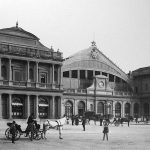
Designed by Salvatore Bianchi and built in 1867 among the fields and vineyards of Esquilino, it was inaugurated by Pope Pius IX as “the station of the capital of Italy.” Although it seemed too large for the needs of the capital of the Papal State, within 15 years, it proved insufficient to handle the growing rail traffic.
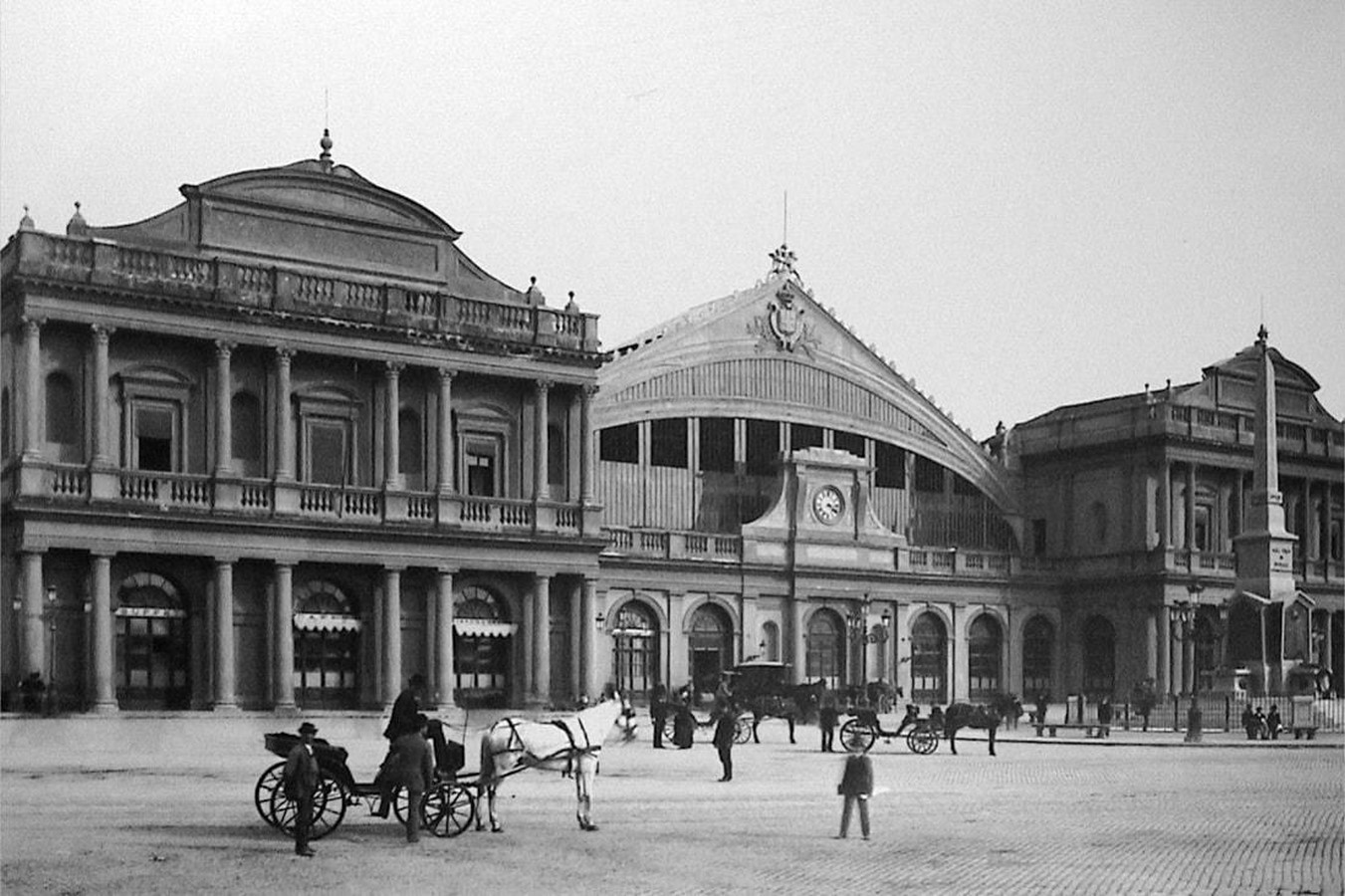
Upon its completion, expansion works started, such as adding tracks, temporary sheds, and loading platforms. Still, the building did not change size until 1905. Six years after this, a ticket office wooden shed, as well as a new set of tracks for passenger trains, was built. The early plans envisioned an underground station with two terminal stations (one to the north and one to the south), with the lines under the city intersecting and converging at Termini, envisioned as a central transportation hub, also underground. Prior to designing a structure that would meet the approval of both Mussolini and Minister Benni, Mazzoni investigated many solutions toward bringing the old and the new together. There was no getting around the command to produce classical-type forms, vast and imposing spaces with arches, vaults, and a gigantic hall designed not as a sieve between station and city but as an “imposing temple gate.” Therefore, the initial design gradually but inexorably evolved, finally being ratified on February 3, 1939. A monument with a daunting portico and a 12,000-square-meter hall, totally vacant and solely designed for its visual effect, pushed all the travel services to the side buildings, at the expense of the station’s efficiency and the comfort of the public. One fascinating element of Mazzoni’s design was that he aimed to symbolize the country using valuable Italian marbles. For floors and walls, rich Italian marbles were used. Mazzoni’s departure for Colombia and World War II ceased the project work at Termini. Post-war, the wings of the new station were nearly completed, but the front building was yet to be built. The prevailing characteristics of the new project were to be transparent, open, and functional shapes, in harmony with the already constructed elements and existing alongside the 80-meter-long walls of the Agger Servianus, with 9-meter-high peaks. It was decided to divide the space into four separate but communicating buildings, with connections to the two wings of the station and Piazza dei Cinquecento: front building, ticket hall, head gallery, and outdoor restaurant. The whole complex unfolded over an area of 14,000 square meters.
The New Redevelopment
Termini Station in Rome is a real icon of contemporary Roman architecture, acting as the city’s most important intermodal complex and one of Europe’s key transit points. This monumental structure unites the historic 19th-century building with post-war modern architecture. The restoration has exceeded mere modernization; it has reconnected this colossus with the city and redefine its image, rearranging spaces and services to suit the 21st century.
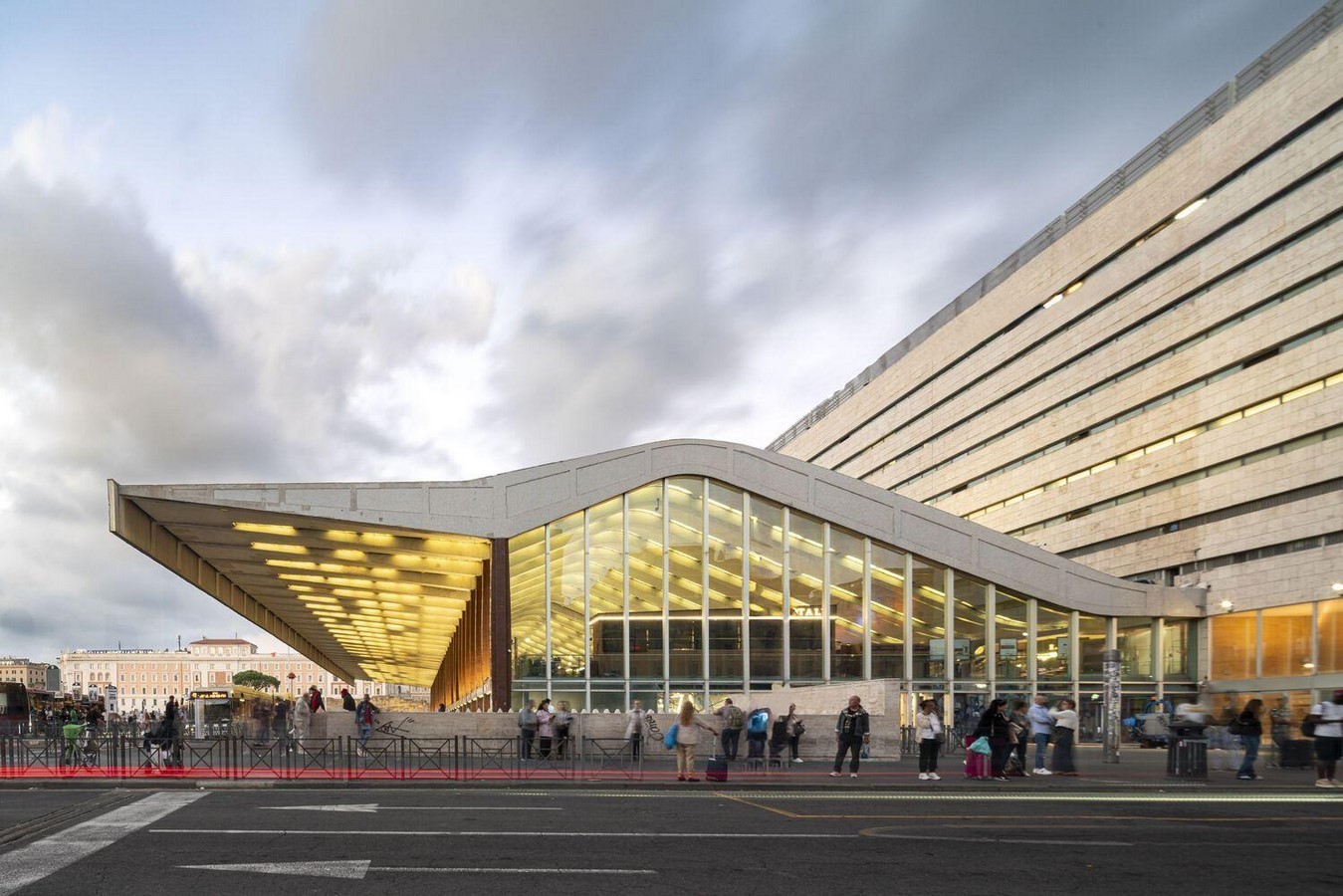
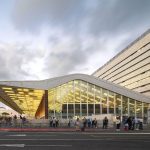
Utilizing an integrated approach, the project has transformed the interiors with a more aesthetic appearance, rearranging commercial spaces, railway services, and flow of pedestrian circulation, thereby optimizing the user experience. Way finding strategies and visual clarity of the pathways have been enhanced with more direct and accessible connections between levels, thus making user orientation and functionality one of the key features. Another important aspect of this redesign was providing better views of the Servian walls from the grand lobby. Commissioned by architects Eugenio Montuori, Leo Calini, and Annibale Vitellozzi, the building has a high glass facade that encloses an extant segment of the oldest of Rome’s Servian Walls. Boldly contoured and immediately dubbed “the Dinosaur,” the curved shapes of the building were originally intended to track the contours of the adjacent Servian agger. The redesign is straightforward with new elements having focus on materiality and architectural composition by not incorporating unneccesary complexity to the building already enriched by several interventions. The project’s expressiveness is found in a well-defined material and compositional logic in which glass and metal engage with the finishes and tones of the historical preexistence.
Stakeholders and Collaboration
The transformation of this iconic terminal building involves a complex network of stakeholders. Grandi Stazioni Retail acts as both client and asset manager, balancing both commercial viability and public responsibility. Amidst the public realm it is the City of Rome and the urban mobility department that supervise new interventions. These authorities ensure compliance with zoning and heritage regulations. In terms of execution on the design end, an array of technical partners, structural engineers, lighting consultants, and contractors such as SALC were responsible. This collaboration demonstrates how different stakeholders are involved in large scale infrastructure projects and those structures that demand careful negotiation between private operators, public authorities, and design professionals.
The renewal of Rome’s Stazione Termini illustrates how architecture can act as a bridge between eras. From the optimism of its 1950s modernism to the complexity of its twenty-first-century reinvention, the station embodies the evolving narrative of Rome itself, ancient yet restless, monumental yet adaptable. This building is not merely a renovation project but a re-assertion of civic identity. The project has become a true gateway to Rome, a place where the city’s past and future meet in transit.
Citations:
Grandi Stazioni. Roma Termini – The Station. Available at: https://www.grandistazioni.it/en/our-stations/roma-termini.html (Accessed: 19 October 2025).
L35 Architects. Stage: Stazione Roma Termini. Available at: https://www.l35.com/en/projects/stazione-roma-termini.html (Accessed: 19 October 2025).