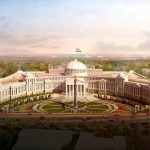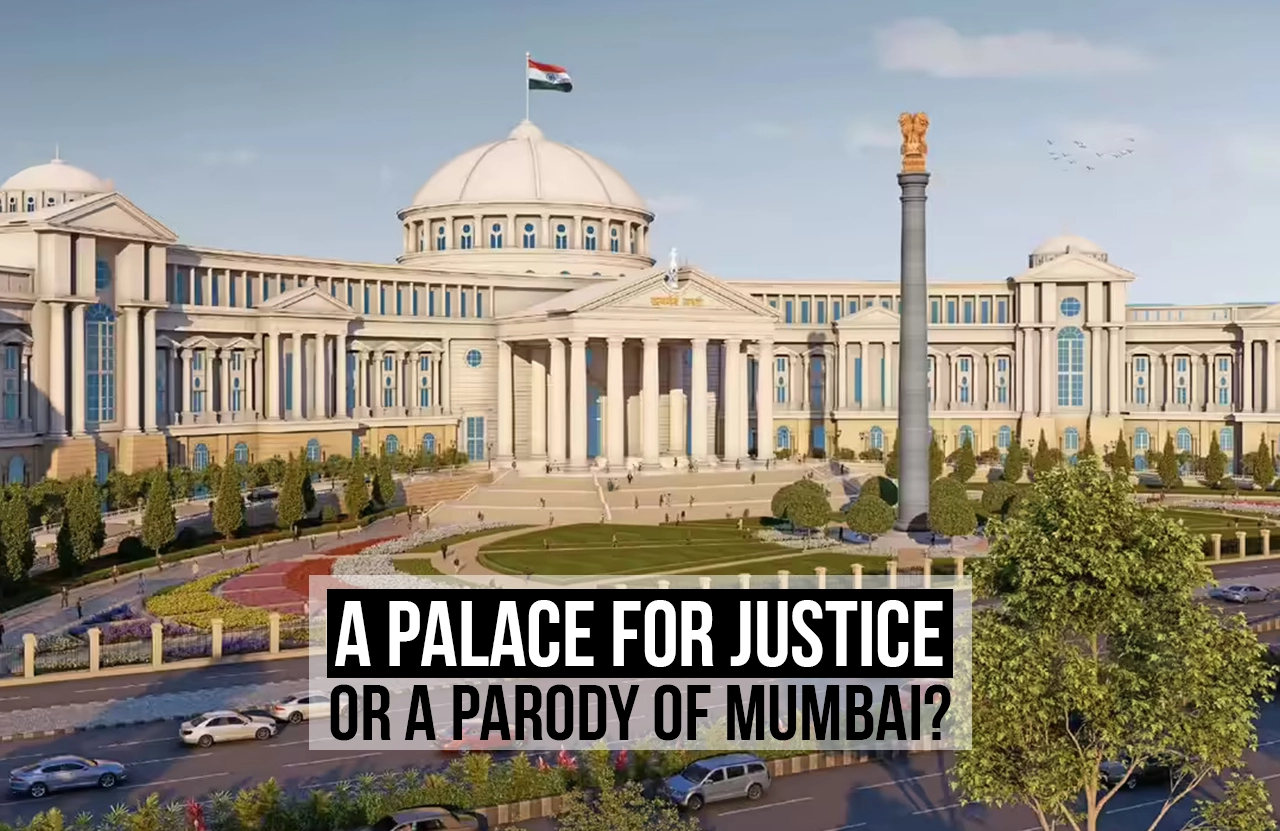
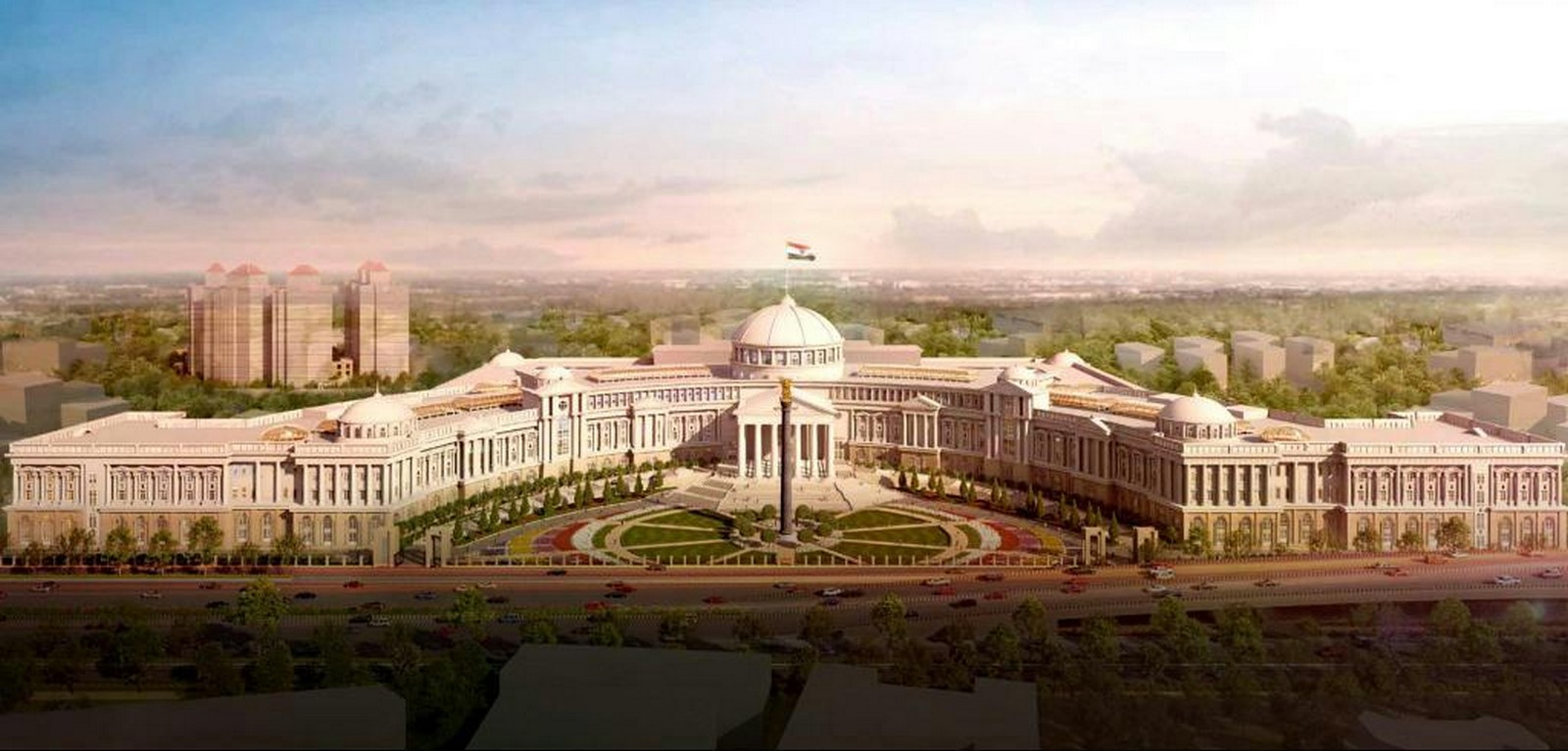
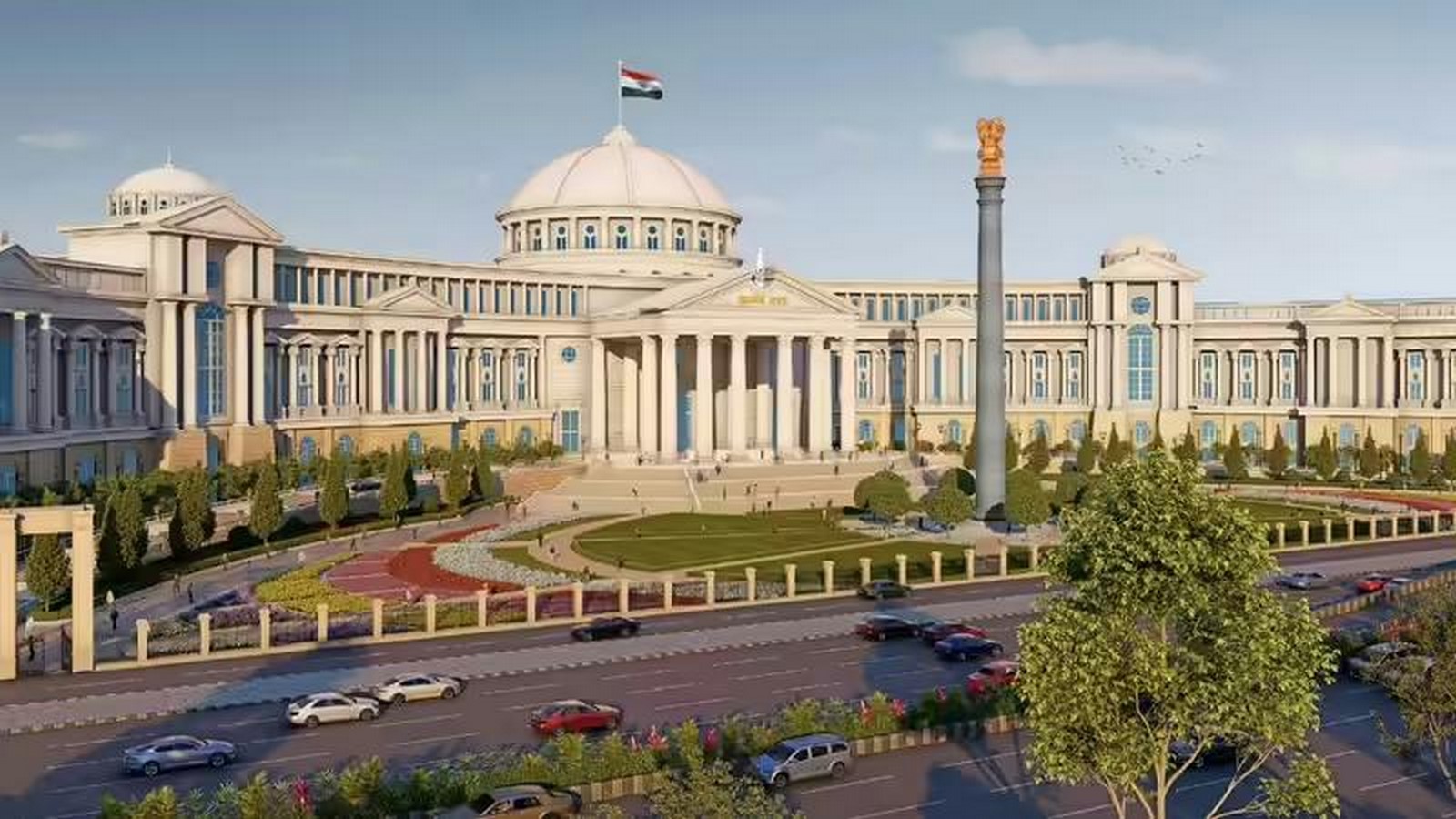
The recently unveiled proposal for the new Mumbai High Court, designed by architect Hafeez Contractor, stands as a monumental irony. It is an architectural spectacle that seems to have wandered into Mumbai from a different continent, from a different century altogether. It has borrowed the gleaming dome, sprawling colonades, and perfect symmetry from neoclassical and Beaux-Arts. The vocabulary of these styles is rooted in the power fantasies of empires, not in the democratic ethos and definitely not in the architectural DNA of contemporary India.
A city of Layers, not of imitations
Mumbai has always been a city of layered modernities. The city’s architecture tells a story of the evolution of cultural synthesis, not mimicry. From the Gothic Revival of the Fort, to the Art Deco of Marine Drive, till the contemporary glass & steel of Bandra Kurla Complex, each era has brought its own vocabulary, shaped by local materials, climate, and civic imagination. Colonial buildings like the current High Court or the Chhatrapati Shivaji Maharaj Terminus carry a distinctive Indo-Gothic sensibility. In these cases, imported style met Indian craft, climate, and context.
On the other hand, the new proposal feels very tone-deaf to this lineage. The marble white facade and oversized Corinthian columns that are proposed might suit the National Mall of Washington D.C., or the boulevards of St. Petersburg, but in Mumbai’s humid, monsoon-battered context, it reads as a grand set piece for a theatre rather than a civic building.
Missing the present, mocking the past
The style of this proposal is not a reverence for the past; rather, it is a mimicry of power. The current High Court building, though colonial in origin, speaks a language that has become a part of Mumbai’s architectural identity. It is gothic yet grounded, massive yet humane. It is made up of local basalt stone, high-pitched roofs that are suitable for the monsoon rains, and deep windows for ventilation. The form has followed climate as much as it has followed the function.
The new proposal ignores all of this. The imported domes and sweeping wings seem to compete not with the skyline but with the ego of monumentalism. It has mistaken grandeur for gravity and symmetry for dignity. The result feels disconnected, an architectural cosplay of empire masquerading as justice.
City’s Image of Stake
Mumbai’s spirit is plural, adaptive, and restless. It is a city that reinvents itself every passing day. It doesn’t need a courthouse that is postured as eternal marble. What it needs is an architecture that symbolises accessibility, transparency, and resilience. The judiciary is a pillar of democracy. The building, therefore, should reflect those values and be open, breathable, and inclusive, and not feel intimidating or exclusionary.
The proposal, instead, asserts distance. It is creating a visual language of hierarchy where justice sits high on a plinth, under the dome, approached by monumental steps. This is more suited to an imperial court than to a democratic institution serving 20 million citizens.
Context is not Optional
Architecture, especially public architecture, is never neutral. It speaks of who the people are, what they value. The city that battles floods, density, and infrastructural inequity on a daily basis, shall feel disconnected with such a colossal monument that exudes self-importance. Where are the courtyards that bring in the cool monsoon breeze? Where are the shaded arcades, the open verandahs, the subtle references to the city’s tactile fabric of stone, brick, and timber?
The idea of having a new high court is a chance to reimagine civic architecture for modern India. Instead of being rooted in context, progressive in spirit, and environmentally responsive, the proposal has chosen the safest and the shallowest route: mimicry as majesty.
Justice, Not Theatre
The architecture of justice should emulate trust, not awe. It should stand as a testament to accessibility, not power. The new High Court design seems to confuse authority with arrogance, with its scale and symbolism. It is borrowing the grammar of the colonial might and is dressing it up as national pride. It is an architectural paradox in a country that is striving to define its own identity.
Ultimately, the proposal is not just failing Mumbai; it is misreading it. Mumbai doesn’t need a courthouse that looks like it belongs in the capital of an empire. It needs one that belongs to its people: to the chaos, creativity, and contradictions that make this city alive.
If the future of justice in Mumbai must be built, it should not rise from imitation, but from imagination. Because a building that doesn’t speak the city’s language has no right to claim its voice.
References:
PTI (2025). Bombay High Court set to get 30-acre Bandra complex as Maharashtra speeds up land handover. [online] CNBCTV18. Available at: https://www.cnbctv18.com/india/bombay-high-court-set-to-get-30-acre-bandra-complex-as-maharashtra-speeds-up-land-handover-19587206.htm/amp [Accessed 5 Oct. 2025].
http://www.facebook.com/advanirajesh (2025). ‘A farcical approach to an institutional building of such importance’ — Ramu Katakam, on the Proposed Bombay High Court Complex Design. [online] ArchitectureLive! – Art, Architecture and Urbanism from around the world. Available at: https://architecture.live/bombay-high-court-hafeez-contractor-ramu-katakam/ [Accessed 5 Oct. 2025].
Bombayhighcourt.nic.in. (2024). Official Website of High Court of Bombay. [online] Available at: https://bombayhighcourt.nic.in/index.php.
Architect Hafeez Contractor. (n.d.). Architect Hafeez Contractor – Award Winning, Indias Largest and one of the Top Architectural Design Consultancy. [online] Available at: https://www.hafeezcontractor.com/.
Lewis, C. (2025). 30-acre, Rs 3,750cr Bombay HC complex in Bandra to be in a grand old style. [online] The Times of India. Available at: https://timesofindia.indiatimes.com/city/mumbai/30-acre-rs-3750cr-bombay-hc-complex-in-bandra-to-be-in-a-grand-old-style/amp_articleshow/123819908.cms [Accessed 5 Oct. 2025].
Advani, R. (2025). Architecturally, we have lost it. [online] Linkedin.com. Available at: https://www.linkedin.com/posts/advanirajesh_architecturally-we-have-lost-it-if-this-activity-7373583390509330432-w-Ai/?utm_source=social_share_send&utm_medium=android_app&rcm=ACoAAFf_1mwBzyhwcb1i8GIcGYemKdopR7_-L80&utm_campaign=share_via [Accessed 5 Oct. 2025].