“Cities have the capability of providing something for everybody, only because, and only when, they are created by everybody.” – Jane Jacobs
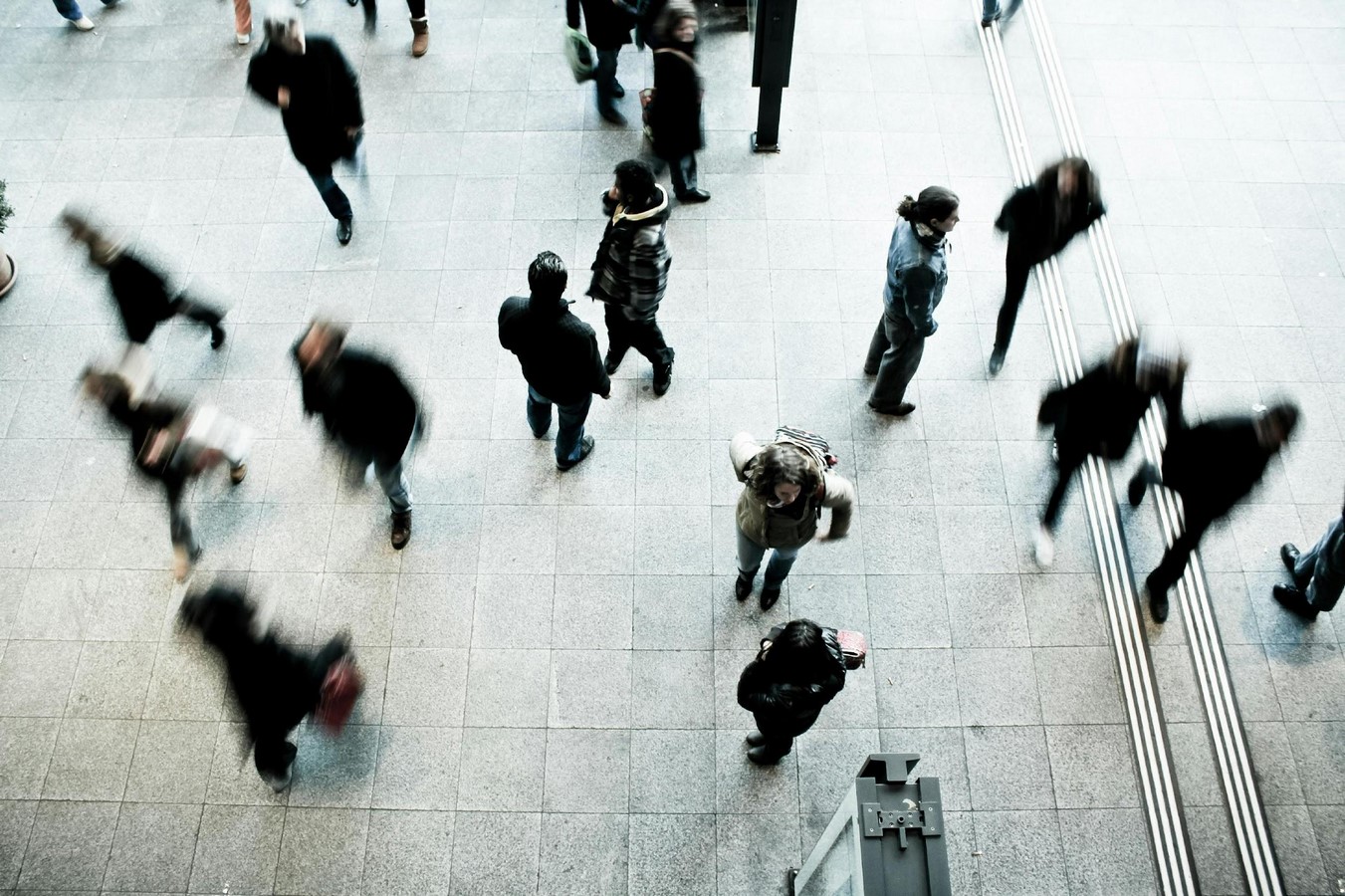
Outdoors: parks, plazas, sidewalks, courts, community halls are designed to be places of collective belonging; places where people meet, relax, protest, celebrate, or simply hang out. But things are the other way round with cities today; of outdoor spaces increasingly being shaped into private interests. In other words, public spaces are being redefined and often reclaimed by private owners, leaving us to question: whose city really is it?
This article explores three themes to this subject: first, what to understand by a public space; second, how privatization is altering those spaces; and finally, to answer the question of who really owns and controls the city in respect to public use.
Public Spaces
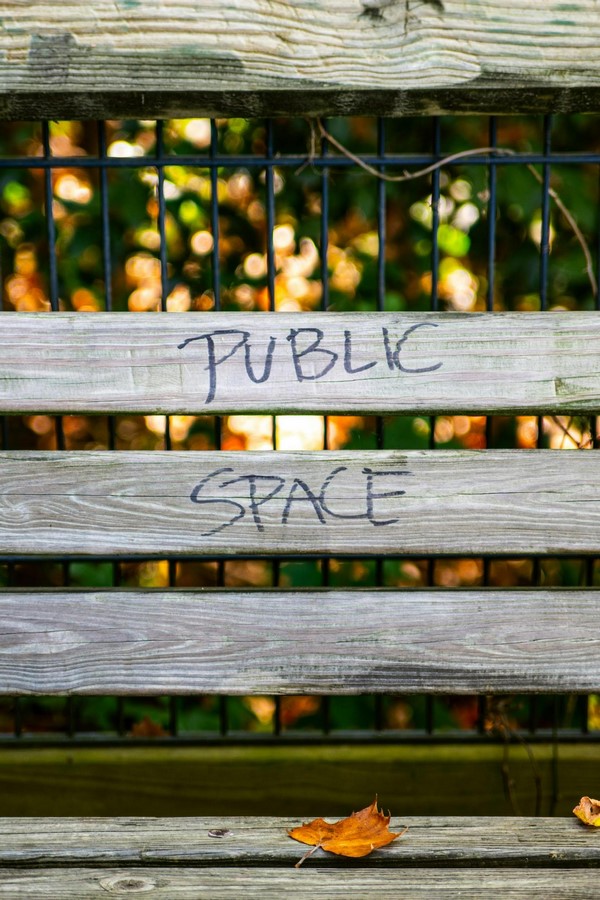
Imagine a public park in your busy neighbourhood. Children play after school, parents sit and chat, hawkers sell snacks, and residents gather for informal meetings or celebrations. Everyone can walk in freely, sit on a concrete or wooden bench, stroll, or campaign, without being asked to pay or prove their right to be there. That freedom is the essence of public space.
Public buildings and public spaces are structures and areas that are built, maintained, and operated for the general public: libraries, town halls, community centres, schools, parks, and squares. They are physical and symbolic anchors of civic life. When they are accessible, they foster a sense of shared belonging, and enhance social cohesion.

Privatization of Public Spaces
Yet, in many cities, publicness is being eroded by privatization. Across the globe, privately owned public spaces or privately managed ones are on the increase. There are many examples of places that look like public plazas or parks but are controlled by developers or private corporations.
Often, planning authorities strike deals with developers: in return for building taller or more profitable structures, developers are asked to provide “public space.” In reality, that space remains privately run. It might technically be open to all, but the owners set the rules: limited opening hours, bans on activities such as photography, skateboarding, or protesting. Security staff enforce these rules.
Sometimes privatization happens more quietly. Restaurants spread onto sidewalks, or outdoor dining occupying street corners that once belonged to everyone. Back dating to COVID-19, many cities allowed businesses to take over parking spaces and pavements for outdoor dining. These moves blurred the line between what was public and what was privately occupied.
While the impact is profound, access becomes conditional. A plaza may welcome office workers eating lunch, but remove a homeless person who stays too long. A square may host shoppers, but disperse protesters. And other spaces appear public but carry hidden rules. Governance is shifted away from the public into private hands. Accountability weakens, and citizens lose both control and voice.
A striking example came from New York’s Zuccotti Park during Occupy Wall Street. Though the park looked open, its private ownership meant protesters could be removed when their presence became inconvenient. Studies of other privatized spaces show similar patterns: users may enjoy the cleanliness and safety, but worry about who is excluded, how long one can stay, and under what conditions.
So, Whose City Is It?
Asking this question is about who has the right to shape, use, and define the city. Whose presence is welcomed, and whose is excluded? Who decides what counts as legitimate urban life?
Cities are, by nature, contested. They are arenas where diverse groups clash, meet and greet. True public spaces allow for encounters across social lines: children playing, street vendors selling, neighbours chatting, citizens protesting. They also allow people to simply exist: resting, wandering, reflecting.
Privatized spaces narrow that possibility. They favour orderly, profitable, and curated uses. Spontaneous activities like leisure walking or photographing fascinating things in a public space become unwelcome. The city turns into a showroom rather than a commons.
Belonging in such spaces is selective. You are welcome if you behave “appropriately”—shopping, paying, or doing something that at least profits them. If you linger too long or act outside the script, you may have the security called on you. Cities designed this way are not homes for all, but curated environments for certain people and certain behaviours.
A more democratic vision insists that public spaces remain public in the fullest sense: open to everyone, managed transparently, and shaped by community voices. This echoes the idea of the “right to the city”: that all inhabitants should have a say in how the city is governed, not only in using public spaces but in shaping them.
Public spaces should not be treated as a luxury or a backdrop for commerce at the expense of other citizens. It is the commons: a shared resource for civic life, co-produced by everyday users. If cities are to provide for everybody, public spaces must remain places where people can gather, rest, celebrate, or even grieve without asking permission or paying for entry.
Bibliography:
Garrett, B. L. (2015) ‘The privatisation of cities’ public spaces is escalating. It is time to take a stand’, The Guardian, 4 August. https://www.theguardian.com/cities/2015/aug/04/pops-privately-owned-public-space-cities-direct-action
Leclercq, E. and Pojani, D. (2023) ‘Public space privatisation: are users concerned?’, Journal of Urbanism: International Research on Placemaking and Urban Sustainability, 16(1), pp. 1–18. https://www.tandfonline.com/doi/full/10.1080/17549175.2021.1933572
Zhang, M. (2021) The Privatization of Public Space in Lower Manhattan, 20 April. https://www.myleszhang.org/2021/04/20/lower-manhattan-public-space/