Imagine a city after a sudden downpour. Water does not shimmer or dance here; it goes down drains, surges through concrete channels, and vanishes. What remains is not joy, but threat: flooded underpasses, stalled traffic, and heat trapped in asphalt. For decades, urban designers have viewed water as a nuisance. But water architecture is altering this narrative. Cities are now embracing water as a central feature, creating plazas, parks, and wetlands that serve as both climatic buffers and community hubs.
Water Plazas – Where Streets Become Lakes
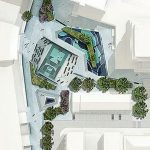
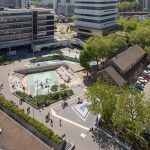
Rotterdam, a city situated below sea level, has always struggled with water. But instead of hiding it, the Dutch decided to make it apparent, even amusing. The city’s Water Squares are the first prominent instances of blue infrastructure as a public area.

On a sunny day, the Benthemplein Water Square resembles any bustling square. Children skateboard on smooth concrete. University students gather on steps. Neighbors sit on seats, chatting as bicycles pass. However, when it rains, the square completely transforms. The depression basins fill with water, converting the plaza into a shallow, shimmering lake.
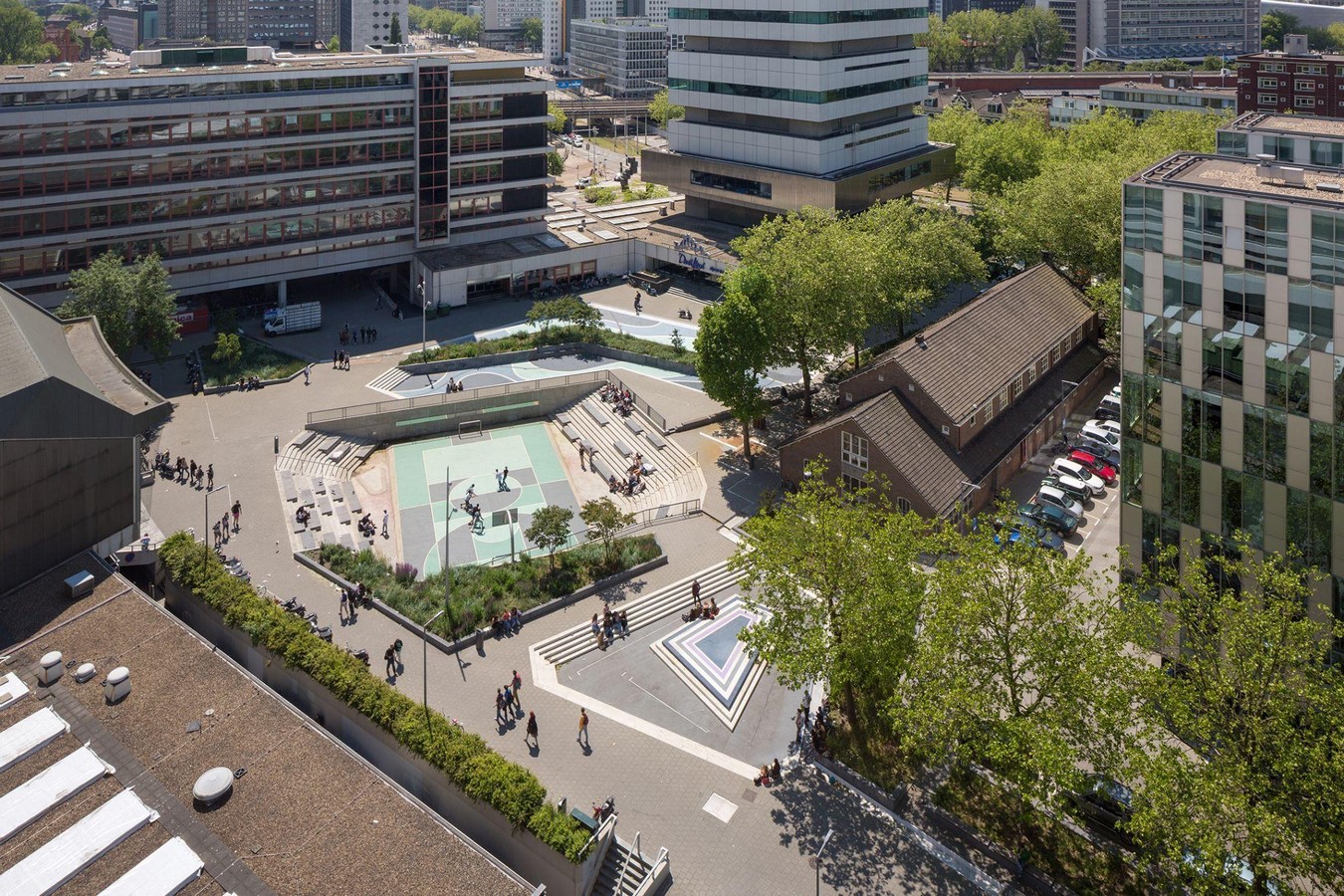
This dual identity exemplifies water architecture, an urban living room by day, a flood basin by storm. Rotterdam proved that resilience can be visible, civic, and joyful.
Rotterdam’s experiment has become a global benchmark. It demonstrates that flood control does not have to be hidden underground; it can exist in the open and, more importantly, bring people together.
Waterfront Parks – Resilience at the Edge
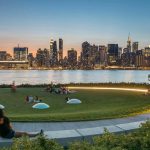
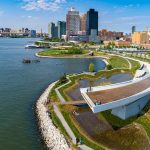
Hunter’s Point South Park in New York is yet another water architecture landmark. Rather than rigid seawalls, planners used wetlands, tidal marshes, and highland meadows to absorb surges.

Boardwalks curve over reeds, children play in marshes, and an 11-meter cantilevered overlook frames the Manhattan cityscape. Flood defense is not hidden; rather, it is interwoven into public life.
This park demonstrates how water architecture generates edges that protect and encourage, while illustrating that resilience is greater when enjoyed by the community.

The brilliance lies in how safety and leisure blend. Locals don’t visit because it is resilient- they visit because it is attractive, walkable, and vibrant. Climate defense is embedded in daily life.
Urban Wetlands – Ecology as Everyday Space
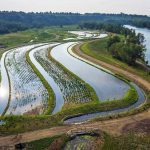
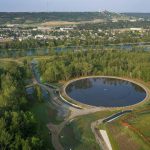
Beyond plazas and parks, some of the most powerful blue infrastructures are wetlands woven into cities. Wetlands, once dismissed as wastelands, are now core to water architecture, are now recognized as natural sponges, filters, and ecosystems, as well as public landscapes.

For instance, take Dale Hodges Park in Calgary. What was previously a gravel pit is now a stormwater treatment landscape. Wetlands filter drainage before it flows into the Bow River. Instead of fencing it off, planners created pathways, boardwalks, and lookouts that allow inhabitants to see the passage of the water. Walking through the environment teaches children about ecology; birdwatchers find refuge; and joggers go along water-inspired routes.

These wetlands remind us that blue infrastructure is not about machines. It is about living systems – and when opened to the public, they become shared classrooms and sanctuaries.
Cultural Resonance – Water as Civic Theater
The idea of water as public space is not new. Ancient societies understood it deeply.
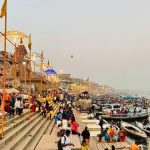
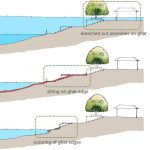
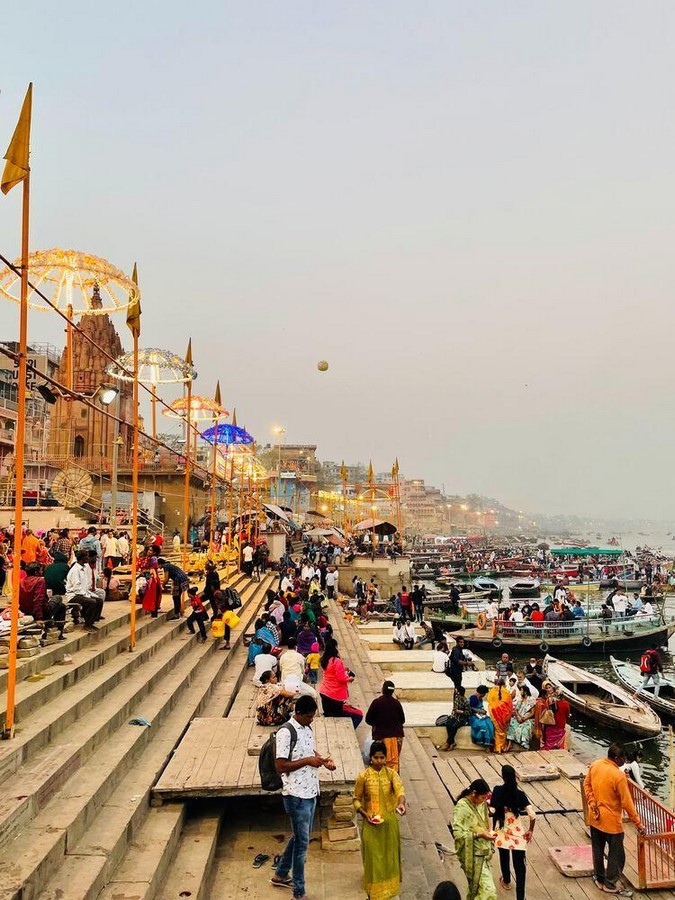
The steps of rivers on India’s ghats, such as Varanasi, Ujjain, and Madurai, are more than just devotional destinations. They are civic stages, used for worship, commerce, bathing, and storytelling. Life unfurls along the water’s edge.
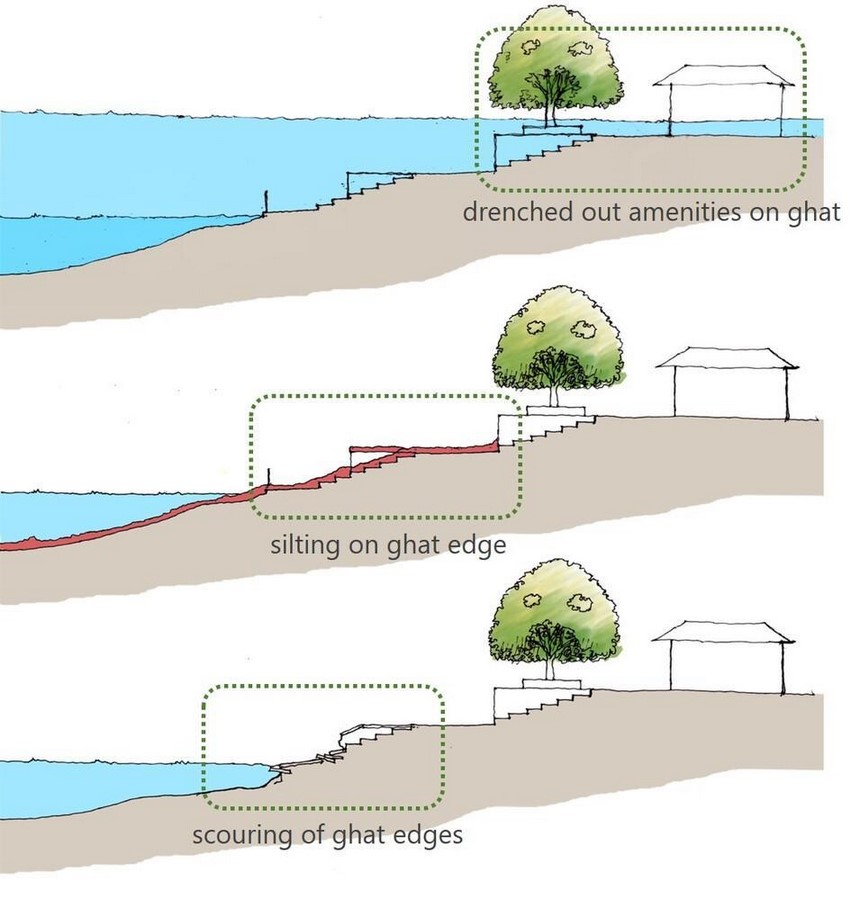
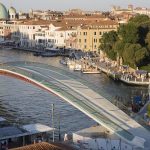
Additionally, Venice’s canals carry similar roles. They are functional, but also cultural and social.

The modern blue infrastructure movement is, in some ways, a revival of this heritage.It emphasizes that water is not a problem to be fixed, but rather a stage on which urban life unfolds.
The Double Role – Guardian and Host
Across the globe, one theme emerges: water architecture serves a dual purpose. It serves as both a guardian, protecting against floods, heat, and climate extremes, and a host, welcoming populations into plazas, parks, and wetlands that provide life and joy.
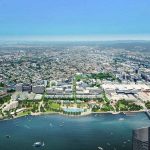
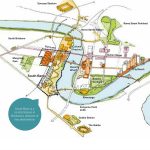
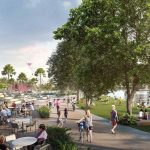
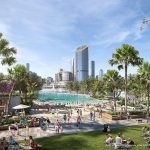
Nowhere is this more obvious than on Brisbane’s South Bank. Originally established as a legacy of Expo ’88, the district has developed into a 42-hectare riverbank setting that attracts 14 million tourists each year. The newest Future South Bank Master Plan envisions the area as a “people’s place” where climatic resilience and cultural vibrancy coexist.


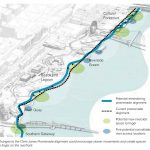
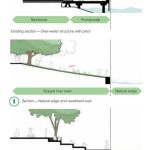
Future renovations propose flood-resistant promenades along the Brisbane River, meant to meander with tides, absorb shocks, and create softer, greener margins .

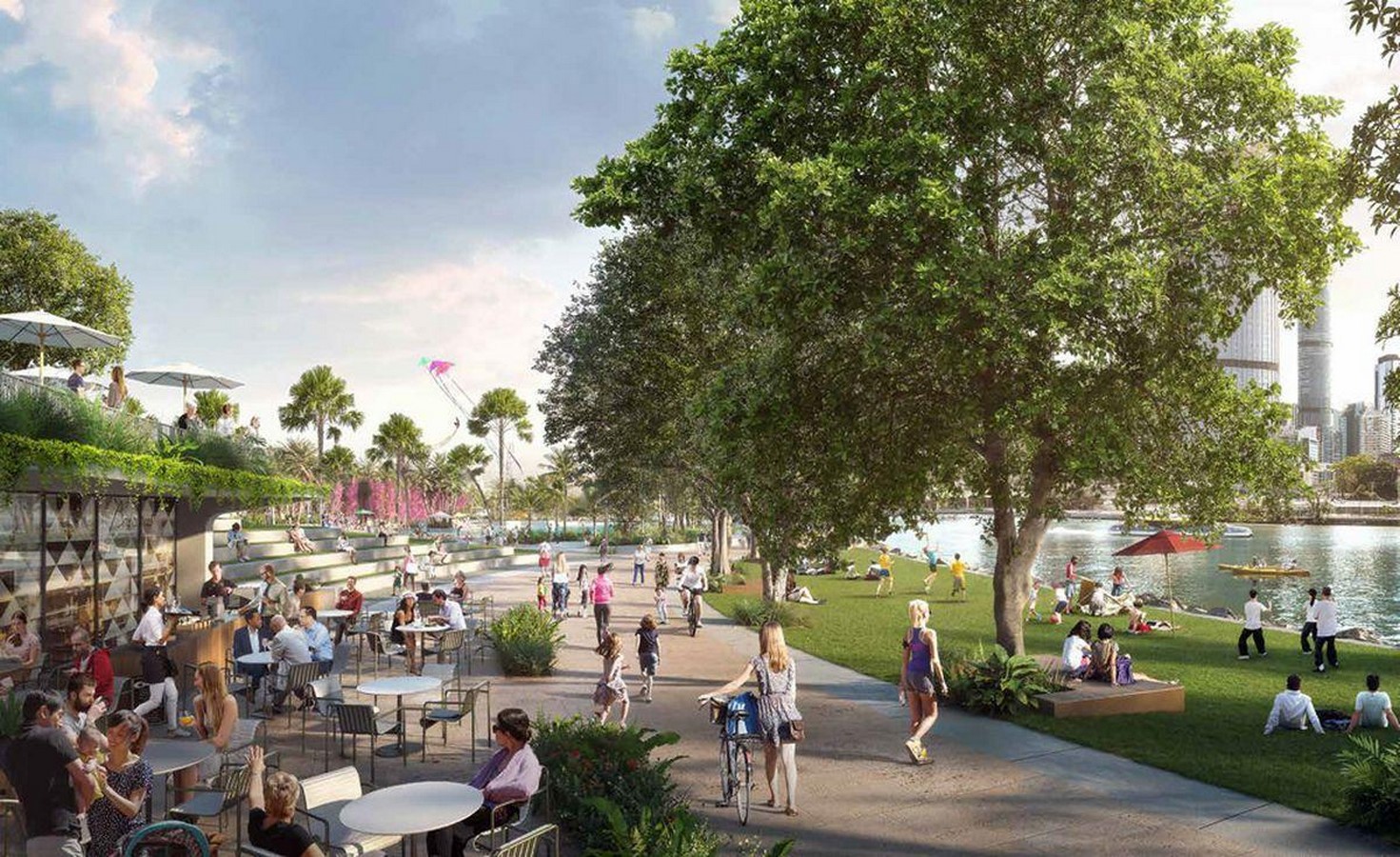
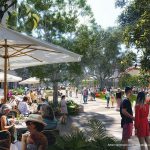
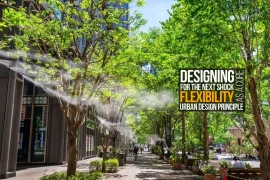
Urban cooling is essential: enlarged tree canopy, misting devices, and rewilded rainforest passages will transform the riverside into a climate buffer.

South Bank serves as a municipal commons, with 14.6 hectares of parkland, a public beach and lagoon, 700+ free yearly events, and innovative initiatives like a Gondwana rainforest treetop walk, edible landscapes, and inclusive play areas.


In short, Brisbane showcases how water architecture can evolve beyond hidden engineering. It builds infrastructure that you can swim in, eat at, and rejoice on. By embracing the river as both protector and stage, South Bank establishes a global standard for communities reinventing water as the core of urban space.
The Future- Cities as Living Waterworks
What lies ahead? Water architecture suggests cities where:
- Plazas serve as playgrounds during the day, reflecting pools at night, and safe basins during thunderstorms.
- Schoolyards are converted into rain gardens and outdoor classrooms.
- Wetlands are used as courtyards in housing developments, providing cool air and ecosystem.
- Waterfronts evolve with the tides, becoming amphitheaters, promenades, and shields.
The future city won’t push water away but it will choreograph with it.
References:
Green, J. (2019) Detours obligatory: Rotterdam’s Water Square, THE DIRT. Available at: https://dirt.asla.org/2014/03/13/detours-obligatory-rotterdams-water-square/ (Accessed: 31 August 2025).
Sinopoli, D. (2019) The climate-resilient hunter’s point south park in New York, Azure Magazine. Available at: https://www.azuremagazine.com/article/hunters-point-south-park-queens-resilience/1000/ (Accessed: 31 August 2025).
Florian, M.-C. (2025) Venice Architecture City Guide: 15 historical and contemporary attractions to discover in Italy’s city of canals, ArchDaily. Available at: https://www.archdaily.com/1000784/venice-architecture-city-guide-15-historical-and-contemporary-attractions-to-discover-in-italys-city-of-canals (Accessed: 31 August 2025).
The Museum of Chinese Gardens and Landscape Architecture. Available at: https://www.gardensmuseum.cn/en/exhibitions_nr?id=ee7951ac61fa4a0d016200f1b4ac00cd&type=1 (Accessed: 31 August 2025).
Sinopoli, D. (2019a) The climate-resilient hunter’s point south park in New York, Azure Magazine. Available at: https://www.azuremagazine.com/article/hunters-point-south-park-queens-resilience/1000/?utm_source=chatgpt.com (Accessed: 31 August 2025).
Dale Hodges Park: Calgary (no date) Green Communities Guide. Available at: https://greencommunitiesguide.ca/about/case-studies/project/dale-hodges-park-city-of-calgary (Accessed: 31 August 2025).
Salburua (2025) Wikipedia. Available at: https://en.wikipedia.org/wiki/Salburua?utm_source=chatgpt.com (Accessed: 31 August 2025).
Florian, M.-C. (2025a) Venice Architecture City Guide: 15 historical and contemporary attractions to discover in Italy’s city of canals, ArchDaily. Available at: https://www.archdaily.com/1000784/venice-architecture-city-guide-15-historical-and-contemporary-attractions-to-discover-in-italys-city-of-canals?utm_source=chatgpt.com (Accessed: 31 August 2025).
The Museum of Chinese Gardens and Landscape Architecture. Available at: https://www.gardensmuseum.cn/en/exhibitions_nr?id=ee7951ac61fa4a0d016200f1b4ac00cd&type=1&utm_source=chatgpt.com (Accessed: 31 August 2025).
Future South Bank master plan (no date) Site Title. Available at: https://southbankcorporation.com.au/futuresouthbankmasterplan (Accessed: 31 August 2025).
York, M. (2024) Sponge cities: How we can adapt urban areas to beat the rain, The Times & The Sunday Times. Available at: https://www.thetimes.com/life-style/property-home/article/how-to-make-our-cities-more-spongy-and-less-flood-prone-kqb69nmzb?utm_source=chatgpt.com (Accessed: 31 August 2025).