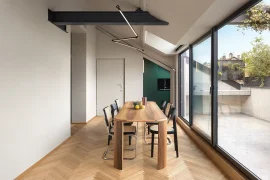
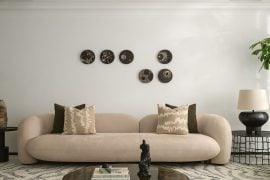
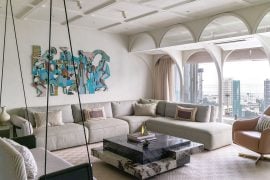
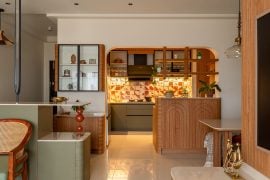
Kimāna means least, minimal. The name arises out of the client’s brief for a minimal and restrained design that doesn’t feel overwhelming for everyday living.
Project Name: Kimāna
Studio Name: studio d.wa (द्वा)
Location: Pune, MH
Year Built: 2025
Built-up Area: 2500 sft
Project Size (in sq. ft.): 2000 sq ft
Principal Architect(s) / Designer(s): Diksha Walse
Photograph Courtesy: relicstudio
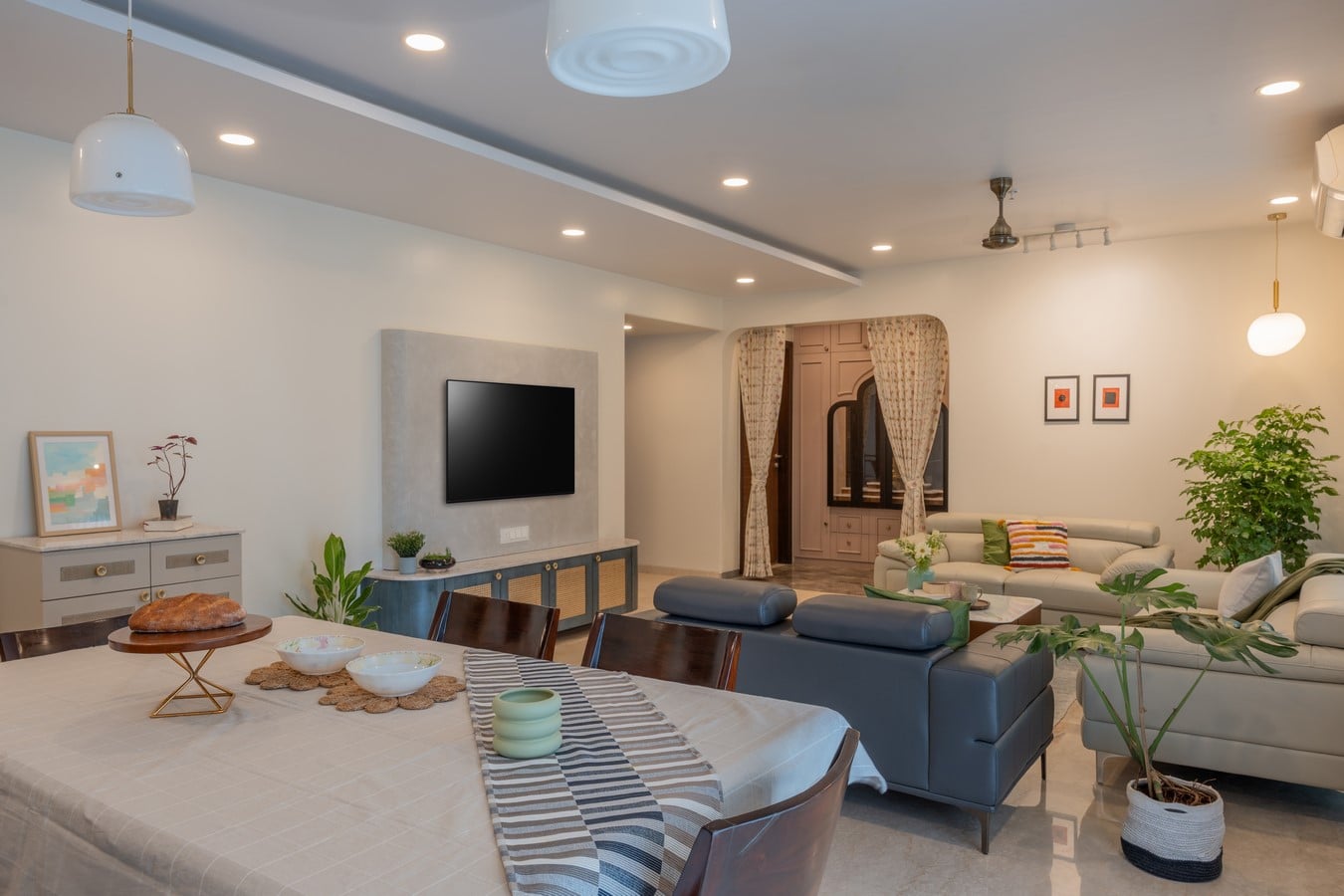
The client approached us to design their 4.5 bhk apartment located in a central locality in Pune- primarily for him and his parents. The brief was straightforward- to keep the design subtle and spaces clutter free. Every furniture piece, every design decision had to solve a functional need. This meant avoiding the use of filler elements just for the sake of aesthetics alone. The challenge then, was to keep the design interventions minimal without making the spaces feel neglected.
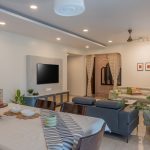
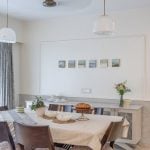
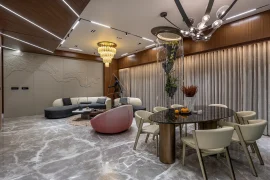
The living and dining rooms had typical requirements of seating, some storage, media console etc. The furniture and walls here are minimal with the exception of the royal blue media console.
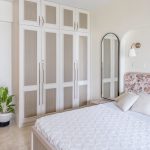
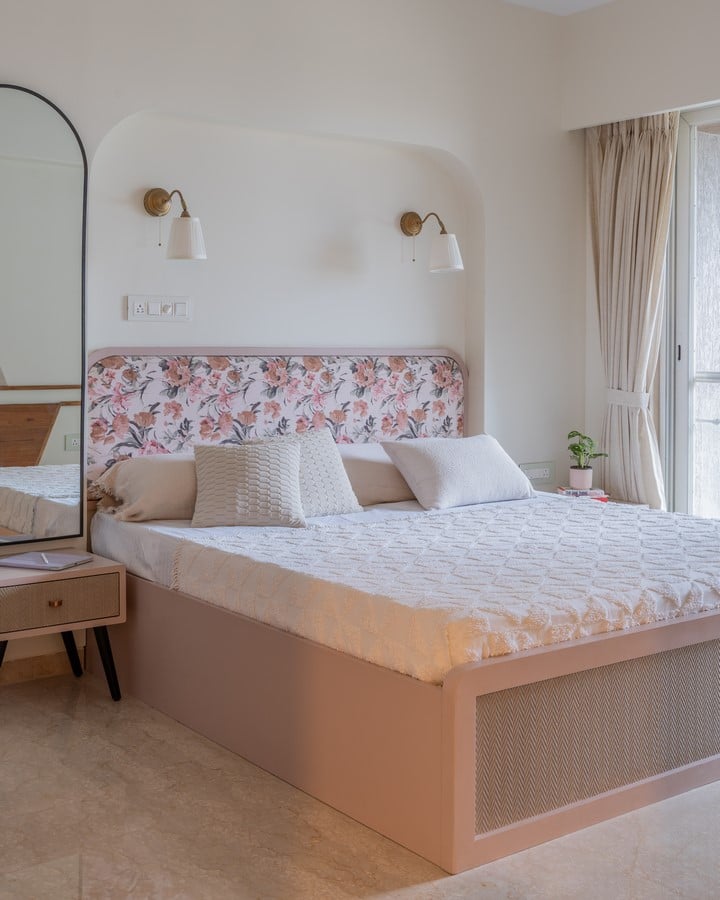
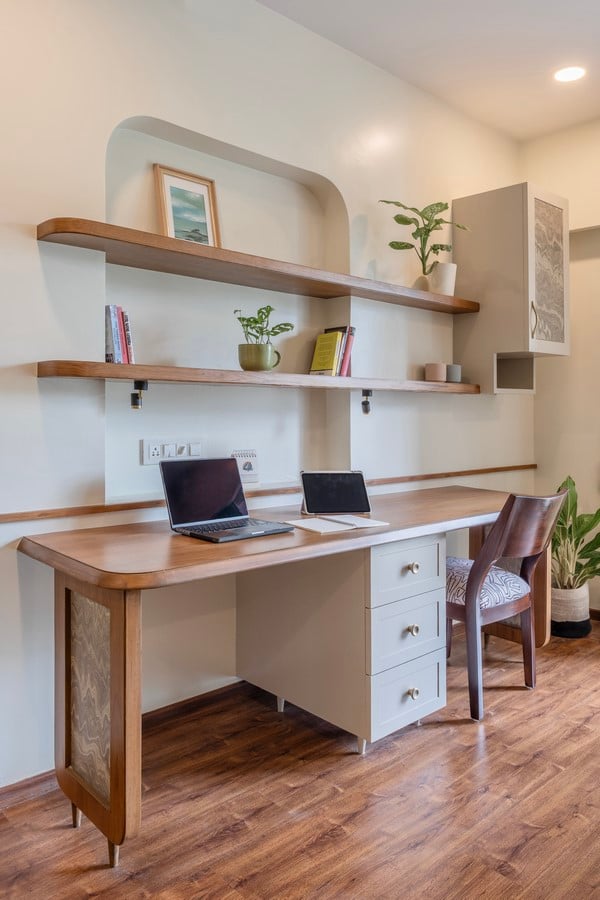
Of the four bedrooms, one was to be a home office/guest bedroom. The home office has a long work desk finished in teak veneer, carefully designed to comfort long working hours. Another bedroom was to be designed for their daughter and son-in-law who visit often. The daughter’s bedroom is designed to be visually light and soft with light colours and patterns, rounded corners.
The son’s bedroom has shades of teal with grey embossed veneer panels and shutters. The master bedroom is designed for the parents with a touch of classic elements. A thread of vertical grooves and flutes runs throughout the bedroom tying it all together.
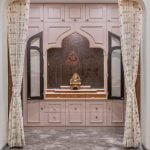
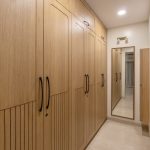
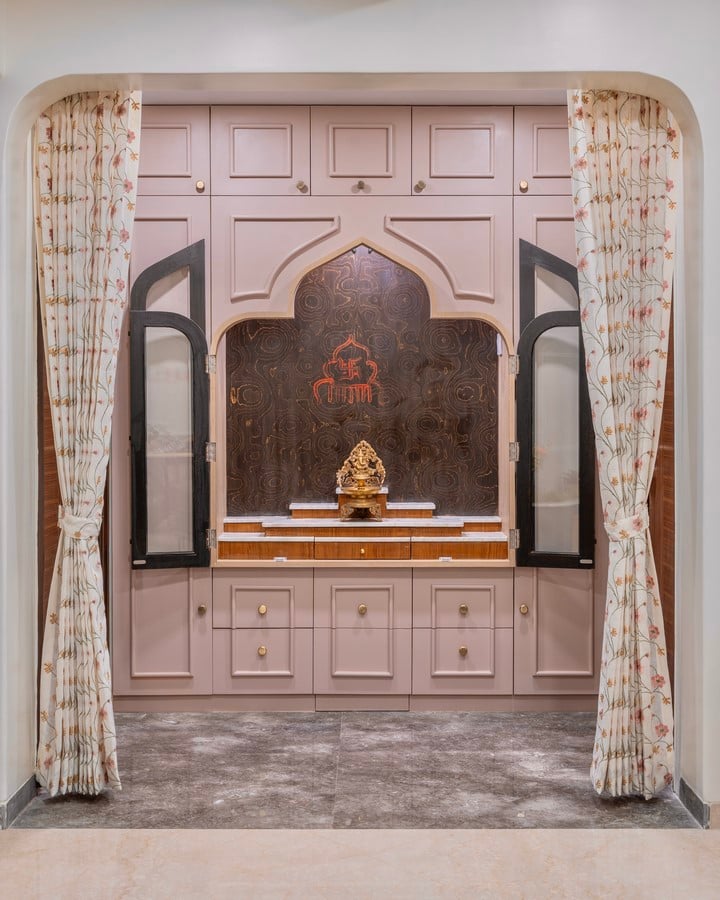
Apart from the living spaces, one of the key concerns for the client was the puja mandir. The client’s father insisted the mandir be prominent and not just tucked away in some corner. Considering Vastu aspects, there were very few feasible locations for an opulent mandir. We proposed to get rid of the closet wall and to shift the master bedroom entrance wall to widen the existing passage. This allowed us a grand 7’ wide mandir with the master wardrobe right behind it.
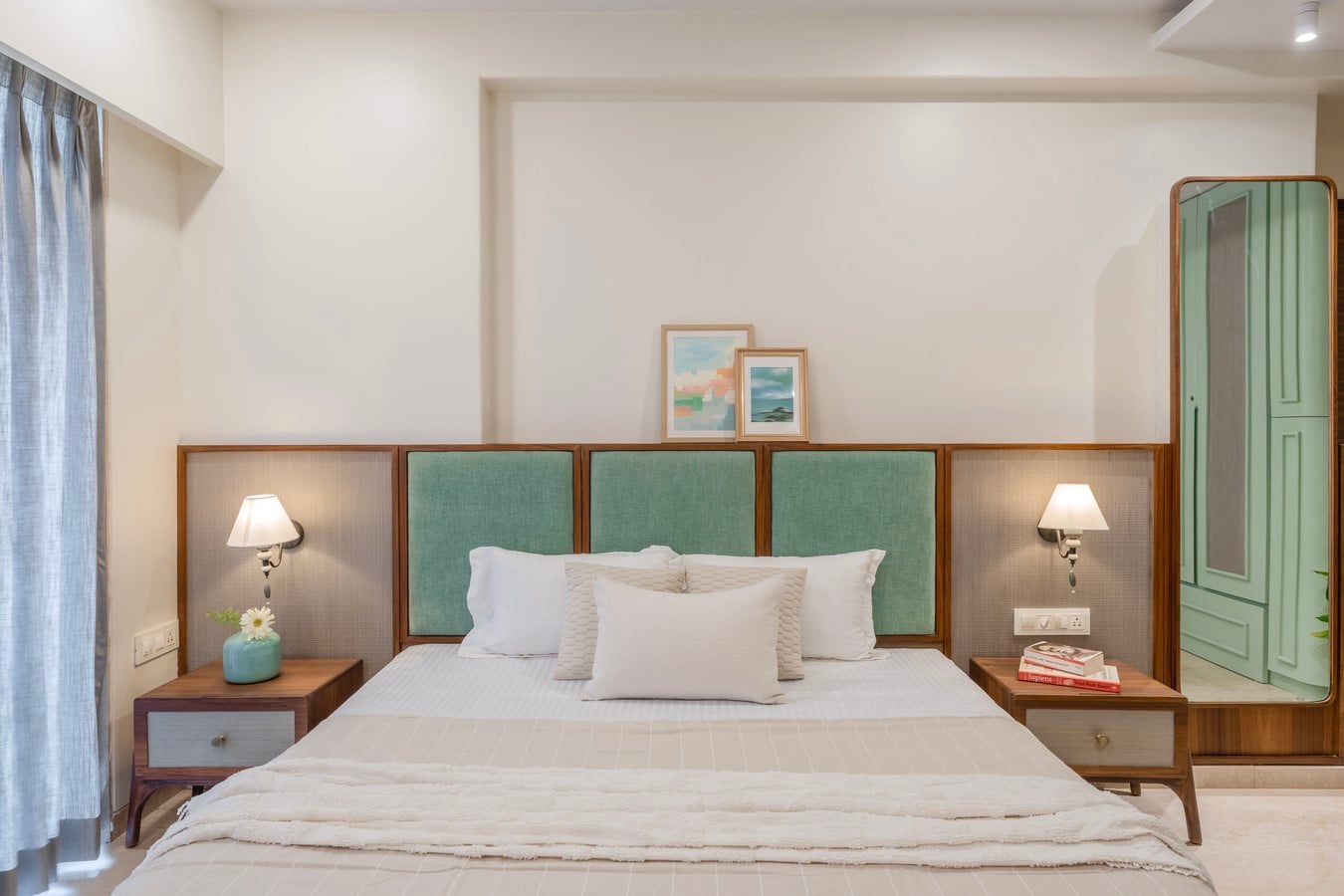
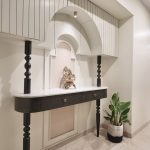
Instead of adding filler elements to make the spaces look ‘designed’, we decided to refine the functional aspects of design- one of which was working out the mechanism for multiple concealed storage spaces throughout the house. Right at the entrance, the unit is not only designed to visually welcome guests into home but to hide storage and electrical DB access. The mirror in one of the bedrooms is actually a hidden pull out vanity. The storage shutters of the mandir are designed to look like backdrop for the actual mandir space.
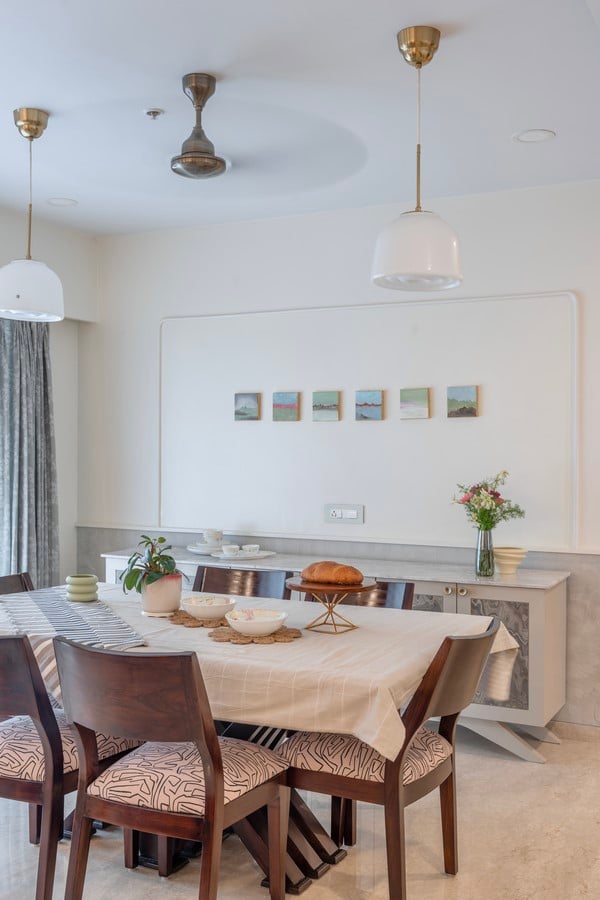
To compensate for the intentional bareness of the spaces, the focus shifted to the nuanced scale of design which led to finer visual detailing of the furniture- sculpted wooden legs, grooved surfaces, fluted panels, moulding details, rounded corners. Since the overall palette of the home was to be subtle and minimal, it was carefully stripped down to classic elements- veneers, marble, woven cane, brass hardware, and largely neutral colour palette with some pops of colours. Patterned, dyed and embossed veneers were used as highlights to give the furniture some character.