When Bureaucracy Goes Green
When we think of Net Zero buildings, our imaginations often take flight. Shimmering glass towers with solar panels, sleek silhouettes that resemble something from science fiction rather than our everyday lives. Around the world, architects have embraced this vision, making sustainability appear futuristic, glamorous, and almost out of reach.
However, in 2014, India changed this narrative in a surprising setting: a government office. The Indira Paryavaran Bhawan did not emerge as a shiny new tower or a sculptural masterpiece; instead, it signified a quiet revolution. At a time when public buildings were seen as dull and boxy, this structure became India’s first Net Zero Energy Government Building, demonstrating that sustainability was not just a corporate spectacle or a private luxury. It could serve as the foundation for everyday public infrastructure.
The Indira Paryavaran Bhawan serves as both the headquarters for the Ministry of Environment, Forest and Climate Change, and as a powerful statement about sustainable design. It exemplifies how India can create and operate in harmony with its climate. Its strength lies not in elaborate aesthetics but in its simplicity. Flat and unassuming, the building demonstrates that the future of green design doesn’t need to be overly futuristic; sometimes, it merely needs to function effectively.

From the beginning, it was envisioned as a living laboratory; a building where people could work every day, while the structure itself depicted what India’s green future could look like.
The brief was extremely simple: create a workplace that consumes as little energy as possible, and produces all that it needs on its own.
A Design Rooted in Tradition
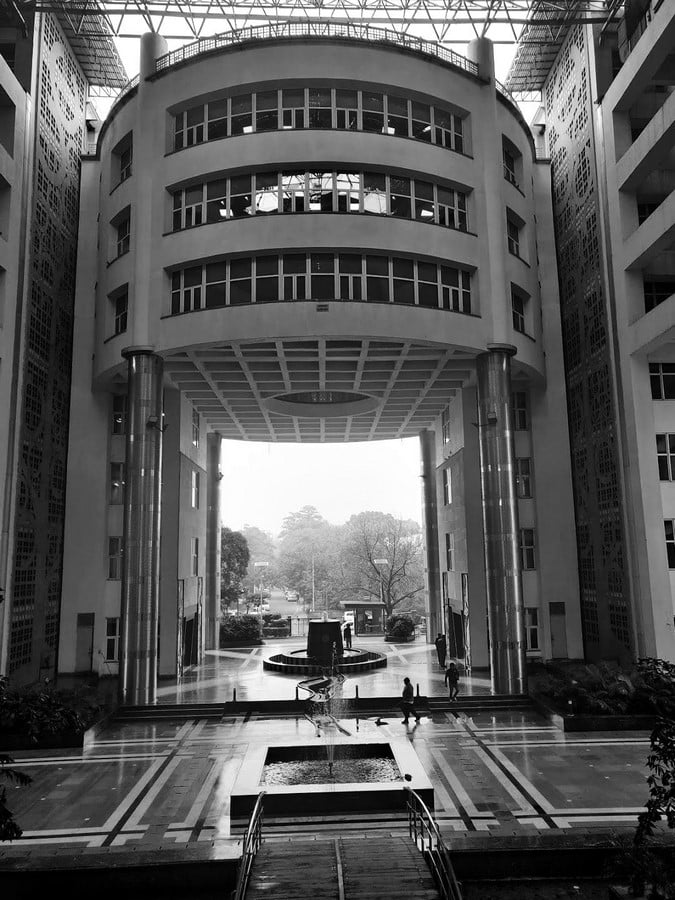
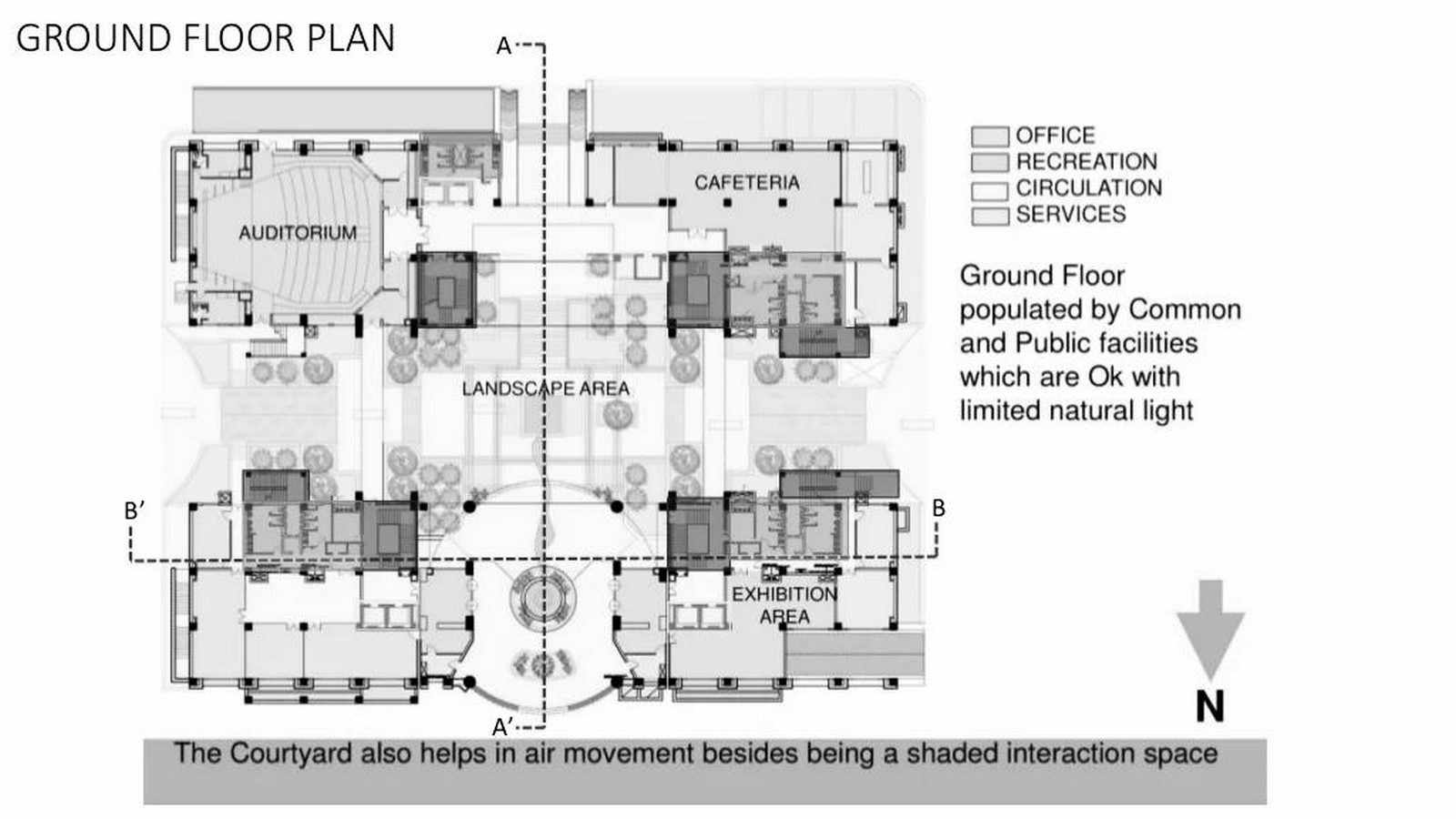
The central courtyard is the heart of the building, combining traditional Indian architecture with modern climate solutions. It enhances natural light and ventilation while serving as a social hub for employees. Designed along the north–south axis, the building protects against harsh east and west sun, allowing three-quarters of the workspaces to bask in natural light, reducing the need for artificial lighting and creating a vibrant atmosphere throughout the day.
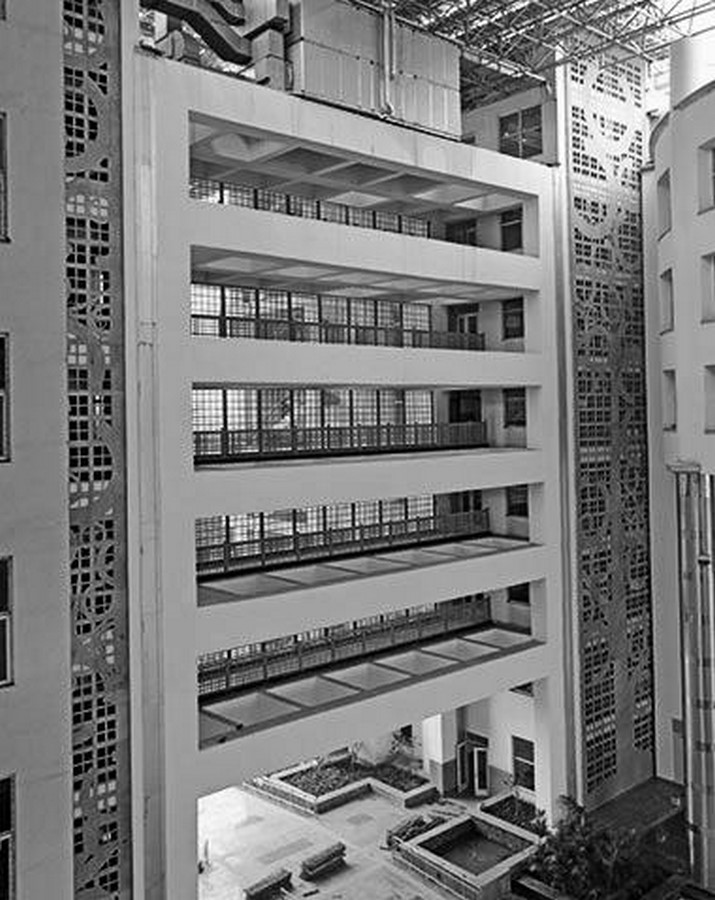
While many corporate campuses in India feature sleek glass façades, the Indira Paryavaran Bhawan takes a different approach. Its exterior is designed with jaalis, recessed windows, and deep overhangs, elements drawn from India’s traditional architecture, but employed with a focus on high performance. These choices are not merely nostalgic; they are strategic, helping to reduce solar gain, minimize glare, and keep the interiors naturally cool, all while preserving openness and views.
Natural ventilation is a remarkable feature of this building. Instead of acting as a sealed box, it promotes cross-ventilation through operable windows. The courtyard functions as a lung, while shaded terraces invite people to spend time outdoors. The building feels less like an energy-consuming machine and more like a space that harmonizes with its climate, operating in a gentle and intelligent manner.
Even at the urban scale, the building avoids overpowering its surroundings. By utilizing only 30% of the ground area, the design maintains a modest height, ensuring that the structure harmonizes with its environment rather than dominating it.
The design philosophy can be summed up in one word: restraint. Rather than relying on impressive technology or loudly promoting “sustainability” through flashy features, the architects allowed climate, orientation, and human comfort to guide every decision. The result is refreshingly grounded: modern yet welcoming, efficient without being sterile, Indian in spirit while ambitious enough to compete on the global stage.
In an era where “green” is often reduced to glossy façades and superficial additions, Indira Paryavaran Bhawan makes a powerful statement: true sustainability does not begin with gadgets; it starts with intelligence.

Unveiling the Power of Subtle Innovation
If the planning set the stage, the materials and construction methods brought the Bhawan’s philosophy to life.
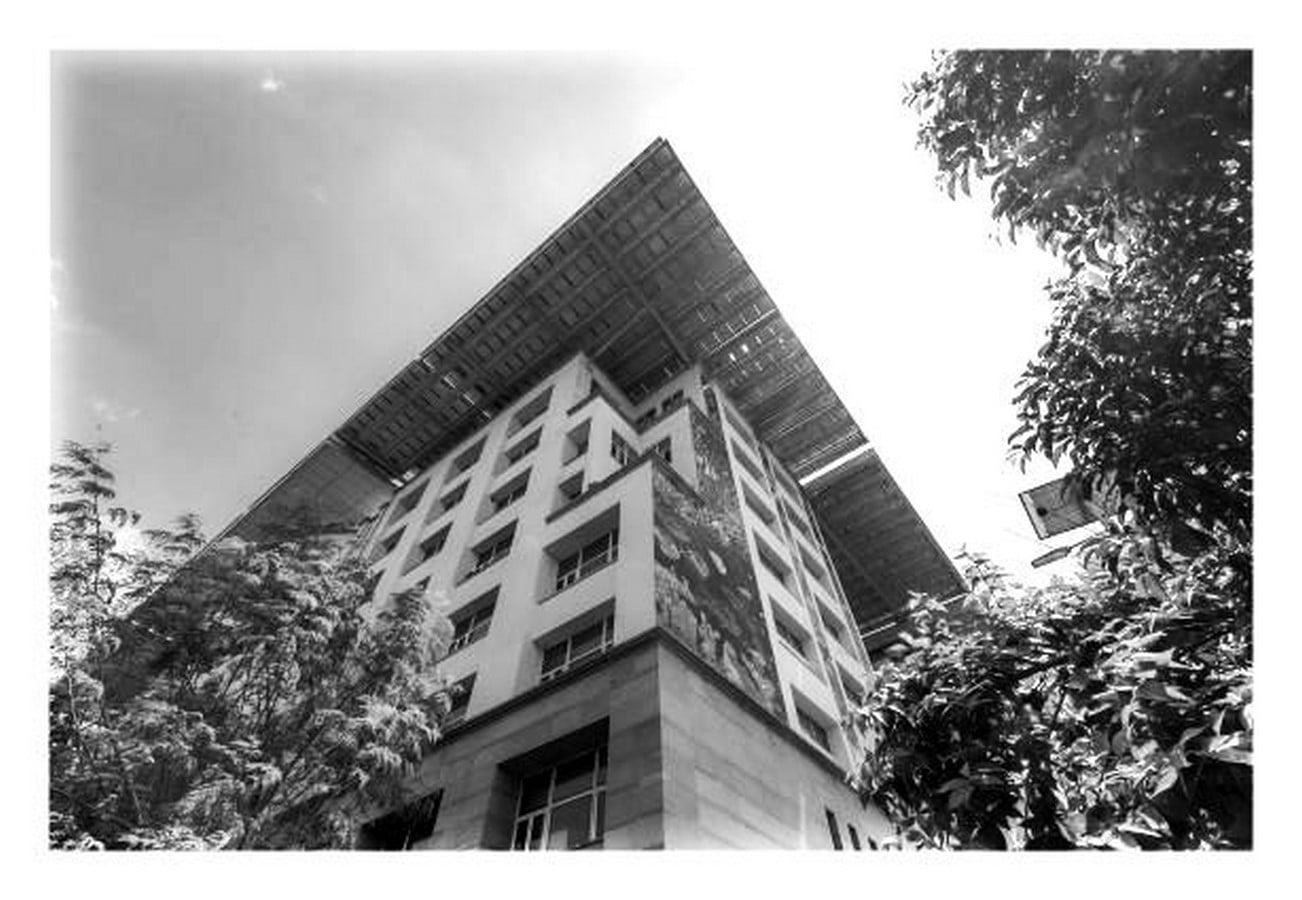
The building is primarily clad in locally sourced sandstone and granite, which visually connects it to Delhi’s historic architecture while minimizing transportation energy. This choice anchors the structure in its environment, giving it a timeless appearance rather than a trendy one.
The interiors prioritize low-VOC paints, recycled materials, and bamboo-based furniture, all of which are healthier for occupants and lighter on the planet. The finishes are minimal yet warm, demonstrating that sustainability does not need to compromise comfort.
Smart Building Envelope
One of the most captivating features of this building is its innovative double-skin façade. Imagine a clever design that creates an insulating air buffer between the external stone layer and the inner glazed layer. This brilliant setup not only reduces heat transfer but also keeps the interior comfortable with remarkably less energy consumption.
- The Bhawan features high-performance glazing that reduces solar gain while maximizing daylight. It moves away from traditional mechanical systems, employing innovative methods:
- Cool air is introduced at floor level, rising as it warms for a comfortable environment with lower energy use.
- Ceiling-embedded pipes circulate chilled water, cooling surfaces, and air without the disruptions of standard air conditioning, enhancing energy efficiency and indoor air quality.
- This blend of aesthetic beauty and effective thermal insulation creates a comfortable temperature year-round, making the Bhawan a modern design marvel.
Building Breakthrough
Prefabricated components and modular construction methods significantly reduced waste during the building process. Effective site management ensured that construction practices aligned with sustainability goals, emphasizing the importance of recycling materials and controlling dust and pollution.
The construction of the Bhawan embodies the principle that sustainability is not only about the final outcome; it also encompasses the methods used in the building process.
Sustainability: Walking the Talk
If the design and materials make Bhawan clever, its performance makes it legendary. This is not a building that merely claims sustainability; it truly embodies it.
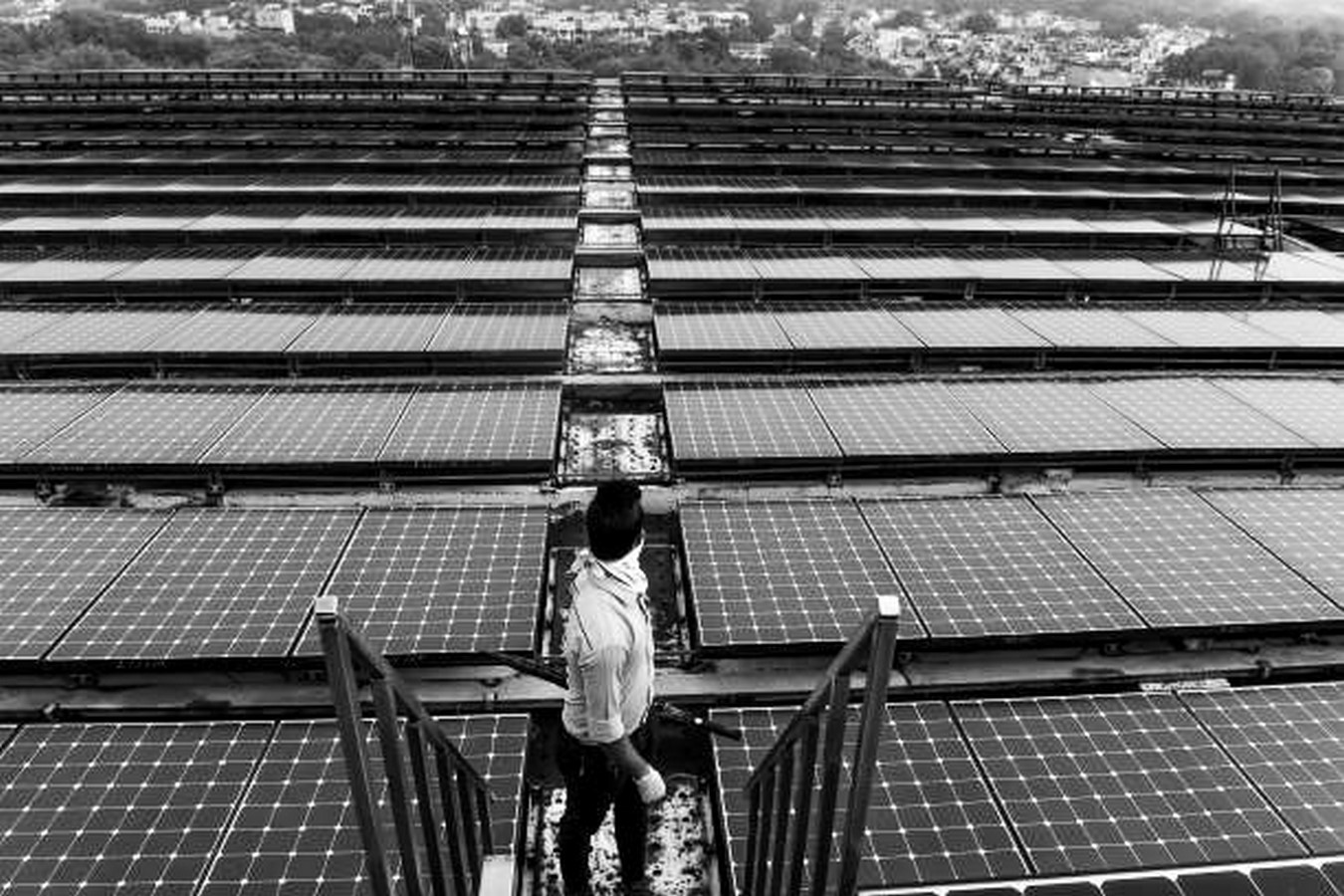
The Bhawan is crowned by 7,000 square meters of rooftop solar panels, producing more energy than the building consumes on sunny days. This makes it India’s first Net Zero Energy Government Building. The excess power is even fed back into the city grid.
Water Efficiency
Water is managed holistically:
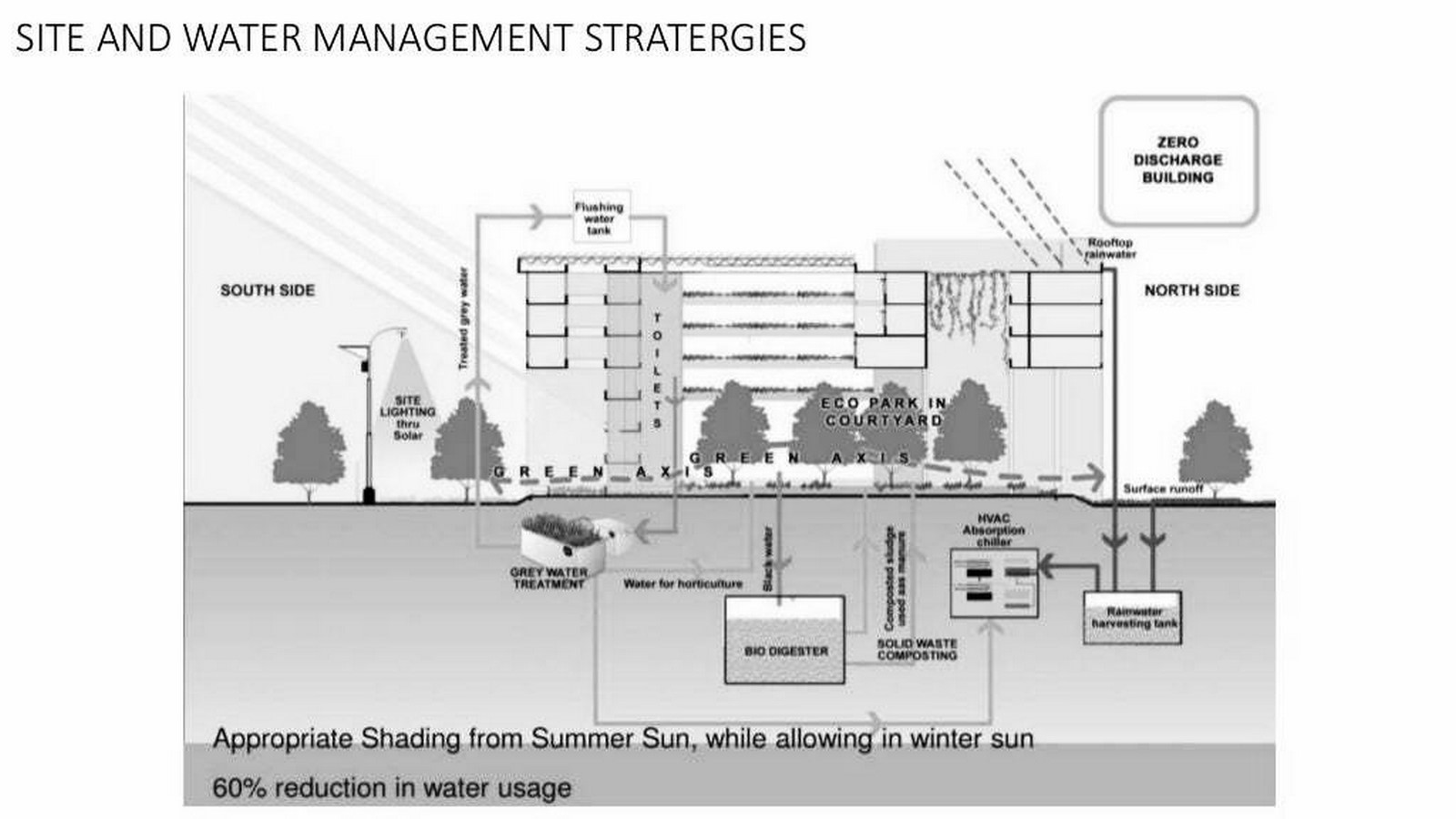
The building captures almost 100% of its rainwater, significantly reducing its reliance on the municipal supply. A greywater recycling system processes about 80% of the wastewater, redirecting it for toilet flushing and landscaping use. Low-flow fixtures decrease water consumption by nearly 40% compared to traditional buildings. Together, these strategies create a closed-loop system, making the Bhawan’s water cycle exceptionally self-sufficient.
Daylighting and Well-being
The Bhawan ensures that three-quarters of its spaces are naturally lit, which not only saves energy but also enhances employee well-being. Natural light improves mood, reduces eye strain, and creates a healthier work environment, demonstrating how sustainability and the human experience are interconnected.
It’s no surprise that the building has achieved both a GRIHA 5-Star rating and LEED Platinum certification, making it one of the greenest buildings in India. However, what truly matters more than these accolades is the example it sets: a government office demonstrating the importance of sustainability.
Redefining What Green Really Means
At first glance, the bhawan is flat and simple, but don’t be fooled. This simplicity harbors incredible depth. Beneath the unassuming exterior lies an epitome of thoughtful planning and climate-responsive design. It embraces material honesty while diligently balancing efficiency with comfort. It’s a design that doesn’t scream for attention; instead, it speaks volumes through its contextual relevance.
It sets an exciting precedent, not just for India, but for the world: sustainable architecture can be both understated and transformative. It serves as a vibrant workplace, a cultural beacon, and a living testament that sometimes the most profound revolutions come in the quietest forms.
This building reminds us that innovation does not always require a grand stage; sometimes, the most significant impacts emerge from simplicity and authenticity.
References:
CPWD (Central Public Works Department). (2014). Indira Paryavaran Bhawan: A case study on green government buildings. Ministry of Housing and Urban Affairs, Government of India.
Singh, B., Sharma, S. K., & Syal, P. (2020, June). NZEB: A Case Study of Indira Paryavaran Bhawan [Case study]. Journal Name (if known). https://doi.org/10.18231/2454-9150.2018.1398
Chandana, R. (n.d.). Indira Paryavaran Bhavan: Case Study / Net Zero Energy Building / Sustainable Building [PowerPoint slides]. Slideshare. Retrieved August 24, 2025, from https://www.slideshare.net/slideshow/indira-paryavaran-bhavan-case-study-net-zero-energy-building-sustainable-building/238755426
Press Information Bureau. (2014, February 25). PM inaugurates Indira Paryavaran Bhawan – India’s first on-site Net Zero building. Government of India. Retrieved from https://pib.gov.in