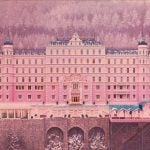
A masterclass in how architecture can be leveraged as a medium for storytelling, symbolism, and emotion – Wes Anderson’s The Grand Budapest Hotel revolves around a once glorious fictional hotel. Set in Zubrowka, an invented fictional Central European country, the building itself plays a pivotal, character-like role in the movie’s emotional landscape. Using deliberate contrasts and meticulous design, the production team, comprising production designer Adam Stockhausen and set decorator Anna Pinnock, transformed the Grand Budapest into a visual metaphor for cultural identity, memory, and loss due to historical change.
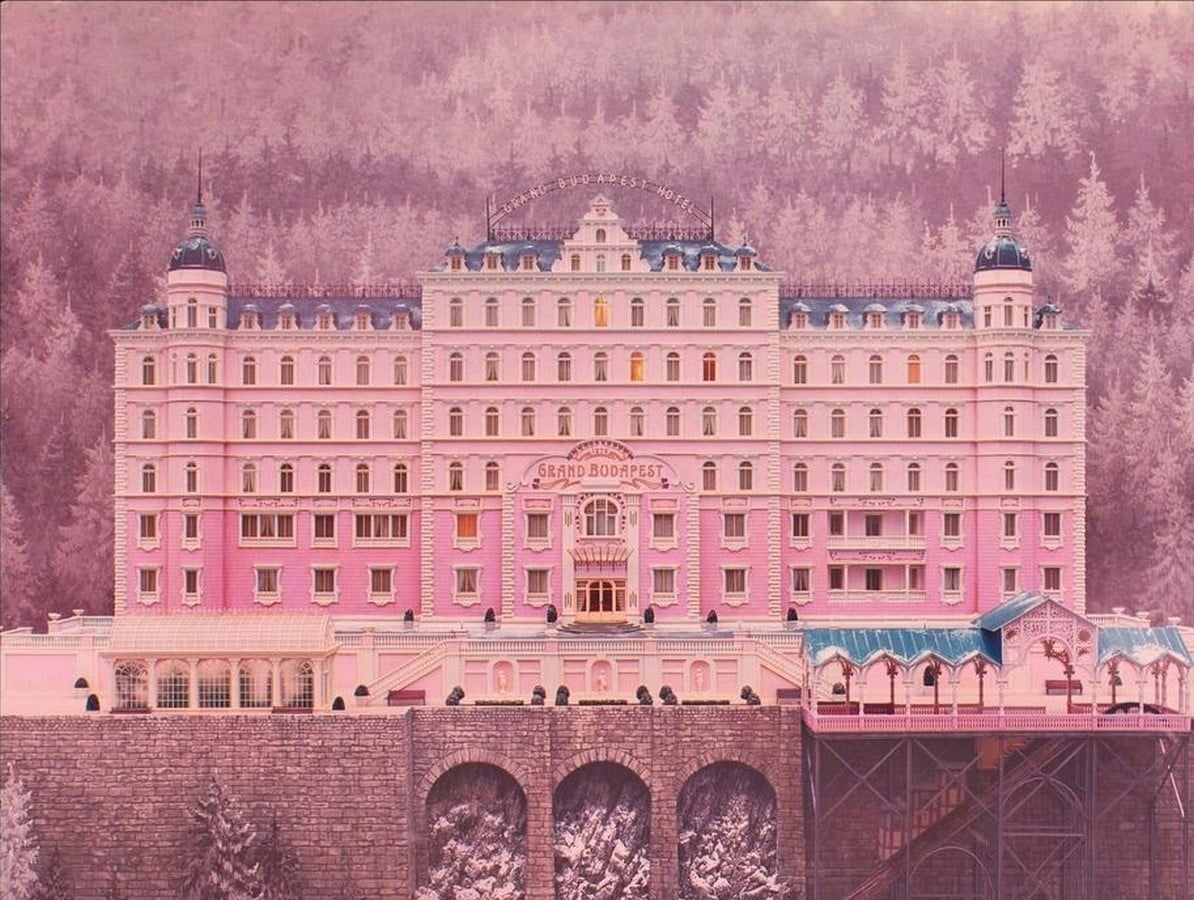
The architectural style is intentionally eclectic, inspired by the French Renaissance, Art Nouveau, and early 20th-century European design. The use of patel-pink exterior, turrets, and mansard roof evokes a vision of opulence and refinement reminiscent of the elite European hotels from the 1930s. The film signals that this is not just a place; the first wide shot shows the hotel as a highly stylized miniature model. This playful artificiality sets a storybook tone and lets the viewer know that the hotel is a constructed memory, a fantasy captured through architecture.
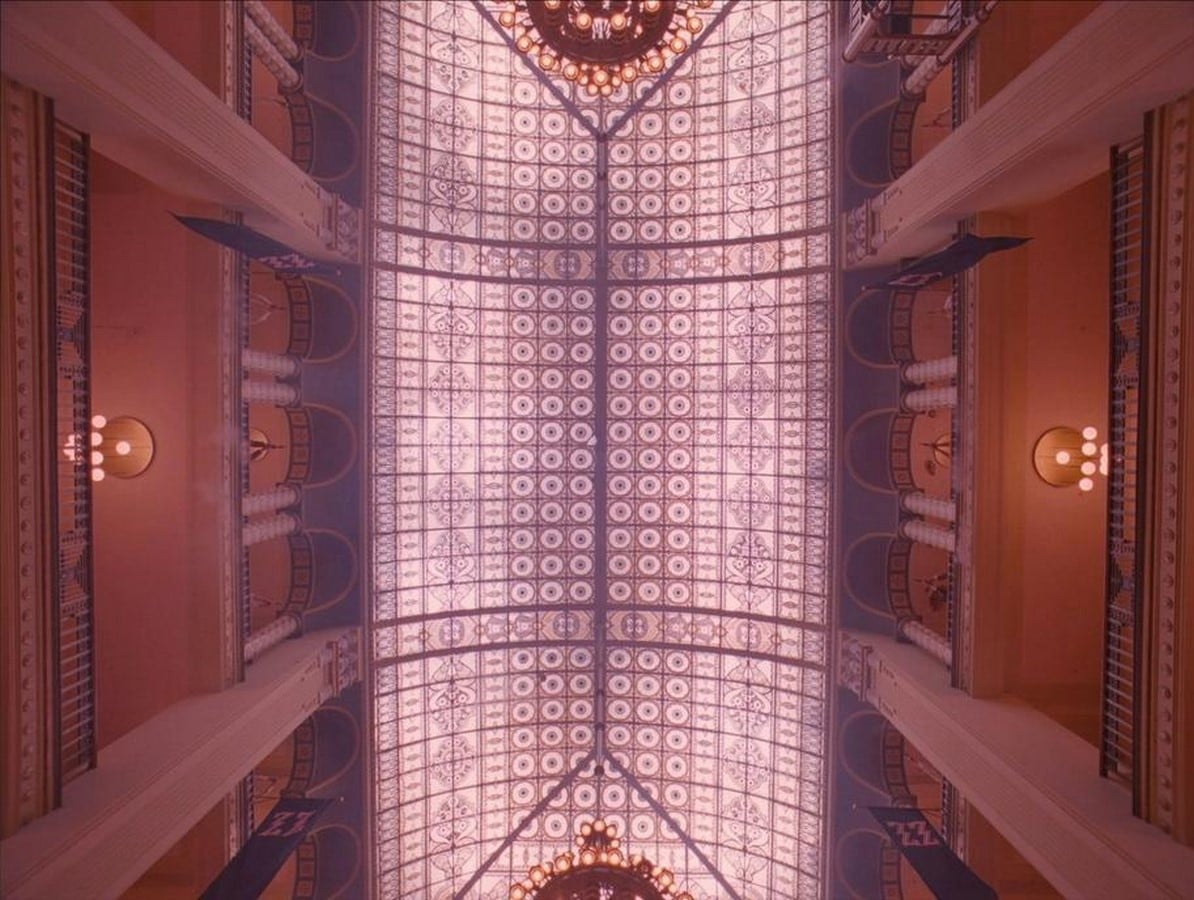
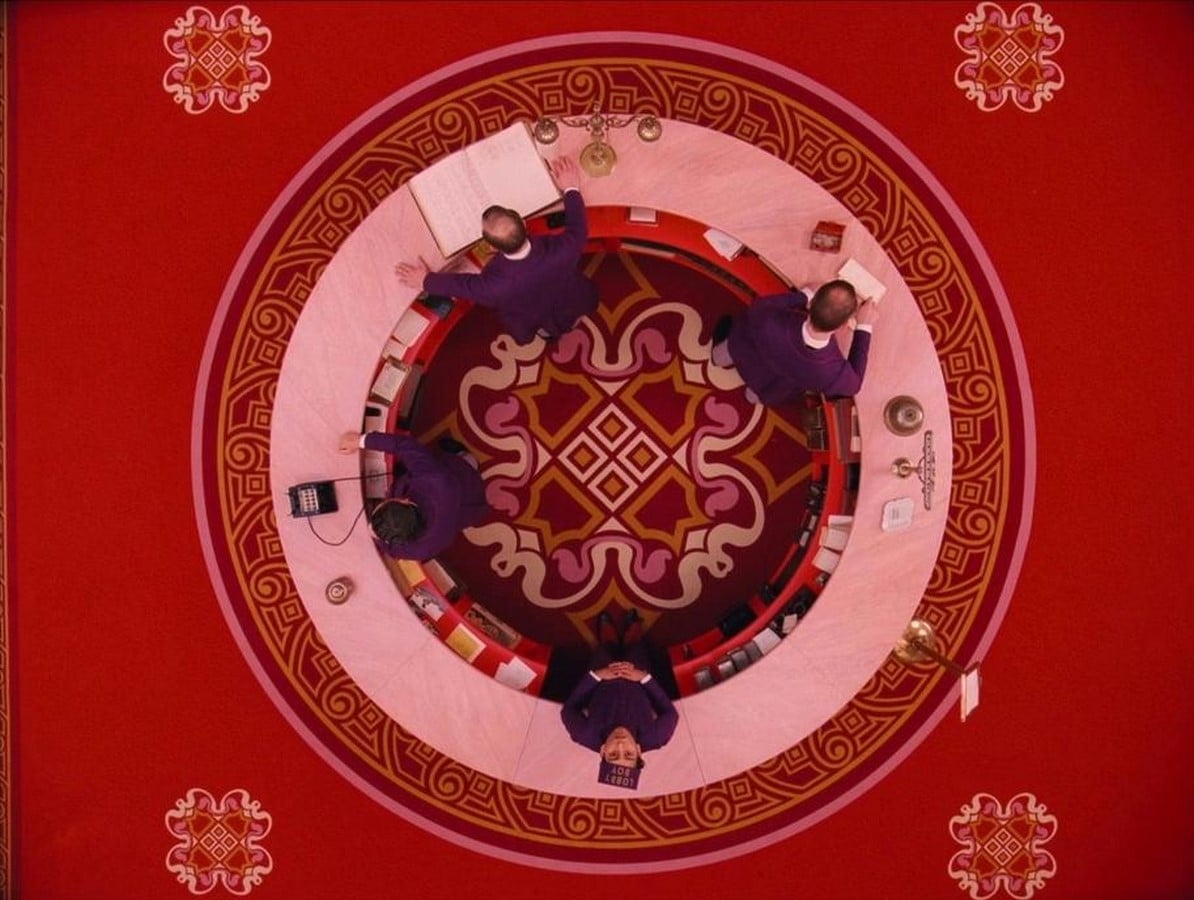
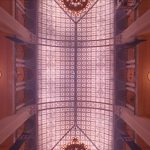
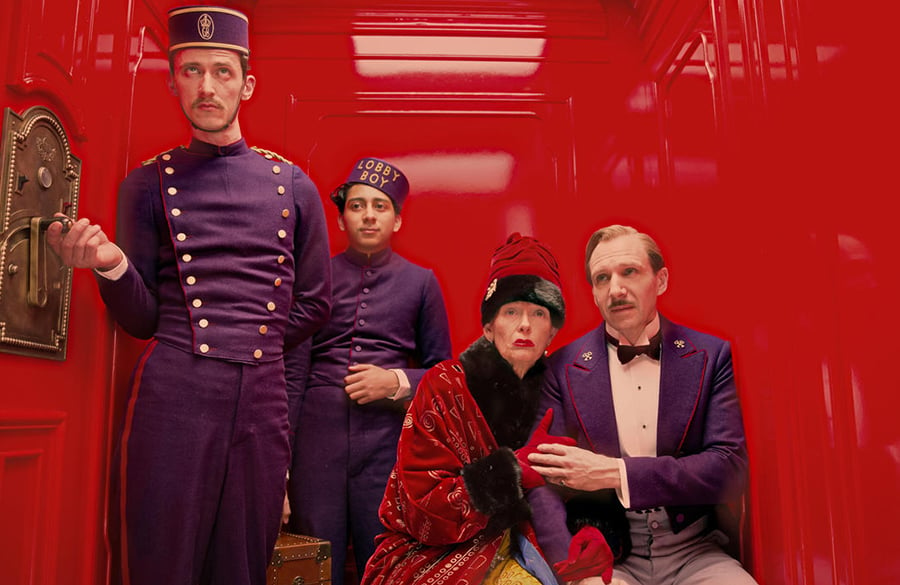
The film symbolises the Grand Budapest Hotel as an oasis against the ominous political and social forces acting on this world. During its prime, overseen by the attentive and humane concierge Monsieur Gustave, the hotel is full of colour and life. The architecture amplifies Gustave’s character; his being taller than the entrance reinforces his importance. He is often found gracefully moving through the hotel’s prominent art nouveau interiors – filmies in the historic Görlitz department store in Germany. The vibrant colour palette comprising warm reds, bold pinks, and golds, intensifies nostalgia and elegance, opposing the external dread of war and authoritarianism.
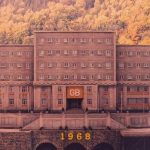
The narration through architecture is most prominent in the film when it contrasts the hotel’s heyday with its decline in the 1960s. As the country falls to political oppression, The Grand Budapest loses its colours and whimsy. The fantasy is replaced by drab concrete facings and utilitarianism. The ornate sign becomes an impersonal “GB”. The hotel’s beauty and individuality are erased. It is not mere aesthetics, but this erasure symbolizes the loss of liberal values and homogenization imposed by bureaucratic regimes.
Exploring this loss using time, the hotel’s architecture witnesses shifting eras and ideals. The interiors on the 1960s timeline are matte. muted oranges and greens, symbolising warmth and apathy. This contrasts with the earlier saturated, vibrant visuals. These visual cues signal the undertone of each period consistently, making architecture in the film not just a background but a narrator.
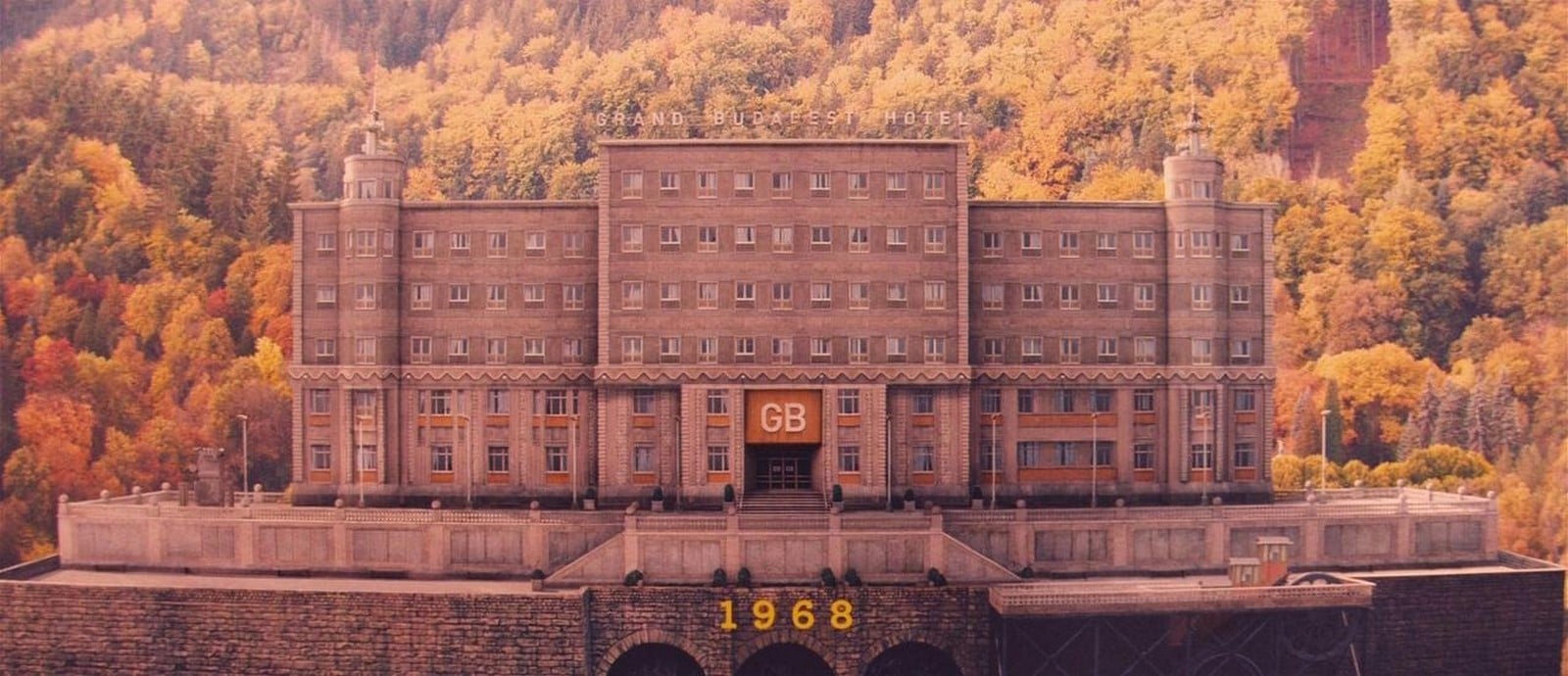
Going beyond external forms and finishes, the film’s architecture is embedded with layers of meaning and contradiction. The Grand Budapest Hotel is constructed as a paradox, blending stylistic elements from conflicting architectural traditions. The design cherry-picks from the collective anonymity of Soviet-era modernism and European grandeur, reflecting the thematic interest between collective erasure and personal memory. Even in the characters, Gustave’s etiquette and refined service can be read as a reclamation of individuality, defying mechanized brutality. The rational floor plans and technological advances of the hotel underline the shift from artful design to functional infrastructure depending on social priorities.
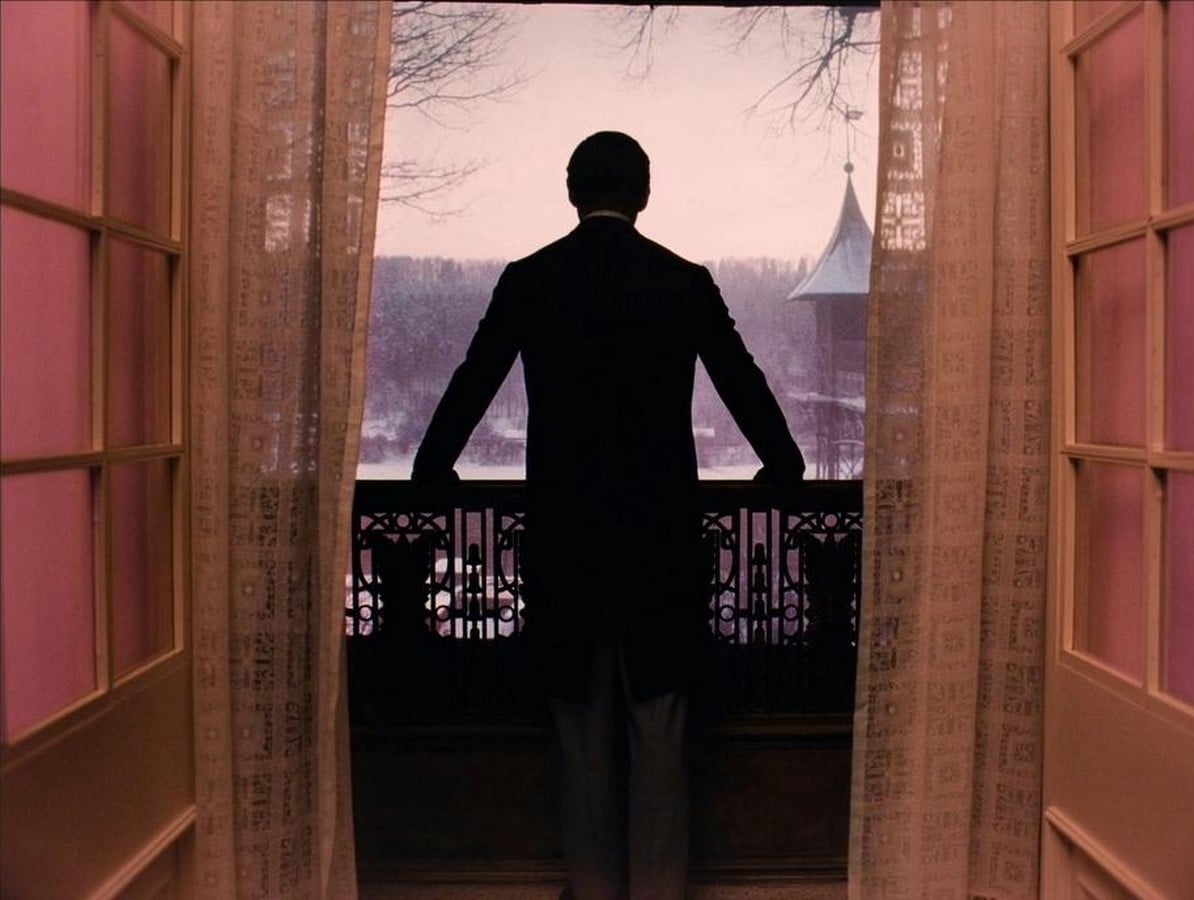
The architecture is animated because of its link to the characters and their memory. An integral part of Gustave’s personality, his humanistic values are reflected in its ornamental detailing and symmetry. His absence coincides directly with the building’s descent into anonymity in the 1960s. Architecture in the film is not just about form or function but about the communion of space , identity, and memory.
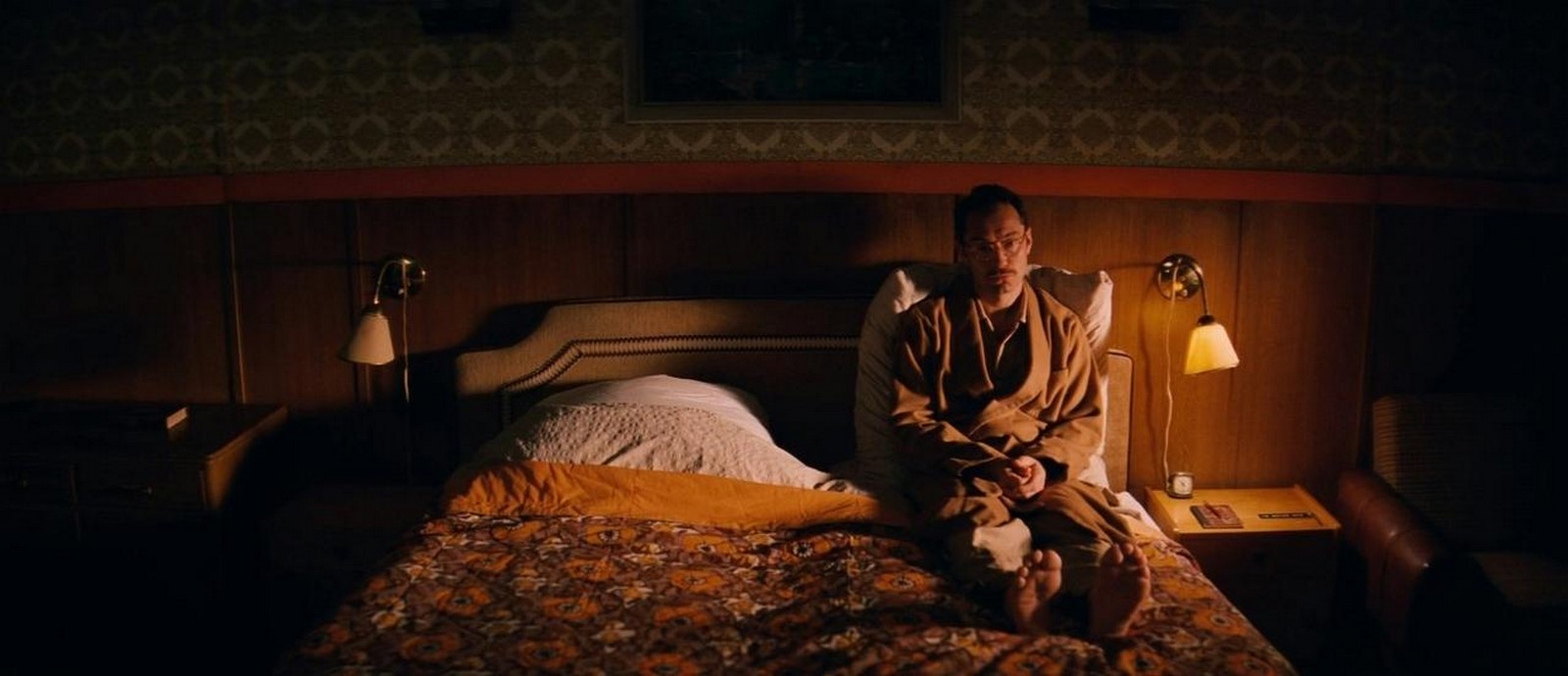
Something viewers can observe in Anderson’s use of architecture is the presence of deep symbolic elements. Mystical and religious undertones are subtly woven into the film using visuals, from cross-like window engravings to eye symbols that evoke higher consciousness; these allusions position the hotel as not only a witness to human drama but an object of cosmic observation. Perhaps the hotel can even be construed as a vessel of fate and destiny in the story’s narrative structure.
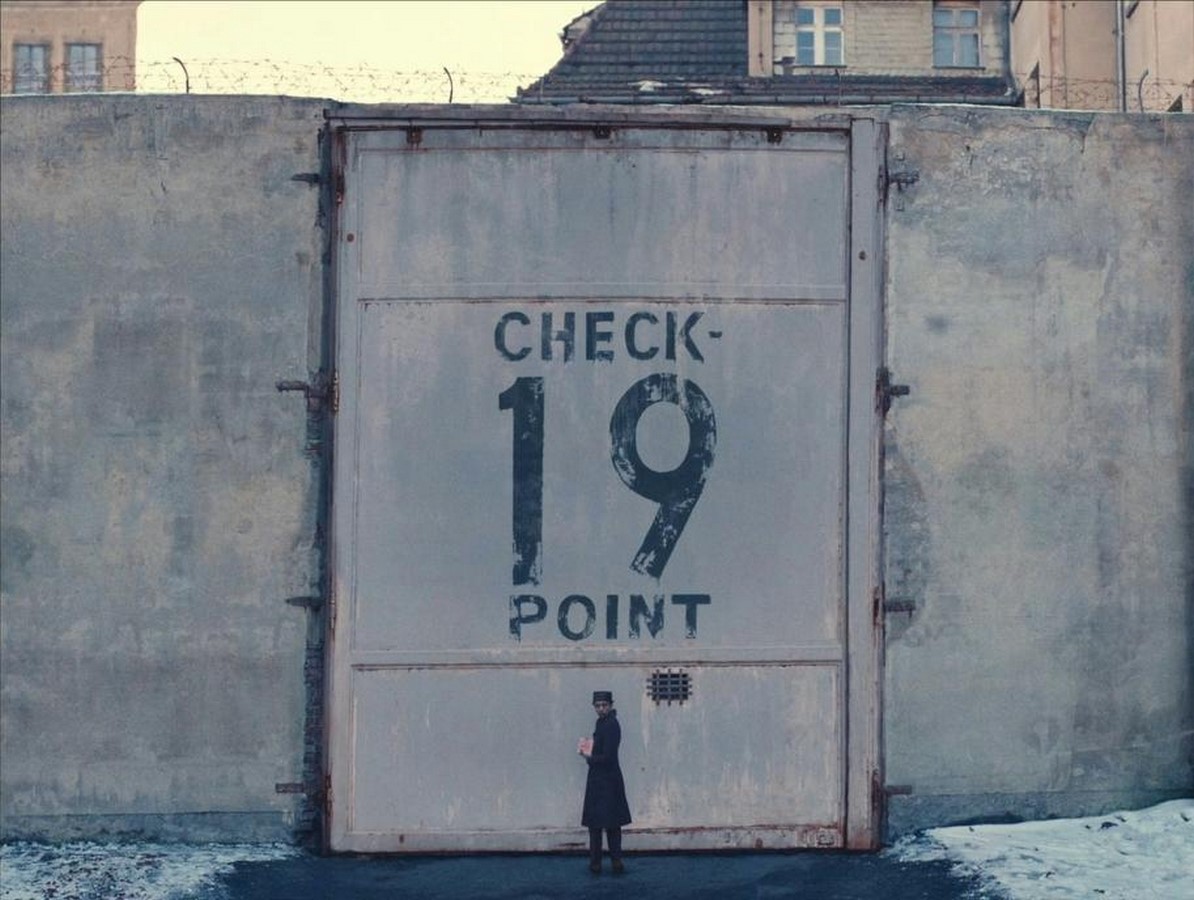
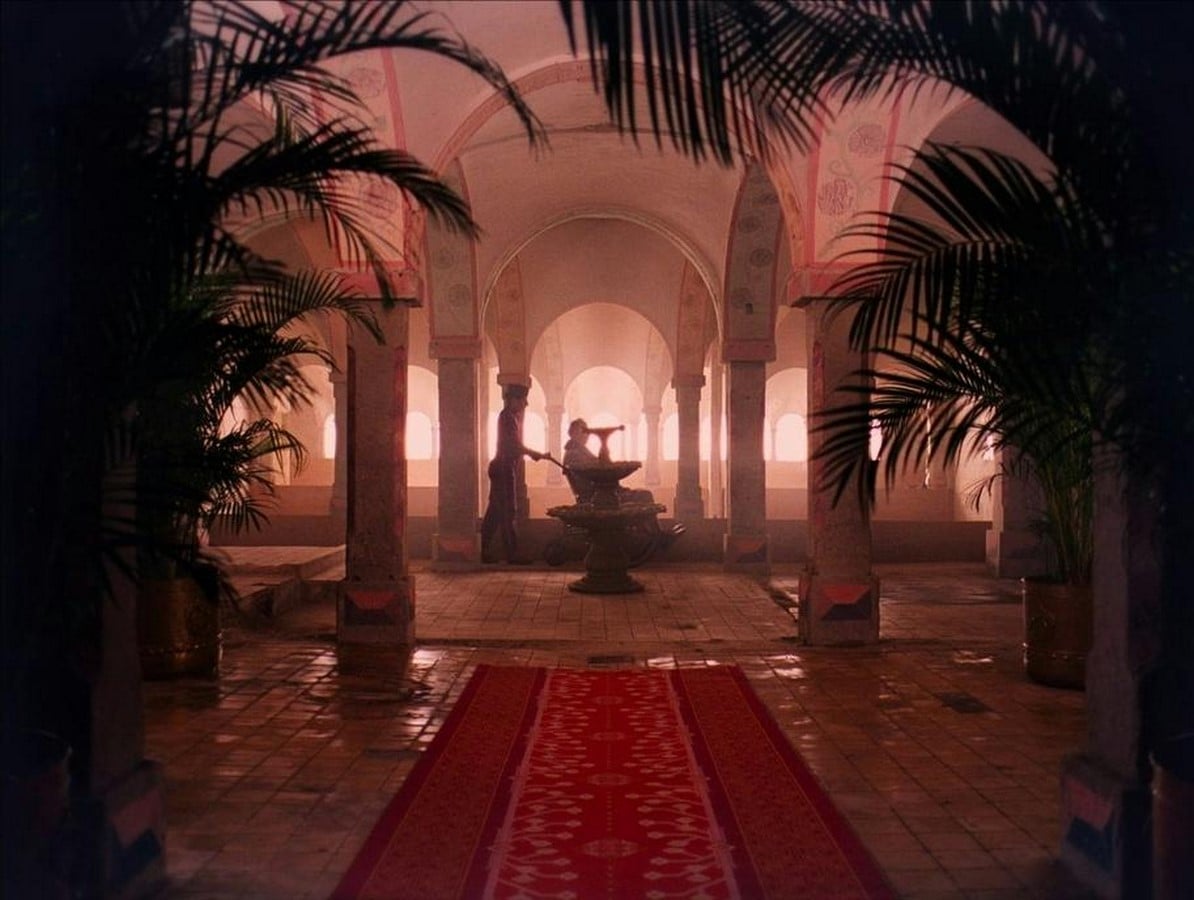
Ultimately, the Grand Budapest Hotel uses architecture to emphasize nostalgia, loss, and the fragile endurance of cultural identity. The building stands as a testament to a vanished era and the resilience of humanistic values. In Anderson’s works, architecture is the stage on which communities create, remember, and grieve their histories. This meticulously crafted visual style, symmetry, and intentional artificiality all serve to reinforce the film’s central notion: that places hold memory and meaning, capable of evoking the most profound feelings of longing and hope.
Briefly put, the architecture of the Grand Budapest Hotel is a constructed memorial to the ideals of civility, beauty, and kindness lost to the intense path of history – A living archive. As a viewer, especially someone in the design field, the film reawakens dreams, emotions, and consciousness through spaces. It demonstrates architecture’s distinct capacity to narrate not only stories, but the passage of time itself. The film uses architecture as a canvas to paint emotions of resilience, nostalgia, and change.
References:
All images sourced from,
- The Grand Budapest Hotel (2024) [FILMGRAB]. Available at: https://film-grab.com/2014/07/10/the-grand-budapest-hotel/# (Accessed: 25 August 2025).
Citations,
- Director, M.M. (2024) Wes Anderson’s whimsy – analysing ‘The Grand Budapest Hotel’, Mark Murphy. Available at: https://markmurphydirector.co.uk/wes-andersons-whimsy-analysing-the-grand-budapest-hotel (Accessed: 24 August 2025).